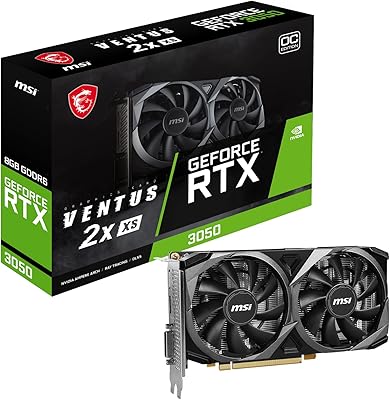
ASUS Dual GeForce RTX 3050 6GB OC




Overview
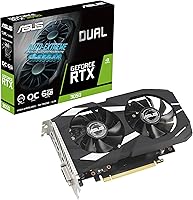
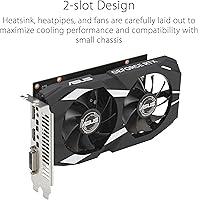
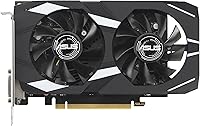
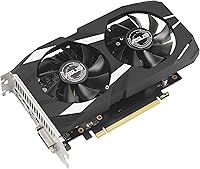
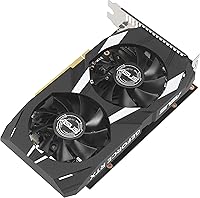
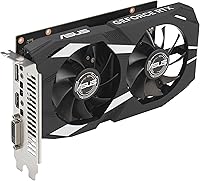
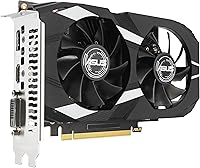
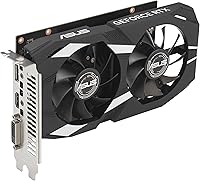
The ASUS Dual GeForce RTX 3050 6GB OC is a compact, entry-level graphics card built for budget-conscious builders who want a genuine upgrade path without breaking the bank. Worth noting upfront: this is the newer 6GB GDDR6 variant, not the older 8GB model — a distinction that matters when setting performance expectations. The ASUS Dual 3050 fits comfortably in today's GPU market as a capable 1080p gaming card, though it won't handle 1440p with any comfort. Its 2-slot design is a real practical advantage for anyone building in a compact or mini-ITX chassis where larger cards simply won't fit. Expect solid, playable frame rates in most current titles at medium-to-high settings — just don't expect miracles.
Features & Benefits
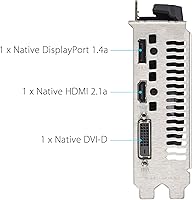
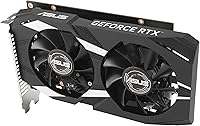
What stands out immediately about this budget Ampere GPU is how much engineering went into such a small package. The Axial-tech fans use a barrier ring to push more air downward across the heatsink, and thanks to 0dB fan-stop technology, the card runs completely silent during light desktop tasks or video playback — the fans don't spin at all until thermals demand it. PCIe 4.0 keeps it compatible with current and next-gen motherboards, while HDMI 2.1 and DisplayPort 1.4a handle high-refresh displays without issue. DLSS and hardware ray tracing are present via Ampere's Tensor and RT Cores, though ray tracing at this tier is best used sparingly. The steel reinforced bracket is a small but appreciated touch that prevents GPU sag over time.
Best For
This RTX 3050 card makes the most sense for a specific type of builder. If you're putting together a budget 1080p gaming rig and want access to DLSS and ray tracing without stretching your spend, it checks the right boxes. The compact 2-slot, short-length form factor makes it one of the few current-gen options that actually fits smaller mATX and mini-ITX cases without any modification. People upgrading from GTX 1060-era hardware will notice a real generational jump in performance and feature support. It also works well in a living room or home theater PC where near-silent operation matters. Light creative or AI-assisted workloads can tap into the Tensor Cores too, though expectations should stay realistic.
User Feedback
Across more than a thousand ratings, the ASUS Dual 3050 holds a strong 4.6-star average — and reading through the feedback, that score makes sense. Buyers consistently praise the quiet operation, easy installation, and how well it fits compact builds. Build quality gets positive mentions too, with ASUS's reputation for reliability holding up. The friction points are honest and predictable: 6GB of VRAM is starting to feel tight in more demanding 2024 titles, especially at higher texture settings. A few buyers note they wish they had gone with the older 8GB variant, or considered an AMD alternative at a similar price. That said, most agree the card delivers what it promises for modest 1080p workloads.
Pros
- The 2-slot, compact design fits mini-ITX and mATX cases where few current-gen cards can go.
- DLSS support meaningfully extends playable frame rates in supported titles beyond what raw specs suggest.
- Fan-stop technology keeps the card completely silent during everyday desktop use and media playback.
- HDMI 2.1 makes it a practical choice for connecting to a 4K TV or high-refresh display without adapters.
- PCIe 4.0 interface ensures the card stays compatible with current and future motherboard platforms.
- The steel bracket prevents GPU sag and contributes to a build quality that feels above its price tier.
- Upgraders from GTX 10-series hardware will experience a substantial leap in both performance and feature support.
- Driver support has been consistently stable, with the card recognized and configured correctly across a wide range of systems.
- Hardware ray tracing is available for lighter or older titles where the performance cost is manageable.
- ASUS's track record for long-term reliability holds here, with early owners reporting stable performance over extended use.
Cons
- 6GB of VRAM is already a bottleneck in several modern titles at high or ultra texture settings.
- Raw frame-rate-per-dollar value lags behind AMD alternatives at a comparable price point.
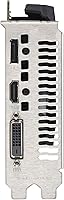
- Only two display outputs available, which rules out three-monitor configurations entirely.
- Ray tracing in demanding current-gen titles drops performance to uncomfortable levels at this tier.
- The 6GB VRAM ceiling will likely age poorly over a three-to-four year ownership cycle as games grow more demanding.
- Buyers upgrading from RTX 2060 or GTX 1080-class cards will find the performance improvement marginal at best.
- Limited heatsink mass compared to full-size cards means thermals require more attention in poorly ventilated cases.
- This RTX 3050 card offers no meaningful headroom for 1440p gaming, even with DLSS enabled.
Ratings
The ASUS Dual GeForce RTX 3050 6GB OC earns a strong overall reception across more than a thousand verified purchases worldwide, and the scores below reflect what real buyers actually experienced — not marketing promises. Our AI rating engine analyzed global user reviews, actively filtering out incentivized, bot-generated, and unverified submissions to surface patterns from genuine owners. Both the card's real strengths and its honest limitations are reflected here with equal weight.
1080p Gaming Performance
VRAM Adequacy
Value for Money
Thermal Performance
Noise Level
Build Quality & Physical Design
Compact Form Factor
DLSS & Ray Tracing
Driver Stability & Software
Display Output Versatility
Upgrade Value vs. Older GPUs
Installation & Compatibility
Long-Term Reliability
Suitable for:
The ASUS Dual GeForce RTX 3050 6GB OC is a strong fit for builders putting together a budget-focused 1080p gaming PC who want access to modern GPU features without committing to a higher spend. It makes particular sense if your case is the constraint — the 2-slot, short-length design opens up mini-ITX and mATX builds where most current-gen cards simply won't physically fit. Anyone upgrading from GTX 10-series hardware or older will notice a real and meaningful generational jump, not just in frame rates but in supported technology like DLSS and hardware ray tracing. It also works well as a living room or home theater PC card, where the near-silent fan-stop operation during light use is a genuine day-to-day quality-of-life benefit. Light content creators who want to occasionally tap into AI-accelerated workflows via Tensor Cores will find it a capable, no-fuss entry point into that territory.
Not suitable for:
If your goal is 1440p gaming at comfortable frame rates, the ASUS Dual GeForce RTX 3050 6GB OC is not the card to build around — the GPU compute and especially the 6GB VRAM ceiling will force uncomfortable compromises before you get there. Buyers who play a wide and current library of demanding AAA titles should take the VRAM constraint seriously; several modern games already load texture data that pushes past 6GB at high settings, and that situation will only get more common over a typical three-to-four year ownership cycle. If raw rasterization performance per dollar is your primary metric, AMD alternatives at a similar price point frequently offer more frame rate for the money, and that comparison deserves honest consideration before committing. Builders upgrading from RTX 2060 or GTX 1080-class hardware will likely find the performance delta underwhelming and would be better served stretching their budget further up the stack. This budget Ampere GPU is also not the right call for anyone running three monitors, since only two display outputs are available.
Specifications
- GPU: The card is built on the NVIDIA GeForce RTX 3050 graphics processor using the Ampere architecture.
- VRAM: 6GB of GDDR6 memory provides the frame buffer for gaming and light creative workloads.
- Memory Speed: The GDDR6 memory operates at 4000 MHz, delivering adequate bandwidth for 1080p gaming workloads.
- Interface: A PCIe 4.0 x8 interface ensures forward and backward compatibility with modern and legacy motherboards.
- Slot Width: The card occupies exactly 2 expansion slots, making it compatible with compact mATX and mini-ITX enclosures.
- Card Length: The PCB and cooler measure 7.9 inches in total length, fitting most standard and small form factor cases.
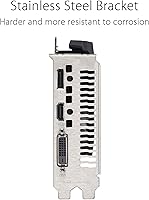
- Display Outputs: One HDMI 2.1 port and one DisplayPort 1.4a port are provided, supporting up to two simultaneous displays.
- Max Resolution: The card supports a maximum output resolution of 7680 x 4320 pixels (8K) across compatible displays.
- Fan Design: Dual Axial-tech fans with a barrier ring and extended blade length increase downward airflow across the heatsink.
- Silent Mode: 0dB fan-stop technology halts both fans entirely when GPU temperatures remain below the thermal threshold under light loads.
- Ray Tracing: 2nd Generation RT Cores enable hardware-accelerated ray tracing in supported titles, offering twice the throughput of 1st Gen RT Cores.
- AI Upscaling: 3rd Generation Tensor Cores power DLSS, allowing AI-based image upscaling to recover frame rates in supported games.
- Bracket: A steel-reinforced mounting bracket is included, providing structural rigidity and reducing GPU sag during long-term installation.
- Card Weight: The card weighs 14.4 ounces, which is lightweight relative to full-size dual and triple-fan alternatives.
- Power Connector: The card requires a single 8-pin PCIe power connector, with a recommended system PSU of at least 550W.
- TDP: The RTX 3050 has a rated TDP of 70W, making it one of the lower-power options in the current-gen discrete GPU segment.
- API Support: The card supports DirectX 12 Ultimate, OpenGL 4.6, and Vulkan, covering all major modern gaming and compute APIs.
- Codec Support: NVENC and NVDEC hardware encode and decode engines support AV1, H.265, and H.264 for streaming and video workflows.
Related Reviews
ASUS Dual RTX 5050 8GB Graphics Card
ASUS Dual RTX 4060 EVO 8GB GPU
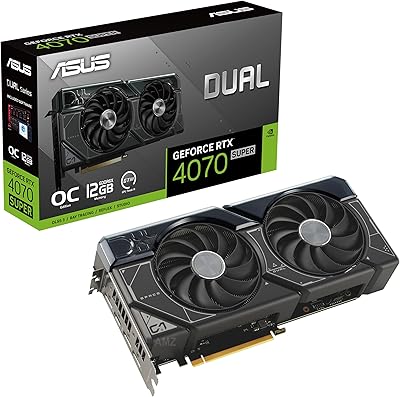
ASUS Dual RTX 4070 Super OC Graphics Card
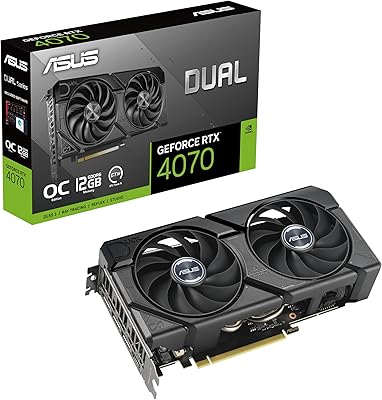
ASUS Dual RTX 4070 EVO Graphics Card
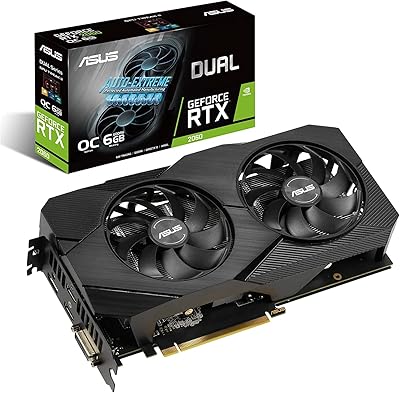
ASUS RTX 2060 Dual EVO 6GB Graphics Card
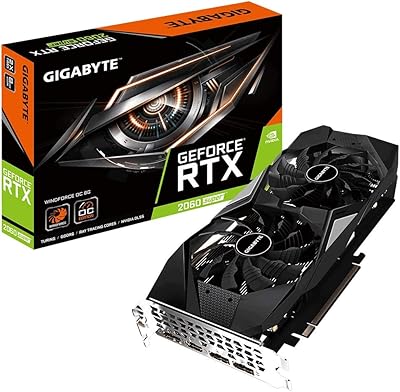
GIGABYTE RTX 2060 OC 6GB Graphics Card
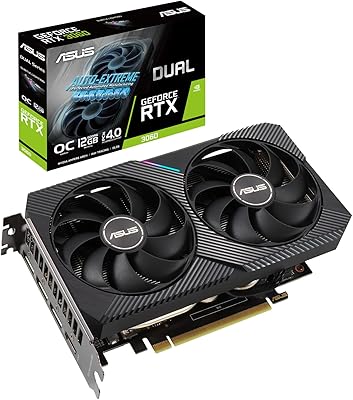
ASUS Dual RTX 3060 12GB Graphics Card
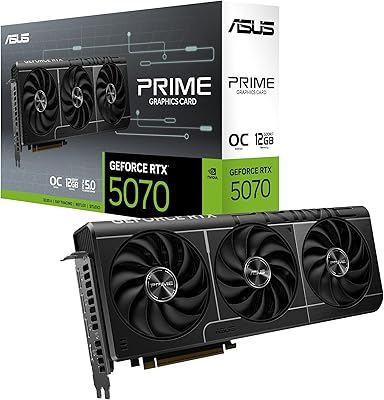
ASUS Prime GeForce RTX 5070 OC 12GB
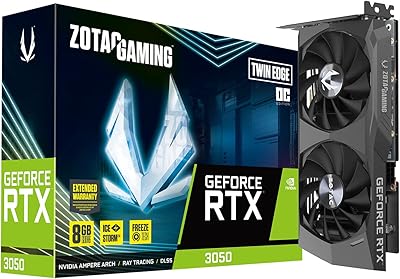
ZOTAC RTX 3050 Twin Edge OC GPU