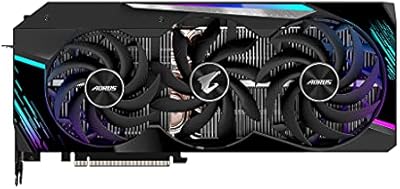
ASUS Dual RTX 3060 12GB Graphics Card
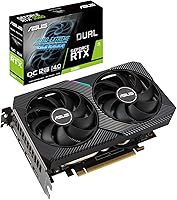
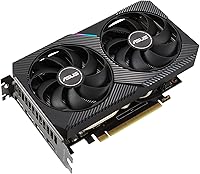
Overview
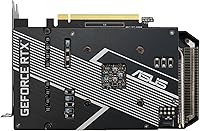
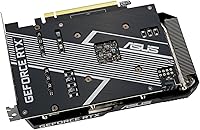
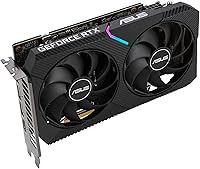
The ASUS Dual RTX 3060 12GB Graphics Card is a solid mid-range Ampere GPU built for gamers who want real performance without spending flagship money. ASUS's Dual series has earned a reputation for dependable cooling and straightforward build quality — nothing flashy, just hardware that works. In a crowded GPU market, the RTX 3060 sits comfortably between entry-level cards and the pricier RTX 3060 Ti, offering a genuinely competitive value proposition. What separates this mid-range GPU from similarly priced competition is its 12GB of GDDR6 VRAM — most rivals at this tier ship with 8GB, which is starting to feel limiting in modern titles. Just be clear-eyed going in: this is a 1080p and 1440p card, not a 4K solution.
Features & Benefits
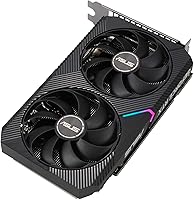
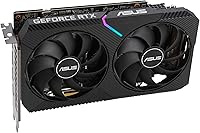
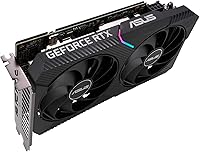
That 12GB GDDR6 VRAM buffer is arguably the RTX 3060 Dual's defining feature — in texture-heavy open-world games, you simply don't hit the memory ceiling that chokes competing 8GB cards. ASUS ships the card with a factory overclock pushing the boost clock to 1867MHz in OC Mode, though the difference versus Gaming Mode is modest and stability holds up well. The dual Axial-tech fans are genuinely impressive: they stop spinning entirely under idle or light desktop load, so your PC runs near-silent until cooling capacity is actually needed. Ray tracing and DLSS 2.0 support mean you can enable visual effects that would otherwise tank frame rates and let the upscaling recover the performance hit intelligently.
Best For
This mid-range GPU makes the most sense for gamers running 1080p or 1440p displays who want high settings in modern AAA titles without constant compromise. The generous VRAM also makes it a reasonable pick for content creators doing video editing or light 3D work — tasks where running out of memory mid-project is more disruptive than a slower render time. First-time builders will appreciate that ASUS's driver support and documentation are consistently reliable, reducing friction when getting a new system running. The card's compact dual-slot footprint — just under 8 inches long — fits comfortably in most mid-tower cases and even some smaller builds. If you want ray-traced visuals without a four-figure GPU bill, this ASUS Dual card is worth a serious look.
User Feedback
With close to 3,000 ratings averaging 4.6 stars, buyer sentiment around the RTX 3060 Dual is consistently strong. The most frequently praised qualities are quiet operation and cool running temperatures — multiple owners specifically note they can barely hear the card during demanding gaming sessions. Installation gets high marks too, with many first-time builders calling it the easiest part of their entire build. On the critical side, some buyers flag the LHR limiter, though for pure gaming that restriction is entirely irrelevant. A handful of reviewers mention confirming their PSU has a spare 8-pin connector beforehand, which is a fair practical heads-up. Long-term reliability reports are largely encouraging, with few complaints about driver issues or hardware failures even in older verified purchases.
Pros
- 12GB of GDDR6 VRAM gives this mid-range GPU more memory headroom than almost any direct competitor at this price point.
- Fans stop completely during idle and light desktop use, keeping your workspace genuinely quiet between gaming sessions.
- DLSS 2.0 support lets you push higher resolutions without sacrificing smooth, playable frame rates.
- The compact 7.87-inch length fits comfortably in mid-tower and many smaller form factor cases.
- ASUS's build quality and long-term reliability hold up well, with few hardware failure reports even from multi-year owners.
- Ray tracing works as a usable feature at 1080p in supported titles, not just a spec-sheet checkbox.
- PCIe 4.0 compatibility keeps this card forward-compatible with newer motherboard platforms.
- Thermal performance under sustained gaming load stays in a safe and comfortable range without aggressive fan ramp-up.
- NVIDIA's driver ecosystem is mature and consistently updated, reducing the risk of game compatibility headaches.
- The RTX 3060 Dual's factory OC mode provides a modest but stable performance boost out of the box.
Cons
- The 192-bit memory bus limits bandwidth, which creates a ceiling in scenarios where raw memory throughput matters most.
- The RTX 3060 Ti outperforms this card by a meaningful margin and deserves a direct price comparison before buying.
- DLSS 2.0 lacks the frame generation capability introduced in the newer RTX 40 series, making upscaling less competitive over time.
- Ray tracing at 1440p in demanding titles requires significant quality trade-offs to stay at playable frame rates.
- PSU compatibility should be verified upfront — older or budget power supplies may not have a spare 8-pin connector available.
- The LHR limiter makes this card a poor choice for any workload where full GPU hash rate matters.
- RGB lighting is minimal — a single Aura Sync strip rather than the multi-zone setups found on premium alternatives.
- Power efficiency lags noticeably behind RTX 40 series options for buyers where electricity costs or heat output are primary concerns.
- A small number of long-term owners have reported fan bearing noise developing after extended heavy use.
- 4K gaming is effectively off the table — even with upscaling, the experience in demanding titles falls short of what most users would accept.
Ratings
The ASUS Dual RTX 3060 12GB Graphics Card has been put through its paces by thousands of verified buyers worldwide, and our AI-driven analysis has carefully filtered out spam, bot activity, and incentivized submissions to surface what real users actually experience. The scores below reflect a balanced picture — where this mid-range GPU genuinely shines and where it shows limitations — giving you an honest foundation to make a confident purchasing decision.
Gaming Performance
VRAM Capacity
Thermal Management
Noise Level
Ray Tracing Capability
Build Quality & Construction
Installation & Compatibility
DLSS & Upscaling Quality
Value for Money
Driver Stability
Content Creation Suitability
RGB & Aesthetics
Power Efficiency
Long-Term Reliability
Suitable for:
The ASUS Dual RTX 3060 12GB Graphics Card is a strong fit for gamers who play at 1080p or 1440p and want high settings in modern AAA titles without building around a flagship-tier budget. First-time PC builders will find the installation process straightforward, the driver ecosystem mature, and the ASUS brand reassuring when something inevitably needs troubleshooting. The 12GB VRAM buffer makes this card a practical choice for video editors and lightweight 3D artists who need GPU memory headroom more than raw compute speed — running a DaVinci Resolve timeline without memory warnings is genuinely useful in a day-to-day workflow. Its compact dual-slot footprint also makes it one of the more versatile options for builders working with smaller cases who still want RTX-generation ray tracing and DLSS support. Anyone upgrading from a GTX 10 or 16 series card will notice an immediate and meaningful improvement across nearly every dimension of the experience.
Not suitable for:
The ASUS Dual RTX 3060 12GB Graphics Card is not the right choice for anyone with a 4K monitor as their primary gaming display — the card simply lacks the compute headroom to drive demanding titles at that resolution with acceptable frame rates, even with DLSS engaged. Buyers who are eyeing the RTX 3060 Ti and can stretch their budget should think carefully, because the Ti offers a tangible performance uplift that becomes more noticeable the longer you plan to keep the card. If your PC case has tight clearance or your power supply is older and connector-limited, it is worth checking compatibility before purchasing, as a few buyers have been caught off guard by the single 8-pin power requirement. Competitive players who prioritize absolute maximum frame rates in esports titles over everything else may find better raw throughput at this price tier from alternative configurations. Finally, users hoping to leverage cryptocurrency mining should be aware that this card ships with NVIDIA's LHR restriction, which caps mining efficiency significantly.
Specifications
- GPU Architecture: Built on NVIDIA's Ampere architecture using the GA106 chip, which underpins the RTX 3060 class of graphics cards.
- CUDA Cores: Equipped with 3,584 CUDA cores responsible for handling the parallel compute workloads that drive gaming and creative tasks.
- VRAM: Ships with 12GB of GDDR6 video memory — notably more than most competing cards at this performance tier.
- Memory Interface: Operates over a 192-bit memory bus, which defines the maximum data throughput available between the GPU and its VRAM.
- Memory Bandwidth: Delivers up to 15 Gbps memory speed, providing adequate throughput for 1080p and 1440p workloads in current-generation titles.
- Boost Clock: Reaches 1,867 MHz in OC Mode and 1,837 MHz in Gaming Mode, both representing factory-tuned boosts above NVIDIA's reference spec.
- Bus Standard: Uses a PCI Express 4.0 x16 interface, which is backward compatible with PCIe 3.0 motherboards without any performance penalty at this card's throughput level.
- Display Outputs: Provides HDMI and DisplayPort outputs, supporting multi-monitor configurations and high-refresh-rate displays up to 7680 x 4320 resolution.
- Card Dimensions: Measures 7.87 inches in length and occupies a dual-slot footprint, making it compatible with most mid-tower and select compact cases.
- Card Weight: Weighs 11.3 ounces, a moderate weight that is manageable in most standard builds without requiring additional GPU support brackets.
- Power Connector: Requires a single 8-pin PCIe power connector from the system's power supply unit.
- Ray Tracing: Supports hardware-accelerated ray tracing via dedicated RT cores built into the Ampere architecture.
- DLSS Support: Compatible with NVIDIA DLSS 2.0, which uses AI-based upscaling to recover frame rates at higher resolutions with minimal visible image quality loss.
- Cooling System: Uses ASUS's dual Axial-tech fan design with a 0dB idle mode that stops the fans entirely when the GPU temperature is below the thermal threshold.
- RGB Lighting: Features an Aura Sync compatible RGB strip that can be synchronized with other ASUS Aura ecosystem components via ASUS's Armoury Crate software.
- LHR Status: Ships with NVIDIA's Lite Hash Rate (LHR) limiter enabled, which restricts Ethereum mining efficiency but has no impact on gaming or creative workloads.
- OpenGL Version: Supports OpenGL 4.6, the current standard required for compatibility with a wide range of modern games and professional visualization applications.
- API Support: Fully compatible with DirectX 12 Ultimate, Vulkan, and OpenCL, covering the full range of modern rendering and compute APIs used in games and software.
Related Reviews
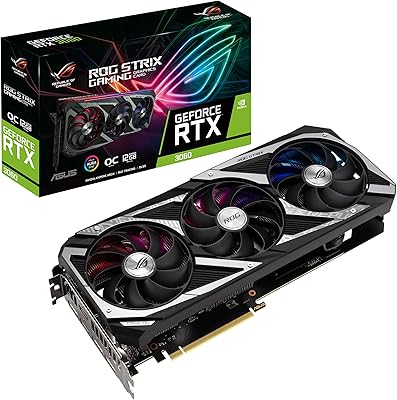
ASUS ROG Strix NVIDIA GeForce RTX 3060 V2 OC Edition 12GB Graphics Card
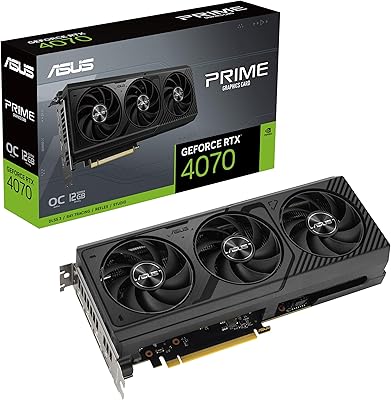
ASUS PRIME GeForce RTX 4070 OC Edition 12GB Graphics Card
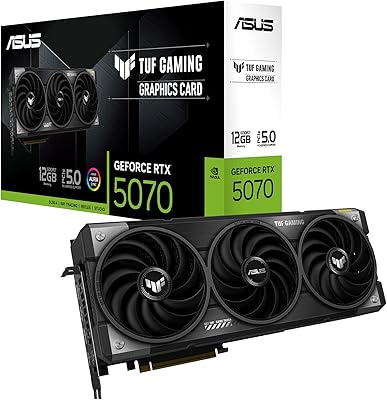
ASUS TUF Gaming RTX 5070 12GB GPU
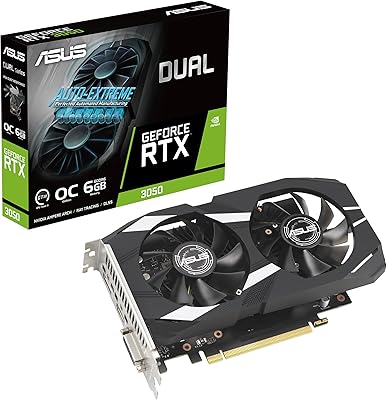
ASUS Dual GeForce RTX 3050 6GB OC
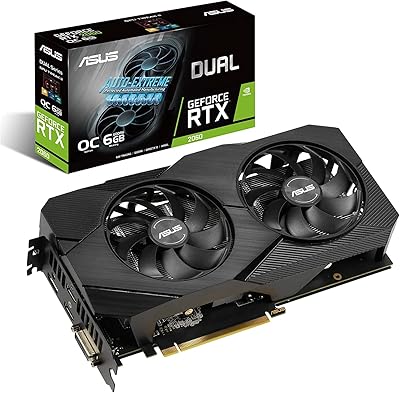
ASUS RTX 2060 Dual EVO 6GB Graphics Card
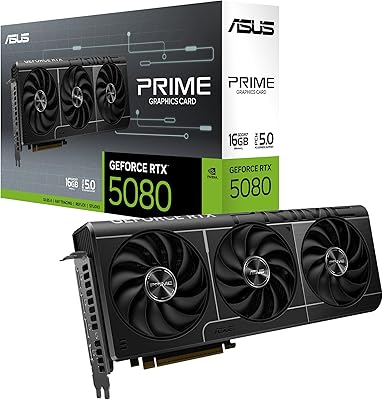
ASUS Prime RTX 5080 16GB Graphics Card
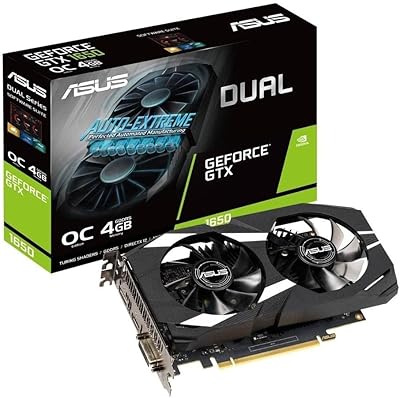
ASUS GeForce GTX 1650 Dual-Fan 4GB Graphics Card
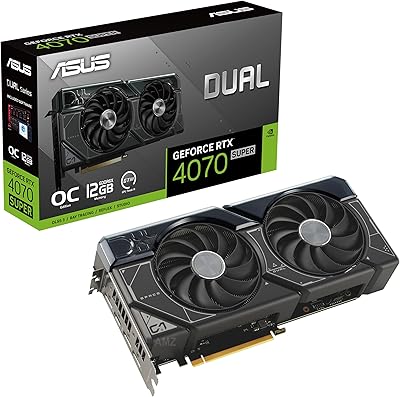
ASUS Dual RTX 4070 Super OC Graphics Card
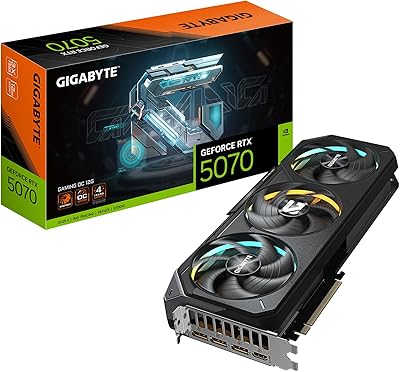
GIGABYTE RTX 5070 Gaming OC 12GB GPU