
Overview
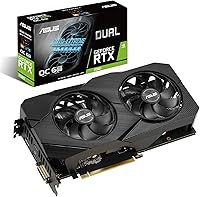
The ASUS RTX 2060 Dual EVO 6GB Graphics Card entered the mid-range market as a capable 1080p performer with a genuine push into 1440p territory, and it still holds up reasonably well for the right buyer. Built on NVIDIA's Turing architecture, it separates itself from base reference models through a factory overclock and a more polished cooling solution. Ray tracing and DLSS were headline features at launch — honest caveat: ray tracing at this performance tier is a bonus, not a strong suit. The dual-slot footprint fits most mid-tower builds without demanding exotic power configurations. Just go in with realistic expectations about where a card of this generation stands against today's newer budget options.
Features & Benefits
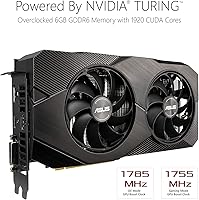
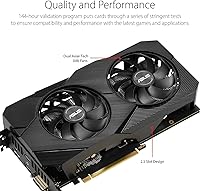
The semi-passive cooling is one of the first things you actually notice in daily use — fans stop entirely at idle and light loads, keeping things whisper-quiet until thermals genuinely demand airflow. The IP5X dust resistance on the Wing-Blade fans is a practical long-term benefit in real-world dusty environments. The boost clock runs at 1785 MHz straight out of the box, a meaningful step above reference RTX 2060 speeds. The 6GB GDDR6 VRAM handles 1080p gaming comfortably across most titles, though texture-heavy games and high-res mod packs can push against that ceiling. An aluminum backplate protects the PCB from flex during installation and adds a solid, finished feel to the card.
Best For
This mid-range graphics card hits its stride with 1080p gaming — high to ultra settings in mainstream titles, esports games, or mid-high settings in demanding open-world releases. VR users on a tighter build budget will find it comfortable with major headsets without overspending. The compact dual-slot footprint drops cleanly into most mid-tower cases with no clearance headaches. Coming from a GTX 900 or 1000 series card, the generational jump is substantial and worth it. Streamers and light video editors benefit from NVENC hardware encoding, which offloads encoding work from the CPU without requiring a dedicated workstation-class GPU.
User Feedback
Across more than 1,600 ratings, the RTX 2060 Dual EVO earns consistently positive marks — and what stands out is the stability of that feedback across varied use cases, not just the headline score. Buyers frequently highlight quiet operation and reliable thermal performance during extended gaming sessions. Long-term owners report that fan durability holds up well and temperatures remain predictable over time. The recurring criticism centers on the 6GB VRAM ceiling, which surfaces in newer AAA titles and high-resolution texture mods more noticeably now than at launch. A smaller number of users mention driver-related quirks, though those tend to reflect broader NVIDIA ecosystem behavior rather than a flaw specific to this card.
Pros
- Handles 1080p gaming at high to ultra settings in the majority of mainstream titles without breaking a sweat.
- The semi-passive fan mode makes this card genuinely silent during desktop use and light gaming sessions.
- Factory overclock delivers a real-world performance boost over reference RTX 2060 cards right out of the box.
- Long-term owners consistently report stable thermals and no fan degradation even after years of regular use.
- The aluminum backplate prevents PCB flex and gives the card a build quality that feels above its price tier.
- NVENC hardware encoding is a practical win for streamers who want clean output without taxing the CPU.
- VR-ready certification holds up in real use — mainstream headsets run comfortably without performance walls in typical VR titles.
- IP5X dust-resistant fans are a genuine long-term reliability advantage in dusty or pet-hair-prone environments.
- Supports up to four simultaneous displays, covering nearly every multi-monitor productivity or gaming layout.
- The RTX 2060 Dual EVO is a well-documented, stable platform with a large community of users and driver support history to draw from.
Cons
- The 6GB VRAM ceiling causes stuttering and texture issues in newer AAA titles, and the problem worsens over time.
- Ray tracing support is technically present but practically underwhelming — enabling it in demanding games tanks frame rates noticeably.
- At current new retail pricing, newer-generation budget GPUs offer more VRAM and better performance for similar or less money.
- A minority of users experience occasional driver-related crashes or black screen events tied to specific NVIDIA driver updates.
- 1440p gaming requires consistent settings compromises and becomes more frustrating as newer titles raise their GPU demands.
- The card's weight can cause GPU sag in builds that lack a support bracket, which adds a hidden cost for some buyers.
- DLSS only helps in a limited number of specifically supported titles, leaving raw rasterization as the fallback in most of the library.
- High-fidelity VR applications and GPU-intensive VR simulators push this card to its limits faster than casual users might expect.
- GPU Tweak II and the bundled software suite feel dated compared to more modern GPU companion applications.
- Buying this card new today means starting with hardware that is already behind the current GPU generation curve from day one.
Ratings
The ASUS RTX 2060 Dual EVO 6GB Graphics Card has been scored across 12 critical categories by our AI system after analyzing thousands of verified global buyer reviews, with spam, bot submissions, and incentivized feedback actively filtered out. Scores reflect real ownership patterns — not marketing claims — so both the genuine strengths and the frustrations that surface after months of use are represented here. Whether you are weighing it as a budget 1080p build centerpiece or a used-market upgrade, these ratings give you an honest picture of what living with this card actually looks like.
Gaming Performance at 1080p
Thermal Management
Noise Level
VRAM Adequacy
Build Quality
Ray Tracing Capability
DLSS Support
Driver Stability
1440p Gaming Performance
VR Readiness
Streaming and Content Creation
Multi-Monitor Support
Value for Money
Suitable for:
The ASUS RTX 2060 Dual EVO 6GB Graphics Card is a strong match for PC gamers who play at 1080p and want high or ultra settings in mainstream titles without paying a premium for the latest generation hardware. Buyers upgrading from a GTX 970, 1060, or similar Pascal-era card will notice a meaningful performance jump that genuinely refreshes the gaming experience. VR enthusiasts on a tighter build budget will find this card handles popular headsets comfortably without demanding a high-end system around it. Streamers and light content creators benefit from NVENC hardware encoding, which keeps CPU overhead low during live broadcasts and 1080p video exports. The compact dual-slot design drops into most mid-tower and smaller cases without clearance issues, making it a practical choice for space-conscious builds. If you are shopping the used GPU market and find this card at a fair price, it remains one of the more reliable and well-built options available in the Turing generation.
Not suitable for:
The ASUS RTX 2060 Dual EVO 6GB Graphics Card is not the right call for buyers who primarily want to game at 1440p or higher with demanding, recently released titles — the combination of raw performance and a 6GB VRAM ceiling will require consistent settings compromises that grow more frequent as time goes on. If ray tracing is a key part of your buying decision, this card will disappoint; RT performance is technically present but practically limited, and enabling it in demanding games requires enough settings reductions to undermine the visual payoff. Buyers building a system they expect to keep current for the next three to four years without a GPU upgrade should look at a newer-generation card that ships with more VRAM headroom from the start. Serious content creators working with 4K timelines, complex compositing, or GPU-accelerated rendering will find the compute resources and memory insufficient for productive workflows. Anyone targeting competitive high-refresh-rate 1440p esports should also look elsewhere, as newer budget-tier cards offer better performance-per-dollar at that resolution today.
Specifications
- GPU Chip: Powered by the NVIDIA GeForce RTX 2060 processor built on the Turing architecture, which introduced hardware-accelerated ray tracing and DLSS to the mid-range market.
- VRAM: Equipped with 6GB of GDDR6 video memory, providing fast bandwidth suitable for 1080p gaming and light content creation workloads.
- Boost Clock: Factory-overclocked boost clock runs at 1785 MHz, a step above the reference RTX 2060 specification straight from the box.
- CUDA Cores: Contains 1920 CUDA cores, which handle the parallel processing workloads involved in rendering, compute tasks, and AI-accelerated features like DLSS.
- Cooling System: Uses dual Wing-Blade fans rated to IP5X dust resistance, with a semi-passive mode that stops the fans entirely when GPU temperature stays below 55°C.
- Backplate: Fitted with a protective aluminum backplate that reinforces the PCB against flex and physical stress during installation and transport.
- Display Outputs: Provides three video outputs: one HDMI 2.0 port, one DisplayPort 1.4 port, and one DVI port, supporting up to four monitors simultaneously.
- Max Resolution: Supports a maximum digital output resolution of 7680x4320 (8K), though practical gaming performance is best suited to 1080p and light 1440p use.
- Card Dimensions: Measures 9.53 x 5.12 x 2.09 inches, occupying a dual-slot footprint that fits standard mid-tower and most compact ATX cases.
- VR Support: Certified VR Ready, meeting the hardware requirements for mainstream PC VR headsets including Oculus and Valve Index platforms.
- Memory Speed: GDDR6 memory operates at an effective speed of 1785 MHz, contributing to the card's strong memory bandwidth relative to GDDR5-based predecessors.
- API Support: Supports DirectX 12 Ultimate, OpenGL 4.6, and Vulkan, ensuring broad compatibility with modern game engines and rendering pipelines.
- Power Connector: Requires a single 8-pin PCIe power connector, with a recommended system power supply of at least 550W for stable operation.
- PCIe Interface: Connects via a PCIe 3.0 x16 slot, compatible with PCIe 4.0 motherboards through backward compatibility without performance penalty.
- Software Bundle: Includes GPU Tweak II for real-time monitoring and overclocking, alongside Game Booster, XSplit Gamecaster, WTFast, and QuantumCloud utilities.
- Manufacturer: Designed and produced by ASUS, under the Dual series product line with model designation DUAL-RTX2060-O6G-EVO.
- Ray Tracing: Supports real-time ray tracing via dedicated RT cores, though performance headroom limits practical RT use to less demanding titles or lower RT quality presets.
- DLSS Support: Compatible with NVIDIA DLSS (Deep Learning Super Sampling), using Tensor cores to upscale lower-resolution frames in supported game titles.
Related Reviews
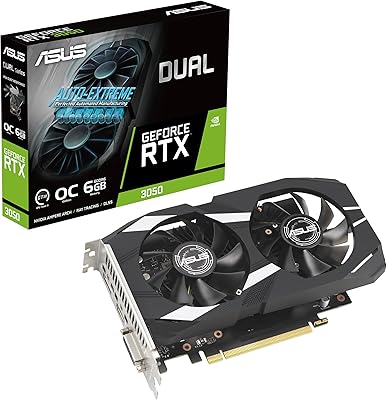
ASUS Dual GeForce RTX 3050 6GB OC
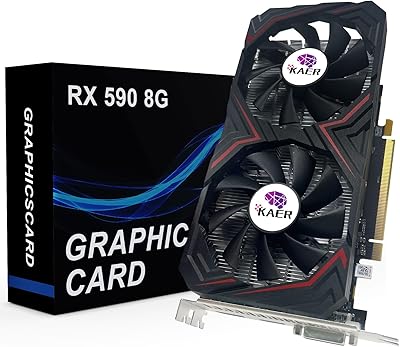
KAER RX590 8GB Graphics Card
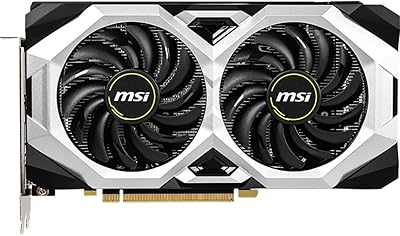
MSI GeForce RTX 2060 VENTUS 6G OC Graphics Card
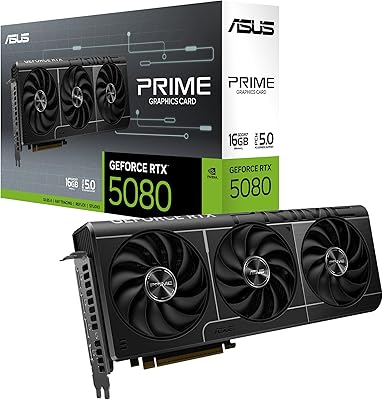
ASUS Prime RTX 5080 16GB Graphics Card
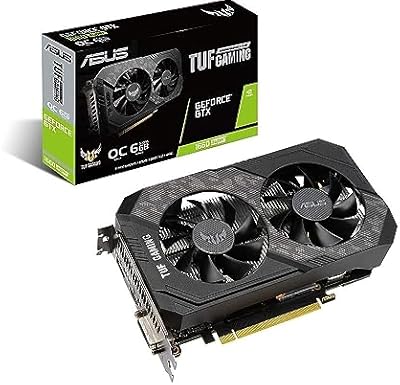
ASUS TUF GTX 1660 Super 6GB GPU
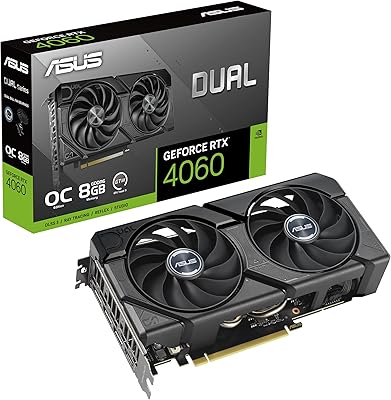
ASUS Dual RTX 4060 EVO 8GB GPU
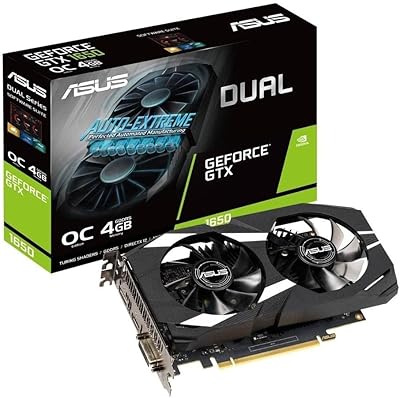
ASUS GeForce GTX 1650 Dual-Fan 4GB Graphics Card
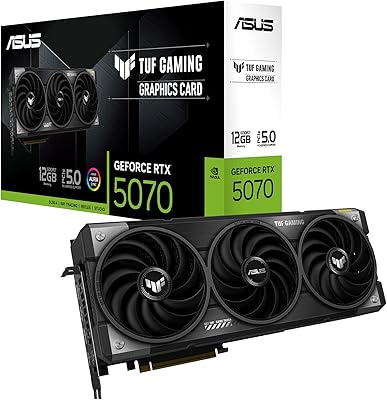
ASUS TUF Gaming RTX 5070 12GB GPU
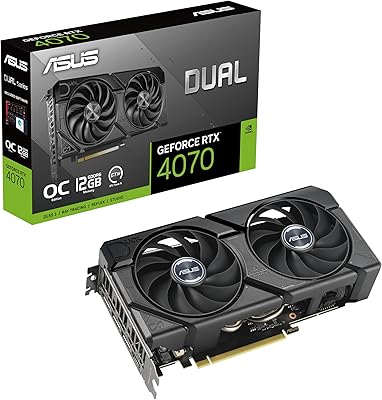
ASUS Dual RTX 4070 EVO Graphics Card