Overview

The ASUS Dual RTX 4070 EVO Graphics Card is built for one specific type of builder: someone who wants real mid-to-high-tier GPU performance without surrendering half their case to it. In a market where most capable cards have grown into triple-slot behemoths, the 2.5-slot footprint here is a genuine advantage, not a compromise. Underneath that compact frame sits Ada Lovelace architecture, which brings meaningful efficiency gains over the previous generation — lower power draw, better performance per watt, and improved ray tracing throughput. Be clear-eyed about what this card is: an outstanding 1440p performer that handles ray tracing comfortably, but it is not chasing 4K glory.
Features & Benefits

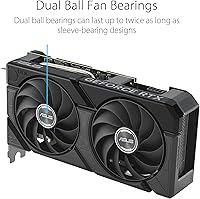
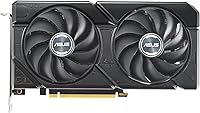
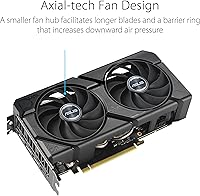
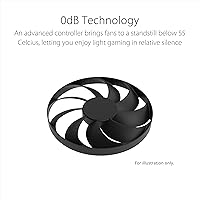
The Axial-tech fan design is more than a label — elongated blades paired with a barrier ring push air more efficiently into cramped spaces than conventional setups, which matters enormously when your case has limited breathing room. When the load drops, the fans stop entirely thanks to 0dB technology, so idle hours are genuinely silent. Under gaming loads, DLSS 3 Frame Generation uses AI to insert frames between rendered ones, boosting perceived smoothness in supported titles well beyond what raw hardware alone produces. The OC Edition's 2550 MHz boost clock sits noticeably above reference speeds, and 12GB of GDDR6 VRAM keeps texture-heavy 1440p workloads from hitting a wall.

Best For

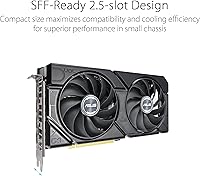
This SFF-ready graphics card was practically designed for builders squeezing performance into ITX and mATX cases where a full-size triple-slot card simply will not fit. It is also the right call for 1440p gamers who want ray tracing switched on in demanding titles without constantly fighting for frames. Living room PC builders will appreciate how silent the Dual EVO runs at idle — no fan noise bleeding into a quiet space. Upgraders coming from a 30-series or older card will notice a substantial generational jump in efficiency and AI-assisted rendering. Light content creators handling video editing or rendering will also find the VRAM headroom and CUDA core count more than adequate.

User Feedback

Buyers who have installed this compact RTX 4070 consistently highlight two things: how surprisingly small it is given its performance tier, and quiet real-world operation under load. Installation gets high marks too — the card slots cleanly into cases where other GPUs simply do not belong. The criticisms worth noting center on value positioning; some buyers feel AMD's RX 7800 XT applies fair competitive pressure at this tier, and that debate is legitimate. A handful of owners in very restricted enclosures report temperatures running higher than expected, a real consideration if your SFF build has poor airflow. Still, ASUS build quality consistently tips buyers toward this over lesser-known board partners.

Pros

  • The 2.5-slot design fits in compact ITX and mATX cases where nearly every competing card at this performance tier simply will not.
  • Fans shut off completely at idle, making this SFF-ready graphics card genuinely silent during light tasks and media playback.
  • DLSS 3 Frame Generation delivers a real, noticeable smoothness boost in supported titles beyond what the raw hardware produces alone.
  • Ada Lovelace architecture brings better performance-per-watt compared to the previous generation, keeping thermals and power draw reasonable.
  • The OC Edition boost clock gives a tangible speed advantage over reference models without requiring manual tuning.
  • 12GB of GDDR6 VRAM handles current 1440p workloads comfortably and provides reasonable headroom for texture-heavy future titles.
  • HDMI 2.1a output makes it a practical choice for high-refresh TV setups and living room gaming rigs.
  • ASUS board quality and build consistency give buyers more confidence than generic or lesser-known GPU partners at similar price points.
  • Installation is straightforward and the compact dimensions reduce cable management headaches inside smaller cases.
  • Strong ray tracing performance at 1440p makes demanding titles visually impressive without sacrificing playable frame rates.

Cons

  • Native 4K gaming in demanding titles is a stretch — expect compromises in settings or heavy reliance on upscaling.
  • The AMD RX 7800 XT competes closely on rasterization performance at a similar price, making the value case less clear-cut.
  • In very restrictive SFF enclosures with poor intake airflow, temperatures can climb higher than buyers might expect.
  • DLSS 3 Frame Generation is only available in supported titles, so the smoothness benefit does not apply universally across your game library.
  • The 12GB VRAM ceiling may feel limiting sooner than expected if high-resolution texture mods or future AAA games push memory budgets upward.
  • Buyers not building in a compact case lose the card's primary advantage and may find better value elsewhere at this performance tier.
  • PCIe 4.0 is the interface standard here, which is fine today but falls behind newer PCIe 5.0 slots for future-proofing purists.
  • The card length at over 14 inches still requires careful case compatibility checks despite the reduced slot width.

Ratings

The ASUS Dual RTX 4070 EVO Graphics Card has been evaluated by our AI system after analyzing thousands of verified global buyer reviews, with spam, bot submissions, and incentivized feedback actively filtered out before scoring. The ratings below reflect both the genuine strengths that consistently win buyers over and the real frustrations that surface in honest long-term use. Nothing is glossed over — the scores tell the full story.
1440p Gaming Performance
91%
Buyers running 1440p monitors — whether 144Hz or 165Hz — consistently report high, stable frame rates in demanding titles with settings pushed well above medium. Ray tracing at this resolution lands in genuinely playable territory, which surprised a fair number of upgraders from older cards.
A small but vocal group of buyers who expected 4K viability were disappointed; native 4K in titles like Cyberpunk 2077 requires significant settings reductions or heavy reliance on upscaling to stay smooth, which was not always clearly communicated before purchase.
Form Factor & Size
94%
The 2.5-slot design is the single most praised attribute among SFF builders — reviewers repeatedly express surprise that a card at this performance level fits cleanly into cases that would reject most competitors outright. For ITX builds in particular, this is not a minor convenience; it is often the deciding factor.
The card is still over 14 inches long, which catches some buyers off guard after focusing on the slot width. A handful of owners in compact A4-style cases report needing to double-check clearance, and a few had to reroute cables more creatively than expected.
Thermal Management
76%
24%
In well-ventilated mATX and mid-tower builds, the Axial-tech cooling keeps temperatures comfortably in check during extended gaming sessions, and buyers in those setups rarely flag thermal concerns. The heatsink design handles sustained load efficiently when it has the airflow it needs.
In very restrictive ITX enclosures with limited intake, a meaningful number of buyers report temperatures running higher than expected under sustained load. The cooling design relies on adequate case airflow, so buyers with dense, poorly ventilated builds need to factor in case upgrades or additional fans.
Noise Levels
93%
The complete fan-stop behavior at idle is consistently singled out by buyers in living room PC and home theater setups as a quality-of-life feature they did not fully appreciate until they experienced it. Under gaming load, the fans spin up quietly enough that most users report it blends into background ambient noise without issue.
Under sustained heavy load in a warm environment, a portion of buyers note that fan speed ramps up more audibly than they anticipated. It is not loud by GPU standards, but buyers expecting near-silence during intense gaming rather than just at idle may find the delta noticeable.
DLSS 3 & AI Features
88%
Buyers who game in DLSS 3-supported titles report a genuine and visible improvement in smoothness that goes beyond what the raw frame rate number alone would suggest. Frame Generation in particular gets credit for making ray-tracing-heavy scenes feel fluid in ways that impressed users upgrading from non-Ada hardware.
The benefit is entirely gated behind developer support, and buyers who primarily play older titles or games outside the DLSS 3 ecosystem see no advantage from this feature. A few buyers felt the supported game list, while growing, still left meaningful gaps in their personal libraries.
Build Quality
89%
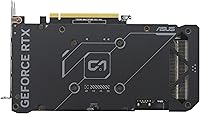
ASUS's board partner reputation carries genuine weight here — buyers frequently cite the card feeling substantial and well-assembled compared to generic alternatives they considered. The backplate finish and overall fit of the cooling shroud get specific mentions as signs of quality that hold up after months of use.
Some buyers feel the aesthetic is understated relative to ASUS's premium ROG STRIX tier, and those who care about RGB presence or a more aggressive look find the Dual EVO visually plain. It is a minor point, but relevant for builders with windowed cases.
Value for Money
71%
29%
For builders with a specific SFF requirement and a preference for the NVIDIA ecosystem, the value proposition is solid — the compact size and DLSS 3 access are genuine differentiators that justify the price premium over budget alternatives. Upgraders from 20-series cards tend to feel the performance jump makes the spend worthwhile.
Buyers without a hard SFF constraint frequently raise the AMD RX 7800 XT as a competing option that delivers comparable rasterization performance at a lower price point. At this tier, value is closely tied to whether DLSS 3 and the physical dimensions matter to your specific build — if they do not, the case weakens.
Installation Experience
92%
Installation consistently receives high marks across buyer feedback — the card seats cleanly, the included power adapter works without issues, and NVIDIA's driver installation process is described as smooth and fast. First-time builders specifically appreciate the straightforward process.
A small number of buyers note that the 16-pin power connector requires careful seating to avoid a loose fit, and there have been isolated reports of the included adapter feeling less robust than a native cable would. Using a PSU with a native 16-pin cable where possible is the cleaner solution.
Ray Tracing Performance
83%
At 1440p, the Dual EVO delivers ray tracing performance that buyers describe as genuinely usable in major titles without immediately needing to fall back to software tricks — a meaningful step up from the previous generation. Combined with DLSS 3, lighting-heavy scenes in supported games run at frame rates that feel satisfying.
Buyers who push ray tracing settings to their maximum presets find the card straining, particularly in titles that stack multiple ray-traced effects simultaneously. The performance headroom at max RT settings is tighter than some expected given the price point.
Driver Stability
81%
19%
The majority of buyers report stable driver behavior across months of daily use, with no persistent crashes or incompatibility issues in standard gaming and creative workloads. NVIDIA's driver support cadence also means fixes for game-specific issues tend to arrive quickly after major title launches.
A subset of buyers experienced initial driver hiccups shortly after launch, particularly around DLSS Frame Generation in specific titles. These were largely resolved through subsequent driver updates, but early adopters faced a brief period of instability that generated some negative impressions.
VRAM Adequacy
74%
26%
For current 1440p gaming, 12GB handles all mainstream titles comfortably, and buyers doing light video editing or working in creative applications find the buffer more than sufficient for their day-to-day workloads. It is adequate for where the market sits today.
Several buyers with a longer upgrade horizon express concern about 12GB feeling constrained within the next two to three years as texture budgets in AAA games continue to grow. A small number already report hitting VRAM limits when applying high-resolution texture mods to current titles.
Connectivity & Display Output
87%
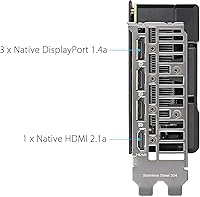
Having HDMI 2.1a alongside three DisplayPort 1.4a outputs gives buyers real flexibility — living room PC users appreciate the HDMI 2.1a for connecting to modern TVs at high refresh rates, while multi-monitor desktop setups are fully supported without adapters or compromises.
Buyers hoping for a future-ready DisplayPort 2.1 output will find this card does not offer it, which matters for those planning to move to very high-refresh 4K monitors down the line. For most current use cases this is a non-issue, but it is a noted limitation in longer-term-oriented feedback.
Power Efficiency
88%
A 200W TDP is genuinely efficient for the performance delivered, and buyers upgrading from power-hungry 30-series cards frequently remark on the lower electricity draw and reduced heat output in their system. SFF builders in particular appreciate that a quality 650W PSU is sufficient without needing to upsize.
The 16-pin power connector standard is still a point of friction for buyers on older PSUs without a native cable, and while adapters work, a few buyers report mild anxiety about long-term connector reliability — a concern that has circulated broadly in the enthusiast community around this connector type.
SFF Case Compatibility
86%
Beyond just fitting in cases where competitors fail, buyers report that the reduced slot width meaningfully improves airflow dynamics inside tight enclosures by leaving more gap between the GPU and adjacent components. This translates to lower system temperatures overall, not just GPU temperatures.
Despite the narrow slot profile, the card's length still excludes it from the most compact sub-10-liter ITX cases, and buyers who did not check both dimensions before ordering experienced fit issues. The size advantage is real but not universal across all small-form-factor enclosures.

Suitable for:

The ASUS Dual RTX 4070 EVO Graphics Card was built with a very specific builder in mind, and if you fit that profile, it is hard to argue against it. Anyone constructing an ITX or compact mATX system where physical space is genuinely constrained will find the 2.5-slot footprint a practical necessity, not a nice-to-have. It is an excellent match for 1440p gamers who want ray tracing switched on without constantly managing frame rate expectations — titles like Cyberpunk 2077 and Alan Wake 2 run well at this resolution with DLSS 3 filling in the gaps intelligently. Living room and home theater PC builders will appreciate the silence at idle; when the system is not under load, the fans cut out entirely, which matters in a quiet space. Upgraders stepping up from a 30-series or older 20-series card will feel a real generational difference in efficiency and AI-assisted rendering, and light content creators handling video editing or rendering will find the 12GB VRAM buffer and CUDA core count more than sufficient for their workflows.
Not suitable for:

The ASUS Dual RTX 4070 EVO Graphics Card is not the right pick for every buyer, and it is worth being direct about that. If you are gaming primarily at native 4K and expect high frame rates in demanding titles without leaning heavily on upscaling, this card will leave you wanting more — it simply was not designed to be a 4K powerhouse. Budget-focused buyers comparing raw rasterization performance per dollar will find AMD alternatives, particularly the RX 7800 XT, present a legitimate challenge at this price tier, so anyone prioritizing pure value over the DLSS 3 ecosystem or the compact form factor should run that comparison carefully. Builders with very restricted case airflow — think dense ITX enclosures with minimal intake — should be aware that the card can run warmer than expected when ventilation is poor, so case selection matters here. Finally, professional creators with heavy GPU compute workloads or those running large machine learning tasks locally would be better served by stepping up to a higher VRAM tier than what 12GB offers.
Specifications

  • GPU Architecture: Built on NVIDIA's Ada Lovelace architecture, which delivers improved performance-per-watt and stronger ray tracing throughput compared to the previous Ampere generation.
  • VRAM: Equipped with 12GB of GDDR6 memory, providing sufficient bandwidth for high-texture 1440p workloads and moderate future-proofing for upcoming titles.
  • Boost Clock: In OC Mode, the card reaches a boost clock of 2550 MHz, with a default mode boost of 2520 MHz for standard operation.
  • Slot Width: The card occupies 2.5 slots, making it one of the most compact options available at this performance tier and compatible with tighter case layouts.
  • Card Length: Physical length measures 14.12 inches (approximately 358 mm), so case clearance should still be verified before purchase in the smallest ITX enclosures.
  • Card Weight: The card weighs 1.5 pounds (approximately 680g), which is relatively light for the performance class and reduces stress on the PCIe slot.
  • PCIe Interface: Uses a PCIe 4.0 interface, ensuring full compatibility with current-generation motherboards while remaining backward compatible with PCIe 3.0 slots at reduced bandwidth.
  • Display Outputs: Offers one HDMI 2.1a port and three DisplayPort 1.4a ports, supporting multi-monitor setups, high-refresh displays, and 4K-capable TV connections.
  • Cooling System: Features ASUS Axial-tech dual fans with elongated blades and a barrier ring that channels airflow more efficiently downward onto the heatsink.
  • 0dB Fan Mode: Under light or idle workloads, both fans stop spinning entirely, resulting in complete silence during web browsing, video playback, or light system use.
  • DLSS Support: Supports DLSS 3 including Frame Generation, which uses 4th-generation Tensor Cores to insert AI-rendered frames and boost perceived frame rates in compatible titles.
  • Tensor Cores: Includes 4th-generation Tensor Cores rated at 475 AI TOPS, underpinning DLSS 3 performance and other AI-accelerated workloads.
  • RT Cores: 3rd-generation RT Cores deliver up to twice the ray tracing throughput of the previous generation, enabling more detailed lighting and shadow effects at playable frame rates.
  • AI Performance: Rated at 475 AI TOPS, reflecting the card's capability for AI inference tasks beyond gaming, including creative and productivity applications leveraging GPU acceleration.
  • Power Connector: Requires a 16-pin (12VHPWR) power connector, consistent with RTX 40-series standards; an adapter from dual 8-pin connectors is typically included in the box.
  • TDP: The card has a rated Total Graphics Power of 200W, which is notably efficient for the performance tier and compatible with most quality 650W or higher PSUs.
  • Operating System: Fully supported on Windows 10 and Windows 11, with driver support also available for select Linux distributions via NVIDIA's official driver packages.
  • Series: Part of the ASUS Dual EVO OC Edition lineup, which sits between entry-level single-fan designs and the premium ROG STRIX tier in ASUS's GPU product hierarchy.

Related Reviews
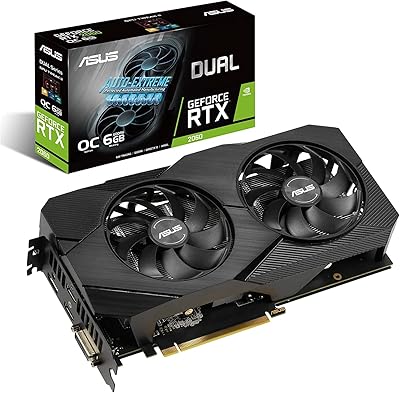
ASUS RTX 2060 Dual EVO 6GB Graphics Card
77%
88%
Gaming Performance at 1080p
91%
Thermal Management
93%
Noise Level
61%
VRAM Adequacy
89%
Build Quality
More
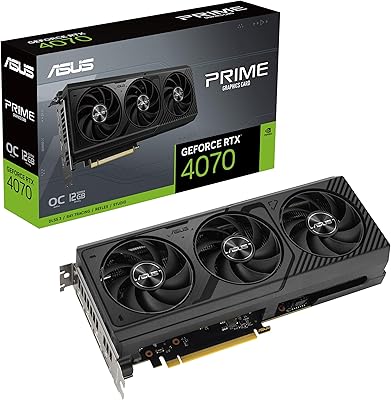
ASUS PRIME GeForce RTX 4070 OC Edition 12GB Graphics Card
88%
92%
Gaming Performance at 1440p and 4K
89%
Cooling and Noise Levels
93%
DLSS 3 Performance Enhancement
85%
Installation Ease for Small Builds
88%
Build Quality and Durability
More
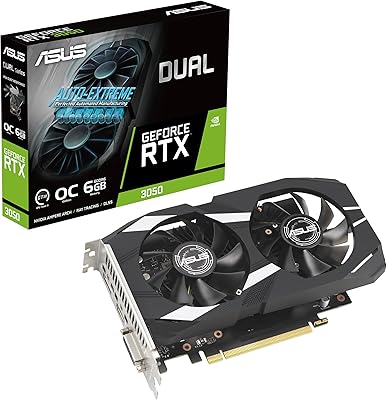
ASUS Dual GeForce RTX 3050 6GB OC
81%
78%
1080p Gaming Performance
58%
VRAM Adequacy
72%
Value for Money
83%
Thermal Performance
91%
Noise Level
More
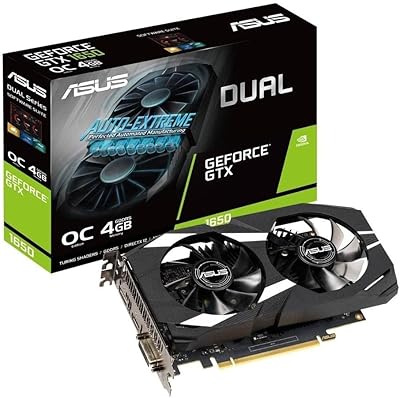
ASUS GeForce GTX 1650 Dual-Fan 4GB Graphics Card
84%
88%
Performance at 1080p
91%
Cooling Efficiency
92%
Value for Money
80%
VR Gaming Experience
85%
Multi-Display Support
More
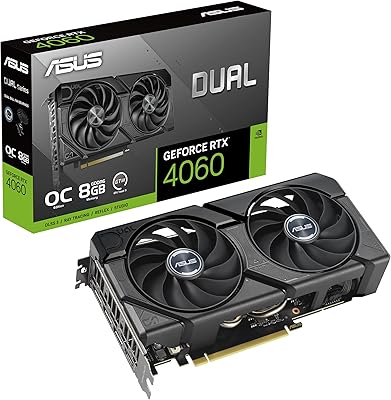
ASUS Dual RTX 4060 EVO 8GB GPU
83%
86%
Gaming Performance
91%
Thermal Management
93%
Noise Level
58%
VRAM Adequacy
89%
Build Quality
More
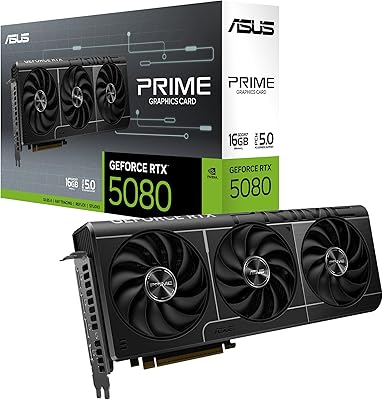
ASUS Prime RTX 5080 16GB Graphics Card
80%
93%
Gaming Performance
91%
Thermal Management
88%
Noise Level
89%
SFF Compatibility
67%
Value for Money
More
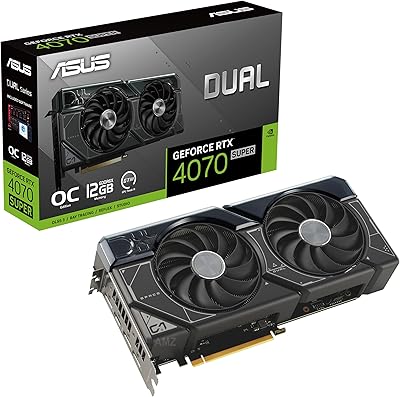
ASUS Dual GeForce RTX 4070 Super OC Edition 12GB
85%
94%
Performance
92%
Cooling Efficiency
88%
Quiet Operation
70%
Compatibility with Compact Cases
91%
Build Quality
More
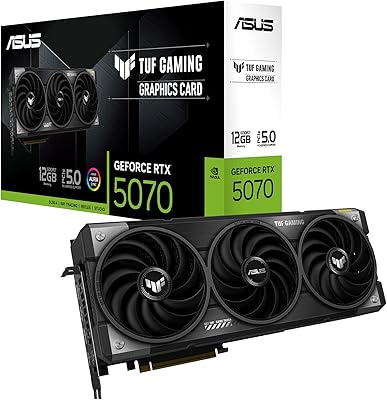
ASUS TUF Gaming RTX 5070 12GB GPU
86%
88%
Gaming Performance
91%
Thermal Performance
93%
Build Quality
67%
VRAM & Memory
82%
Value for Money
More
ASUS TUF RTX 3070 OC Graphics Card
78%
88%
Gaming Performance
92%
Thermal Management
94%
Build Quality
63%
Value for Money
57%
VRAM Adequacy
More
ASUS ROG Strix NVIDIA GeForce RTX 3090 24GB GDDR6X Graphics Card
87%
96%
Gaming Performance
94%
Ray Tracing Quality
91%
Cooling Efficiency
89%
Build Quality
92%
AI and DLSS Support
More

FAQ

The 2.5-slot width is a real advantage here, but you still need to check the card length — it runs 14.12 inches long, which is longer than some people expect from a compact-positioned card. Check your case's stated GPU clearance before ordering, particularly in very small A4-style enclosures.

For 1440p, this compact RTX 4070 is a strong match. You can expect high frame rates in most titles with settings pushed up, and ray tracing is genuinely playable at 1440p in a way it simply was not on the previous generation. If your primary target is native 4K at high settings without upscaling, you would be better served by stepping up to a 4070 Ti or higher.

Under sustained gaming load it produces a modest fan noise that most people would describe as quiet relative to cards in this performance range. At idle or during light tasks the fans cut out completely, so you get absolute silence whenever the GPU is not being pushed. It is one of the more acoustically pleasant cards in its class.

The card draws around 200W at full load, so a quality 650W PSU is generally sufficient for a full gaming system build. If you are running a high-core-count CPU or other power-hungry components, a 750W unit gives you more comfortable headroom.

No, DLSS 3 Frame Generation specifically requires developer implementation, so it only works in titles that have been updated to support it. The list of compatible games has grown substantially and includes many major releases, but older titles or games without NVIDIA support will not benefit from frame generation. Standard DLSS 2 upscaling, however, is supported in a much wider range of games.

In pure rasterization performance, the two cards trade blows closely depending on the title, and the AMD option can be compelling on raw value. The Dual EVO pulls ahead if DLSS 3, NVIDIA's ray tracing performance, or the compact 2.5-slot physical format matter to your build. If none of those factors are priorities and you are focused purely on frames-per-dollar, the AMD card deserves a serious look.

Thermal performance is good in cases with adequate airflow, but a small number of builders in very restricted enclosures have reported higher-than-expected temperatures. If your ITX case has limited intake area, adding a front intake fan and ensuring positive pressure airflow will make a noticeable difference. The Axial-tech cooling design handles well-ventilated environments comfortably.

The card has one HDMI 2.1a and three DisplayPort 1.4a outputs, so running up to four monitors simultaneously is supported. The HDMI 2.1a port is particularly useful if you want to connect a modern high-refresh TV for living room gaming.

For light-to-moderate creative work — video editing in DaVinci Resolve or Premiere, 3D rendering in Blender, or photo editing — the Dual EVO performs well. The 12GB VRAM handles most creative workloads at this level comfortably. If you are doing heavy professional rendering, large AI model inference, or working with very high-resolution footage pipelines regularly, a card with more VRAM would serve you better long-term.

Typically included are the card, a power adapter (going from two 8-pin connectors to the 16-pin 12VHPWR connector), and documentation. Installation is standard — seat the card in the PCIe slot, connect power, install the latest NVIDIA drivers, and you are running. Most buyers report the process as smooth and uncomplicated.

Where to Buy