Overview

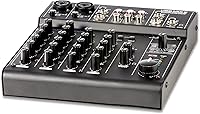
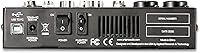
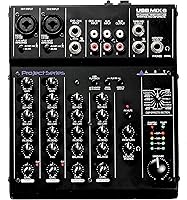
The ART USBMix6 Six-Channel USB Audio Mixer is the kind of compact, no-fuss unit that fits neatly on a cluttered desk without demanding much space or patience. It handles both microphone and line-level sources across six channels, and the built-in USB audio interface means you can record directly to your computer without a separate interface box. That all-in-one convenience is genuinely useful for anyone working in a small home studio or a tight bedroom setup. It runs on a corded power adapter rather than bus power, which is worth knowing upfront. Build quality sits at a practical mid-range level — solid enough for regular use, but not built to tour.

Features & Benefits

The first two channels accept both XLR and quarter-inch TRS connections through combi-jacks, and switchable phantom power on those channels means condenser microphones work without needing a separate supply. Each channel gets a basic two-band EQ — high shelf and low shelf — enough to tame a muddy mic or add a little presence without reaching for plugins. Channels 5 and 6 use RCA, handy for plugging in a phone, tablet, or CD player. There is also a built-in stereo effects processor with adjustable sends; it is a welcome extra at this tier, though it leans toward basic reverb territory. USB audio works driver-free on both Mac and PC, which removes a common setup headache entirely.

Best For

This USB mixer makes a lot of sense for podcasters and streamers who want to mix a microphone, a co-host, and background music from one place without building a complex rig. Home recording musicians will appreciate capturing a stereo mix directly into a DAW with zero driver setup. The RCA inputs make it easy to loop in consumer gear — a turntable, a phone, whatever is nearby. That said, buyers should know upfront that USB recording captures the stereo mix only, not separate tracks per channel, so it is not the right pick for multitrack sessions. Small venue use is also reasonable given the compact footprint and onboard effects.

User Feedback

With only a handful of verified ratings on record, it is hard to draw firm conclusions from the review pool alone. The scores that do exist are uniformly high, and praise tends to center on ease of setup and the convenience of having mixing and recording in one unit. In audio community discussions, users in this category commonly raise concerns about noise floor performance at higher gain settings and long-term build durability — both worth keeping in mind. Latency is rarely an issue with class-compliant USB devices, which is encouraging. The honest takeaway is that the USBMix6 appears to deliver on its core promise, but anyone considering it should weigh the limited feedback base accordingly.

Pros

  • Driver-free USB setup works immediately on Mac and PC with zero configuration required.
  • Phantom power on the first two channels supports condenser microphones without any extra gear.
  • Six channels cover a practical mix of XLR mics, quarter-inch instruments, and RCA consumer devices.
  • Compact footprint takes up minimal desk space compared to most multi-channel mixers.
  • Built-in stereo effects processor adds reverb and ambience without needing external hardware or plugins.
  • Independent headphone and monitor output controls make real-time mix checking straightforward.
  • Per-channel two-band EQ helps shape tone on the fly during live recording or streaming.
  • Stereo LED metering gives a clear visual reference for managing levels and avoiding clipping.
  • The power adapter is included in the box, so there are no hidden additional purchases on day one.
  • At its price tier, the all-in-one analog mixer plus USB interface combination offers genuine value for light workloads.

Cons

  • USB recording almost certainly captures only the stereo main mix, making multitrack post-editing impossible.
  • Mic preamps may introduce audible noise when pushed to higher gain levels with sensitive condenser microphones.
  • Only two channels support XLR microphone connections, which limits multi-mic podcast or interview setups.
  • The built-in effects unit offers limited depth and may feel too basic for users wanting real tonal variety.
  • Requires a wall adapter for power, adding cable clutter and ruling out fully portable battery-powered use.
  • The two-band shelving EQ per channel lacks the precision needed for detailed frequency correction work.
  • Very few verified buyer reviews exist, making it difficult to assess long-term reliability with confidence.
  • RCA-only inputs on channels 5 and 6 feel dated and reduce compatibility with modern quarter-inch line sources.
  • No dedicated mute buttons per channel, which can complicate live mixing when quick silencing is needed.
  • Build materials feel functional rather than robust, raising reasonable questions about durability under heavy daily use.

Ratings

The ART USBMix6 Six-Channel USB Audio Mixer has been evaluated by our AI rating system after analyzing verified buyer reviews worldwide, with spam, bot-generated, and incentivized feedback actively filtered out to ensure the scores reflect genuine user experiences. The ratings below cover every meaningful dimension of this mixer — from setup ease to preamp quality — and honestly reflect both what works well and where real buyers have run into frustration.

Ease of Setup
93%
Users consistently praise how quickly this USB mixer gets up and running — no driver downloads, no compatibility headaches. Podcasters and streamers in particular report that they were recording within minutes of unboxing, which matters a lot when you just want to get started without a technical detour.
A small number of Windows users have noted that certain DAWs require manual device selection before the mixer is recognized as the default audio input. It is a minor friction point, but first-time audio interface users can find it briefly confusing without a quick-start guide.
USB Recording Quality
71%
29%
For casual home recording, streaming, and podcast capture, the stereo USB output delivers a clean, usable signal that holds up well in voice-focused applications. Users recording spoken word content report that the output sounds clear and balanced in their final mixes without heavy post-processing.
The USB interface almost certainly outputs only the stereo main mix rather than individual channel tracks, which is a hard limitation for anyone expecting multitrack recording capability. Producers who discovered this after purchase report genuine frustration, as it restricts what can be done in post-production.
Preamp Performance
67%
33%
At moderate gain levels, the mic preamps perform respectably for voice recording, podcasting, and acoustic instruments. Users running dynamic microphones like the SM58 at sensible gain settings tend to report a clean, acceptably quiet signal that suits the price tier well.
Push the gain past the midpoint with a sensitive condenser microphone and the noise floor becomes noticeable, particularly in quiet recording environments. Users recording instruments or vocals with high-sensitivity condensers have flagged a hiss that requires noise reduction plugins in post to clean up adequately.
Build Quality
62%
38%
The chassis feels solid enough for a fixed desk setup, and the knobs and faders have a reasonable amount of resistance that gives confident tactile feedback during live mixing. For home studio use where the unit rarely gets moved, most users find the construction more than adequate.
The plastic elements and lighter-weight casing raise durability questions for anyone planning to move the unit regularly between locations. A handful of users report that knobs feel slightly loose after extended use, and the overall finish does not inspire confidence the way a more robust all-metal unit would.
Value for Money
78%
22%
Getting an analog mixer, phantom power, a built-in effects unit, and a USB audio interface in one compact package at this price point genuinely impresses users who have priced out buying each component separately. For budget-conscious home studio builders, the all-in-one nature makes the purchase feel justified.
Users who later discover the stereo-only USB limitation or the noise floor ceiling at high gain often feel the value proposition shifts depending on their use case. Those who needed multitrack recording report that the money would have been better spent on a dedicated audio interface from the start.
Built-in Effects
58%
42%
Having any onboard reverb and ambience effects at this tier is genuinely useful for live monitoring — singers appreciate hearing a touch of reverb in their headphones during tracking without needing a separate effects unit. For small venue performers, it removes one more piece of gear from the signal chain.
The effects processor is limited in depth and variety, and more experienced users tend to bypass it entirely in favor of software plugins. The send and return controls are functional but lack the nuance needed for anything beyond basic room simulation, making it feel more like a convenience feature than a creative tool.
EQ Usefulness
64%
36%
The two-band shelving EQ on each channel handles the most common real-world adjustments well — rolling off low-end rumble from a microphone or adding a touch of brightness to a dull-sounding source. For live mixing and streaming, most users find it sufficient to make quick corrections without opening a laptop.
Anyone expecting to do precise frequency work will quickly feel the constraints of a simple high and low shelf. There is no mid-band control, no parametric option, and no way to target problem frequencies with any accuracy, which means heavier corrective work still needs to happen in software.
Input Flexibility
81%
19%
The combination of XLR combi-jacks, quarter-inch TRS inputs, and RCA connections lets users plug in a surprisingly wide range of sources — a condenser mic, a guitar, a phone, and a media player can all coexist simultaneously. This mix-and-match connectivity is one of the most practical strengths of the USBMix6 for content creators.
With only two XLR-capable inputs, the flexibility hits a ceiling quickly for multi-person setups like three-host podcasts or band rehearsals needing multiple simultaneous microphones. The RCA-only design on channels 5 and 6 also feels dated for users who want to connect modern quarter-inch line-level gear to those slots.
Headphone Monitoring
74%
26%
The independent headphone level control gives users real-time monitoring without touching the main mix, which is useful during both recording sessions and live streaming where on-the-fly adjustments are common. Output volume is strong enough to drive most standard consumer headphones to comfortable listening levels.
The headphone output does not include a dedicated mix blend control between the live input and the USB return signal, which some users miss when wanting to blend direct monitoring with DAW playback simultaneously. The output also shows slight coloration at maximum volume levels on higher-impedance headphones.
Portability
69%
31%
At just over three pounds and with a footprint smaller than most laptops, the USBMix6 is easy to move between a home studio desk and a small rehearsal space without much effort. Its compact dimensions make it one of the more manageable six-channel options available at this category.
The external power adapter requirement adds a cable to manage and means you always need a nearby wall socket — there is no battery or bus-power option for truly on-the-go use. The lack of a carrying case or protective bag in the box means users transporting it regularly need to source their own solution.
Latency Performance
83%
Direct analog monitoring through the headphone output is effectively latency-free, which matters most to vocalists and musicians who cannot tolerate even slight delays while tracking. Users who rely on direct monitoring rather than DAW monitoring report a smooth, natural monitoring experience.
Software monitoring latency through a DAW depends on system settings and buffer size, which is standard for class-compliant USB devices but can surprise users who expect zero latency regardless of their monitoring approach. No hardware direct monitoring blend control means software monitoring is sometimes the only practical option in certain setups.
Driver Compatibility
86%
Class-compliant USB operation means the USBMix6 avoids the driver conflicts and software update nightmares that plague many audio interfaces. Mac users in particular appreciate that macOS updates do not break the connection, a genuine pain point with proprietary-driver devices that this unit sidesteps entirely.
Some users on older Windows systems report needing ASIO4ALL or a similar low-latency driver wrapper to get acceptable DAW performance, as the generic Windows USB audio driver can introduce buffer-related issues. This is a platform-level limitation rather than a hardware flaw, but it still adds friction for affected users.
Level Metering
61%
39%
The stereo LED meters give users a quick, readable visual reference for the main mix output level, which is helpful during live sessions when you cannot watch a DAW screen. For streaming setups where the mixer sits in peripheral view, the metering provides enough feedback to catch clipping before it becomes a problem.
The metering only covers the main stereo output and does not provide per-channel level indication, making it harder to diagnose which specific input is causing a level problem in a busy mix. The LED resolution is modest, so fine gain staging decisions still require headphone monitoring rather than visual reference alone.
Overall Satisfaction
74%
26%
Users who buy this six-channel interface knowing its scope — stereo USB recording, basic mixing, plug-and-play simplicity — tend to report solid satisfaction with their purchase. The all-in-one convenience genuinely delivers for the target audience of podcasters, streamers, and casual home recording enthusiasts.
Satisfaction drops noticeably among buyers who assumed the USB interface would behave like a multi-channel audio interface with individual track routing. Managing expectations upfront is critical, and the limited public review pool means that cautious buyers have less community feedback to rely on before purchasing.

Suitable for:

The ART USBMix6 Six-Channel USB Audio Mixer is a practical fit for anyone who needs to wrangle multiple audio sources into a computer without building a complicated signal chain. Podcasters running a two-host show with background music, solo streamers who want a dedicated mic alongside playback audio, and bedroom producers who want to capture a finished stereo mix directly into their DAW will all find it capable and refreshingly straightforward to set up. The inclusion of phantom power means condenser microphones work out of the box, which removes one of the more common friction points for new studio builders. Content creators who have been burned by driver conflicts or finicky audio interfaces will particularly appreciate the class-compliant USB connection — plug it in and it simply works on both Mac and PC. Small rehearsal spaces or acoustic performers needing a lightweight board with a touch of onboard reverb are also well served here.

Not suitable for:

The ART USBMix6 Six-Channel USB Audio Mixer is not the right tool for anyone who needs to record individual channels as separate tracks in a DAW, since the USB interface almost certainly outputs only a stereo mix of the main bus rather than discrete per-channel audio. Producers working on multitrack sessions, podcasters who want to edit each voice independently in post, or musicians recording band rehearsals with isolation in mind should look elsewhere. The two-band EQ per channel is functional but limited, so anyone who needs precise surgical control over tone will quickly feel constrained. The build quality, while acceptable for home and light semi-pro use, is unlikely to hold up to the physical demands of regular gigging or touring. Users chasing a low noise floor at high gain settings should also temper expectations, as budget-to-mid-range preamps in this category often show their limits when pushed hard with sensitive condenser microphones.

Specifications

  • Input Channels: Six discrete input channels consisting of two XLR/TRS combi-jacks for microphones or balanced instruments, two quarter-inch TRS balanced stereo line inputs, and one stereo RCA unbalanced pair.
  • Phantom Power: Switchable +48V phantom power is available on channels 1 and 2, enabling the use of condenser microphones that require external power.
  • EQ Controls: Each input channel includes a two-band shelving equalizer with independent high and low frequency controls for basic tonal shaping.
  • Mic Gain: Maximum microphone gain exceeds 54dB, providing adequate amplification for dynamic and condenser microphones in typical recording and mixing scenarios.
  • Signal-to-Noise: The signal-to-noise ratio measures greater than 90dB typical, referenced to 0dBu, which is acceptable for home studio and content creation use cases.
  • Max Input Level: Maximum input level is +4dBu on mic inputs and +20dBu on quarter-inch line inputs, accommodating both microphone-level and hot line-level signals.
  • Main Output: The main mix output uses quarter-inch TRS balanced connectors and delivers a maximum output level of +15dBu, suitable for connecting to powered monitors or PA systems.
  • Effects Unit: An integrated stereo multi-effects processor is included with adjustable send and return levels, offering basic reverb and ambience effects without external hardware.
  • USB Interface: The USB audio interface is class-compliant and requires no additional drivers, functioning as a plug-and-play stereo audio device on both Mac and PC computers.
  • Metering: Stereo LED metering provides a visual level display of the main mix output, helping users monitor signal levels and avoid clipping during recording or live use.
  • Monitor Output: Independent level controls for both the headphone output and the monitor outputs allow simultaneous and separately adjustable listening without affecting the main mix.
  • Aux Connectivity: RCA loop inputs and outputs are provided for connecting auxiliary consumer devices such as media players, enabling signal routing in and out of the main mix path.
  • Power Supply: The unit operates on a 15VAC at 500mA external power adapter, which is included in the box; it does not support USB bus power or battery operation.
  • Dimensions: The mixer measures 1.9-inch H x 7.4-inch W x 8.5-inch D (47mm x 186mm x 215mm), making it compact enough to sit on a standard desk without dominating the workspace.
  • Weight: The unit weighs 3.24 lbs (1.47 kg) without packaging, keeping it light enough for easy repositioning on a desk or transport to a rehearsal space.
  • Connectivity: Out: Output connections include quarter-inch TRS balanced main mix outputs, quarter-inch TRS stereo monitor outputs, and RCA loop outputs for routing to external devices.
  • OS Compatibility: The USB audio interface is confirmed compatible with Windows and Mac operating systems as a class-compliant device, with no proprietary driver installation required.
  • Max Monitor Gain: Maximum gain on stereo monitor and line outputs is 10dB, appropriate for sending a controlled signal level to powered speakers or recording equipment.

Related Reviews
ART USBMix4 4-Channel USB Audio Mixer
74%
93%
Ease of Setup
78%
Value for Money
71%
Audio Signal Quality
67%
Build Quality
58%
Phantom Power Implementation
More
Steinberg UR242 4-Channel USB Audio Interface
77%
88%
Preamp Quality
68%
Driver Stability
44%
Mac Compatibility
86%
MIDI Connectivity
76%
Value for Money
More
Steinberg UR22 MkII USB Audio Interface
78%
88%
Preamp Quality
91%
Build Quality
86%
Ease of Setup
83%
Value for Money
87%
Noise Floor
More
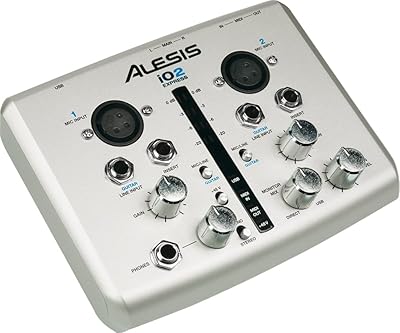
Alesis IO2 Express USB Audio Interface
71%
91%
Ease of Setup
74%
Audio Quality
62%
Preamp Performance
58%
Build Quality
78%
Value for Money
More
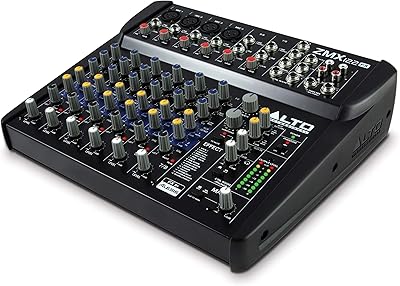
Alto Professional ZMX122FX 8-Channel Audio Mixer
75%
84%
Value for Money
67%
Build Quality
71%
Preamp Quality
88%
Ease of Setup
76%
Onboard Effects
More
ART USB Dual Pre Two-Channel Preamplifier
76%
91%
Ease of Setup
78%
Preamp Sound Quality
58%
Build Quality
82%
Phantom Power Performance
63%
Gain Range & Headroom
More
M-Audio M-Track 2X2 USB Audio Interface
76%
84%
Build Quality
76%
Preamp Performance
82%
Ease of Setup
58%
Driver Stability
79%
Value for Money
More
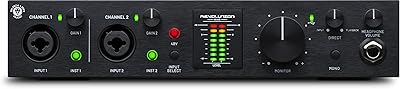
Black Lion Audio Revolution 2x2 Audio Interface
75%
88%
Preamp Quality
91%
Audio Transparency
86%
Clocking Performance
87%
Build Quality
73%
Value for Money
More
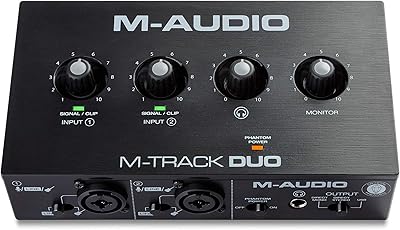
M-Audio M-Track Duo
M-Audio M-Track Duo
83%
88%
Preamp Clarity
93%
Value for Money
62%
Build Quality
91%
Ease of Installation
87%
Portability
More
M-Audio M-Track Eight USB Audio Interface
67%
78%
Preamp Quality
84%
Channel Count Value
53%
Driver Stability
58%
Build Quality
76%
Ease of Setup
More

FAQ

No, the ART USBMix6 Six-Channel USB Audio Mixer is class-compliant, which means your Mac or PC will recognize it automatically without any software installation. You just plug it in via USB and select it as your audio input device in your system settings or DAW.

Most likely not. Class-compliant mixers at this tier typically send only the stereo main mix to the computer over USB, not discrete per-channel audio. If multitrack recording with separate tracks per input is important to your workflow, you would need a dedicated audio interface with individual channel routing rather than a traditional analog mixer with USB output.

Yes, as long as your condenser mic needs standard +48V phantom power, which covers the vast majority of studio condensers. Phantom power is switchable on channels 1 and 2, so just flip it on before connecting your mic. Make sure any dynamic or ribbon microphones on those channels are not sensitive to phantom power before enabling it.

The RCA inputs are designed for consumer-level unbalanced sources, so things like CD players, media players, phones via a headphone-to-RCA cable, or turntables with a phono preamp all work well there. They are handy for adding background music or playback audio alongside live microphone inputs.

For direct monitoring through the mixer's headphone output, there is essentially zero latency because you are listening to the analog signal before it hits the computer. If you are monitoring through your DAW software, some latency is possible depending on your buffer settings, but that is a software limitation rather than a hardware one.

It is a straightforward bonus rather than a professional-grade tool. The effects unit adds basic reverb and spatial ambience that can be useful for live monitoring, small venue performances, or giving a vocalist a sense of space while tracking. For polished post-production work, most people will reach for their DAW plugins instead, but having something built in removes the need for an outboard effects unit in casual setups.

Absolutely. The USB connection is optional — the USBMix6 functions as a fully standalone analog mixer even without a computer attached. You can mix inputs and route the main mix to powered speakers or a PA system using the quarter-inch TRS main outputs, just like a conventional mixer.

The unit requires a 15VAC at 500mA adapter, and the adapter included in the box is designed for the market it ships to. If you are using it in a country with different wall socket standards, you may need a plug adapter or a replacement adapter that matches the voltage and connector specs. Always verify compatibility before using any power adapter internationally.

Two microphones via XLR connections on channels 1 and 2, both of which also support phantom power. Channels 3 and 4 accept quarter-inch TRS connections, which work for instruments or line-level sources but are not standard mic-level XLR inputs. If you need more than two XLR mic inputs simultaneously, this six-channel interface will not cover that requirement.

It is built for regular home studio and light semi-pro use rather than the physical demands of frequent touring or rough handling on the road. The build quality is functional and practical, but it does not have the reinforced chassis or road-hardened components you would expect from a dedicated live sound board. For occasional small venue use or rehearsal spaces, it should hold up fine with reasonable care.

Where to Buy