Alto Professional ZMX122FX 8-Channel Audio Mixer
Alto Professional ZMX122FX 8-Channel Audio Mixer — image 1
Alto Professional ZMX122FX 8-Channel Audio Mixer — image 2
Alto Professional ZMX122FX 8-Channel Audio Mixer — image 3
Alto Professional ZMX122FX 8-Channel Audio Mixer — image 4
Alto Professional ZMX122FX 8-Channel Audio Mixer — image 5
Alto Professional ZMX122FX 8-Channel Audio Mixer — image 6
75%
25%

Overview

The Alto Professional ZMX122FX 8-Channel Audio Mixer has been a steady presence in the budget mixer market since its debut in 2011 — and that kind of staying power is not accidental. Where many affordable mixers come and go, this compact mixer has accumulated over 300 genuine ratings and holds a solid 4.3-star average, which says something real about its track record. That said, set expectations carefully: this is a corded analog unit with onboard DSP, not a USB audio interface. If you plan to plug directly into a DAW via USB, you will need a separate interface. Compared to alternatives from Behringer or Yamaha at a similar tier, the ZMX122FX holds its own as a no-frills mixing solution.

Features & Benefits

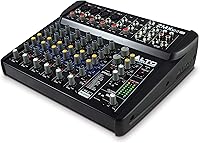
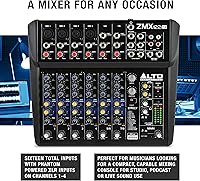
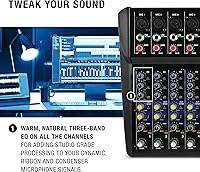
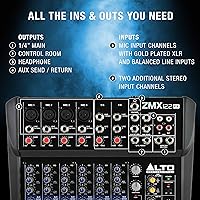
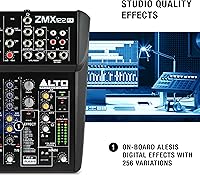
The ZMX122FX packs a lot into its compact frame. All four mic channels accept XLR connections and supply phantom power, which means condenser microphones work straight out of the box without any extra gear. Each channel also gets a genuine three-band EQ — high, mid, and low — rather than a single tone control, giving you real flexibility to shape each source independently. The onboard effects engine draws from Alesis, offering 256 24-bit DSP presets including reverb, delay, chorus, and phaser — a meaningful inclusion at this price point. Output options cover Main, Control Room, Headphone, and Aux, and there is even a footswitch input for toggling effects mid-performance, though that footswitch is sold separately.

Best For

This Alto mixer is a natural fit for anyone who wants hands-on control without a steep learning curve. Home studio beginners stepping up from a single USB interface will appreciate the physical faders, multiple mic inputs, and the ability to blend sources in real time. Podcasters running multi-guest setups or streamers who want a clean mix without routing audio through software will find it equally practical. It also works well in smaller live settings — a rehearsal room, a small church, or an acoustic duo at a local venue. Anyone needing a compact live solution with built-in effects, without the cost or bulk of a larger desk, sits squarely in the target audience.

User Feedback

Buyers tend to agree on a few things. Setup is quick, the layout is intuitive even for first-timers, and the built-in effects are a genuine bonus that most people did not expect to actually use regularly. Build quality draws mixed opinions — the chassis holds up fine for home and rehearsal use, but some owners note the knobs and plastic trim feel less premium than what comparable Mackie units offer. Noise floor is the most cited technical concern: this Alto mixer performs well with dynamic mics, but users running sensitive condenser mics at high gain sometimes report a faint background hiss. Long-term durability looks reasonable overall, with many reporting years of steady service in practice rooms and small venues.

Pros

  • Four XLR inputs with phantom power handle condenser mics straight out of the box, no extra gear needed.
  • 256 onboard DSP effects drawn from Alesis add practical value that many competing mixers at this price skip entirely.
  • Three-band EQ on every channel offers genuine tonal shaping rather than a single, blunt tone control.
  • Flexible output routing — Main, Control Room, Headphone, and Aux — suits both home studio monitoring and live setups.
  • The footswitch input lets performers toggle effects hands-free mid-performance, a thoughtful live-use feature.
  • Intuitive layout means most buyers are up and running within minutes of unboxing, no manual required.
  • Has remained in continuous production since 2011, a sign of consistent demand and reliable real-world performance.
  • Lightweight at under five pounds, making it easy to transport to rehearsals, gigs, or recording sessions.
  • Works cleanly with dynamic microphones, delivering a quiet, stable signal for spoken word and live acoustic sources.

Cons

  • No USB audio interface capability means a separate interface is still required to record directly into a DAW.
  • Noise floor becomes noticeable when running sensitive condenser mics at higher gain settings.
  • Plastic knobs and trim feel noticeably less substantial than what Mackie units offer at a comparable price.
  • Onboard effects, while numerous, can sound thin or artificial compared to even modest dedicated effects processors.
  • The footswitch for toggling effects on and off is sold separately, adding an unannounced cost for live users.
  • Eight total inputs is a hard ceiling — larger multi-source setups will outgrow this mixer quickly.
  • No individual channel mute buttons, which creates awkward workarounds during live mixing or recording.
  • Corded AC power only, with no battery or bus-power option, restricts use in outdoor or off-grid scenarios.

Ratings

The Alto Professional ZMX122FX 8-Channel Audio Mixer earns its scores through AI-powered analysis of hundreds of verified buyer reviews gathered globally, with automated filtering applied to remove spam, bot-generated, and incentivized submissions. The ratings below reflect both what this compact mixer genuinely excels at and where it consistently falls short — nothing has been softened or inflated. Buyers evaluating this unit for home studio, podcasting, or small-venue live use will find the category breakdowns especially useful for matching its real strengths to their specific needs.

Value for Money
84%
For the asking price, getting four phantom-powered mic inputs, a three-band EQ on every channel, and 256 onboard effects in a single unit is genuinely hard to beat. Most buyers at this tier are choosing between this and a barebones mixer with no effects — and the ZMX122FX wins that comparison clearly.
Users who scrutinized the build materials felt the price could buy a sturdier unit from a competing brand. The absence of USB connectivity also means buyers must spend more on a separate audio interface, which affects the total cost of ownership more than the initial price tag suggests.
Build Quality
67%
33%
The chassis itself feels reasonably solid for a desktop mixer in this category, and most owners report that the main frame holds up without issue through years of regular home or rehearsal use. The matte black finish resists light scratches well enough for day-to-day handling.
The knobs and fader caps are noticeably plastic in feel, and a recurring pattern in user feedback is that they do not inspire confidence when compared side by side with units from Mackie or Yamaha. A handful of owners have reported developing wobble in the potentiometers after extended use.
Preamp Quality
71%
29%
For a budget-tier mixer, the preamps deliver a clean and usable signal across dynamic microphones used in podcasting, live vocals, and acoustic instrument recording. Most users found the gain staging intuitive, with enough headroom to handle a variety of microphone sensitivities without clipping.
Running a high-sensitivity large-diaphragm condenser through these preamps at high gain is where the cracks begin to show — subtle coloration and noise contribution become audible. Users working on anything more demanding than voice recording or acoustic performances will likely want a higher-quality preamp solution.
Ease of Setup
88%
This is consistently the highest-praised aspect across user feedback — people with no prior mixer experience report being fully operational within minutes of unboxing. The channel layout is logical, the labeling is clear, and even first-time podcasters have noted it just works without consulting a manual.
The only setup friction users mention is needing a separate audio interface to record into a computer, which is not obvious from the marketing and has caught some buyers off guard. Navigating 256 effects presets can also feel overwhelming at first without a printed reference guide.
Onboard Effects
76%
24%
Having 256 Alesis-sourced DSP presets built directly into the mixer is a meaningful advantage for live performers and home studio users who want to add reverb or delay to vocals without setting up a separate effects chain. For small gigs or rehearsal rooms, the reverb presets in particular are practical and easy to dial in quickly.
Users with more critical ears note that some modulation effects — chorus and phaser in particular — can sound slightly artificial, especially applied to instruments rather than vocals. The lack of parameter control beyond preset selection also limits how much you can tailor any given effect to a specific sound.
EQ Performance
73%
27%
Having a full three-band EQ on every channel — rather than a single tone sweep — is a genuine differentiator at this price point, and users working with a mixed lineup of mics and instruments appreciate the ability to roll off low-end rumble or add presence to vocals independently on each channel.
The EQ bands are fixed-frequency rather than parametric or semi-parametric, so you are working with preset frequency points rather than freely sweeping to find problem areas. Experienced engineers used to more flexible EQ tools will find this limiting, particularly when trying to tame feedback in a live setting.
Noise Floor
63%
37%
For dynamic microphone use — the most common scenario among podcast hosts and live acoustic performers — the signal is clean and usable without any objectionable background noise. Most users running standard dynamic mics report that what they hear through the headphone output is quiet and well-defined.
The noise floor becomes a documented concern when users push the gain with sensitive condenser microphones — a recurring pattern in feedback highlights audible hiss at higher gain settings that would not be acceptable for studio vocal tracking. This is a consistent structural limitation of the preamp design at this price tier.
Channel Routing
72%
28%
Eight total inputs — four mic and two stereo — is a practical sweet spot for small ensembles, podcast setups, and acoustic live performances where you rarely need more than a vocalist, a guitarist, a keyboard player, and a playback source running at once. The Aux send adds useful routing versatility for stage monitors.
Anyone needing more than four microphone channels will immediately hit a hard ceiling, which rules this mixer out for full-band rehearsals or any venue requiring multiple instrument mics. The layout also lacks individual channel mute buttons, which is a notable omission that creates awkward workarounds during live performances.
Output Flexibility
78%
22%
The combination of Main, Control Room, Headphone, and Aux outputs gives this compact mixer routing flexibility that outperforms several competitors in the same class. Home studio users particularly appreciate being able to run a headphone monitor mix separately from what is feeding their recording interface or speaker system.
All outputs are analog 1/4-inch, so connecting to modern digital recording setups still requires an intermediary interface — there is no digital output or USB send of any kind. Users wanting a more streamlined all-in-one digital workflow will find the purely analog output architecture a persistent limitation.
Phantom Power
81%
19%
Phantom power availability on all four XLR channels is a real practical benefit — users running condenser mics for studio recording or small-venue live work can power them directly without hunting for a separate DI box or phantom power supply. It handles standard 48V condensers reliably under normal use conditions.
Toggling phantom power while a microphone is already connected can introduce a brief audible pop through the speakers, which some users found startling in live settings. Phantom power is also limited to the four XLR channels, so there is no option to power any device through the stereo line inputs.
Portability
83%
Weighing under five pounds and fitting comfortably on a standard desktop, this Alto mixer is easy to pack into a gig bag for rehearsals and small venue shows. Several users specifically call out its footprint as a deciding factor — it takes up minimal space in a home studio without sacrificing channel count.
Because it runs on AC power only, portability is conditional — a wall outlet is always required, which limits spontaneous use outdoors or in off-grid situations. No carrying case is included, so users who move it regularly will need to source their own protective bag to avoid damage in transit.
Durability
69%
31%
A product remaining in continuous production since 2011 without being discontinued is a meaningful signal of real-world reliability at scale. Many owners report using the same unit for five or more years in regular home studio and rehearsal room conditions without encountering any major functional failures.
Some users report that faders and potentiometers develop crackling or intermittent behavior after a few years of use, a common issue with budget analog mixers using lower-grade components. The overall construction is not suited for heavy touring, frequent vehicle loading, or rough outdoor environments.
Beginner Friendliness
86%
Buyers who have never touched a mixer before consistently highlight how approachable this unit feels out of the box — the controls are clearly labeled, signal flow is logical, and no proprietary software needs to be installed. First-time podcasters and streamers find it accessible without any prior audio engineering background.
The lack of clarity around what is not included — particularly that the footswitch is separate and there is no USB connectivity — has left some first-time buyers confused after purchase. Intermediate users growing beyond basic mixing will also find they outgrow the feature set relatively quickly and face an upgrade decision sooner than expected.
Live Use
74%
26%
For acoustic performers, small venue PAs, or rehearsal rooms, the ZMX122FX delivers a practical live tool — enough mic inputs for a small act, onboard reverb for vocal treatments, and an Aux send for a stage monitor feed, all in one compact unit that sets up in minutes.
The absence of individual channel mute buttons is a real inconvenience mid-performance, forcing performers to drag faders down instead of cutting cleanly. The AC-only power requirement is also restrictive at outdoor or unconventional venues, and the four-mic ceiling means the mixer cannot scale with a more complex live setup.
Studio Suitability
58%
42%
For casual home studio tasks — recording a spoken-word podcast, capturing a solo acoustic performance, or laying down rough demo tracks — this compact mixer provides a workable analog signal path that many beginners find more than adequate. The three-band EQ on each channel adds useful shaping before the signal hits a recording interface.
Users with professional recording expectations are likely to be disappointed — the preamp noise floor, fixed EQ frequencies, and lack of channel inserts make it unsuitable for high-quality studio production. The requirement for a separate audio interface to convert to digital also adds both cost and latency to any DAW-based recording workflow.

Suitable for:

The Alto Professional ZMX122FX 8-Channel Audio Mixer is a smart pick for anyone who needs a practical, no-nonsense mixing solution without a complicated setup or a professional-grade budget. Home studio musicians who track multiple sources at once — a vocalist, an acoustic guitar, a keyboard — will find the four phantom-powered XLR inputs and per-channel EQ genuinely useful for real sessions. Podcasters and streamers benefit from the straightforward signal routing: blend two or three mics, dial in a touch of reverb, and you are live without ever opening a software plugin. Acoustic performers and small venue operators will appreciate the compact footprint and onboard effects, which remove the need for a separate effects unit on a tight stage. Beginners upgrading from a single USB interface who want tactile, hands-on control over multiple channels are precisely the audience this mixer was built for.

Not suitable for:

The Alto Professional ZMX122FX 8-Channel Audio Mixer is not the right tool for every buyer, and being upfront about that will save some people a frustrating return. If your primary goal is recording directly into a DAW without extra hardware, this mixer will leave you short — it has no USB audio interface functionality, so a separate interface remains a requirement in your signal chain. Producers or engineers working with a large channel count, or anyone who needs digital mixing with recall, automation, or built-in EQ metering, should look elsewhere entirely. Those running very sensitive condenser microphones at high gain may encounter noise floor limitations that would be unacceptable in a professional studio context. If tactile build quality and premium feel matter to you, the plastic construction here is functional but noticeably behind what higher-tier options from Mackie or Yamaha offer. This is a budget-tier workhorse, and expecting studio-desk performance from it will only lead to disappointment.

Specifications

  • Total Inputs: The mixer accommodates 8 input channels in total, combining 4 dedicated microphone channels with 2 additional stereo line input pairs.
  • Mic Inputs: Channels 1 through 4 each feature a balanced XLR microphone input with individually switchable phantom power for condenser microphones.
  • Phantom Power: 48V phantom power is available across all four XLR mic channels, enabling direct use of condenser microphones without a separate external preamp.
  • Stereo Inputs: Two stereo input channels accept balanced line-level signals, suitable for keyboards, drum machines, or other stereo line-level sources.
  • EQ: Every input channel includes a three-band equalizer covering high, mid, and low frequencies for independent tonal shaping of each source.
  • DSP Effects: The onboard effects processor provides 256 presets at 24-bit resolution, sourced from Alesis, covering reverb, delay, chorus, and phaser types.
  • Effects Toggle: A dedicated footswitch input allows hands-free on/off control of the onboard effects during live performance; the footswitch itself is sold separately.
  • Outputs: Available outputs include a 1/4-inch Main output, a Control Room output, a Headphone output, and an Aux send for flexible signal routing.
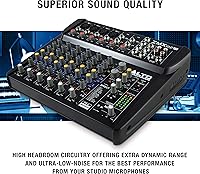
  • Circuitry: The internal signal path uses high-headroom, ultra-low-noise circuitry engineered to maximize dynamic range and reduce unwanted noise across all channels.
  • Dimensions: The unit measures 12.76 x 5.94 x 15.51 inches, compact enough to sit comfortably on a desktop or fit in a standard equipment bag.
  • Weight: The mixer weighs approximately 4.85 lbs (2,200g), light enough for regular transport to rehearsals or small live gigs.
  • Power Source: The mixer operates exclusively on corded AC power; no battery or bus-power option is available, so a wall outlet is always required.
  • Color: The unit ships in a matte black finish with a standard compact desktop mixer form factor.
  • Model Number: The official model designation is ZMX122FX, identifying this specific variant within Alto Professional's mixer lineup.
  • Brand: Manufactured by Alto Professional, a brand specializing in entry-level to mid-range audio equipment for both live sound and studio environments.
  • Market Entry: The ZMX122FX first became available in October 2011 and has remained in continuous production, reflecting sustained demand in its category.
  • Current Status: As of the latest available data, this mixer has not been discontinued by the manufacturer and remains an active, supported product in their catalog.

Related Reviews
M-Audio M-Track Eight USB Audio Interface
67%
78%
Preamp Quality
84%
Channel Count Value
53%
Driver Stability
58%
Build Quality
76%
Ease of Setup
More
ART USBMix6 Six-Channel USB Audio Mixer
73%
93%
Ease of Setup
71%
USB Recording Quality
67%
Preamp Performance
62%
Build Quality
78%
Value for Money
More
ART USBMix4 4-Channel USB Audio Mixer
74%
93%
Ease of Setup
78%
Value for Money
71%
Audio Signal Quality
67%
Build Quality
58%
Phantom Power Implementation
More
Behringer DS2800 Professional 2-Input 8-Output Audio Splitter
86%
94%
Signal Quality
88%
Build Quality
83%
Usability
91%
Flexibility of Signal Routing
89%
Noise Performance
More
Douk Audio OK013 Mini 2.1 Channel HiFi Stereo Amplifier
75%
83%
Value for Money
71%
Sound Output & Power
77%
Build Quality
88%
Ease of Installation
58%
Thermal Management
More
Stinger MT-1000.5 5-Channel Car Amplifier
75%
81%
Value for Money
84%
Ease of Installation
58%
Real-World Power Output
63%
Thermal Management
88%
Built-in Crossover Filters
More
OSD Audio SPW-8 8-Zone Speaker Distribution Panel
77%
91%
Ease of Installation
74%
Build Quality
61%
Impedance Handling
88%
Value for Money
83%
Audio Signal Quality
More
Universal Audio Apollo 8 QUAD Audio Interface
79%
93%
Preamp Quality
91%
DSP Performance
89%
Audio Conversion
92%
Build Quality
74%
Software & Console 2.0
More
BOSS Audio R2504 4-Channel Car Amplifier
70%
82%
Value for Money
86%
Ease of Installation
51%
Power Output (Real-World)
58%
Thermal Management
62%
Build Quality
More
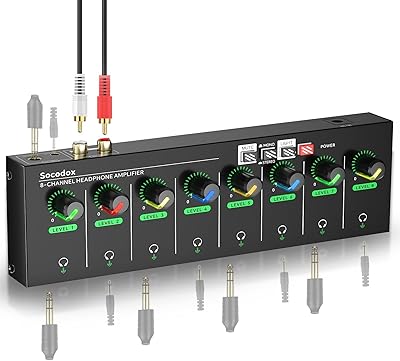
Socodox 8-Channel Headphone Amplifier
86%
88%
Performance
91%
Build Quality
85%
Sound Quality
87%
Ease of Use
90%
Volume Control Precision
More

FAQ

Not on its own, unfortunately. The ZMX122FX is a purely analog mixer with no USB output or built-in audio interface functionality. To get audio into your computer, you will need to route the Main output into a separate USB or Thunderbolt audio interface. It is a common point of confusion, so worth knowing clearly before you buy.

Just engage the phantom power switch for the channel you are using. Channels 1 through 4 all support phantom power, so any standard condenser mic requiring 48V will work without any additional gear. Dynamic microphones do not require phantom power and work across all channels as well.

You have four XLR mic inputs, so a four-person setup is the practical maximum for microphones. If you also need to bring in a music bed or audio playback from a phone or laptop, the two stereo line inputs can handle that simultaneously without taking up any of your mic channels.

The Alto Professional ZMX122FX 8-Channel Audio Mixer ships with 256 DSP effect presets covering reverb, delay, chorus, and phaser at 24-bit processing quality. For home recording, podcasting, or small live gigs, the reverb and delay presets are genuinely useful. They will not replace a dedicated hardware effects unit for precision work, but as a built-in convenience at this price point, they are a real bonus.

The footswitch input is built into the mixer, but the actual footswitch accessory is sold separately and is not included in the box. If you plan to toggle effects on and off hands-free during live performance, factor that additional purchase into your budget.

For most home recording scenarios using dynamic microphones, the noise floor is perfectly workable. The place where some users notice a problem is when running high-sensitivity condenser mics at elevated gain levels, where a faint background hiss can appear. For podcast-style voice recording or casual home studio sessions, the vast majority of users find it quiet enough.

Yes, that is exactly what the 1/4-inch Main output is designed for. You can run it directly into powered monitors, an active PA speaker, or a power amplifier feeding passive speakers. The separate Control Room output also gives you an independent monitoring path, which is handy if you want to listen on headphones or a separate monitor feed without affecting the main mix.

Most owners report reliable performance over several years of regular home and rehearsal use. The chassis is solid enough for the price, though the plastic knobs and fader caps feel less premium than what you would get from pricier units by Mackie or Allen and Heath. Treat it with basic care and it should serve you well; just do not expect it to handle heavy touring abuse.

Both sit in the same budget tier and offer comparable core functionality. The ZMX122FX tends to stand out with its Alesis-sourced DSP effects, which many users find more polished than Behringer equivalents at this level. Behringer mixers sometimes offer more input channels for the same money. It really comes down to whether the effects quality or the channel count matters more for your specific setup.

It can be a practical fit for a small worship setting, particularly for a simple acoustic ensemble with a few vocalists and an instrument or two. Keep in mind that four mic inputs is the hard ceiling, so if your setup regularly involves more sources, you will hit that limit quickly. For a modest praise team or a small-room PA setup, it is a cost-effective and straightforward option.

Where to Buy