Overview

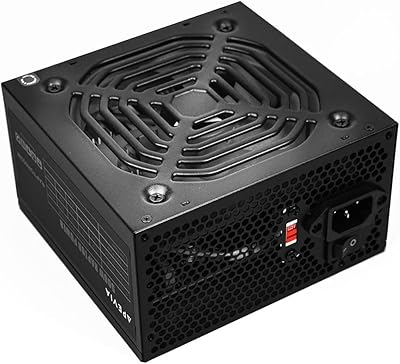
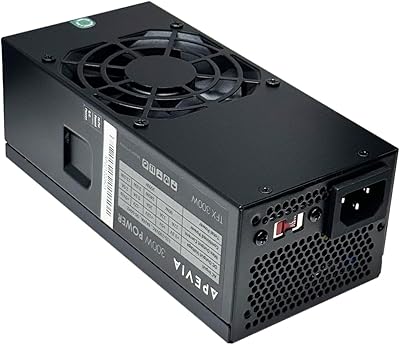
The Apevia TFX-PFC500W 500W TFX Power Supply occupies a practical niche: it's a compact, no-frills unit built specifically for small form factor desktops that require the TFX standard. TFX is a smaller form factor than common ATX, designed for slim and low-profile cases where a full-size PSU simply won't fit. At 500W, this compact PSU delivers enough headroom for office machines, HTPCs, or modest builds running integrated graphics or a light discrete card. Apevia has been around the budget PSU space for years — they're not chasing high efficiency ratings, and this unit reflects that honestly. Think of it as a reliable, affordable workhorse rather than a flagship.

Features & Benefits

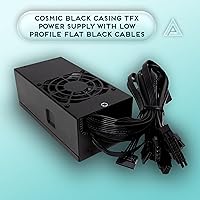
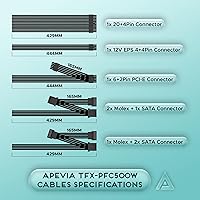
One spec worth highlighting is the full range active PFC, which accepts input from 90 to 264 volts — useful if you ever run this TFX power supply on a UPS or in a different region. The connector set covers what most compact builds genuinely need: a 24-pin ATX board connection, an 8-pin CPU plug that splits into a pair of 4-pin halves for older motherboards, two 6+2 PCIe connectors for a low-power GPU, three SATA ports, and three Molex connectors for legacy peripherals. An 80mm fan handles airflow, and five protection circuits cover over-voltage, overload, overcurrent, overheating, and short circuit scenarios. The non-modular cables keep costs down but add some routing friction in tight cases.

Best For

This compact PSU is essentially built for one purpose: swapping out a failed TFX unit in a slim desktop without overspending. It fits naturally into office towers, media center builds, or any system that shipped with a TFX slot. If your machine runs a modern CPU with integrated graphics, or pairs a low-wattage discrete card alongside it, 500W gives you comfortable headroom with room to spare. What this unit is not well-suited for is a dedicated gaming rig with a high-draw GPU — that is not its lane, and chasing that use case would be a mistake. For appropriately modest systems, though, it hits the mark.

User Feedback

Buyers tend to appreciate how cleanly this TFX power supply drops into existing TFX cases — particularly those replacing a burned-out unit who need something that works without fuss. The connector variety earns consistent praise for the form factor. On the flip side, fan noise under load is a recurring theme in negative reviews, and some users flag that the fixed cables can be stiff and awkward to route in very cramped enclosures. Long-term reliability is the harder variable to judge. There are isolated reports of early failures, though many one-star reviews on closer reading reflect installation confusion rather than actual hardware defects — a distinction worth keeping in mind when you weigh the feedback.

Pros

  • Fits standard TFX enclosures precisely, making it a genuine drop-in replacement for most slim desktops.
  • Full range active PFC handles input voltages from 90 to 264V, adding flexibility for varied power environments.
  • The connector set covers a motherboard, CPU, a low-power GPU, three SATA drives, and legacy Molex devices.
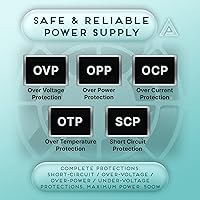
  • Five built-in protection circuits provide a reasonable safety net against electrical faults.
  • The 8-pin CPU connector splits cleanly into a 4+4 configuration for older motherboards.
  • At its price point, this TFX power supply is one of the more accessible options in the TFX segment.
  • Compact dimensions make it compatible with tight cases where even slight size differences cause fitment issues.
  • Active PFC contributes to cleaner power delivery compared to passive PFC designs at this price tier.

Cons

  • Fan noise under sustained load is a recurring complaint from real-world users.
  • Long-term reliability is uncertain — budget PSUs from Apevia carry more risk than certified alternatives.
  • Fixed, non-modular cables can be stiff and awkward to manage inside cramped TFX cases.
  • No published efficiency rating means you cannot verify how well it performs under various load conditions.
  • Isolated reports of early failures and DOA units suggest quality control is not always consistent.
  • The 80mm fan is smaller than what most full-size PSUs use, which can translate to higher RPM and more noise.
  • Warranty terms and customer support responsiveness are not strengths Apevia is widely known for.
  • Only three SATA connectors limits expandability for storage-heavy builds.

Ratings

The scores below for the Apevia TFX-PFC500W 500W TFX Power Supply were generated by our AI engine after analyzing verified global buyer reviews, actively filtering out incentivized submissions, duplicate accounts, and suspected bot activity. Each category reflects the honest distribution of real user sentiment — strengths and shortcomings weighted equally — so you get a clear picture before committing to a purchase.

Form Factor Fit
91%
For buyers replacing a dead PSU in a slim OEM desktop, this unit drops in cleanly without any case modification. Reviewers consistently praised how precisely it matched their existing TFX mounting points, making what could be a frustrating repair a straightforward swap.
A small number of users found minor variation in screw alignment with certain OEM cases, suggesting tolerances are not perfectly tight across every chassis brand. It is a rare issue, but worth dry-fitting before final installation.
Value for Money
78%
22%
Within the narrow TFX segment, options are limited and prices can climb quickly. Buyers replacing a failed unit in a basic office or media PC found this compact PSU offered solid functionality without requiring a significant financial outlay for a machine that does not justify premium hardware.
Those who experienced early failures naturally felt the value equation fall apart fast. For a unit without independent efficiency certification or a multi-year warranty, the margin for disappointment is tighter than with more established brands offering comparable pricing.
Connector Coverage
83%
For the physical size of this TFX power supply, the connector spread is genuinely practical: a board connection, CPU power, two GPU-capable PCIe plugs, three SATA ports, and three Molex connectors handle most real-world compact builds without needing adapters.
Three SATA connections is the ceiling, which limits storage expandability for users who want to run multiple drives simultaneously. Anyone building a small NAS-style system or a compact workstation with several SSDs will hit that wall quickly.
Reliability
61%
39%
The majority of buyers reported no issues over typical usage periods for a budget replacement unit. For office machines running standard productivity workloads, this compact PSU held up adequately and delivered stable power without incident.
A recurring thread in negative reviews points to units arriving dead or failing within the first few months of use, which is a pattern more common with budget-tier PSUs. Long-term reliability beyond one to two years is genuinely uncertain, and that uncertainty is priced into the purchase.
Noise Level
58%
42%
At idle and under light loads — think a basic office PC running spreadsheets or media playback — the 80mm fan is quiet enough that most users in the same room would not notice it over ambient noise.
Under sustained load, the smaller fan has to spin at higher RPM to move adequate air, and several reviewers flagged it as noticeably loud in that state. For a living room HTPC or a quiet home office environment, this is a meaningful trade-off worth considering.
Active PFC Quality
74%
26%
Full range active PFC covering 90 to 264V is a genuine functional advantage over units with passive PFC at this price point, providing cleaner power delivery and better compatibility with UPS devices and international outlets.
Without an 80 Plus rating or independent lab testing data, there is no way to verify how efficiently this unit actually performs under real load conditions. Buyers have to take the active PFC claim at face value.
Cable Management
47%
53%
The fixed cable set covers all essential connections without requiring any additional adapters for a standard build, which simplifies the initial installation process for users who are not experienced builders.
Non-modular cables in a compact TFX case are a genuine frustration. Multiple reviewers described the cables as stiff and difficult to tuck neatly, leaving excess bundled awkwardly inside an already cramped enclosure and potentially restricting airflow.
Protection Circuits
71%
29%
Five built-in protection mechanisms — covering over-voltage, overload, overcurrent, overheating, and short circuits — provide a reasonable safety baseline for a budget unit, giving some peace of mind during everyday operation.
Protection circuits on budget PSUs are only as reliable as the components behind them, and without third-party validation it is difficult to know how consistently they engage under real fault conditions compared to certified alternatives.
Installation Experience
82%
18%
Most buyers described installation as uncomplicated, particularly those swapping out a like-for-like TFX unit. The splitrable CPU and ATX connectors were appreciated by users with older motherboards, eliminating the need for separate adapters.
A portion of negative reviews stem from users who did not realize the PSU requires all cables connected before it will power on — a non-standard behavior that caused confusion and some unwarranted return attempts.
Thermal Performance
63%
37%
For systems running at modest power draw — a low-wattage CPU with integrated graphics, for example — the Apevia 500W unit maintains reasonable internal temperatures during normal operation without the fan ramping aggressively.
The 80mm fan is a physical limitation in warm ambient environments or cases with poor natural airflow. Users running the unit in a warm room or an enclosed cabinet reported thermal throttling behavior and elevated fan speeds under moderate loads.
Build Quality
55%
45%
The external casing feels solid enough for a budget unit, and the connectors seat firmly without feeling flimsy. For a straightforward replacement in a secondary or low-priority machine, the physical construction is acceptable.
Internal component quality is harder to assess without teardown, and the price point strongly implies cost-saving measures in capacitor and transformer selection. Several long-term users reported degraded performance over time, consistent with lower-grade internals.
12V Rail Output
69%
31%
A 33A rating on the +12V rail is adequate for modest system configurations — a mid-efficiency modern CPU paired with integrated graphics or a light GPU will draw well within that ceiling under normal conditions.
Add a moderately demanding discrete GPU into the mix and headroom shrinks quickly, leaving less buffer for load spikes. This is not a unit designed for systems where the +12V rail is being pushed hard by multiple high-draw components simultaneously.
Warranty and Support
44%
56%
Apevia does provide a standard limited warranty, and for buyers who experience issues early in the product lifecycle, the return window through the retailer typically offers a practical resolution path.
Community feedback on Apevia direct support is consistently mixed, with reports of slow response times and limited resolution options outside of standard retailer returns. The single-year window is also short compared to the multi-year warranties offered by premium PSU brands.

Suitable for:

The Apevia TFX-PFC500W 500W TFX Power Supply is the right call for anyone dealing with a dead PSU in a slim desktop or compact office tower that physically requires the TFX form factor — a smaller standard than ATX that many pre-built systems from major OEMs use. If you inherited one of those small-footprint PCs and the power supply gave out, this unit is a practical, no-drama replacement that slides in without case modification. It also makes sense for builders putting together a quiet HTPC or a light workstation where the CPU handles graphics duties or a modest, low-draw discrete card is all that is needed. Budget-conscious buyers who simply want the machine running again without investing in a premium unit will find the value proposition straightforward. For low-demand, everyday computing workloads, this compact PSU does exactly what it promises.

Not suitable for:

The Apevia TFX-PFC500W 500W TFX Power Supply is a poor fit for anyone building or upgrading a dedicated gaming system, a content creation workstation, or any machine pairing a power-hungry GPU with a multi-core processor. Even at 500W, the output headroom gets thin fast when a mid-range or high-end graphics card enters the picture, and budget-tier PSUs under load are not where you want to cut corners. Enthusiasts who care about efficiency ratings, long-term electrical stability, or whisper-quiet operation should look toward certified units from established names like Seasonic, Corsair, or be quiet! — brands that publish independent test data and offer multi-year warranties. This compact PSU also lacks the cable flexibility that modular designs provide, which makes it a frustrating choice inside any case where routing matters. If your build involves serious hardware or you plan to run it for many years without touching it, this is not the unit to trust with that responsibility.

Specifications

  • Form Factor: This unit uses the TFX form factor, a compact standard designed for slim and small form factor desktop cases that cannot accommodate full-size ATX power supplies.
  • Max Output: The power supply delivers a maximum continuous output of 500W, sufficient for light to mid-range systems without dedicated high-draw graphics hardware.
  • Input Voltage: Full range active PFC accepts input voltages from 90 to 264V, making it compatible with standard power grids across different regions.
  • PFC Type: Active Power Factor Correction is included, which helps reduce electrical noise and improves efficiency compared to passive PFC designs at this price tier.
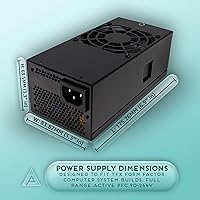
  • Dimensions: The unit measures 175.26 x 83.82 x 63.5mm (6.9″ x 3.3″ x 2.5″, L x W x H), matching the standard TFX enclosure specification.
  • Weight: The power supply weighs 2.46 pounds, which is typical for a unit of this size and internal component density.
  • Main Connector: A 20+4 pin ATX connector is included for motherboard power, and it can be configured as a 20-pin connection for older boards.
  • CPU Connector: One 8-pin EPS CPU connector is provided, which splits into two 4-pin halves to support motherboards requiring a standard 4-pin power input.
  • PCIe Connectors: Two 6+2 pin PCIe connectors are included, each configurable as either a 6-pin or 8-pin connection for compatible low-power discrete graphics cards.
  • SATA Connectors: Three SATA power connectors are provided, supporting up to three solid-state or mechanical storage drives simultaneously.
  • Molex Connectors: Three 4-pin Molex connectors are included for legacy peripherals such as older optical drives, case fans, or accessory adapters.
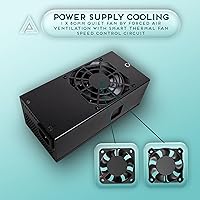
  • Cooling: A single 80mm fan provides forced-air ventilation, exhausting heat generated by internal components under operating load.
  • +12V Rail: The primary +12V rail is rated at 33A, which represents the main power budget for the CPU and any connected discrete graphics hardware.
  • 5Vsb Rail: The standby rail provides 2.5A at +5V, maintaining power to the motherboard and USB ports while the system is off or in sleep mode.
  • Cable Design: All cables are fixed and non-modular, meaning every cable is permanently attached to the unit and cannot be removed to simplify routing.
  • Protections: Five protection circuits are built in: Over-Voltage Protection, Overload Protection, Overcurrent Protection, Over-Temperature Protection, and Short Circuit Protection.
  • Output Rails: Output rails include +3.3V at 12A, +5V at 14A, +12V at 33A, -12V at 0.3A, and +5Vsb at 2.5A.
  • Compatibility: This unit is designed for standard desktop PCs using TFX-compatible cases, supporting EPS and PCIe connector types as listed by the manufacturer.

Related Reviews
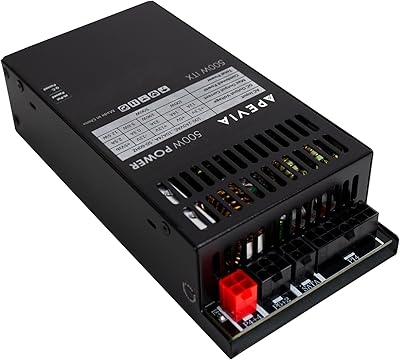
Apevia ITX-PFC500W 500W Flex ATX Power Supply
77%
88%
Cable Management
91%
Form Factor Compatibility
79%
Power Delivery & Rail Stability
54%
Fan Noise & Acoustics
72%
Build & Component Quality
More
Apevia Venus 500W ATX Power Supply
86%
92%
Value for Money
88%
Cooling Efficiency
91%
Protection Features
84%
Build Quality
85%
Compatibility with Components
More
Apevia Raptor 500W ATX Power Supply
72%
83%
Value for Money
88%
Ease of Installation
74%
Connector Availability
58%
Reliability & Longevity
79%
Fan Noise
More
Apevia SFX-AP500W 500W SFX Power Supply
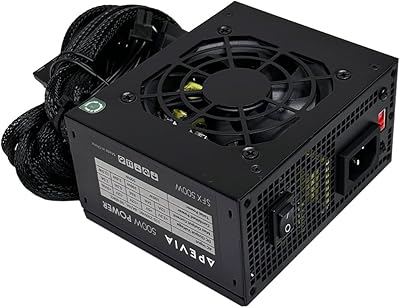
70%
83%
Value for Money
89%
Form Factor Fit
81%
Ease of Installation
52%
Cable Management
61%
Noise Level
More
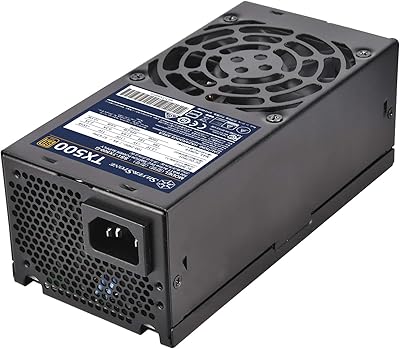
Apevia TFX-AP300W 300W Flex ATX Power Supply
80%
83%
Performance
89%
Value for Money
78%
Build Quality
75%
Cooling Efficiency
60%
Noise Level
More
SilverStone TX500-G 500W TFX Power Supply 80 PLUS Gold
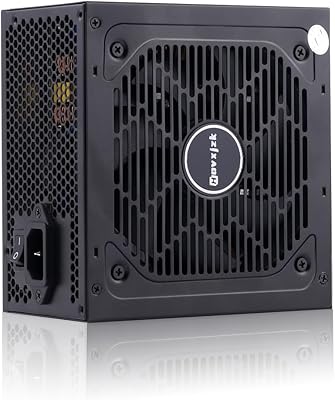
87%
87%
Performance
92%
Efficiency
90%
Build Quality
94%
Noise Level
88%
Thermals
More
Hovxjzk PS500WF 500W ATX Power Supply
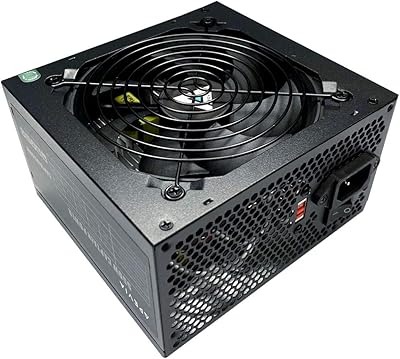
69%
83%
Value for Money
79%
Efficiency Rating
76%
Voltage Stability
58%
Cable Quality
74%
Noise Level
More
Apevia CAPTAIN550 550W ATX Power Supply
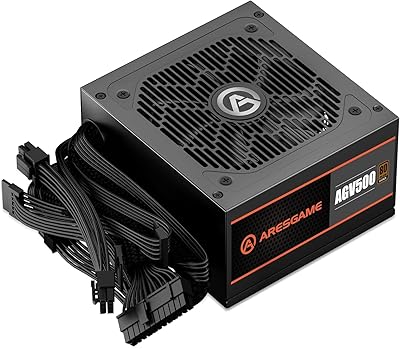
70%
78%
Value for Money
54%
Reliability
83%
Cable Quality & Aesthetics
81%
Connector Compatibility
84%
Ease of Installation
More
ARESGAME AGV 500W PSU
77%
91%
Value for Money
84%
Efficiency & Power Delivery
88%
Cable Quality & Aesthetics
82%
Noise Level
83%
Component Protection
More
Apevia Venus 450W ATX Power Supply
70%
83%
Value for Money
88%
Installation Ease
81%
Noise Level
74%
Connector Availability
62%
Build Quality
More

FAQ

It will fit if your case is designed around the TFX standard, which is a specific form factor smaller than ATX. Before ordering, check your case or existing PSU label for the letters TFX — if your current unit is SFX, FlexATX, or a proprietary OEM size, this unit likely will not fit.

Not necessarily. This compact PSU will not power on if any required cables are left disconnected. Make sure the 24-pin motherboard connector, the CPU power connector, and any other relevant cables are fully seated before assuming the unit is faulty. A loose connector is the most common cause of this issue.

It depends on the card. The two 6+2 pin PCIe connectors can power a low-wattage GPU, but this unit is not suited for mid-range or high-end graphics cards with significant power demands. If your GPU pulls 150W or more under load, you should look for a more robust PSU.

At idle or light loads, fan noise is generally minimal. Under sustained load, the 80mm fan has to spin faster to compensate for its smaller size, and several users have reported it becomes audible in that scenario. If quiet operation is a priority, this may be a consideration worth weighing.

No 80 Plus certification is listed for this unit by the manufacturer. This means there is no independently verified efficiency rating, which is a common trade-off at this price tier. It will function correctly, but you should not expect the same efficiency levels as certified units from premium brands.

Yes. The 8-pin CPU connector on this TFX power supply is designed to split into two separate 4-pin halves. You can push the halves apart and plug just one of them into a board with a 4-pin CPU socket — a common setup on budget or older motherboards.

You can power up to three SATA drives directly. There are also three Molex connectors, which can be used with Molex-to-SATA adapters if you need more ports, though adapters add a small amount of resistance and are not ideal for high-demand drives.

For a standard TFX enclosure, the cable lengths are generally adequate. However, some users working inside especially compact or unusually laid-out cases have found the fixed cables to be stiff and slightly short for clean routing. If your case has a tight layout, factor this in before purchasing.

Apevia typically offers a one-year limited warranty on their power supplies, though you should verify current terms directly with the retailer or manufacturer at the time of purchase. Customer support experiences from Apevia tend to be mixed based on community feedback, so keeping your purchase receipt is advisable.

Realistically, this Apevia 500W unit is best thought of as a practical, affordable solution rather than a long-haul workhorse. For office machines, media PCs, or systems you plan to retire within a few years, it does the job without issue. If you are building something you intend to run continuously or heavily for many years, spending more on a certified, higher-reliability PSU is the smarter move.

Where to Buy