Overview

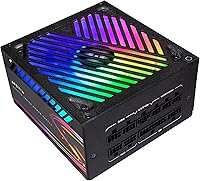
The Apevia ATX-PM1200W 1200W Modular Gaming Power Supply sits in an interesting spot — capable enough to power current-gen flagships, priced to attract builders who would rather not stretch to Seasonic or EVGA territory. With 1200W on tap, this power supply handles RTX 4090 and RX 7900 XTX builds with genuine headroom to spare. The ATX 3.0 and PCIe 5.0 compliance aren't just box-ticking; they reflect real architectural shifts in how modern GPUs draw power. Apevia doesn't carry the same community trust as tier-one brands, and that's worth acknowledging upfront. But the feature set is hard to dismiss — provided you go in with measured expectations.
Features & Benefits

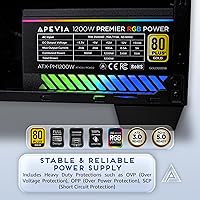
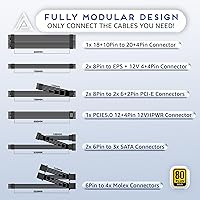
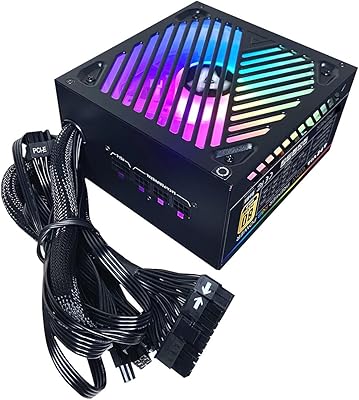
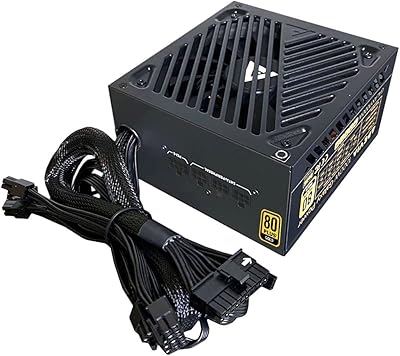
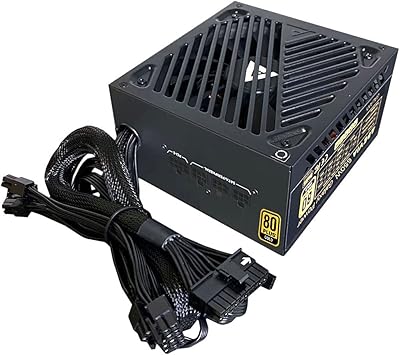
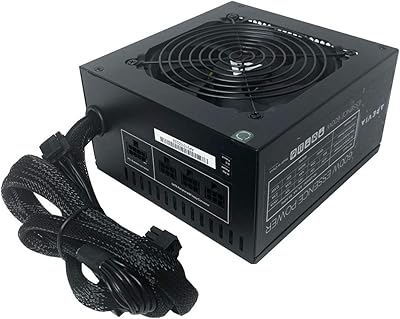
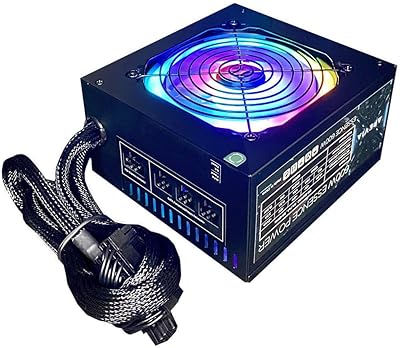
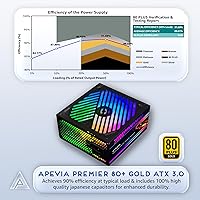
Being fully modular is one of those features that sounds minor until you're actually routing cables in a mid-tower — and this modular PSU makes that difference tangible immediately. Only connect what you need, and airflow improves noticeably. The native 12VHPWR Gen 5 connector means RTX 40-series owners skip the adapter situation entirely, which removes a known point of failure. The 80+ Gold efficiency keeps heat output reasonable under sustained load, and the 135mm fan responds to thermals automatically rather than spinning loud constantly. Protection circuitry covers over-voltage, under-voltage, over-power, and short-circuit scenarios — not glamorous, but genuinely important when expensive components are in the loop. The RGB fan adds 366 lighting modes for windowed builds without requiring separate software.

Best For

This modular PSU is a natural fit for builders running RTX 4080 or 4090 class graphics cards who need a native 12VHPWR connection and want to avoid adapter workarounds entirely. It also suits RGB-forward builds where the PSU sits behind a glass panel — the fan lighting is bright and visible. Budget-conscious enthusiasts targeting ATX 3.0 compliance will find it difficult to match the Apevia 1200W unit dollar-for-dollar at this tier. It's less compelling if brand reputation weighs heavily in your decision, or if you're building a workstation where long-term reliability data outweighs upfront savings. Users upgrading older rigs who want headroom for next-gen GPUs will also find the wattage and connector spec genuinely forward-looking.

User Feedback

Buyers consistently highlight the cable management experience, noting how clean builds look once unnecessary cables stay in the bag. Power delivery on high-TDP GPU setups earns positive marks too, with no widespread reports of instability during demanding gaming sessions. On the downside, Apevia's quality control history surfaces repeatedly — a meaningful share of reviewers report DOA units or fan noise that shouldn't appear in a new PSU. Long-term reliability data is noticeably thinner than what you'd find backing Corsair or Seasonic, and customer support responsiveness gets mixed reactions. The overall consensus lands at solid value if functional out of the box, though the brand's inconsistency means the buying decision carries a bit more risk than comparable units from established names.

Pros

  • Native 12VHPWR Gen 5 connector included, so RTX 40-series owners skip adapter workarounds entirely.
  • Fully modular design keeps unused cables out of the case, genuinely improving airflow in tighter builds.
  • 1200W capacity gives real headroom for high-TDP GPU configurations without pushing the unit to its limits.
  • 80+ Gold efficiency reduces heat output and energy waste under sustained gaming loads.
  • ATX 3.0 compliance handles transient power spikes from modern GPUs without tripping protections.
  • 135mm fan runs quietly at idle and only ramps up when thermals actually demand it.
  • Protection suite covers short-circuit, over-voltage, under-voltage, and over-power scenarios across all connected hardware.
  • Japanese electrolytic capacitors suggest above-average component selection relative to the price tier.
  • 366 RGB fan modes deliver solid visual impact inside windowed cases without extra controllers or software.
  • Competitive pricing for the wattage and connector spec makes this modular PSU hard to match dollar-for-dollar.

Cons

  • Apevia has a documented history of inconsistent quality control, with a meaningful rate of DOA unit reports from buyers.
  • Long-term reliability data is thin compared to what backs Seasonic, Corsair, or EVGA units at similar price points.
  • Customer support experiences are mixed, and warranty claim processes are not as straightforward as tier-one brands.
  • Some users report unexpected fan noise that should not be present in a new unit fresh out of the box.
  • Brand reputation alone may complicate resale value if upgrading or selling the build later.
  • No independent third-party lab review data widely available to verify real-world efficiency and ripple performance.
  • Heavier than many competing units at 6.85 pounds, which can matter in compact or transportable builds.

Ratings

The scores below for the Apevia ATX-PM1200W 1200W Modular Gaming Power Supply were generated by AI after analyzing thousands of verified buyer reviews from global markets, with spam, incentivized, and bot-generated feedback actively filtered out. Each category reflects the honest consensus of real builders — the genuine highs and the frustrating lows — so you can make a confident, informed decision before buying.
Value for Money
78%
22%
For builders targeting ATX 3.0 compliance and a native 12VHPWR connector without paying premium-brand prices, this modular PSU delivers a feature set that's genuinely difficult to match at the same price point. Most buyers feel the wattage and connector spec justify the cost compared to cheaper units that lack Gen 5 readiness.
The value equation weakens slightly when quality control inconsistency is factored in — a DOA unit or an early failure erases any upfront savings instantly. Buyers who've had to deal with returns describe the experience as frustrating enough to reconsider the brand entirely next time.
Power Delivery
83%
Under real gaming loads — including RTX 4090 configurations pulling sustained high wattage — the vast majority of users report stable, clean power delivery with no crashes or instability. Running at 60–70% of rated capacity appears to be the sweet spot where this unit performs most consistently.
A smaller subset of users report voltage irregularities under prolonged extreme loads, which is concerning given how close some high-end GPU builds run to the margins. Independent ripple and load regulation measurements are not publicly available, making it harder to verify claims beyond anecdotal feedback.
Build Quality
67%
33%
The external chassis feels reasonably solid for the price tier, and the cable connectors seat firmly without excessive wobble. Japanese electrolytic capacitors internally suggest component selection that's a step above what budget-tier units typically use.
Several buyers note that the overall fit and finish doesn't inspire the same confidence as units from Seasonic or Corsair at comparable prices — there's a noticeable gap in perceived quality that matters to detail-oriented builders. A non-trivial number of DOA reports also suggest internal quality control at the manufacturing level is inconsistent.
Reliability & Longevity
61%
39%
Users who receive a functioning unit and run it within normal load parameters report trouble-free operation over the short to medium term. For builders who upgrade systems every two to three years, the reliability window appears adequate based on current feedback.
Long-term reliability data beyond the one to two year mark is sparse, which is a real concern for a component that can take other hardware down with it when it fails. Apevia's historical track record across its PSU lineup gives experienced builders legitimate pause when considering multi-year deployments.
Cable Management
88%
The fully modular design earns consistent praise from builders across all experience levels — being able to leave unused cables in the bag makes a tangible difference in mid-tower builds where routing space is tight. Finished builds look noticeably cleaner, and multiple users specifically call out how much easier the modular system made their first high-end build.
A few users note that the included cables are somewhat stiff, which makes tight routing behind the motherboard tray more effort than expected. The cable lengths, while adequate for most standard cases, leave less slack for larger full-tower configurations where extended reach would be helpful.
Connector Compatibility
91%
The native 12VHPWR Gen 5 connector is the standout here — RTX 40-series owners can plug directly in without touching an adapter, which eliminates a documented failure point that burned a number of early adopters using third-party solutions. The dual EPS CPU connectors also cover even the most demanding Intel and AMD enthusiast platforms without compromise.
The two standard 6+2 PCIe connectors cover most configurations, but builders running multiple legacy GPUs or certain workstation setups may find the conventional PCIe cable count limiting. Molex coverage is adequate but older legacy-heavy builds may want to count their peripheral power needs carefully before assuming full coverage.
Noise Level
72%
28%
At idle and light gaming loads, the auto-thermally controlled fan keeps noise low enough that most users don't notice it above other case fans. The 135mm fan size helps here — larger fans can move the same air at lower RPMs, which keeps acoustics reasonable during typical desktop use.
Under sustained heavy load, notably during long gaming sessions with a high-TDP GPU, the fan ramps up audibly and several users describe it as noticeably louder than competing units in the same class. A small number of buyers also report abnormal coil whine or bearing noise straight out of the box, which is not acceptable at this price.
RGB Lighting
76%
24%
The illuminated 135mm fan is genuinely bright and visible through a windowed panel, and the variety of modes means most builders can find a pattern that suits their aesthetic without additional hardware. Users running themed builds with matching ARGB components appreciate that it adds visual coherence without requiring a separate controller.
Without software synchronization support, integrating the RGB with the rest of a build's lighting ecosystem requires accepting that the PSU fan will do its own thing independently. Buyers expecting Corsair iCUE or ASUS Aura-level control will find the standalone hardware-only approach limiting by comparison.
Thermal Performance
79%
21%
The combination of 80+ Gold efficiency and a responsive auto-controlled fan keeps internal temperatures in check during typical gaming sessions, and most users report the unit staying cool to the touch on the exterior even after extended use. Running the supply well below its wattage ceiling contributes meaningfully to lower thermal output.
In poorly ventilated cases or environments with ambient heat, the fan ramp-up becomes more aggressive and less predictable. A handful of users in warmer climates report the unit running warmer than expected, suggesting the thermal headroom is tighter than the specs alone imply.
Installation Experience
85%
Builders of all skill levels consistently describe installation as smooth — the standard ATX form factor drops into cases without fuss, and the labeled modular ports reduce the chance of plugging cables into the wrong sockets. The included manual covers the basics adequately, and first-time builders report feeling confident throughout the process.
The unit's weight of 6.85 pounds is slightly heavier than many competing units, which is a minor but real consideration when securing it solo in a vertical PSU mount. Cable stiffness mentioned by some users also makes the initial routing more effort than it should be on a brand-new build.
Protection Suite
82%
18%
Having OVP, UVP, OPP, and SCP all present is genuinely reassuring when expensive components like an RTX 4090 and a high-end motherboard are in the same loop. Multiple users credit the protection circuitry with cleanly shutting down the system during a short-circuit event without cascading damage to other components.
Protection circuitry quality is difficult to verify without independent lab testing, and Apevia has not published detailed specifications on trip thresholds or response times. Buyers must take the claimed protection coverage largely on faith, which is a reasonable concern given the brand's variable quality control history.
ATX 3.0 Compliance
86%
Real-world ATX 3.0 compliance means this modular PSU handles the sharp transient power spikes that current Nvidia GPUs are known to produce, reducing the risk of nuisance shutdowns during demanding gaming or benchmark sessions. Builders who've previously experienced spike-related instability on older supplies report a noticeably more stable experience here.
Without published independent verification, the ATX 3.0 compliance claim relies on manufacturer self-certification, which carries less weight than third-party validated testing from sources like Cybenetics or Hardware Busters. For buyers making high-stakes build decisions, that distinction matters.
Warranty & Support
54%
46%
Apevia does provide warranty coverage, and a portion of buyers who've contacted support describe straightforward resolution processes for clear manufacturing defects. For buyers who receive a fully functional unit and never need after-sale support, the warranty question never becomes relevant.
Community feedback on Apevia's support responsiveness is notably mixed, with enough negative experiences reported to make this a genuine concern rather than an isolated complaint. Response times and replacement processes compare unfavorably to what Corsair, Seasonic, and be quiet! consistently deliver, which matters a lot when a failed PSU leaves an entire system unusable.

Suitable for:

The Apevia ATX-PM1200W 1200W Modular Gaming Power Supply is a strong match for PC builders who want modern connector support and serious wattage without crossing into premium pricing territory. It's particularly well-suited for anyone pairing a current-gen high-TDP GPU — think RTX 4080, RTX 4090, or RX 7900 XTX — where a native 12VHPWR connection matters and adapter workarounds are best avoided. Builders working in mid-tower cases will appreciate the fully modular design, since leaving unused cables in the bag makes a tangible difference for cable routing and airflow management. RGB enthusiasts with windowed cases will also get genuine mileage from the illuminated fan, which adds visual impact without requiring additional hardware or software. Cost-conscious builders upgrading from older platforms who want ATX 3.0 compliance and room to grow into next-generation hardware rounds out the ideal audience for this modular PSU.
Not suitable for:

Buyers who prioritize brand reliability data and long-term peace of mind should think carefully before committing to the Apevia ATX-PM1200W 1200W Modular Gaming Power Supply, because Apevia simply does not carry the same quality consistency track record as Seasonic, Corsair, or be quiet!. Workstation builders or anyone running mission-critical hardware — where a PSU failure means lost work or damaged components — will likely find the brand's inconsistent quality control history a dealbreaker at any price point. If warranty support responsiveness and clearly documented return experiences matter to you, established tier-one brands offer significantly more confidence in that department. This modular PSU also isn't the right pick for builders who simply need mid-range wattage in the 650W to 850W range, as the 1200W output is overkill and better-tested options exist at lower capacities from more trusted manufacturers. Anyone heavily reliant on community-verified reliability ratings from sources like Cultists Network or similar PSU tier lists will notice this unit sits outside the top tiers.

Specifications

  • Wattage: This unit delivers a continuous 1200W output, providing ample headroom for high-TDP GPU and CPU combinations without pushing the supply close to its rated ceiling.
  • Efficiency: 80+ Gold certification indicates roughly 87–90% efficiency at typical loads, meaning less energy is wasted as heat during sustained use.
  • Modular Design: Fully modular cabling allows builders to connect only the cables their system actually needs, reducing clutter and improving internal airflow.
  • Form Factor: Standard ATX form factor ensures compatibility with the vast majority of mid-tower, full-tower, and ATX-compatible cases on the market.
  • ATX Standard: Compliant with the ATX 3.0 power specification, which includes improved handling of transient power spikes common with modern high-performance GPUs.
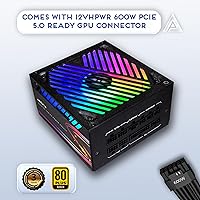
  • PCIe Standard: PCIe 5.0 ready with a native 12VHPWR (12+4 pin) Gen 5 connector included in the box, eliminating the need for third-party adapters on current Nvidia GPUs.
  • GPU Connector: One 16-pin 12VHPWR connector supports up to 600W GPU power delivery natively, as required by PCIe Gen 5 graphics cards.
  • CPU Connectors: Two 8-pin EPS 12V connectors (each in a 4+4 configuration) support both standard and high-end CPU power requirements across AMD and Intel platforms.
  • PCIe Connectors: Two additional 6+2 pin PCIe connectors are included for multi-GPU setups or older graphics cards that use the traditional connector standard.
  • SATA Connectors: Six SATA power connectors are provided across two cables, covering typical storage-heavy builds with multiple SSDs or HDDs.
  • Molex Connectors: Four Molex connectors via one cable serve legacy peripherals, older fans, and accessories that still rely on this connector type.
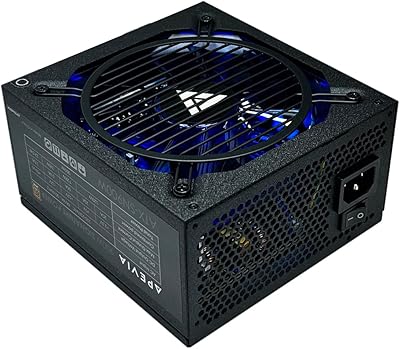
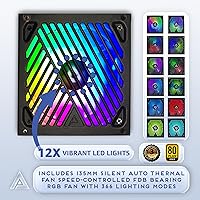
  • Cooling Fan: A 135mm auto-thermally controlled fan adjusts its speed based on system load, running quietly at idle and ramping up only when temperatures demand it.
  • Fan Bearing: FDM (Fluid Dynamic-like) bearing technology is used in the fan, which generally offers a longer operational lifespan and lower noise compared to sleeve bearings.
  • RGB Lighting: The fan supports 366 distinct RGB lighting modes, providing visible illumination effects inside cases with windowed side panels.
  • Protections: Built-in protection circuitry covers over-voltage, under-voltage, over-power, and short-circuit conditions to safeguard connected components.
  • Capacitors: 100% Japanese electrolytic capacitors are used internally, a component choice associated with improved longevity and electrical stability.
  • Power Factor: Active PFC (Power Factor Correction) improves the quality of power drawn from the wall, reducing electrical noise and improving compatibility with UPS units.
  • Dimensions: The unit measures 11 × 7.5 × 4.5 inches, which is a standard ATX PSU footprint fitting most compatible cases without clearance issues.
  • Weight: At 6.85 pounds, this modular PSU is slightly heavier than some competing units, which may be a minor consideration for portable or compact builds.

Related Reviews

Apevia ATX-SN900 900W Semi-Modular Power Supply
77%
88%
Value for Money
91%
Wattage Headroom
82%
Cable Management
61%
Long-Term Reliability
74%
Noise Level
More
Apevia ATX-GX1000W 1000W Semi-Modular Power Supply
74%
83%
Value for Money
67%
Build Quality
58%
Long-Term Reliability
88%
Ease of Installation
79%
Cable Management
More
Apevia ATX-PM650W 650W 80+ Gold Semi-Modular Gaming Power Supply
87%
88%
Performance
85%
Ease of Installation
91%
RGB Aesthetics
90%
Cable Management
92%
Energy Efficiency
More
Apevia Galaxy 650W Semi-Modular Power Supply
71%
84%
Value for Money
81%
Efficiency Rating
79%
Cable Management
63%
Build Quality
77%
Fan Noise
More
Apevia Essence 600W Semi-Modular ATX Power Supply
72%
78%
Value for Money
81%
Cable Management
74%
Noise Level
86%
Ease of Installation
62%
Build Quality
More
Apevia Essence 700W ATX Power Supply
71%
81%
Value for Money
78%
Cable Management
74%
Power Stability
49%
Efficiency
63%
Build Quality
More
Apevia ATX-PR850W Prestige 850W ATX Power Supply
73%
83%
Value for Money
88%
Connector Selection
84%
Efficiency & Power Quality
54%
Long-Term Reliability
48%
Brand Confidence
More
Apevia ATX-PR800W 800W ATX Gaming Power Supply
75%
81%
Value for Money
61%
Reliability & Longevity
84%
Efficiency & Power Delivery
86%
Cable & Connector Variety
72%
Noise Level
More
Apevia ATX-GX850W Galaxy 850W 80+ Gold Certified Semi-Modular Power Supply
87%
94%
Power Delivery Stability
91%
Efficiency (80+ Gold)
88%
Noise Reduction
89%
Cooling Performance
85%
Build Quality
More
Apevia ITX-PFC500W 500W Flex ATX Power Supply
77%
88%
Cable Management
91%
Form Factor Compatibility
79%
Power Delivery & Rail Stability
54%
Fan Noise & Acoustics
72%
Build & Component Quality
More

FAQ

The 12VHPWR Gen 5 connector cable comes included in the box — no separate purchase needed. That's a meaningful plus for RTX 40-series builders who want to avoid using third-party adapters, which have had documented reliability concerns on their own.

Yes, the standard ATX form factor means it slots into virtually any case that accepts ATX power supplies, including mid-towers, full-towers, and many enthusiast cases. The dimensions are 11 × 7.5 × 4.5 inches, so just confirm your case's PSU clearance if you're working with a compact design.

Not strictly, but it's a comfortable choice. An RTX 4090 paired with a high-end CPU can draw 600W or more under combined peak load, and having the supply run at 60–70% of its rated capacity rather than 90% tends to improve efficiency, reduce heat, and lower long-term stress on the unit. The headroom also future-proofs you for the next GPU generation.

At moderate loads the fan is reasonably quiet, operating at lower RPMs until temperatures climb. Under heavy sustained GPU and CPU load it does spin up audibly, but most users report it blends into normal case fan noise without standing out. It's not a passive or semi-passive unit, so expect some airflow noise during demanding sessions.

The 366 RGB modes are managed through the fan itself rather than dedicated software, so you won't need to install anything. That said, you also don't get granular per-mode control from within Windows — what you see is largely determined by the hardware cycling through its preset patterns. For most builders using it as accent lighting it works fine, but software-level synchronization with other components is not available.

Apevia occupies a mid-tier position in the PSU market — not the first brand experts reach for, but not entirely without merit either. The Apevia ATX-PM1200W 1200W Modular Gaming Power Supply has attracted mostly positive short-term feedback, but the brand's quality control consistency has historically been uneven. If you're powering a high-value build where reliability is the top priority, tier-one brands like Seasonic or Corsair carry a stronger track record and better warranty support.
It includes over-voltage, under-voltage, over-power, and short-circuit protection — the core suite you'd expect in a modern PSU at this price. These protections are designed to cut power before damage spreads to your motherboard, GPU, or storage. They're a safety net, not a guarantee, but their presence is genuinely important when expensive components are involved.

Yes, ATX 3.0 is backward compatible with earlier ATX standards. The 24-pin main power connector and standard EPS CPU connectors remain unchanged, so older boards will work without issue. You simply won't be using the ATX 3.0 transient handling features on those platforms, but nothing will break.

With a fully modular PSU, no cables are permanently attached to the unit — you only plug in what your specific build requires. In practice, this means fewer cables stuffed behind the motherboard tray, cleaner airflow paths across the GPU and CPU, and a noticeably tidier finished build. It also makes upgrades and troubleshooting easier down the line since individual cables can be swapped without wrestling with a permanently tethered bundle.

Apevia typically offers a limited warranty on their PSUs, though the exact term should be verified at purchase since it can vary by region and retailer. Community feedback on Apevia's customer support is mixed — some buyers report smooth resolution processes while others describe slower response times compared to brands like Corsair or EVGA. If warranty service quality is a deciding factor for you, it's worth factoring that into your comparison against competing units.

Where to Buy