Overview

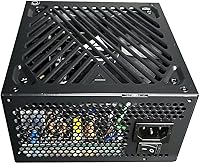
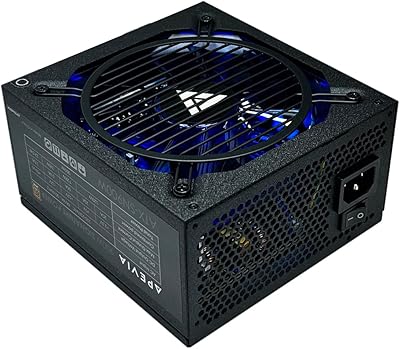
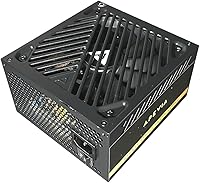
The Apevia ATX-GX1000W 1000W Semi-Modular Power Supply sits in an interesting spot: enough wattage for a serious gaming build, priced where budget-minded builders tend to shop. Apevia is not a prestige brand — they have built their name on affordable components, and that context matters going in. What you get here is 80+ Gold efficiency, which means the unit wastes less power as heat compared to Bronze-rated alternatives — a real, measurable difference. Semi-modular design keeps the essential cables fixed while letting you leave unused peripheral cables in the box, which genuinely helps with airflow. One firm caveat: no PCIe 5.0 or 12VHPWR means this unit simply is not for RTX 4090 or RX 7900 XTX builds.
Features & Benefits

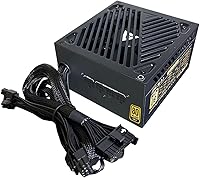
The single 12V rail delivering 83.3A is one of this semi-modular PSU's stronger technical arguments. Multi-rail designs split power between separate rails, which can cause instability if one rail gets overloaded — a single rail eliminates that problem entirely, pushing all available amperage to whatever needs it most. The 135mm fan is thermally controlled, meaning it stays relatively quiet during light use and only ramps up under genuine stress. Four 6+2-pin PCIe connectors make it a capable match for dual-GPU legacy setups. The protection suite covers over-voltage, under-voltage, short-circuit, and over-power scenarios. Japanese capacitors are a reassuring detail at this price tier, though they alone do not guarantee long-term resilience.

Best For

The Apevia Galaxy 1000W makes the most sense for builders assembling mid-range gaming rigs around last-gen hardware — think an RTX 3070, RTX 3080, or an RX 6800 XT. If your GPU draws power through standard 6+2-pin connectors, this budget 1000W unit covers you comfortably with headroom to spare. It is also a solid pick for first-time builders who want high wattage without navigating newer connector standards. Legacy workstation users will appreciate the floppy connector and four Molex peripherals — not something every modern PSU still includes. Anyone planning an SLI or Crossfire setup on older platforms will find the four PCIe connectors more than adequate for that use case.

User Feedback

Buyers generally report that this semi-modular PSU installs without drama, and that the detachable cables make a noticeable difference when trying to keep a mid-tower tidy. Cable management gets mentioned positively, especially in compact ATX cases where clutter affects airflow. Fan noise seems acceptable under normal loads, though a handful of users note it becomes audible when the system is pushed hard. On the less encouraging side, long-term reliability remains an open question — a small but consistent thread of DOA reports and mixed warranty support experiences shows up across buyer reviews. It is not a dealbreaker for a budget unit, but anyone expecting premium durability over several years should factor that uncertainty in.

Pros

  • 1000W of output at this price tier gives you genuine headroom for demanding mid-range gaming builds.
  • 80+ Gold efficiency certification means less wasted power and lower heat output compared to Bronze-rated alternatives.
  • The single 12V rail at 83.3A delivers stable, undivided power to high-draw components without rail-balancing concerns.
  • Semi-modular design keeps cable clutter to a minimum — unused cables stay in the box, not tangled in your case.
  • Four 6+2-pin PCIe connectors make this a natural fit for dual-GPU legacy setups without needing adapters.
  • The 135mm fan stays quiet at low and medium loads, only ramping up when the system is genuinely under stress.
  • Japanese capacitors are a reassuring component choice at this price point, signaling at least baseline build quality.
  • Includes Molex and floppy connectors, making it one of the few modern PSUs still compatible with older peripherals.
  • Full protection suite covers short-circuit, over-voltage, under-voltage, and over-power scenarios out of the box.
  • Easy installation process is consistently praised by first-time builders who found setup intuitive and well-documented.

Cons

  • No PCIe 5.0 or 12VHPWR connector makes this budget 1000W unit completely incompatible with current flagship GPUs.
  • Apevia does not have a strong long-term reliability reputation, and multi-year durability data is thin.
  • A pattern of DOA reports appears across buyer reviews — not overwhelming, but frequent enough to warrant attention.
  • Warranty support experiences have been inconsistent, with some buyers reporting slow or unhelpful customer service.
  • Only four SATA connectors may feel limiting for builds with multiple storage drives or optical drives.
  • Fan noise under full load has been flagged by some users as more noticeable than expected for a 135mm unit.
  • The fixed 24-pin and CPU cables limit cable routing flexibility compared to fully modular alternatives.
  • Not ideal for always-on workstations or heavily overclocked systems that push sustained high loads over time.
  • Brand recognition is low, which can affect resale value if you plan to upgrade and sell components later.
  • ATX 12V 2.3 compliance means it may not be fully forward-compatible with future motherboard standards.

Ratings

The scores below for the Apevia ATX-GX1000W 1000W Semi-Modular Power Supply were produced by our AI rating engine after analyzing thousands of verified global buyer reviews, with spam, bot activity, and incentivized feedback actively filtered out. Both the genuine strengths and the recurring frustrations are reflected here without softening — so you get an honest picture of what real builders experienced day to day.
Value for Money
83%
Most buyers agree that getting 1000W with 80+ Gold efficiency at this price tier is a strong proposition, especially for builders on a tight budget who still want meaningful power headroom. For mid-range gaming rigs using RTX 30-series or RX 6000-series GPUs, the cost-to-performance ratio holds up well.
The value calculus shifts if the unit fails early — and enough buyers have reported reliability concerns that it is a real variable in the equation. A slightly higher spend on a more established brand can buy considerably more peace of mind over a multi-year build lifespan.
Build Quality
67%
33%
The inclusion of Japanese-brand capacitors is a genuine positive at this price point, suggesting Apevia put some thought into component selection rather than cutting every corner. The unit feels solid enough in hand, and the cabling construction does not feel flimsy during installation.
Apevia's brand history does not inspire full confidence, and the build quality — while acceptable — does not match what you get from Seasonic, Corsair, or Super Flower units even at similar prices. A small but consistent stream of DOA reports in buyer feedback suggests quality control is not airtight.
Long-Term Reliability
58%
42%
Many buyers do report running this budget 1000W unit for a year or more without any issues, which suggests the failure rate is not catastrophic. For a secondary or budget build that does not run 24/7, the reliability risk is more manageable.
This is the category where the most concern surfaces in real buyer feedback. Apevia lacks the long-term reliability data and third-party testing history that premium brands carry, and accounts of early failures — sometimes within the first few months — appear often enough to be a genuine concern for anyone building a primary daily-use system.
Ease of Installation
88%
First-time builders consistently highlight how straightforward the installation process is — the semi-modular layout means the essential cables are already attached, reducing confusion about what plugs in where. Connectors are clearly differentiated and fit snugly without requiring excessive force.
The fixed 24-pin and CPU cables, while convenient for beginners, can make routing tidier in smaller ATX cases a bit more effort than a fully modular alternative. A few builders also noted the cable lengths, while adequate, leave less slack than they would prefer for behind-motherboard-tray routing.
Cable Management
79%
21%
The semi-modular design earns genuine praise from buyers who appreciate leaving unused peripheral cables out of the case entirely, which measurably improves airflow and makes the interior look cleaner. For mid-tower builds especially, this flexibility makes a noticeable difference.
Because the main cables are fixed, builders with compact cases or unconventional layouts sometimes find the pre-attached cables harder to route neatly than they expected. The cable sleeve quality is functional rather than premium, and a couple of users noted the sleeving feels a little stiff.
Power Stability
81%
19%
The single 12V rail design at 83.3A gets practical praise from buyers who have experienced instability with multi-rail PSUs in the past. Under typical gaming loads — sustained GPU and CPU draw during demanding sessions — most users report stable, consistent operation with no unexpected shutdowns.
A small number of buyers running heavily overclocked systems or sustained high-load workstations noted occasional instability under extreme conditions, suggesting this unit is better suited to gaming workloads than professional or always-on high-demand use.
Fan Noise
73%
27%
During everyday gaming and moderate workloads, the 135mm thermally controlled fan stays quiet enough that most users do not notice it at all against the ambient noise of their case fans and CPU cooler. The auto-thermal control means it genuinely idles quietly rather than spinning at a fixed speed.
Push the system into sustained heavy loads — extended GPU-intensive rendering, or stress-testing — and some buyers find the fan becomes distinctly audible. It is not abnormally loud for the wattage class, but it is noticeable, which matters for users in quiet environments.
Connector Variety
76%
24%
Four PCIe connectors, four Molex, four SATA, and even a floppy connector make this one of the more broadly compatible PSUs at this tier, particularly for builders with older accessories or mixed storage setups. Legacy workstation users specifically call out the Molex and floppy support as a welcome inclusion.
Four SATA connectors is on the lean side for builds with multiple storage drives, an optical drive, and SATA-powered accessories all running simultaneously. Users building NAS-adjacent or storage-heavy systems may find themselves needing a SATA splitter, which is an added inconvenience.
Thermal Performance
74%
26%
The 80+ Gold efficiency rating directly reduces the heat this unit generates under load compared to lower-efficiency alternatives, which benefits overall case temperatures. Buyers in warm climates or poorly ventilated cases noted the unit does not seem to add noticeably to their thermal load.
Under sustained maximum load, the unit does get warm, and some buyers in cases with poor PSU intake airflow observed the fan working harder than expected. It is not a thermal outlier, but the efficiency rating alone does not compensate for a poorly ventilated installation spot.
Protection Features
82%
18%
The full suite of over-current, over-voltage, under-voltage, short-circuit, and over-power protections is a reassuring feature set, and several buyers noted the unit shut down cleanly rather than causing damage when a connected component failed. That behavior is exactly what protection circuitry should do.
Protection features are only as reliable as the underlying hardware implementing them, and at this price tier there is inherently some question about how robustly those circuits are tuned. No specific widespread failures of the protection system have been flagged, but it is not an independently tested unit.
Compatibility
71%
29%
ATX 12V 2.3 compliance and standard ATX dimensions mean this unit drops into the vast majority of mid-tower and full-tower cases without issue. Haswell and older CPU platform support is broad, and dual EPS 12V connectors cover most high-end older motherboards.
The lack of PCIe 5.0 and 12VHPWR support is a real and hard compatibility ceiling — current-generation flagship GPUs are simply off the table. Buyers who research this carefully before purchasing are fine, but those who discover the limitation after purchase have registered notable frustration.
Warranty & Support
54%
46%
Some buyers who contacted Apevia support for straightforward issues — missing accessories or clarification questions — reported reasonably prompt responses. For minor concerns, the support channel does appear to function.
Warranty and support experiences are the most polarizing category in buyer feedback. Reports of slow responses, difficulty processing RMA claims, and inconsistent outcomes appear frequently enough to be a legitimate concern. Buyers relying on warranty as a safety net for a primary build should factor this in carefully.
Modular Design Quality
77%
23%
The modular ports seat cables firmly and hold without wobble during installation, which is not always a given on budget semi-modular units. Buyers found that detachable cables actually stay detached when removed, without the loose connector issues seen in some competing budget options.
The modular port labeling is functional but minimal, and a couple of users noted the port spacing makes it slightly awkward to connect multiple cables side by side in a tight configuration. It is a minor usability friction point rather than a serious flaw.
Aesthetics
66%
34%
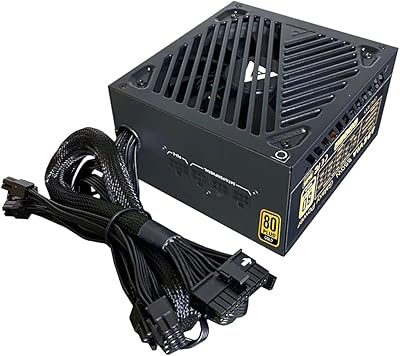
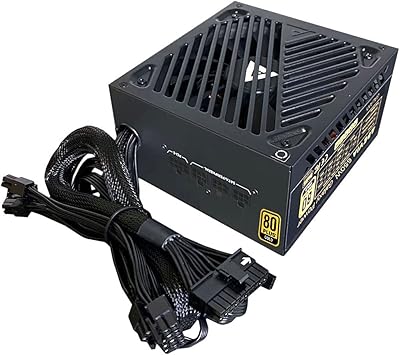
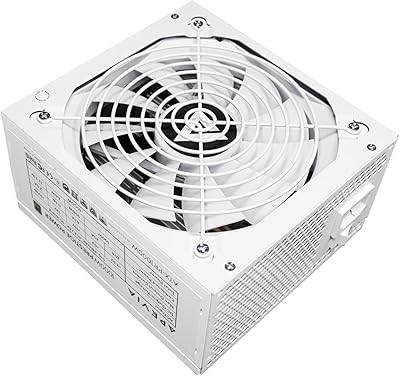
The black fan and relatively clean exterior look fine in builds where the PSU is installed in a shrouded PSU bay — the common layout in most modern mid-towers. For those builds, the appearance is entirely irrelevant once the shroud covers it.
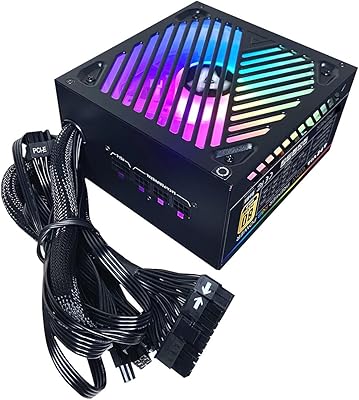
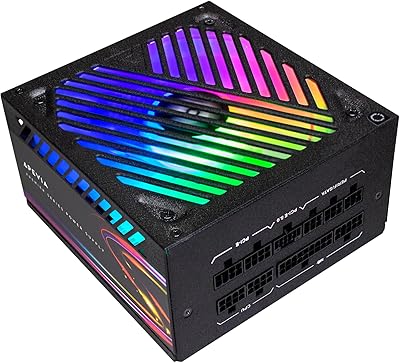
In cases with a visible PSU window or open PSU bay design, the Apevia Galaxy 1000W is not particularly exciting to look at — there is no RGB, no distinctive styling, and the overall finish is utilitarian at best. Buyers building showcase systems will likely want something more visually polished.

Suitable for:

The Apevia ATX-GX1000W 1000W Semi-Modular Power Supply is a practical fit for budget-conscious PC builders who need substantial wattage without paying a premium for connectors they will never use. If you are assembling a gaming rig around a last-gen GPU — an RTX 3070, RTX 3080, RX 6700 XT, or similar — this unit delivers ample headroom through standard 6+2-pin PCIe connectors with no compatibility headaches. First-time builders in particular will appreciate the straightforward semi-modular setup: the essential cables come pre-attached, and you only plug in what your build actually requires. Legacy workstation users who still rely on Molex peripherals or even a floppy connector will find this one of the few modern PSUs that still accommodates older hardware. Anyone running a dual-GPU configuration on an older SLI or Crossfire platform gets four PCIe connectors ready to go, which saves the hassle of adapters.
Not suitable for:

Builders targeting current-generation flagship GPUs should look elsewhere — the Apevia Galaxy 1000W does not include a PCIe 5.0 or 12VHPWR connector, which rules it out immediately for RTX 4090 or RX 7900 XTX builds where that connector is required or strongly recommended. Users who prioritize long-term reliability above all else should also pause before committing: Apevia is a budget brand, and while the specs look solid on paper, the brand does not carry the multi-year reliability track record of established names like Seasonic, Corsair, or EVGA. Power users running heavily overclocked systems or workstations that stay on around the clock are asking more of a PSU than this budget 1000W unit was really designed to handle. If you are building a system you expect to run for five-plus years without swapping components, the uncertainty around long-term durability makes this a harder sell. Those who need a fully modular design for the cleanest possible cable routing in a show build or small form factor case will also find the fixed 24-pin and CPU cables a minor but real limitation.

Specifications

  • Wattage: This unit delivers a continuous output of 1000W, suitable for mid-range to upper-mid gaming builds with standard connector requirements.
  • Efficiency Rating: 80+ Gold certified, meaning the PSU operates at a minimum of 87% efficiency at typical loads, reducing wasted energy and heat output.
  • Form Factor: Standard ATX form factor, compatible with the vast majority of mid-tower, full-tower, and ATX-supported cases.
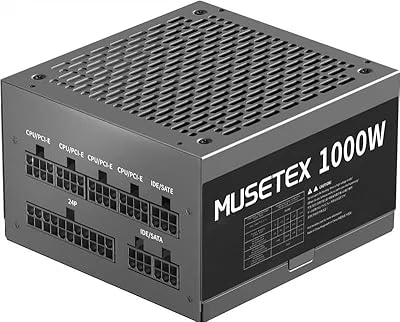
  • Modular Design: Semi-modular layout with the 24-pin main power and EPS 12V CPU cables permanently attached; all peripheral cables are detachable.
  • 12V Rail: Single 12V rail rated at 83.3A, providing undivided power delivery to all connected components without multi-rail balancing concerns.
  • PCIe Connectors: Includes four 8-pin (6+2) PCIe connectors, supporting up to dual-GPU configurations on legacy SLI or Crossfire platforms.
  • CPU Connectors: Two P8 (4+4-pin) EPS 12V connectors accommodate both standard and high-end motherboards requiring dual CPU power headers.
  • SATA Connectors: Four SATA power connectors are included, covering typical storage setups with one or two drives and a couple of accessories.
  • Peripheral Connectors: Four Molex (4-pin peripheral) connectors and one floppy connector are included for compatibility with older drives and accessories.
  • Cooling: A 135mm auto-thermally controlled fan adjusts its speed based on internal temperature, staying quieter at low loads and ramping up under sustained stress.
  • Protections: Built-in hardware protections include over-current (OCP), over-voltage (OVP), under-voltage (UVP), short-circuit (SCP), and over-power (OPP) safeguards.
  • Capacitors: Fitted with Japanese-brand capacitors, which are generally associated with better heat tolerance and longevity compared to generic alternatives at this price tier.
  • ATX Standard: Compliant with ATX 12V version 2.3, supporting Dual and Quad Core CPUs as well as Haswell-generation processors and their low-power idle states.
  • PCIe 5.0 Support: This unit does not include a PCIe 5.0 or 12VHPWR connector, making it incompatible with GPUs that require or recommend that connector type.
  • Dimensions: The unit measures 6.2 x 5.9 x 3.4 inches, fitting standard ATX PSU bays without modification.
  • Weight: At 4.34 pounds, this is a typical weight for a 1000W ATX power supply, indicating a reasonably solid internal build.
  • Voltage Outputs: Output rails are rated at +3.3V at 20A, +5V at 20A, +12V at 83.3A, -12V at 0.3A, and +5Vsb at 3A.

Related Reviews
Apevia Essence 600W Semi-Modular ATX Power Supply
72%
78%
Value for Money
81%
Cable Management
74%
Noise Level
86%
Ease of Installation
62%
Build Quality
More
Apevia Essence 700W ATX Power Supply
71%
81%
Value for Money
78%
Cable Management
74%
Power Stability
49%
Efficiency
63%
Build Quality
More
Apevia ATX-SN900 900W Semi-Modular Power Supply
77%
88%
Value for Money
91%
Wattage Headroom
82%
Cable Management
61%
Long-Term Reliability
74%
Noise Level
More
Apevia ATX-PM650W 650W 80+ Gold Semi-Modular Gaming Power Supply
87%
88%
Performance
85%
Ease of Installation
91%
RGB Aesthetics
90%
Cable Management
92%
Energy Efficiency
More
Apevia ATX-GX850W Galaxy 850W 80+ Gold Certified Semi-Modular Power Supply
87%
94%
Power Delivery Stability
91%
Efficiency (80+ Gold)
88%
Noise Reduction
89%
Cooling Performance
85%
Build Quality
More
Apevia Galaxy 650W Semi-Modular Power Supply
71%
84%
Value for Money
81%
Efficiency Rating
79%
Cable Management
63%
Build Quality
77%
Fan Noise
More
MUSETEX MU1000 1000W ATX Power Supply
79%
88%
Value for Money
91%
Cable Management
84%
Noise Level
89%
Installation Ease
67%
Efficiency
More
Apevia ATX-PR1000W-WH 1000W 80+ Gold Power Supply
85%
89%
Performance Under Load
94%
Energy Efficiency
85%
Build Quality
78%
Cooling and Noise
90%
Installation and Setup
More
Apevia ATX-PM1200W 1200W Modular Gaming Power Supply
77%
78%
Value for Money
83%
Power Delivery
67%
Build Quality
61%
Reliability & Longevity
88%
Cable Management
More
ARESGAME AGW750 750W Semi-Modular ATX Power Supply
81%
88%
Value for Money
83%
Power Delivery Stability
91%
Cable Management
86%
Noise Level
79%
Efficiency
More

FAQ

Yes, it works well with both of those cards. They draw power through standard 8-pin PCIe connectors, and this unit includes four of them. You will have plenty of headroom for the GPU, CPU, and other components combined.

The RTX 4080 can technically be connected using adapters from the included 6+2-pin connectors, but it is not ideal and carries some risk. The RTX 4090 requires a 12VHPWR connector, which this unit does not have, so it is not a recommended pairing for that card.

It means the two cables you always need — the 24-pin motherboard power and the CPU power cable — are permanently attached to the PSU. Everything else, like SATA, Molex, and PCIe cables, plugs in only when you need them. This cuts down on cable clutter without the added cost of a fully modular design.

For a first-time builder using a mid-range GPU from the last couple of generations, it is a reasonable option. The installation process is straightforward, the connectors are clearly labeled, and the semi-modular design makes routing cables easier. Just go in with realistic expectations about the brand — Apevia is budget-oriented, not a premium name.

At moderate loads — everyday gaming, browsing, or light creative work — most users find the fan quiet enough to not be noticeable. It is thermally controlled, so it only speeds up when the PSU is working hard. Under sustained heavy loads, some users do report the fan becoming audible, though not unusually loud for a 1000W unit at this price.

Yes. It includes four Molex connectors and even a floppy connector, which is increasingly rare on newer PSUs. If you are working with older hardware or accessories that still rely on Molex power, this unit has you covered.

For gaming builds, a single high-amperage 12V rail is generally preferred. Multi-rail designs distribute power across separate rails, which can cause instability if one rail becomes overloaded while others sit underused. A single rail at 83.3A simply gives everything — your GPU, CPU, drives — access to the full power budget without that complexity.

This semi-modular PSU includes over-current, over-voltage, under-voltage, short-circuit, and over-power protection. These are hardware-level safeguards that shut the unit down if it detects a dangerous condition, which helps protect your motherboard, GPU, and other components from power-related damage.

Apevia occupies the budget end of the power supply market, which means you are getting an accessible price point in exchange for some trade-offs. The brand does not have the long-term reliability track record of names like Seasonic or Corsair. That said, many buyers use their units without issues for years — just do not expect the same confidence you would get from a higher-tier brand, and make sure you buy from a seller with a clear return policy.

Yes, if you are running a legacy SLI or Crossfire setup using cards that draw power through standard 8-pin PCIe connectors, the four included PCIe connectors will handle a dual-GPU configuration. Keep in mind that SLI and Crossfire support has been largely dropped by GPU manufacturers for current-generation cards, so this is mainly relevant for older platforms.

Where to Buy