Overview

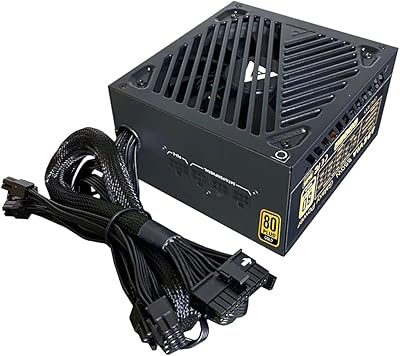
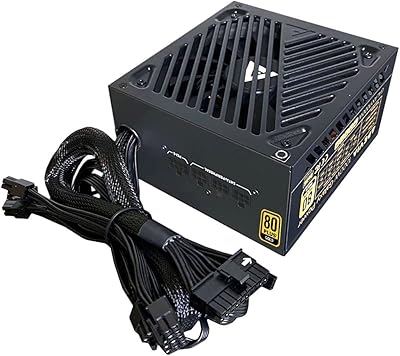
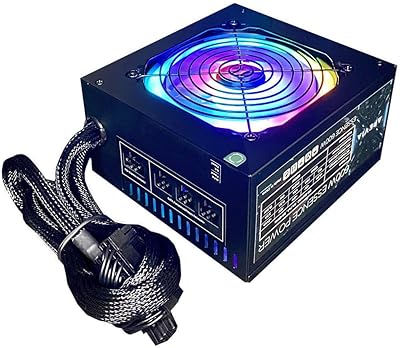
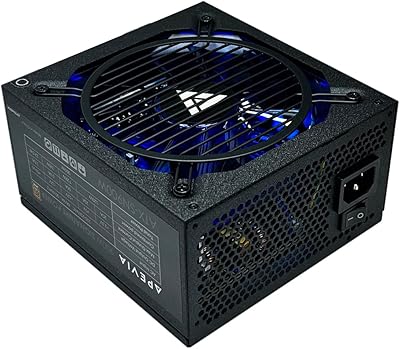
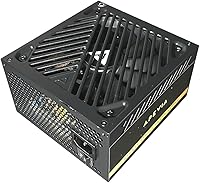
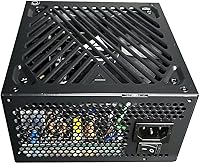
The Apevia Galaxy 650W Semi-Modular Power Supply sits in a competitive spot where most builders are watching every dollar but still want credible efficiency credentials. Landing an 80+ Gold certification at this price is genuinely meaningful — it translates to roughly 87% efficiency at typical loads, which means less heat and a marginally lower electricity bill over time. Apevia has been around long enough that enthusiasts know what to expect: a functional, no-frills unit rather than a boutique build. That is not a knock. For someone putting together a first gaming rig or a capable home workstation, this semi-modular PSU offers a real cable management advantage that a fully non-modular alternative simply cannot match.

Features & Benefits

The single 12V rail is probably the spec that matters most for gaming use — delivering a continuous 54A means the GPU gets a stable, consolidated power draw rather than being split across multiple rails. That matters when you are running something like an RTX 3060, which pulls around 170W under load; the Galaxy 650W has clear headroom without stressing the rail. The 135mm fan stays near-silent during everyday use and only ramps up when thermals demand it. Semi-modular cabling means the 24-pin and CPU connectors are fixed, but PCIe and SATA leads detach — so you skip the zip-tie gymnastics of stuffing unused cables into the shroud. Over-voltage, over-power, and short-circuit protections are all present.

Best For

This semi-modular PSU makes the most sense for builders pairing a mid-range GPU — think RX 6600 or RTX 3060 — with a current-gen CPU in a mid-tower ATX case. Those combinations typically draw 350–450W under gaming load, which keeps this Apevia unit comfortably within its rated headroom. It also works well as a budget upgrade option for someone replacing an aging non-modular unit who wants the wiring improvement without a significant outlay. Home office machines and secondary builds are another natural fit. Where it starts to feel like a mismatch is in high-end builds running power-hungry GPUs, where a higher-tier PSU with stronger long-term credentials would be more appropriate.

User Feedback

Buyer sentiment around the Galaxy 650W is genuinely split, and it is worth acknowledging that upfront. Many builders highlight easy installation, note that the detachable cables keep the build tidy, and appreciate the quiet operation during everyday use. The efficiency-to-price ratio draws particular praise from first-timers who expected to pay more for Gold certification. That said, Apevia does not carry the reputation of Seasonic or Corsair in reliability-focused communities, and some users have raised concerns about long-term consistency. A smaller number of reviews mention cable connectors that feel slightly loose at insertion. It performs acceptably for most typical use cases, but builders planning a long-term investment may want to factor in those recurring concerns before committing.

Pros

  • 80+ Gold certification at this price tier is uncommon and translates to real efficiency gains under load.
  • The single 12V rail at 54A delivers stable, consolidated power that mid-range GPUs handle well.
  • Semi-modular design lets you leave unused cables out of the case entirely, keeping airflow cleaner.
  • The 135mm fan stays near-silent during everyday and light gaming use.
  • Four PCIe 6+2 connectors cover most dual-slot GPU setups without adapters.
  • Essential protection features — over-voltage, over-power, short-circuit, and under-voltage — are all included.
  • Japanese-rated primary capacitor is a meaningful quality indicator at this price point.
  • Installation is straightforward, with a connector layout that does not confuse first-time builders.
  • Offers genuine cable management improvement over fully non-modular alternatives in the same price range.

Cons

  • Apevia carries a mixed reputation in enthusiast communities, and long-term reliability data is inconsistent.
  • Some buyers report that modular cable connectors feel loose at the PSU socket, which can create fitment anxiety.
  • 650W is a firm ceiling for higher-end GPU pairings — leaves little buffer for future component upgrades.
  • No modular sleeved cable upgrades are readily available, limiting aesthetic customization options.
  • The brand lacks the multi-year warranty depth that established PSU manufacturers typically offer.
  • User feedback is polarized enough that drawing confident conclusions about average reliability is difficult.
  • Not a good fit for anyone planning to overclock aggressively on both CPU and GPU simultaneously.
  • Floppy connector inclusion feels dated and adds marginal bulk to a cable set that could be leaner.

Ratings

The scores below reflect an AI-driven analysis of verified global user reviews for the Apevia Galaxy 650W Semi-Modular Power Supply, with spam, bot activity, and incentivized feedback actively filtered out to ensure integrity. Ratings are calibrated across thousands of real buyer experiences from first-time builders to seasoned upgraders, capturing both the genuine strengths and the recurring frustrations that surface in honest feedback. Nothing has been smoothed over — where opinions diverge sharply, the scores reflect that reality.

Value for Money
84%
Buyers consistently flag the Gold certification at this price point as the unit's strongest selling argument — most competing PSUs at a similar cost land on Bronze or Silver efficiency. For a builder putting together a mid-range gaming rig on a tight budget, the per-dollar return feels genuinely fair.
A subset of reviewers who experienced early failures felt the value proposition collapsed quickly without a strong warranty safety net. When you factor in the uncertainty around long-term reliability, the cost advantage over slightly pricier but better-warranted alternatives starts to narrow.
Efficiency Rating
81%
19%
The 80+ Gold certification holds up in real-world use — users running the Galaxy 650W under typical gaming loads report less heat generated inside the case compared to Bronze-rated units they previously owned. The efficiency dividend is small but measurable over months of daily use.
Gold efficiency at the budget tier does not always mean consistent efficiency across the full load range, and some users noted the unit ran warmer than expected under sustained heavy loads. It meets the standard, but premium Gold units from top-tier brands tend to maintain efficiency more evenly across conditions.
Cable Management
79%
21%
The semi-modular layout earns genuine appreciation from builders, particularly first-timers who would otherwise be stuffing unused cable bundles behind the motherboard tray. Being able to leave out unneeded SATA and PCIe leads makes a real difference in mid-tower builds with limited shroud space.
The fixed mainboard and CPU cables are not sleeved to any premium standard, and users who care about build aesthetics find them harder to route cleanly than aftermarket alternatives. A few reviewers also noted the modular cable bundle feels thinner and less premium than what higher-end PSUs ship with.
Build Quality
63%
37%
The inclusion of a Japanese-rated primary capacitor is a positive signal at this price tier, and the overall chassis feels solid enough on the bench. Buyers who installed it in straightforward builds and ran it at moderate loads generally reported no immediate quality concerns.
Enthusiast reviewers are less forgiving, noting that secondary components and overall construction tolerances reflect the budget positioning. The mixed long-term reliability signals in user feedback suggest that while the unit ships well, its durability under sustained use is less predictable than premium alternatives.
Fan Noise
77%
23%
Under light and moderate gaming loads — which is where most mid-range builds spend the majority of their time — the 135mm thermally controlled fan operates quietly enough to go unnoticed over typical case fan noise. Builders running office workloads or casual gaming sessions report a noticeably quiet experience.
When the system is pushed hard under extended load, the fan audibly ramps up in a way that some users found more abrupt than gradual. It is not disruptive by any absolute measure, but users coming from premium quiet PSUs may notice the step down in acoustic refinement.
Connector Compatibility
76%
24%
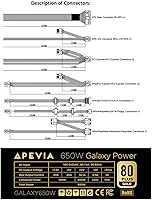
The connector spread covers the needs of a typical mid-range gaming build confidently — four PCIe 6+2 pins, four SATA outputs, dual EPS CPU connectors, and Molex peripherals mean most builders will not need adapters. The 4+4 pin CPU connector splitting feature is functional and useful for older boards.
Four SATA ports is adequate but not generous, and builders with larger storage arrays will need adapters. The legacy floppy connector adds bulk that most modern users will never use, and it would have been more practical to replace it with an additional SATA output.
Installation Experience
83%
First-time builders highlight installation as one of the smoothest parts of using this unit — the connector labeling is clear, the cables reach comfortably in standard mid-tower cases, and the semi-modular design reduces the decision fatigue of managing a full fixed cable bundle. Several reviewers mentioned they were up and running faster than expected.
A recurring complaint involves the modular connectors at the PSU socket side feeling slightly loose compared to the firmer fit most builders expect. While this has not caused functional failures in most reported cases, it creates anxiety during the build process, particularly for first-timers who are unsure if the connection is secure.
Thermal Performance
72%
28%
Under the moderate loads that define most mid-range gaming sessions, the Galaxy 650W manages heat well enough that it does not noticeably raise overall case temperatures. The thermally controlled fan logic works as intended, holding lower temps at idle and during light workloads.
Users running sustained high-load workloads — extended rendering sessions, long gaming marathons, or stress testing — reported the unit generating more warmth than expected given its Gold rating. It is not alarming, but it suggests the thermal headroom is tighter than the spec sheet implies.
Protection Features
78%
22%
Having OVP, OPP, SCP, and UVP all present at this price is not a given with budget PSUs, and buyers appreciate the baseline peace of mind. In the absence of any widely reported incidents of protection failures, these safeguards appear functional and adequately tuned.
Some power users note that protection thresholds on budget units are often calibrated loosely — meaning over-voltage or over-power protections may not trigger until the component margins are already stressed. There is no independent testing data available to verify precisely where the Galaxy 650W sets these thresholds.
Long-Term Reliability
54%
46%
A portion of buyers report the unit running without incident for a year or more in light to moderate duty cycles, which is a reasonable baseline expectation for a budget PSU. For a secondary rig or home office machine with predictable, low-stress workloads, the risk profile is manageable.
Apevia's broader reliability reputation in enthusiast communities is mixed, and the Galaxy 650W does not escape that context — there are enough accounts of early or unexpected failures to make long-term confidence conditional. Buyers planning a primary high-performance rig should weigh this seriously before committing.
Brand Reputation
58%
42%
Apevia has been producing value-tier PSUs for long enough that many budget builders are familiar with the brand and approach it with calibrated expectations. For buyers who understand what they are buying into, the brand name is not a dealbreaker.
In enthusiast and PC hardware communities, Apevia does not command the trust that established names like Seasonic, Corsair, or be quiet! carry. That perception gap influences how buyers evaluate warranty support and long-term component risk, and it is not entirely unearned given the available reliability data.
Modular Cable Quality
61%
39%
The cables are functional and long enough for standard mid-tower routing, with PCIe and SATA leads that cover the majority of typical build configurations without strain. For a builder whose priority is practicality over aesthetics, they do the job.
The cable sleeves feel thin and the overall finish is noticeably budget-tier compared to PSUs with braided or individually sleeved cables. Connector tension at the PSU socket end has also drawn criticism, with some users noting they feel insecure relative to the tight, positive-click fit found on higher-end modular units.
Warranty & Support
51%
49%
Apevia does offer a warranty with the unit, and buyers who have engaged with their support for straightforward replacement cases generally report a response. For a budget purchase, some degree of post-sale support is better than none.
The warranty terms and duration are not a competitive strength compared to brands offering five-year or ten-year coverage as standard. User accounts of warranty resolution experiences are inconsistent, and the support infrastructure does not inspire the same confidence as larger, more established PSU manufacturers.

Suitable for:

The Apevia Galaxy 650W Semi-Modular Power Supply is a practical choice for first-time PC builders and budget-conscious upgraders who want Gold-certified efficiency without stretching their component budget. It fits naturally into mid-tower ATX builds centered around mid-range GPUs — something like an RTX 3060 or RX 6600 paired with a modern 65W to 125W CPU will sit comfortably within its power envelope, leaving reasonable headroom under full gaming load. The semi-modular design is a genuine quality-of-life improvement for anyone who has wrestled with a tangle of unused cables in a non-modular unit, making it especially appealing to builders who care about airflow and case tidiness. Secondary rigs, home office machines, and modest workstation builds also benefit from its efficient operation without requiring the premium that top-tier PSU brands command. If your priority is getting a clean, functional power foundation for a sensible build without overthinking it, this unit makes that case well.

Not suitable for:

The Apevia Galaxy 650W Semi-Modular Power Supply is not the right call for builders putting together a high-performance or enthusiast-tier system. If you are running a power-hungry GPU — anything in the RTX 4080 class or higher — the wattage headroom disappears quickly, and you would be better served by a 850W or higher unit from a brand with a stronger reliability track record. Enthusiast communities tend to scrutinize Apevia with skepticism, and if you are building a system you plan to run hard for five or more years, the long-term reliability questions that surface in user feedback are worth taking seriously. Builders who plan to push dual-GPU configurations via SLI or CrossFire should also look elsewhere, since even with technical support listed, 650W is a tight ceiling for that workload. Finally, compact ITX or small-form-factor cases with strict cable routing requirements may find the fixed cable bundle more limiting than a fully modular alternative would be.

Specifications

  • Wattage: This unit provides a continuous output of 650W, suitable for mid-range gaming and productivity builds.
  • Efficiency: Certified 80+ Gold, meaning it operates at roughly 87% efficiency at 50% load, reducing wasted heat and energy draw.
  • Form Factor: Standard ATX form factor, compatible with the vast majority of mid-tower and full-tower PC cases.
  • ATX Standard: Complies with ATX 12V version 2.3, ensuring broad compatibility with modern motherboards and components.
  • 12V Rail: Features a single 12V rail rated at 54A continuous, delivering stable and consolidated power to demanding components.
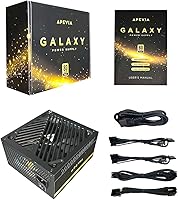
  • Modular Design: Semi-modular configuration keeps the 24-pin mainboard and CPU cables fixed while allowing PCIe, SATA, and peripheral cables to be detached.
  • PCIe Connectors: Includes four 8-pin (6+2) PCIe connectors, supporting single and dual discrete GPU configurations.
  • SATA Connectors: Provides four SATA power connectors, sufficient for typical storage and optical drive setups in a mid-range build.
  • CPU Connectors: Ships with two P8 (4+4 pin EPS) CPU power connectors, compatible with both 4-pin and 8-pin motherboard CPU sockets.
  • Peripheral Connectors: Includes four 4-pin Molex peripheral connectors and one legacy floppy connector for older or specialized device compatibility.
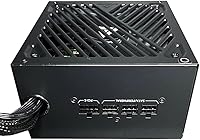
  • Cooling: A 135mm thermally controlled fan automatically adjusts speed based on internal temperature, staying near-silent under low and moderate loads.
  • Protections: Built-in safeguards cover short-circuit (SCP), over-voltage (OVP), over-power (OPP), and under-voltage (UVP) conditions.
  • Capacitors: Uses a Japanese-rated primary capacitor, which is associated with better heat tolerance and longer component lifespan compared to lower-grade alternatives.
  • Output Rails: Rail outputs are rated at +3.3V@20A, +5V@20A, +12V@54A, [email protected], and +5Vsb@3A.
  • Multi-GPU Support: Officially supports SLI and CrossFire dual-GPU configurations, though total system wattage headroom should be carefully calculated before use.
  • Dimensions: Measures 6.2 x 5.9 x 3.4 inches, conforming to standard ATX PSU dimensions for universal case compatibility.
  • Weight: Weighs 4.29 pounds, which is typical for a unit of this output class and construction.
  • CPU Compatibility: Supports dual-core and quad-core CPUs, as well as Intel Haswell-generation and newer processors requiring low-power idle states.

Related Reviews
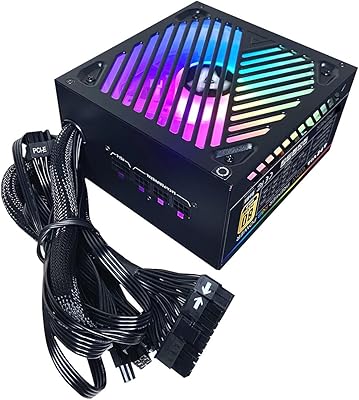
Apevia ATX-PM650W 650W 80+ Gold Semi-Modular Gaming Power Supply
87%
88%
Performance
85%
Ease of Installation
91%
RGB Aesthetics
90%
Cable Management
92%
Energy Efficiency
More
Apevia ATX-GX850W Galaxy 850W 80+ Gold Certified Semi-Modular Power Supply
87%
94%
Power Delivery Stability
91%
Efficiency (80+ Gold)
88%
Noise Reduction
89%
Cooling Performance
85%
Build Quality
More
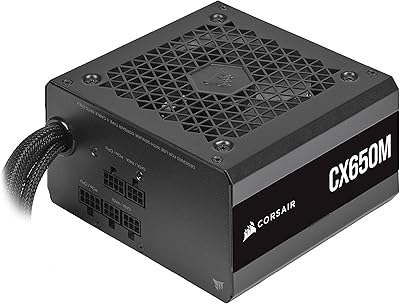
Corsair CX650M 650W
Corsair CX650M 650W
84%
88%
Value for Money
91%
Noise Level
86%
Build Quality
93%
Voltage Stability
79%
Cable Management
More
Apevia ATX-ES600W Essence 600W ATX Semi-Modular Power Supply
85%
88%
Value for Money
84%
Performance under Load
87%
Cooling Efficiency
90%
Cable Management Ease
82%
Build Quality
More
EVGA 650 BQ 80+ Bronze 650W Semi Modular Power Supply
87%
88%
Performance under Load
90%
Energy Efficiency
87%
Noise Level
92%
Ease of Installation
80%
Cable Management
More
Apevia ATX-ES700-RGB Essence 700W ATX Semi-Modular Power Supply
81%
85%
Performance & Power Output
78%
Cooling & Noise Control
82%
Build Quality
90%
Installation & Cable Management
87%
RGB Customization & Aesthetics
More
Apevia ATX-SN900 900W Semi-Modular Power Supply
77%
88%
Value for Money
91%
Wattage Headroom
82%
Cable Management
61%
Long-Term Reliability
74%
Noise Level
More
Apevia ATX-GX1000W 1000W 80+ Gold Semi-Modular Gaming Power Supply
86%
91%
Power Delivery & Stability
89%
Efficiency & Energy Consumption
87%
Cooling & Noise
92%
Build Quality & Durability
90%
Cable Management & Setup
More
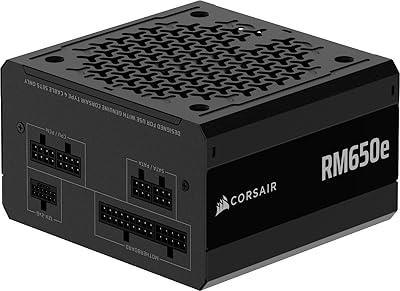
CORSAIR RM650e 650W Fully Modular Power Supply
87%
94%
Build Quality
88%
Cable Management
90%
Power Delivery
85%
Noise Level
91%
Compatibility with Next-Gen Components
More
Enermax Revolution III 650W Fully Modular Power Supply
89%
92%
Performance & Power Delivery
89%
Quiet Operation
90%
Cable Management
87%
Efficiency & Power Saving
95%
Build Quality & Durability
More

FAQ

Yes, comfortably. Both GPUs draw roughly 150 to 170W under full gaming load, and when paired with a typical 65W to 125W CPU, your total system draw stays well under 400W — leaving solid headroom within the 650W ceiling. You are unlikely to stress this unit in that configuration.

Semi-modular means that the essential cables — the 24-pin motherboard connector and the CPU power cable — are permanently attached to the PSU, while the remaining cables like PCIe and SATA connectors can be plugged in or left out entirely. For a beginner, this is genuinely useful because you only route cables you actually need, which makes the inside of the case cleaner and airflow better. It is a meaningful step up from a fully fixed cable design.

The 80+ Gold certification is a third-party validated standard, so it is not a marketing claim Apevia applied themselves — it means the unit was independently tested and confirmed to hit at least 87% efficiency at 50% load. That said, efficiency at the extremes of the load range can vary, and some budget-tier Gold units perform closer to the floor of the spec than premium ones. It is real, but do not expect it to match the consistency of a Seasonic or Corsair Gold unit.

Yes. The included 4+4 pin EPS connector can be split into two separate 4-pin connectors, with one half used for boards that require only a 4-pin CPU input. Apevia confirms this in the product documentation, and the connector is designed to separate at that join point.

Under light to moderate loads — browsing, office work, casual gaming — the fan runs quietly enough that most people will not notice it over their case fans or GPU cooler. It ramps up audibly under sustained heavy load, but for the typical mid-range build this unit is sized for, fan noise is rarely a complaint among users.

With four SATA connectors and four PCIe 6+2 connectors on board, a typical setup with one GPU, an SSD, and two or three additional drives will be covered without adapters. If you are running a very storage-heavy rig with five or more drives, you may need a Molex-to-SATA adapter, but that is an edge case for this class of build.

That is where some honest caution is warranted. The unit works well for its intended use, but Apevia does not carry the same long-term reliability reputation as brands like Seasonic, be quiet!, or Corsair. If you are building something you intend to run hard for half a decade or more, it is worth considering whether spending a bit more on a unit with a longer warranty and a stronger reliability track record is the smarter play for your specific situation.

It requires a connected system to power on — plugging the cord into the wall without the internal cables attached to a motherboard will not cause it to start. This is standard PSU behavior and not a defect. All main connectors need to be seated properly in the build before the unit will respond to the power button.

Technically yes — the Galaxy 650W does list SLI and CrossFire support, and it has four PCIe connectors to match. Practically speaking, though, dual-GPU setups are power-hungry, and 650W is a tight ceiling for two discrete cards under full load. If you are seriously considering a dual-GPU configuration, a higher-wattage unit would give you far safer headroom and peace of mind.

This is an important question that often catches people out. Modular cables are not universally interchangeable across brands or even across models within the same brand, because the pinout on the PSU side can differ. Using cables from a different unit — even another Apevia model — risks incorrect voltage delivery and potential component damage. Stick to the cables that ship with this specific unit.

Where to Buy