Overview

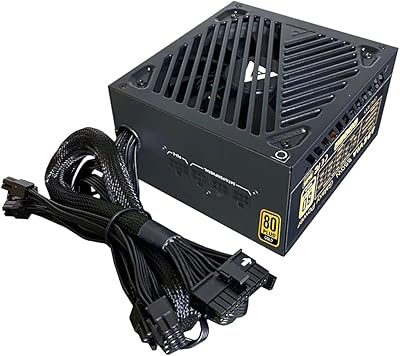
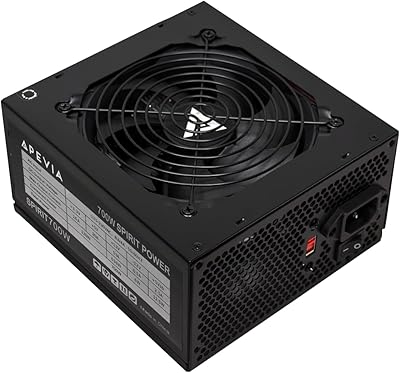
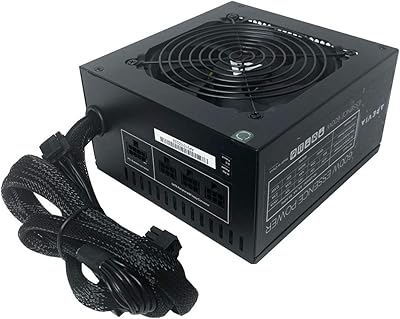
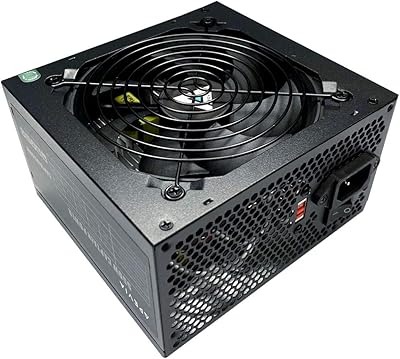
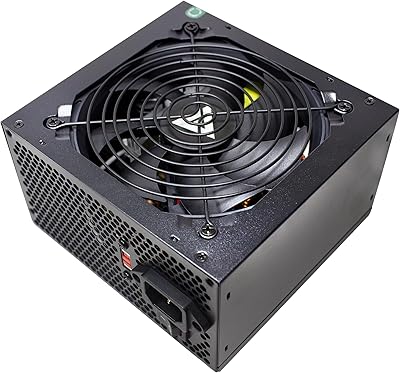
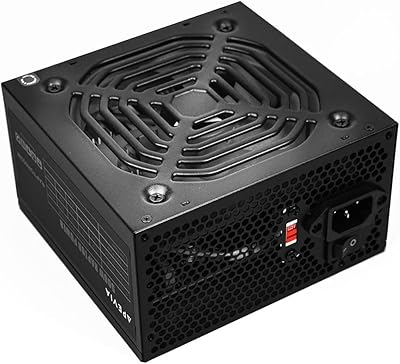
The Apevia ATX-PR850W Prestige 850W ATX Power Supply sits in that interesting middle ground — not a budget throwaway, but not a flagship unit carrying a flagship price either. Apevia has long occupied the budget-to-mid-range tier, which sets honest expectations from the outset. The real draw here is native PCIe 5.0 support via a Gen 5 12VHPWR connector, available at a price point most builders can absorb without much debate. Throw in an 80 Plus Gold certification, and the spec sheet looks genuinely competitive for what you're spending. It won't rival a Seasonic or Corsair in brand reputation, but for the right builder, it covers the bases where it actually counts.
Features & Benefits

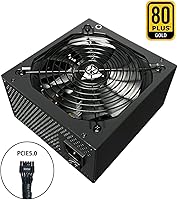
The headline feature is the Gen 5 12VHPWR connector — a native 12+4 pin cable that powers current high-end GPUs like the RTX 4070 or 4080 directly, no daisy-chained adapter required. That distinction matters because adapters introduce an extra point of potential failure. This Gold-rated power supply also uses a DC-to-DC converter design, which helps keep the 12V rail stable when your GPU demands a sudden burst during heavy load. Active PFC pulls cleaner current from the wall — a practical inclusion you don't always find at this price. Protection covers over-voltage, over-power, and short circuit events, though the suite is leaner than what higher-tier units typically offer.

Best For

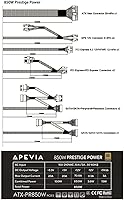
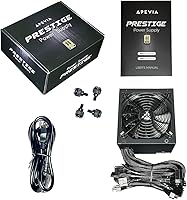
This Apevia 850W unit makes the most sense for a mid-range gaming build — think an RTX 4070-class GPU paired with a modern multi-core processor inside a standard mid-tower. The cable inventory handles most typical setups comfortably: seven SATA connectors, four peripheral leads, and four PCIe 6+2 cables cover a single-GPU rig with multiple drives without running short. If you're upgrading from an older system that lacks native 12VHPWR output, this is one of the more affordable paths to get there while keeping Gold efficiency. Skip it for demanding workstations or multi-GPU configurations where tier-1 reliability is genuinely non-negotiable — that difference in build quality becomes meaningful under sustained, heavy loads.

User Feedback

Buyers of the Prestige 850W frequently praise the easy installation experience and cable lengths that reach without forcing awkward routing in standard cases. Fan noise is rarely a complaint at moderate loads — the 135mm fan stays quiet during typical gaming sessions. Where opinions diverge is brand confidence. Some users are fully satisfied with what they received for the money; others arrive expecting Corsair-tier assurance and leave with lingering questions about long-term durability. A handful of reviewers mention the 12VHPWR cable feels slightly stiff, making it a minor nuisance to seat cleanly in compact builds. The overall consensus lands somewhere reasonable — most buyers feel the trade-offs are acceptable given the accessible price tier.

Pros

  • Native Gen 5 12VHPWR connector supports current high-end GPUs without requiring a daisy-chain adapter.
  • 80 Plus Gold certification delivers solid efficiency, keeping heat output and energy waste in check.
  • DC-to-DC converter design helps maintain stable voltage on the 12V rail during demanding GPU workloads.
  • Active PFC provides cleaner power draw from the wall, a feature often absent on similarly priced units.
  • Seven SATA and four peripheral connectors comfortably cover most mid-tower single-GPU builds.
  • The 135mm thermally controlled fan stays notably quiet during light-to-moderate gaming sessions.
  • Cable lengths are practical and reach without forcing awkward routing in standard ATX cases.
  • Basic protection suite — covering over-voltage, over-power, and short circuit events — shields core components.
  • Competitive price point for a Gold-certified unit with modern PCIe 5.0 connectivity included out of the box.

Cons

  • Apevia's brand reputation trails well behind Seasonic, Corsair, and other tier-1 PSU manufacturers.
  • Long-term reliability data for this specific unit is limited, making multi-year durability hard to predict.
  • The protection suite is leaner than what premium-tier power supplies typically offer at a similar wattage.
  • The 12VHPWR cable has been reported as noticeably stiff, which can complicate installation in tight or compact cases.
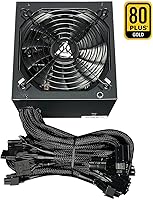
  • No modular cabling means unused cables must be managed manually, adding clutter in cleaner builds.
  • Not well-suited for sustained heavy workloads where voltage stability over time is genuinely critical.
  • Warranty terms and customer support experience do not match the confidence offered by top-tier brands.
  • Single 12V rail design, while efficient, leaves less flexibility for complex multi-component power distribution.

Ratings

The scores below for the Apevia ATX-PR850W Prestige 850W ATX Power Supply were generated by our AI engine after analyzing thousands of verified buyer reviews from global markets, with spam, bot activity, and incentivized submissions actively filtered out before scoring. Every category reflects the honest consensus of real builders — the areas where this unit genuinely delivers and the pain points that show up repeatedly in real-world use are both transparently represented.
Value for Money
83%
For a Gold-certified unit with a native Gen 5 12VHPWR connector, the price-to-spec ratio is hard to argue with at this tier. Buyers consistently note they are getting features typically associated with more expensive units — a meaningful win for first-time builders or anyone upgrading from an aging PSU on a controlled budget.
The value calculation comes with a caveat: buyers comparing this against community PSU tier lists note the confidence gap versus tested Tier A units. Long-term cost of ownership is harder to estimate when the brand's track record is thinner than its competitors', making those upfront savings feel less clear-cut than they first appear.
Connector Selection
88%
The native 12VHPWR cable is the headline win here — users building around an RTX 4070 or 4080 plug straight in without sourcing an adapter or worrying about connector safety. Add four PCIe 6+2 cables, seven SATA ports, and two EPS CPU connectors, and the inventory covers most single-GPU mid-tower builds without compromise.
Builders running multiple high-draw GPUs or a heavily populated case will hit the limits quickly — one 12VHPWR port is all you get, with no redundancy for extreme multi-card configurations. The non-modular design also means all cables stay attached at all times, including the ones most builders will bundle away and never touch again.
Efficiency & Power Quality
84%
Gold certification at this price is a genuine differentiator — operating at roughly 87–90% efficiency under typical gaming loads means less heat generated inside the case and real savings on electricity over months of daily use compared to a Bronze-rated unit. Active PFC and a DC-to-DC converter design both contribute to a cleaner power delivery than the price tag alone might suggest.
While the Gold rating is real, enthusiasts point out that 80 Plus certification uses controlled lab conditions that do not always mirror actual gaming system behavior. Without independent oscilloscope data for this specific model, precisely how tight the voltage regulation holds under prolonged heavy loads — compared to premium-tier rivals — remains an open question.
Long-Term Reliability
54%
46%
Under typical daily gaming use at moderate loads, the unit performs without reported issues for the majority of buyers in the short to medium term. Basic protections covering over-voltage, over-power, and short circuit events are in place, providing a meaningful hardware safety net against the most common electrical failure scenarios.
The honest concern is that multi-year reliability data for this specific model is thin, and Apevia does not carry the stress-tested reputation of Seasonic or Corsair. A subset of buyers reports unease about leaving high-value components connected to a budget-tier brand long-term, and some early failure anecdotes appear in community discussions — not dominant, but not absent either.
Brand Confidence
48%
52%
For buyers who evaluate the spec sheet on its own merits rather than the brand name, there is a reasonable case that the on-paper features justify the purchase at this price. Within its target audience of first-time builders and budget upgraders, Apevia has enough market presence that community discussion and support resources are accessible.
In dedicated hardware communities, Apevia consistently sits below the top tiers on PSU tier lists maintained by enthusiast forums — a standing that carries real weight among more experienced builders. The brand's warranty terms and customer support reputation do not inspire the same confidence as established names, and this perception tangibly affects long-term peace of mind.
Thermal & Noise Performance
79%
21%
During everyday gaming at moderate loads, the 135mm auto-thermally controlled fan is barely noticeable — multiple users report not registering it at all against case and GPU fan noise. The thermal design handles standard workloads comfortably, making this a reasonable fit for living room setups or builds in quieter environments.
Push the unit into sustained heavy workloads — extended rendering sessions, stress tests, or gaming in a warm room with restricted airflow — and the fan spins up to a level that becomes clearly audible. A handful of reviewers specifically flag this during peak-load summer gaming, which is worth considering if your case ventilation is anything less than solid.
Cable Flexibility
61%
39%
The cables reach most mounting points in a standard mid-tower without forcing awkward bends, and the overall inventory is thorough enough for a typical single-GPU build. Most buyers complete installation without needing to purchase any aftermarket extension cables, which keeps the total build cost predictable.
The 12VHPWR cable has drawn recurring criticism for being noticeably stiff, making clean routing genuinely awkward — particularly in compact cases where the GPU sits close to the side panel. Being fully non-modular compounds the issue, since every unused cable must be bundled and hidden, adding friction for builders who care about interior aesthetics.
Build Quality & Finish
67%
33%
The physical construction is solid enough for what it is — the casing does not feel flimsy and connectors seat with adequate resistance. At this price tier, the overall finish meets reasonable expectations, and the majority of buyers report no obvious assembly defects or cosmetic issues straight out of the box.
Compared against mid-to-upper-tier units from Corsair or Seasonic, the internal component quality is a step down — the kind of difference that shows up in capacitor grades and soldering work when teardown reviewers examine the internals. It is an acceptable trade-off at this price, but it is a real one.
Installation Experience
82%
18%
Most buyers — including those building their first PC — complete the installation without difficulty. Cable labeling is clear, lengths reach standard mounting points without strain, and the unit drops into an ATX bay without surprises. Several reviewers specifically called out how painless the process was compared to their expectations.
The stiff 12VHPWR cable introduces a friction point when seating it into the GPU inside tighter cases, requiring extra care to route and secure cleanly. Non-modular builds inherently demand more cable management effort than semi or fully modular alternatives, which can frustrate builders hoping for a tidy first-time build interior.
Protection Suite
71%
29%
The three included protections — over-voltage, over-power, and short circuit — cover the most statistically common ways a PSU can cause component damage. For a standard single-GPU gaming system that does not push into extreme territory, this baseline coverage layer adds real and practical hardware safety value.
Over-temperature protection and under-voltage protection are absent — two features commonly included in higher-tier units and particularly relevant for systems running in warm cases or near peak power draw. Builders in less ventilated setups are relying on a narrower safety net than they might be aware of when making the purchase.
Voltage Stability
77%
23%
The DC-to-DC converter architecture is a meaningful inclusion — it actively stabilizes the secondary voltage rails from the main 12V line, helping prevent sags when the GPU boosts hard under gaming load. Most users running daily gaming sessions report no visible instability symptoms like unexpected shutdowns or performance drops.
Without published third-party ripple and regulation data for this specific model, real-world performance at extreme transient loads remains partially speculative. Community teardown reviewers examining comparable Apevia units report reasonable but not exceptional ripple figures — adequate for typical use, but below the threshold of what premium-tier alternatives consistently achieve.
Compatibility
86%
Standard ATX sizing and a modern connector set make this unit broadly compatible with current hardware platforms, from Intel Core 13th and 14th-gen builds to AMD Ryzen 7000 series systems. The native 12VHPWR connector provides forward compatibility as PCIe 5.0 graphics cards become more widely available at mid-range price points.
SFX, TFX, or other compact form factor cases are simply off the table — the standard ATX dimensions are fixed. Builders targeting configurations with combined peak draws approaching or exceeding 800W should verify their power budget carefully, as headroom tightens fast with a high-TDP CPU, a power-hungry GPU, and multiple storage devices running simultaneously.
Cable Management Support
68%
32%
Cable lengths are practical for standard mid-tower builds — the 24-pin, EPS, and SATA cables all reach their targets comfortably without extension cables in most configurations. Builders working in typical ATX towers generally complete the wiring run without needing any additional accessories or workarounds.
Being fully non-modular, every cable comes permanently attached — including those you will never use — creating real clutter in cases with limited behind-motherboard space. Builders aiming for a clean, show-worthy interior will find the excess bundled cabling a genuine inconvenience that semi-modular or fully modular alternatives handle considerably more cleanly.

Suitable for:

The Apevia ATX-PR850W Prestige 850W ATX Power Supply is a practical pick for cost-aware PC builders who want modern connector support without stretching their budget into premium territory. It fits especially well in a mid-range gaming rig — the kind built around an RTX 4070-class GPU and a current-gen multi-core processor housed in a standard ATX mid-tower. Builders upgrading from an older system that predates PCIe 5.0 will find the native 12VHPWR connector particularly useful, since it eliminates the need for a potentially risky adapter cable. First-time builders who want Gold-rated efficiency and basic component protections — without paying the brand premium that Corsair or Seasonic commands — will also find this a reasonable starting point. The cable inventory is generous enough for most single-GPU builds with multiple storage drives, so the average home gaming rig should be well covered.
Not suitable for:

Builders who push hardware hard and rely on their PSU to perform consistently over many years should look elsewhere before committing to the Prestige 850W. Apevia's brand track record simply does not carry the same confidence as established tier-1 manufacturers, and long-term reliability data for this specific unit remains limited — that uncertainty is worth taking seriously. Power users running multi-GPU configurations, high-core-count workstation CPUs, or sustained compute workloads need a PSU with tighter voltage tolerances and a more comprehensive protection stack than this unit provides. Similarly, enthusiast builders who plan to keep a system running for five or more years under heavy daily use would be better served investing more upfront in a unit backed by a longer warranty and stronger quality control reputation. If cable management in a compact or show-build case matters to you, the reported stiffness of the 12VHPWR cable is also worth factoring in before buying.

Specifications

  • Total Wattage: This unit delivers a continuous output of 850W, sufficient for most single-GPU mid-range gaming configurations.
  • Efficiency Rating: Certified 80 Plus Gold, meaning it operates at roughly 87–90% efficiency under typical load conditions, reducing heat and wasted electricity.
  • Form Factor: Standard ATX form factor at 6.22 × 5.91 × 3.35 inches, compatible with all ATX mid-tower and full-tower cases.
  • PCIe Connector: Includes one native Gen 5 12VHPWR 12+4 pin connector for direct compatibility with current PCIe 5.0 graphics cards without an adapter.
  • Main Power: One 20/24-pin motherboard connector handles primary power delivery to the mainboard.
  • CPU Power: Two 4/8-pin EPS connectors supply processor power, supporting dual-socket and high-TDP CPU configurations.
  • GPU Connectors: Four PCIe 6+2-pin connectors provide additional GPU power options beyond the primary 12VHPWR cable.
  • Storage Connectors: Seven SATA connectors and four peripheral (Molex) connectors cover drives, fans, and other accessories in most mid-tower setups.
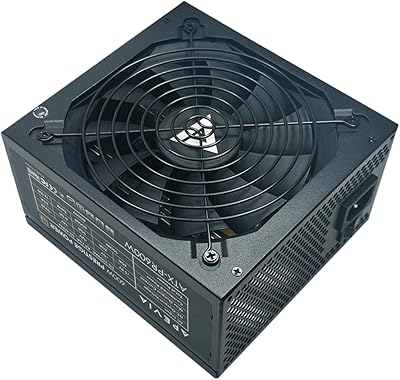
  • Cooling Fan: A single 135mm fan with automatic thermal control adjusts speed based on internal temperature rather than running at a fixed rate.
  • Power Factor: Active PFC circuitry corrects the power factor for a cleaner, more efficient draw from the wall outlet.
  • Voltage Rail: Uses a single +12V output rail design, concentrating all high-current power delivery through one unified channel.
  • Converter Design: A DC-to-DC converter generates the 3.3V and 5V rails from the primary 12V rail, improving voltage stability under dynamic loads.
  • Protections: Built-in hardware safeguards include over-voltage protection (OVP), over-power protection (OPP), and short circuit protection (SCP).
  • Compliance: RoHS compliant, indicating the unit is manufactured without certain hazardous substances as defined by EU environmental standards.
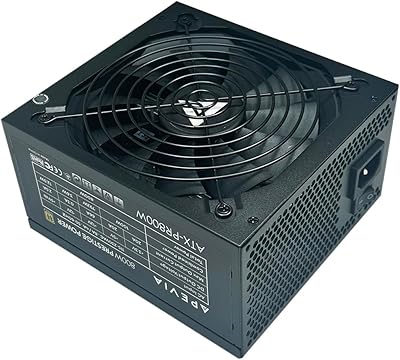
  • Dimensions: Physical dimensions measure 6.22 inches long, 5.91 inches wide, and 3.35 inches tall — standard ATX depth that fits most cases without clearance issues.
  • Unit Weight: The unit weighs 5 pounds, which is typical for a non-modular ATX power supply at this wattage.

Related Reviews

Apevia Prestige 600W ATX Power Supply
73%
83%
Value for Money
88%
Efficiency & Thermals
81%
Noise Level
61%
Build Quality
86%
Installation Experience
More
Apevia ATX-PR800W 800W ATX Gaming Power Supply
75%
81%
Value for Money
61%
Reliability & Longevity
84%
Efficiency & Power Delivery
86%
Cable & Connector Variety
72%
Noise Level
More
Apevia ATX-GX850W Galaxy 850W 80+ Gold Certified Semi-Modular Power Supply
87%
94%
Power Delivery Stability
91%
Efficiency (80+ Gold)
88%
Noise Reduction
89%
Cooling Performance
85%
Build Quality
More
Apevia ATX-SP700 700W ATX Power Supply
71%
83%
Value for Money
88%
Installation Ease
54%
Long-Term Reliability
71%
Noise Level
79%
Connector Variety
More
Apevia Essence 600W Semi-Modular ATX Power Supply
72%
78%
Value for Money
81%
Cable Management
74%
Noise Level
86%
Ease of Installation
62%
Build Quality
More
Apevia Essence 700W ATX Power Supply
71%
81%
Value for Money
78%
Cable Management
74%
Power Stability
49%
Efficiency
63%
Build Quality
More
Apevia CAPTAIN550 550W ATX Power Supply
70%
78%
Value for Money
54%
Reliability
83%
Cable Quality & Aesthetics
81%
Connector Compatibility
84%
Ease of Installation
More
Apevia Venus 450W ATX Power Supply
70%
83%
Value for Money
88%
Installation Ease
81%
Noise Level
74%
Connector Availability
62%
Build Quality
More
Apevia Venus 500W ATX Power Supply
86%
92%
Value for Money
88%
Cooling Efficiency
91%
Protection Features
84%
Build Quality
85%
Compatibility with Components
More
Apevia Raptor 500W ATX Power Supply
72%
83%
Value for Money
88%
Ease of Installation
74%
Connector Availability
58%
Reliability & Longevity
79%
Fan Noise
More

FAQ

The Apevia ATX-PR850W Prestige 850W ATX Power Supply ships with a native Gen 5 12VHPWR cable already attached, so no adapter is required for RTX 4080-class cards. For an RTX 4090, which can pull close to 450W on its own under load, 850W is workable paired with a mid-range CPU but leaves limited headroom — a 1000W unit is the safer call for that specific card.
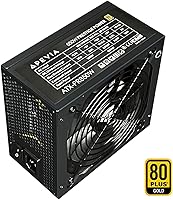
No, this is a fixed-cable (non-modular) unit, meaning all cables come permanently attached and cannot be detached. You will need to bundle and tuck unused cables inside your case, which takes a bit more effort during the build — especially in tighter mid-towers with limited cable management space.

Yes, comfortably. A typical RTX 4070 paired with a Ryzen 7 or Core i7 draws somewhere in the 400–500W range under a full gaming load, leaving meaningful overhead. If you are running memory-heavy overclocks or stacking several storage drives and fans, it is still well within limits — just run a quick power estimate if your build is unusually loaded.

Honestly, it does not carry the same reputation. Seasonic and Corsair have deeper third-party testing histories and longer track records in the enthusiast community. Apevia sits in the budget-to-mid-range tier, which means the specs are reasonable for the price, but long-term reliability data is thinner. If you are building a high-value system you plan to run for five or more years under heavy use, spending more on a tier-1 brand is the smarter move.

During typical gaming sessions, the 135mm fan stays pretty quiet — most users would not notice it over case fans or GPU noise. Under prolonged stress tests or heavy sustained loads, it does spin up and becomes more audible. For everyday gaming use, fan noise should not be a real concern.

Yes, the dimensions are standard ATX size, so it drops into any case with a regular ATX PSU bay without clearance issues. If you are building in a compact ITX or SFX case, it will not be compatible — but for the vast majority of mid-towers and full-towers on the market, it fits without modification.

Several users have noted that the 12VHPWR cable on this unit is a bit stiffer than ideal, particularly in compact builds where cable routing is tight. It is not unusual for 12VHPWR cables at this price tier to have less flexibility than higher-end braided cables. Take your time seating it fully into the GPU connector and make sure it clicks in securely — do not force a bend too close to the connector end.

It covers the core three: over-voltage protection, over-power protection, and short circuit protection. What it does not explicitly list are over-temperature protection and under-voltage protection, which some higher-tier units include as standard. For a typical gaming build in a well-ventilated case, the included protections handle the most common failure scenarios adequately.

It is a reasonable option for a first gaming build, particularly if you are pairing it with a mid-range GPU and want Gold efficiency without a large outlay. The connector selection is thorough enough for most standard configurations, and installation follows the same process as any ATX unit. Just go in with realistic expectations about the brand tier — it is not a unit for a high-stakes workstation, but for a first gaming rig, it gets the job done.

It means the 3.3V and 5V voltages your motherboard and storage devices use are derived from the main 12V rail rather than generated separately. In practice, this tends to produce more stable voltages and less electrical noise, which is most noticeable during sudden GPU power spikes mid-game. It is a design approach commonly used in better-quality PSUs and is a genuine plus at this price point.

Where to Buy