Overview

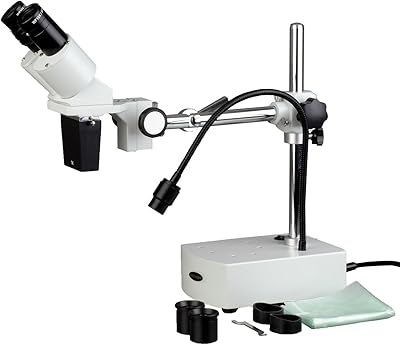
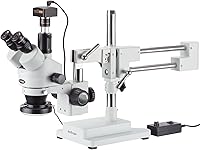
The AmScope SM-4TZ-144-5MT Trinocular Stereo Microscope is a serious, professional-grade instrument — not something you buy to sit on a kitchen counter. Built for dedicated lab benches, industrial inspection stations, and research environments, it covers a magnification range of 3.5X to 90X, handling an impressive spread of real-world tasks without requiring lens swaps. The included 5MP camera adds genuine utility; being able to document what you see without purchasing a separate imaging solution is a real advantage at this tier. The double-arm boom stand gives you reach and flexibility that a fixed-arm stand simply cannot match. At 55 pounds with a substantial footprint, dedicated workspace is not optional — it is a firm requirement.
Features & Benefits

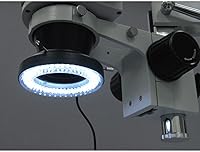
The zoom range is where this stereo microscope really earns attention. Using the 0.7X–4.5X zoom objective paired with the included Barlow lenses — one at 0.5X and one at 2.0X — you can move between a broad overview and tight, high-magnification detail without swapping objectives. The trinocular head handles camera capture independently, so eyepiece brightness is never compromised. A 144-bulb LED ring light wraps specimens in consistent, shadow-free illumination that makes surface detail easy to read. The 65mm field of view and 200mm working distance keep hands and tools comfortably clear during extended sessions. Wide 110–240V input compatibility rounds out a well-considered feature set for both domestic and international lab use.

Best For

This boom-stand microscope fits naturally into professional and technical workflows. Electronics technicians handling PCB inspection and rework will value the long working distance and the ability to photograph findings for documentation. Biological researchers — entomologists, botanists, and similar — benefit from even, consistent lighting when studying delicate specimens at length. Jewelers and gemologists get a stable, hands-free magnified view suited to precision assessment. Institutional buyers such as university labs and quality control departments will appreciate the robust construction and wide voltage range. Even dedicated hobbyists working on scale models, coins, or stamps can put this to good use, though the size and weight deserve honest consideration before purchasing.

User Feedback

Owners consistently praise optical clarity and the raw brightness of the LED ring light, calling it one of the more noticeable improvements over lesser units in daily use. The boom stand also gets strong marks — users coming from fixed-arm setups appreciate the added reach and freedom to reposition. The complaints worth noting: the bundled software feels dated and can behave inconsistently on current operating systems, which is frustrating if measurement and EDF tools are central to your work. Setup documentation is minimal. The 55-pound weight is less a complaint and more a caveat — this unit needs a dedicated surface. Long-term owners report that build quality holds up reliably after years of heavy use.

Pros

  • Wide 3.5X–90X magnification range handles everything from broad overviews to fine surface detail without lens swaps.
  • The trinocular head lets you view through eyepieces and capture camera images simultaneously, with no brightness trade-off.
  • 144-bulb LED ring light delivers consistently bright, shadow-free illumination across the entire sample surface.
  • Included 5MP camera with Mac and Windows compatibility adds real documentation value without extra cost.
  • Both Barlow lenses (0.5X and 2.0X) are included, meaningfully expanding magnification flexibility out of the box.
  • 200mm working distance keeps hands and tools comfortably clear during detailed manipulation tasks.
  • The double-arm boom stand offers reach and repositioning flexibility that fixed-arm alternatives simply cannot match.
  • 110–240V input compatibility makes this stereo microscope usable in international lab environments without adapters.
  • Long-term owners consistently report that build quality remains solid after years of regular, heavy-duty use.
  • Glass optics deliver clarity that holds up well against competitors at a comparable price tier.

Cons

  • At 55 pounds, this boom-stand microscope is essentially immovable once set up and demands a sturdy, dedicated surface.
  • Bundled software feels dated and has reported compatibility issues with current versions of Windows and Mac OS.
  • Setup and calibration documentation is minimal, which can be genuinely frustrating for first-time users.
  • The physical footprint — 21 by 19 by 18 inches — can overwhelm smaller lab benches or shared workspaces.
  • 5MP camera resolution may fall short for users who need high-detail imaging for publication or advanced analysis.
  • No transmitted light base is included, limiting the unit for applications that require backlighting of transparent specimens.
  • The learning curve for the measurement and EDF software features is steep without adequate instructional materials.
  • Replacement parts and accessories, while available, typically need to be sourced directly through the manufacturer.

Ratings

The scores below reflect an AI-driven analysis of verified global user reviews for the AmScope SM-4TZ-144-5MT Trinocular Stereo Microscope, with spam, bot submissions, and incentivized feedback actively filtered out before scoring. Each category captures both what genuine buyers consistently praised and where real frustrations surfaced — nothing is glossed over. The result is a transparent, balanced picture of where this stereo microscope excels and where it falls short of expectations.

Optical Clarity
93%
Users across electronics repair, gem inspection, and biological research repeatedly single out the optical quality as exceptional for this instrument class. The glass optics render fine surface detail with sharpness and contrast that holds up even at the higher end of the zoom range, which is where cheaper optics typically degrade.
A small number of users noted minor edge softness at the extreme 90X end of the zoom range, particularly when using the 2.0X Barlow lens. This is not unusual for zoom-based stereo optics, but buyers expecting perfectly flat, tack-sharp images across the full field at maximum magnification may notice it.
Build Quality
91%
Long-term owners are consistently positive about durability — multiple reviewers noted that the unit had been in heavy institutional use for several years with no mechanical degradation in the zoom mechanism or stand tension. The all-metal construction gives the instrument a solidity that inspires confidence during daily professional use.
A few users flagged that the zoom ring can feel slightly stiff when the unit is cold or new, requiring a brief break-in period before operation becomes smooth. This is a minor issue that typically resolves with use, but it was notable enough for some buyers to mention it in early reviews.
LED Ring Illumination
89%
The 144-bulb ring light is one of the most praised aspects of this boom-stand microscope — users working on reflective surfaces like PCBs, coins, and polished gemstones specifically appreciated the shadow-free, even coverage across the sample. Adjustable intensity lets operators fine-tune brightness to match the specimen without glare.
A handful of users reported that at maximum brightness the ring light generates noticeable heat over long sessions, which can be relevant when examining heat-sensitive specimens. There is also no color temperature adjustment, which matters to some researchers who need neutral or warm lighting for accurate color rendering.
Zoom Range & Versatility
88%
The ability to sweep from 3.5X wide overview down to 90X fine detail without swapping objectives is a genuine practical advantage for technicians and researchers who regularly shift between tasks. Including both Barlow lenses in the box extends this range without additional purchase, which buyers recognized as meaningful out-of-the-box value.
Achieving the full 90X requires stacking the 2.0X Barlow with the zoom at maximum, and at that setting the working distance narrows considerably, making hands-on manipulation difficult. Some users found themselves using the upper magnification range mainly for static imaging rather than active work.
Camera Quality
79%
21%
For documentation, live streaming to a monitor, and basic measurement tasks, the 5MP camera performs reliably and delivers usable, clear images that hold up well during lab reporting and client presentations. The ability to connect directly to both Mac and Windows systems without sourcing a third-party camera is a meaningful convenience.
Users with publication or precision imaging requirements found the 5MP resolution limiting — fine detail at high magnification can look slightly soft in captured stills compared to what the eyepieces show directly. Those coming from higher-resolution dedicated microscopy cameras were more likely to feel the constraint than first-time users.
Bundled Software
58%
42%
The Windows software does offer genuinely useful features — stitching for wide-area imaging, Extended Depth of Focus processing, and on-screen measurement tools are all functional and save steps compared to working with raw image files in a third-party editor. For basic lab documentation workflows on Windows, it covers the essentials.
Compatibility issues on Windows 10 and beyond are a recurring complaint, and installation can require troubleshooting that should not be necessary for a professional instrument. The interface design feels dated, and Mac users receive no access to the processing tools at all — a frustrating gap given that Mac use is common in research and medical environments.
Boom Stand Design
87%
Buyers who had previously used fixed-arm or post stands frequently commented that switching to the double-arm boom configuration meaningfully improved their workflow — the ability to swing the head over large or awkwardly shaped objects, and to reposition without fully dismounting the specimen, saves real time during inspection tasks.
Balancing the boom stand correctly under load takes some initial adjustment, and if the tension is not set properly the arm can slowly drift during use, which is frustrating mid-inspection. The setup instructions do not walk users through this calibration step clearly, leaving some buyers to figure it out independently.
Working Distance
86%
The 200mm clearance between the objective and the sample surface is generous enough to accommodate bulky or tall specimens — circuit boards in chassis, mounted insects in display cases, or jewelry in holders — without the operator feeling cramped. Technicians doing active soldering or manipulation under the lens particularly valued this headroom.
Working distance naturally decreases as magnification increases, so at the higher end of the zoom range the clearance is no longer 200mm. Users who assumed the full working distance was available at all magnification levels found this surprising and occasionally inconvenient when switching from high-mag imaging back to hands-on work.
Setup & Assembly
61%
39%
The physical assembly of the unit is manageable for most users — the core components attach without specialized tools, and the boom stand comes largely pre-assembled. Users with any prior experience with lab equipment generally reported getting the unit operational within a reasonable timeframe.
The instruction documentation is thin and lacks detail on critical steps like camera driver installation, boom arm tension adjustment, and software configuration. First-time microscope buyers or those unfamiliar with optical instruments were significantly more likely to report a frustrating setup experience than seasoned lab users.
Portability
22%
78%
There is genuinely little to say positively about portability — buyers who knowingly purchased this for a fixed lab installation reported no issues, and within that context the weight and size are accepted trade-offs for a professional-grade boom stand instrument.
At 55 pounds and 21 x 19 x 18 inches assembled, this stereo microscope does not move. Users who underestimated the physical size before purchasing reported difficulty finding an adequate surface, and several noted that relocating the unit even within the same room required two people. This is not a field instrument by any measure.
Value for Money
77%
23%
When buyers factor in the included 5MP camera, both Barlow lenses, and the boom stand — which would each carry a separate cost if purchased as accessories — the overall package is viewed as reasonably strong relative to comparable professional stereo microscopes. Institutional buyers in particular noted it compares favorably to equivalent units from better-known brands.
The software limitations and sparse documentation are recurring complaints that chip away at the value perception — buyers feel they are paying for a complete professional solution but receiving an instrument that requires supplementary investment in third-party software or workarounds to reach its full potential.
Eyepiece Comfort
82%
18%
The 45-degree inclined eyepieces are a practical ergonomic choice for users who spend extended periods at the instrument — researchers and inspectors consistently noted less neck and shoulder strain compared to more upright eyepiece configurations. The WF10x widefield optics also contribute to a comfortable, spacious view during long sessions.
The interpupillary distance adjustment range may not fully accommodate all users at the extremes — a small number of reviewers with narrower or wider-than-average eye spacing reported difficulty achieving a perfectly comfortable merged image. Diopter adjustment on the eyepieces helps compensate but does not fully resolve fit for outlier users.
Durability Over Time
90%
Multi-year ownership reviews are consistently positive — users who have run the unit in demanding daily lab or institutional environments report that the optical alignment stays stable, the zoom mechanism operates as smoothly as when new, and the LED ring light maintains consistent brightness without bulb failures over extended use.
Some long-term users noted that the rubber eyecup guards can degrade with heavy use and UV exposure, requiring replacement. This is a relatively minor consumable issue but worth noting for users in environments where the unit sees constant daily handling by multiple operators.
Compatibility & Connectivity
74%
26%
The wide 110–240V input range means the unit can be deployed internationally without voltage converters, which is a practical asset for institutions with labs in multiple countries or for buyers purchasing in one region for use in another. USB camera connectivity is universal and requires no proprietary adapter.
Driver support for the camera on newer operating systems is inconsistent, and AmScope has not always been quick to release updated drivers that match OS upgrade cycles. Buyers who regularly update their operating systems — particularly on Windows — may encounter periods where the camera stops functioning until a driver fix is released.

Suitable for:

The AmScope SM-4TZ-144-5MT Trinocular Stereo Microscope is purpose-built for professionals and serious enthusiasts who need reliable, high-magnification optics in a fixed workspace. Electronics technicians and PCB repair specialists will find the long working distance and integrated camera documentation particularly useful — being able to photograph a soldering fault or trace a board issue without swapping tools is a real workflow advantage. Biological researchers, entomologists, and botanists who spend long hours examining specimens will appreciate the 65mm field of view and bright, even LED ring illumination that reduces eye fatigue over extended sessions. Gem and jewelry professionals benefit from the stable boom stand, which keeps hands completely free during precise inspection work. Institutional buyers — university labs, quality control departments, or industrial inspection teams — are arguably the ideal match: organizations that need a durable instrument that can handle daily use across multiple operators and hold up over many years without needing replacement.
Not suitable for:

Buyers expecting a portable or casual-use instrument should look elsewhere — the AmScope SM-4TZ-144-5MT Trinocular Stereo Microscope weighs 55 pounds and occupies a substantial footprint, which means it genuinely needs a dedicated, sturdy surface and is not something you move around frequently. If your primary need is basic, occasional home inspection at low magnification, the investment here is difficult to justify when simpler, lighter options exist at a fraction of the cost. Users who rely heavily on integrated software for measurement and analysis should be aware that the bundled application can feel outdated on modern operating systems and may require troubleshooting to get working reliably. Those without prior microscopy experience may also find the sparse setup documentation frustrating during initial assembly and calibration. If camera resolution beyond 5MP matters for your imaging workflow — say, for high-resolution publication photography — you would need to supplement with an external camera solution, as the included unit has its limits.
Specifications

  • Magnification Range: This stereo microscope covers 3.5X to 90X total magnification, achieved through the zoom objective combined with the included Barlow lenses.
  • Zoom Objective: The built-in zoom objective ranges from 0.7X to 4.5X and allows continuous, stepless magnification adjustment without swapping optical components.
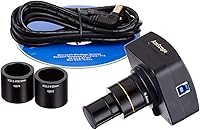
  • Barlow Lenses: Two auxiliary Barlow lenses are included — a 0.5X wide-field lens and a 2.0X high-magnification lens — both of which thread onto the objective to extend the usable magnification range.
  • Eyepieces: The unit ships with a pair of WF10x widefield eyepieces, which contribute to the large 65mm field of view during standard binocular observation.
  • Field of View: The maximum field of view measures 65mm (approximately 2.5 inches) in diameter, enabling operators to survey broad sample areas without repositioning.
  • Working Distance: The working distance between the objective and the sample surface is 200mm (approximately 8 inches), leaving ample room for tools, hands, or bulky specimens beneath the lens.
  • Head Type: The trinocular head accepts two eyepieces for direct viewing while routing a third optical path to the camera port simultaneously, with no brightness reduction to the eyepieces.
  • Camera: A 5MP digital camera is included and connects to a computer via USB, capturing still images and streaming live video for documentation or remote viewing.
  • OS Compatibility: The included camera and software are compatible with Windows XP, Vista, 7, 8, and 10, as well as Mac OS X.
  • Software Features: The bundled Windows software supports image stitching, Extended Depth of Focus (EDF), and on-screen measurement tools for dimensional analysis.
  • Light Source: Illumination is provided by a ring-style LED array containing 144 individual bulbs, which encircles the objective to cast even, shadow-free light across the sample surface.
  • Input Voltage: The unit accepts a wide voltage input of 110–240V at 50/60Hz, making it compatible with standard power supplies across North America, Europe, and Asia.
  • Stand Type: A double-arm boom stand is included, offering extended horizontal reach and multi-axis repositioning that a fixed post stand cannot provide.
  • Optical Material: The optical elements are constructed from glass rather than plastic, contributing to the image clarity and long-term durability expected at this instrument tier.
  • Viewing Angle: The eyepiece tubes are set at a 45-degree inclined angle, which reduces neck and back strain during prolonged observation sessions.
  • Item Weight: The fully assembled unit weighs 55 pounds (approximately 25kg), which effectively makes it a permanent fixture once positioned on a bench.
  • Dimensions: The overall assembled footprint measures 21 x 19 x 18 inches, requiring a large, dedicated surface such as a heavy-duty lab bench or workstation.
  • Manufacturer: This instrument is manufactured by United Scope LLC, the company behind the AmScope brand, which has been supplying optical instruments to labs and institutions for many years.
  • Model Number: The exact model designation is SM-4TZ-144-5MT, which encodes the stand type, zoom ratio, light source, and camera specification for easy identification when ordering parts or accessories.
  • Discontinuation Status: As of the information available, this model has not been discontinued by the manufacturer and remains an active product in the AmScope lineup.

Related Reviews
AmScope SM-3T Trinocular Stereo Zoom Microscope
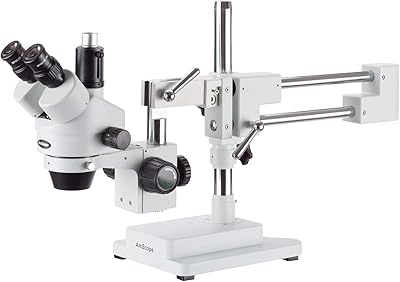
77%
88%
Optical Clarity
91%
Build Quality
93%
Boom Stand Design
86%
Zoom Range & Versatility
84%
Ergonomics & Comfort
More
AmScope SM-4TPZ Trinocular Stereo Zoom Microscope
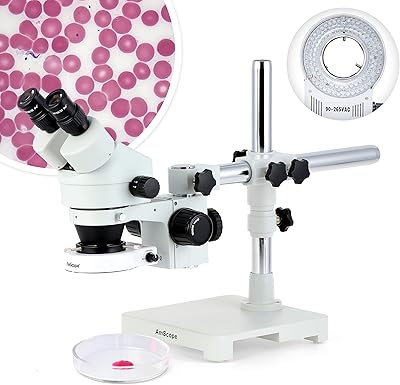
76%
88%
Optical Clarity
91%
Build Quality
93%
Boom Stand Versatility
86%
Zoom Range & Flexibility
74%
Trinocular Camera Integration
More
AmScope SM-3B Binocular Zoom Stereo Microscope
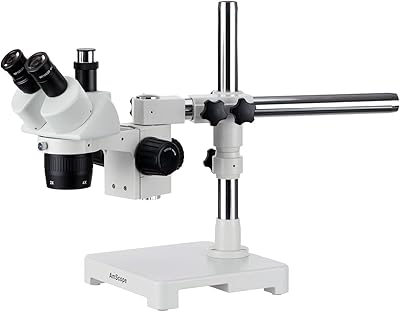
73%
88%
Optical Clarity
91%
Zoom Range & Versatility
83%
Boom Stand Design
86%
LED Ring Light
84%
Build Quality & Durability
More
AmScope SW-3T24Z Trinocular Stereo Microscope
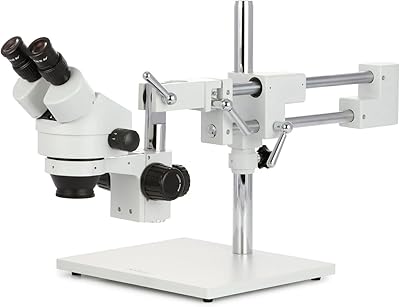
87%
92%
Magnification Quality
88%
Ergonomics & Comfort
84%
Boom Stand Adjustability
91%
Image Clarity
85%
Build Quality & Durability
More
AmScope SM-4B Stereo Zoom Microscope Boom Stand
76%
93%
Build Quality
88%
Optical Clarity
91%
Boom Stand Versatility
41%
Illumination
82%
Ergonomics
More
AmScope T490B Compound Trinocular Microscope
74%
88%
Optical Clarity
91%
Trinocular Head
78%
Camera Integration
86%
Mechanical Stage
89%
Build Quality
More
AmScope SE305R-PZ Stereo Microscope
75%
86%
Build Quality
78%
Optical Clarity
71%
Lighting System
91%
Ease of Setup
82%
Ergonomics & Comfort
More
AmScope SE306R-PZ-LED Stereo Microscope
84%
88%
Value for Money
91%
Build Quality
85%
Ease of Use
78%
Magnification Range
89%
Lighting Performance
More
AmScope SE508 8X Magnification Binocular Stereo Microscope
85%
91%
Build Quality
88%
Usability & Ergonomics
80%
Magnification Performance
85%
LED Illumination Effectiveness
93%
Stability
More
AmScope SE400-Z Binocular Stereo Microscope
77%
88%
Build Quality
79%
Optical Clarity
93%
Working Distance & Clearance
86%
Boom Arm Flexibility
81%
Eyepiece Comfort & Ergonomics
More

FAQ

The camera is compatible with both Mac OS X and Windows (XP through 10), so Mac users are supported. That said, the full software suite — including the stitching, EDF, and measurement tools — is only available for Windows. On a Mac you can capture images and stream live video, but the advanced processing features require a Windows machine.

Absolutely. The trinocular head works independently of the camera port — you can use the two eyepieces for standard binocular observation without connecting any camera at all. The camera port simply sits unused until you need it. This makes the unit fully functional as a standalone stereo microscope.

This is one area worth taking seriously before you buy. The unit weighs 55 pounds fully assembled and sits on a wide boom stand, so you need a heavy-duty bench — ideally a dedicated lab bench or solid workbench rated for significant weight. A typical lightweight office desk or folding table is not a safe or stable choice for this instrument.

The 144-bulb LED ring light includes intensity adjustment, so you can dial back the brightness for more delicate or reflective specimens where full power would cause glare. This is especially useful when examining polished gems, metals, or glossy circuit boards where harsh lighting washes out fine detail.

Most users can assemble it without special tools, but the included instructions are minimal and can leave gaps — particularly around fine-tuning the boom stand tension and calibrating the camera. Budgeting extra time for initial setup is wise, and checking the AmScope website or user community forums for supplementary guidance is recommended if you run into trouble.

Yes, and this is one of the main reasons experienced users choose a boom stand over a fixed post stand. The double-arm design gives you meaningful horizontal reach and the ability to swing the head over awkwardly shaped or tall objects. Exact reach depends on how the arms are configured, but it handles most standard lab and bench inspection scenarios without issue.

It works well for examining mounted or preserved specimens, insects, plant material, and similar subjects. However, it does not include a transmitted light base, which limits its usefulness for transparent or semi-transparent specimens that require backlighting — like microscope slides with tissue sections. For incident-light surface examination of biological specimens, it performs very well.

For documentation, lab reporting, and sharing images on a screen, the 5MP camera is genuinely capable and delivers good results. If your work involves publication-quality imaging, high-resolution photomicrography, or detailed digital measurement requiring very high pixel counts, a dedicated scientific camera would outperform it. For most professional and institutional users, though, the included camera is more than adequate for daily needs.

Yes, this stereo microscope uses a standard trinocular body that is compatible with a range of AmScope accessories, including alternative eyepieces and auxiliary lenses beyond the included Barlow set. AmScope sells a broad catalogue of compatible components, so expanding or customizing the optical configuration is quite practical over time.

The officially listed compatibility goes up to Windows 10, and several users have reported mixed results on Windows 11 — some get it working without issue, others run into driver or software conflicts. If Windows 11 compatibility is critical for your setup, it is worth contacting AmScope support directly before purchasing to confirm current driver availability, rather than assuming it will work out of the box.