Overview

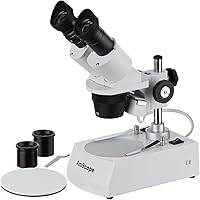
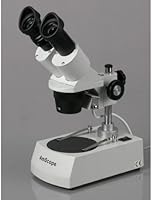
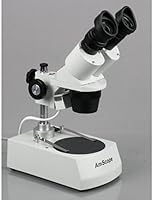
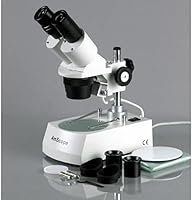
The AmScope SE305R-PZ Stereo Microscope has been a steady fixture in the mid-range market since its introduction in 2011 — and that kind of longevity usually signals something real. This is a hands-on inspection tool, built for people who need to examine actual objects up close, not a laboratory-grade research instrument. The all-metal construction and sturdy pillar stand give it a reassuring solidity that is not always a given at this price tier. One design choice that stands out immediately is the forward-facing binocular head, which positions your eyes comfortably while keeping your hands free to manipulate whatever sits on the stage below.

Features & Benefits

Magnification runs across four practical steps — 10X, 20X, 30X, and 60X — achieved by swapping between 1X and 3X objectives paired with WF10x and WF20x widefield eyepieces. The dual halogen lighting system earns its keep here: the top incident light picks up surface texture on opaque objects, while the bottom transmitted light handles thin or transparent specimens. Achromatic lenses combined with a 45-degree viewing angle let you work through extended sessions without the eye fatigue that narrower optics tend to produce. The corded 120V setup keeps brightness consistent throughout, and the forward head configuration gives your hands genuine working clearance under the lens.

Best For

This benchtop scope hits a sweet spot for a fairly specific kind of user. Coin collectors and stamp enthusiasts will appreciate the lower magnification settings for surface detail work, while electronics hobbyists doing circuit board inspection or solder rework benefit from the open stage access the forward head creates. Jewelry makers and watchmakers — anyone regularly handling bulky or oddly shaped objects — will find that clearance genuinely useful. It also holds up well as a shared classroom tool, durable enough for K-12 or introductory college lab settings. It is not a substitute for a compound microscope, but for surface-level inspection work it fills the role reliably.

User Feedback

Across 133 ratings, the AmScope SE305R-PZ holds a solid four-star average, and the feedback paints a fairly consistent picture. Buyers regularly highlight the straightforward setup and the optical clarity at lower magnifications, with 10X and 20X drawing particular praise for sharpness and usability. The metal build also gets positive mentions — it simply feels more substantial than plastic-framed alternatives. On the other side, halogen bulbs generate noticeable heat during longer sessions, and eventual bulb replacement is a real consideration. A number of reviewers also point out that image quality at 60X drops off compared to the lower settings — not unusual at this tier, but worth knowing before you buy.

Pros

  • All-metal construction and pillar stand feel noticeably solid and stable during use.
  • Four magnification steps cover the practical range most hobbyists and repair techs actually need.
  • Dual halogen lighting handles both opaque surfaces and transparent specimens without swapping equipment.
  • The forward binocular head keeps your hands free and accessible while viewing bulky objects.
  • Wide-field eyepieces and a 45-degree viewing angle reduce eye strain during longer sessions.
  • Corded power means consistent brightness — no batteries to die mid-inspection.
  • Setup is straightforward out of the box, with no steep learning curve for new users.
  • Has maintained consistent buyer interest and availability since 2011, suggesting reliable quality control.
  • Lower magnification settings — particularly 10X and 20X — produce sharp, clear images.

Cons

  • Image sharpness drops off noticeably at the 60X setting, which may frustrate detail-focused users.
  • Halogen bulbs generate real heat during extended sessions, making long work periods less comfortable.
  • Bulb replacement is an inevitable maintenance cost that buyers should plan for upfront.
  • This benchtop scope is corded and stationary — no practical option for portable or field use.
  • Not compatible with prepared slides or any application requiring compound microscope functionality.
  • Some buyers have reported minor alignment inconsistencies straight from the packaging.
  • No built-in camera mount or digital output for those who want to capture or share images.
  • The halogen lighting system lacks the cooler, more energy-efficient output of modern LED alternatives.

Ratings

The scores below reflect an AI-driven analysis of verified global user reviews for the AmScope SE305R-PZ Stereo Microscope, with spam, bot-generated, and incentivized feedback actively filtered out before scoring. Each category is evaluated independently to give you an honest picture — not just what buyers loved, but where real frustrations showed up. Strengths and trade-offs are weighted equally so you can make a genuinely informed decision.

Build Quality
86%
The all-metal frame and sturdy pillar stand consistently earn praise from buyers who have handled cheaper plastic alternatives. Users working in repair and inspection settings specifically note that the scope does not flex or shift during use, which matters when you are trying to hold a steady view over a circuit board or gemstone.
A small but recurring number of buyers reported minor alignment issues straight out of the packaging, suggesting that quality control is not perfectly consistent across units. While most arrive in good shape, the possibility of a misaligned head is worth knowing before you buy.
Optical Clarity
78%
22%
At 10X and 20X, the widefield achromatic lenses produce images that buyers regularly describe as sharp and well-defined — more than adequate for coin grading, solder inspection, or examining insect specimens. The wide field of view also means you can take in more context around your subject without constantly repositioning.
The 60X setting is where optical limits become apparent, with noticeable softening and reduced edge sharpness that frustrates users expecting uniform quality across all magnification steps. This is a known physical constraint at this price tier, but buyers expecting crisp 60X performance will likely be let down.
Lighting System
71%
29%
Having both incident top lighting and transmitted bottom lighting in a single unit gives this benchtop scope genuine versatility — you can switch between opaque objects and semi-transparent specimens without swapping accessories. The corded halogen setup also delivers consistent, flicker-free brightness that battery-powered alternatives simply cannot match.
Halogen bulbs generate real, noticeable heat during extended sessions, which becomes uncomfortable when you are leaning over the scope for 30 minutes or more. Bulb replacement is also an inevitable maintenance cost, and some users found sourcing compatible replacement bulbs mildly inconvenient depending on their location.
Ease of Setup
91%
Virtually every buyer who commented on setup described it as fast and painless — most had the scope assembled and operational within 15 to 20 minutes without consulting detailed instructions. The objective and eyepiece system is intuitive enough that first-time microscope users rarely report confusion.
The included documentation is functional but minimal, and buyers who want a deeper explanation of how to optimize magnification combinations for specific tasks will need to seek guidance elsewhere. A more detailed quick-start guide would make the out-of-box experience feel more polished.
Ergonomics & Comfort
82%
18%
The 45-degree binocular viewing angle is noticeably more comfortable than flat-view alternatives during longer work sessions, and several users specifically mentioned reduced neck strain compared to earlier scopes they had owned. The forward head positioning also keeps your arms and hands in a natural working position rather than reaching awkwardly under the optics.
The interpupillary distance adjustment range may feel limiting for users at the wider or narrower ends of the spectrum, and a handful of buyers noted mild eye strain when the diopter adjustment was not set correctly — something that requires a calibration step many first-time users skip.
Stage & Working Clearance
84%
The open stage design and forward head position create enough working clearance for users to comfortably manipulate objects, use tweezers or soldering tools, and handle larger specimens without the scope getting in the way. Watchmakers and jewelry hobbyists in particular praised this aspect as a practical day-to-day advantage.
There is no built-in mechanical stage or grid system for precise specimen positioning, which means any fine repositioning has to be done by hand. For casual inspection work this is fine, but users coming from compound microscopes with mechanical stages may find the freehand approach slightly less controlled.
Magnification Range
74%
26%
The four-step magnification system covers the practical range that most hobbyists, repair technicians, and classroom users actually need on a daily basis. Swapping between the 1X and 3X objectives combined with two eyepiece options gives you enough flexibility to handle a wide variety of inspection tasks without additional accessories.
The fixed four-step system offers no intermediate magnification options, which some users find limiting compared to zoom-style stereo microscopes that allow continuous adjustment. If your work frequently requires fine-tuned magnification between the set steps, this scope will feel rigid.
Stability & Vibration Control
83%
The weighted metal pillar stand keeps the scope planted firmly on the desk, and users doing precise work like soldering or gemstone examination appreciate that minor table disturbances do not translate into image shake. The overall mass of the unit works in its favor here.
The pillar stand, while solid, does not offer the rotational flexibility of a boom-arm stand, which means repositioning the scope for unusually large or awkwardly shaped specimens requires moving the entire unit rather than swinging an arm. This is a design trade-off, not a flaw, but it matters for some workflows.
Value for Money
79%
21%
For a scope with an all-metal frame, dual lighting, and widefield glass optics, the pricing sits in a reasonable range relative to comparable models from other brands. Buyers evaluating it alongside cheaper plastic alternatives consistently report that the build and optical quality justify the additional outlay.
Users who eventually need to replace halogen bulbs or who find the 60X performance underwhelming may feel the value proposition weakens slightly over time. A few buyers felt that LED lighting at this price point should be standard, and that the halogen system feels dated compared to newer competitors.
Durability Over Time
81%
19%
The fact that this model has been on the market continuously since 2011 with a sustained positive rating is itself a signal of long-term reliability. Classroom users in particular reported that units held up well through heavy shared use across multiple school years without mechanical degradation.
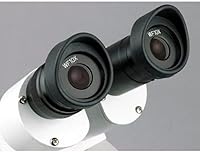
Halogen bulb lifespan is the most commonly cited durability concern, as bulbs will eventually burn out with regular use. A small number of long-term owners also noted that the rubber eyecup guards can deteriorate or loosen over extended periods, requiring occasional attention.
Portability
47%
53%
At 6.45 pounds, the scope is light enough to be moved between rooms or relocated on a workbench without difficulty. The compact footprint also means it does not dominate a desk, which several home users noted as a practical benefit in smaller workspaces.
This is a corded, benchtop instrument with no battery option, so true portability is simply not part of its design. Buyers who need to take a microscope into the field, travel with it, or use it away from a power outlet will need to look at a different category of product entirely.
Compatibility & Expandability
54%
46%
The eyepiece diameter is a standard size, which means aftermarket eyepiece cameras designed for stereo microscopes can often be fitted as an informal workaround for users who want to capture images. AmScope also has a broad ecosystem of accessories, so some add-ons are available through the same brand.
There is no dedicated camera port or trinocular head, so image capture requires a third-party workaround rather than a clean native solution. Users who anticipated growing into digital documentation or on-screen display will likely find this scope's expandability ceiling lower than expected.
Packaging & Unboxing
67%
33%
The majority of buyers received their unit well-protected and intact, with optical components arriving undamaged. For most users, the unboxing experience was uneventful in the best possible way — everything was present and the scope was ready for assembly without any missing parts.
A recurring minority of reviewers flagged packaging that felt insufficient for a precision optical instrument, with some units arriving with minor cosmetic marks or slightly misaligned components. It is not a widespread problem, but it appears often enough in the feedback to be worth noting as an occasional risk.

Suitable for:

The AmScope SE305R-PZ Stereo Microscope is a strong fit for anyone whose work or hobby involves examining real, three-dimensional objects up close — not slides under a cover slip, but actual physical specimens you can handle. Coin collectors grading surface detail, jewelry makers checking stone settings, and watchmakers inspecting tiny mechanical components will all find the open stage and forward head design genuinely practical. Electronics hobbyists and repair technicians doing solder work or tracing circuit board faults benefit especially from the working clearance the forward binocular head creates. It also holds up well in shared educational environments — K-12 classrooms, homeschool setups, or introductory college labs — where durability and ease of use matter more than cutting-edge optics. If you need a reliable, no-fuss benchtop scope that covers the most common magnification needs without requiring technical expertise to operate, this stereo microscope delivers on that promise consistently.

Not suitable for:

Anyone expecting research-grade optics or cellular-level magnification will be disappointed — the AmScope SE305R-PZ Stereo Microscope tops out at 60X, and image quality at that upper setting noticeably softens compared to what you get at 10X or 20X. It is not a compound microscope, so prepared slides, microorganisms, or any specimen requiring magnifications above 60X are simply out of scope here. Professional laboratory environments or advanced biology students who need precise, high-magnification work should look at purpose-built compound or digital microscopes instead. The halogen lighting system, while functional, generates real heat during extended sessions and will eventually require bulb replacement — something to factor in if low-maintenance operation is a priority. Buyers who need portability or field use should also look elsewhere, as this is a corded, benchtop instrument that belongs on a desk.

Specifications

  • Brand: Manufactured by United Scope LLC under the AmScope brand.
  • Model Number: The exact model identifier for this unit is SE305R-PZ.
  • Magnification Range: Offers four discrete magnification levels: 10X, 20X, 30X, and 60X.
  • Eyepieces: Includes both WF10x and WF20x widefield eyepieces for flexible viewing options.
  • Objectives: Ships with 1X and 3X achromatic objective lenses that swap to change magnification.
  • Head Type: Features a forward-facing binocular head positioned at a 45-degree viewing angle.
  • Lighting System: Dual halogen setup provides incident top lighting for opaque surfaces and transmitted bottom lighting for transparent specimens.
  • Power Supply: Corded electric unit rated at 120V, intended for standard North American outlets.
  • Frame Material: Primary structural components are constructed from metal for durability and stability.
  • Stand Type: Mounted on a pillar stand with a metal framework that minimizes vibration during observation.
  • Dimensions: Overall unit measures 13.7 x 10.8 x 6.5 inches when assembled.
  • Weight: Complete unit weighs 6.45 pounds, making it a stable but portable benchtop instrument.
  • Lens Type: Achromatic objective lenses are used to reduce color fringing and improve edge-to-edge clarity.
  • Viewing Angle: The binocular head is set at a 45-degree incline to reduce neck and eye strain during extended use.
  • Color: Unit is finished in white with metal framework details.
  • Availability: This model has been continuously available since its introduction in March 2011 and has not been discontinued.

Related Reviews
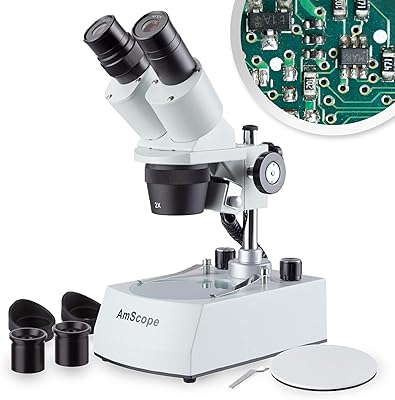
AmScope SE306R-PZ-LED Stereo Microscope
84%
88%
Value for Money
91%
Build Quality
85%
Ease of Use
78%
Magnification Range
89%
Lighting Performance
More
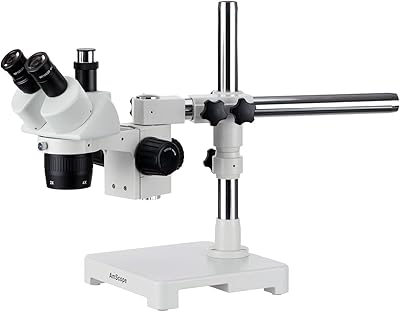
AmScope SM-3B Binocular Zoom Stereo Microscope
73%
88%
Optical Clarity
91%
Zoom Range & Versatility
83%
Boom Stand Design
86%
LED Ring Light
84%
Build Quality & Durability
More
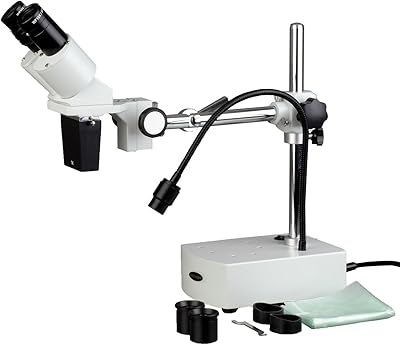
AmScope SW-3T24Z Trinocular Stereo Microscope
87%
92%
Magnification Quality
88%
Ergonomics & Comfort
84%
Boom Stand Adjustability
91%
Image Clarity
85%
Build Quality & Durability
More
AmScope SE508 8X Magnification Binocular Stereo Microscope
85%
91%
Build Quality
88%
Usability & Ergonomics
80%
Magnification Performance
85%
LED Illumination Effectiveness
93%
Stability
More
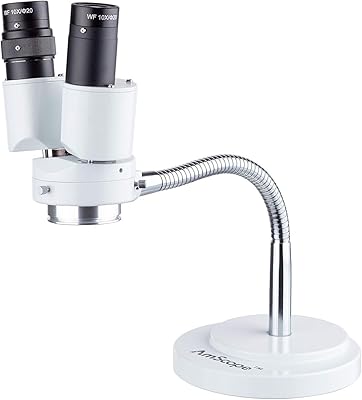
AmScope SE400-Z Binocular Stereo Microscope
77%
88%
Build Quality
79%
Optical Clarity
93%
Working Distance & Clearance
86%
Boom Arm Flexibility
81%
Eyepiece Comfort & Ergonomics
More
AmScope SM-4TZ-144-5MT Trinocular Stereo Microscope
77%
93%
Optical Clarity
91%
Build Quality
89%
LED Ring Illumination
88%
Zoom Range & Versatility
79%
Camera Quality
More
AmScope SM-3T Trinocular Stereo Zoom Microscope
77%
88%
Optical Clarity
91%
Build Quality
93%
Boom Stand Design
86%
Zoom Range & Versatility
84%
Ergonomics & Comfort
More
AmScope SM-4B Stereo Zoom Microscope Boom Stand
76%
93%
Build Quality
88%
Optical Clarity
91%
Boom Stand Versatility
41%
Illumination
82%
Ergonomics
More
AmScope SM-4TPZ Trinocular Stereo Zoom Microscope
76%
88%
Optical Clarity
91%
Build Quality
93%
Boom Stand Versatility
86%
Zoom Range & Flexibility
74%
Trinocular Camera Integration
More
AmScope SE306R-P-LED Stereo Microscope
79%
83%
Optical Clarity
88%
Build Quality
79%
Illumination Quality
54%
Magnification Range
81%
Ergonomics & Comfort
More

FAQ

Not really — this is a stereo microscope, which is designed for viewing solid, three-dimensional objects rather than thin prepared slides. If you need to examine cells or microorganisms on a slide, you would want a compound microscope instead. This benchtop scope is better suited for things like insects, coins, circuit boards, or gemstones.

Setup is quite straightforward. Most users have it assembled and ready to use within 15 to 20 minutes without needing any special tools. The main steps involve attaching the head to the pillar stand and connecting the power cord — the eyepieces and objectives are generally pre-installed or slot in easily.

Honestly, 60X is the weakest setting on this scope. The 10X and 20X views are crisp and comfortable, and 30X is still quite usable, but at 60X you will notice some softening and reduced clarity. It is fine for getting a general sense of detail at higher zoom, but do not expect the same sharpness you get at lower settings.

The bulbs do generate noticeable heat, especially during longer sessions. For most common objects like coins, electronics, or minerals this is not a concern. However, if you are working with heat-sensitive specimens such as wax, certain plastics, or living insects, it is worth limiting your session length or keeping the lights off when not actively viewing.

The AmScope SE305R-PZ Stereo Microscope does not include a built-in camera port or digital output in its standard configuration. Some users adapt third-party eyepiece cameras by replacing one of the eyepieces, but this is not an officially supported setup and results can vary. If image capture is a priority for you, look for a model specifically designed with a trinocular head or USB camera port.

The unit is rated for 120V, which is the North American standard. Using it in countries with 220-240V mains without a proper voltage converter could damage the halogen lighting system. Always check compatibility or use an appropriate step-down transformer if you are outside North America.

Replacement halogen bulbs for AmScope stereo microscopes are widely available and relatively inexpensive. The bulb housing is typically accessible from the base or side of the light assembly — the exact process is covered in the included manual. It is a good idea to keep a spare bulb on hand, since a burned-out bulb mid-session is a common inconvenience with halogen-equipped scopes.

Yes, it holds up well in shared educational settings. The all-metal construction means it can handle the kind of regular handling that classroom equipment endures, and the simple magnification switching makes it easy for students to operate without much instruction. It works particularly well for earth science or natural history lessons where students examine rocks, fossils, or insects.

Working distance is one of this scope's practical strengths. The forward binocular head design leaves a reasonable amount of space between the objective and the stage, which is enough to comfortably manipulate objects, use small tools, or handle slightly bulky specimens. It is one of the reasons repair technicians and jewelers tend to favor this style of stereo microscope.

The metal framework makes a noticeable difference in real-world use. Plastic-framed scopes at lower price points tend to flex slightly, which can cause the image to shift when you adjust your specimen or bump the table. This benchtop scope stays steady, and the optical quality of the widefield glass lenses is a step above what you typically find in budget plastic models. For regular or semi-professional use, that stability is worth it.