Overview

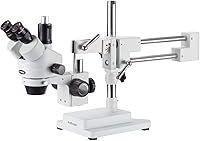
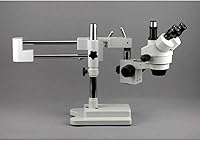
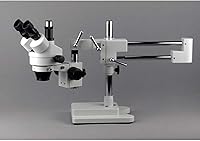
The AmScope SM-4TPZ Trinocular Stereo Zoom Microscope is a professional-grade optical tool built for technical users who demand reliable, high-magnification viewing in real work environments. Its standout feature is the trinocular viewing head, which allows simultaneous observation through the eyepieces and a live camera feed — no switching required. The double-arm boom stand makes positioning intuitive, letting you work around large or irregularly shaped specimens without constantly repositioning. At this price tier, it is unmistakably a serious instrument, not a hobbyist curiosity. If you only need occasional low-magnification inspection, this boom-stand microscope is likely more tool than you need.
Features & Benefits

The magnification range here is genuinely versatile. Using the built-in 0.7X–4.5X zoom objective, you can dial in anywhere from 3.5X to 45X without touching a lens. Swap in the included Barlow lenses — think of them as optical multipliers that attach to the objective — and you extend the range down to a wider field or up to 90X for fine detail work. The head's fixed 45-degree angle keeps your neck comfortable during long sessions, and the adjustable interpupillary distance means different users can share the scope without fuss. Head rotation spans a full 360 degrees, which proves useful in collaborative settings. Ambient lighting keeps setup simple, though it may not suit every low-contrast specimen.

Best For

This trinocular stereo microscope is a strong fit for electronics technicians and PCB repair professionals who need a generous working area below the lens — the boom stand gives you room to actually manipulate components while observing. Dental lab technicians benefit from the stable positioning and precision zoom range. Entomologists, gemologists, and naturalists working with larger specimens will appreciate the reach and flexibility. Educators and researchers who need to feed live imagery to a display or recording device will find the trinocular port genuinely practical. That said, if your work requires cellular-level resolution, this is a stereo scope and cannot replace a compound microscope — keep that distinction in mind before buying.

User Feedback

Across roughly 68 ratings, this boom-stand microscope holds a strong 4.5-star average, and most of the enthusiasm reads as earned. Buyers consistently highlight build quality, noting the metal construction feels substantial compared to entry-level alternatives. Image clarity at mid-zoom ranges draws repeated compliments, and the boom stand gets called out often as a practical workspace advantage. On the downside, a handful of users flagged packaging as insufficient for a scope this size, with some units arriving slightly damaged in transit. Getting the Barlow lenses properly dialed in also involves a learning curve for first-timers. Camera adapter compatibility can be hit-or-miss depending on your device, so verify fit before purchasing.

Pros

  • Continuous zoom from 3.5X to 90X covers an exceptionally wide range of inspection tasks without swapping objectives.
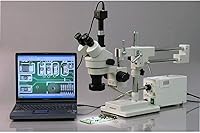
  • The trinocular head streams live imagery to a camera and eyepieces simultaneously — no toggling or interruption.
  • All-metal construction gives this boom-stand microscope a solidity that cheaper plastic-bodied alternatives simply cannot match.
  • The double-arm boom stand offers genuine three-axis flexibility, making it easy to work around bulky or irregularly shaped specimens.
  • A 360-degree rotating head lets multiple users share a single view without repositioning the specimen or the scope.
  • The fixed 45-degree eyepiece inclination meaningfully reduces neck and eye fatigue during extended working sessions.
  • Both a 0.5X and 2.0X Barlow lens are included in the box, extending the usable magnification range at no additional cost.
  • Adjustable interpupillary distance makes the scope comfortable for a wide range of users without extra accessories.
  • Ambient lighting eliminates cable clutter and power dependency, keeping the workspace clean and setup fast.
  • Ranked in the top 20 stereo microscopes on a major retail platform, with a 4.5-star average reflecting consistently positive real-world use.

Cons

  • Passive ambient lighting may be insufficient for low-contrast specimens or dim workspaces, requiring a separate light source.
  • Camera adapter compatibility is not universal — verify your specific device fits the trinocular port before purchasing.
  • At its size and weight class, the AmScope SM-4TPZ is not easy to relocate or share between workstations regularly.
  • The Barlow lens system adds a learning curve; first-time users often need time to dial in optimal results.
  • Packaging has been flagged by some buyers as inadequate for a unit this size, with occasional transit damage reported.
  • The review pool of roughly 68 ratings is relatively small, making it harder to assess long-term durability with full confidence.
  • No powered or LED ring illumination is included, which may frustrate users accustomed to integrated lighting on comparable scopes.
  • The large footprint — over 21 inches in its longest dimension — demands dedicated bench space that not every workspace can offer.

Ratings

Our scores for the AmScope SM-4TPZ Trinocular Stereo Zoom Microscope are generated by AI after analyzing verified buyer reviews from multiple global sources, with spam, bot activity, and incentivized feedback actively filtered out. The results reflect a realistic cross-section of professional users — technicians, lab workers, and advanced hobbyists — who put this boom-stand microscope through genuine daily use. Both its clear strengths and its honest shortcomings are weighted into every score below.
Optical Clarity
88%
Most reviewers who use this trinocular stereo microscope for PCB inspection and dental lab work consistently describe the image as sharp and color-accurate across the mid-zoom range. The achromatic objective keeps chromatic fringing minimal, which matters when distinguishing fine component markings or surface textures.
At the upper end of the magnification range — particularly when the 2.0X Barlow lens is attached — some users notice a softening of edge sharpness. This is not unusual for stereo zoom optics at extreme magnification, but it is worth noting for anyone who needs critical resolution at 90X.
Build Quality
91%
The all-metal construction is one of the most frequently praised aspects among buyers, especially those upgrading from entry-level plastic-bodied scopes. Technicians who use this boom-stand microscope in daily repair work report that it holds its adjustments without loosening over time, which is a meaningful indicator of long-term structural integrity.
A small number of users noted that certain knobs and adjustment points felt slightly stiff out of the box and required a break-in period. This is a minor complaint in the context of the overall build, but buyers expecting a perfectly smooth feel from day one may be briefly disappointed.
Boom Stand Versatility
93%
The double-arm boom stand earns some of the most enthusiastic feedback in the entire review pool. Electronics technicians in particular appreciate the ability to position the head on three axes, leaving both hands completely free to manipulate components, solder, or probe circuits without any interference from the stand.
Achieving and holding precise Z-axis positioning requires the tension knobs to be dialed in correctly, and new users sometimes struggle with this during initial setup. If the arm tension is not set right, very slight head drift can occur during fine-detail work, which is frustrating until the adjustment is understood.
Zoom Range & Flexibility
86%
Continuous zoom from 3.5X to 45X covers the majority of real-world inspection tasks without touching a lens, and the included Barlow lenses extend both ends of that range meaningfully. Users who regularly switch between broad circuit board orientation and tight component inspection find this workflow particularly smooth compared to fixed-objective alternatives.
Getting the most out of the Barlow lenses involves a learning curve that some users underestimated. Several reviewers mentioned spending significant time re-focusing and adjusting parfocality when switching between Barlow configurations, which interrupts workflow until the technique becomes second nature.
Trinocular Camera Integration
74%
26%
The simultaneous eyepiece-and-camera output is a genuine differentiator for educators and researchers who need to broadcast a live magnified view. Several buyers in teaching and demo environments specifically called out this feature as the primary reason they chose the AmScope SM-4TPZ over binocular alternatives.
Camera adapter compatibility is not plug-and-play, and this generates a consistent stream of frustration in the reviews. The trinocular port does not fit all camera mounts without a separately purchased adapter ring, and several buyers discovered this only after the scope arrived — a costly oversight to resolve after the fact.
Ergonomics & Comfort
83%
The fixed 45-degree eyepiece inclination is well-calibrated for extended bench sessions, and users who spend several hours a day at a microscope note a real reduction in neck and upper-back fatigue compared to more vertical configurations. Adjustable interpupillary distance also helps multiple users share the scope without discomfort.
The fixed inclination angle, while comfortable for most, does not suit every user's workstation height or seating preference. A handful of reviewers with non-standard bench setups or posture requirements noted that they would have preferred an adjustable inclination, which is a feature found on some competing models at this tier.
Lighting Performance
61%
39%
Ambient lighting keeps the setup clean and eliminates the need for power cables or separate illuminators in well-lit workshops. For users working in bright, naturally lit environments or under strong overhead shop lighting, the passive system is genuinely adequate for most inspection tasks.
In dimmer environments or when examining low-contrast specimens, the ambient lighting system falls clearly short. A notable portion of users end up purchasing a supplemental ring light or LED arm lamp shortly after receiving the scope, which adds cost and complexity that the base purchase price does not communicate upfront.
Setup & Assembly
72%
28%
The core assembly — mounting the head to the boom arm and securing the stand — is manageable for most technical users and does not require special tools. Buyers with hands-on technical backgrounds, such as electronics repair professionals, generally report being up and running within an hour.
Users without prior microscope experience frequently flag the initial boom arm balancing and Barlow lens orientation as confusing, with the included documentation described as thin on practical guidance. A more thorough setup guide or video reference would meaningfully reduce early frustration for less experienced buyers.
Value for Money
79%
21%
Buyers who use this boom-stand microscope regularly for professional work — PCB repair, dental lab work, gemology — generally feel the price is justified by the optical quality, the included Barlow lenses, and the robust metal construction. The trinocular head adds functionality that most scopes in a lower price bracket simply do not offer.
For buyers who use the scope infrequently or who do not require the full feature set, the cost feels harder to justify against simpler binocular alternatives. The added expense of a compatible camera adapter and potentially a supplemental light source also nudges the real total cost of ownership above the base price.
Packaging & Shipping Safety
54%
46%
When units arrive in good condition — which represents the majority of reported experiences — buyers are generally satisfied with the protective foam inserts around the optical components. The scope itself is heavy and well-protected at its core.
A recurring complaint across multiple reviews involves outer packaging that is not robust enough for a unit of this size and weight. Some buyers received units with minor cosmetic damage to the stand or boom arm, and a smaller number reported optical misalignment that appeared transit-related — a quality-control issue AmScope should address more systematically.
Head Rotation & Sharing
87%
Full 360-degree head rotation is a practically useful feature in collaborative lab or classroom settings. Researchers and educators noted that swinging the head to face a colleague without touching the specimen saves meaningful time and avoids accidental sample disturbance.
The rotation mechanism, while smooth on most units, can develop a slight resistance over extended use if not occasionally maintained. A few long-term users mentioned the rotation becoming stiffer after a year or more without cleaning, suggesting periodic maintenance is advisable.
Long-Term Durability
78%
22%
The metal body and professional-grade optics suggest a construction philosophy oriented toward longevity, and the limited multi-year feedback available trends positive. Buyers who have owned the scope for two or more years generally report no significant degradation in optical performance or mechanical function.
The review base of roughly 68 ratings is too small to draw firm long-term conclusions, and most feedback reflects early-to-mid ownership experience. Buyers seeking reassurance from a large pool of verified long-term durability data will not find it here — the sample simply does not yet support that level of confidence.
Footprint & Portability
47%
53%
For users with a dedicated workstation, the large footprint is a non-issue — the boom stand is designed to occupy space deliberately, and the reach it provides is the core reason to choose it over a fixed-arm alternative. Technicians with a permanent bench setup find the size appropriate and well-proportioned.
At over 21 inches in its longest dimension, this boom-stand microscope is not practical to move between workstations regularly, and it is entirely unsuited for shared or mobile use scenarios. Buyers who need a portable or easily stored microscope should look elsewhere — this scope demands a permanent home.

Suitable for:

The AmScope SM-4TPZ Trinocular Stereo Zoom Microscope is purpose-built for professionals who spend serious time under magnification and need a tool that keeps up with demanding, real-world work. Electronics technicians and PCB repair specialists will appreciate the long working distance the boom stand creates — there is actual room to use tools and manipulate components while watching through the eyepiece. Dental lab technicians working on crowns, bridges, or prosthetics benefit from the stable three-axis positioning and the wide zoom range that handles both macro orientation and close-detail inspection without swapping objectives. Researchers and educators who need to share a live magnified view with a class or colleague will find the simultaneous eyepiece-and-camera output genuinely practical, not a workaround. Naturalists, entomologists, and gemologists examining larger specimens that would overwhelm a compound microscope's limited stage will also find this boom-stand setup well matched to their needs. Advanced hobbyists who have hit the ceiling on entry-level stereo scopes and want something that will not hold them back will feel the step-up in rigidity and optical range immediately.
Not suitable for:

If your budget is tight or your microscopy needs are casual and occasional, the AmScope SM-4TPZ Trinocular Stereo Zoom Microscope is almost certainly more instrument than you need. This is not a scope you buy to look at coins on weekends — the price reflects a professional tool, and the value only materializes through consistent, serious use. Anyone who needs cellular-level resolution for biological or medical work should understand that no stereo zoom microscope, regardless of brand or price, can replicate the function of a compound microscope; these are fundamentally different optical instruments. Users working in very low-contrast or low-ambient-light environments may find the passive lighting system limiting and will need to invest in a supplemental light source separately. Those expecting plug-and-play camera integration should verify adapter compatibility with their specific device before buying, as the trinocular port does not universally fit every camera system out of the box. Finally, buyers in locations with limited packaging oversight during shipping should be aware that the unit's size creates some transit vulnerability worth factoring into the purchase plan.
Specifications

  • Magnification Range: Provides continuous zoom from 3.5X to 90X, covering a wide span of inspection scales without requiring objective changes.
  • Zoom Objective: A 0.7X to 4.5X achromatic zoom objective delivers sharp, color-accurate images across the entire magnification range.
  • Eyepieces: Includes a matched pair of WH10x super-widefield eyepieces designed to maximize the visible field at any zoom setting.
  • Head Type: Trinocular head enables simultaneous viewing through both eyepieces and the top camera port at the same time.
  • Head Inclination: The eyepiece tubes are fixed at a 45-degree angle to reduce neck and eye strain during prolonged use.
  • Head Rotation: The viewing head rotates a full 360 degrees around the optical axis, supporting collaborative viewing without disturbing the specimen.
  • Interpupillary Distance: Adjustable interpupillary distance accommodates different users without tools or additional accessories.
  • Included Lenses: A 0.5X Barlow lens for extended working distance and a 2.0X Barlow lens for increased magnification are both included in the box.
  • Stand Type: A double-arm boom stand with 20-inch arms and a 17-inch pillar allows three-axis positioning over large or irregularly shaped workpieces.
  • Lighting: Ambient lighting is built in and requires no external power source, though it may need supplementation in very low-contrast or dim environments.
  • Body Material: The main structural components are constructed from metal, contributing to the unit's stability and long-term durability.
  • Dimensions: The assembled unit measures approximately 21.65 x 19.88 x 15.55 inches, requiring a dedicated and unobstructed bench footprint.
  • Lens Coating: Achromatic objective lens design minimizes chromatic aberration, keeping color fringing under control across the zoom range.
  • Brand: Manufactured by United Scope LLC, marketed under the AmScope brand, a company focused on optical instruments for professional and scientific users.
  • Model Number: The official model designation is SM-4TPZ, which identifies this specific trinocular boom-stand configuration within the AmScope lineup.
  • Camera Compatibility: The trinocular port supports camera attachment, though compatibility varies by device and adapter; buyers should verify fit before purchasing.
  • Availability Status: This model is confirmed as not discontinued by the manufacturer, indicating ongoing production and likely continued parts availability.

Related Reviews
AmScope SM-3T Trinocular Stereo Zoom Microscope
77%
88%
Optical Clarity
91%
Build Quality
93%
Boom Stand Design
86%
Zoom Range & Versatility
84%
Ergonomics & Comfort
More
AmScope SM-4B Stereo Zoom Microscope Boom Stand
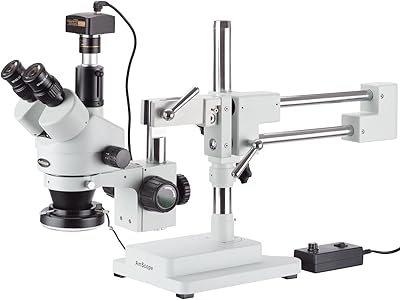
76%
93%
Build Quality
88%
Optical Clarity
91%
Boom Stand Versatility
41%
Illumination
82%
Ergonomics
More
AmScope SM-4TZ-144-5MT Trinocular Stereo Microscope
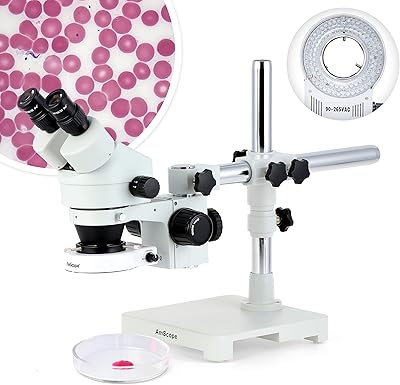
77%
93%
Optical Clarity
91%
Build Quality
89%
LED Ring Illumination
88%
Zoom Range & Versatility
79%
Camera Quality
More
AmScope SM-3B Binocular Zoom Stereo Microscope
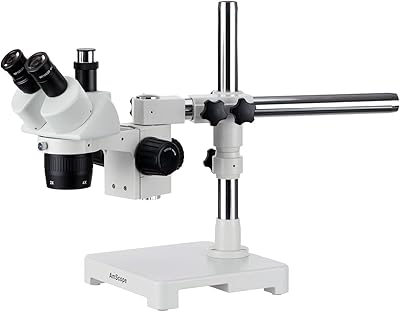
73%
88%
Optical Clarity
91%
Zoom Range & Versatility
83%
Boom Stand Design
86%
LED Ring Light
84%
Build Quality & Durability
More
AmScope SW-3T24Z Trinocular Stereo Microscope
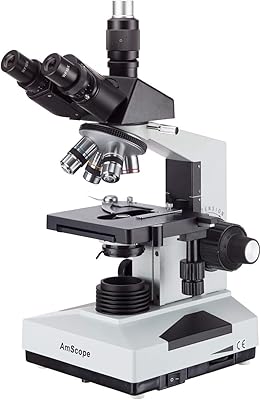
87%
92%
Magnification Quality
88%
Ergonomics & Comfort
84%
Boom Stand Adjustability
91%
Image Clarity
85%
Build Quality & Durability
More
AmScope SE305R-PZ Stereo Microscope
75%
86%
Build Quality
78%
Optical Clarity
71%
Lighting System
91%
Ease of Setup
82%
Ergonomics & Comfort
More
AmScope T490B Compound Trinocular Microscope
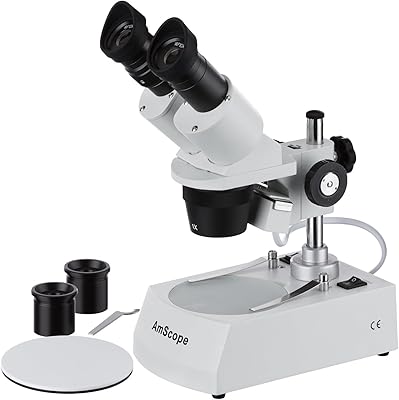
74%
88%
Optical Clarity
91%
Trinocular Head
78%
Camera Integration
86%
Mechanical Stage
89%
Build Quality
More
AmScope SE306R-PZ-LED Stereo Microscope
84%
88%
Value for Money
91%
Build Quality
85%
Ease of Use
78%
Magnification Range
89%
Lighting Performance
More
AmScope SE400-Z Binocular Stereo Microscope
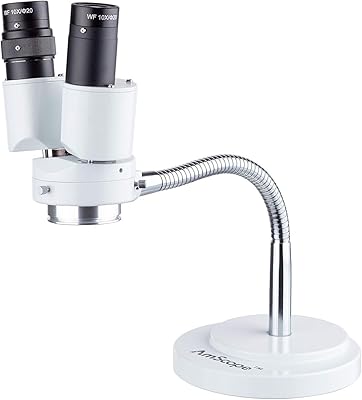
77%
88%
Build Quality
79%
Optical Clarity
93%
Working Distance & Clearance
86%
Boom Arm Flexibility
81%
Eyepiece Comfort & Ergonomics
More
AmScope SE508 8X Magnification Binocular Stereo Microscope
85%
91%
Build Quality
88%
Usability & Ergonomics
80%
Magnification Performance
85%
LED Illumination Effectiveness
93%
Stability
More

FAQ

Yes, the trinocular port on the AmScope SM-4TPZ Trinocular Stereo Zoom Microscope is designed to accept a camera. That said, compatibility is not universal — the adapter you need depends on your specific camera mount or sensor size. It is worth checking the camera thread size and available third-party adapters before buying, rather than assuming any camera will connect directly out of the box.

It is genuinely well suited for that type of work. The boom stand creates a large open area beneath the lens, giving you room to use soldering tools and move boards around while keeping the target in view. The zoom range also covers both broad board orientation and fine component inspection without swapping anything out.

A Barlow lens is an optical element that attaches between the objective and the eyepieces to either extend the working distance or increase the effective magnification. The 0.5X version gives you more physical room between the lens and your specimen, while the 2.0X version pushes the top end of your zoom range significantly higher. Whether you need them depends on your work — many users operate comfortably without either one, but having both included is a genuine bonus.

For many standard applications — inspecting PCBs, examining gemstones under natural room light, or reviewing dental appliances — the ambient lighting holds up reasonably well. However, it is passive, meaning it relies entirely on the ambient light in your workspace. In dim rooms or when working with low-contrast specimens, you will likely want to add a separate ring light or desk lamp to compensate.

Most users who have worked with the stand describe it as solid for its class. The metal construction and the counterbalanced arm design resist vibration better than lighter alternatives. That said, as with any boom-stand microscope, you may notice slight drift if the tension knobs are not properly tightened — a quick adjustment usually resolves it.

Not through the eyepieces simultaneously — there are only two eyepiece tubes for one user at a time. However, the 360-degree rotating head means a second person can take a turn quickly without moving anything. If you need true shared real-time viewing, the trinocular port lets you connect a monitor or display so others can watch the live feed while you work.

The core assembly — attaching the head to the boom arm and mounting the boom to the base — is manageable for most users and does not require specialized tools. The Barlow lenses can take a bit of experimentation to get the focus and image quality right, but the base scope is operational fairly quickly. The most common setup challenge is properly balancing and tensioning the boom arm so the head holds its position without drifting.

The optical quality and viewing comfort are certainly good enough for classroom demonstrations, and the trinocular port with a display setup is excellent for group instruction. That said, the size, weight, and price point make it a poor fit for individual student use or a general classroom where handling by multiple unsupervised users is expected. It is better suited to a demo station managed by an instructor.

No — and it is important to be clear about that. This is a stereo zoom microscope, which means it uses reflected light and produces a three-dimensional, lower-magnification view suited to surface inspection of larger objects. Compound microscopes use transmitted light and achieve much higher magnification for thin, prepared slides and cellular-level detail. The two types serve genuinely different purposes and are not interchangeable.

The all-metal body is a good sign for long-term durability, and the AmScope brand generally has a reasonable reputation for build consistency in its professional-tier products. The review sample is relatively small at around 68 ratings, so there is not a large body of multi-year feedback to draw from definitively. What is available suggests the optics hold up well under regular use, but as with any precision instrument, keeping it covered when not in use and handling the boom arm carefully will extend its service life considerably.

Where to Buy