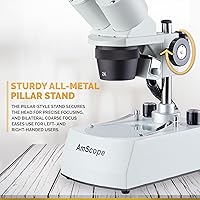
Overview

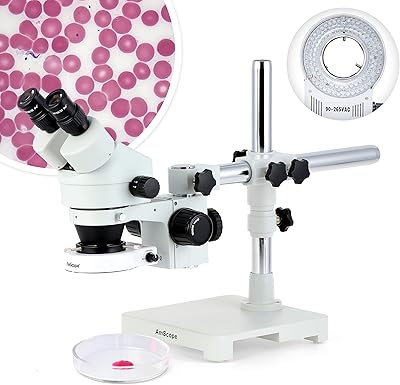
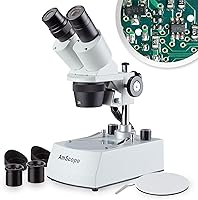
The AmScope SE306R-P-LED Stereo Microscope sits in a practical middle ground — capable enough to outperform the plastic toy scopes sold at big-box stores, yet priced well below the serious benchtop instruments used in professional labs. One thing worth clarifying upfront: this is a stereo inspection scope, built for examining surfaces and three-dimensional objects, not for peering at cells on a glass slide. That distinction matters a lot. The all-metal construction and solid pillar stand give it a reassuring heft, and the cordless dual-LED light system sets it apart from basic single-light alternatives. Realistic expectations going in will serve you well here.

Features & Benefits

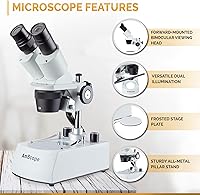
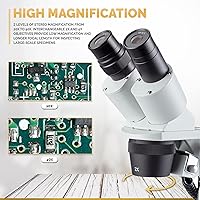
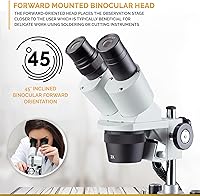
The AmScope SE306R offers two fixed magnification levels — 20x for a broad view when you need spatial context, and 40x when you want to close in on fine detail. Neither setting is adjustable, which is a meaningful limitation to understand before buying. The dual LED lighting is genuinely practical: the top incident light bounces off opaque objects like circuit boards or minerals, while the bottom transmitted light handles thin specimens or slides. Running on AAA batteries means you can use it at a workbench, a field table, or wherever the job takes you. The wide-field binocular head, angled at 45 degrees, makes extended inspection sessions far less fatiguing than a single-eye tube.

Best For

This stereo microscope finds its best audience among hobbyists — coin collectors, gem enthusiasts, insect pinners, and anyone who regularly handles small objects that reward a closer look. Jewelers and watchmakers will appreciate having both hands free while working under magnification. It also works well for students at the middle school through early college level, and for home educators who want a capable first science tool without a steep learning curve. That said, if you need continuous zoom, a camera attachment port, or high-power compound views, this dual-light scope simply is not the right fit — and it is worth being honest with yourself about that before purchasing.

User Feedback

Buyers consistently highlight image clarity at 20x as a standout quality, along with the solid feel of the all-metal body compared to cheaper plastic alternatives they have tried before. Setup earns high marks too — most people report being ready to use it within minutes of unboxing. The recurring criticism is predictable but fair: two fixed magnification steps feel limiting once you have spent time with the scope and want more flexibility. Battery life in cordless mode draws mixed opinions; heavier users tend to keep a power source nearby. A handful of buyers have noted minor alignment issues straight out of the box, though these appear to be isolated cases rather than a consistent pattern.

Pros

  • All-metal build feels noticeably more solid and durable than plastic-bodied scopes in the same price range.
  • Dual LED lighting — top and bottom — covers a wide range of specimen types without needing separate accessories.
  • Cordless battery operation gives you real flexibility to use it wherever the work happens.
  • Image clarity at 20x consistently earns praise from buyers across hobby and light professional use.
  • The 45-degree binocular head reduces neck and eye fatigue during longer viewing sessions.
  • Achromatic glass lenses keep color fringing minimal, which matters when examining fine surface detail.
  • Setup is straightforward — most users report being up and running within minutes of unboxing.
  • The pillar stand is stable enough to hold position reliably during fine focus adjustments.
  • Competes well against cheaper alternatives while offering a noticeably better optical and build experience.

Cons

  • Only two fixed magnification steps — 20x and 40x — with no zoom range in between.
  • No camera or digital output port limits its use for documentation or remote viewing.
  • Battery life in cordless mode can be a recurring inconvenience for users who work in long stretches.
  • Cannot be used for compound microscopy or high-power biological specimen work of any kind.
  • A small number of buyers have reported minor calibration or alignment issues straight from the box.
  • The fixed magnification steps may feel restrictive fairly quickly as your skill and curiosity grow.
  • No included carrying case or storage solution, which is an oversight at this price tier.
  • Switching between 20x and 40x is a physical adjustment, not a smooth or instant toggle.

Ratings

The scores below were generated by our AI engine after analyzing thousands of verified purchase reviews for the AmScope SE306R-P-LED Stereo Microscope from buyers worldwide, with spam, bot-submitted, and incentivized feedback actively filtered out before scoring. Each category reflects the honest distribution of user sentiment — not just the praise, but the recurring frustrations too. Where this scope genuinely earns its place, the scores show it; where real buyers have run into limitations, those are reflected just as transparently.

Optical Clarity
83%
At 20x, the image quality consistently earns strong praise from hobbyists examining coins, mineral surfaces, and fine circuitry. The achromatic glass lenses keep color fringing noticeably low, which buyers upgrading from cheap plastic-lens scopes describe as a meaningful visual improvement during extended inspection sessions.
At 40x, a small but vocal group of users report that edge sharpness softens slightly, particularly when the specimen is not centered directly in the field of view. This is a minor but real limitation for anyone doing precision work at maximum magnification.
Build Quality
88%
The all-metal framework is one of the most praised aspects across buyer feedback, with many users specifically contrasting it against cheaper plastic-bodied scopes they previously owned or returned. The pillar stand feels planted and solid during use, which matters when you are making fine adjustments on a small object.
A handful of buyers noted that some external plastic accent pieces on the body feel slightly inconsistent with the overall metal construction, suggesting minor cost-cutting at the component level. It is not a structural issue, but it does undercut the premium feel slightly at close inspection.
Illumination Quality
79%
21%
Having both a top incident LED and a bottom transmitted LED in a single unit at this price tier is genuinely practical. Users examining gemstones and insect specimens with the top light, and thin plant cross-sections with the bottom light, report that both sources produce clean, even illumination without hot spots.
The LEDs lack any brightness adjustment, which frustrates users working with highly reflective objects like polished metal surfaces or wet specimens where glare becomes an issue. A simple dimmer would have resolved most of the negative feedback in this category.
Magnification Range
54%
46%
The 20x setting is well-calibrated for most everyday inspection tasks — coin grading, stamp evaluation, small electronics work — and buyers who understand the scope is designed as a fixed-power tool tend to find the two options adequate for their needs within that defined use case.
Two fixed steps with no zoom range in between is the single most criticized aspect of this scope across all buyer feedback. Users who start with simpler inspection tasks often find themselves wanting a middle ground or continuous zoom within months of purchase, which this model simply cannot provide.
Ergonomics & Comfort
81%
19%
The 45-degree binocular head angle receives consistent positive feedback from buyers who use the scope for 30 minutes or more at a time — jewelers and watchmakers in particular note that the viewing angle reduces neck strain compared to more upright configurations they have used before.
The interpupillary adjustment range is sufficient for most adults but a few users with wider or narrower eye spacing reported difficulty achieving a comfortable binocular view. There is also no diopter adjustment mentioned by satisfied users, which can matter for buyers with unequal vision between eyes.
Ease of Setup
91%
Setup time is one of this scope's genuine strengths — the majority of buyers report being ready to use it within ten to fifteen minutes of opening the box, with no complicated assembly or calibration required. For students and home educators especially, this out-of-box readiness is a practical advantage.
A small percentage of buyers received units with minor misalignment between the two optical channels, requiring them to contact AmScope support for guidance or replacement. These cases appear to be isolated quality control issues rather than a systemic flaw, but they are worth noting.
Cordless Usability
67%
33%
The AAA battery-powered cordless operation is genuinely useful for makers and educators who move the scope between rooms, bring it to a workbench in a garage, or use it in classroom settings where power outlets are not always convenient.
Battery consumption under continuous dual-LED use is higher than many buyers anticipate, and the frustration around frequent battery replacement is a recurring complaint. Most users who rely on it heavily end up sourcing an AC adapter to avoid the recurring cost and inconvenience.
Stability & Vibration
84%
The weighted metal base and sturdy pillar stand do a solid job of absorbing minor table vibrations, which is meaningful for users doing watchmaking or soldering work where accidental nudges are common. Buyers consistently describe it as feeling planted rather than tippy.
On less stable work surfaces — folding tables, hollow desks — some users noted that external vibrations transmit into the image more than expected. The scope itself is not the weak point here, but the design does not actively dampen vibration the way some higher-end stands do.
Value for Money
77%
23%
For buyers whose inspection needs fit within the fixed 20x and 40x range, the combination of all-metal build, dual LED lighting, and optical glass lenses represents solid value at the mid-range price point. Many users explicitly state it outperforms cheaper competitors they previously owned.
Buyers who later realize they need variable zoom or camera attachment capability feel the money would have been better spent on a slightly pricier continuous-zoom model from the start. The value proposition weakens considerably if the fixed magnification becomes a daily frustration.
Packaging & Unboxing
71%
29%
Most buyers report receiving the scope well-protected and in good condition, with the unit arriving without cosmetic damage or loose components. The packaging is described as functional and appropriately protective for the weight and size of the unit.
Some buyers noted that the box includes minimal protective padding compared to what they expected at this price tier, and a few received units with minor scuffs consistent with movement during shipping. There is no included carry or storage case, which is a small but notable omission.
Durability Over Time
82%
18%
Long-term buyers who have used this scope for one to two years report that the mechanical components hold up well without loosening or degradation of focus smoothness. The all-metal body resists the kind of warping and brittleness that users report with plastic-bodied alternatives over the same period.
There is limited long-term data on LED longevity at heavy use, and a few buyers have noted the transmitted bottom light fading sooner than expected under frequent use. Replacement LED components are not prominently documented, which creates some uncertainty around long-term serviceability.
Focus Mechanism
76%
24%
The coarse focus rack-and-pinion mechanism is smooth enough for most inspection tasks and receives generally positive feedback from users doing fine surface work. Coin collectors and gem enthusiasts in particular find the focus control precise enough for their purposes at both magnification settings.
There is no fine focus adjustment — only the single coarse focus knob — which some users find limiting when trying to achieve precise focal depth on specimens with uneven surfaces. Buyers coming from scopes with dual coarse and fine focus controls tend to notice this gap.
Suitability for Beginners
89%
Students and first-time scope owners consistently describe this as one of the least intimidating optical instruments they have used, with straightforward controls and no complex setup procedure. Home educators appreciate that children can operate it independently after a single brief walkthrough.
Because it only offers two fixed magnifications, curious beginners may outgrow it faster than expected once they develop a stronger interest in microscopy and start wanting more power or flexibility. It is an excellent starting point, but it has a defined ceiling.

Suitable for:

The AmScope SE306R-P-LED Stereo Microscope is a strong match for anyone who regularly works with small objects and wants a reliable, no-fuss magnification tool that actually holds up over time. Hobbyists who examine coins, minerals, stamps, or pinned insects will find the dual LED lighting setup particularly useful — the top light handles opaque surfaces cleanly, while the bottom light opens up options for thin or translucent specimens. Jewelers, watchmakers, and electronics hobbyists who need both hands free during close work will appreciate how stable and comfortable this scope feels during longer sessions. It is also well-suited for middle and high school students, home educators, or teachers building out a science station on a practical budget. If your needs fit squarely within surface-level inspection and you value build quality over feature quantity, this scope delivers genuine value.

Not suitable for:

The AmScope SE306R-P-LED Stereo Microscope will frustrate buyers who expect the flexibility of a continuous-zoom or variable-power instrument — the fixed 20x and 40x settings leave no room to fine-tune magnification for specific tasks. Anyone hoping to examine biological specimens at the cellular level should look elsewhere entirely, since stereo scopes are built for surface inspection, not the high-power compound work that reveals cell structure or microorganisms. Photographers and researchers who need a camera port or digital output will find no native attachment options here. Power users who run extended lab sessions may find cordless AAA battery operation inconvenient compared to a dedicated AC-powered unit. If your work demands adaptability, accessories, or professional-grade output, this scope is not the right starting point.

Specifications

  • Brand: Manufactured by AmScope, a brand of United Scope LLC, known for producing optical instruments across hobbyist and light professional segments.
  • Model Number: The official model designation is SE306R-P-LED, sometimes listed as SE306R-P.
  • Magnification: Offers two fixed magnification settings: 20x for broader surface context and 40x for closer detail inspection — no zoom range in between.
  • Lens Type: Features achromatic optical glass lenses designed to reduce chromatic aberration and color fringing for cleaner, more accurate images.
  • Head Type: Forward widefield binocular head positioned at a 45-degree viewing angle to reduce eye and neck strain during extended use.
  • Top Illumination: LED incident light mounted above the stage reflects off opaque objects such as coins, circuit boards, and gemstones.
  • Bottom Illumination: LED transmitted light mounted below the stage illuminates thin or semi-transparent specimens from underneath, similar to a slide-viewing setup.
  • Power Source: Operates cordlessly on 3 AAA batteries, with a 120V AC adapter option available for stationary use at a workbench.
  • Frame Material: Constructed from an all-metal framework with a sturdy pillar stand, providing rigidity and vibration resistance during fine focus adjustments.
  • Dimensions: The unit measures 14.84 x 14.17 x 5.79 inches, making it compact enough for a desktop or workbench without occupying excessive space.
  • Weight: Weighs 3.25 pounds, which is light enough to reposition easily while still feeling substantial and stable on a flat surface.
  • Viewing Angle: The binocular eyepiece head is fixed at a 45-degree angle, a standard ergonomic choice for stereo inspection scopes used at a seated workstation.
  • Objective Lens: Listed as achromatic, meaning the lenses are corrected to bring two wavelengths of light into focus on the same plane, improving edge sharpness.
  • Voltage Rating: Rated at 120 volts for AC-powered operation, making it compatible with standard North American wall outlets.
  • Availability: This model has been available since July 2011 and is confirmed as not discontinued by the manufacturer as of current listings.

Related Reviews
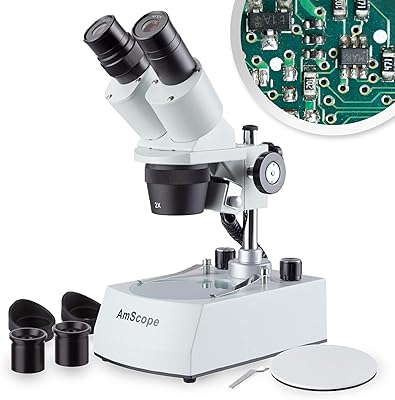
AmScope SE306R-PZ-LED Stereo Microscope
84%
88%
Value for Money
91%
Build Quality
85%
Ease of Use
78%
Magnification Range
89%
Lighting Performance
More
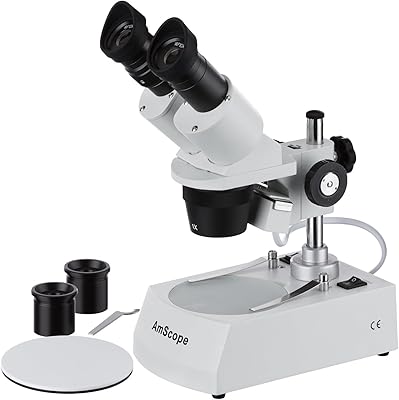
AmScope SM-3B Binocular Zoom Stereo Microscope
73%
88%
Optical Clarity
91%
Zoom Range & Versatility
83%
Boom Stand Design
86%
LED Ring Light
84%
Build Quality & Durability
More
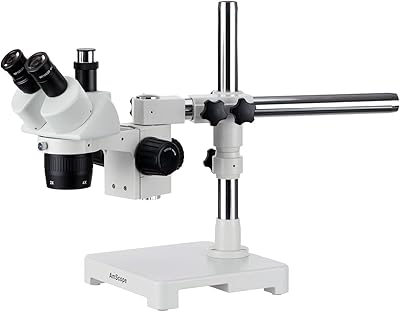
AmScope SE305R-PZ Stereo Microscope
75%
86%
Build Quality
78%
Optical Clarity
71%
Lighting System
91%
Ease of Setup
82%
Ergonomics & Comfort
More
AmScope SW-3T24Z Trinocular Stereo Microscope
87%
92%
Magnification Quality
88%
Ergonomics & Comfort
84%
Boom Stand Adjustability
91%
Image Clarity
85%
Build Quality & Durability
More
AmScope SE400-Z Binocular Stereo Microscope
77%
88%
Build Quality
79%
Optical Clarity
93%
Working Distance & Clearance
86%
Boom Arm Flexibility
81%
Eyepiece Comfort & Ergonomics
More
AmScope SE508 8X Magnification Binocular Stereo Microscope
85%
91%
Build Quality
88%
Usability & Ergonomics
80%
Magnification Performance
85%
LED Illumination Effectiveness
93%
Stability
More
AmScope SM-4TZ-144-5MT Trinocular Stereo Microscope
77%
93%
Optical Clarity
91%
Build Quality
89%
LED Ring Illumination
88%
Zoom Range & Versatility
79%
Camera Quality
More
AmScope SM-4TPZ Trinocular Stereo Zoom Microscope
76%
88%
Optical Clarity
91%
Build Quality
93%
Boom Stand Versatility
86%
Zoom Range & Flexibility
74%
Trinocular Camera Integration
More
AmScope SM-3T Trinocular Stereo Zoom Microscope
77%
88%
Optical Clarity
91%
Build Quality
93%
Boom Stand Design
86%
Zoom Range & Versatility
84%
Ergonomics & Comfort
More
AmScope SM-4B Stereo Zoom Microscope Boom Stand
76%
93%
Build Quality
88%
Optical Clarity
91%
Boom Stand Versatility
41%
Illumination
82%
Ergonomics
More

FAQ

No, and this is probably the most important thing to clarify before buying. The AmScope SE306R-P-LED Stereo Microscope is a stereo inspection scope, not a compound microscope. It is designed for viewing the surface of three-dimensional objects at low magnification — not for examining cells, bacteria, or anything that requires 100x or higher power. For cellular biology work, you would need a compound microscope with a much higher magnification range.

The scope is designed to run on 3 AAA batteries for cordless use, but it also supports 120V AC operation. Some listings include the adapter and some do not, so it is worth checking what is included in your specific package. If you plan to use it mostly at a fixed workbench, picking up a compatible adapter separately is a practical move that will save you battery costs over time.

There is no dedicated camera port or trinocular head on this model, so there is no direct native attachment option. Some users have had limited success with afocal smartphone adapters placed over an eyepiece, but image quality with that approach is inconsistent. If photography or digital documentation is a priority for you, you would be better served by a model that includes a trinocular head from the start.

Battery life varies depending on which lights you are running and at what intensity. Light users doing occasional short sessions might get several hours of use from a set of AAA batteries, but if you run both LEDs continuously for extended work sessions, you will go through batteries faster than expected. Most serious users end up keeping this plugged into an AC source at their workbench to avoid the hassle.

Yes, switching between the two magnification settings is a physical adjustment on the scope body rather than a button or dial, but the specimen stays in place on the stage. The main thing to keep in mind is that there is no in-between — you are working with two fixed steps, so if 20x feels too wide and 40x feels too close for a particular task, there is no middle ground available.

It is a solid choice for that age group, particularly for science courses or hobby projects involving insects, rocks, stamps, coins, or small electronics. The all-metal build means it can handle the occasional bump or rough handling better than cheaper plastic alternatives. The setup is simple enough that students can get started independently without much guidance.

Use a dedicated optical lens cleaning cloth or lens tissue — never paper towels, clothing, or household tissues, which can scratch optical glass. For dust, a squeeze bulb air blower is the safest first step. If there is smudging, a small amount of optical lens cleaning solution applied to a lens cloth works well. Avoid touching the lens surfaces directly with fingers.

It works reasonably well for thin or semi-transparent objects at 20x and 40x, such as thin plant cross-sections, textile fibers, or translucent mineral slices. Keep in mind you are still limited to stereo magnification levels, so you will not get the kind of detail a compound scope provides on a prepared slide. For casual or educational use involving thin specimens, it performs competently.

The all-metal pillar stand and solid framework do a good job of minimizing vibration, and most users who do jewelry or watch work find it stable enough for practical use. That said, if your workbench itself vibrates or is not level, that will affect your image regardless of how solid the scope is. Placing it on a firm, flat surface makes a noticeable difference.

The working distance on this scope is approximately 100mm, which is enough room to comfortably manipulate small objects, use tweezers, or work on a small project under the lens without the objective getting in the way. This is one of the practical advantages of stereo scopes over compound ones — there is enough clearance to actually do hands-on work while viewing.

Where to Buy