Overview

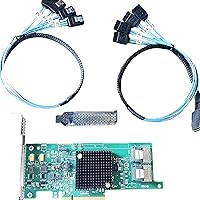
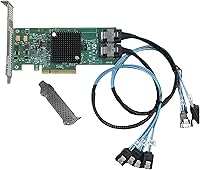
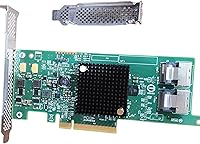
The SVNXINGTII 9207-8i 8-Port SAS Host Bus Adapter is a third-party clone of the well-regarded LSI 9207-8i, built around the SAS2308 chipset and pre-flashed to IT Mode — making it an accessible entry point for DIY NAS and home lab builds. IT Mode is worth understanding: unlike RAID mode, it passes drives directly to the operating system without any hardware abstraction layer, which is exactly what ZFS, TrueNAS, and unRAID need to manage disks on their own terms. This LSI-based host bus adapter is not an official Broadcom or LSI product, and that distinction genuinely matters. It works well for many builders, but approaching clone hardware with realistic expectations is simply the smart way to go in.
Features & Benefits

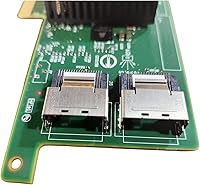
The 9207-8i clone runs on the LSI SAS2308 controller, delivering 6Gbps transfer speeds across both SAS and SATA drives. Eight internal ports come through two SFF-8087 connectors, letting you attach up to 8 drives directly — or push further with a SAS expander and breakout cables. A genuinely useful touch is that it ships already flashed with IT Mode P20 firmware (version 20.00.07.00), so there is no risky flashing process to navigate before your build is up. The PCIe 3.0 x8 interface covers a wide range of modern motherboards, though verifying your slot configuration before ordering is still a smart step. Linux-based systems like TrueNAS, FreeNAS, and unRAID recognize this SAS HBA natively, with no driver headaches.

Best For

This SAS HBA fits squarely into the home lab and budget NAS builder space. If you're running TrueNAS SCALE or Core on a custom box with several drives to wrangle, this is the kind of card that keeps costs sensible without forcing you to give up ZFS compatibility. unRAID users will appreciate the direct drive passthrough — there is no hardware RAID layer interfering with how the OS sees and manages individual disks. It also performs well in Proxmox or ESXi environments where passing drives through to virtual machines is the goal. Anyone expanding an existing server with more SATA slots via SFF-8087 cables will find this a practical, no-fuss option.

User Feedback

Across 69 ratings, this LSI-based host bus adapter holds a 4.2 out of 5 — solid, though not uniformly glowing. The standout positive reported by buyers is a genuine plug-and-play experience: drop it into a TrueNAS or unRAID build, boot up, and it simply works without additional configuration. That kind of friction-free setup is clearly what resonates most. On the other side, a real — if minority — portion of buyers have flagged quality control issues, which is a known risk with clone hardware and worth factoring in before purchasing. A handful of users also hit compatibility snags with specific motherboards, reinforcing the need to confirm your PCIe slot specs ahead of time. Honest expectations lead to better outcomes here.

Pros

  • Ships pre-flashed to IT Mode P20 firmware — no risky DIY flashing process required before use.
  • The SAS2308 chipset delivers 6Gbps per port across both SAS and SATA drives.
  • Eight internal ports handle up to 8 drives natively, expandable further with a SAS expander.
  • Recognized natively by TrueNAS, FreeNAS, unRAID, and most Linux-based NAS operating systems.
  • PCIe 3.0 x8 interface covers a broad range of modern motherboards without special configuration.
  • Many buyers report a true plug-and-play experience with zero additional setup on supported platforms.
  • The 9207-8i clone brings LSI SAS2308 performance to builders who cannot justify OEM card pricing.
  • Ranked #6 in the RAID Controllers category, reflecting genuine market traction among real buyers.
  • Dual SFF-8087 connectors make it easy to integrate with standard SAS breakout cabling setups.

Cons

  • Clone hardware carries inherent quality control variance — a minority of buyers have received faulty units.
  • No official Broadcom or LSI support backing; troubleshooting falls entirely on community resources.
  • Low-profile bracket compatibility is not confirmed out of the box, which can be a problem in smaller cases.
  • The 9207-8i clone has a limited review pool of 69 ratings, making reliability trends harder to assess confidently.
  • PCIe slot requirements must be verified manually — a few buyers hit compatibility issues with specific boards.
  • Not suitable for hardware RAID use cases; IT Mode is a one-way design decision, not a configurable option.
  • Return and warranty experience with lesser-known third-party brands can be inconsistent compared to OEM sellers.
  • This LSI-based host bus adapter offers no native Windows driver support for typical desktop or workstation use.

Ratings

The SVNXINGTII 9207-8i 8-Port SAS Host Bus Adapter scores below are generated by AI after systematically analyzing verified global buyer reviews, actively filtering out incentivized, bot-generated, and outlier feedback to surface genuine user sentiment. This card draws a technically minded audience with clear expectations, and the scores reflect both where it consistently delivers and where clone hardware reality creates friction. Nothing has been softened — the wins and the rough edges are both here.
Out-of-Box Readiness
88%
The pre-flashed IT Mode P20 firmware is the single most praised aspect of this card among real builders. For TrueNAS and unRAID users who have previously wrestled with LSI firmware flashing utilities, receiving a card that simply works on first boot is a meaningful time-saver that directly reduces build anxiety.
A small but consistent thread of buyers reports that the claimed firmware version was not what actually appeared on inspection after installation, requiring a re-flash anyway. This is uncommon but worth verifying during initial setup rather than assuming the firmware state is exactly as advertised.
OS Compatibility
91%
On Linux-based NAS platforms — particularly TrueNAS SCALE, TrueNAS Core, and unRAID — this SAS HBA is recognized instantly without any driver installation or kernel module fiddling. Proxmox users running virtual TrueNAS instances also report clean PCIe passthrough behavior with no unusual configuration needed.
Outside the Linux ecosystem, compatibility drops off sharply. Windows workstation users and those hoping to use this card with hardware RAID on any platform will find it fundamentally unsuitable. The card is purpose-built for a specific software environment, and buyers outside that world should look elsewhere.
Drive Throughput
84%
The SAS2308 chipset handles 6Gbps per port reliably in real-world NAS workloads, which is more than sufficient for spinning hard drives and most entry-level SSD arrays. Builders running eight-drive ZFS pools report steady sequential transfer rates with no bottlenecking attributed to the card itself during typical NAS usage.
At 6Gbps, this card predates the SAS3 12Gbps standard, which limits its ceiling for high-throughput all-flash or enterprise SSD setups. For builders planning to scale into fast NVMe-over-SAS or 12Gbps SAS drives in the future, this LSI-based host bus adapter is not a forward-looking investment.
Value for Money
86%
The gap between this clone and a genuine Dell H200 or IBM M1015 — once you factor in current used OEM pricing — is real enough to matter for budget-conscious home lab builds. For a builder who needs eight ports and IT Mode without paying a premium for a logo, the cost-to-function ratio lands in a genuinely favorable place.
The value equation shifts if you receive a defective unit and face a difficult return process. A small number of buyers have noted that the savings feel less compelling after dealing with a DOA card and the time cost of troubleshooting or reordering, which is a legitimate risk calculation for anyone on a tight build timeline.
Build & Component Quality
63%
37%
The majority of units arrive functional and show reasonable physical build quality for the price tier — solder points look clean in most buyer photos, and the PCIe connector edge appears well-formed. For builders who receive a good unit, there are no obvious red flags in day-to-day handling or installation.
Quality control is the most cited concern across negative reviews, and it is a real one. A notable minority of buyers have received cards that failed early, arrived with visible defects, or exhibited intermittent drive detection issues that pointed to component-level inconsistency. This is the core tradeoff of clone hardware and not something to dismiss.
Motherboard Compatibility
74%
26%
PCIe 3.0 x8 is a widely available slot configuration on modern ATX and E-ATX boards, and the vast majority of home server motherboards accommodate this card without issue. Supermicro and ASUS server board users in particular report straightforward physical and electrical compatibility.
A recurring issue in buyer feedback involves boards where the physical x16 slot is electrically wired for only x4 bandwidth, causing detection failures or degraded performance. Additionally, some micro-ATX boards lack a true x8 slot entirely, so this is not a card you should order without first confirming your specific motherboard specifications.
Setup & Configuration
83%
For the target audience — people building ZFS or unRAID systems — setup is about as simple as it gets. Install the card, connect SFF-8087 breakout cables to your drives, and boot into your NAS OS. There are no BIOS configurations, driver packages, or software utilities required in the typical use case.
Buyers new to SAS HBAs occasionally run into confusion around cable requirements, since SFF-8087 breakout cables are not included and must be sourced separately. A few users also report that the card initializes slowly on POST, which can cause concern during first boot before the system fully recognizes attached drives.
Port Density
89%
Eight ports from a single PCIe card is a strong return on a single slot, and the dual SFF-8087 layout is clean and practical. For home NAS builders consolidating drives from multiple controllers into one card, this density makes cable management straightforward and frees up additional PCIe slots for other expansion.
Eight native ports is genuinely sufficient for most home lab builds, but builders planning large-scale arrays of 16 or more drives will need a SAS expander backplane, which adds cost and complexity. The card itself provides no active port expansion — what you see is what you get without additional hardware.
Thermal Performance
77%
23%
Under typical home NAS workloads with eight spinning drives, the SAS2308 chipset runs at moderate temperatures that do not require dedicated active cooling in well-ventilated server cases. Buyers running the card in standard tower NAS builds with reasonable airflow have not flagged heat as a concern.
In poorly ventilated cases or dense rack setups without dedicated airflow across the PCIe area, the chipset can run warm. A few buyers running continuous high-throughput workloads in compact chassis noted thermal throttling behavior, suggesting that case airflow planning is advisable before installing the 9207-8i clone in a tightly packed enclosure.
Virtualization Support
81%
19%
Proxmox VE users report reliable PCIe passthrough to TrueNAS VMs, with the card presenting individual drives cleanly to the guest OS as intended. ESXi compatibility is also frequently confirmed in buyer discussions, making this a practical and affordable choice for home lab hypervisor builds that need direct storage access.
PCIe passthrough requires IOMMU grouping to work cleanly, and some motherboards place the relevant PCIe slots in shared IOMMU groups that complicate passthrough. This is a platform-level limitation rather than a card issue, but buyers should verify their motherboard and CPU support ACS override or clean IOMMU grouping before relying on this for a VM-based NAS build.
Documentation & Support
41%
59%
Because this card mimics the well-documented LSI 9207-8i, the broader community knowledge base — forum threads, Reddit guides, YouTube tutorials — is extensive and directly applicable. Buyers who are comfortable with community-sourced support will find answers to most questions without needing to contact the manufacturer.
Direct manufacturer support from SVNXINGTII is effectively nonexistent for most buyers. There is no official documentation included in the box, no dedicated support portal, and responses to warranty or defect claims have been inconsistent based on buyer reports. If something goes wrong, you are largely on your own or relying on platform return policies.
Packaging & Presentation
58%
42%
The card arrives in reasonably protective retail-style packaging that prevents physical damage during shipping in most cases. Buyers generally report that the card is adequately secured and arrives without cosmetic damage, which matters when ordering sensitive electronics through standard shipping channels.
No accessories are included beyond the card itself — no SFF-8087 cables, no low-profile bracket alternative, and no installation guide. For first-time SAS HBA buyers, this bare-bones packaging can leave them needing additional research and purchases before the card is actually usable, which is a friction point worth noting.
Long-Term Reliability
66%
34%
A meaningful segment of buyers report months or years of trouble-free operation in always-on NAS environments, which is the most demanding use case for this type of card. When a good unit is received, the SAS2308 chipset itself has a proven track record in the industry that extends well beyond this particular brand.
The long-term reliability picture is clouded by the quality control variance inherent to clone hardware. Early failure rates appear higher than equivalent OEM cards based on the proportion of negative reviews citing hardware faults, and without a robust warranty process, a card that fails after six months represents a total loss rather than a covered replacement.

Suitable for:

The SVNXINGTII 9207-8i 8-Port SAS Host Bus Adapter is a strong fit for home lab builders and DIY NAS enthusiasts who know what they need and want to get there without overspending. If you are running TrueNAS SCALE, TrueNAS Core, or unRAID and need a card that passes drives directly to the OS — no hardware RAID layer getting in the way — this SAS HBA delivers exactly that. ZFS users in particular benefit from IT Mode operation, since ZFS is designed to own drive management entirely and does not play well with controllers that abstract disk access. Proxmox and ESXi builders doing drive passthrough to virtual machines will also find this LSI-based host bus adapter a practical and cost-effective choice. It suits anyone looking to expand an existing server with more SATA or SAS slots using standard SFF-8087 breakout cables, especially when budget is a real constraint and branded OEM pricing feels hard to justify.
Not suitable for:

Buyers who need production-grade reliability with guaranteed quality assurance should look elsewhere — the SVNXINGTII 9207-8i 8-Port SAS Host Bus Adapter is a clone of the original LSI 9207-8i, and that carries real implications for consistency. If you are building a business-critical storage system where a DOA card or early failure would cause serious problems, spending more on a genuine Broadcom or Dell OEM card is the safer path. This SAS HBA is also not the right choice for anyone running Windows-only environments or looking for hardware RAID functionality — IT Mode means the card intentionally does none of that. Builders working with compact or small-form-factor cases should verify low-profile bracket compatibility before ordering, since this is not guaranteed out of the box. Anyone uncomfortable troubleshooting potential compatibility issues or dealing with the occasional quality control lottery that comes with clone hardware should weigh that risk carefully.
Specifications

  • Brand: Manufactured and sold under the SVNXINGTII brand, a third-party producer of LSI-based controller cards.
  • Model Number: The card is designated model 9207-8i, mirroring the LSI 9207-8i form factor and pinout.
  • Controller Chipset: Built around the LSI SAS2308 controller chipset, which handles both SAS and SATA drive communication.
  • Transfer Speed: Supports SAS and SATA data transfer at up to 6Gbps per port under the SAS 6G specification.
  • Host Interface: Connects to the motherboard via a PCIe 3.0 x8 slot, which is required for proper installation and full bandwidth.
  • Drive Ports: Provides 8 internal SAS or SATA ports through two SFF-8087 Mini-SAS connectors on the card edge.
  • Max Native Drives: Supports up to 8 drives natively, with the option to expand beyond that using a compatible SAS expander backplane.
  • Firmware Mode: Ships pre-flashed with IT Mode firmware at revision P20 (version 20.00.07.00), requiring no additional flashing before use.
  • Compatible OS: Natively supported on Linux-based operating systems including TrueNAS SCALE, TrueNAS Core, FreeNAS, and unRAID.
  • Drive Compatibility: Works with standard 3.5-inch and 2.5-inch SAS and SATA hard drives and SSDs connected via SFF-8087 breakout cables.
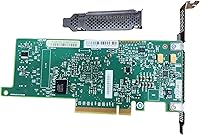
  • Form Factor: Standard full-height PCIe card; low-profile bracket compatibility should be confirmed separately before installation in compact cases.
  • Item Weight: The card weighs 10.2 oz (approximately 289g), consistent with a standard single-slot PCIe expansion card.
  • Package Dimensions: Retail packaging measures 9.57 x 6.89 x 1.81 inches, accommodating the card and any included accessories.
  • RAID Support: This card operates exclusively in IT (Initiator Target) Mode and does not support hardware RAID configurations of any level.
  • Virtualization Use: Compatible with PCIe passthrough configurations in Proxmox VE and VMware ESXi for direct drive access within virtual machines.
  • BSR Ranking: Holds the #6 position in the Amazon RAID Controllers category, reflecting consistent buyer interest in this segment.
  • Average Rating: Carries a 4.2 out of 5 average rating based on 69 customer ratings at the time of this review.

Related Reviews

Zyxel GS1200-8 8-Port Gigabit Managed Switch
82%
88%
Ease of Setup
83%
Web Interface Usability
79%
Build Quality
97%
Noise Level
81%
VLAN Performance
More
D-Link DES-1008PA 8-Port PoE Fast Ethernet Switch
82%
94%
Ease of Setup
88%
PoE Port Reliability
91%
Build Quality & Durability
58%
Network Speed & Throughput
97%
Noise Level
More
Reidubo 8-Port 10G Unmanaged Network Switch
76%
83%
Real-World Throughput
91%
Ease of Setup
61%
Fan Noise
78%
Build Quality
86%
SFP+ Port Utility
More
Amcrest 8-Port POE+ Unmanaged Network Switch
78%
93%
Ease of Setup
84%
POE Reliability
61%
Port Speed Performance
88%
Build Quality
58%
Thermal Management
More
Loocam LNA-SPG1008 8-Port Gigabit PoE Switch
80%
94%
Ease of Setup
76%
PoE Power Delivery
83%
Build Quality
88%
Compatibility
71%
Extended Transmission Range
More
Grandstream HT818 8-Port FXS VoIP Gateway
77%
91%
Long-term Stability
88%
Port Density & Value
61%
Setup & Configuration
72%
SIP Provider Compatibility
84%
Call Quality
More
YuLinca 8-Port 10G Managed Network Switch
79%
92%
Port Speed & Auto-Negotiation
89%
Throughput & Switching Performance
88%
Build Quality & Chassis
71%
Web Management Interface
86%
L2 Feature Set Depth
More
TCNEWCL KS-801 8-Port HDMI KVM Switch
78%
88%
Ease of Setup
91%
Port Capacity & Scalability
74%
Video Quality & Resolution
69%
Switching Speed & Reliability
83%
IR Remote Control
More
StarTech 8-Port SATA III PCIe Expansion Card
80%
88%
Drive Detection Reliability
84%
Multi-Controller Architecture
79%
OS Compatibility
86%
Motherboard Compatibility
81%
Included Cables
More
YuanLey 8-Port 10G Unmanaged Ethernet Switch
80%
93%
Setup & Ease of Use
89%
Throughput Performance
86%
Build Quality
88%
Value for Money
71%
Fan Noise & Acoustics
More

FAQ

It ships pre-flashed with IT Mode P20 firmware (20.00.07.00), so you should not need to touch the firmware before dropping it into your build. That said, it is always worth verifying the firmware version once the card is recognized by your system, just to confirm everything is as advertised.

For most users, yes. The SAS2308 chipset is natively supported by the Linux kernel, which means TrueNAS SCALE typically recognizes this SAS HBA without any driver installation. A significant number of buyers report a completely plug-and-play experience on TrueNAS SCALE and Core alike.

You will need SFF-8087 to SATA breakout cables, sometimes called forward breakout cables, for standard SATA hard drives or SSDs. Each SFF-8087 connector on the card supports four drives, so two cables give you access to all eight ports. These cables are usually sold separately and are widely available.

No, it is not. The SVNXINGTII 9207-8i 8-Port SAS Host Bus Adapter is a third-party clone of the original LSI 9207-8i, not a product manufactured or certified by Broadcom or LSI. It uses the same SAS2308 chipset, but the build quality and quality control are handled by a separate manufacturer. That distinction is worth keeping in mind when assessing reliability expectations.
Yes, and this is actually one of the most common use cases for this card. Since it runs in IT Mode, the 9207-8i clone passes each drive directly to unRAID as an individual device, with no hardware RAID layer in between. unRAID needs that direct visibility to manage parity and per-drive assignments correctly.

In most cases, yes. PCIe slots are generally backward and forward compatible in terms of physical fit, so a PCIe 3.0 x8 card will typically run in a physical x16 slot at x8 speeds. What matters is that your motherboard actually routes x8 bandwidth to that slot — some x16 slots are wired for only x4 lanes, which can cause issues. Check your motherboard manual to confirm lane configuration.

Yes, the LSI-based host bus adapter works well in Proxmox VE for PCIe passthrough to virtual machines. You can pass the entire HBA through to a VM running TrueNAS or another storage OS, giving it direct, unmediated access to the attached drives. This is a popular setup in home lab Proxmox environments.

A small number of buyers have reported compatibility questions tied to specific motherboard configurations, particularly around PCIe slot wiring. It is worth confirming your board has a true PCIe 3.0 x8 slot with full lane bandwidth before ordering. Also verify low-profile bracket availability if you are building in a compact or small-form-factor case, as this is not guaranteed to be included.

Honestly, it is a mixed picture. Many buyers have no issues whatsoever and the card performs exactly as expected for years. A minority, though, have received units with problems right out of the box, which is a known risk with clone hardware. If consistent build quality is critical for your use case, a genuine OEM card from Dell, IBM, or a verified Broadcom channel is the safer investment.

Yes, with a SAS expander backplane. The card itself natively supports 8 drives across its two SFF-8087 ports, but connecting a SAS expander to one or both ports lets you multiply that significantly. SAS expanders are common in larger home NAS builds and work well with IT Mode HBAs like this one.