HighPoint RocketRAID 2840C RAID Controller

Overview
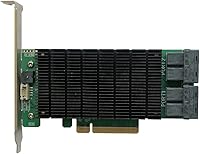
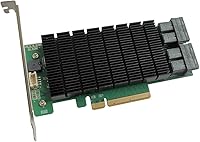
The HighPoint RocketRAID 2840C RAID Controller sits squarely in the mid-range of hardware RAID solutions, built for home lab builders and prosumers who need serious multi-drive capacity without enterprise-level pricing. Unlike software RAID, a dedicated hardware controller offloads parity calculations and drive management from your CPU — which matters when you're running 12 or more spinning disks simultaneously. This card uses a PCIe 3.0 x8 interface, so it drops into most modern motherboards without compatibility headaches. The headline spec is its 16-port capacity — rare at this price tier. One thing to be clear about upfront: this controller is built for traditional spindle HDDs, not SSDs or NVMe drives.
Features & Benefits
The RocketRAID 2840C uses four internal SFF-8643 mini-SAS HD connectors to deliver all 16 ports, letting you populate a large drive cage without adding expanders or extra cabling complexity. RAID mode support spans 0, 1, 5, 6, 1/0, 5/0, JBOD, and single disk — covering everything from pure speed to robust redundancy. OS compatibility is genuinely broad: Windows, major Linux distributions including Proxmox and Unraid, and macOS through Ventura. The Linux driver auto-compile feature is particularly useful — Proxmox and Unraid users who update kernels regularly will appreciate not having to hunt down updated drivers manually. A unified management suite ties all three platforms together from one interface.
Best For
This 16-port SAS card makes the most sense for home lab enthusiasts running high-drive-count arrays — think 10 to 16 spinning disks in an Unraid, Proxmox, or TrueNAS build where reliable connectivity matters more than raw speed. Small offices or prosumers needing RAID 5 or RAID 6 data protection across many drives will find it a practical fit. It also works well in mixed-OS environments where a single management interface across Windows and Linux saves real time. That said, this controller is not the right choice for all-SSD builds, NVMe caching setups, or anyone who requires 12Gb/s SAS throughput — it tops out at 6Gb/s per port.
User Feedback
Across 233 reviews, this RAID controller holds a 3.9 out of 5 rating — which tells part of the story but not all of it. Users who set it up on Unraid or Linux tend to report a solid experience: reliable drive detection, good long-term stability, and decent value for 16 ports on one card. Where things get rougher is driver support. Some buyers hit friction when updating to newer kernels, and HighPoint's documentation does not always keep pace. Motherboard compatibility has tripped up a minority of users too. macOS buyers should note that support ends at Ventura — do not assume plug-and-play behavior on current macOS versions without verifying driver availability first.
Pros
- Delivers 16 SAS/SATA ports from a single PCIe slot — exceptional port density for the price.
- Four SFF-8643 connectors eliminate the need for drive expanders in most large-array builds.
- Supports a comprehensive range of RAID modes including RAID 5 and RAID 6 for serious data protection.
- Linux driver auto-compile is a genuine time-saver for Proxmox and Unraid users on rolling kernels.
- Cross-platform management suite works consistently across Windows, Linux, and macOS environments.
- PCIe 3.0 x8 interface ensures broad compatibility with modern consumer and workstation motherboards.
- Compact form factor fits into tighter cases without sacrificing any connectivity.
- Unraid and Proxmox users consistently report reliable drive detection and stable long-term operation.
- Broad Linux distribution support covers Redhat, Ubuntu, Debian, Fedora, Rocky Linux, and more.
Cons
- Driver updates for newer Linux kernels have lagged, causing friction for users on cutting-edge distros.
- Official documentation is thin, leaving less experienced builders to rely on community forums for setup guidance.
- macOS support ends at Ventura and cannot be assumed to work on newer system versions without verification.
- A small but notable share of users report motherboard compatibility issues that are difficult to diagnose.
- No support for 12Gb/s SAS drives, which limits future-proofing if your storage needs evolve.
- Strictly limited to 64-bit operating systems — a hard requirement that catches some buyers off guard.
- The out-of-box experience varies noticeably by platform; Windows setup is smoother than macOS in practice.
- HighPoint customer support responsiveness has drawn criticism in some user reviews, particularly for edge-case issues.
- Not suited for caching or tiered storage setups that mix SSDs with HDDs in the same array.
Ratings
The scores below were generated by AI after analyzing verified global user reviews for the HighPoint RocketRAID 2840C RAID Controller, with spam, bot activity, and incentivized feedback actively filtered out before scoring. Each category reflects a transparent synthesis of real buyer experiences — the strengths that kept users satisfied and the friction points that pushed ratings down. Both sides are represented honestly, so you can make a genuinely informed decision.
Port Density & Value
Linux Compatibility
Unraid Integration
Drive Detection Reliability
macOS Support
Setup & Documentation
RAID Mode Coverage
Motherboard Compatibility
Management Software
Build & Form Factor
Driver Update Cadence
Long-Term Stability
Throughput Performance
Vendor Support
Suitable for:
The HighPoint RocketRAID 2840C RAID Controller is a strong fit for home lab builders and prosumers who are assembling high-drive-count storage servers around spinning HDDs. If you are running Unraid, Proxmox, or TrueNAS with anywhere from 8 to 16 drives, this card gives you all the ports you need on a single PCIe slot without requiring additional expanders. Small businesses or home offices that need structured data protection through RAID 5 or RAID 6 — without the cost of enterprise-grade hardware — will find this controller punches well above its price bracket. It also suits mixed-OS environments, where the unified management suite across Windows and Linux removes a real operational headache. Builders who frequently update their kernel versions on Linux will specifically appreciate the auto-compile driver support, which reduces the maintenance burden that typically plagues third-party controller cards in rolling-release distributions.
Not suitable for:
Buyers focused on all-SSD or NVMe-centric builds should look elsewhere — this card was designed from the ground up for traditional spindle drives, and using it outside that context means paying for capabilities you will never fully use. Anyone who needs 12Gb/s SAS throughput will hit a ceiling here, as the controller is rated for 6Gb/s per port. macOS users should approach with real caution: support ends at Ventura, and getting drivers working correctly on current or future macOS versions is not guaranteed without significant troubleshooting effort. The HighPoint RocketRAID 2840C RAID Controller also demands a 64-bit operating system, so anyone still running a 32-bit environment is immediately ruled out. Finally, buyers who expect plug-and-play simplicity on every platform may be frustrated — particularly on macOS and on Linux distributions with very recent kernel versions, where driver availability has lagged behind.
Specifications
- Host Interface: The card connects via PCIe 3.0 x8, providing sufficient bandwidth headroom for managing up to 16 simultaneous drive connections.
- Port Count: Sixteen SAS/SATA ports are available in total, delivered through four internal SFF-8643 (mini-SAS HD) connectors.
- Connector Type: Each of the four onboard connectors is an SFF-8643 mini-SAS HD port, which fans out to four drives per cable using a standard breakout cable.
- Drive Speed: Each port supports a maximum transfer rate of 6Gb/s, consistent with the SAS-2 and SATA III specifications used by modern enterprise-class spindle drives.
- Drive Types: The controller is designed exclusively for SAS and SATA hard disk drives (HDDs); solid-state and NVMe devices are not supported.
- RAID Modes: Supported array configurations include RAID 0, 1, 5, 6, 1/0, 5/0, JBOD, and single disk mode.
- OS Support: Compatible operating systems include Windows 7 through 11, Windows Server 2008 through 2022, macOS 10.9 through 13.x (Ventura), and Linux kernels 3.10 and later.
- Linux Distros: Explicitly supported Linux distributions include Redhat, Ubuntu, Debian, Fedora, Proxmox, Rocky Linux, and Unraid 6.9.2.
- Architecture: The controller requires a 64-bit operating system; 32-bit OS environments are not supported under any configuration.
- Management: A unified cross-platform management suite is included, allowing array configuration and monitoring from Windows, Linux, or macOS from a single consistent interface.
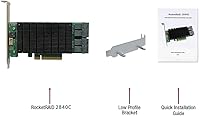
- Form Factor: The card ships as a low-profile PCIe add-in card measuring 5.63 x 2.71 x 0.72 inches, suitable for both standard and compact tower builds.
- Weight: The card weighs 9.9 ounces, which is typical for a controller card of this port density and component count.
- PCB Color: The printed circuit board is green, which is standard for this product line and has no bearing on performance or compatibility.
- Driver Support: Linux drivers support auto-compilation, allowing the card to adapt to kernel updates on rolling-release distributions without requiring manual driver rebuilds.
- Market Rank: This controller holds a position of #71 in the RAID Controllers category on Amazon, based on sales and review volume data.
Related Reviews
HighPoint SSD7104 4-Port M.2 NVMe RAID Controller
HighPoint Rocket 640L 4-Port SATA RAID Controller
10Gtek LSI-2008-8I HBA RAID Controller Card
FOSA M5015 SAS SATA RAID Controller Card
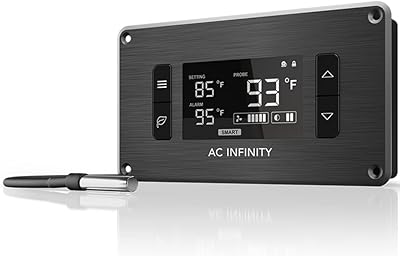
AC Infinity Controller 2 Fan Speed Controller
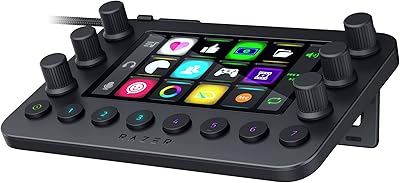
Razer Stream Controller Streaming Keypad
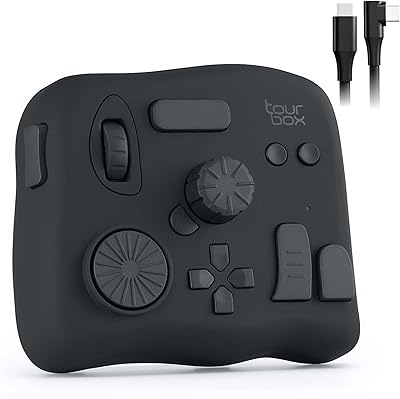
TourBox NEO Creative Editing Controller
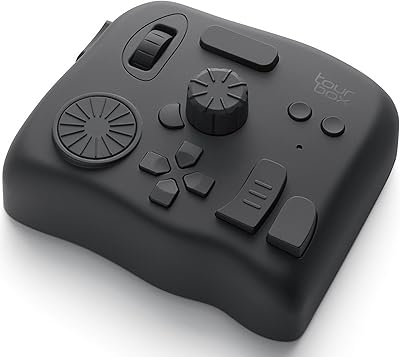
TourBox Elite Video Editing Controller
Lashify Petit Fuse Control Wand