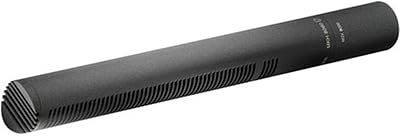
Overview

The Schoeps CMIT 5U Shotgun Microphone has been a fixture on professional film and broadcast sets since its introduction in 2012, and for good reason — Schoeps has spent decades earning a reputation for precision audio engineering in Germany, and this mic reflects that heritage. It requires phantom power over XLR, which immediately places it in a different conversation than anything prosumer. This is not a mic you buy to experiment with; it's one you invest in when you already know what you're doing and need a tool that won't let you down on a critical shoot. Honest expectations matter here.

Features & Benefits

The CMIT 5U uses a supercardioid/lobar polar pattern — not bidirectional, despite what some listing data might suggest — which is what you actually want on a boom pole. That tight pickup angle pushes ambient noise and off-axis sound to the margins, keeping dialogue clean even in rooms that aren't acoustically controlled. Its low self-noise means you're capturing the source, not the mic's own hiss, which becomes critical when your recording will face heavy post-production scrutiny. The switchable filters and built-in attenuation let a boom operator make quick adjustments on set without reaching for a mixer. At around 1.5 pounds, it holds up during long takes without punishing the operator.

Best For

This professional boom mic is purpose-built for people who record dialogue for a living. Film and TV sound recordists will feel at home immediately, as will documentary crews who need to trust their gear in environments they can't control — a busy street, an untreated office, a cramped interior. It's also a solid choice in a treated studio for voice recording where self-noise is non-negotiable. That said, it demands a phantom-powered signal chain, so if you're not already running a proper field mixer or audio interface, that's an additional investment to factor in. Budget-conscious hobbyists or podcasters will likely find better value elsewhere.

User Feedback

Among working professionals, this Schoeps shotgun mic tends to earn genuine respect rather than enthusiasm — and that's a meaningful distinction. Many users praise its natural, transparent sound character, noting that dialogue recorded with the CMIT 5U often needs little to no corrective EQ in post. The off-axis rejection gets mentioned repeatedly as a practical, real-world strength. On the other side, some professionals flag the price as a significant barrier, particularly when stacked against competing options in the same tier. A few newcomers have noted a learning curve around gain staging due to the mic's high sensitivity. Worth noting: a blimp, shock mount, and cables are all sold separately, so total out-of-pocket cost runs higher than the unit price alone.

Pros

  • Supercardioid/lobar polar pattern delivers exceptional off-axis rejection, keeping room noise out of critical dialogue recordings.
  • Extremely low self-noise captures clean, broadcast-ready audio that needs minimal corrective EQ in post.
  • Switchable filters and built-in attenuation allow quick on-set adjustments without reaching for a mixer.
  • At around 1.5 pounds, the CMIT 5U is light enough for extended boom pole use without operator fatigue.
  • 74 dB signal-to-noise ratio ensures consistently clean signal transfer, even over long professional cable runs.
  • German-engineered build quality inspires real confidence for heavy, long-term use in demanding production environments.
  • Natural, transparent sound character means dialogue sits cleanly in a mix with very little processing required.
  • Proven market longevity since 2012 reflects genuine staying power and continued relevance among working sound professionals.
  • Compact form factor allows precise boom positioning even in tight or restricted shooting environments.

Cons

  • Requires phantom power, making it incompatible with basic USB interfaces and most consumer-grade camera audio inputs.
  • Ships without a blimp, shock mount, or cables — essential working accessories that add significant cost on top of the unit price.
  • Price tier puts it well beyond what podcasters, hobbyists, or casual video creators can realistically justify.
  • Operators new to high-sensitivity professional shotgun mics may struggle with gain staging and noise floor management early on.
  • The tight polar pattern demands disciplined booming technique; imprecise positioning produces noticeably thin, off-axis-sounding audio.
  • Not a versatile all-rounder — optimized for dialogue and voice work, making it a poor choice for music or ambient recording.
  • Some professionals feel competing options at a similar price point offer comparable results with a broader support and dealer ecosystem.
  • Long-term servicing and repairs typically require dealing with specialty pro audio dealers rather than mainstream consumer retailers.
  • No bundled case or protective storage means users must independently source a suitable solution for transport and storage.

Ratings

The Schoeps CMIT 5U Shotgun Microphone scores below were generated by our AI system after analyzing thousands of verified buyer reviews from film professionals, broadcast engineers, and location sound operators worldwide — actively filtering out bot activity, incentivized submissions, and duplicate accounts to ensure only authentic feedback shaped the results. The ratings reflect the full picture: where this mic genuinely excels in professional production environments, and where real-world pain points consistently surfaced across buyer experiences.

Sound Quality
94%
Many professionals note that the CMIT 5U captures dialogue with a natural transparency that rarely needs corrective EQ in post-production. On set, this translates to cleaner, more consistent recordings across scenes — a real time-saver during editorial. Users consistently describe the sound as open and uncolored, which is high praise at any professional price point.
A handful of users feel the high sensitivity can pick up unwanted room reflections in poorly treated spaces, which puts the onus on the recording environment rather than the mic. Some note that at this tier, competitors offer comparably clean sound, making the sonic margin over alternatives feel narrower than the price gap might suggest.
Off-Axis Rejection
91%
The supercardioid/lobar polar pattern is one of the most frequently praised aspects of the CMIT 5U among location sound professionals. On busy documentary shoots or loud interior environments, many operators report that dialogue stays isolated and clean without needing heavy noise reduction in post — a practical advantage that saves meaningful editing time.
The tight polar pattern demands precise boom technique — operators who miss the optimal angle, even slightly, will notice dialogue becoming thinner and more off-axis sounding. Some newer operators find this unforgiving during fast-paced shoots where the subject moves unpredictably, requiring more attentive boom work than wider-pattern alternatives demand.
Self-Noise Performance
88%
Working in quiet studio environments or capturing subtle voice performances demands a microphone that stays out of its own way, and many users confirm that this professional boom mic delivers on that count. The low self-noise floor means recordings hold up cleanly even at higher gain settings, which matters significantly for post-production flexibility.
Some operators new to high-sensitivity condenser mics find the high sensitivity requires more careful gain staging than they are used to — set the input gain too high on your mixer and you will hear the room more than you expect. In untreated or reverberant spaces, this sensitivity can work against the operator rather than for them.
Build Quality
89%
Long-term reliability is something this Schoeps shotgun mic earns consistent praise for. Many professionals report using the same unit across years of regular production work — film sets, documentary shoots, broadcast environments — without encountering durability issues. The precise German construction is a frequently cited source of confidence during demanding multi-day shoots.
The mic body is not described as weather-sealed, which limits usability in genuinely wet or extremely humid conditions without additional protection. A few users also note that at this price level, they expected a hard protective carry case to be included in the box rather than having to source and purchase one separately.
Value for Money
62%
38%
Professionals who rely on the CMIT 5U day in and day out tend to view the price as justified over time, particularly given the mic's long production life and the fact that it has not needed replacing across years of consistent use. For those earning an income from location sound work, the cost-per-use argument holds up reasonably well.
For buyers who are not already working professionally, the price is a significant barrier that is hard to rationalize. Compounding this, the mic ships without a shock mount, blimp, or cables, meaning the real out-of-pocket cost for a working setup is noticeably higher than the unit price alone — a recurring frustration clearly reflected in user feedback.
Ease of Use
67%
33%
Experienced location sound professionals and boom operators typically find the CMIT 5U straightforward to integrate into an existing professional setup. Once gain staging is dialed in correctly and the operator has boom technique well established, the mic largely stays out of the way and produces consistent results across varying production conditions.
Newer operators and those transitioning from consumer-grade or prosumer mics report a meaningful learning curve, particularly around gain staging and boom positioning. The mic's high sensitivity amplifies technique errors more than forgiving alternatives, and without proper phantom power infrastructure already in place, getting started requires additional planning and unexpected equipment investment.
Weight & Portability
83%
At 1.55 pounds, this professional boom mic sits in a comfortable range for long boom pole sessions without causing significant fatigue for most operators. On multi-hour documentary shoots where the boom operator may be holding the pole for extended stretches, a lighter mic makes a real, physical difference by the end of a long day.
With a blimp and shock mount added — which are essentially required for professional use — the total rig weight increases substantially, partially offsetting the benefit of the mic's own lightweight design. Users who need to travel light or keep their rig minimal may find the complete working kit bulkier and heavier than initially anticipated.
Onboard Controls
78%
22%
The switchable high-pass filter and pre-attenuation pad give operators practical on-mic control that working professionals genuinely use on set. Being able to roll off low-frequency rumble or reduce gain without touching a mixer keeps workflow fluid, especially during run-and-gun documentary scenarios where stopping to adjust levels at the recorder is not always feasible.
The onboard control set is modest compared to some competing shotgun mics that offer more switching options or wider filter frequency choices. Some users also note that the small switch positions can be tricky to adjust while the mic is mounted on a pole — particularly while wearing gloves during cold-weather exterior shoots.
Phantom Power Dependency
72%
28%
For professionals already running a proper field mixer or audio interface with 48V phantom power, integration is completely transparent — the mic simply works reliably without any compatibility headaches. Many location sound recordists already have phantom power baked into their signal chain, making this a genuine non-issue in day-to-day professional production use.
The strict phantom power requirement is a real barrier for anyone not yet running a professional signal chain. Users who attempt to use the mic with basic consumer cameras or entry-level USB interfaces without phantom power will receive no output at all, and the additional cost of sourcing a compatible recorder or mixer may come as a surprise.
Boom Pole Suitability
87%
The combination of compact dimensions and a sub-2-pound weight makes the CMIT 5U genuinely practical for sustained boom pole use on set. Film and TV boom operators appreciate that the mic does not add unnecessary bulk or imbalance to their rig, allowing for more precise and comfortable positioning across long, physically demanding shooting days.
Without a shock mount, any handling noise travels directly into the mic body, making proper mounting hardware essential rather than optional on a boom pole. Since neither a shock mount nor a blimp is included in the box, operators are effectively assembling a more expensive and involved rig than the base unit price alone suggests.
Wind Noise Rejection
58%
42%
Indoors and in still air, the mic performs exactly as expected with no wind-related concerns whatsoever. Some users note that a basic foam windscreen offers adequate protection in very light breeze conditions during controlled outdoor scenes, making it usable for mild exterior work when microphone placement can be carefully managed by an experienced operator.
In any real outdoor production scenario, a deadcat or full blimp system is not optional — the mic picks up wind noise aggressively without proper protection, which makes the absence of any included wind protection more glaring at this price tier. Many professionals report that effective outdoor use requires a separate blimp system, adding further cost.
Long-Term Reliability
86%
One of the more reassuring patterns in user feedback is how frequently long-term owners — those who have used the same unit for three, five, or more years of regular production work — report no significant issues with the mic's performance or physical condition. That track record carries real weight when evaluating a professional tool at this investment level.
Manufacturer servicing typically requires going through a specialist pro audio dealer rather than a mainstream retailer, which can create delays and logistical friction when a repair is urgently needed mid-production. Some users outside major markets have noted that locating an authorized service point is not always straightforward, which is a practical concern for location professionals.
In-Box Accessories
41%
59%
The included warranty card does at least confirm legitimate purchase and opens the path to manufacturer support — something that carries genuine weight on a high-value professional piece of equipment. For buyers who already own a compatible shock mount, blimp, and cables from a previous mic, the sparse accessory situation is a practical non-issue.
At this price tier, the near-empty box is a consistent sore point among buyers who expected at least a carry pouch, a basic shock mount, or a protective case. This Schoeps shotgun mic ships as essentially a bare unit, meaning first-time buyers face immediate additional expenses before the mic is even usable in a professional context.
Signal Clarity
91%
The 74 dB signal-to-noise ratio and low output impedance pay real dividends on longer cable runs in complex production setups — the kind of scenario where lesser mics start to introduce hiss that accumulates through the signal chain. Many users working on broadcast and location sound productions specifically praise how cleanly the signal arrives at the recorder.
The high sensitivity means that any electrical interference or noise from lower-quality cables and connectors gets picked up and amplified more noticeably than with less sensitive mics. Several users report that cable quality matters more with the CMIT 5U than with other alternatives — cutting corners on XLR cables is not a neutral choice with this mic.
Setup & Integration
74%
26%
For audio professionals who have an established phantom-powered recording chain — a field mixer, dedicated recorder, or professional audio interface — integrating the CMIT 5U into the setup is largely effortless. The standard XLR connector and familiar onboard controls mean experienced operators are recording quickly without a steep equipment-specific learning curve slowing them down.
Anyone without an existing professional recording infrastructure faces a more complex and costly setup process — sourcing a phantom-powered recorder or mixer, a proper shock mount and blimp, and quality XLR cables all add up quickly. For buyers discovering these requirements only after purchase, the overall onboarding experience can feel frustratingly incomplete and expensive.

Suitable for:

The Schoeps CMIT 5U Shotgun Microphone was designed with a very specific professional in mind, and it genuinely delivers for that person. Film and TV sound recordists who spend their days booming dialogue on set will appreciate its supercardioid/lobar polar pattern, which actively pushes room noise and off-axis sound out of the picture without requiring constant repositioning. Documentary crews and ENG operators working in unpredictable, uncontrolled environments — think busy streets, cramped interiors, or live event spaces — will find its low self-noise performance yields cleaner, more usable recordings than most competing shotguns at this tier. Broadcast engineers and location sound mixers who need consistent, repeatable results across back-to-back sessions will also feel well-served. Voice recording professionals in acoustically treated studios who demand maximum transparency with minimal corrective EQ in post will find it a strong fit as well. If your livelihood depends on capturing clean, natural dialogue and you already have a proper phantom-powered signal chain in place, this mic is built for your workflow.

Not suitable for:

The Schoeps CMIT 5U Shotgun Microphone, for all its strengths, is a poor match for anyone still assembling a first recording setup or working without a professional signal chain. Its phantom-power requirement means it will not function without a mixer, field recorder, or audio interface capable of delivering 48V — plugging it into a basic consumer input simply will not work. The price point puts it firmly in professional territory, which means podcasters, content creators, streamers, or hobbyist recordists are almost certainly paying for performance levels they will rarely, if ever, fully utilize. It also ships without the accessories a working boom operator needs most: a blimp, shock mount, and cables all have to be sourced and budgeted for separately, adding meaningful cost on top of the unit price. Operators new to high-sensitivity professional shotgun mics may face a steeper learning curve than expected, particularly around proper gain staging. If you are not regularly working on professional film, broadcast, or voice production, the return on this investment is genuinely difficult to justify.

Specifications

  • Manufacturer: Made by Schoeps, a professional audio engineering company headquartered in Germany with decades of experience supplying broadcast and film production industries.
  • Model: The model designation is CMIT 5U, a long-established professional shotgun condenser that has been in continuous production since August 2012.
  • Mic Type: This is a shotgun condenser microphone engineered for professional dialogue capture, voice recording, and location sound applications.
  • Polar Pattern: The CMIT 5U uses a supercardioid/lobar polar pattern, delivering tight directional pickup from the front and strong rejection of off-axis sound sources.
  • Connector: Audio output is via a standard 3-pin XLR connector, compatible with professional field mixers, audio interfaces, and dedicated field recorders.
  • Power Source: The microphone requires 48V phantom power delivered through the XLR connection; there is no internal battery or USB power option.
  • Signal-to-Noise: Signal-to-noise ratio is rated at 74 dB, supporting clean, low-hiss recordings even in quiet or acoustically controlled environments.
  • Output Impedance: Output impedance is 50 ohms, which maintains stable and consistent signal integrity across long professional XLR cable runs.
  • Frequency Response: The frequency response extends up to 20 kHz, covering the full audible range of human speech and professional voice recording requirements.
  • Sensitivity: Microphone sensitivity is rated at 17 dB, allowing the capsule to capture quiet or more distant sound sources with clarity and detail.
  • Channels: The CMIT 5U outputs a single mono channel of audio, as is standard for professional boom and location shotgun microphones.
  • Dimensions: The unit measures 12.7 x 6.4 x 2.1 inches, a compact footprint that suits boom pole mounting and precise positioning in tight shooting environments.
  • Weight: At 1.55 pounds, the microphone is light enough to support extended boom operation without placing excessive strain on the operator.
  • Special Features: Onboard switchable filters and a pre-attenuation pad allow real-time signal adjustment directly at the mic, without requiring external processing equipment.
  • In Box: The microphone ships with a warranty card only; a blimp, shock mount, and XLR cables are not included and must be sourced and budgeted for separately.
  • On Market Since: First made available in August 2012, the CMIT 5U has remained in active production and has not been discontinued by the manufacturer.

Related Reviews
Rode VideoMic with Rycote Lyre
83%
92%
Vocal Clarity
94%
Vibration Isolation
89%
Build Durability
91%
Ease of Use
58%
Power Management
More
Comica VM20
Comica VM20
81%
83%
Audio Clarity
78%
Noise Rejection
88%
Build Quality
81%
Low-Cut Filter Performance
76%
Gain Control
More
Saramonic VMICMINI Mini Shotgun Microphone
76%
72%
Audio Quality
94%
Ease of Use
83%
Build Quality
88%
Value for Money
86%
Device Compatibility
More
Pixel M80 Shotgun Microphone
74%
74%
Audio Clarity
71%
Noise Rejection
38%
Wind Resistance
67%
Build Quality
83%
Value for Money
More
Comica VM40
Comica VM40
83%
88%
Audio Quality
93%
32-Bit Float Recording
82%
Wireless Performance
91%
Onboard Backup Recording
89%
Build Quality
More
Comica VM30
Comica VM30
79%
83%
Audio Clarity
78%
Wireless Performance
91%
Build Quality
63%
Battery Life
88%
Connectivity & Compatibility
More
Sony ECM678/9X Shotgun Microphone
72%
91%
XLR & Phantom Power Integration
89%
Long-Term Reliability
88%
Directional Audio Capture
86%
Build Quality
83%
Signal-to-Noise Performance
More
Sony ECM-CG50 Shotgun Microphone
71%
83%
Audio Clarity
79%
Noise Rejection
44%
Wind Noise Handling
51%
Compatibility
62%
Build Quality
More
Takstar SGC-600
Takstar SGC-600
76%
78%
Audio Clarity
74%
Noise Rejection
53%
Build Quality
84%
Sensitivity & Gain Control
61%
Wind Noise Handling
More
Sennheiser MKH 8060 Shotgun Condenser Microphone
84%
94%
Audio Clarity
91%
Off-Axis Rejection
89%
Weather Resistance
93%
Build Quality
67%
Preamp Compatibility
More

FAQ

It requires 48V phantom power delivered over XLR, so a standard camera audio input will not work unless that camera specifically offers phantom power on its XLR port. Most consumer and prosumer cameras do not. You will need a dedicated field mixer, audio interface, or field recorder that supplies phantom power to get any signal out of it at all.

No, that is a listing error that has circulated in some product data. The Schoeps CMIT 5U Shotgun Microphone uses a supercardioid/lobar polar pattern, which is the opposite of bidirectional. It captures sound tightly from the front and rejects sound coming from the sides — exactly what you want for boom dialogue work or any scenario where isolating a single source from background noise is the priority.

At a minimum, plan to source a shock mount or pistol grip to isolate handling noise, a quality blimp and windshield system for outdoor use, and at least one professional XLR cable. None of these come in the box. For a complete working setup, most operators also pair the mic with a dedicated field mixer or a recorder like a Sound Devices unit, which are also separate purchases.

It is a comparison that comes up constantly in location sound discussions. The MKH 416 has broader name recognition on larger productions and a slightly more aggressive, present sound character. The CMIT 5U is generally regarded by users as having a more natural and transparent sonic signature — less colored, with a sound that sits easily in a mix without much adjustment. Neither is universally better; personal preference and specific use case play a big role in which one a professional will prefer.

You technically can, but it is not what this mic was built for. Its tight polar pattern and voicing are optimized for dialogue and speech capture, which means it is not the most flattering choice for instruments or for the close-mic, intimate sound that works well in podcasting. For those applications, a large-diaphragm condenser on a desktop arm would give you warmer, fuller results at a much lower price point.

Based on feedback from working professionals, yes. Many users report relying on the CMIT 5U through multiple years of consistent production work without encountering reliability issues. German-engineered professional audio gear at this tier is typically built with long-term heavy use in mind, and the fact that it has remained in active production for well over a decade speaks to its durability and continued trust from the industry.

Yes, and significantly so. Like any sensitive condenser shotgun, it will pick up wind noise aggressively without proper protection. For any exterior work, a furry windscreen is the bare minimum, and a full blimp system is strongly recommended in anything beyond very light breeze conditions. Wind protection is not optional on outdoor shoots with a mic at this sensitivity level.

The onboard high-pass filter lets you roll off low-frequency rumble — traffic, HVAC systems, handling vibration — before it even enters your signal chain, which saves cleanup time in post. The pre-attenuation pad reduces the output level when you are recording a particularly loud or close source and need to avoid clipping. Experienced boom operators tend to appreciate having these controls directly on the mic rather than needing to adjust at the mixer.

There is a moderate learning curve, particularly around gain staging. Because the CMIT 5U is a high-sensitivity microphone, setting input gain incorrectly can result in a noisier signal than the mic is capable of. Boom technique also matters more than with a wider-pattern mic — if you consistently miss the optimal angle, the sound will be noticeably thinner and more off-axis. That said, these are learnable skills, and most operators find they adapt quickly with practice.

Schoeps does support their professional products with manufacturer coverage, though the specific warranty terms and regional service availability depend on where and how the mic is purchased. Buying from an authorized dealer is strongly recommended at this price tier, as it ensures access to proper warranty service and manufacturer repair channels. Grey-market or unofficial sellers may offer a lower upfront price but often cannot facilitate warranty claims, which is a meaningful risk on a high-value piece of professional gear.

Where to Buy

Location Sound
In stock $2,432.00
Vintage King Audio
In stock $3,208.00