Overview

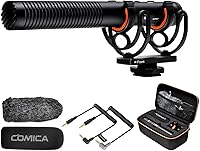
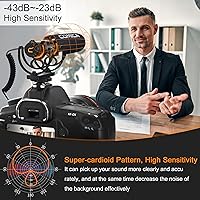
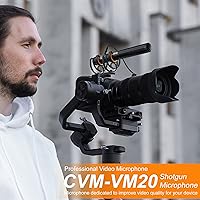
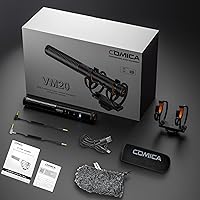
The Comica VM20 is a mid-range on-camera shotgun microphone built for solo creators, vloggers, and indie filmmakers who want a meaningful audio upgrade without stepping into professional broadcast territory. Its super-cardioid polar pattern does a solid job isolating the subject in front while rejecting ambient noise from the sides and rear — useful whether you're recording a street interview or a sit-down talking-head video. The all-metal body feels genuinely sturdy for the price tier, and the kit includes both TRS and TRRS cables plus a windscreen and wind muff, so you're not hunting for accessories on day one. No AA batteries required — it charges via USB-C.

Features & Benefits

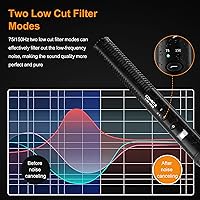
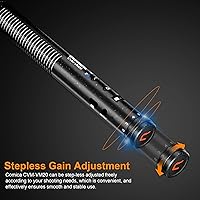
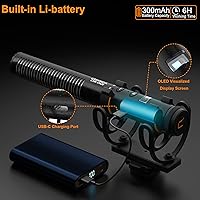
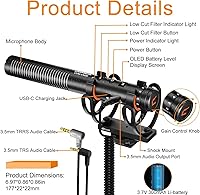
What makes this shotgun mic stand out at its price point is how many practical controls it packs in without overwhelming you. The dual low-cut filters — switchable between 75Hz and 150Hz — are genuinely handy for cutting through wind rumble on an outdoor shoot or killing the low-frequency hum of an air conditioner in a cramped interview room. The ten-level stepless gain control gives you fine-tuned volume management rather than crude jumps. Perhaps the most appreciated touch is the OLED battery display, a small screen showing remaining charge in real time so you're never blindsided mid-take. Pass-through USB-C charging means you can top it up while still rolling.

Best For

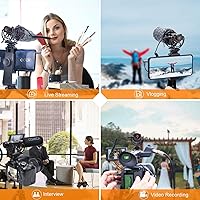
This on-camera microphone is a natural fit for anyone stepping up from a camera's built-in mic for the first time. Run-and-gun videographers will appreciate that it needs no phantom power — just plug in and shoot. Smartphone creators are well covered thanks to the bundled TRRS cable that connects directly without an adapter. For DSLR and mirrorless users shooting YouTube videos or short films, the Rycote-style shock mount handles handheld and gimbal wobble reasonably well. Outdoor producers will find the included wind muff useful in light-to-moderate breeze. It is not built for a professional recording studio, but for on-location video work it performs well above expectations.

User Feedback

Across hundreds of verified purchases, the VM20 holds a strong 4.4-out-of-5 rating, and the feedback patterns are telling. The most repeated compliment is the clarity improvement over built-in camera audio — buyers consistently describe it as an obvious, immediate upgrade. The OLED battery indicator earns its own praise as a surprisingly practical detail that reduces anxiety on longer shoots. That said, not all responses are glowing. Several users flag that the shock mount adds noticeable bulk, which can throw off the balance on compact mirrorless bodies. At higher gain settings, a handful of reviewers report increased sensitivity to handling noise. Buyers expecting XLR connectivity out of the box should also know that adapter is sold separately.

Pros

  • The Comica VM20 delivers a clear and immediate improvement over any built-in camera microphone.
  • The OLED battery display removes guesswork — you always know your remaining charge at a glance.
  • USB-C pass-through charging means you can record and recharge simultaneously from a power bank.
  • Dual low-cut filters at 75Hz and 150Hz offer genuine flexibility for different shooting environments.
  • The all-metal construction feels significantly more premium than plastic-bodied rivals in the same price range.
  • Both TRS and TRRS cables are included, so camera and smartphone users are covered out of the box.
  • Ten-level stepless gain control lets you fine-tune sensitivity rather than toggle between crude presets.
  • The windscreen and wind muff bundled in the kit are actually useful for light outdoor work.
  • The shock mount adjusts forward and backward, helping balance the mic across different camera and lens combinations.
  • At nearly 60 hours of standby, battery life is rarely a concern across a full week of intermittent shooting.

Cons

  • At high gain settings, self-noise and handling sensitivity increase enough to affect final audio quality.
  • The shock mount adds noticeable bulk that can unbalance smaller mirrorless camera bodies.
  • No XLR adapter is included, which surprises buyers expecting full audio interface compatibility.
  • The user manual is sparse and unhelpful for anyone trying to optimize gain staging or filter selection.
  • The OLED display does not show active gain level or filter status — just battery charge.
  • Wind protection is adequate for light breezes but falls short in genuinely gusty outdoor conditions.
  • The shock mount's plastic adjustment points feel less robust than the metal body they attach to.
  • Recording quiet or distant sources pushes the noise floor into noticeable territory in post-production.
  • The finish picks up fine surface scratches relatively quickly under regular field use.
  • Buyers with a hybrid camera-plus-mixer workflow will need to source and budget for an XLR adapter separately.

Ratings

The Comica VM20 has earned a strong reputation among on-camera microphones in its price tier, and these scores reflect an AI-driven analysis of verified buyer reviews gathered globally — with spam, bot activity, and incentivized feedback actively filtered out. The ratings cover everything from audio clarity to physical ergonomics, giving you an honest picture of where this shotgun mic genuinely delivers and where it falls short.

Audio Clarity
83%
The jump in vocal intelligibility compared to built-in camera audio is one of the most consistently mentioned positives across buyer reviews. Whether users are recording a sit-down interview in a quiet room or a short documentary segment outdoors, the subject's voice comes through focused and clean at moderate gain settings.
At higher gain levels, the noise floor becomes more noticeable, and some users picking up subtle ambient sounds in treated spaces find the results less refined than pricier competitors. It is a strong mid-tier performer, but not a substitute for a dedicated studio-grade capsule.
Noise Rejection
78%
22%
The super-cardioid pattern does a commendable job of keeping off-axis noise — nearby conversations, traffic hum, or an air conditioning unit running in the background — from bleeding into the recording. Most users shooting run-and-gun content in semi-controlled environments report satisfying isolation without complex post-processing.
In genuinely noisy environments like busy streets or crowded event spaces, the pattern alone is not enough to fully isolate the subject, and some low-frequency rumble can still sneak through even with the 150Hz filter engaged. Expectations need to be calibrated accordingly.
Build Quality
88%
The all-metal housing is a genuine differentiator in this category, where plastic-bodied competitors are common. Buyers frequently describe it as feeling solid and purposeful in hand, and the weight distribution suggests it will hold up to regular travel and daily mounting and dismounting from a hot shoe.
A few reviewers note that the finish shows fine scratches after extended field use, and the shock mount's plastic adjustment points feel slightly less confidence-inspiring than the metal body itself. Nothing deal-breaking, but worth noting for heavy-use scenarios.
Low-Cut Filter Performance
81%
19%
Having two distinct filter options — 75Hz for light rumble and 150Hz for more aggressive low-end cleanup — gives creators real flexibility depending on the shooting environment. Users shooting near busy roads or in wind report that switching to the 150Hz setting makes a perceptible difference without introducing a thin or tinny quality to voices.
The filter switch is small and positioned in a way that some users find fiddly to adjust while the mic is mounted on a camera. A couple of reviewers also note that the 75Hz cut feels subtle enough that they occasionally question whether it engaged properly.
Gain Control
76%
24%
The ten-level stepless gain control is more nuanced than the coarse high/low switches found on many competing mics, letting users dial in a specific sensitivity level for quiet subjects or loud environments. Videographers shooting a panel discussion versus a solo vlogger in a park appreciate having that granular range.
At the upper end of the gain range, handling noise and self-noise both increase noticeably, which limits how far you can practically push it. Users recording very quiet sources in less-than-ideal acoustic spaces may find the upper gain settings introduce more hiss than they are willing to live with.
Battery Life
91%
A 60-hour standby time essentially eliminates battery anxiety for most shooting schedules — users report going days of intermittent shooting without needing to recharge. The USB-C pass-through charging is a practical bonus that lets you top up from a power bank mid-shoot without interrupting a recording session.
The battery capacity is modest at 300mAh, so active recording time is lower than the standby figure implies. A small number of users also note that the battery indicator can drop faster than expected under continuous high-gain use, making the OLED display more important than it might initially seem.
OLED Display
86%
This is one of those features that sounds minor on paper but earns disproportionate appreciation in actual use. Knowing your remaining charge at a glance — without pulling out your phone or guessing — is the kind of practical detail that saves a take during a time-sensitive interview or event shoot.
The display is small, and in bright outdoor sunlight some users find it harder to read quickly. It shows battery status clearly but does not surface gain level or filter status on-screen, which means you still need to physically check the switches mid-shoot.
Shock Mount Design
72%
28%
The Rycote-style shock mount does its primary job well — handling vibration from walking shots, gimbal adjustments, or accidental knocks to the rig. The ability to slide the mic forward or backward on the mount to rebalance the camera setup is a thoughtful touch that users with different body-lens combinations appreciate.
The shock mount adds meaningful bulk to the overall rig, and on compact mirrorless bodies it can create a front-heavy imbalance that becomes tiring during handheld shoots. A few users with smaller cameras note they removed it entirely and used a direct cold shoe mount to reduce the profile.
Wind Protection
74%
26%
The bundled windscreen and wind muff together give outdoor shooters a reasonable starting point for location work in light to moderate breeze. Vloggers doing walking tours or travel content in open environments report the wind muff in particular makes a noticeable difference over the bare capsule.
In strong or gusty wind conditions, neither the foam screen nor the faux-fur muff fully eliminates the thump and drag artifacts. Users doing consistent outdoor work in variable weather eventually look toward a dedicated blimp-style solution, which is an added cost not reflected in the kit price.
Compatibility
84%
Shipping with both a TRS cable for cameras and a TRRS cable for smartphones means the majority of creators can connect directly without hunting for adapters. Android and iOS smartphone users, Canon, Nikon, and Sony camera owners all report straightforward plug-and-play connections right out of the box.
Buyers expecting XLR connectivity for use with an audio interface or professional mixer are caught off guard — the XLR adapter is not included and needs to be sourced separately. This is worth flagging clearly to anyone buying with a hybrid camera-and-mixer workflow in mind.
Value for Money
87%
Relative to the feature set — rechargeable battery, OLED display, dual filters, stepless gain, shock mount, and two cables — the price-to-capability ratio is hard to argue with in this category. Most buyers describe it as significantly more capable than other options they considered at a similar outlay.
As the price creeps closer to the lower end of dedicated broadcast microphones, some users begin questioning whether spending a little more for a recognizable pro-tier brand makes better long-term sense. The value proposition is strongest for creators who want a complete kit without piecing together accessories separately.
Ease of Setup
89%
Cold shoe mounting, cable connection, and basic gain setting can realistically be done in under two minutes, even for first-time users. The labeled controls and logical layout mean most buyers feel comfortable using it on their first real shoot without consulting the manual more than once.
The manual itself is concise to the point of being sparse, and users who want to understand the nuances of gain staging or filter selection for specific environments have to rely on online tutorials rather than the documentation in the box.
Form Factor & Portability
80%
20%
At 84 grams the mic body itself is light enough to slide into a camera bag pocket without adding meaningful weight to a travel kit. The metal body does not feel delicate, so most users toss it into a bag without a case and report no issues after months of use.
Once the shock mount is attached the overall footprint grows considerably, and the assembled unit is not the most compact option for mirrorless shooters who prioritize a minimal rig. Users switching between handheld and tripod setups frequently find themselves removing and reattaching the mount, which adds minor friction.
Self-Noise Level
71%
29%
For standard dialogue, vlogging, and interview recording at sensible gain settings, the self-noise is low enough that most users never notice it in their final cuts. The 75dB signal-to-noise ratio holds up well in real-world use when the mic is pointed directly at a subject within a reasonable distance.
Push the gain past the midpoint or try to record a source more than a couple of meters away and the noise floor becomes harder to ignore, particularly in post-production when audio is normalized. Users recording quieter sources — ambient sound, whispered narration — report the most frustration here.

Suitable for:

The Comica VM20 is the kind of microphone that makes the most sense for creators who are tired of their camera's built-in audio but are not yet ready — or do not need — to invest in a full broadcast-level rig. Solo vloggers, YouTube creators, and indie documentary filmmakers will find it fits naturally into a hot shoe and covers the majority of everyday shooting scenarios without requiring any additional gear. Smartphone content creators are particularly well served here, since the included TRRS cable means direct plug-and-play connection without hunting for adapters. For outdoor shoots — walking tours, street interviews, event coverage — the bundled wind muff and dual low-cut filters give you a practical head start on controlling environmental noise. If your workflow involves DSLR or mirrorless cameras, the TRS cable and adjustable shock mount make the transition from built-in audio genuinely immediate and impactful.

Not suitable for:

The Comica VM20 is not the right call for anyone whose work consistently demands professional broadcast or studio-grade audio. Sound designers, documentary producers working with dedicated audio recorders, or anyone whose workflow runs through an XLR-based mixer or audio interface will find the absence of a bundled XLR adapter — and the limitations of the capsule at the upper end of the gain range — a real constraint. Photographers and videographers who shoot primarily on compact mirrorless bodies and prioritize a minimal, lightweight rig may also find the assembled shock mount adds more bulk than they are comfortable with. This on-camera microphone is also not well suited to recording quiet or distant sound sources in acoustically untreated spaces, where its noise floor becomes harder to manage. If you are already working with professional audio equipment and are looking to upgrade rather than start fresh, the investment is better directed elsewhere.

Specifications

  • Polar Pattern: The microphone uses a super-cardioid directional pattern, which tightly focuses pickup on sound directly in front while rejecting off-axis noise from the sides and rear.
  • Frequency Response: Audio capture spans 20Hz to 20kHz, covering the full range of human speech and most musical sources relevant to on-camera video work.
  • Signal-to-Noise Ratio: The microphone delivers a signal-to-noise ratio of 75dB, which supports clean dialogue recording at moderate gain settings in reasonably controlled environments.
  • Sensitivity Range: Gain is adjustable across a -43dB to -23dB sensitivity range via a ten-level stepless control, allowing precise volume management without crude jumps between presets.
  • Low-Cut Filters: Two switchable low-cut filter modes are built in — one at 75Hz for light rumble reduction and one at 150Hz for more aggressive low-frequency cleanup in noisier environments.
  • Battery: A built-in 3.7V 300mAh rechargeable lithium battery powers the microphone, with a manufacturer-stated standby time of up to 60 hours.
  • Charging: The microphone charges via a USB-C port and supports pass-through charging, meaning it can be connected to a power source and actively used at the same time.
  • Battery Display: An OLED screen on the microphone body shows remaining battery level in real time, allowing the user to monitor charge status without removing the mic from the camera.
  • Shock Mount: A Rycote-style shock mount is included and features adjustable front-to-rear positioning to help balance the assembled rig across different camera and lens combinations.
  • Connections: The kit includes a 3.5mm TRS cable for cameras and a 3.5mm TRRS cable for smartphones; the microphone outputs audio via a standard 3.5mm jack.
  • Body Material: The microphone housing is constructed from full metal, giving it a more durable and premium feel than plastic-bodied alternatives in the same price category.
  • Weight: The microphone body weighs 84 grams (2.96 oz), making it light enough to mount on a mirrorless or DSLR camera without significantly affecting handheld balance on its own.
  • Dimensions: The assembled unit with shock mount measures approximately 5.51″ x 3.94″ x 9.45″, which adds meaningful height and depth above the camera body when fully rigged.
  • Included Accessories: The package includes one 3.5mm TRS-TRS audio cable, one 3.5mm TRS-TRRS audio cable, a foam windscreen, a faux-fur wind muff, and the Rycote-style shock mount.
  • Compatibility: The VM20 is compatible with Android and iOS smartphones, Canon, Nikon, and Sony DSLR and mirrorless cameras, camcorders, and most devices with a 3.5mm audio input.
  • XLR Support: The microphone does not include an XLR output or adapter in the box; users who require XLR connectivity for audio interfaces or mixers must source a compatible adapter separately.
  • Power Source: The microphone is self-powered by its internal rechargeable battery and does not require phantom power from the connected camera or device to operate.
  • Market Rank: As of the most recent available data, the VM20 holds a Best Sellers Rank of number 35 in the Professional Video Microphones category on Amazon.

Related Reviews
Comica VM40
Comica VM40
83%
88%
Audio Quality
93%
32-Bit Float Recording
82%
Wireless Performance
91%
Onboard Backup Recording
89%
Build Quality
More
Comica CVM-VM10II
Comica CVM-VM10II
83%
92%
Build Quality
88%
Value for Money
79%
Audio Clarity
94%
Portability
84%
Wind Noise Reduction
More
Comica VM30
Comica VM30
79%
83%
Audio Clarity
78%
Wireless Performance
91%
Build Quality
63%
Battery Life
88%
Connectivity & Compatibility
More
COMICA CVM-V30 PRO Shotgun Microphone
85%
87%
Sound Quality
89%
Noise Reduction
91%
Ease of Use
68%
Battery Life
85%
Build Quality
More
Comica VM10 Pro
Comica VM10 Pro
87%
93%
Build Quality
96%
Portability
88%
Digital Audio Performance
91%
Gain Control Functionality
84%
Real-Time Monitoring
More
Comica CVM-V30 LITE
Comica CVM-V30 LITE
79%
78%
Audio Clarity
81%
Directional Performance
61%
Build Quality
93%
Ease of Use
84%
Camera & Phone Compatibility
More
Comica CVM-WM100 PLUS
83%
92%
Signal Stability
86%
Audio Quality & Clarity
94%
Post-Production Flexibility
61%
Portability & Form Factor
68%
Power Management & Battery Life
More
Comica CVM-WM200A Wireless Lavalier Microphone System
84%
88%
Audio Quality
67%
Battery Life
91%
Setup Ease
85%
Transmission Range
80%
Build Quality
More
Comica EJoy D10 PRO Wireless Gaming Microphone
83%
88%
Sound Quality
94%
Battery Life
83%
RGB Lighting
90%
Connectivity Options
79%
Build Quality
More
COMICA Ejoy Uni PRO(A)
80%
93%
Ease of Setup
78%
Audio Clarity
74%
Noise Cancellation
71%
Wireless Performance
63%
Build Quality
More

FAQ

Yes, provided you use the included TRRS cable. The TRRS connection is the standard used by smartphones for combined audio input and output, so you can plug straight into your phone's headphone jack — or use a USB-C or Lightning adapter — without any extra equipment. Android phones with a 3.5mm port work the same way.

No. The microphone has a built-in rechargeable lithium battery that charges via the included USB-C cable. You do not need to stock AA or AAA batteries. The OLED display will show you how much charge is left, so you are never caught off guard mid-shoot.

Yes, the USB-C port supports pass-through charging, which means you can connect a USB power bank or wall charger and continue recording at the same time. This is genuinely useful for long event shoots or interviews where you cannot afford to stop and recharge.

It should work with any camera that has a 3.5mm microphone input, which includes the Sony ZV-E10, Fujifilm X-series bodies, and most Canon and Nikon DSLRs and mirrorless cameras. Just use the included TRS cable and you are ready to record. Check your specific camera model to confirm it has a dedicated 3.5mm mic input rather than just a headphone jack.

The 75Hz cut is the gentler option — it trims very deep low-frequency rumble like vibration from a surface or very distant traffic without affecting voice quality much. The 150Hz cut goes further and is more useful when you are shooting near heavy wind, air conditioning, or loud ambient noise. If you are indoors in a relatively quiet space, 75Hz is usually sufficient; outdoors or near noise sources, 150Hz does more noticeable work.

For most camera and smartphone users, the kit is genuinely complete out of the box — you get both cable types, a windscreen, a wind muff, and the shock mount. The main thing not included is an XLR adapter, so if you plan to run it into a mixing board or audio interface you will need to buy that separately.

Yes, and the shock mount is actually a practical asset here. The Rycote-style mount absorbs vibration and micro-movements that are common when operating a gimbal, which reduces the kind of handling noise that can otherwise bleed into your audio. Just be aware that the assembled rig adds height, so check your gimbal's payload and balance range before rigging it up.

At moderate gain settings the self-noise is low enough that most users never hear it in their final cut. The issues tend to surface when you push the gain to the higher end of its range — particularly if you are recording a quiet source from a distance or in a less-than-ideal acoustic space. For standard vlogging, interviews, and documentary dialogue at close to moderate range, it performs cleanly.

Yes, the shock mount is designed to slide onto a standard cold shoe or hot shoe. The adjustable forward-rear slider also lets you reposition the mic to help rebalance the camera if the front gets too heavy. Some users with very compact bodies find the assembled rig bulky and prefer to mount the mic directly on the hot shoe without the shock mount — which is also possible.

For YouTube content, talking-head videos, travel vlogs, and indie short film dialogue, this on-camera microphone is a strong performer that comfortably outpaces any built-in camera mic. For narrative film projects where you have the time and budget to invest in a boom operator and dedicated audio recorder, you will eventually outgrow it — but for solo creators and small crews, it covers a wide range of production scenarios well.