Overview

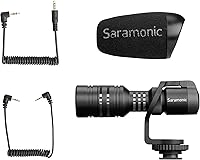
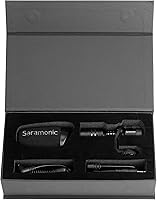
The Saramonic VMICMINI Mini Shotgun Microphone is a compact, no-fuss on-camera mic aimed squarely at content creators who want noticeably better audio without a significant investment. Saramonic pitches it as broadcast-quality, which is bold language for this price tier — though it holds up reasonably well against rivals like the Rode VideoMicro. What genuinely separates it from the crowd at this level is the inclusion of two output cables right in the box: one TRS for cameras, one TRRS for mobile devices. That bundled versatility is a real convenience. Just go in with grounded expectations — this is a solid entry point, but it carries real-world limitations worth understanding before you buy.
Features & Benefits

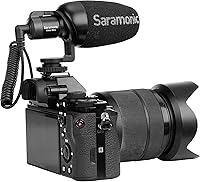
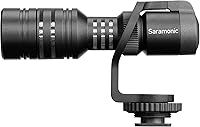
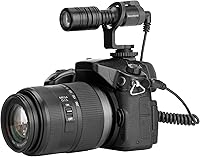
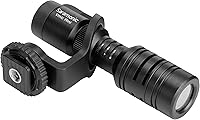
Plug it in and you are recording — no batteries required, no phantom power, no settings to configure. That zero-friction setup matters when you are grabbing a quick shot. The metal housing feels genuinely solid; it does not rattle or flex the way cheaper plastic mics tend to. This on-camera microphone mounts cleanly to a standard cold shoe and stays compact enough that it will not creep into your camera's LCD view. The supercardioid polar pattern does a good job pulling in sound from the front while rejecting noise from the sides — useful in busy cafes or outdoor locations. Both cables ship in the box, so you are set whether you shoot on a Sony A7 or an Android phone.

Best For

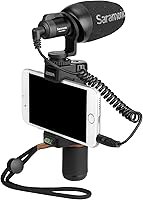
This compact shotgun mic is a natural fit for anyone making their first real audio upgrade from a camera's built-in microphone. Vloggers, YouTube creators, and students will notice an immediate improvement in voice clarity. Run-and-gun videographers will appreciate how light and unobtrusive it sits on a mirrorless or DSLR body — it barely adds to the overall rig weight. Smartphone shooters are also well covered, since the TRRS cable in the box eliminates the need for a separate adapter. Travelers and event shooters keeping their kit lean will find it easy to pack. It is a weaker match for controlled studio work or anyone with more demanding audio requirements.

User Feedback

Most buyers report a clear improvement over built-in camera audio, particularly outdoors or in moderately controlled settings. The solid metal build draws consistent praise — people are often genuinely surprised it does not feel cheap for what they paid. That said, a recurring complaint is audible self-noise: in very quiet indoor environments, a faint background hiss can creep in and become noticeable during editing. Wind sensitivity is another honest limitation; a fair number of users recommend picking up an aftermarket furry windshield for outdoor work. Some long-term owners have also noted that the cables are the most likely point of wear, so it pays to handle the connectors with care.

Pros

  • Plug-and-play setup works instantly with no batteries, apps, or configuration required.
  • Two cables in the box mean it works straight away with both cameras and smartphones.
  • The metal housing feels noticeably more solid than other mics in the same price range.
  • Supercardioid pickup pattern does a solid job rejecting background noise from the sides and rear.
  • Compact enough that it does not obstruct LCD screens or add meaningful bulk to a small mirrorless body.
  • Cold shoe mount is standard and secure, with no wobble during handheld shooting.
  • Real improvement over built-in camera audio is noticeable even to untrained ears.
  • Works cleanly with both iOS and Android phones without needing a separate adapter.
  • Lightweight at under 2.5 ounces, making it easy to forget it is even on the camera.

Cons

  • Audible self-noise or background hiss can become a real problem in quiet indoor recording environments.
  • The included foam windscreen provides minimal protection — outdoor shooters will need an aftermarket furry cover.
  • Cable connections are the most vulnerable part; rough handling will shorten their lifespan noticeably.
  • No onboard gain control or high-pass filter, so you are entirely dependent on your camera settings.
  • Performance drops off significantly the moment ambient noise or acoustics become challenging.
  • Not well suited to recording subjects more than a couple of feet away from the camera.
  • Some users report inconsistent results between the TRS and TRRS cables depending on device compatibility.
  • No carrying case or pouch is included, making safe storage and transport an afterthought.

Ratings

The scores below reflect our AI-driven analysis of verified buyer reviews for the Saramonic VMICMINI Mini Shotgun Microphone, collected from global markets and processed to filter out incentivized, bot-generated, and single-use spam accounts. Each category is scored to honestly represent both what this on-camera microphone does well and where real users have run into genuine frustration — nothing is glossed over.

Audio Quality
72%
28%
For vloggers stepping off built-in camera audio for the first time, the improvement in voice clarity is immediately obvious — dialogue sounds more present and focused, especially when shooting in a park, a coffee shop, or a moderately busy street. The supercardioid pattern does a solid job pulling in the speaker's voice while keeping peripheral chatter at bay.
In truly quiet indoor settings — a home office, a bedroom recording space — an underlying noise floor becomes hard to ignore, especially after any gain boost in post. It is not a dealbreaker for casual YouTube content, but anyone expecting studio-clean audio from this mic will come away disappointed.
Ease of Use
94%
Almost every user mentions how refreshingly simple the setup is — mount it, plug it in, hit record. There are no menus to navigate, no battery compartments to fumble with, and no compatibility apps to install. For run-and-gun creators who want to shoot fast, this zero-friction workflow is a genuine day-to-day advantage.
The simplicity does come with a trade-off: there are no controls whatsoever on the mic body itself, so you cannot adjust gain, switch polar patterns, or activate a low-cut filter without going into your camera's audio menu. Users who want more hands-on control will find the VMICMINI a little too passive.
Build Quality
83%
The all-metal housing consistently surprises buyers who expect something flimsy at this price point. It feels solid in hand, does not rattle when mounted, and holds up well to the kind of casual bumps and bag-tossing that travel shooters deal with regularly. Several users specifically noted it felt like it belonged in a higher tier.
The cables are the weak link — the 3.5mm connectors are not reinforced and the solder joints can loosen with repeated plugging, unplugging, or bending near the connector head. Long-term users have reported intermittent audio dropouts tied directly to cable wear rather than the mic body itself.
Value for Money
88%
At its price point, the VMICMINI bundles real metal construction, two device-specific cables, and usable directional audio into one purchase — a combination that genuinely undercuts what competitors charge for similar entry-level packages. For a student or hobbyist making their first gear investment, the per-dollar return is hard to argue with.
Once you factor in that most serious outdoor shooters will need to buy a better windshield separately, and that the cables may need replacing within a year of heavy use, the total cost of ownership creeps up a bit. Against something like the Rode VideoMicro, the value gap narrows when you account for those add-on purchases.
Device Compatibility
86%
The dual-cable bundle is the VMICMINI's most practical differentiator — shipping both a TRS camera cable and a TRRS mobile cable means iPhone and Android users are ready to shoot immediately without hunting for a separate adapter. This genuinely broadens who the mic works for straight out of the box.
A small number of users report inconsistent behavior when using the TRRS cable with certain Android phones, where the device misidentifies the input and routes it to the wrong channel. Compatibility is not universal across all mobile hardware, and there is no dedicated troubleshooting guide from Saramonic to help when it goes wrong.
Wind Noise Rejection
51%
49%
In calm outdoor conditions — a still day at a park or a sheltered urban location — the included foam windscreen handles light breath and minimal air movement without much trouble. For quick outdoor shots where wind is not a factor, it performs acceptably and keeps the kit minimal.
Any real wind turns this into a liability fast. Buyers who shoot at beaches, open fields, or anywhere with consistent breeze almost universally report needing to purchase a furry dead cat windshield as an immediate follow-up buy. The stock foam cover is not adequate for genuine outdoor production work.
Self-Noise Performance
48%
52%
In noisy or ambient environments — city streets, event spaces, outdoor interviews — the self-noise is largely masked by the surrounding soundscape, and most users shooting in these conditions never notice it as a problem. The mic performs cleanly enough for social media and YouTube content in lively settings.
This is the VMICMINI's most commonly cited weakness. In quiet indoor rooms, the mic's inherent noise floor introduces a hiss that becomes very audible at higher camera gain settings. Podcasters, voiceover artists, or anyone recording in acoustically treated spaces will find this a persistent and frustrating limitation.
Mounting Versatility
81%
19%
The standard cold shoe foot fits cleanly on virtually every DSLR and mirrorless hot shoe without any adapter, and the thread compatibility means it also drops onto boom poles, cage accessory rails, and tripod mounting plates. That kind of multi-mount flexibility is genuinely useful for creators who shift between setups.
The cold shoe connection, while standard, lacks any locking mechanism on the mic side, meaning it can loosen slightly during extended handheld shooting with heavier rigs. A few users also note that the short cable lengths make boom pole use impractical without a separate extension cable.
Portability
91%
At under 2.5 ounces and not much larger than a thumb drive, this on-camera microphone barely registers as extra weight on a mirrorless body. Travel vloggers and event shooters frequently highlight that they forget it is even mounted, which is exactly what a travel-friendly mic should accomplish.
The lack of any included storage pouch or protective case means the mic gets tossed loose into bags, which accelerates cable wear at the connector ends over time. For something this small, a minimal drawstring pouch in the box would have been an easy win Saramonic skipped.
Polar Pattern Effectiveness
74%
26%
The supercardioid pattern performs reliably for its intended purpose — narrowing pickup toward the subject in front of the camera and reducing obvious side bleed from people talking nearby. In interview setups or walking vlog scenarios, it gives voice recordings a sense of direction that built-in mics simply cannot replicate.
The rejection is not tight enough to handle acoustically challenging rooms — spaces with hard walls, echo, or strong background noise will still bleed into recordings more than users expect from a directional mic. It is a useful polar pattern for its tier, but not a substitute for proper room treatment.
Cable Quality
57%
43%
Having two purpose-built cables included is genuinely convenient, and for light to moderate use both cables perform their basic job without introducing noise or channel imbalance. Casual creators who shoot a few times a week typically have no cable-related complaints in the early months of ownership.
Repeated bending, coiling, and reconnecting takes a toll faster than expected — this is the most common long-term failure point reported by users. The connectors are not strain-relieved adequately, and the cables feel thin enough that careful storage habits become necessary from day one to avoid early failure.
Low-Profile Design
89%
The compact footprint means it sits cleanly above the camera body without intruding into the frame or blocking the flip-out LCD screen — a detail that matters a lot to solo vloggers who rely on self-monitoring while recording. Users running gimbals also note that it does not throw off balance the way larger shotguns can.
The smaller body size does mean the capsule is positioned closer to the camera body than on longer shotgun mics, which can pick up more vibration and handling noise from the camera itself if the shooter is not careful. A dedicated shockmount would help, but none is included or sold as a matching accessory.

Suitable for:

The Saramonic VMICMINI Mini Shotgun Microphone is a genuinely smart pick for first-time audio upgraders who are tired of the hollow, echo-prone sound their camera or phone captures on its own. Vloggers and YouTube creators who shoot talking-head videos, short interviews, or walking tours will notice an immediate and meaningful jump in voice clarity without needing to learn anything new — you literally just plug it in and shoot. Smartphone creators are particularly well served here, since the included TRRS cable means iOS and Android users do not have to hunt down a separate adapter before their first session. Run-and-gun videographers who keep their kit light will also appreciate how little this mic adds to the overall load on a mirrorless or DSLR body. Students, hobbyists, and anyone shooting YouTube content, travel videos, or social media clips on a tight budget will find it punches well above its price in most everyday shooting conditions.
Not suitable for:

Anyone recording in controlled, quiet indoor environments — podcasters, voiceover artists, or documentary filmmakers capturing silent room ambience — will likely find the Saramonic VMICMINI Mini Shotgun Microphone frustrating, because its self-noise floor becomes audible exactly when the room around it goes quiet. Professional videographers or journalists who need reliable audio in demanding, variable conditions will quickly run into its wind sensitivity limitations outdoors, and the cables are not rugged enough for heavy daily professional use over the long haul. If your workflow already includes a dedicated audio recorder, a lav mic, or a higher-tier shotgun like the Rode VideoMic Pro, this on-camera microphone simply does not offer enough performance headroom to justify a place in your kit. It is also a poor fit for anyone shooting in consistently loud or windy environments without a quality windshield, since the included foam cover offers only minimal protection.
Specifications

  • Product Type: Mini shotgun on-camera microphone designed for use with DSLRs, mirrorless cameras, video cameras, smartphones, and tablets.
  • Polar Pattern: Supercardioid directional pattern that focuses pickup on sound from the front while rejecting noise from the sides and rear.
  • Power Source: Draws plug-in power directly through the 3.5mm jack connection; no batteries or external power supply required.
  • Output Connector: Dual-cable system: one 3.5mm TRS cable for cameras and one 3.5mm TRRS cable for smartphones and tablets.
  • Cables Included: Two output cables are included in the box, one per supported device type, requiring no additional adapters for basic use.
  • Housing Material: Full metal construction providing a solid, durable exterior that resists minor knocks and flex during everyday shooting.
  • Weight: The microphone body weighs 2.47 ounces, keeping total camera rig weight increase minimal during handheld or travel shooting.
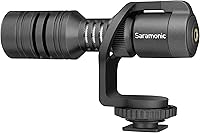
  • Dimensions: Measures 4.6 x 2.4 x 0.75 inches, making it compact enough to avoid obstructing on-camera LCD screens or viewfinders.
  • Mount Type: Features a standard cold shoe mount and is also compatible with boom poles, camera cages, tripods, and accessory stands.
  • Compatible Devices: Works with DSLR cameras, mirrorless cameras, dedicated video cameras, iOS smartphones, Android smartphones, and tablets.
  • Color: Available in black with a matte metal finish suited to blending with most camera bodies and rig setups.
  • Manufacturer: Made by Saramonic, a manufacturer specializing in affordable audio accessories for video production and content creation.
  • Model Number: Official model designation is VMICMINI, used across Saramonic product documentation and accessory compatibility references.
  • Windscreen: A foam windscreen is included in the package to provide basic protection against light breath and indoor air movement.
  • Market Tier: Positioned as a budget to entry-level on-camera microphone, targeting first-time audio upgraders and casual content creators.

Related Reviews

Rode VideoMic with Rycote Lyre
83%
92%
Vocal Clarity
94%
Vibration Isolation
89%
Build Durability
91%
Ease of Use
58%
Power Management
More
Comica VM20
Comica VM20
81%
83%
Audio Clarity
78%
Noise Rejection
88%
Build Quality
81%
Low-Cut Filter Performance
76%
Gain Control
More
Pixel M80 Shotgun Microphone
74%
74%
Audio Clarity
71%
Noise Rejection
38%
Wind Resistance
67%
Build Quality
83%
Value for Money
More
Comica VM40
Comica VM40
83%
88%
Audio Quality
93%
32-Bit Float Recording
82%
Wireless Performance
91%
Onboard Backup Recording
89%
Build Quality
More
TAKSTAR SGC-598
TAKSTAR SGC-598
80%
93%
Value for Money
82%
Audio Clarity
91%
Battery Efficiency
58%
Build Quality
74%
Vibration Isolation
More
Sanken CS-3e Shotgun Microphone
77%
93%
Directional Accuracy
91%
Off-Axis Rejection
88%
Build Quality
89%
XLR Connectivity
71%
Value for Money
More
Saramonic SR-XM1 Compact Condenser Microphone
77%
73%
Audio Quality
94%
Ease of Use
71%
Build Quality
91%
Value for Money
96%
Portability
More
NZXT Capsule Mini USB Microphone
77%
83%
Audio Quality
76%
Noise Rejection
94%
Ease of Setup
78%
Value for Money
61%
Gain Performance
More
Rode NTG-2
Rode NTG-2
80%
83%
Audio Clarity
93%
Dual Power Flexibility
81%
Directional Pickup & Off-Axis Rejection
89%
Build Quality & Durability
76%
Wind & Rumble Rejection
More
Sony ECM-CG50 Shotgun Microphone
71%
83%
Audio Clarity
79%
Noise Rejection
44%
Wind Noise Handling
51%
Compatibility
62%
Build Quality
More

FAQ

No, nothing like that is needed. The Saramonic VMICMINI Mini Shotgun Microphone is fully plug-and-play — you connect the appropriate cable, mount it to your camera or phone, and it starts working immediately. There are no drivers, apps, or firmware updates involved.

Use the TRS cable for your Canon DSLR or any dedicated camera with a standard 3.5mm microphone input. For your iPhone or most Android phones, use the TRRS cable, which is wired to carry both audio and a mic signal through a single headphone-style jack. Both cables come in the box, so you are covered for either scenario without buying anything extra.

This is an honest concern worth taking seriously. In quiet indoor environments — a silent room, a controlled home studio — some users do notice a faint self-noise floor or hiss, particularly when the camera gain is set high. It is less of an issue outdoors or in naturally ambient settings. If your primary use is controlled indoor recording, you may find this limitation frustrating.

The included foam windscreen handles very light breeze reasonably well, but anything stronger will introduce audible wind rumble. If you plan to shoot outside regularly, investing in an aftermarket furry windshield — often called a dead cat — makes a noticeable difference and is a worthwhile add-on for this mic.

Yes, it works well with Sony A7 series cameras. Use the TRS cable and plug it into the camera's 3.5mm mic input jack. You may want to dial in your input gain carefully in the camera's audio settings, as the VMICMINI is a passive mic and output levels can vary by camera body.

You can, though it is worth keeping the cable length in mind. The included cables are relatively short and designed for on-camera use, so boom pole mounting at any real distance would require a separate extension cable. The mounting thread and cold shoe adapter do support boom pole attachment mechanically.

The metal housing itself holds up well to everyday bumps and light handling, and users consistently note it feels more solid than you would expect. The more vulnerable point is the cable connections — the solder joints at the 3.5mm plugs can weaken with repeated bending or rough handling. Storing it with the cables coiled loosely rather than kinked will extend their lifespan considerably.

Most standard GoPro models do not have a 3.5mm microphone input, so this mic would not connect directly to them without a separate USB-C or proprietary audio adapter. If your action camera has a dedicated 3.5mm mic jack, it will work; otherwise you would need an intermediary adapter specific to your camera model.

The Rode VideoMicro is widely considered a step up in audio quality, particularly in self-noise performance, and it shows in quieter recording environments. The VMICMINI's main practical advantage is that it ships with both a camera and a mobile cable in the box, whereas the VideoMicro requires a separate cable purchase for smartphone use. If clean audio in quiet rooms is a priority, the Rode is the better investment; if device flexibility and value matter more, this compact shotgun mic is competitive.

No carrying case or pouch is included in the box. You get the mic body, the foam windscreen, and the two output cables — that is it. If you want to protect it during transport, a small padded pouch picked up separately is a good idea, especially to keep the cable connectors from getting damaged.

Where to Buy