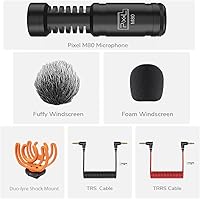
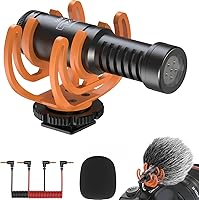
Overview

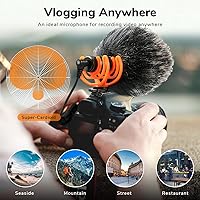
The Pixel M80 Shotgun Microphone is the kind of budget-friendly audio upgrade that makes sense for creators tired of thin, echo-prone sound from their phone or camera's built-in mic. It uses a super-cardioid polar pattern to focus on audio directly in front of the capsule, pushing ambient room noise further into the background. At just 1.76 oz and built from aluminum alloy, it genuinely feels pocketable. Both TRS and TRRS cables are included, so you're not hunting for adapters on day one. This is not gear aimed at broadcast engineers — it's aimed at people taking their first real step toward better audio.

Features & Benefits

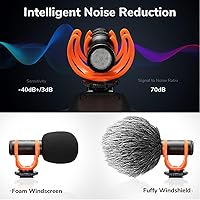
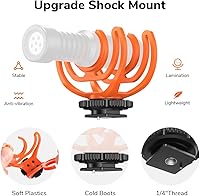
The electret condenser capsule covers a frequency range of 35–20kHz with a 70dB signal-to-noise ratio — solid numbers for this price tier, though don't expect studio-grade transparency. One genuinely useful detail: this compact video mic is entirely passive, meaning no batteries, no charging, no fiddling. Plug in and record. The integrated shock mount does a reasonable job absorbing handling rumble when you're moving around, and the narrow pickup pattern helps keep conversational audio cleaner in reverberant spaces like kitchens or tiled rooms. The lightweight aluminum body avoids the plasticky flex you'd find on cheaper competitors, keeping the feel reasonably solid for its size.

Best For

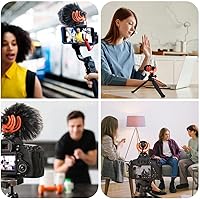
This shotgun mic makes the most sense for solo YouTube creators, vloggers, and anyone shooting talking-head or walk-and-talk content where the speaker stays reasonably close to the capsule. Smartphone filmmakers will appreciate how easy it is to mount this on a cold shoe adapter or tripod and immediately get cleaner dialogue without adding a dedicated audio recorder to the kit. Run-and-gun shooters and travelers benefit from the low weight as well. For DSLR and mirrorless users who find onboard camera audio muddy or noisy in moderately busy environments, this is a practical, low-commitment upgrade genuinely worth trying.

User Feedback

Most buyers agree that the M80 delivers a clear, audible improvement over built-in smartphone and camera audio — for many people, that alone justifies the purchase. The shock mount performance gets generally positive mentions for handheld and gimbal use, though a few users note it doesn't fully eliminate all vibration noise. Where feedback turns more critical is outdoors: there's no windscreen included, and even light breezes produce noticeable low-frequency rumble. Some buyers also raise questions about long-term cable durability, particularly at the connector ends after repeated plugging and unplugging. Overall sentiment leans positive for the price tier, but realistic expectations matter here.

Pros

  • Immediate, noticeable improvement over built-in smartphone and camera microphones for indoor talking-head content.
  • The passive design means zero setup time — no batteries, no charging, just plug in and record.
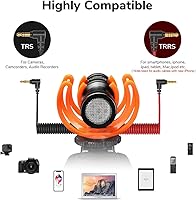
  • Both TRS and TRRS cables are included, covering cameras, phones, and laptops without extra purchases.
  • At under two ounces, the M80 fits in a jacket pocket and adds almost nothing to a travel kit.
  • The aluminum alloy body feels solid and resists the flex you find in cheaper plastic-bodied competitors.
  • The integrated shock mount meaningfully reduces handling noise during handheld and gimbal shooting.
  • Hot and cold shoe compatibility means it mounts easily on a wide range of camera rigs and phone tripods.
  • The super-cardioid pattern helps focus dialogue and reduce room echo in moderately sized indoor spaces.
  • For first-time external mic buyers, setup is intuitive enough that most people are recording within minutes.

Cons

  • No windscreen is included, making outdoor recording in any breeze a frustrating experience.
  • Stock cables show durability issues over time, with fraying near connectors reported after regular use.
  • Off-axis sound rejection isn't tight enough to handle loud or complex ambient environments reliably.
  • The fixed mount orientation limits positioning flexibility on unconventional or modular rig setups.
  • Some units have reported minor rattle or loose housing after a few months of consistent use.
  • Low-frequency rumble from HVAC systems and traffic bleeds through more than the spec sheet suggests.
  • Slight misalignment between the mic and a moving speaker causes audible level drops during casual handheld use.
  • No protective pouch or storage case is included, leaving the capsule vulnerable during transport.

Ratings

The Pixel M80 Shotgun Microphone scores below are generated by AI after analyzing thousands of verified buyer reviews from global markets, with spam, bot activity, and incentivized feedback actively filtered out. The result is an honest picture of where this compact video mic genuinely impresses and where it falls short — no inflated averages, no buried complaints.

Audio Clarity
74%
26%
For creators coming straight from a smartphone or camera's built-in microphone, the jump in vocal clarity is immediately noticeable. Dialogue sounds more focused and present, particularly when the speaker is within a meter of the capsule and the environment is reasonably controlled.
In reverberant spaces or during fast-paced movement, some softness and occasional muddiness creep in. The M80 is not going to satisfy anyone who has used mid-range condensers before — the gap becomes obvious on close listening.
Noise Rejection
71%
29%
The super-cardioid pattern does a solid job narrowing what the capsule picks up, which is a real benefit when recording in cafes, busy streets, or shared workspaces where ambient chatter is unavoidable. Many buyers notice a meaningful reduction in room noise compared to omnidirectional built-in mics.
The rejection isn't surgical. Off-axis sounds bleed through more than experienced audio folks would expect, and the mic picks up HVAC hum and low-frequency rumble more readily than its marketing implies. It's good for the price, not good in absolute terms.
Wind Resistance
38%
62%
In dead-calm indoor conditions, wind is a non-issue and the mic performs exactly as expected. Some buyers use it near open windows or in light airflow without major problems when the source is loud enough to cut through.
No windscreen is included, and outdoors even a gentle breeze turns into a distracting low rumble on recordings. This is a consistent and significant complaint from buyers who assumed outdoor shooting would be straightforward — a foam dead-cat would need to be purchased separately.
Build Quality
67%
33%
The aluminum alloy chassis feels noticeably more solid than the plastic-bodied competitors at this price. It doesn't creak or flex when handled, and the overall fit and finish gives a first impression that reads above its cost.
Closer inspection reveals some inconsistency in assembly — a few buyers report loose capsule housings or minor rattle after a few months of regular use. It's durable enough for careful hobbyist use, but it's not something you'd want to throw into a bag unprotected repeatedly.
Value for Money
83%
As an entry point into external microphone audio, the M80 delivers a compelling cost-to-improvement ratio. For beginners who have never used anything but built-in device audio, the perceived upgrade is real and the price makes it easy to justify experimenting.
Once buyers start comparing it to slightly pricier alternatives, the value proposition gets shakier. A modest additional spend opens up significantly better options, which leaves some buyers feeling like this was a stepping stone rather than a destination.
Ease of Use
91%
The passive design is one of the M80's most practical features — no batteries, no charging cycles, no setup menus. Mount it, plug in the correct cable from the included pair, and you're recording. First-time mic users consistently praise how frictionless the experience is.
The dual-cable setup can cause minor confusion at first, as users need to identify which cable suits their device. There's no labeling or guidance on the cables themselves, which occasionally leads to a brief troubleshooting session before things click.
Compatibility
88%
Including both TRS and TRRS cables is a smart move that covers the vast majority of devices buyers are likely to pair this with — DSLRs, mirrorless cameras, iPhones, Android phones, and laptops all work without additional purchases. The hot and cold shoe mount fits a wide range of rigs.
Some users report that the 3.5mm connection can feel slightly loose on certain camera bodies, raising minor concerns about intermittent contact during movement. Devices requiring XLR input are simply incompatible, which is worth noting for anyone hoping to grow into more serious gear.
Shock Mount Performance
69%
31%
The integrated shock mount provides a real, measurable reduction in handling noise, which matters a lot for vloggers shooting handheld or using a gimbal. Users running walk-and-talk content note that footstep vibrations and grip adjustments come through much less than with fixed-mount competitors.
Heavy handling — like quickly repositioning a smartphone rig or tapping the mount — still bleeds through noticeably. The shock isolation works well for light incidental movement but isn't robust enough to absorb sharp impacts or vigorous camera handling.
Portability
93%
At 1.76 oz and roughly the length of a pen, this compact video mic disappears into a jacket pocket or small pouch without a second thought. Travelers and mobile creators who hate adding bulk to their kit repeatedly highlight the size-to-utility ratio as a genuine advantage.
The small form factor means there's no storage pouch or protective case included. Given that the capsule is the most sensitive part of the mic, carrying it loose raises some durability concerns over time, particularly for frequent travelers.
Cable Quality
52%
48%
The included cables work as expected out of the box and are long enough for most mounting configurations. Buyers generally get reliable connections from the start and don't encounter immediate issues during initial use.
Durability over time is where the cables draw consistent criticism. Several buyers report fraying near the connectors after a few months of regular use, and the plugs don't inspire confidence under repeated insertion cycles. Replacing the stock cables early is a common recommendation in user discussions.
Frequency Response
72%
28%
The 35–20kHz range handles vocal frequencies well, and the mic captures a reasonably natural tone for speech-focused content. Mid-range clarity for talking-head and interview formats is where it performs most reliably.
The low-end and high-frequency extension that the spec sheet implies doesn't fully materialize in real recordings. Some buyers notice a slightly compressed, midrange-heavy character that works fine for dialogue but feels thin when used for music or ambient sound capture.
Setup & Mounting
84%
Hot and cold shoe compatibility makes attaching this mic to cameras, smartphones, and tripods quick and intuitive. The mount fits snugly on standard accessories without tools, and most users are up and recording within a couple of minutes of opening the box.
The mount doesn't rotate or tilt, which limits positioning flexibility compared to gooseneck or articulating alternatives. On unconventional rig configurations, this fixed orientation can be a minor but real inconvenience.
Directional Accuracy
76%
24%
When pointed directly at the audio source, the M80 captures a focused, on-axis sound that holds up well for solo presenter content. Buyers recording interviews and tutorials notice that dialogue sits cleanly in the center of the stereo field without unwanted phase artifacts.
The directional tightness that makes this mic useful indoors also means that slight misalignment — common when the mic is mounted on a phone and the speaker turns their head — results in audible level drops. Precise positioning matters more here than with broader polar patterns.

Suitable for:

The Pixel M80 Shotgun Microphone is a natural fit for beginner and intermediate content creators who have outgrown their device's built-in audio but aren't ready to invest in a full recorder-and-lav setup. Solo vloggers shooting talking-head videos at home or on the street will notice an immediate improvement in vocal focus and presence, particularly when they're within arm's reach of the mic. Smartphone filmmakers benefit especially well here — mounting this compact video mic on a cold shoe adapter or tripod turns a phone into a noticeably more capable video tool without adding significant weight or complexity. DSLR and mirrorless users who shoot in moderately noisy environments like offices, cafes, or indoor events will appreciate how the super-cardioid pattern helps cut through background chatter. Travelers and run-and-gun creators who need to pack light will find the sub-two-ounce aluminum body easy to justify in any bag. If you're recording YouTube tutorials, Vlogs, TikTok content, or casual interviews and you want a low-friction audio upgrade that works straight out of the box, the M80 is a practical first step in the right direction.

Not suitable for:

The Pixel M80 Shotgun Microphone is not the right tool for creators who shoot primarily outdoors, work in professional broadcast contexts, or are already familiar with mid-range audio gear. The absence of a windscreen is a genuine problem the moment there's any breeze — outdoor street interviews, event coverage, or nature content will produce distracting wind rumble without a separately purchased foam cover. Anyone recording in large or highly reverberant spaces, like auditoriums, gyms, or tiled rooms, will find the noise rejection less effective than expected. Filmmakers working on narrative projects, short films, or client work should look higher up the price ladder, where the gap in audio transparency becomes impossible to ignore. The 3.5mm passive connection also rules it out for anyone using XLR-based mixers or audio interfaces, meaning it has no natural upgrade path into semi-professional workflows. If you've already used a decent shotgun or lavalier mic before, this compact video mic is unlikely to impress you — the jump in quality simply isn't there compared to what you'd already consider a baseline.

Specifications

  • Polar Pattern: Super-cardioid (unidirectional), designed to capture audio primarily from directly in front of the capsule while rejecting sound from the sides and rear.
  • Capsule Type: Electret condenser capsule, which requires no external power source and activates as soon as a cable is connected.
  • Frequency Response: 35Hz–20kHz, covering the full range of human speech and extending into the upper limits of audible sound.
  • Sensitivity: Rated at -40dB ±3dB, indicating a moderate sensitivity level suited to close-range vocal and dialogue recording.
  • Signal-to-Noise Ratio: 70dB, meaning the capsule produces relatively low self-noise relative to the audio signal it captures.
  • Connector Type: 3.5mm jack, compatible with standard TRS and TRRS inputs found on cameras, smartphones, tablets, and laptops.
  • Included Cables: One TRS cable and one TRRS cable are included in the box, covering both camera and smartphone input formats without additional purchases.
  • Body Material: Aluminum alloy construction throughout the main housing, providing a degree of rigidity and resistance to flex without adding significant weight.
  • Weight: 1.76 oz (50g), making it one of the lighter options in its category and practical for extended handheld or mounted use.
  • Dimensions: 3 × 2.2 × 5.7 inches overall, a compact footprint that fits easily in a small bag or jacket pocket.
  • Power Source: Entirely passive — no batteries or phantom power required; the mic draws no power and functions solely through the connected device.
  • Mounting Type: Compatible with both hot shoe and cold shoe mounts, fitting standard accessory slots on cameras, tripods, and smartphone rigs.
  • Shock Mount: An integrated shock mount is built into the mic body, designed to absorb handling vibrations and reduce mechanical noise transmitted from the rig.
  • Compatible Devices: Works with DSLR cameras, mirrorless cameras, camcorders, smartphones (iOS and Android), tablets, laptops, and voice recorders with a 3.5mm input.
  • Channels: Mono (single channel), which is standard for directional shotgun microphones used in video and dialogue recording applications.
  • Manufacturer: Produced by Pixel Enterprise Limited, a brand focused on budget-friendly accessories for cameras and mobile video production.
  • Model Number: M80, as designated by the manufacturer for this specific compact shotgun microphone configuration.

Related Reviews
Comica VM20
Comica VM20
81%
83%
Audio Clarity
78%
Noise Rejection
88%
Build Quality
81%
Low-Cut Filter Performance
76%
Gain Control
More
PIXEL Lavalier Microphone for iPhone
85%
92%
Value for Money
88%
Ease of Use
84%
Audio Quality in Noisy Environments
93%
Compatibility with iPhone
91%
Portability & Size
More
TELEFUNKEN M80 Dynamic Microphone
89%
94%
High-Frequency Clarity
96%
Build Quality & Durability
92%
Off-Axis Noise Rejection
91%
Vocal Cut & Presence
89%
Feedback Resistance
More
Saramonic VMICMINI Shotgun Microphone
86%
88%
Audio Quality
92%
Value for Money
94%
Portability
90%
Ease of Use
85%
Build Quality
More
Rode VideoMic with Rycote Lyre
83%
92%
Vocal Clarity
94%
Vibration Isolation
89%
Build Durability
91%
Ease of Use
58%
Power Management
More
Comica VM40
Comica VM40
83%
88%
Audio Quality
93%
32-Bit Float Recording
82%
Wireless Performance
91%
Onboard Backup Recording
89%
Build Quality
More
Azden SGM-1X Shotgun Microphone
85%
87%
Sound Quality
91%
Ease of Setup
84%
Build Quality
85%
Battery Life
93%
Portability
More
Sennheiser ME66 Shotgun Microphone Capsule
88%
94%
Audio Quality
88%
Build Quality & Durability
91%
Noise Isolation
85%
Ease of Setup
89%
Compatibility with K6 Module
More
Takstar SGC-600
Takstar SGC-600
76%
78%
Audio Clarity
74%
Noise Rejection
53%
Build Quality
84%
Sensitivity & Gain Control
61%
Wind Noise Handling
More
Sennheiser MKH 8060 Shotgun Microphone
87%
94%
Sound Quality
89%
Build Quality & Durability
85%
Portability
92%
Ease of Use
90%
Compatibility with Cameras
More

FAQ

Yes, but you need to use the TRRS cable that comes in the box, not the TRS one. The TRRS cable is the correct format for smartphones with a 3.5mm headphone-slash-microphone combo jack. If your iPhone uses USB-C or Lightning, you will need a separate adapter to make the connection work.

No, the M80 is fully passive and requires zero power. Just plug in the appropriate cable and your recording device will power the capsule automatically. It is one of the more convenient things about this mic — there is nothing to charge or replace.

Yes, most Canon and Nikon DSLRs with a 3.5mm microphone input are compatible. Use the TRS cable from the included kit and plug directly into the mic-in port on the camera body. Make sure your camera's audio input settings are set to external mic rather than internal.

No, and this is worth knowing before you buy. The box includes the mic, a shock mount, and two cables, but no foam or furry windscreen. If you plan on using it outdoors at all, even in light wind, picking up a cheap foam windscreen separately is strongly recommended.

For indoor talking-head or sit-down content, the difference is noticeable — voices sound more focused and room echo is reduced. That said, the improvement is meaningful within the context of budget gear, not a dramatic studio-quality transformation. Think of it as a solid first step up rather than an endpoint.

Technically yes, but it is not well-suited for it. The mic is optimized for speech and dialogue, and its tonal character tends to emphasize midrange frequencies. For instrument recording, a dedicated studio condenser or small-diaphragm mic will give you far more accurate and flattering results.

Yes, as long as your tripod or gimbal has a standard cold shoe or hot shoe accessory mount. The mic slides in and locks securely on most standard mounts. For gimbals specifically, the integrated shock mount helps reduce some of the mechanical vibration that gets transmitted during motion.

The cables are relatively short — roughly suitable for direct attachment between a mic on a hot shoe and a camera body or phone. They are not designed for run distances longer than a meter or two, so if you need to place the mic at a distance from your recorder, you would need an extension cable.

The aluminum body holds up reasonably well for careful travel use, but the mic does not come with a case or pouch, which means the capsule is exposed whenever you pack it. A small padded pouch is worth adding to protect it in transit, particularly if it will be sharing space with other gear in a bag.

TRS cables have two black rings on the connector and are designed for devices with a dedicated microphone input, like most DSLR cameras. TRRS cables have three black rings and are designed for devices with a combined headphone-and-microphone jack, like smartphones. Using the wrong cable will either produce no audio or very low signal, so matching the cable to the device type is important.