
Overview

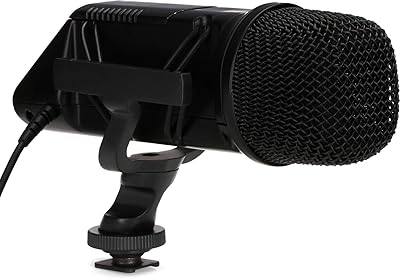
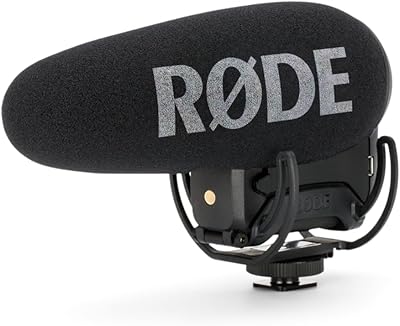
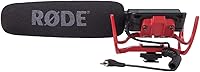
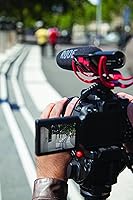
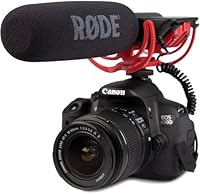
The Rode VideoMic with Rycote Lyre represents a refined evolution of the directional design that first hit the market in 2004. Constructed from lightweight yet durable ABS material, this shotgun mic avoids adding excessive bulk to your setup while maintaining structural integrity. It connects via a standard 3.5mm TRS minijack, making it a straightforward addition for almost any DSLR or mirrorless camera owner. While its 10-inch frame is noticeably larger than more modern micro-shotguns, its presence remains balanced once secured via the integrated cold shoe mount. It feels like a tool designed for work, prioritizing functional reliability over flashy aesthetics. This Rycote-mounted unit offers a simple entry point for anyone looking to step up from the poor performance of internal camera microphones without needing complex adapters.

Features & Benefits

The standout feature of the on-camera microphone is undoubtedly the suspension system, which uses a thermoplastic material to virtually eliminate handling noise and mechanical vibrations. When filming in environments with background hum, the 80Hz high-pass filter is a lifesaver for cleaning up the low end. You also get a three-stage level switch, allowing you to cut or boost the signal depending on whether you are recording a loud concert or a quiet interview. Because it uses a supercardioid pattern, the mic focuses intently on the sound directly in front of the lens while rejecting side-chatter. This focus is essential for capturing clear dialogue in busy spaces. Knowing that the build is backed by a 10-year warranty provides significant peace of mind for creators who are frequently out in the field.

Best For

This shotgun mic is a staple for independent filmmakers who need clean, directional audio without the price tag of high-end cinema gear. It is particularly effective for run-and-gun shooters who move quickly between locations and cannot afford to fiddle with external recorders. If you are a content creator currently struggling with the thin, echoey sound of internal camera mics, this Rycote-mounted unit provides a massive jump in quality. Outdoor videographers will also appreciate the high-density windshield, which helps maintain clarity in light breezes. While its physical length might look a bit imposing on smaller mirrorless bodies, the improved vocal clarity it provides makes the size trade-off worth it. It remains one of the most reliable options for budget-conscious filmmakers looking to deliver professional-sounding dialogue in a variety of unpredictable environments.

User Feedback

Long-term users frequently highlight the incredible durability of the suspension system, noting that it survives years of being tossed into gear bags. The audio improvement is often described as night and day compared to stock camera audio. However, a common point of contention is the 9V battery requirement. Unlike modern mics that use plug-in power or internal rechargeable cells, the on-camera microphone feels a bit dated in this regard, and the battery compartment can be tricky to open quickly. Additionally, its large footprint can sometimes interfere with the viewfinder on compact cameras. Despite these minor ergonomic gripes, the plug-and-play simplicity is highly valued, especially by those using older hardware. It offers a consistent, reliable audio solution that does not require a steep learning curve or complicated menus to get great results.

Pros

  • The integrated Rycote Lyre suspension is exceptionally good at blocking mechanical vibrations and handling noise.
  • A supercardioid pickup pattern provides excellent directional focus for clear dialogue in crowded spaces.
  • The 10-year warranty offers incredible long-term peace of mind for professional creators.
  • Physical switches for the high-pass filter and gain levels allow for quick, tactile adjustments in the field.
  • Using an internal 9V battery reduces the strain on your camera body's power supply.
  • The +20dB boost setting is a lifesaver for getting clean audio out of cameras with noisy preamps.
  • Rugged ABS plastic construction makes the Rode VideoMic with Rycote Lyre very durable without being overly heavy.
  • The 3.5mm TRS connection ensures broad compatibility with almost any traditional camera input.

Cons

  • The requirement for a 9V battery is an inconvenient and dated power solution for modern shooters.
  • At 10 inches long, this shotgun mic can look and feel quite oversized on compact mirrorless cameras.
  • The battery compartment door is notoriously difficult to open and can be frustrating during quick swaps.
  • There is no auto-off function, making it very easy to accidentally drain the battery overnight.
  • The stock foam windshield struggles to block anything more than a very light breeze.
  • Its large physical footprint makes it difficult to pack into small, streamlined camera inserts or backpacks.
  • The lack of a digital output means you will need extra adapters for smartphone or laptop use.
  • The LED battery indicator is helpful but can be difficult to see in bright daylight.

Ratings

Our analysis of the Rode VideoMic with Rycote Lyre is based on a deep dive into thousands of verified buyer experiences and professional field tests worldwide. We have meticulously filtered out incentivized reviews and bot noise to provide a transparent look at how this Rycote-mounted unit performs for real creators, highlighting both its legendary reliability and its aging ergonomic quirks.

Vocal Clarity
92%
Users consistently report a night-and-day difference when switching from internal camera audio. The supercardioid pattern excels at isolating a subject's voice during interviews, delivering a professional-grade richness that requires very little post-production cleanup.
In extremely cavernous or echo-prone rooms, the off-axis rejection can struggle slightly compared to high-end balanced XLR microphones. It can occasionally pick up a bit of room reflections if the subject is more than six feet away.
Vibration Isolation
94%
The integrated suspension system is the industry standard for a reason, effectively absorbing the thumps and clicks of handheld operation. Filmmakers love that they can adjust lens focus or move quickly without mechanical noise ruining their audio track.
The Lyre mounts are quite flexible by design, which can cause the microphone to visibly bounce during aggressive running shots. While it protects the audio, the movement can be distracting if it enters the top of a wide-angle frame.
Build Durability
89%
The ABS construction strikes a perfect balance between being lightweight for long days of shooting and being rugged enough to survive being shoved into a stuffed gear bag. Many long-term owners report this on-camera microphone still functioning perfectly after five or more years of heavy use.
The plastic cold shoe mount, while sturdy, feels less premium than metal alternatives found on newer models. A few users have noted that the mounting ring can become cross-threaded if you are in a rush and apply too much force.
Ease of Use
91%
This Rycote-mounted unit is the definition of plug-and-play, requiring no complex software or digital menus to operate. The physical switches for the high-pass filter and level control are intuitive, allowing for tactile adjustments while keeping your eye on the viewfinder.
The lack of an auto-power feature means it is very easy to accidentally leave the mic on after a shoot. Many creators have experienced the frustration of showing up to a second day of filming only to find a completely dead battery.
Power Management
58%
42%
Using a dedicated 9V battery ensures the microphone doesn't drain your camera's limited internal power supply during long recording sessions. It provides a consistent voltage that results in lower self-noise compared to some cheaper mics that rely on 3.5mm plug-in power.
The requirement for a bulky 9V battery is a significant pain point for modern shooters who prefer USB-C recharging. The battery door is notoriously difficult to slide open without using a tool or risking a broken fingernail, making quick swaps mid-shoot a hassle.
Directional Accuracy
87%
The tight pickup pattern is excellent for run-and-gun filmmaking where you need to focus on a specific sound source in a noisy street. It effectively suppresses distracting ambient noise from the sides and rear, keeping the viewer's attention on the dialogue.
Because the mic is quite long, the supercardioid 'tail' can sometimes pick up noise from directly behind the camera, such as a videographer's heavy breathing. You have to be mindful of your own positioning relative to the rear of the capsule.
Wind Noise Rejection
76%
24%
The included high-density foam windshield does a respectable job of blocking light breezes during outdoor vlogging or basic reporting. For many standard scenarios, it provides enough protection to keep the audio from clipping due to air movement.
In gusty conditions, the stock foam is simply not enough to prevent low-frequency popping. Serious outdoor shooters will almost certainly need to invest in a separate furry 'deadcat' windshield, which adds to the total cost and bulk of the setup.
Low-Frequency Control
84%
The 80Hz high-pass filter is highly effective at cutting out the low-end rumble of traffic, air conditioners, or distant machinery. This saves a lot of time in the editing suite by delivering a much cleaner signal right out of the gate.
Engaging the filter can sometimes make thinner voices sound a bit too bright or 'tinny' if the environment is already quiet. It is a binary switch, so you don't have much nuanced control over exactly how much bass is removed.
Signal-to-Noise Ratio
81%
19%
The +20dB level boost is a fantastic feature for users with entry-level cameras that have noisy internal preamps. By boosting the signal at the mic, you can turn down the camera gain, resulting in a much cleaner and hiss-free recording.
At the 0dB or -10dB settings, the mic relies more on the camera's hardware, which can introduce floor noise if your camera isn't high-end. It requires a bit of experimentation to find the 'sweet spot' for your specific camera body.
Portability & Size
67%
33%
Despite its length, the microphone is surprisingly light and doesn't make the camera feel top-heavy when mounted. This makes it manageable for handheld gimbal work where weight distribution is critical for motor balance.
Its 10-inch length is quite substantial and can feel overkill on modern, tiny mirrorless cameras like the Sony ZV series. It takes up a lot of room in a backpack and can sometimes poke out of the top of smaller camera inserts.
Value for Money
88%
As a long-term investment, the combination of professional sound quality and a 10-year warranty makes this one of the most cost-effective audio upgrades available. It outlives many camera bodies, remaining a reliable staple in a creator's kit for a decade.
The initial price point is higher than many budget 'mini' shotgun mics that don't require batteries. When you factor in the ongoing cost of 9V batteries and the likely need for a deadcat, the total cost of ownership creeps up.
Compatibility
83%
The 3.5mm connection is universally compatible with almost every DSLR and camcorder manufactured in the last fifteen years. It works flawlessly with older hardware that might not support the newer 'plug-in power' standards required by smaller mics.
Users with modern smartphones or newer cameras that only have USB-C or Lightning ports will need to buy additional dongles and adapters. This adds cable clutter and potential points of failure to what should be a simple setup.

Suitable for:

The Rode VideoMic with Rycote Lyre is a reliable workhorse for independent filmmakers and run-and-gun videographers who need to capture broadcast-grade dialogue without a Hollywood budget. Its supercardioid pickup pattern makes it particularly effective for interviewers working in noisy environments where isolating the subject's voice is a priority. This Rycote-mounted unit is also an excellent choice for owners of older DSLR or camcorder bodies that lack the modern plug-in power required by many newer, smaller microphones. Because it provides its own power via a 9V battery, it ensures a consistent and clean signal regardless of the camera's internal preamp quality. Content creators looking for a long-term investment will appreciate the rugged ABS construction and the extensive ten-year warranty that comes with the brand name.

Not suitable for:

This on-camera microphone is likely a poor fit for vloggers using ultralight mirrorless cameras or smartphones, as its ten-inch length can feel incredibly cumbersome and unbalanced on tiny setups. If you prioritize a minimalist kit that fits into a jacket pocket, the Rode VideoMic with Rycote Lyre will probably be too bulky for your needs. Modern users who despise carrying specialized batteries should also look elsewhere, as the requirement for a 9V alkaline cell feels quite dated compared to modern USB-rechargeable alternatives. Additionally, the lack of an automatic power-on feature makes it a risky choice for forgetful shooters who might leave the mic switched on, leading to a dead battery right before a critical shoot. Travelers and hikers might find the physical footprint takes up too much valuable space in a compact gear bag.

Specifications

  • Acoustic Principle: The unit operates as a pressure gradient condenser microphone.
  • Directional Pattern: It features a supercardioid polar pattern to maximize front-facing audio pickup.
  • Frequency Response: The frequency range spans from 40Hz to 20kHz for full-spectrum recording.
  • High Pass Filter: A selectable 80Hz filter is available to cut out low-frequency environmental rumble.
  • Level Control: Internal switches allow for three-stage gain adjustment at -10dB, 0, and +20dB.
  • Shock Mount: The integrated Rycote Lyre system provides professional-grade isolation from handling noise.
  • Power Requirement: A single 9V alkaline battery is required for operation and can last up to 70 hours.
  • Output Connection: The microphone utilizes a standard 3.5mm TRS minijack for camera connectivity.
  • Build Material: The housing is constructed from durable, lightweight ABS thermoplastic.
  • Dimensions: The physical footprint measures approximately 10-inch in length and 4-inch in height.
  • Weight: The total weight is 176g, excluding the battery and windshield.
  • Signal to Noise: It delivers a signal-to-noise ratio of 75dB for clean recording results.
  • Warranty: Rode offers a 10-year extended warranty upon online product registration.
  • Mounting Options: It includes a standard cold shoe mount with a 3/8-inch thread for boom pole use.
  • Included Accessories: The package comes with a high-density foam windshield for basic wind protection.

Related Reviews
Rode VideoMic NTG
Rode VideoMic NTG
84%
91%
Audio Clarity
89%
Versatility
88%
Build Quality
86%
Ease of Use
79%
Value for Money
More
Rode VideoMic Me-L iPhone/iPad Microphone
86%
88%
Sound Quality
95%
Ease of Use
65%
Wind Resistance
91%
Build Quality
89%
Portability
More
Rode SVM Stereo VideoMic On-Camera Microphone
87%
91%
Sound Quality
89%
Portability
88%
Ease of Use
85%
Wind Noise Reduction
93%
Build Quality
More
RØDE VideoMic Pro+
RØDE VideoMic Pro+
85%
93%
Audio Clarity
88%
Build Quality
91%
Shock Mount & Isolation
89%
Safety Channel
86%
Power Flexibility
More
Rode S1 Microphone
Rode S1 Microphone
87%
94%
Sound Quality
91%
Build Quality
85%
Noise Isolation
89%
Durability
88%
Ease of Use
More
Rode Mini Boompole
Rode Mini Boompole
86%
93%
Portability & Weight
89%
Ease of Setup
85%
Build Quality & Durability
87%
Flexibility & Reach
91%
User-Friendliness
More
Rode Reporter
Rode Reporter
83%
94%
Vocal Clarity
91%
Build Quality
93%
Ease of Positioning
92%
Professional Aesthetics
58%
Background Noise Rejection
More
Rode NT1 4th Gen
Rode NT1 4th Gen
87%
94%
Audio Clarity
88%
Background Noise Isolation
90%
Build Quality
89%
Ease of Setup
92%
Value for Money
More
Rode SmartLav+
Rode SmartLav+
80%
92%
Audio Quality Upgrade
54%
Modern Device Compatibility
88%
Vocal Clarity & Placement
87%
Ease of Use and Setup
84%
Value for Money
More
Rode NT5 Matched Pair
89%
94%
Sound Quality
89%
Build Quality
91%
Noise Performance
86%
Versatility
88%
Ease of Use
More

FAQ

Yes, this Rycote-mounted unit requires a single 9V battery. It does not run on plug-in power from your camera, which is actually a benefit for older cameras that don't provide enough voltage for high-end mics.

Absolutely, as long as your camera has a standard cold shoe and a 3.5mm mic input. Just keep in mind that the Rode VideoMic with Rycote Lyre is about 10 inches long, so it might look a bit large on very small camera bodies.

You can typically expect around 70 hours of use from a fresh alkaline battery. Just remember to turn the switch to 'Off' when you aren't filming, as there is no automatic shut-off feature.

While the Lyre mounts are incredibly durable and made of a flexible thermoplastic that doesn't snap easily, they are integrated into the base. If you ever have an issue, that 10-year warranty is there to cover you.

It boosts the signal at the microphone level, which allows you to turn down the gain on your camera. This is the best way to avoid that annoying background 'hiss' often found in cheaper camera preamps.

You can, but you will need a TRS to TRRS adapter (like a Rode SC4) and potentially a Lightning or USB-C dongle depending on your phone model. By itself, the 3.5mm plug is designed for cameras.

The included foam cover is fine for indoors or very light breezes, but if you are shooting near the coast or on a windy day, I definitely recommend picking up a furry windshield to prevent audio clipping.

You can use them, but many rechargeable 9Vs have slightly lower voltage or shorter runtimes. For the most consistent performance and lower noise floor, standard alkaline batteries are usually the better choice.

If the foam gets dusty or dirty, just slide it off the capsule and give it a gentle rinse in lukewarm water with a drop of mild soap. Let it air dry completely before sliding it back onto the on-camera microphone.

Because of its supercardioid pattern, it is very directional and ignores most side noise. However, there is a small 'lobe' of sensitivity directly behind the mic, so try to avoid heavy breathing or whispering while you are operating the camera.