Overview

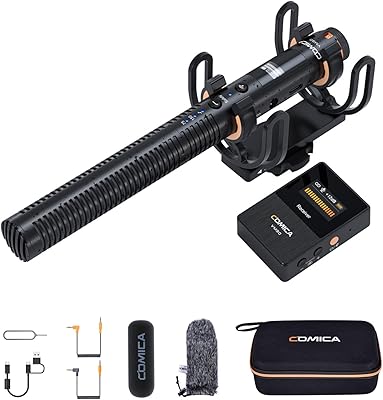
The Comica VM40 entered the market in late 2024 targeting a clear gap: videographers and content creators who want professional-grade audio without carrying a separate recorder. At its price point, this shotgun mic sits firmly in mid-to-premium territory, competing with established names like the Rode VideoMic Pro+ and Sennheiser MKE 400. What makes it stand out is the combination of wireless capability and onboard backup recording in a single unit — features that were previously spread across two or more devices. It won't replace a studio condenser for voiceover work, but that's not the point. This is a field tool built for real-world shooting conditions.

Features & Benefits

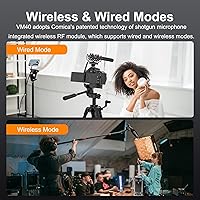
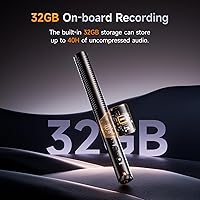
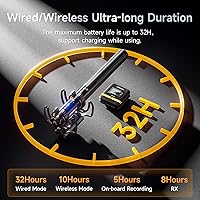
The standout engineering choice here is 32-bit float recording — and it matters more than the number suggests. In practice, it means you can recover audio that would otherwise be clipped or too quiet, which is invaluable when you can't monitor levels on the fly. Pair that with nearly 32GB of onboard storage backing up everything you shoot, and you have a genuine safety net for high-stakes jobs. The wireless mode reaches a claimed 200 meters with latency under 20 milliseconds — tight enough to stay lip-synced on camera. Battery life is strong in both modes, and the ability to charge while recording means all-day events aren't a problem.

Best For

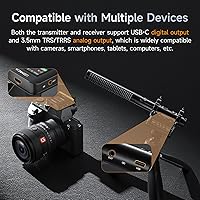
This camera microphone is a natural fit for solo content creators who shoot in unpredictable environments — outdoor interviews, event coverage, street-level documentary work. Because you can't always have a sound person riding levels beside you, the combination of wireless range and clip-free recording does a lot of the technical heavy lifting. Wedding videographers will particularly appreciate having a local audio backup running during the ceremony, where a lost wireless signal could otherwise ruin an irreplaceable moment. It connects cleanly via USB-C or 3.5mm to Canon, Nikon, and Sony cameras, so there's no adapter hunting or compatibility guesswork involved.

User Feedback

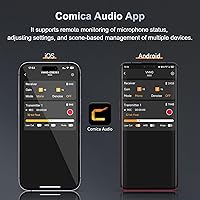
Buyers tend to praise the wireless reliability and the peace of mind that comes from knowing every take has a local backup. The metal build gets consistent mentions as feeling genuinely solid at this price point — not plasticky like some competing units. Where opinions diverge is around weight and bulk. At nearly two pounds, this shotgun mic is on the heavier side for camera mounting, and a few gimbal users have flagged balance issues. The Comica Audio App has drawn mixed responses too — some find it useful for remote adjustments, while others report occasional Bluetooth pairing hiccups. The included accessories — bag, stand adapter, charging cable — land as a nice practical touch rather than box-padding.

Pros

  • 32-bit float recording recovers clipped or too-quiet audio in post, a genuine lifesaver for solo shooters.
  • Onboard backup storage means you always have a local copy, even if wireless drops out mid-ceremony.
  • All-metal construction feels durable and professional — noticeably sturdier than plastic competitors at this tier.
  • Wireless latency is tight enough that lip-sync issues are not a practical concern for standard video work.
  • Charge-while-recording support removes battery anxiety during all-day events or long multi-hour shoots.
  • Works cleanly with Canon, Nikon, and Sony cameras via both USB-C and standard 3.5mm outputs — no adapter hunting required.
  • The Comica VM40 consolidates what previously required a separate wireless system and standalone recorder into one unit.
  • Super-cardioid pattern handles outdoor ambient noise well without making dialogue sound unnaturally narrow or processed.
  • Battery endurance in wired mode is among the strongest in its class for extended shoot days.
  • Included carry bag is sturdy and practical enough to use in the field, not just for storage at home.

Cons

  • Nearly two pounds is heavy for a camera-top mic and creates noticeable front-heavy imbalance on compact bodies.
  • Gimbal users must recalibrate balance after mounting, reducing effective payload capacity for heavier lenses.
  • Real-world wireless range in RF-congested venues falls well short of the open-environment specification.
  • The Comica Audio App has reported Bluetooth pairing inconsistencies that can disrupt workflow mid-shoot.
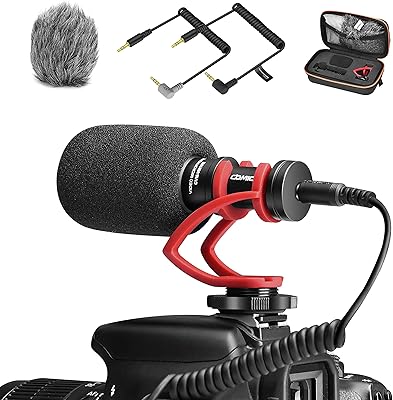
  • No windshield or deadcat is included despite the mic being marketed heavily for outdoor use.
  • Post-shoot file management for 32GB of onboard audio adds a time cost to an already heavy editing workflow.
  • The app interface has a learning curve that feels steeper than competing solutions at this price point.
  • Audio quality, while strong, does not fully close the gap with more established premium brands in controlled listening tests.
  • Documentation for output mode selection across specific camera models is thinner than buyers at this level expect.

Ratings

Our scores for the Comica VM40 are generated by AI after analyzing thousands of verified buyer reviews worldwide, with spam, bot activity, and incentivized feedback actively filtered out before any scoring takes place. The results reflect a genuinely balanced picture — what real videographers, content creators, and event shooters love about this camera microphone, alongside the friction points that came up repeatedly enough to matter.

Audio Quality
88%
Most buyers in the content creation space were genuinely impressed by the clarity this shotgun mic delivers, especially for dialogue capture in outdoor settings where background noise is unpredictable. The super-cardioid pickup does a solid job of isolating the speaker without making the audio sound artificially narrow or processed.
A handful of users noted that in highly reverberant indoor spaces — tiled rooms, bare-walled studios — the mic picks up more room tone than expected. It is not a weakness unique to this model, but buyers expecting near-studio cleanliness from a camera-mounted mic may find the results occasionally needing post-processing.
32-Bit Float Recording
93%
This is consistently one of the most praised aspects among solo shooters and documentary filmmakers. The ability to recover audio from a clipped or whisper-quiet take in post-production has genuinely saved footage for users who cannot monitor levels in real time during a shoot.
The benefit is largely invisible to users who are already comfortable riding manual gain or who edit in software that does not fully support 32-bit float workflows. A small number of buyers found the learning curve around float recording steeper than expected without prior audio engineering background.
Wireless Performance
82%
18%
In open outdoor environments, the wireless range earned strong marks from event videographers and journalists who need freedom of movement during fast-moving situations. Latency was not flagged as a practical issue by the majority of reviewers, and lip-sync accuracy on camera held up well under typical shooting conditions.
The claimed maximum range is an ideal-condition figure, and some users shooting in RF-congested environments like wedding venues or conference halls reported occasional dropouts at distances far shorter than advertised. A few reviewers also noted that obstructions like walls reduced reliable range more aggressively than competing systems at this price level.
Onboard Backup Recording
91%
Wedding videographers and event shooters consistently highlighted this as the feature that justifies the price on its own. Having a local copy of every take stored directly on the mic has rescued audio from situations where a wireless dropout or camera file corruption would otherwise have meant a lost moment.
The backup files require a secondary transfer step after the shoot, which adds to post-production workflow time. A small number of users also noted that managing and organizing 32GB of audio files alongside camera footage requires a more deliberate file-naming system than most casual users initially expect.
Build Quality
89%
The all-metal construction earned consistent praise from buyers who had previously owned plastic-bodied competitors. It communicates durability in a way that matters on a real shoot, where a mic might get knocked against a camera rig or tossed into a bag between locations without a second thought.
The solid metal build contributes directly to the weight, and nearly two pounds is heavy for a camera-top microphone. Users running the mic on lightweight mirrorless bodies reported noticeable front-heavy imbalance, and those using gimbals had to recalibrate balance after mounting it.
Battery Life
87%
The wired mode battery duration is exceptional and drew specific praise from educators and corporate videographers who run long multi-hour shoots without access to power. The charge-while-recording capability removed a logistical headache that limits many competing mics during full-day events.
Wireless mode battery life is considerably shorter, and users running full wireless shoots found themselves needing to manage charging between sessions more actively than expected. It is still a competitive figure, but the gap between wired and wireless endurance was a mild surprise for some buyers.
Weight & Form Factor
61%
39%
For users mounting this camera microphone directly on a DSLR or larger mirrorless body, the weight is manageable and the metal build feels appropriately professional. Shooters using it on a boom pole or fixed rig reported no real complaints about the physical handling.
On compact mirrorless cameras or lightweight handheld rigs, nearly two pounds becomes a genuine ergonomic issue over the course of a long shoot. Gimbal users flagged this most frequently, noting that the weight distribution required counterbalancing that reduced the gimbal's effective load capacity for lenses.
App & Bluetooth Control
67%
33%
Users who took time to learn the Comica Audio App found real value in the remote monitoring and multi-device scene management features, particularly for multi-camera shoots where adjusting mic settings on the fly without touching the camera was a meaningful workflow improvement.
Bluetooth pairing proved inconsistent for a notable subset of users, with some reporting that the app lost connection mid-shoot or required multiple reconnection attempts after standby. The interface also has a learning curve that some buyers described as unintuitive compared to simpler competing apps.
Ease of Setup
84%
Out of the box, pairing the transmitter and receiver was quick for most users, and the dual output options — USB-C and 3.5mm — meant that connecting to a wide range of cameras required no hunting for adapters. Most buyers reported being ready to shoot within minutes of unboxing.
The sheer number of features and settings available means the mic is not entirely plug-and-play for users who want to unlock its full potential. First-time users of 32-bit float or wireless audio systems in particular noted a setup learning curve that took a session or two to get comfortable with.
Value for Money
79%
21%
Given the combination of onboard recording, wireless capability, and 32-bit float support, many buyers felt the feature-per-dollar ratio genuinely competes with more established brands that charge noticeably more for similar functionality. For creators who were previously buying a separate recorder and a wireless system, the consolidation alone felt like strong value.
Buyers who compared it directly against the Rode VideoMic Pro+ or Sennheiser MKE 400 on pure audio quality found the gap narrower than expected but still present. At this price tier, expectations are high, and users who experienced app issues or wireless dropouts felt those rough edges were harder to accept given the investment.
Noise Rejection
83%
In practical outdoor use — street interviews, park shoots, event coverage — the super-cardioid pattern did a solid job of keeping off-axis noise at bay without requiring extensive post-processing. Reviewers doing run-and-gun documentary work particularly appreciated how well it handled wind with basic shielding in place.
Without the optional windscreen or deadcat accessory, wind handling in exposed outdoor environments drew criticism from buyers shooting in coastal or high-elevation locations. A few users also noted that handling noise transmitted through the camera body was occasionally audible in wired mode on handheld setups.
Wireless Latency
86%
The sub-20-millisecond wireless latency proved sufficient for virtually all camera video work, with reviewers reporting no perceptible lip-sync issues during normal filming. Broadcast and live-streaming users in particular appreciated that audio arrived tight enough to avoid manual sync correction in post.
In head-to-head comparisons with dedicated wireless audio systems, a small number of technically focused reviewers noted that latency, while low, was not quite at the level of premium dedicated wireless systems. For most video applications this is irrelevant, but live audio monitoring through the camera was occasionally flagged as feeling slightly off.
Included Accessories
74%
26%
The carry bag earned genuine appreciation from buyers who cited it as practical rather than decorative — sturdy enough to protect the mic during travel and actually used in the field. The stand adapter and charging cable were consistently mentioned as thoughtful inclusions that covered immediate real-world needs.
Some users felt the package still left gaps, particularly around wind protection — no deadcat or furry windshield is included despite the mic being marketed heavily for outdoor use. A few buyers also noted that the carry bag, while useful, was not quite large enough to store the mic fully assembled with accessories attached.
Camera Compatibility
91%
Broad compatibility across Canon, Nikon, and Sony bodies via both 3.5mm TRS/TRRS and USB-C digital output was consistently praised by users who switch between camera systems or work with mixed-brand production setups. No proprietary adapters or brand-specific dongles were required for most common camera configurations.
A small number of users running older camera bodies with non-standard audio input configurations reported needing to experiment with cable combinations before getting clean signal. The documentation around which output mode to use for specific camera models was described by some buyers as less thorough than it could be.

Suitable for:

The Comica VM40 is purpose-built for serious content creators and videographers who shoot in conditions where audio control is difficult and mistakes are costly. Solo YouTubers and documentary filmmakers who cannot dedicate attention to monitoring levels mid-shoot will find the 32-bit float recording genuinely transformative — it acts as a technical safety net that keeps otherwise ruined takes salvageable in post. Wedding and event videographers in particular get outsized value from the combination of wireless freedom and local onboard backup, since ceremony audio is unrepeatable and a single wireless dropout without a backup copy can mean a career-defining failure. Journalists and run-and-gun operators who need to set up quickly and move freely will appreciate the wireless range in open environments, alongside broad compatibility with Canon, Nikon, and Sony camera systems through standard outputs. If you are the kind of shooter who regularly finds yourself in unpredictable acoustic environments — outdoor interviews, live events, crowded locations — this camera microphone is designed with your exact workflow in mind.

Not suitable for:

The Comica VM40 is a harder sell for creators who prioritize minimal camera weight or work primarily with compact mirrorless bodies and gimbals. At close to two pounds, this shotgun mic adds front-heavy load that genuinely affects balance on lightweight rigs, and gimbal users will likely need to recalibrate payload distribution every time it is mounted. Buyers expecting studio-grade voice isolation for controlled indoor recording — podcasters with treated rooms, voice actors, corporate talking-head setups — would be better served by a dedicated condenser microphone or a proper studio setup, since no camera-top shotgun mic can replicate that environment regardless of capsule quality. Users who rely heavily on companion app functionality and expect a polished, set-and-forget Bluetooth experience may find the occasional connectivity hiccups frustrating enough to affect their workflow. And if your shoots are consistently in RF-congested environments like large convention halls or densely populated urban interiors, the real-world wireless range will fall meaningfully short of the open-field specification.

Specifications

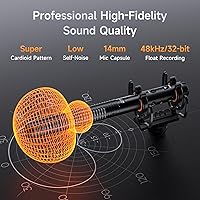
  • Polar Pattern: Super-cardioid directional design focuses tightly on the sound source directly in front of the mic while rejecting off-axis ambient noise from the sides and rear.
  • Capsule: 14mm gold-plated microphone capsule provides high sensitivity and low self-noise for detailed audio capture in demanding field conditions.
  • Sample Rate: Records at 48kHz, the broadcast and video production standard, ensuring full compatibility with professional editing and post-production workflows.
  • Bit Depth: 32-bit float recording preserves the full dynamic range of a recording, allowing recovery of clipped or underleveled audio during post-production without quality loss.
  • Onboard Storage: 32GB internal storage holds up to approximately 40 hours of uncompressed audio, functioning as an automatic backup recording alongside the camera feed.
  • Wireless Range: Wireless transmission reaches up to 200 meters in open, unobstructed environments under ideal RF conditions.
  • Wireless Latency: End-to-end wireless audio latency is rated at under 20 milliseconds, keeping audio synchronized with video for standard camera recording applications.
  • Battery Life: Built-in lithium polymer battery delivers up to 32 hours of operation in wired mode and up to 10 hours in wireless mode, with charge-while-use supported in both modes.
  • Audio Outputs: Supports both USB-C digital output and 3.5mm TRS/TRRS analog output, enabling direct connection to a wide range of cameras, smartphones, and computers.
  • App Control: Compatible with the Comica Audio App via Bluetooth on iOS and Android devices, enabling remote monitoring, settings adjustment, and multi-device scene management.
  • Signal-to-Noise Ratio: Rated at 75 dB SNR, indicating a clean noise floor suitable for professional dialogue capture and field recording in typical shooting environments.
  • Build Material: Full metal construction throughout the main body provides durability and resistance to the physical wear of regular field use and travel.
  • Weight: Complete unit weighs 1.96 lbs, which is on the heavier end for a camera-mounted shotgun microphone and should be factored into rig and gimbal planning.
  • Power Source: Powered by an integrated rechargeable lithium polymer battery; a USB-C charging cable is included and the unit accepts charge during active recording.
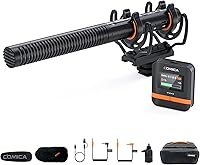
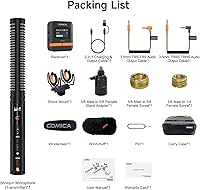
  • Included Accessories: Package includes the shotgun microphone transmitter, wireless receiver, a 3-in-1 charging cable, a 3/8-inch male to 5/8-inch female stand adapter, and a protective carry bag.
  • Compatibility: Works with Canon, Nikon, and Sony DSLR and mirrorless cameras, as well as smartphones, tablets, computers, and mixers via standard 3.5mm or USB-C connections.
  • Number of Channels: Single-channel audio system captures one mono audio source, standard for camera-mounted directional shotgun microphone designs.
  • Market Position: Ranked #48 in the Professional Video Microphones category on Amazon as of its listing data, reflecting strong early traction since its August 2024 launch.

Related Reviews
Comica VM20
Comica VM20
81%
83%
Audio Clarity
78%
Noise Rejection
88%
Build Quality
81%
Low-Cut Filter Performance
76%
Gain Control
More
Comica CVM-VM10II
Comica CVM-VM10II
83%
92%
Build Quality
88%
Value for Money
79%
Audio Clarity
94%
Portability
84%
Wind Noise Reduction
More
Comica VM30
Comica VM30
79%
83%
Audio Clarity
78%
Wireless Performance
91%
Build Quality
63%
Battery Life
88%
Connectivity & Compatibility
More
Comica CVM-V30 LITE
Comica CVM-V30 LITE
79%
78%
Audio Clarity
81%
Directional Performance
61%
Build Quality
93%
Ease of Use
84%
Camera & Phone Compatibility
More
Comica VM10 Pro
Comica VM10 Pro
87%
93%
Build Quality
96%
Portability
88%
Digital Audio Performance
91%
Gain Control Functionality
84%
Real-Time Monitoring
More
COMICA CVM-V30 PRO Shotgun Microphone
85%
87%
Sound Quality
89%
Noise Reduction
91%
Ease of Use
68%
Battery Life
85%
Build Quality
More
Comica EJoy D10 PRO Wireless Gaming Microphone
83%
88%
Sound Quality
94%
Battery Life
83%
RGB Lighting
90%
Connectivity Options
79%
Build Quality
More
Comica CVM-WM100 PLUS
83%
92%
Signal Stability
86%
Audio Quality & Clarity
94%
Post-Production Flexibility
61%
Portability & Form Factor
68%
Power Management & Battery Life
More
COMICA Ejoy Uni PRO(A)
80%
93%
Ease of Setup
78%
Audio Clarity
74%
Noise Cancellation
71%
Wireless Performance
63%
Build Quality
More
Comica CVM-WM200A Wireless Lavalier Microphone System
84%
88%
Audio Quality
67%
Battery Life
91%
Setup Ease
85%
Transmission Range
80%
Build Quality
More

FAQ

Yes, the VM40 connects via standard 3.5mm TRS or TRRS analog output, which is compatible with virtually all Sony, Canon, and Nikon mirrorless cameras that have a 3.5mm mic input. The USB-C digital output adds another connection option for cameras and devices that support it. Just verify your specific body has a 3.5mm mic jack — a small number of ultra-compact cameras omit it.

In practical terms, yes. With 32-bit float recording, the mic captures the full dynamic range of the audio signal regardless of the gain setting you choose, meaning there is no true clipping at the recording stage. When you bring the file into editing software like DaVinci Resolve or Adobe Audition that supports 32-bit float, you can pull down the gain on a loud passage and recover clean audio that would have been destroyed on a standard 24-bit recorder. It is not magic, but it is as close to a level-monitoring safety net as current technology offers.

Yes, the onboard storage records independently of the wireless transmission, so you get a local backup copy on the mic itself while the wireless signal feeds your camera. This is one of the key workflow advantages for wedding and event videographers — if the wireless drops out for any reason, you still have the full uncompressed recording stored directly on the unit.

The 200-meter figure is an open-environment, line-of-sight specification and should be treated as a best-case ceiling rather than a typical performance number. In practice, most users report reliable performance across much shorter distances in real shooting environments. Indoor venues, RF-congested locations like wedding halls or conference centers, and anything with walls or obstructions between transmitter and receiver will reduce the effective range considerably. Expect reliable performance at 30 to 50 meters indoors as a more realistic working figure.

Yes, via the 3.5mm TRRS output it connects to smartphones that have a headphone jack, and the USB-C output works with Android devices and recent iPad models that support USB-C audio. For iPhones without a headphone jack, you would need a Lightning-to-3.5mm or USB-C-to-Lightning adapter, which Apple sells separately. The mic is not listed as MFi certified, so adapter compatibility may vary slightly depending on your iOS version.

Unfortunately no — the package does not include a furry windshield or deadcat, which is a genuine omission given that the mic is actively marketed for outdoor use. The included accessories are a carry bag, stand adapter, and charging cable. If you plan to shoot outdoors in anything more than light indoor air movement, picking up a compatible foam or furry windshield from a third-party supplier is strongly recommended.

The full unit weighs close to two pounds, which is notably heavy for a camera-top microphone. On larger DSLR bodies or fixed rigs it is manageable, but on compact mirrorless cameras it creates a front-heavy imbalance. For gimbal users, this almost certainly means recalibrating your balance after mounting, and it will eat into your gimbal's available payload capacity for heavier lenses. It is worth checking your gimbal's maximum payload spec before committing if you plan to use both together.

The most widely used options that handle 32-bit float audio natively include Adobe Audition, DaVinci Resolve (free version included), Logic Pro, and recent versions of Reaper. Most professional video editing platforms now support importing 32-bit float audio tracks as well. If you are editing in older software or a basic free editor, you may not be able to take full advantage of the format, so it is worth confirming your software supports it before relying on the feature as a safety net.

The app adds genuinely useful features — remote level monitoring, settings changes without touching the mic, and scene presets for multi-device shoots. However, buyer feedback is mixed on the Bluetooth connection stability. Some users report it works smoothly, while others have experienced pairing drops mid-shoot or a steeper-than-expected learning curve with the interface. The good news is the mic functions completely without the app — you do not need it to record, switch modes, or use any of the core hardware features.

In the box you get the shotgun microphone body which also serves as the transmitter, the wireless receiver, a 3-in-1 USB-C charging cable, a 3/8-inch to 5/8-inch stand adapter, and a carry bag. What is notably absent for most buyers is wind protection — a foam or furry windshield for outdoor use is the most common immediate addition. Depending on your camera setup, you may also want a cold shoe mount extension if the mic physically interferes with your viewfinder or LCD screen when mounted directly on camera.