MOTU 896mk3 Hybrid USB/FireWire Audio Interface
Overview
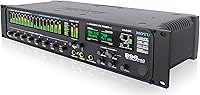
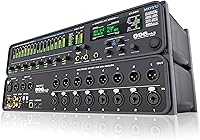
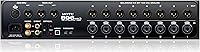
The MOTU 896mk3 Hybrid USB/FireWire Audio Interface is a professional rack-mount unit built for engineers and producers who need serious channel count and flexible connectivity in one box. With 28 inputs and 30 outputs, it handles full band recordings and complex studio sessions without breaking a sweat. What sets it apart from most interfaces in its class is the dual FireWire and USB connectivity — you can run it on a legacy FireWire machine today and switch to a modern USB-equipped laptop tomorrow without buying new hardware. MOTU has been a trusted name in pro audio for decades, and this interface reflects that pedigree. Just know upfront: this is not a beginner's tool.
Features & Benefits
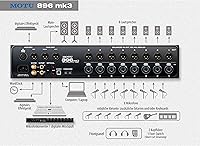
Eight combo XLR/TRS inputs with built-in mic preamps mean you can track a full drum kit, a choir, or a live ensemble without reaching for an external preamp rack. The 24-bit/192kHz resolution gives you professional headroom for tracking and mixing, capturing subtle dynamics that lower-spec interfaces simply compress away. The onboard DSP engine handles real-time mixing and effects processing independently of your computer, which keeps latency tight and your CPU free for plugins. On the digital side, AES/EBU and S/PDIF connections let you tie in outboard converters, digital consoles, or other professional gear — think of it as a central hub, not just an interface.
Best For
This hybrid audio interface is well-suited to recording engineers who routinely track multiple simultaneous sources — drums, live bands, orchestral sections — and need all eight preamps firing at once. Project studio owners stepping up from two-channel consumer gear will find the expanded I/O headroom genuinely useful for more ambitious sessions. Producers working with outboard digital equipment benefit from the AES/EBU and S/PDIF connectivity. It also makes sense for anyone still running a FireWire-equipped machine who wants a path forward to USB without replacing the interface entirely. Broadcast and post-production engineers needing high sample-rate operation up to 192kHz will also find it a capable fit.
User Feedback
With only 18 Amazon ratings, drawing broad conclusions from the aggregate score alone would be misleading — but the texture of individual reviews tells a clearer story. Owners consistently praise the solid build quality, the headroom and cleanliness of the preamps, and the flexibility of having so many I/O options in a single 1U chassis. The criticisms, however, are worth taking seriously: driver support on current macOS and Windows versions has been a recurring frustration, and MOTU's CueMix software has a steep learning curve that catches new users off-guard. Long-term owners in pro-audio forums speak highly of long-term reliability, suggesting the hardware holds up well when the software side cooperates.
Pros
- Eight built-in mic preamps mean you can track a full drum kit or ensemble without any additional hardware.
- Dual FireWire and USB connectivity gives you real flexibility across older and newer computer setups.
- 24-bit/192kHz resolution delivers professional-grade audio quality with plenty of dynamic headroom.
- The onboard DSP engine handles monitoring and effects without putting any load on your computer CPU.
- AES/EBU and S/PDIF ports let you connect outboard converters and digital consoles directly.
- Rack-mount 1U form factor integrates cleanly into both permanent studio racks and portable rigs.
- Long-term owners consistently report strong hardware reliability over years of studio use.
- The 896mk3 offers a total of 28 inputs and 30 outputs, which is genuinely rare at this form factor.
- Build quality feels solid and purpose-built, not like a consumer product dressed up for professionals.
Cons
- Driver support on current macOS and Windows versions is inconsistent and has frustrated multiple users.
- CueMix software has a steep learning curve that can slow down initial setup significantly.
- The small number of published reviews makes it harder to assess reliability trends with confidence.
- At 11 pounds in a full rack chassis, this is not a practical option for truly mobile or lightweight rigs.
- Users who do not need multi-channel recording are paying for I/O capacity they will never use.
- No standalone operation mode limits its usefulness in live or installation scenarios without a computer.
- Occasional reports of firmware and software updates lagging behind major OS releases.
- Setup complexity means first-time MOTU users should budget extra time before their first session.
Ratings
The scores below reflect our AI-driven analysis of verified global user reviews for the MOTU 896mk3 Hybrid USB/FireWire Audio Interface, with spam, bot-generated, and incentivized feedback actively filtered out before scoring. Each category is weighted against real-world usage patterns reported by working engineers, project studio owners, and live recording professionals. Both the strengths that keep long-term owners loyal and the friction points that have frustrated buyers are transparently represented here.
Build Quality
Preamp Quality
Driver Stability
Software & DSP Routing
I/O Flexibility
USB & FireWire Connectivity
Latency Performance
Channel Count Value
Sample Rate Range
Rack Integration
Reliability & Longevity
Ease of Setup
Value for Money
Suitable for:
The MOTU 896mk3 Hybrid USB/FireWire Audio Interface is a strong fit for working recording engineers and project studio owners who need to capture multiple simultaneous sources — a full drum kit, a live band, or a small ensemble — without patching together multiple devices. If you regularly work with outboard digital gear like external converters or a digital mixing console, the AES/EBU and S/PDIF connections mean this interface can sit at the center of a real signal chain rather than the edge of it. It also makes practical sense for anyone running an older FireWire-equipped machine who wants a bridge to USB-based systems without replacing their entire setup. Broadcast engineers and post-production professionals who need sample rates up to 192kHz will find it technically capable of meeting those demands. In short, this is a tool for people who already know what they need and have outgrown what two-channel and entry-level interfaces can offer.
Not suitable for:
The MOTU 896mk3 Hybrid USB/FireWire Audio Interface is not the right choice for beginners, casual podcasters, or bedroom producers who only need one or two inputs at a time. The onboard DSP routing and CueMix software have a genuine learning curve, and if you are not already comfortable with signal routing concepts, the setup process will be frustrating rather than educational. Driver compatibility with current macOS and Windows versions has been a documented pain point — if you are running a recent operating system and cannot afford downtime troubleshooting driver issues, that risk alone should give you pause. The 1U rack-mount form factor also assumes you have a rack or at minimum a permanent desk setup; this is not a grab-and-go interface for casual mobile recording. Buyers expecting plug-and-play simplicity should look elsewhere.
Specifications
- Brand: Manufactured by MOTU (Mark of the Unicorn), a professional audio company with decades of experience in studio hardware and software.
- Model Number: The official model designation is 896-MK3 HYBRID, identifying it as the third generation of the 896 interface series with hybrid connectivity.
- Form Factor: Housed in a 1U rack-mount chassis designed to fit standard 19-inch equipment racks in studio and live sound installations.
- Dimensions: The unit measures 23.4 x 14.1 x 6.3 inches, occupying a single rack unit of vertical space.
- Weight: The interface weighs 11 pounds, reflecting its all-metal professional construction.
- Connectivity: Supports both FireWire and USB host connections simultaneously, allowing use with legacy and modern computers without additional adapters.
- Analog Inputs: Features 8 combo XLR/TRS analog input channels, each equipped with a built-in microphone preamp for direct mic or line-level connections.
- Total I/O: Offers a total of 28 inputs and 30 outputs across all analog and digital connection types.
- Bit Depth: Records and plays back audio at up to 24-bit resolution, meeting the standard requirement for professional studio and broadcast work.
- Sample Rate: Supports sample rates up to 192kHz, covering standard session rates of 44.1kHz, 48kHz, 88.2kHz, 96kHz, and 192kHz.
- Digital I/O: Includes AES/EBU, S/PDIF, and S/MUX digital input and output ports for connecting external converters, digital consoles, and optical devices.
- DSP Engine: Onboard DSP processor handles real-time mixing, routing, and effects independently of the host computer, reducing CPU load during sessions.
- Software: Ships with MOTU CueMix FX software for configuring the onboard DSP mixer, routing, and monitoring settings on Mac and PC.
- OS Compatibility: Compatible with both Mac and PC operating systems, though driver support for the most current OS versions should be verified with MOTU before purchase.
- Channel Count: Supports up to 60 total signal paths when all analog and digital I/O connections are in use simultaneously.
- First Available: This product was first made available in April 2004, making it a mature design with an established but aging driver ecosystem.
- Manufacturer: MOTU is headquartered in Cambridge, Massachusetts, and continues to manufacture and support professional audio hardware and software.
Related Reviews
MOTU 4pre USB Audio Interface
MOTU 8pre USB Audio Interface
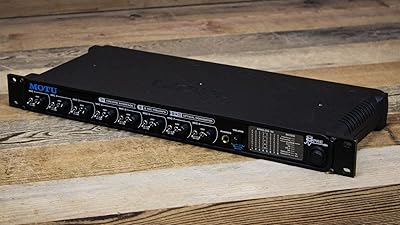
MOTU 8pre Firewire Audio Interface
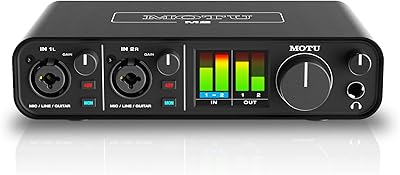
MOTU M2
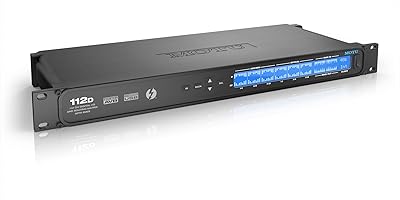
MOTU 112D Thunderbolt USB Audio Interface
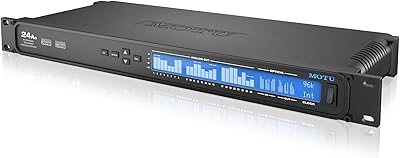
MOTU 24Ao USB AVB Audio Interface
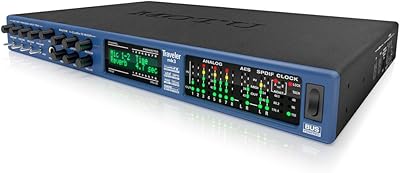
MOTU Traveler-mk3 FireWire Audio Interface
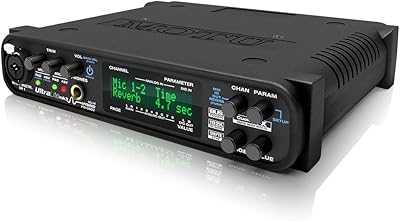
MOTU UltraLite-MK3 Hybrid USB/FireWire Audio Interface
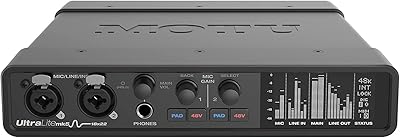
MOTU UltraLite-mk5