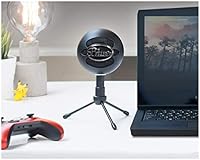

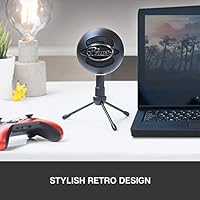

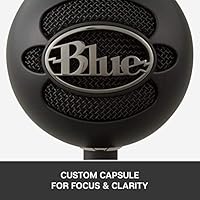
Overview

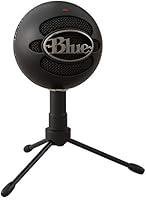
The Blue Snowball iCE USB Microphone has been a quiet staple in the entry-level audio space since 2015, and its staying power says a lot. If your laptop mic makes you sound like you are calling from a parking garage, this USB mic is a logical, low-friction fix. It connects instantly on both Windows and Mac with no driver installation required — you plug it in and it just works. The retro spherical shape also looks surprisingly good on camera, which matters when you are streaming or on video calls. Just do not expect studio-grade results; this is a voice clarity upgrade, not a full recording suite.

Features & Benefits

The Snowball iCE uses a cardioid pickup pattern, which means it locks onto sound coming directly in front — your voice — while naturally reducing noise from the sides and rear. In practical terms, less keyboard clatter and room hum bleeds into your recordings. The 16-bit/44.1kHz spec delivers CD-quality audio, genuinely sufficient for streaming, podcasting, and video calls. A 78 dB signal-to-noise ratio keeps background hiss low so listeners hear your voice rather than static. The mic is USB bus-powered with no adapters needed, and the included tripod stand lets you aim it correctly — because placement makes a real difference with this capsule.

Best For

This entry-level condenser is a natural fit for anyone stepping up from a headset mic or built-in laptop audio. First-time streamers, students on video calls, and remote workers tired of being asked to repeat themselves will notice an immediate improvement. Casual Discord users who want to sound more present without building a complex audio chain will find it plenty capable. The compact tripod stand keeps things tidy on a smaller desk, and the simple USB connection means zero configuration fuss. If you want something that looks respectable on camera and sounds noticeably better than the default — without a steep learning curve — this USB mic covers that ground well.

User Feedback

With over 37,000 ratings sitting at 4.6 stars, most buyers walk away satisfied. Instant setup and a noticeable jump over built-in laptop audio are the two things people mention most. That said, this entry-level condenser is more sensitive to ambient noise than some expect — fans, keyboards, and background chatter can creep in, especially in untreated rooms. There is also no onboard mute button or gain control, which feels like a real omission once you use it daily. The stand has been flagged as a bit lightweight. Placement matters a lot — angle it wrong or sit too far back, and results suffer noticeably. Get positioning right, and most complaints fade.

Pros

  • Plug-and-play setup works instantly on both Windows and Mac — no driver installation or configuration needed.
  • Delivers a clear, immediate improvement over built-in laptop and headset microphones for voice use.
  • Cardioid pickup pattern focuses on your voice and naturally reduces noise from behind and to the sides.
  • CD-quality 16-bit/44.1kHz audio output is fully adequate for streaming, podcasting, and video calls.
  • Compact and lightweight at just one pound, making it easy to fit on a crowded desk.
  • The retro spherical design looks polished and intentional on camera — a rare quality at this price tier.
  • Officially certified for Discord and Skype, so voice clarity on those platforms is well validated.
  • Includes an adjustable tripod stand out of the box, allowing proper angling without extra accessories.
  • USB bus-powered — no external power supply or batteries required.
  • Over 37,000 ratings averaging 4.6 stars reflects consistent satisfaction across a wide range of buyers.

Cons

  • No onboard mute button, which becomes a noticeable daily frustration during back-to-back meetings or streams.
  • No gain control knob means you must adjust input levels through software — less intuitive for beginners.
  • More sensitive to ambient room noise than many buyers expect, especially in untreated spaces.
  • The included tripod stand feels lightweight and can wobble or tip on uneven surfaces.
  • Performance is highly placement-dependent — sit too far back or off-axis and audio quality drops noticeably.
  • Mono output only; not suited for recording more than one voice source simultaneously.
  • No headphone monitoring jack, so you cannot listen to your audio in real time while recording.
  • Picks up keyboard noise more than expected, which is a real issue for gamers and heavy typists.
  • Not well suited for music recording or any application beyond voice-focused audio capture.
  • The USB Type-A connector may require an adapter on newer laptops that only offer USB-C ports.

Ratings

The scores below were generated by our AI after analyzing tens of thousands of verified buyer reviews for the Blue Snowball iCE USB Microphone from global marketplaces, with spam, bot submissions, and incentivized feedback actively filtered out before scoring. Each category reflects the honest consensus — where this entry-level condenser genuinely delivers and where real users ran into friction. Nothing has been smoothed over to make the picture look rosier than it is.

Ease of Setup
96%
Buyers across every experience level consistently highlight how effortlessly this USB mic gets running — plug it into any Windows or Mac machine and it appears immediately as an audio input with zero configuration. For students jumping on a last-minute Zoom call or a new streamer going live for the first time, that instant readiness is genuinely appreciated.
A small number of users on older Windows systems reported needing to manually select the mic in sound settings rather than it defaulting automatically, which caused brief confusion. This is a minor OS-level nuance rather than a hardware fault, but it caught a handful of less tech-savvy buyers off guard.
Voice Clarity
81%
19%
For voice communication — Discord chats, podcast recordings, Zoom meetings — the Snowball iCE produces noticeably cleaner, more present audio than the built-in microphones found on laptops. Listeners consistently report that the speaker sounds like they are in the room rather than calling from a tin can, which is exactly the gap this mic is designed to close.
Clarity does not hold up as well when the speaker sits more than 12 inches away or positions the mic off-axis. Several users who did not read any setup guidance complained about thin, distant sound — an experience almost entirely caused by improper placement rather than the mic itself.
Background Noise Rejection
63%
37%
The cardioid polar pattern does a reasonable job of ignoring sound coming from behind and to the sides — meaning a TV in the next room or a conversation across the office is less likely to intrude on your recordings than it would with an omnidirectional mic.
Noise rejection is one of the more common complaint areas. Mechanical keyboards, desk fans, air conditioning units, and hard floor reflections all bleed into recordings more than buyers expect at this price point. Users in untreated rooms or busy home environments regularly note that background noise is a persistent irritant.
Value for Money
91%
At its price point, the Snowball iCE occupies a sweet spot that very few rivals have managed to challenge consistently over nearly a decade. Buyers repeatedly describe it as the obvious first step up from a laptop mic — they get a real condenser capsule, a cardioid pattern, and a stand included, all without a meaningful financial risk.
A small segment of buyers felt the value proposition weakened once they started comparing it to slightly pricier competitors that add onboard mute buttons or USB-C connectivity. The lack of those modern conveniences can make it feel dated to buyers who discover those gaps after purchase.
Onboard Controls
41%
59%
There is little to say positively here — the absence of physical controls keeps the design clean and the unit simple, which suits total beginners who would not know what to do with a gain knob anyway.
The lack of a hardware mute button and gain dial is the single most cited frustration among regular users. Remote workers who need to mute quickly during meetings and streamers who want to adjust sensitivity on the fly are forced to rely entirely on software controls, which adds friction to what should be a simple action.
Build Quality
72%
28%
The mic body itself feels solid and weighted appropriately for its size — the spherical capsule housing does not creak or flex, and the connection between the mic and stand is stable enough for daily desktop use. Several long-term owners report using the same unit for three or more years without any hardware issues.
The tripod stand is the weak link in the package. It is noticeably lightweight and prone to wobbling on textured or uneven desk surfaces, and a firm accidental nudge can tip the whole assembly. Many users end up purchasing a boom arm separately within months of buying the mic.
Stand & Positioning
58%
42%
The adjustable tripod stand does allow for basic vertical angling, which helps users position the mic toward their mouth more accurately than a fixed-angle mount would. For stationary desktop setups on flat surfaces, it functions adequately as a starter accessory.
The stand generates consistently lukewarm feedback — it wobbles, it does not extend high enough for some desk configurations, and taller users find it hard to achieve the right mouth-to-mic distance without hunching. It is functional but clearly a cost-reduced component that many buyers replace quickly.
Audio Consistency
74%
26%
When the mic is placed correctly and the recording environment is reasonably controlled, the Snowball iCE delivers consistent, predictable results session to session. Podcasters and streamers who treat their space even minimally — a rug, a bookshelf — report reliable audio quality that requires little post-processing.
Inconsistency crept into reviews from users in variable environments — those who move the mic frequently, record in different rooms, or share a desk with other people find results less repeatable. The mic is sensitive enough that small changes in room acoustics produce audible differences.
Compatibility
88%
Broad platform compatibility is one of this entry-level condenser's genuine strengths — it works out of the box with Windows, macOS, most Linux distributions, and even Chromebooks. It is also recognized immediately by every major recording and streaming application without any manual configuration.
The USB Type-A connector is increasingly awkward on newer laptops that ship with only USB-C ports. While an adapter solves the problem, buyers using modern MacBooks or ultrabooks have flagged this as an unexpected inconvenience that the product packaging does not clearly flag.
Design & Aesthetics
84%
The retro spherical silhouette is genuinely distinctive in a sea of generic rectangular USB mics, and it photographs and streams well on camera. Buyers frequently comment that it looks more expensive than it is, which matters for streamers and video podcasters who care how their setup appears on screen.
The aesthetic is polarizing for some — the vintage-inspired look does not suit every desk theme, and buyers who prefer a more minimal or modern setup find it a bit bulky and conspicuous. It is entirely subjective, but worth noting for setup-conscious buyers.
Placement Sensitivity
55%
45%
For buyers who take five minutes to understand cardioid microphone positioning — speaking directly into the front of the capsule at close range — the reward is noticeably better, more focused audio that the spec sheet promises.
Placement sensitivity is a recurring source of buyer disappointment. Users who set the mic to the side, face it incorrectly, or sit too far back consistently report underwhelming results and sometimes return the mic without realizing the issue was positioning rather than product failure. Better in-box guidance would help significantly.
Suitability for Streaming
83%
For entry-level Twitch and YouTube streamers, the Snowball iCE punches well above its price bracket. It is Discord and Skype certified, appears reliably in OBS and Streamlabs without configuration, and produces voice audio that sounds deliberate rather than incidental — a meaningful upgrade for any new creator.
As a streamer grows and starts caring about finer audio details — room tone, breath control, real-time monitoring — the lack of a headphone output and any onboard controls becomes a limiting factor. It is a strong starting point, but ambitious streamers will outgrow it faster than casual users.
Long-term Durability
77%
23%
A meaningful portion of the review base consists of buyers who have owned the Snowball iCE for two to five years, which speaks well to the capsule and housing longevity. Under normal desktop use — no drops, no liquid exposure — the mic itself tends to hold up reliably.
The USB cable included in the box has been flagged by a subset of longer-term users as a point of failure — it can develop connectivity issues with repeated bending or unplugging. Having a replacement Micro-USB cable on hand is a sensible precaution for daily users who connect and disconnect frequently.

Suitable for:

The Blue Snowball iCE USB Microphone is a practical choice for anyone who is tired of sounding muffled or distant on calls and streams but does not want to wrestle with audio interfaces, drivers, or complicated setups. Students attending online classes, remote workers on daily Zoom or Teams calls, and first-time podcasters will all notice an immediate and meaningful improvement over a built-in laptop mic or bundled headset. Casual streamers who want something that looks intentional on camera — without spending a lot — will appreciate the retro spherical silhouette, which reads well both on desk and in frame. Discord gamers who just want their squad to hear them clearly without background hiss will find this USB mic more than capable for that purpose. If your primary goal is clearer voice communication in a home or dorm-room setting, this entry-level condenser delivers exactly what it promises.

Not suitable for:

The Snowball iCE is not the right tool for anyone expecting broadcast-quality or music-recording results — its single cardioid condenser is built for voice clarity, not capturing instruments or layered audio. Content creators who work in acoustically untreated spaces with loud mechanical keyboards, fans, or street noise nearby will likely find that the mic picks up more of that ambient noise than they would like, since it has no onboard noise gate or high-pass filter. The absence of a physical mute button or gain dial is a genuine inconvenience for anyone who mutes frequently during meetings or needs to fine-tune input levels on the fly without diving into software settings. Podcasters planning to record two people simultaneously should know this is a mono, single-channel mic — it cannot handle multi-person setups without additional hardware. Anyone already comfortable with XLR equipment or intermediate-level audio production will quickly feel limited by what the Blue Snowball iCE USB Microphone can offer.

Specifications

  • Connectivity: Connects via USB Type-A, compatible with standard ports found on most desktop and laptop computers.
  • Polar Pattern: Uses a cardioid (unidirectional) pickup pattern that focuses on sound directly in front of the mic while reducing pickup from the sides and rear.
  • Bit Depth: Records at 16-bit depth, which is the same standard used for CD audio and is well suited for voice-focused applications.
  • Sample Rate: Operates at a 44.1kHz sample rate, capturing the full audible frequency range needed for clear voice reproduction.
  • Signal-to-Noise: Rated at 78 dB signal-to-noise ratio, meaning background hiss is kept low enough that listeners hear your voice clearly rather than static.
  • Sensitivity: Audio sensitivity is rated at 10 dB, making it appropriately responsive to a speaking voice at close range.
  • Capsule Type: Houses a single custom condenser capsule designed and tuned specifically for voice recording and communication use cases.
  • Channels: Captures mono audio on a single channel, which is standard for voice-focused USB microphones in this category.
  • Power Source: Fully bus-powered via USB, requiring no external power supply, batteries, or dedicated audio interface.
  • Driver Requirement: Operates as a plug-and-play USB audio device on both Windows and macOS with no driver installation required.
  • Platform Support: Compatible with PC and Mac systems; also works with Chromebook and most devices that support standard USB audio class drivers.
  • Certifications: Officially certified for use with Skype and Discord, confirming reliable voice clarity on those major communication platforms.
  • Dimensions: Measures 10.6 x 5.5 x 9.1 inches with the stand attached, giving it a compact footprint suitable for most desktop setups.
  • Weight: Weighs approximately 1 pound, making it light enough to reposition easily without tipping or straining a desk surface.
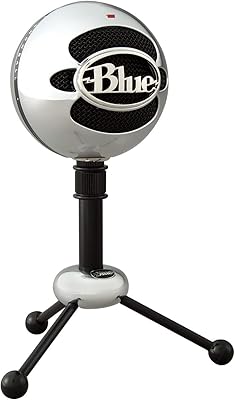
  • Form Factor: Features a retro spherical body mounted on an adjustable tripod stand, with a design aesthetic that reads well on camera.
  • Included Items: Package includes the microphone unit, an adjustable desktop tripod stand, a USB cable, and a printed user guide.
  • Stand Type: Comes with an adjustable desktop tripod stand that allows the mic to be angled toward the sound source for optimal pickup positioning.
  • Manufacturer: Originally designed and produced by Blue Microphones, now sold under the Logitech for Creators brand following Logitech's acquisition of Blue.

Related Reviews
Blue Snowball USB Condenser Microphone
78%
81%
Audio Quality
93%
Ease of Setup
57%
Noise Rejection
84%
Build Quality
83%
Value for Money
More
Blue Yeti USB Microphone
80%
91%
Audio Quality
96%
Ease of Setup
88%
Polar Pattern Versatility
89%
Build Quality
83%
Onboard Controls
More
Blue Yeti Pro USB XLR Condenser Microphone
80%
93%
Audio Clarity
88%
Build Quality
91%
Ease of Setup
86%
Polar Pattern Versatility
89%
USB Recording Resolution
More
Blue Blueberry Cardioid Condenser Microphone
79%
93%
Tonal Character
91%
Vocal Performance
89%
Build Quality
94%
Capsule Quality
71%
Preamp Compatibility
More
Neat Microphones Skyline USB Desktop Condenser Microphone
89%
94%
Audio Quality
91%
Ease of Use
89%
Build Quality
90%
Mute Button Functionality
92%
Value for Money
More
Blue Bluebird SL Condenser Microphone
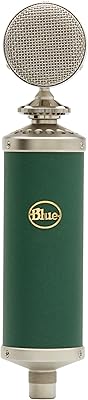
75%
91%
Vocal Sound Quality
88%
Build Quality
79%
Value for Money
54%
Ease of Setup
74%
Noise Rejection
More
Blue Kiwi Large-diaphragm Condenser Microphone
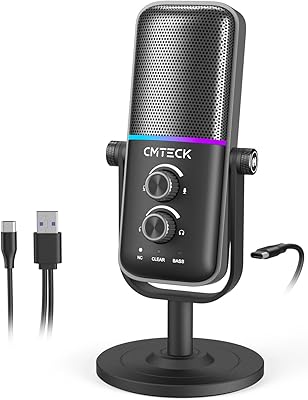
78%
91%
Sound Quality
93%
Pattern Versatility
88%
Vocal Performance
57%
Ease of Setup
72%
Value for Money
More
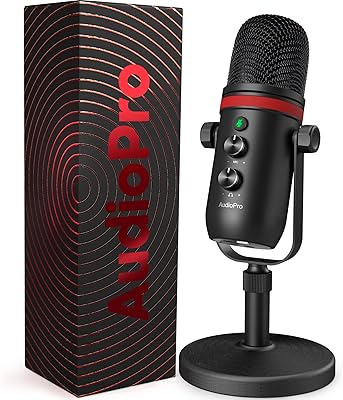
AUDIOPRO X5
AUDIOPRO X5
77%
94%
Ease of Setup
78%
Voice Clarity
67%
Background Noise Rejection
82%
Build Quality
88%
Onboard Controls
More
ROCCAT Torch USB Microphone
86%
92%
Audio Quality
88%
Ease of Use
85%
Microphone Sensitivity
89%
Versatility (Pickup Patterns)
91%
RGB Lighting & Visual Feedback
More
Logitech USB Desktop Gooseneck Microphone
73%
93%
Ease of Setup
79%
Voice Clarity
71%
Noise Isolation
68%
Build Quality
82%
Gooseneck Flexibility
More

FAQ

No, none at all. The Blue Snowball iCE USB Microphone is recognized automatically by both Windows and macOS as a standard USB audio device. You plug it in, select it as your input in your system sound settings, and it is ready to use within seconds.

The mic uses a standard USB Type-A connector, so you will need a USB-A to USB-C adapter or a hub if your laptop lacks a full-size USB port. Those adapters are inexpensive and widely available, and the mic works fine through them.

For the best results, position yourself about 6 to 12 inches directly in front of the mic and angle it slightly upward toward your mouth. The cardioid pattern is fairly focused, so sitting too far back or off to the side will noticeably reduce clarity. Getting placement right makes a bigger difference than most people expect.

It can, more than some buyers anticipate. The cardioid pattern helps reject noise from behind and the sides, but loud mechanical keyboards, fans positioned nearby, and reflective room surfaces can still bleed into recordings. If your space is noisy, try adding a soft surface behind the mic — like a bookshelf or curtain — to reduce room echo.

No, there is no physical mute button on the Snowball iCE. To mute yourself, you have to use the mute function in whatever app you are using — Discord, Zoom, Teams, and most streaming tools all have keyboard shortcuts for this. It is a real inconvenience if you mute frequently, but it is manageable once you set up a hotkey.

It is not really designed for that. The Snowball iCE is optimized for voice — speaking, streaming, and communication. It records mono audio only and lacks the frequency response character or low-noise floor that music recording typically demands. For instruments or singing, a dedicated XLR condenser with an audio interface would serve you much better.

Not well. This is a single-channel, cardioid mic, so it captures one direction and one audio stream. Two people speaking into it from opposite sides will produce uneven, inconsistent results. For a two-person setup, you really want two separate mics or a solution built for multi-source recording.

The included tripod stand is functional but lightweight — it does the job on a flat, stable surface, but it can wobble if bumped or placed on an uneven desk. If you plan to use this long-term or want more positioning flexibility, a basic boom arm with a standard 5/8-inch thread mount is a worthwhile upgrade and compatible with the Snowball iCE.

Yes, without any issues. Because it shows up as a standard USB audio input, any software that lets you select an audio source will recognize it — OBS, Audacity, GarageBand, Streamlabs, Adobe Audition, and others. No special configuration is needed beyond selecting it as your input device.

It is actually one of the better choices for exactly that use case at this price point. Voice intelligibility on Zoom, Teams, Google Meet, and similar platforms improves noticeably compared to a laptop mic, and the plug-and-play simplicity means there is nothing to configure before a meeting. The Snowball iCE has even been officially certified for Skype and Discord, which speaks to its reliability for communication rather than just audio hobbyists.

Where to Buy