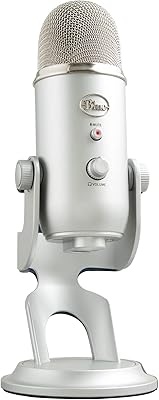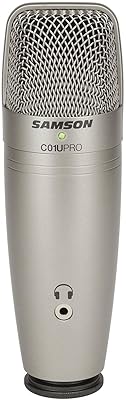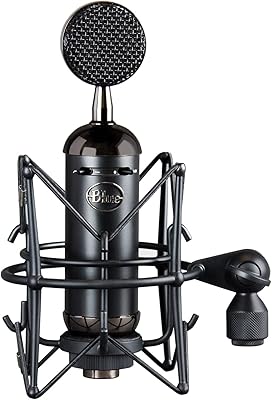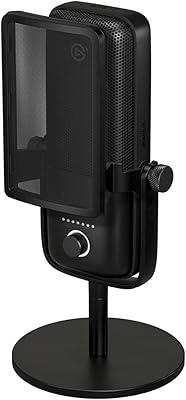

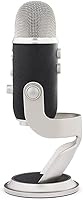
Overview

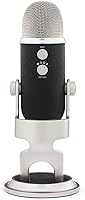
The Blue Yeti Pro USB XLR Condenser Microphone has held a distinct position in the audio world since its 2011 debut — a studio-grade mic designed to bridge home recording setups and professional signal chains. Its dual-output design lets you plug directly into a computer via USB or route into a preamp and mixer via XLR, depending on how your workflow evolves. Three custom condenser capsules sit inside a full metal body that feels genuinely substantial, not like something you'd knock over and forget about. That solidity comes with real weight, and the pricing reflects a clear premium tier — this is not a starter mic, and it doesn't pretend to be.

Features & Benefits

The Yeti Pro offers four polar patterns — cardioid for focused vocals, stereo for room ambience, bidirectional for face-to-face interviews, and omnidirectional for group setups — each serving a real purpose rather than padding a spec sheet. On the digital path, it captures audio at 192 kHz/24-bit resolution, which is meaningfully higher than what most USB mics deliver. The built-in headphone amp enables zero-latency monitoring, so you hear yourself exactly as the mic picks you up. One thing every buyer should know upfront: USB and XLR cannot run simultaneously. You choose one connection per session — a genuine limitation that catches people off guard more often than it should.

Best For

This dual-output condenser mic is a strong fit for podcasters and streamers who want broadcast-quality audio without adding an audio interface to their desk. Home studio musicians benefit from the flexibility to record direct via USB one day and plug into a proper signal chain via XLR the next. The bidirectional and omnidirectional patterns make it practical for interview-style recording and multi-person setups. It also holds up well as a long-haul investment for creators planning to expand their gear over time. Where it struggles is in rigs that require simultaneous hardware mixer monitoring alongside digital USB recording — that combination simply isn't supported.

User Feedback

Across more than 60,000 ratings at 4.6 stars, the response to Blue's professional-tier microphone is consistently strong, particularly around vocal clarity and richness compared to typical USB mics. Buyers regularly describe it as a clear step up in recorded voice quality. The criticisms, though, cluster around predictable pain points: the mic is heavier and bulkier than many anticipate, and the integrated stand makes boom arm mounting awkward without an aftermarket adapter. The included XLR breakout cable also draws complaints for feeling short and flimsy given the mic's build quality. A smaller number of users have noted occasional USB recognition issues on updated operating systems, though these don't appear to be consistent across hardware.

Pros

  • Dual USB and XLR outputs offer real workflow flexibility as your recording setup grows.
  • 192 kHz/24-bit digital resolution puts it well ahead of most USB-only microphones in raw audio quality.
  • Four polar patterns cover solo vocals, stereo room capture, interviews, and group recording without swapping gear.
  • Zero-latency headphone monitoring lets you hear your actual mic signal while recording, with no audible delay.
  • Driverless plug-and-play setup works on both Mac and PC with zero configuration headaches.
  • All-metal construction feels built to last and holds up well to daily desk use.
  • On-body controls for gain, mute, pattern, and headphone volume mean you rarely need to touch software mid-session.
  • A 114 dB signal-to-noise ratio keeps background hiss out of recordings even in quieter passages.
  • Over 60,000 user ratings averaging 4.6 stars reflects a long, consistent track record of buyer satisfaction.

Cons

  • USB and XLR outputs cannot operate simultaneously, which is a hard limit many buyers discover too late.
  • The mic is noticeably heavy and bulky — not something you move around or travel with comfortably.
  • The stock integrated stand makes mounting on a boom arm awkward and usually requires an aftermarket adapter.
  • The included XLR breakout cable is short and feels underbuilt relative to the overall quality of the mic.
  • Some users have reported intermittent USB recognition issues on newer operating system versions.
  • The price reflects a premium tier, but the competitive landscape has shifted since 2011 and alternatives exist.
  • No bundled shock mount means vibration and desk noise can creep into recordings without extra accessories.
  • The footprint is large enough to crowd a small desk, especially when paired with a monitor and other peripherals.

Ratings

Our AI rating engine analyzed tens of thousands of verified global purchases of the Blue Yeti Pro USB XLR Condenser Microphone, actively filtering out incentivized, bot-generated, and low-signal reviews to surface what real buyers consistently experienced. The scores below reflect both the genuine strengths that keep this mic relevant after more than a decade on the market and the recurring pain points that informed buyers should weigh carefully before purchasing.

Audio Clarity
93%
Vocal recordings through this dual-output condenser mic consistently draw praise for their richness and presence — podcasters and voice-over artists frequently describe it as the first mic where their voice actually sounds like them. The 114 dB signal-to-noise ratio keeps recordings clean even during quiet, nuanced passages.
A small number of users in acoustically untreated rooms note that the mic's sensitivity works against them, picking up room reflections and ambient noise more than expected. Cardioid mode helps, but the mic rewards proper acoustic treatment more than forgiving environments.
Build Quality
88%
The all-metal construction gives the Yeti Pro a solidity that buyers notice immediately out of the box — it feels like a professional piece of gear rather than something that will crack if nudged off a desk. The weight alone signals that corners were not cut in the chassis.
The included XLR breakout cable is a recurring point of frustration; several reviewers describe it as noticeably underbuilt relative to the mic body itself, with a length that feels more like a placeholder than a usable accessory. It is one of the few places where the premium feel breaks down.
Ease of Setup
91%
Plug-and-play USB operation on both Mac and PC means most users are recording within minutes of unboxing, with no driver downloads or software configuration required. For streamers and podcasters who want to avoid technical friction, this is a meaningful practical advantage.
Some users on newer OS versions have hit intermittent USB recognition issues, requiring them to unplug and reconnect before the mic registers correctly. It is not a widespread problem, but it has caught enough people off guard to be worth flagging for anyone on a recent system update.
Polar Pattern Versatility
86%
Having cardioid, stereo, bidirectional, and omnidirectional patterns in a single desktop mic genuinely expands what you can record without swapping gear — interviewers, room ambience captures, and roundtable conversations all become viable with a single dial turn. That kind of flexibility is rare at this form factor.
The pattern selection control is a physical dial on the mic body, which means accidental bumps can change your recording mode mid-session without any software warning. Users who move their mic frequently report this happening more than once before they develop the habit of double-checking.
USB Recording Resolution
89%
The 192 kHz/24-bit ceiling puts the Yeti Pro well above the 48 kHz/16-bit standard that most competing USB mics top out at, and home studio musicians doing post-production work appreciate having that headroom when editing and mixing. It is a tangible technical advantage for buyers who plan to do serious audio work.
In everyday podcast and streaming use, most listeners cannot perceive the difference between 48 kHz and 192 kHz output, so for that specific audience the higher resolution is more future-proofing than immediate benefit. Some users feel the premium pricing partially reflects a spec they may never fully utilize.
Zero-Latency Monitoring
84%
The built-in headphone amplifier with direct monitoring is one of the features that separates this mic from simpler USB options — hearing your actual mic signal in real time without software delay makes a real difference when tracking vocals or narrating live. The dedicated volume knob keeps adjustments quick and tactile.
The headphone output volume, while functional, lacks the power that some users want for louder headphones or in-ear monitors with higher impedance. A few reviewers note the maximum output level feels modest compared to a dedicated headphone amp or audio interface.
Desk Stand & Mounting
51%
49%
The integrated desk stand keeps the out-of-box setup self-contained and means you can place the mic and start recording immediately without sourcing additional hardware. For users who record at a fixed desk position and never need to reposition, it is perfectly functional.
The integrated stand is the most consistently criticized aspect across thousands of reviews — it uses a non-standard thread that requires an adapter for any standard boom arm, and the fixed angle offers limited adjustment for different desk heights. Many users end up spending extra on mounting hardware shortly after purchase.
XLR Analog Performance
82%
18%
For users with a quality preamp or audio interface already in their chain, the XLR output unlocks a clean analog signal path that integrates well into professional recording setups. Home studio musicians who outgrow USB recording can transition to full analog operation without replacing the mic.
The no-simultaneous-operation limitation is a genuine constraint that affects certain professional workflows — anyone needing to monitor through a mixer while recording digitally hits a hard wall. This is not a design flaw so much as a fundamental architectural choice, but it does narrow the XLR use case meaningfully.
Value for Money
74%
26%
The dual USB/XLR output combination is still uncommon in a single mic at this size and quality level, and for users who genuinely need both paths, the value proposition holds up well against buying separate solutions. The long product lifespan and large user community also mean plenty of troubleshooting resources exist.
The USB microphone market has expanded considerably since 2011, and several newer competitors offer strong recording quality at noticeably lower price points. For buyers who only need the USB path, the premium feels harder to justify without factoring in the XLR flexibility as a genuine future use.
Portability
42%
58%
The self-contained design with integrated stand means there are fewer loose parts to manage when moving the mic between rooms in a home or office setup. Bus power over USB also removes one cable from the equation during short relocations.
This is a large, heavy metal mic with a footprint that demands real desk space, and it is not something most users would pack for travel or field recording. The bulk and weight that contribute to its solid feel work directly against any scenario that requires portability.
On-Body Controls
87%
Having physical controls for gain, mute, pattern selection, and headphone volume directly on the mic means you can make adjustments mid-session without touching your computer or opening any software. Streamers in particular find the mute button alone worth having within arm's reach.
The controls are clustered tightly and the mute indicator light, while present, can be easy to miss in bright environments. A small number of users have reported the gain knob feeling slightly loose after extended use, though this appears to be isolated rather than a systematic quality issue.
Compatibility
83%
Driverless USB operation across Mac and PC platforms means the Yeti Pro slots into almost any existing computer setup without configuration friction, and compatibility with standard DAWs, streaming software, and video conferencing tools is essentially universal. No proprietary software is required to use its core features.
Occasional USB recognition issues on newer OS builds have been reported, and while they are generally resolved by unplugging and reconnecting, they create an unreliable first impression. Compatibility with iOS devices and mobile setups is limited without additional adapters.
Long-Term Durability
85%
The all-metal body and the mic's continued strong performance ratings over more than a decade in market suggest real staying power — buyers who have owned this mic for several years consistently report it holding up without degradation in sound quality or mechanical reliability.
The integrated desk stand joint can develop some looseness over time with frequent angle adjustments, and because it is not a user-serviceable part, a worn stand effectively requires replacing the entire base assembly rather than a simple component swap.

Suitable for:

The Blue Yeti Pro USB XLR Condenser Microphone is best suited for creators and professionals who sit somewhere between casual hobbyist and full-time studio user. Podcasters and streamers who want noticeably richer vocal quality without wiring up an audio interface will find the direct USB path genuinely capable — plug in, select your pattern, and you are recording at a resolution that most USB-only mics cannot touch. Home studio musicians get real flexibility here: record direct via USB on a quick session, then route through a proper preamp via XLR when the setup calls for it. Voice-over artists and remote interviewers benefit from the bidirectional and omnidirectional polar patterns, which handle face-to-face and group recording situations that a fixed cardioid mic simply cannot. It also makes practical sense for creators who are building toward a more professional signal chain over time and want a mic that will still hold its own once the rest of the gear catches up.

Not suitable for:

The Blue Yeti Pro USB XLR Condenser Microphone is a poor fit for anyone expecting to run USB and XLR outputs at the same time — that is not a supported configuration, and no workaround changes that. If your workflow involves monitoring through a hardware mixer while recording digitally, you will hit a hard wall. Budget-conscious buyers should also think carefully: the market has grown significantly since this mic launched in 2011, and several capable competitors now offer strong USB recording at lower price points. The physical footprint is another genuine consideration — this is a large, heavy mic, and the integrated stand is not designed for easy boom arm mounting without an aftermarket adapter. Anyone who needs a lightweight, portable recording solution for travel or field work will likely find it impractical.

Specifications

  • Connectivity: The mic offers both USB (digital) and XLR (analog) outputs, though only one connection can be active at any given time.
  • Capsule Design: Three custom condenser capsules are arranged in a proprietary tri-capsule array to enable multiple polar pattern modes.
  • Polar Patterns: Four selectable polar patterns are available: cardioid, stereo, bidirectional, and omnidirectional.
  • Digital Resolution: USB recording supports up to 192 kHz / 24-bit sample and word depth, among the highest available in this mic category.
  • Frequency Response: The mic captures audio across a 15 Hz to 22 kHz range, covering the full spectrum of human hearing and beyond.
  • Signal-to-Noise Ratio: A 114 dB signal-to-noise ratio keeps self-noise extremely low, preserving clarity even during quiet or detailed recordings.
  • Headphone Output: A built-in headphone amplifier provides zero-latency direct monitoring with a dedicated volume control on the mic body.
  • On-Body Controls: Physical controls for microphone gain, mute, polar pattern selection, and headphone volume are all accessible directly on the unit.
  • Build Material: The microphone body and integrated desk stand are constructed from metal, giving the unit a solid, durable feel.
  • Dimensions: The mic measures 5.98 x 5.98 x 12.01 inches, making it a large-footprint desktop microphone not suited for compact setups.
  • Platform Support: The Yeti Pro operates as a plug-and-play USB audio device on both Mac and PC without requiring driver installation.
  • Included Accessories: In the box you get a 3m USB cable, a 12-inch XLR breakout Y-cable, and an integrated custom-designed desk stand.
  • Color Option: The unit is available in Silver finish; other colorways may vary by retailer and regional availability.
  • Audio Sensitivity: Microphone sensitivity is rated at 4.5 dB, suitable for capturing vocals, instruments, and ambient room sound at moderate distances.
  • Manufacturer: The Yeti Pro is made by Blue Microphones, a brand now operating under Logitech for Creators since its acquisition.
  • First Available: This model was first listed for sale in January 2011, giving it over a decade of real-world user feedback to draw from.
  • Model Number: The official model number is 988-000092, which can be used to verify authenticity and source replacement accessories.
  • Power Source: The microphone is bus-powered via its USB connection and does not require an external power supply for digital operation.

Related Reviews
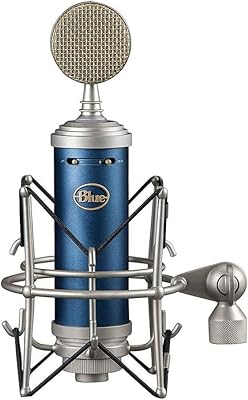
Blue Microphone Bluebird SL XLR Cardioid Condenser Microphone
88%
92%
Sound Quality
88%
Ease of Setup
90%
Noise Reduction
91%
Build Quality
87%
Value for Money
More
Blue Yeti USB Microphone
80%
91%
Audio Quality
96%
Ease of Setup
88%
Polar Pattern Versatility
89%
Build Quality
83%
Onboard Controls
More
Samson C01U Pro
Samson C01U Pro
83%
93%
Build Durability
88%
Vocal Clarity
82%
Background Noise Rejection
91%
Latency Performance
96%
Ease of Setup
More
Blue Blackout Spark SL
85%
92%
Vocal Transparency
94%
Build Quality & Aesthetics
88%
Low-Frequency Control
91%
High-SPL Handling
76%
Background Noise Rejection
More
Elgato Pro Audio Transparency Set USB Condenser Microphone
85%
91%
Sound Clarity
85%
Ease of Setup
88%
Build Quality
90%
Noise Reduction
82%
Software Integration
More
Blue Microphones Blueberry Cardioid Condenser Microphone
87%
91%
Sound Quality
89%
Build Quality
88%
Ease of Use
94%
Performance in Studio Settings
90%
Noise Rejection (Cardioid Pickup)
More
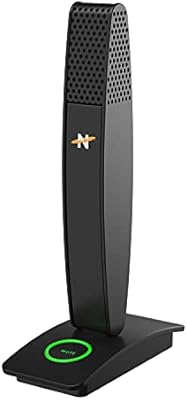
Neat Microphones Skyline USB Desktop Condenser Microphone
89%
94%
Audio Quality
91%
Ease of Use
89%
Build Quality
90%
Mute Button Functionality
92%
Value for Money
More
Logitech Blue Snowball USB Microphone
84%
88%
Sound Quality
94%
Ease of Setup
82%
Build Quality
75%
Noise Cancellation
85%
Versatility (Pickup Patterns)
More
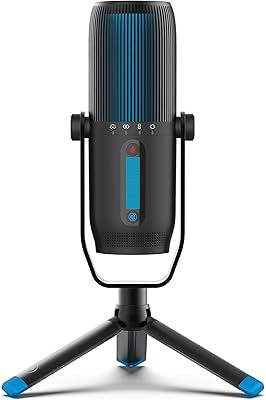
JLab Talk Pro USB Microphone
75%
83%
Audio Clarity
88%
Polar Pattern Versatility
92%
Ease of Setup
58%
Build Quality
81%
Value for Money
More
Blue 5132 Vocal Condenser Microphone
87%
94%
Sound Quality
91%
Build Quality
87%
Ease of Use
93%
Noise Isolation
89%
Durability
More

FAQ

No, and this is probably the most important thing to know before buying. The Blue Yeti Pro USB XLR Condenser Microphone only supports one active connection at a time — either USB for digital recording or XLR for analog output. If you need both paths running simultaneously, this mic will not meet that requirement.

Not if you are using it via USB. The digital path connects directly to your Mac or PC without any additional hardware, and it installs as a standard audio device automatically. You only need an interface or preamp if you choose to use the XLR connection.

Cardioid is the right choice for solo voice recording — it focuses on what is directly in front of the mic and rejects sound from the sides and rear. This minimizes room echo and background noise, which is exactly what you want for a clean podcast or voice-over track.

You can, but it requires an aftermarket adapter. The integrated stand uses a non-standard mount, so you will need a thread adapter to fit most standard boom arms. Many users buy one alongside the mic, so it is worth factoring that into your setup cost.

Yes — the headphone output on the Yeti Pro taps directly into the mic signal before it goes through any digital processing, so what you hear in your headphones is your live voice with no perceptible delay. This is different from software monitoring, which can introduce audible lag depending on your buffer settings.

The XLR path sends an analog signal to whatever preamp or interface you connect it to, so the final quality depends partly on your downstream gear. USB tops out at 192 kHz/24-bit, which is excellent for most applications. In practice, the XLR path shines when you have a high-quality preamp in the chain; otherwise, the USB output holds its own very well.

It should work with most current operating systems without drivers, but a small number of users have reported occasional USB recognition issues after major OS updates. If that happens, unplugging all cables for about 10 seconds and reconnecting usually resolves it. Checking Blue's support page for any firmware notes is also a good step.

The included breakout Y-cable is really meant to get you started — it is only about 12 inches long and several users have noted it feels a bit lightweight for a mic at this price point. If you plan to use the XLR path regularly, picking up a proper full-length balanced XLR cable is worth the small additional cost.

It is on the heavier side for a desktop condenser mic. The all-metal build adds real weight, and some lighter boom arms may struggle to hold it at an extended angle without drooping. If your arm has a listed weight capacity, check it against the mic specs before committing.

It depends on what you need. The dual USB/XLR output combination is still relatively rare in a single mic at this form factor, and the audio quality holds up well. That said, the USB microphone market has grown considerably since 2011, and there are competitive options available now at lower price points. If the XLR flexibility matters to you, the Yeti Pro is still a solid choice; if you only need USB, it is worth comparing current alternatives before deciding.

Where to Buy