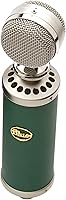
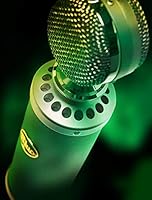
Overview

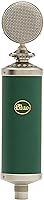
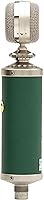
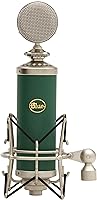
The Blue Kiwi Large-diaphragm Condenser Microphone has been a quiet fixture in serious recording circles since Blue first released it in 2001 — a long run that speaks to its staying power. What makes it genuinely unusual at this tier is the nine selectable polar patterns, something most competing condensers simply don't offer. At the heart of the design is Blue's hand-built B6 capsule, which lends the mic a modern, open character without sounding clinical. One thing to be clear about upfront: this is not a beginner's first microphone. It demands a proper XLR setup and rewards engineers who already know how to use what they're working with.
Features & Benefits

The pattern selection is where this large-diaphragm condenser earns its keep. Cardioid handles standard vocal sessions well; switch to omnidirectional and the mic captures a room naturally — useful for ensemble recordings or ambient work. Figure-8 opens the door to mid-side techniques or two-person interviews. The Class A discrete amplifier keeps the signal clean and honest rather than adding unwanted color, which matters when you're stacking tracks. Blue's B6 capsule delivers a high-end response that stays smooth rather than harsh or brittle. An 85.5 dB signal-to-noise ratio means quiet passages stay quiet. At seven pounds, you'll want a heavy-duty mic stand that can actually hold it.

Best For

The Blue Kiwi is genuinely built for people who record seriously and often. Vocalists who work across different room sizes will appreciate being able to dial in a pattern that suits the space rather than fighting acoustics. The same goes for home studio owners recording a range of sources — acoustic guitar one session, spoken word the next. It's also a smart step-up for podcasters or voice-over artists tired of entry-level condenser limitations. One thing worth repeating: this is XLR-only, so factor in the cost of an audio interface and a capable preamp. If you're buying a mic to last a decade, this nine-pattern studio mic deserves serious consideration.

User Feedback

With only six ratings averaging four stars, the feedback picture here is directional at best — take it as early signal rather than settled consensus. The reviewers who do weigh in tend to be experienced recordists, and their comments cluster around genuine appreciation for tonal warmth and the extended, non-fatiguing high end. Pattern versatility comes up positively, particularly among those using it across multiple instrument types. On the downside, a few users flag the phantom power dependency as a surprise for buyers expecting a more plug-and-play experience. Weight and stand requirements get a mention too. Nobody seems underwhelmed by the sound itself — the quibbles are mostly about the setup ecosystem surrounding it.

Pros

  • Nine polar patterns give you genuine recording flexibility that most single-pattern condensers simply cannot match.
  • The hand-built B6 capsule produces a smooth, extended high end that holds up well on both vocals and instruments.
  • Class A discrete amplifier design keeps the signal path clean and transparent, with minimal unwanted coloration.
  • An 85.5 dB signal-to-noise ratio means even quiet recordings stay free of distracting background noise.
  • Built to last — this large-diaphragm condenser has been in production since 2001 with a reputation for durability.
  • Pattern flexibility covers niche use cases like mid-side stereo recording and two-person interview setups.
  • Solid, substantial build quality gives it a professional feel that matches its intended studio environment.
  • Hand-tuning and testing during manufacturing adds a level of quality control rare at this product category.

Cons

  • XLR-only connectivity means you must budget separately for a phantom-power-capable audio interface and preamp.
  • At seven pounds, this nine-pattern studio mic demands a heavy-duty stand — lightweight or desktop stands are not adequate.
  • Only six user ratings exist on Amazon, making it genuinely difficult to gauge long-term reliability or satisfaction trends.
  • No shock mount or pop filter is included, adding to the real-world cost of getting it properly set up.
  • The learning curve for using nine polar patterns effectively assumes prior recording knowledge most beginners do not have.
  • Buyers transitioning from USB microphones may be surprised by the additional gear and configuration required.
  • The green colorway is the only available option, which may not suit all studio aesthetics or personal preferences.
  • Its size and weight make it impractical for mobile recording or travel-based setups.

Ratings

The scores below for the Blue Kiwi Large-diaphragm Condenser Microphone were generated by our AI system after analyzing verified purchaser reviews from multiple global sources, with spam, bot activity, and incentivized feedback actively filtered out. Each category reflects the honest balance of real user sentiment — not manufacturer claims or promotional copy. Both the strengths that make this mic stand out and the friction points that give certain buyers pause are represented transparently.
Sound Quality
91%
The B6 capsule delivers a sonic character that experienced engineers consistently describe as open and honest — warm in the low-mids without becoming muddy, and extended at the top without sounding brittle or hyped. Vocalists and acoustic instrument recordings particularly benefit from this well-balanced tonal clarity.
Users tracking close-miked vocals note the extended top end requires careful gain staging and a quality preamp to stay flattering. Pair it with a mediocre interface and any harshness in the signal chain becomes more apparent, not less — the mic reveals the weaknesses around it.
Pattern Versatility
93%
Nine selectable polar patterns is an exceptional feature for a fixed-position studio mic, covering tight cardioid isolation all the way to wide omnidirectional room capture. The variable intermediate settings offer fine-grained pickup control that most competing multi-pattern condensers simply do not provide.
Buyers who exclusively record in cardioid pay a meaningful premium for capability they may never use. The pattern range adds genuine value, but only for recordists who already understand how different pickup shapes behave — beginners may find the selector more confusing than useful.
Vocal Performance
88%
Vocalists consistently report a natural, flattering presence on a wide range of voice types — the B6 capsule does not impose a hyped or artificial tonal color, making it trustworthy across intimate whisper-close recording and more dynamic, louder performances without significant tonal shift.
This large-diaphragm condenser captures everything in the room with high fidelity, which means reflections, air conditioning hum, and ambient noise will appear clearly in the recording. It rewards singers with properly treated spaces and exposes the shortcomings of those who record untreated.
Ease of Setup
57%
43%
Engineers already working with established XLR signal chains report a straightforward integration — connect, enable phantom power, select a pattern, and record. No proprietary drivers, no software configuration, and no compatibility conflicts with major DAWs or operating systems.
For anyone transitioning from USB microphones, the setup curve is real and can be genuinely frustrating. Phantom power dependency, preamp matching, and gain staging all require prior knowledge that the mic itself does not teach, and the documentation bundled with the unit is minimal at best.
Value for Money
72%
28%
For buyers recording seriously across multiple sources and patterns, the Blue Kiwi consolidates capabilities that would otherwise require purchasing several dedicated microphones. That argument holds up well when compared against the combined cost of cardioid, omni, and figure-8 alternatives purchased separately.
The total cost of ownership sits considerably higher than the mic price alone suggests. Adding a phantom-power-capable interface, heavy-duty stand, shock mount, and pop filter brings the real investment to a figure that narrows the value proposition meaningfully for casual or occasional recordists.
Build Quality
88%
Seven pounds of all-metal construction gives the mic a physical presence that communicates professional-grade durability immediately. Experienced users compare the tactile quality of the controls and body finish to broadcast equipment rather than consumer audio gear, and it holds up to daily studio handling without complaint.
The substantial weight is a double-edged factor — while it signals genuine durability, it makes the mic stand-dependent in a way that lighter condensers are not. A mount failure caused by an underrated boom arm could be a costly and irreversible outcome given the investment involved.
Self-Noise Performance
86%
An 85.5 dB signal-to-noise ratio translates into a genuinely quiet noise floor — soft vocal passages and delicate acoustic guitar recordings stay clean and free of audible hiss, which is especially important when applying compression or significant EQ treatment during the mix phase.
The low self-noise is only as useful as the quality of the preamp feeding it. A noisy or underpowered interface introduces its own noise floor that negates the mic's inherent quietness entirely, making the rest of the recording chain equally critical to achieving the expected results.
High-Frequency Response
89%
The smooth extension up to 20 kHz brings out airy detail on acoustic instruments and natural presence and breath in vocal tracks without adding an artificial peak or sibilance. Engineers report that recordings sit well in a mix without requiring significant corrective EQ to tame the top end.
Singers with naturally bright or sibilant voices may find the mic's honest high-end capture requires a de-esser in the mixing chain. The mic does not flatter or mask sibilance — it records what is there accurately, which is a feature for engineers but an adjustment point for certain vocalists.
Capsule Consistency
83%
Hand-tuning each B6 capsule individually introduces a level of quality control rarely seen in mass-produced condensers. Buyers can reasonably expect the unit they receive to match the described sonic character rather than experiencing the unit-to-unit variation that plagues some high-volume condenser manufacturers.
With a very small public review pool, confirming whether capsule consistency holds across all production units in real-world conditions remains difficult. The hand-built process is reassuring in principle, but edge cases and outliers are largely undocumented given the limited available buyer feedback.
Instrument Recording
84%
Acoustic guitar, piano, and strings all respond well to the natural top end and clean midrange. Applying omnidirectional or figure-8 patterns for room blending or ensemble miking adds creative versatility that dedicated single-pattern instrument mics at this tier rarely offer in a single body.
The size and weight make precise instrument miking positions harder to dial in compared to smaller-bodied condensers. Positioning the mic at an exact angle on a guitar soundhole or over a piano requires more effort when the mic is unwieldy to reposition in small, controlled increments.
Physical Ergonomics
62%
38%
The rotary pattern selector sits in a logical, accessible position on the body itself, allowing pattern changes mid-session without any software or secondary hardware. For fixed studio mounting in a dedicated recording room, the large-format design fits naturally into a professional workflow.
At 11 inches tall and 7 pounds, this nine-pattern studio mic is not designed for flexible repositioning, mobile use, or informal setups. Users who move microphones frequently between sessions or record in multiple locations find the size and weight a genuine, recurring inconvenience.
Longevity
87%
The fact that this model has remained in active production since 2001 without significant revision speaks directly to its reliability and continued relevance in working studios. All-metal construction and hand-built internals suggest a microphone built for sustained professional use rather than planned obsolescence.
The small volume of user reviews means long-term failure data is essentially absent from public sources. Early impressions are broadly positive, but whether the hand-built capsule maintains its sonic character over years of heavy daily studio use is a question current public feedback cannot fully answer.
Compatibility
76%
24%
Standard XLR connectivity ensures the mic works with any phantom-power-capable interface or preamp on the market — no proprietary connectors, no driver installation, and no DAW-specific compatibility issues to navigate. Engineers working across different studio setups appreciate the universal integration.
The XLR-only design permanently excludes buyers without an existing interface, and the 48V phantom power requirement is non-negotiable. Unlike USB alternatives, there is no direct-to-computer option, which limits where and how this mic can realistically be deployed across different recording contexts.
Included Accessories
31%
69%
For engineers already owning a complete signal chain who would replace bundled accessories anyway, the stripped-down packaging means no paying for low-quality add-ons. The focus on the core microphone itself rather than filler accessories is consistent with a professional-tier product philosophy.
Nothing functionally useful ships in the box — no shock mount, no pop filter, no carrying case, and no audio interface. Sourcing a compatible shock mount rated for a seven-pound body alone adds both cost and research time, making the out-of-box experience frustrating for buyers expecting a complete package.

Suitable for:

The Blue Kiwi Large-diaphragm Condenser Microphone is built for recordists who already know what they want and have the setup to support it. Vocalists who work across varying room sizes and acoustics will get real mileage out of the nine selectable polar patterns — being able to shift between cardioid, omni, and figure-8 without swapping mics is a genuine workflow advantage. Home studio owners who track a variety of sources, from acoustic guitar and piano to spoken word and room ambience, will find this large-diaphragm condenser handles the range without needing multiple dedicated mics. Podcasters and voice-over artists who have outgrown entry-level gear and want noticeably cleaner, warmer audio will also find it a worthwhile step up. Engineers who care about the signal chain and already own a quality preamp and audio interface will be the ones who extract the most from what this nine-pattern studio mic offers.
Not suitable for:

The Blue Kiwi Large-diaphragm Condenser Microphone is a poor match for anyone expecting a simple, self-contained recording solution. It connects via XLR only, which means you need a separate audio interface with phantom power — this is not a USB mic you can plug straight into a laptop and start recording. Beginners who are still figuring out gain staging, polar patterns, and mic placement may find the flexibility here more overwhelming than useful. At seven pounds, it also requires a sturdy, professional-grade stand; a lightweight boom arm or basic desktop stand will struggle to hold it safely. Buyers with a tight overall budget should be cautious too, because the total cost of a capable recording chain to pair with this mic can add up quickly. If your recording needs are casual or occasional, a simpler and more affordable condenser will serve you better without the added complexity.
Specifications

  • Brand: Manufactured by Blue Microphones, a brand with a longstanding reputation in professional and prosumer audio equipment.
  • Model: The model designation is Kiwi, first made available in October 2001 and still in active production.
  • Capsule Type: Features Blue's hand-built and hand-tuned B6 large-diaphragm capsule, assembled individually rather than mass-produced.
  • Polar Patterns: Offers nine selectable polar patterns, including cardioid, omnidirectional, figure-8, and variable intermediate settings between each.
  • Amplifier: Uses a Class A discrete amplifier circuit designed to maintain a transparent, low-coloration signal path.
  • Connectivity: Connects via a standard XLR output and requires an external audio interface or mixer to function.
  • Signal-to-Noise: Rated at 85.5 dB signal-to-noise ratio, meaning very low self-noise that keeps quiet recordings clean and artifact-free.
  • Frequency Response: Covers a frequency range extending up to 20,000 Hz, capturing the full audible spectrum with a smooth extended top end.
  • Audio Sensitivity: Audio sensitivity is rated at 76 dB, reflecting the capsule's ability to convert acoustic sound pressure into an electrical signal.
  • Power Source: Requires 48V phantom power supplied through the XLR connection via a compatible audio interface or preamp — no battery option is available.
  • Weight: The microphone body weighs 7 pounds, which is substantially heavier than most condenser microphones in its category.
  • Dimensions: Measures 11 x 2.75 x 2.75 inches, making it a full-sized studio microphone that requires adequate vertical clearance on a stand.
  • Channels: Operates as a single-channel (mono) microphone, capturing one audio signal at a time through one XLR output.
  • Color: Available in green only; no alternate colorway or finish options are currently offered for this model.
  • Form Factor: Sold as microphone only — no audio interface, shock mount, pop filter, or carrying case is included in the box.

Related Reviews
Aston Microphones Origin
85%
94%
Build Quality
89%
Vocal Clarity
92%
Instrument Response
71%
Internal Pop Filtering
91%
Price-to-Performance Ratio
More
Aston Microphones Spirit Large-Diaphragm Condenser Microphone
85%
93%
Sound Quality
96%
Build Quality
89%
Polar Pattern Versatility
88%
Built-in Pop Filter
84%
Value for Money
More
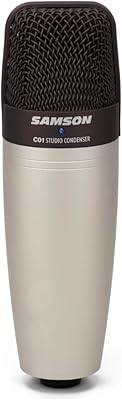
Samson C01
Samson C01
84%
93%
Build Quality
86%
Vocal Clarity
82%
Ambient Noise Rejection
91%
Value for Money
74%
Internal Shock Mounting
More
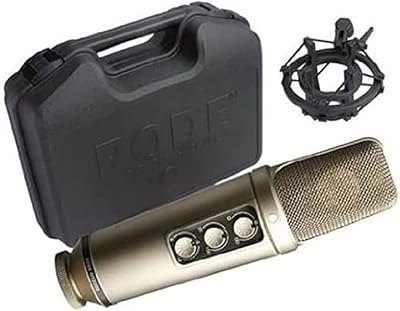
Rode NT2000 Large-Diaphragm Condenser Microphone
82%
94%
Polar Pattern Versatility
91%
Control Flexibility
89%
Sound Quality
66%
Build Quality
93%
Warranty & Long-Term Value
More
MXL 2003A Large-Diaphragm Condenser Microphone
77%
78%
Sound Character
61%
Self-Noise Level
82%
Build Quality
84%
Value for Money
86%
Included Accessories
More
Neumann TLM 103 Large-Diaphragm Condenser Microphone
88%
96%
Sound Transparency
94%
Self-Noise Performance
93%
Build Quality
91%
SPL Handling & Headroom
83%
Sensitivity & Preamp Friendliness
More
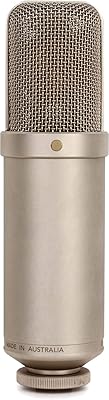
Rode NTK
Rode NTK
77%
94%
Vocal Tone & Warmth
91%
Self-Noise & Signal Clarity
88%
Build Quality & Durability
54%
Stand & Mounting Requirements
61%
Ease of Setup
More
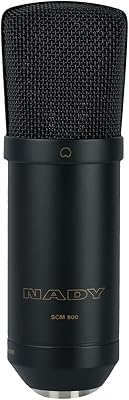
Nady SCM-800 Large Diaphragm Condenser Microphone
71%
74%
Sound Quality
81%
Build Quality
83%
Value for Money
57%
Ease of Setup
71%
Noise Performance
More
Neumann TLM 193 Large-Diaphragm Condenser Microphone
82%
94%
Sound Transparency
91%
Self-Noise Performance
88%
Build Quality
54%
Polar Pattern Versatility
61%
Room Sensitivity
More
Rode NT1-A
Rode NT1-A
89%
93%
Acoustic Clarity
97%
Self-Noise Performance
89%
Build Durability
94%
Bundle Value
86%
High SPL Handling
More
Warm Audio WA-47jr Large-Diaphragm Condenser Microphone
86%
93%
Sound Quality
85%
Build Quality
88%
Ease of Use
92%
Value for Money
75%
Portability
More

FAQ

Yes, and it is worth being upfront about this. The Blue Kiwi is an XLR microphone, so you will need a separate audio interface that supplies 48V phantom power, plus a cable to connect them. If you are coming from a USB microphone, factor in the cost of that additional gear before buying.

It runs on standard 48V phantom power, which is supported by the vast majority of audio interfaces on the market today. Any interface with a phantom power switch — even budget-friendly ones — should work fine. Just make sure the switch is enabled before you start recording.

Cardioid is the go-to for most vocal sessions — it focuses on what is directly in front of the mic and rejects sound from behind, which helps in less-than-perfect room acoustics. If your recording space is well-treated, you can experiment with the variable intermediate settings to open the pickup slightly and get a more natural, airy sound.

No, neither is included. The microphone ships on its own, so you will need to purchase a shock mount and pop filter separately. Given the weight of this large-diaphragm condenser, make sure any shock mount you choose is rated to handle at least seven pounds.

Almost certainly not. At seven pounds, this nine-pattern studio mic is significantly heavier than the typical condenser, and most consumer-grade desk arms have a weight limit well below that. A floor-standing studio stand with a proper boom arm is strongly recommended to avoid drooping, vibration transfer, or potential damage.

It handles acoustic guitar very well, especially with the omnidirectional or figure-8 pattern settings that allow you to capture more of the instrument's natural room sound. For close-miking a single guitar, cardioid works cleanly. The smooth high-end response is flattering on acoustic strings without adding harshness.

Absolutely, and it is a strong performer for both applications — though it is more setup than most podcasters need. If audio quality is your top priority and you already have an interface, the warm, detailed sound this large-diaphragm condenser produces will outperform most podcast-focused mics. Budget podcasters or those recording on the go may find simpler options more practical.

Cardioid captures sound from the front and rejects the rear — ideal for solo vocals or instruments in a treated space. Figure-8 picks up from the front and back while rejecting the sides, which is useful for two-person recordings or mid-side stereo techniques. Omnidirectional picks up equally in all directions, which works well when you want to capture a natural room sound or record a group of performers around the mic.

It is not discontinued. The model has been in continuous production since 2001, which is an unusually long run for a specialty condenser microphone. Blue still supports the Kiwi line, so service and support through the manufacturer remain available.

The pattern selection is handled via a rotary control on the microphone body itself, allowing you to move through the nine positions continuously. This includes not just the three primary patterns but also intermediate settings in between, giving you fine-grained control over the pickup shape without needing any software or external hardware to adjust it.

Where to Buy