Overview

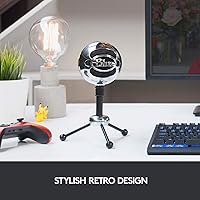
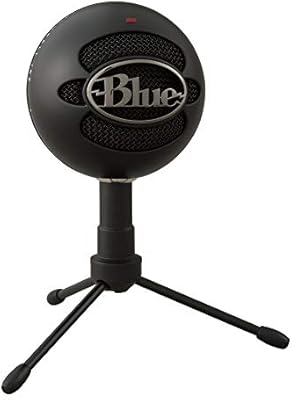
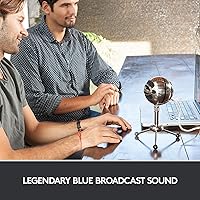
The Blue Snowball USB Condenser Microphone has been a familiar name in home recording circles since it first appeared in 2005 — genuinely rare longevity for consumer audio gear. That staying power comes down to a few things: a distinctive spherical body crafted from aluminum that looks far more expensive than it is, and an approachable price point that appeals to creators who have outgrown their laptop's built-in mic but aren't ready to invest in a full audio interface. Logitech absorbed Blue Microphones a few years back, but the product line has continued without major disruption. Think of this USB condenser as a solid, no-fuss entry point — not a professional studio tool, but a meaningful step up.
Features & Benefits

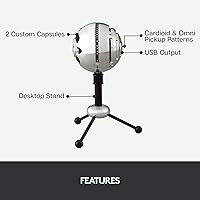
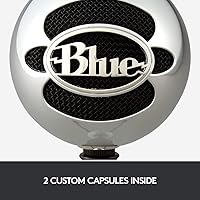
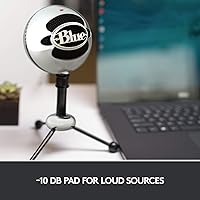
The Snowball mic packs two condenser capsules into that round body, and that matters because it enables two distinct pickup patterns. Switch to cardioid mode and the mic focuses on whatever is directly in front of it — ideal for solo recording or streaming where you don't want your keyboard clicks or room noise creeping into the mix. Flip to omnidirectional mode and it captures sound from all directions, which works well for group calls or roundtable-style podcast recordings. Audio resolution sits at 16-bit/48kHz — think CD-quality — which is more than adequate for voices. The -10 dB pad is a quiet but useful feature; it prevents the capsules from distorting when you get loud. Everything is powered through USB, and the Blue Sherpa app gives you desktop-level gain control if you want it.

Best For

This USB condenser is genuinely well-suited for people making their first real mic purchase. If you're starting a podcast, setting up a streaming channel, or just tired of sounding hollow on video calls, this Blue Snowball is a practical answer. It's also a quietly strong pick for streamers who want reliable voice pickup without routing audio through a separate interface. The design draws attention in a good way — it looks intentional on camera, not like an afterthought. That said, if you're recording voice-over work professionally, or trying to capture a guitar in a small room, you'll quickly bump into its limits. This is a creator's mic, not a studio mic, and it's most satisfying when used with that understanding.

User Feedback

Buyers consistently mention two things right away: how easy it is to set up, and how much better they sound compared to whatever they were using before. The jump from a built-in laptop mic is hard to miss. People also genuinely like how the Snowball mic looks — the retro shape tends to get noticed on video calls and streams. On the critical side, the most common complaint is that it picks up more background noise than expected, especially in untreated rooms or home offices. The included stand gets mixed marks — it works, but many users eventually move to a boom arm for better positioning. Long-term reliability seems solid; plenty of owners are still using theirs after several years. The omni mode draws mixed opinions: handy for group calls, but a liability in noisy spaces.

Pros

  • Plug-and-play setup on Mac and PC means you're recording within minutes, no drivers or extra hardware needed.
  • The Snowball mic's dual pickup patterns give you flexibility most entry-level USB mics simply don't offer.
  • CD-quality 16-bit/48kHz audio resolution is more than sufficient for podcasting, streaming, and clear voice calls.
  • The aluminum spherical build feels solid and looks genuinely distinctive on a desk or in a video frame.
  • Bus-powered through USB — no separate power cable or adapter cluttering your workspace.
  • The -10 dB pad prevents distortion on louder voices, a useful detail most budget mics skip entirely.
  • Long-term durability is a real strength; many users report years of consistent, reliable performance.
  • The Blue Sherpa app lets you dial in gain and mic settings from your desktop without touching the mic itself.

Cons

  • More sensitive to background noise than many comparable cardioid-focused competitors, especially in untreated home rooms.
  • The included desktop tripod stand is basic — most users end up buying a boom arm for practical positioning.
  • Omni mode, while useful for group calls, becomes a liability anywhere ambient noise is a factor.
  • No headphone monitoring jack means you can't check your audio in real time through the mic.
  • The USB-A connector may require an adapter on newer laptops that only have USB-C ports.
  • Gain control relies on the companion app rather than a physical knob, which is less intuitive mid-session.
  • Not well-suited for recording anything beyond voice — instruments and nuanced room sounds don't translate well.
  • The spherical body, while visually appealing, makes precise angle adjustment trickier without a proper boom arm.

Ratings

The scores below are compiled by AI after analyzing thousands of verified buyer reviews for the Blue Snowball USB Condenser Microphone worldwide, with spam, bot activity, and incentivized feedback actively filtered out. Both the genuine strengths and the recurring pain points are reflected honestly — no category has been inflated or softened. If you've been on the fence about this mic, these ratings are designed to give you a clear, unvarnished picture before you commit.
Audio Quality
81%
19%
For anyone stepping up from a built-in laptop or webcam mic, the difference in voice quality is immediately apparent — recordings sound warmer, more present, and noticeably cleaner. The 16-bit/48 kHz resolution captures enough detail for streaming, podcasting, and video calls without any meaningful compromise for those use cases.
At louder volumes or in sessions requiring broadcast-level precision, the limits become clear. Professional voiceover artists and musicians quickly outgrow what this USB condenser can deliver, and the audio character can feel slightly thin compared to XLR alternatives in the same price range.
Ease of Setup
93%
Users consistently praise how quickly they're up and running — unbox the mic, plug in the USB cable, and you're ready to record. No drivers, no configuration menus, no audio interface hunting. This plug-and-play simplicity is especially valued by first-time podcasters and streamers who aren't comfortable with technical audio setups.
While initial setup is effortless, fine-tuning the experience requires jumping into the Blue Sherpa app or digging through system audio settings — there's no physical gain knob to reach for mid-session. Users who want hands-on control during a live stream or active recording find this gap genuinely frustrating.
Noise Rejection
57%
43%
In cardioid mode, the Snowball mic does a reasonable job of focusing on the speaker's voice and softening sounds coming from behind and to the sides. For users with genuinely quiet home offices or recording spaces with some acoustic treatment, the background noise performance is acceptable for everyday content creation.
This is the most cited frustration among long-term users. In untreated rooms — think hard walls, open windows, HVAC systems — the mic captures far more ambient sound than many comparable cardioid-only competitors, and switching to omnidirectional mode makes the problem significantly worse.
Build Quality
84%
The aluminum body gives this USB condenser a noticeably premium feel for the price point — it's heavier than plastic rivals and the spherical housing feels genuinely solid in hand. Users report the mic has held up well across years of daily use, with no meaningful degradation in the physical hardware.
The cable connection point and the mic's mounting socket feel slightly less robust than the main body, and a small number of long-term users have reported wobbling at the stand joint over extended use. The included tripod's build quality doesn't quite match the mic itself.
Value for Money
83%
When you stack up what this USB condenser delivers — dual pickup patterns, CD-quality resolution, plug-and-play simplicity, and an aluminum body that lasts — the overall package represents fair value for the asking price. Buyers stepping up from a basic headset or laptop mic routinely describe it as one of the most impactful audio upgrades they've made.
The value proposition weakens slightly when compared to newer USB microphones that have entered this price range with tighter cardioid patterns and on-mic gain controls. Buyers who need professional-level results will find themselves spending more on a boom arm, pop filter, and eventually a better mic sooner than expected.
Pattern Versatility
74%
26%
Having two selectable pickup patterns in a single USB mic is genuinely useful and not common at this price tier. The cardioid mode handles focused recording reliably, while the omni option adds real flexibility for group calls, interviews, or collaborative podcast sessions with two people gathered around the mic.
The versatility is somewhat theoretical in practice — the omni mode is problematic in any room with background noise, which limits its real-world usefulness for many buyers. Switching between patterns isn't immediate or intuitive enough for mid-session adjustments, and the two-pattern system adds unexpected complexity for beginners who just want one reliable setting.
Design & Aesthetics
89%
The retro spherical form is one of the most recognizable shapes in consumer audio, and it genuinely looks great on a desk or in a video frame — a meaningful consideration for streamers and content creators who are mindful of how their setup appears on camera. The brushed aluminum finish adds visual weight that matches the mic's quality.
The spherical shape, while distinctive, makes traditional mic positioning slightly awkward compared to side-address or top-address designs — it's harder to pop-filter and harder to angle precisely without a boom arm. The absence of a mute button or any physical controls on the body is a minor but occasionally frustrating trade-off.
Compatibility
92%
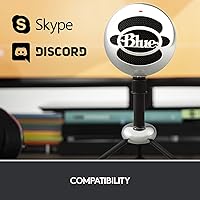
Recognized natively by both macOS and Windows without any driver installation, the Snowball mic works reliably across virtually every major recording, streaming, and communication platform — OBS, Zoom, Discord, GarageBand, Audacity, and more. This universal compatibility means there's almost no scenario where users have to troubleshoot driver conflicts or audio routing issues.
The USB Type-A connector creates a small but real friction point for users with modern MacBooks or USB-C-only laptops, who will need an adapter that isn't included in the box. A small number of users have also reported occasional audio dropout issues on specific configurations, though these appear to be rare exceptions.
Included Accessories
53%
47%
The package includes a functional adjustable desktop tripod stand that gets users recording on day one without any additional purchases — for someone just starting out, having a stand in the box removes one immediate barrier to entry. The included USB cable is standard length and sufficient for most desktop setups.
The tripod stand is the most common source of buyer disappointment — it positions the mic too low for an ideal speaking angle, doesn't hold its position firmly over time, and most regular users replace it with a boom arm within months. A pop filter and shock mount are notably absent for a mic marketed at podcasters and streamers.
Long-term Durability
86%
One of the Snowball mic's quiet strengths is its staying power — a substantial number of users report using the same unit for three, five, or even more years without hardware failures or noticeable degradation in sound quality. The all-aluminum body resists the wear that tends to plague plastic mic enclosures over time.
While the main body is durable, the USB connection and the stand attachment point are the most likely failure spots for heavy daily users. Some buyers who rely on the mic for multiple sessions each day have eventually noticed the mounting socket loosen, requiring occasional repositioning or a full stand replacement.
Gain Control
68%
32%
The Blue Sherpa companion app offers a reasonably capable desktop solution for gain adjustments and basic mic management, and it's free to download. For users who set their levels once and leave them, this app-based approach causes minimal friction in everyday use.
The absence of a physical gain knob on the mic body is a genuine inconvenience for anyone doing live sessions — adjusting input mid-stream requires tabbing out of OBS or a game to open a software panel, which most streamers find disruptive. Competing mics in a similar price range increasingly offer on-mic knobs as standard.
Voice Clarity
79%
21%
For podcasting, streaming commentary, and video call communication, this USB condenser reproduces voices with a warmth and presence that makes a noticeable difference compared to compressed, tinny laptop audio. Remote colleagues and podcast listeners regularly comment on the improvement, especially when the mic is positioned correctly at a comfortable speaking distance.
Voice clarity can degrade noticeably in rooms with hard surfaces and echo, where the mic's sensitivity picks up reverb alongside the speaker's voice. Users who don't treat their recording space — even with something basic like a blanket draped behind the mic — often find the recorded voice sounds less clean than expected.
Portability
72%
28%
At roughly 460 g (about 1 lb), the Snowball mic is compact enough to pack into a laptop bag or backpack for travel or off-site recording. The USB bus-powered design means no extra cables or power bricks are needed — just the mic and a single USB cable.
The spherical form factor isn't designed for travel in the way some flat or folding USB mics are, and without a dedicated carry case it's more susceptible to scratches and knocks in transit. The tripod stand adds bulk that doesn't pack down efficiently, making the whole package less streamlined for frequent movers.

Suitable for:

The Blue Snowball USB Condenser Microphone is a strong match for anyone making their first real upgrade from a built-in laptop or webcam mic — particularly beginner podcasters, Twitch streamers, and YouTubers who want noticeably better audio without the complexity of an audio interface. Remote workers and students who spend hours on video calls will also find real value here; the jump in voice clarity is hard to ignore compared to what most laptops offer. The cardioid pickup pattern makes it practical for solo recording in a reasonably quiet room, while the omni mode handles small group calls or roundtable conversations where you want everyone to be heard. Content creators who care about how their desk setup looks on camera will appreciate the retro spherical design — it draws positive attention rather than blending into the background. If your main goals are ease of use, a low barrier to entry, and audio that sounds genuinely better without a steep learning curve, this mic delivers on all three.
Not suitable for:

The Blue Snowball USB Condenser Microphone is not the right tool for anyone who needs professional-grade audio. If you're doing paid voiceover work, recording acoustic instruments, or producing content where audio quality is the primary deliverable, you'll quickly hit the ceiling this mic places on your sound. It's also a poor fit for anyone recording in an untreated room with significant ambient noise — unlike tighter cardioid-focused competitors, this USB condenser is more sensitive to background sound than many buyers expect, and that sensitivity becomes a real problem in noisy home environments. The included desktop stand is functional but minimal; if you're planning a serious recording setup, you'll almost certainly need to budget for a boom arm separately. Professionals or advanced hobbyists who already own an audio interface and XLR microphone will find nothing here that justifies a switch.
Specifications

  • Pickup Patterns: Supports two selectable pickup patterns — cardioid for focused front-facing capture and omnidirectional for 360-degree room coverage.
  • Capsules: Houses two custom condenser capsules that work together to deliver the mic's dual-pattern capability.
  • Sample Rate: Records at 16-bit/48 kHz, providing CD-quality digital audio output suitable for voice, streaming, and podcasting.
  • Noise Ratio: Rated at an 80 dB signal-to-noise ratio, ensuring a clean audio signal with minimal self-noise from the capsules.
  • Attenuation Pad: Includes a -10 dB attenuation pad that reduces input sensitivity to prevent distortion when recording louder sound sources.
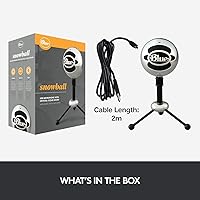
  • Connectivity: Connects to a computer via a standard USB Type-A cable, which is included in the box.
  • Driver Requirement: Operates as a plug-and-play USB audio device on both Mac and PC — no drivers or software installation required to begin recording.
  • Compatibility: Compatible with macOS and Windows-based PCs, functioning as a standard USB audio device recognized natively by both operating systems.
  • Body Material: The main enclosure is constructed from aluminum, giving the mic a solid, durable feel and its distinctive retro spherical appearance.
  • Weight: Weighs approximately 460 g (around 1 lb), making it substantial enough to feel sturdy without being cumbersome on a desk.
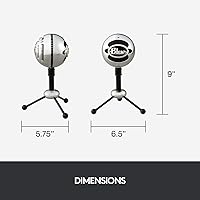
  • Dimensions: Measures 6.42 x 6.14 x 10.51 inches with the stand attached, fitting comfortably on most standard desktop surfaces.
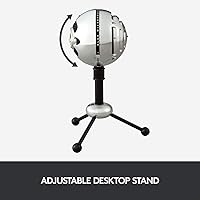
  • Included Stand: Ships with an adjustable desktop tripod stand that allows basic repositioning for direct table use.
  • Companion App: Compatible with the free Blue Sherpa desktop application, which lets users adjust mic gain and audio settings from their computer.
  • Frequency Range: Covers a frequency range extending up to 18 kHz, capturing the full presence of human voices and upper-range audio detail.
  • Power Source: Draws power directly from the connected computer via USB, with no external power adapter or batteries required.

Related Reviews

Blue Snowball iCE USB Microphone
74%
96%
Ease of Setup
81%
Voice Clarity
63%
Background Noise Rejection
91%
Value for Money
41%
Onboard Controls
More
Blue Blueberry Cardioid Condenser Microphone
79%
93%
Tonal Character
91%
Vocal Performance
89%
Build Quality
94%
Capsule Quality
71%
Preamp Compatibility
More
Neat Microphones Skyline USB Desktop Condenser Microphone
89%
94%
Audio Quality
91%
Ease of Use
89%
Build Quality
90%
Mute Button Functionality
92%
Value for Money
More
Blue Bluebird SL Condenser Microphone
75%
91%
Vocal Sound Quality
88%
Build Quality
79%
Value for Money
54%
Ease of Setup
74%
Noise Rejection
More
Blue Encore 300 Vocal Condenser Microphone
80%
88%
Vocal Sound Quality
91%
Build Quality
84%
Handling Noise Rejection
79%
Stage Feedback Resistance
67%
Gain Requirements
More
Blue Yeti USB Microphone
80%
91%
Audio Quality
96%
Ease of Setup
88%
Polar Pattern Versatility
89%
Build Quality
83%
Onboard Controls
More
Blue Yeti Pro USB XLR Condenser Microphone
80%
93%
Audio Clarity
88%
Build Quality
91%
Ease of Setup
86%
Polar Pattern Versatility
89%
USB Recording Resolution
More
Elgato Wave:3
Elgato Wave:3
86%
94%
Software Ecosystem
97%
Audio Distortion Prevention
68%
Build Quality & Materials
91%
Ease of Setup
88%
Voice Clarity & Sound Quality
More
JOBY Wavo POD USB Condenser Microphone
76%
78%
Audio Quality
94%
Ease of Setup
62%
Build Quality
74%
Value for Money
57%
Background Noise Rejection
More
HyperX QuadCast S
HyperX QuadCast S
87%
88%
Vocal Clarity
96%
Mute Functionality
91%
Build Quality
84%
Shock Absorption
89%
Gain Control Ease
More

FAQ

No, the Snowball mic is plug-and-play on both Mac and PC. Just plug the USB cable into your computer and your operating system will recognize it automatically as an audio device. You can start recording immediately without touching any settings.

Cardioid mode picks up sound from directly in front of the mic and rejects most noise from the sides and rear — that's what you want for solo recording, streaming, or podcasting. Omnidirectional mode captures sound equally from all directions, which is better suited for conference calls or situations where multiple people are gathered around the mic. If you're recording solo in a home environment, stick with cardioid.

It can, which is worth knowing before you buy. The Blue Snowball USB Condenser Microphone is more sensitive to room noise than some of its tighter cardioid-only competitors, especially when switched to omnidirectional mode. In a quiet, reasonably treated space it performs well, but if your room has significant echo or ambient sound — fans, traffic, keyboard noise — you may notice it creeping into your recordings.
The Snowball mic uses a standard USB Type-A connector, so you'll need a USB-A to USB-C adapter or a hub to connect it to newer MacBooks. Those adapters are inexpensive and widely available — it's a quick fix rather than a dealbreaker.

The Snowball mic doesn't have a built-in headphone jack, so direct zero-latency monitoring through the mic itself isn't possible. You can still monitor through your recording software or streaming application, though you may notice a small amount of latency depending on your buffer settings.

There's no physical gain knob on the mic body itself. You can adjust input levels through your operating system's audio settings or directly inside your recording software. The free Blue Sherpa companion app also offers more granular gain control from your desktop if you'd prefer a dedicated solution.

The pad reduces how sensitive the mic is to incoming sound, which is useful if you have a naturally loud voice or if you're recording something at high volume close up. For most podcasting and streaming at normal speaking levels, you won't need it — but it's a handy safety net if you ever find your audio clipping or distorting.

The included tripod stand does the job for basic desk use, but it keeps the mic fairly low and locked in one position. Many users — especially streamers and podcasters — eventually upgrade to a boom arm, which gives far more flexibility in positioning the mic at a comfortable speaking angle. It's not essential on day one, but it's a worthwhile addition if you plan to record regularly.

The difference is genuinely noticeable. Most built-in laptop mics and basic headsets are designed to be functional, not to sound good. This USB condenser uses proper condenser capsules, which means your voice comes through clearer, warmer, and more present — people on your calls and listeners to your stream or podcast will hear the improvement right away.

It's primarily designed for voice — podcasting, streaming, and calls — and it handles those use cases well. It can pick up other sources like an acoustic guitar or ambient room sound, but its sensitivity to background noise and its overall audio character aren't really optimized for serious music recording. If instruments are a priority, a dedicated recording mic paired with an audio interface would serve you better.

Where to Buy