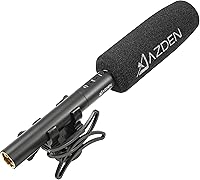
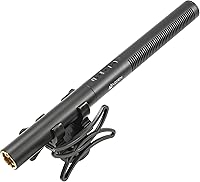
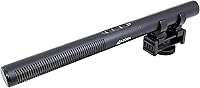

Overview

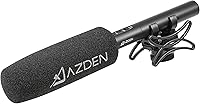
The Azden SGM-250 Shotgun Microphone is a Japan-crafted condenser mic built for videographers who want dependable on-camera audio without carrying a bag full of gear. What sets it apart is its dual-power design — run it off 48V phantom power when you have a mixer or recorder handy, or drop in a single AA battery for fieldwork where no external power exists. Its supercardioid polar pattern handles the heavy lifting on noise rejection, keeping side and rear sounds from cluttering your recordings. That 10-year manufacturer warranty is genuinely unusual in this category — it signals a level of confidence in build quality you rarely see at this price tier.

Features & Benefits

The supercardioid polar pattern is the practical core of this shotgun mic — it rejects ambient sound from the sides and rear far more aggressively than a standard cardioid, which matters enormously when you are shooting in noisy environments. The switchable low-cut filter tackles the low-end rumble that plagues outdoor recordings: wind, traffic, air conditioning. With a 77 dB signal-to-noise ratio and a full 20 Hz to 20 kHz frequency response, the SGM-250 captures dialogue that sounds natural rather than thin or processed. The LED battery indicator is a small but genuinely useful touch — no more discovering a dead battery mid-interview. Build quality feels solid throughout, which the 10-year warranty quietly reinforces.

Best For

This Azden mic is a natural fit for solo run-and-gun shooters — documentary filmmakers, journalists, or independent video producers who need clean audio without a dedicated boom operator or audio assistant. It also works well for sit-down interviews in moderately controlled environments, where pointing the mic at a subject and flipping on the low-cut filter is enough to get professional-sounding results. If you travel for shoots and rely on battery-powered rigs, the dual-power flexibility makes the SGM-250 more versatile than many competitors in this range. It is not built for live sound or studio vocals, but for on-camera dialogue, it covers a lot of practical ground.

User Feedback

With fewer than a dozen ratings at the time of writing, it is worth being upfront: the sample is small, so individual experiences carry real weight. That said, a consistent pattern does emerge — buyers point to a noticeable jump in audio quality over built-in camera mics, and build quality draws repeated praise for feeling sturdy and well-made. On the critical side, a handful of users flag sensitivity to handling noise, meaning a quality shock mount matters more than you might expect. A few also note the cable length could be more generous. Compared to options like the Rode VideoMic Pro, feedback positions this Azden mic as a solid value for shooters who prioritize power flexibility above all.

Pros

  • Dual-power support means you can run it off phantom power or a single AA battery depending on the situation.
  • The supercardioid pattern rejects side and ambient noise far more effectively than a standard cardioid mic.
  • A switchable low-cut filter handles wind rumble and HVAC hiss without needing post-production fixes.
  • The LED battery indicator is a genuinely practical feature that prevents mid-shoot power failures.
  • Handcrafted in Japan with build quality that feels solid and professional in hand.
  • A 10-year manufacturer warranty is almost unheard of at this price tier and signals real confidence in durability.
  • The 77 dB signal-to-noise ratio delivers clean, detailed audio that holds up well in post-production.
  • Full 20 Hz to 20 kHz frequency response captures dialogue naturally without sounding thin or filtered.
  • Buyers consistently report a substantial audio quality jump compared to built-in camera microphones.
  • Compact and lightweight enough to stay mounted on a camera without throwing off the rig balance.

Cons

  • Handling noise sensitivity is a recurring complaint — a shock mount is practically essential, not optional.
  • The included cable length has been flagged as too short for setups where the mic is not directly camera-mounted.
  • With fewer than a dozen ratings, there is not yet enough user data to draw confident long-term reliability conclusions.
  • XLR-only connectivity locks out users without a compatible recorder, mixer, or camera with XLR inputs.
  • At this weight and length, it can feel front-heavy on smaller mirrorless camera bodies.
  • No included shock mount means additional cost on top of the purchase price for vibration-sensitive shooters.
  • Buyers upgrading from TRS-based consumer mics may face an unexpected learning curve around XLR signal chains.
  • The SGM-250 sits in a competitive price bracket against well-established rivals with larger user communities and more documented field performance.

Ratings

The Azden SGM-250 Shotgun Microphone has been evaluated by our AI rating system after analyzing verified buyer reviews from global markets, with spam, bot-generated, and incentivized feedback actively filtered out to reflect only genuine user experiences. Scores across each category transparently capture both what this shotgun mic does well and where real-world users have run into friction — nothing is smoothed over to make the product look better than it is.

Audio Clarity
86%
Users consistently report a striking improvement in vocal definition compared to built-in camera microphones, particularly in controlled indoor environments like sit-down interviews or office setups. The high-sensitivity condenser element captures dialogue with a natural, unprocessed quality that holds up well during editing without needing heavy EQ correction.
In louder or more reverberant environments, some users find the clarity advantage narrows compared to competing mics at a similar tier. A small number of reviewers noted that subtle background sounds they expected to be rejected still bled through, which required additional treatment in post-production.
Noise Rejection
83%
The supercardioid polar pattern is genuinely effective at keeping side chatter, crowd noise, and ambient room sound out of recordings during run-and-gun shoots. Videographers working in busy environments like markets, event halls, or outdoor locations found it meaningfully better than cardioid alternatives at isolating their subject.
The rear lobe inherent to supercardioid designs means that sound directly behind the mic is not completely eliminated, which surprises users who expect total rear rejection. A few reviewers working in highly reflective spaces found the polar pattern alone was not sufficient without also repositioning the mic closer to the subject.
Build Quality
89%
The Japan-crafted construction is one of the most frequently praised aspects across all available reviews, with users describing the mic as feeling noticeably more solid and professional than other options they had tried at comparable price points. The housing has a reassuring rigidity that suggests it can handle the bumps and jostles of regular field use without concern.
Despite the strong overall impression, a small number of users flagged that the mounting hardware feels slightly less refined than the main body, which is a minor inconsistency in an otherwise well-built package. There is also limited data on long-term durability given the relatively small and recent review sample.
Dual Power Flexibility
91%
The ability to switch between 48V phantom power and a single AA battery without any drop in performance is a practical differentiator that working shooters genuinely appreciate. Filmmakers and journalists who move between studio setups with mixers and fully self-contained field rigs found this flexibility eliminates the need to carry or budget for a separate battery-only mic.
Users who primarily shoot with cameras that lack XLR inputs cannot take full advantage of the dual-power system without adding an audio recorder to their kit, which adds cost and workflow complexity. A dedicated power switch label could also be clearer for first-time users unfamiliar with phantom power requirements.
Low-Cut Filter
82%
18%
The switchable low-cut filter earns genuine appreciation from users who shoot outdoors or in climate-controlled interiors where low-frequency rumble is a constant nuisance. Flipping the filter on before an interview in an air-conditioned room noticeably cleans up the low end without requiring any post-production intervention.
The filter does not eliminate wind noise on its own in anything beyond a light breeze, and users who went into outdoor shoots relying solely on it without a windscreen were disappointed. A few reviewers also felt the filter cutoff point was slightly too aggressive, affecting the warmth of male vocal recordings at the low-frequency boundary.
Handling Noise
61%
39%
When mounted properly on a good shock mount, the SGM-250 performs adequately for stationary or lightly moving camera work, and users who invested in isolation accessories reported a significant reduction in transmitted vibration. For locked-off interview setups, handling noise is rarely a complaint.
This is the most consistently flagged pain point in the available user feedback — the mic is noticeably sensitive to camera body vibration, footsteps, and any physical contact with the rig. Users who attempted to hand-hold the camera without a shock mount frequently described a low rumble or knock sound in their recordings that required cleanup or ruined otherwise usable takes.
Ease of Setup
78%
22%
For videographers already familiar with XLR signal chains and portable recorders, getting the SGM-250 up and running is quick and intuitive with no unusual configuration required. The LED battery indicator removes one variable from the setup checklist, which experienced users specifically called out as a thoughtful practical touch.
Buyers new to professional audio equipment frequently underestimated what XLR connectivity actually requires and were caught off guard by needing an additional recorder or mixer to use the mic at all. The lack of any included accessories beyond the mic itself means the out-of-box experience demands more from the buyer than entry-level alternatives do.
Value for Money
74%
26%
Users who already own an XLR-capable recorder and needed a reliable on-camera shotgun mic generally feel the SGM-250 justifies its price, especially factoring in the 10-year warranty which is almost unmatched in this category and effectively reduces long-term replacement risk. The Japan craftsmanship contributes to a perception of value that goes beyond raw specs.
Buyers comparing it directly against the Rode VideoMic Pro or Sennheiser MKE 400 sometimes question whether the price premium over those options is fully justified given the smaller user community and less-documented field track record. Those who did not account for the added cost of a shock mount and potentially a portable recorder also felt the total investment crept higher than expected.
Warranty & Support
88%
The 10-year manufacturer warranty from Azden Corporation is a genuine standout in a category where two-year coverage is often considered generous, and users who have interacted with Azden support describe them as responsive and knowledgeable. This level of backing meaningfully changes the long-term cost calculus for professional users who depend on their gear.
International buyers outside the US have reported some uncertainty about whether the full warranty terms apply in their region, which is worth clarifying before purchase. There is also limited community documentation of warranty claims being processed, so confidence in the process is largely based on Azden's established brand reputation rather than widespread firsthand accounts.
Portability
77%
23%
At 5.7 oz the SGM-250 is manageable for extended shoots when mounted on a proper rig, and its full-length shotgun form factor does not feel excessive for documentary or interview work where size is not the primary concern. Travel videographers report it packs without issue into standard camera bags alongside a recorder and cables.
On compact mirrorless bodies the length and weight create noticeable front-heaviness that can fatigue hand-holders during longer handheld shooting sessions. Users coming from smaller mini-shotgun mics like the Rode VideoMicro found the size adjustment more significant than they anticipated.
Frequency Accuracy
84%
The 20 Hz to 20 kHz frequency response captures the full range of human speech and environmental tone, and users describe dialogue recordings as sounding natural and true-to-life without the artificial top-end brightness that some budget condensers add. It translates well to both YouTube compression and broadcast-quality delivery.
A few more critical reviewers — predominantly those with a background in audio production — felt the mic's character was relatively neutral rather than flattering, meaning recordings from more experienced shooters occasionally needed subtle EQ to add presence in post. This is a minor and subjective concern but worth noting for users expecting a more polished out-of-the-box sound.
Compatibility
67%
33%
For users already operating within a professional XLR ecosystem — cameras with built-in XLR ports, Zoom recorders, Sound Devices mixers — the SGM-250 drops in without friction and plays well with a wide range of gear at various price points. The phantom power support makes it broadly compatible across professional field recording setups.
The XLR-only output is a hard barrier for a significant portion of the potential buyer pool who shoot with consumer cameras or mirrorless systems lacking XLR inputs, and this limitation generates notable frustration in reviews from users who did not research compatibility before purchasing. This is arguably the single biggest compatibility constraint the mic carries.
LED Indicator Usefulness
81%
19%
The battery status LED is consistently mentioned as one of those understated features that proves its worth in the field — specifically during long travel days or multi-shoot schedules where tracking battery state across multiple pieces of gear becomes genuinely difficult. Several users credited it with saving at least one recording session from a dead-battery failure.
The indicator only reflects battery-mode operation, so when running on phantom power there is no active feedback, which is expected but leaves some users wishing for a more comprehensive signal-chain status light. In bright outdoor conditions the LED can also be harder to see at a glance without checking the mic directly.

Suitable for:

The Azden SGM-250 Shotgun Microphone is a strong match for solo videographers, documentary shooters, and independent content creators who need dependable on-camera audio without building out a full audio rig. If you regularly shoot in varied environments — sometimes with a mixer providing phantom power, other times running battery-only in the field — the dual-power design removes a real logistical headache. Journalists and travel filmmakers who cannot afford to babysit their gear will appreciate the LED battery indicator and the reassurance of a 10-year manufacturer warranty, which is genuinely rare in this product category. Interview-focused creators working without a boom operator or audio assistant will also find the supercardioid pattern does a lot of the heavy lifting in moderately noisy rooms. It is a practical, well-built tool for working shooters who want a meaningful audio upgrade over built-in camera mics without overcomplicating their setup.

Not suitable for:

The Azden SGM-250 Shotgun Microphone is not the right pick for every audio situation, and it is worth being clear about where it falls short. If you shoot primarily in acoustically treated spaces or studios and already have a dedicated audio interface, there are condenser microphones purpose-built for that environment that will outperform this shotgun mic on tonal richness and off-axis coloration. Users sensitive to handling noise will need to budget for a quality shock mount, as the SGM-250 picks up vibration more readily than some competitors — something a few early buyers learned mid-shoot. The XLR connector means it does not work directly with cameras or smartphones lacking a proper XLR input, so beginners without an audio recorder or mixer may hit a compatibility wall. Podcasters, voiceover artists, and musicians looking for a versatile studio mic should look elsewhere; this Azden mic is built around a very specific camera-mounted, field-recording use case.

Specifications

  • Microphone Type: The SGM-250 is a shotgun condenser microphone designed primarily for on-camera use in professional video production.
  • Polar Pattern: Supercardioid polar pattern provides tight forward pickup while actively rejecting sound from the sides and rear of the mic.
  • Frequency Response: Captures audio across the full 20 Hz to 20 kHz range, covering the complete spectrum of human speech and ambient sound.
  • Signal-to-Noise Ratio: A 77 dB signal-to-noise ratio delivers clean audio capture with minimal self-noise, keeping recordings clear and usable in post-production.
  • Power Options: Operates on 48V phantom power supplied by a mixer or recorder, or independently via a single AA battery with no performance trade-off.
  • Battery Indicator: An LED indicator light provides a real-time visual signal of battery status, helping users avoid unexpected power loss during recording.
  • Low-Cut Filter: A switchable low-cut filter reduces low-frequency rumble caused by wind, handling vibration, or environmental noise sources such as HVAC systems.
  • Connector: Uses a 3-pin XLR output connector, requiring a compatible camera, audio recorder, or mixer with XLR input for signal routing.
  • Length: The microphone body measures 9.8 inches (250 mm) in length, making it a full-sized shotgun suitable for on-camera or boom mounting.
  • Weight: Weighs 5.7 oz (162 g), which is moderate for a full-length shotgun mic and may affect balance on lighter mirrorless camera bodies.
  • Channels: Mono single-channel output, optimized for dialogue and voice capture rather than stereo or multi-channel audio applications.
  • Compatible Devices: Designed for use with cameras equipped with XLR inputs or used in conjunction with a portable audio recorder or field mixer.
  • Origin: Handcrafted in Japan under Azden Corporation manufacturing standards, reflecting the brand's long-standing heritage in broadcast and field audio equipment.
  • Warranty: Backed by a 10-year manufacturer warranty from Azden Corporation, which is notably longer than the industry standard for professional microphones.
  • Color: Available in black with a matte finish suited to professional video and broadcast environments where light reflection on gear is a concern.

Related Reviews
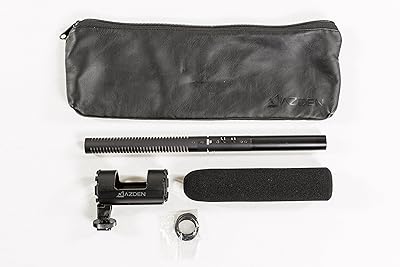
Azden SGM-1X Shotgun Microphone
72%
72%
Audio Quality
54%
Build Quality
79%
Value for Money
86%
Polar Pattern Versatility
53%
Durability
More
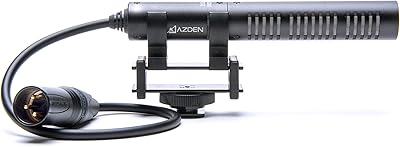
Azden SGM-PDII Shotgun Microphone
72%
83%
Audio Clarity
76%
Noise Rejection
67%
Build Quality
91%
Ease of Setup
78%
XLR Compatibility
More
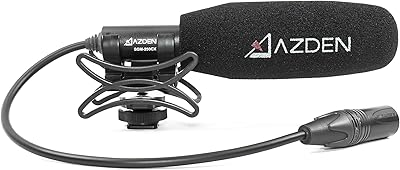
Azden SGM-250CX Compact Shotgun Microphone
73%
84%
Audio Clarity
91%
Build Quality
93%
Size & Portability
58%
Phantom Power Setup
76%
Value for Money
More
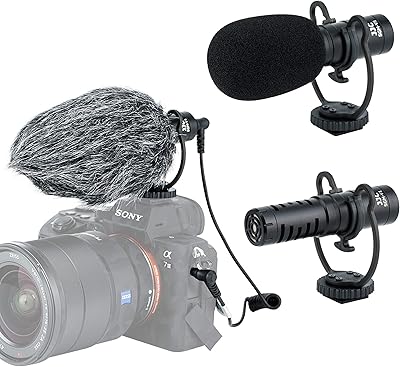
JJC SGM-V1 Shotgun Video Microphone
84%
83%
Vocal Clarity
88%
Build Quality
94%
Portability
91%
Plug-and-Play Convenience
79%
Wind Noise Reduction
More
Azden SMX-15 Shotgun Video Microphone
77%
83%
Audio Quality Improvement
78%
Gain Booster Effectiveness
93%
Ease of Setup
76%
Off-Axis Noise Rejection
81%
Low-Cut Filter Utility
More
Comica VM20
Comica VM20
81%
83%
Audio Clarity
78%
Noise Rejection
88%
Build Quality
81%
Low-Cut Filter Performance
76%
Gain Control
More
Rode VideoMic with Rycote Lyre
83%
92%
Vocal Clarity
94%
Vibration Isolation
89%
Build Durability
91%
Ease of Use
58%
Power Management
More
Pixel M80 Shotgun Microphone
74%
74%
Audio Clarity
71%
Noise Rejection
38%
Wind Resistance
67%
Build Quality
83%
Value for Money
More
Saramonic VMICMINI Mini Shotgun Microphone
76%
72%
Audio Quality
94%
Ease of Use
83%
Build Quality
88%
Value for Money
86%
Device Compatibility
More
Comica VM40
Comica VM40
83%
88%
Audio Quality
93%
32-Bit Float Recording
82%
Wireless Performance
91%
Onboard Backup Recording
89%
Build Quality
More

FAQ

You need a camera or audio recorder with an XLR input, which many DSLRs and mirrorless cameras do not have built in. If your camera only has a 3.5mm mic jack, you will need a portable recorder like a Zoom H5 or Tascam DR-60D between the mic and the camera. It is a common setup among videographers and works well once you have the right adapter in your chain.

Technically yes, but you will almost certainly pick up wind noise on anything more than a calm indoor day. The built-in low-cut filter helps with low-frequency rumble, but it is not a substitute for a proper deadcat or foam windscreen when shooting outside. Most shooters grab a windscreen as a standard accessory alongside this mic.

Azden does not publish a specific battery life figure for the SGM-250, but shotgun mics in this class typically run anywhere from 50 to 100 hours on a single AA battery depending on conditions and battery quality. The LED indicator will warn you before power cuts out, which is the more practical thing to rely on.

A shock mount is not included in the box, and for most shooters that is a meaningful gap. This mic is sensitive to handling vibration and camera body noise, so running it directly in a cold shoe mount without isolation often introduces unwanted rumble. Picking up a compatible shock mount is genuinely recommended rather than optional.

Both sit in a similar professional tier, but they approach the job differently. The Rode VideoMic Pro is shorter, lighter, and outputs via a 3.5mm TRS cable, making it more plug-and-play with consumer cameras. The SGM-250 uses XLR, which ties it to a more professional signal chain but also offers phantom power support and the dual-power flexibility the Rode lacks. If you are already working with an audio recorder, the Azden SGM-250 Shotgun Microphone holds up very well in that comparison.

Not directly. The XLR connector means you need a proper adapter or audio interface that supports XLR inputs to connect it to a smartphone. There are compact XLR-to-Lightning or XLR-to-USB-C interfaces available, but it adds complexity and cost, and this mic is not really designed with smartphone use in mind.

Yes, quite noticeably — especially for indoor shoots near air conditioning vents, or outdoors where there is any ambient low-frequency noise. It does not replace careful mic placement or a windscreen, but flipping that switch on before an interview in a busy environment genuinely cleans up the bottom end of your recording without needing to do it in post-production.

Azden Corporation is a legitimate, long-established manufacturer with a US presence, so the warranty is not just a paper promise. You would need to contact them directly with proof of purchase for any claim. That said, a decade of coverage on a mic you use professionally is a real value add and reflects confidence in how the unit is built.

A standard cardioid pattern picks up sound in a broad forward cone. A supercardioid narrows that cone and rejects more sound from the sides, though it does have a small rear lobe of sensitivity. For on-camera shooting in a noisy room or street environment, supercardioid means less of the surrounding noise bleeds into your recording. It matters most when you cannot control your environment.

At 5.7 oz and nearly 10 inches long, it is a full-sized shotgun and it will feel that way on a compact mirrorless body. Front-heaviness is a legitimate concern, especially if you are hand-holding for extended periods. On a larger DSLR or rigged camera setup it sits more naturally, but on something like a Sony A7 series it can feel unbalanced without a cage or handle underneath.

Where to Buy

B&H Photo-Video-Audio
In stock $275.00
Zack Electronics
In stock $249.00