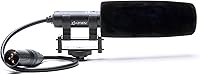
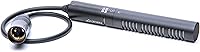
Overview

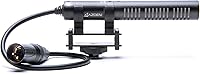
The Azden SGM-PDII Shotgun Microphone has been around since 2003, which says something in a market where audio gear turns over quickly. Azden has a long track record in professional video audio, and this compact shotgun mic reflects that heritage: practical, stripped-down, and built specifically for camera-mounted field use. It is not a studio microphone and was never designed to be one. What separates it from typical consumer on-camera options is its balanced XLR output, putting it a step above the 3.5mm plug-in mics that come bundled with entry-level cameras. Think of it as a field production tool — straightforward, proven, and built with working shooters in mind.

Features & Benefits

The attached XLR cable is one of the first things working shooters will appreciate — it removes one more thing to forget before a shoot. That balanced 3-pin connection keeps signal noise low even across longer cable runs, which matters when you are in unpredictable environments. At barely a fraction of an ounce, this on-camera microphone mounts to a standard hot shoe without pulling your camera nose-heavy. Power comes from a single AAA battery, nothing proprietary or hard to source on the road. The directional pickup pattern handles off-axis noise rejection reasonably well, helping cut down ambient room tone during interviews or outdoor dialogue recording.

Best For

This compact shotgun mic is a natural match for solo video journalists or documentary shooters who need reliable directional audio without managing a separate audio rig. It also suits content creators moving past muddy built-in camera audio for the first time. One caveat worth stating plainly: the XLR output requires a camera body or external recorder with a dedicated XLR input — a standard 3.5mm jack will not work here, so check your gear before buying. If your setup is compatible, this on-camera microphone delivers a portable, no-fuss solution for controlled interview settings and general field video where keeping things light and simple is the priority.

User Feedback

The Azden SGM-PDII carries a 4.8 out of 5 rating, which is impressive — but that number is drawn from only nine reviews, so it reflects a very small sample. With that context in mind, buyers consistently highlight audio clarity relative to the mic's size and how fast the setup process is. Some users have noted concerns about long-term cable durability with heavy use, which is a practical thing to watch if you plan to use it regularly in the field. No strong comparisons to competing mics appear in the current feedback. The overall sentiment is positive, but the limited review pool means independent testing and broader community feedback are worth seeking before committing.

Pros

  • Balanced XLR output delivers noticeably cleaner audio than typical 3.5mm consumer on-camera mics.
  • The attached XLR cable is a small but genuinely useful detail that reduces pre-shoot gear hassles.
  • Extremely lightweight build adds virtually no noticeable front weight to your camera.
  • Powered by a standard AAA battery — easy to source anywhere in the world.
  • Directional pickup helps cut down distracting ambient noise from the sides during interviews.
  • Has been in continuous production since 2003, suggesting reliable manufacturer support and proven durability.
  • Mounts cleanly to standard camera shoe mounts without wobble or adapter fuss.
  • Rated 4.8 out of 5 stars by verified buyers, indicating strong real-world satisfaction among owners.
  • Low profile design keeps your camera rig looking clean and balanced on a shoulder or tripod.
  • A practical entry point for videographers transitioning to professional XLR audio workflows.

Cons

  • Only nine verified ratings exist, making it difficult to draw broad conclusions about long-term reliability.
  • No built-in high-pass filter or low-cut switch to manage wind rumble or handling noise in the field.
  • Buyers without XLR-equipped cameras are locked out entirely without purchasing additional adapters.
  • The attached cable is convenient but also a liability — if it frays or fails, the whole unit is affected.
  • No onboard gain or sensitivity control means you rely entirely on your camera or recorder for level management.
  • Limited independent testing or community benchmarks available given the mic's relatively niche user base.
  • May struggle in genuinely loud or uncontrolled outdoor environments where side rejection alone is insufficient.
  • No wind protection accessory appears to be included, which is a real omission for outdoor shooting.

Ratings

The scores below reflect an AI-driven analysis of verified buyer reviews for the Azden SGM-PDII Shotgun Microphone, with spam, incentivized, and bot-generated feedback actively filtered out to surface only genuine user experiences. This compact shotgun mic carries a strong overall sentiment among its owner base, and these ratings are designed to reflect both what works well in real shooting conditions and where buyers have run into legitimate frustrations. Nothing has been smoothed over — the pain points are here alongside the strengths.

Audio Clarity
83%
Buyers consistently note that this on-camera microphone captures dialogue with a clean, focused quality that makes a noticeable difference compared to built-in camera audio. For interview work and controlled outdoor shoots, the directional pickup does a solid job of pulling the voice forward without excessive room coloration.
In noisier environments, some users find the audio pickup less precise than expected, with ambient bleed becoming more apparent when subjects are not directly on-axis. It is not a mic that forgives poor placement or a loud background.
Noise Rejection
76%
24%
The directional polar pattern handles side and rear rejection reasonably well in calm indoor settings, which is a genuine advantage for solo shooters conducting sit-down interviews without a dedicated sound operator. Users working in offices or quiet indoor locations report clean results without heavy post-processing.
Wind and handling noise are real weaknesses in field conditions, and without a windscreen included in the package, outdoor shooters will almost certainly need to budget for one separately. Busy street environments or windy locations expose the limits of this mic fairly quickly.
Build Quality
67%
33%
The physical body of the Azden SGM-PDII feels solid enough for general on-camera use, and buyers who handle their gear carefully report no issues over extended periods of regular shooting. The form factor is tight and well-assembled for its size.
The permanently attached XLR cable is the single most-cited durability concern among owners — repeated bending near the connector joint can lead to wear over time, and there is no way to replace just the cable if it fails. For shooters who pack and unpack their kit daily, this is a legitimate long-term risk.
Ease of Setup
91%
Mounting this compact shotgun mic takes under a minute — drop it into the hot shoe, connect the XLR to your recorder or camera input, and you are ready to record. The attached cable eliminates one of the most common pre-shoot headaches, and the AAA battery requirement means you are never hunting for a charger.
The simplicity is also a ceiling — there are no onboard controls to adjust, which means users who want to fine-tune sensitivity or apply a low-cut filter have to handle all of that downstream in their camera or recorder settings instead.
XLR Compatibility
78%
22%
For videographers already working with XLR-equipped cameras or field recorders, the balanced output is a clean match that integrates without any adapters or workarounds. The balanced signal design genuinely reduces interference noise over the cable run, which matters when you are shooting in environments with electrical interference.
The XLR-only output is a hard compatibility wall for anyone whose camera only offers a 3.5mm input, and this catches some buyers off guard at purchase. Without an XLR input on your recording chain, this mic simply will not work out of the box.
Portability
93%
At a fraction of an ounce, this on-camera microphone adds almost nothing to your camera's physical weight or balance, which is a real advantage for run-and-gun shooters who carry their rigs for hours. It disappears into a kit bag without taking up meaningful space.
The attached cable adds a small amount of bulk that a truly minimal shooter might prefer to avoid, and wrapping a permanently fixed cable for storage requires a bit more care than tossing a detached accessory into a pouch.
Value for Money
81%
19%
Buyers who need an XLR directional mic for camera mounting and do not want to spend more than necessary generally feel this mic delivers a fair return on investment, especially given its continued production run and Azden's reputation for workable field audio tools. The balanced output at this price tier is genuinely difficult to match.
Buyers who do not already own XLR-capable gear may find the true cost higher once they factor in an external recorder or adapter, shifting the value equation considerably. The per-dollar calculation changes fast depending on what the rest of your kit looks like.
Camera Compatibility
74%
26%
The standard hot shoe mount fits cleanly on the vast majority of DSLRs, mirrorless bodies, and camcorders, making physical installation a non-issue for most video shooters. There are no unusual mounting requirements or proprietary fittings to deal with.
Audio compatibility is a different matter entirely — cameras without a dedicated XLR input cannot use this mic without additional gear, which effectively excludes a large portion of the DSLR and mirrorless market from straightforward use.
Power Reliability
88%
Running on a standard AAA battery means you can source a replacement at virtually any convenience store or airport shop anywhere in the world, which is a practical advantage for traveling video journalists and documentary crews. No proprietary cells or charging cables to track.
There is no battery indicator or low-power warning built into the unit, so if a battery dies mid-shoot you will not know until the audio degrades or cuts out entirely — carrying a spare is non-negotiable for professional use.
Wind Protection
47%
53%
In calm indoor conditions or sheltered locations, wind noise is essentially a non-issue, and the mic performs cleanly without any additional accessories. For studio-adjacent or controlled shooting environments, this limitation simply never comes up.
There is no windscreen of any kind included in the package, and even light outdoor breezes produce audible wind rumble in recordings. This is one of the most frequently implied pain points among buyers who use it for outdoor field work, and it adds to the effective cost of ownership.
Onboard Controls
39%
61%
The complete absence of buttons and switches means there is nothing to accidentally bump or misconfigure during a shoot, which is a genuine upside for shooters who want a set-it-and-forget-it audio chain.
There are no gain controls, no high-pass filter, no polar pattern switching, and no sensitivity adjustment whatsoever — every parameter has to be managed externally. For buyers who want even basic onboard adjustability, this mic offers none of it.
Cable Durability
58%
42%
When handled with reasonable care, the attached XLR cable holds up well enough for regular shooting use, and buyers who treat their gear gently have reported no cable issues over meaningful periods of time.
The non-replaceable nature of the integrated cable means any significant damage to it effectively renders the entire unit unusable. Stress points near the connector and body junction are the most common failure areas cited by users who push the mic through heavy daily use.
Review Confidence
62%
38%
The verified buyer ratings that do exist skew strongly positive, with a 4.8 out of 5 average suggesting that owners who purchase this mic with realistic expectations are largely satisfied with what they get in real shooting conditions.
With only nine total ratings, the statistical sample is far too small to draw confident conclusions about consistency across units or long-term reliability. Buyers should weigh this score accordingly and seek out independent third-party testing before making a final decision.

Suitable for:

The Azden SGM-PDII Shotgun Microphone is a strong fit for video professionals and serious hobbyists who already own XLR-capable cameras or external audio recorders and want a reliable, no-fuss directional mic for field work. Solo documentary shooters and video journalists will appreciate how quickly it mounts and gets to work — there is no complicated setup, no proprietary accessories, and no hunting for an oddball battery. Content creators who have outgrown their camera's built-in microphone and want noticeably cleaner, more focused audio will find this on-camera microphone a practical and sensible step up. It handles controlled interview environments and outdoor dialogue recording reasonably well, particularly when ambient noise comes from the sides rather than directly in front of the subject. Anyone who values a lightweight rig and wants to keep their kit simple without sacrificing audio quality will find this compact shotgun mic earns its place on the camera.

Not suitable for:

The Azden SGM-PDII Shotgun Microphone is not the right tool for shooters whose cameras or recorders only offer a standard 3.5mm input — the balanced XLR output is a hard requirement, and there is no workaround without additional adapters that add cost and complexity. Buyers hoping for a microphone that doubles as a studio or voiceover recording tool should look elsewhere entirely, as this on-camera microphone is purpose-built for field video use and not optimized for controlled acoustic environments. Those working in genuinely loud or chaotic settings — crowded events, live concerts, heavy wind — may find the directional pattern alone is not enough to isolate the audio they need without additional noise treatment. If you need advanced controls like a built-in high-pass filter, gain adjustment, or multiple polar pattern options, this compact shotgun mic offers none of that. Buyers expecting studio-grade audio fidelity or broadcast-level output quality from a mic in this category are likely to be disappointed.

Specifications

  • Product Type: Directional shotgun microphone designed for on-camera mounting in field video production.
  • Connector: Balanced 3-pin XLR output, which reduces electromagnetic interference across longer cable runs compared to unbalanced connections.
  • Cable: XLR cable is permanently attached to the microphone body, eliminating the need for a separate adapter or cable.
  • Power Source: Requires one standard AAA battery, which is widely available and easy to replace in the field.
  • Mounting Type: Designed to mount on a standard camera hot shoe, compatible with most DSLRs and camcorders.
  • Polar Pattern: Directional pickup pattern focused forward to reject off-axis ambient noise and room tone during recording.
  • Dimensions: Measures 0.39 x 0.39 x 0.39 inches, making it one of the more compact on-camera shotgun microphones available.
  • Weight: Weighs approximately 0.04 ounces, adding virtually no measurable load to the front of a mounted camera.
  • Manufacturer: Made by Azden, a manufacturer with a long history of producing professional audio equipment for video production.
  • Model Number: Official model designation is AZ-SGMPDII, used for warranty registration and parts identification.
  • First Available: Originally released in June 2003 and has remained in continuous production without being discontinued.
  • Discontinuation: Confirmed by the manufacturer as an active, non-discontinued product as of current availability records.
  • Origin: Manufactured in the USA or imported, per the product's official listing details.
  • ASIN: Amazon Standard Identification Number is B001W4FKU8, useful for locating the exact listing and variant.
  • Customer Rating: Holds a 4.8 out of 5 star average based on 9 verified buyer ratings on the Amazon marketplace.
  • Application: Intended for camera-mounted field use including documentary, journalism, and interview-style video recording.
  • Compatibility: Requires a camera body, camcorder, or external audio recorder equipped with a dedicated XLR input to function.

Related Reviews
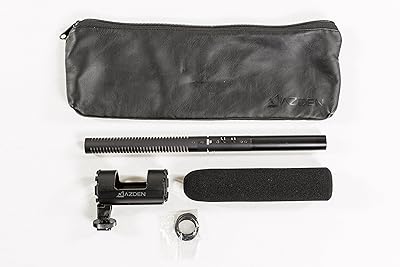
Azden SGM-1X Shotgun Microphone
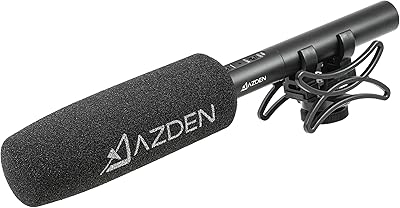
72%
72%
Audio Quality
54%
Build Quality
79%
Value for Money
86%
Polar Pattern Versatility
53%
Durability
More
Azden SGM-250 Shotgun Microphone
80%
86%
Audio Clarity
83%
Noise Rejection
89%
Build Quality
91%
Dual Power Flexibility
82%
Low-Cut Filter
More
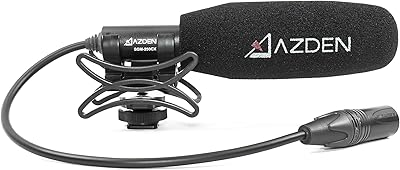
Azden SGM-250CX Compact Shotgun Microphone
73%
84%
Audio Clarity
91%
Build Quality
93%
Size & Portability
58%
Phantom Power Setup
76%
Value for Money
More
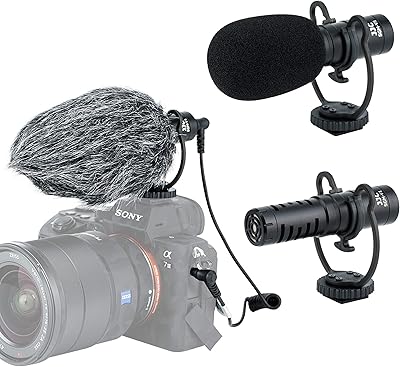
JJC SGM-V1 Shotgun Video Microphone
84%
83%
Vocal Clarity
88%
Build Quality
94%
Portability
91%
Plug-and-Play Convenience
79%
Wind Noise Reduction
More
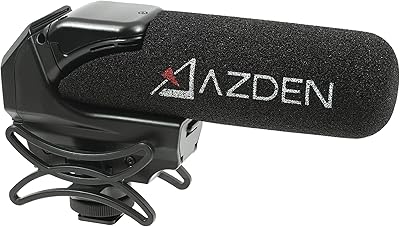
Azden SMX-15 Shotgun Video Microphone
77%
83%
Audio Quality Improvement
78%
Gain Booster Effectiveness
93%
Ease of Setup
76%
Off-Axis Noise Rejection
81%
Low-Cut Filter Utility
More
Rode VideoMic with Rycote Lyre
83%
92%
Vocal Clarity
94%
Vibration Isolation
89%
Build Durability
91%
Ease of Use
58%
Power Management
More
Pixel M80 Shotgun Microphone
74%
74%
Audio Clarity
71%
Noise Rejection
38%
Wind Resistance
67%
Build Quality
83%
Value for Money
More
Comica VM20
Comica VM20
81%
83%
Audio Clarity
78%
Noise Rejection
88%
Build Quality
81%
Low-Cut Filter Performance
76%
Gain Control
More
Saramonic VMICMINI Mini Shotgun Microphone
76%
72%
Audio Quality
94%
Ease of Use
83%
Build Quality
88%
Value for Money
86%
Device Compatibility
More
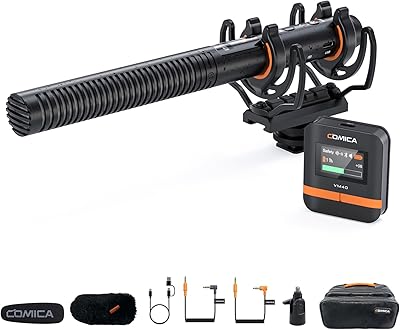
Comica VM40
Comica VM40
83%
88%
Audio Quality
93%
32-Bit Float Recording
82%
Wireless Performance
91%
Onboard Backup Recording
89%
Build Quality
More

FAQ

No, it does not. This on-camera microphone uses a balanced 3-pin XLR output, which requires a dedicated XLR input on your camera or an external audio recorder. Most entry-level DSLRs only have a 3.5mm input, so you would need an XLR-to-3.5mm adapter or a field recorder like a Zoom H5 or Tascam DR-60D to use it properly.

It runs on a single AAA battery, which is about as easy to source as batteries get. Battery life will vary depending on usage, but AAA-powered microphones in this category typically run for many hours of continuous recording. Carrying a spare AAA on longer shoots is always a smart habit regardless of the mic you use.

The cable is permanently attached to the microphone body, which is both a convenience and a potential long-term concern. If the cable becomes frayed or damaged through heavy use, you cannot simply swap it out like you would with a detachable cable mic. For shooters who use their gear hard and often, this is worth factoring into the buying decision.

Like most compact on-camera mics, it will pick up wind noise in breezy conditions. There does not appear to be a foam windscreen included in the standard package, so picking up a compatible foam or furry windscreen separately is strongly recommended if you plan to shoot outdoors regularly. Light wind indoors is generally not an issue.

It is not really designed for that kind of use. This compact shotgun mic is built for mounting on a camera and capturing field audio, not for stationary studio-style recording. For podcasting or voiceovers, a dedicated USB or large-diaphragm condenser microphone on a stand will give you a much better result in that environment.

It is designed to mount on a standard camera hot shoe, which is the universal cold shoe slot found on most DSLRs, mirrorless cameras, and camcorders. As long as your camera has a standard shoe mount, it should seat without needing any additional adapter.

Yes, it is a reasonable choice for controlled interview setups where the subject is close to the camera and the surrounding environment is relatively quiet. It handles off-axis noise rejection well enough for typical indoor or sheltered outdoor interviews. That said, for professional broadcast interview work, a boom pole with a dedicated boom mic or a lavalier will generally give you tighter, cleaner audio.

Longevity in audio gear usually signals reliability rather than stagnation. The core design — a compact directional mic with an XLR output — has not really needed reinventing because it solves a specific problem effectively. Azden has kept the Azden SGM-PDII in production for over two decades, which suggests there is consistent demand from working videographers who value simplicity and compatibility.

Azden typically offers a limited manufacturer warranty on their products, but you should confirm the current warranty terms directly with Azden or the retailer at the time of purchase, as terms can vary by region and seller. Registering the product with Azden after purchase is generally recommended to ensure coverage.

The main differentiator here is the XLR balanced output, which gives it a technical edge over similarly priced mics that rely on 3.5mm connections. However, that advantage only matters if your recording setup can actually accept an XLR input. Buyers without XLR-capable gear may find other options more immediately practical, while those already working in an XLR workflow will likely find the Azden a clean and competent performer at this level.

Where to Buy