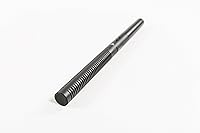
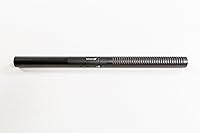
Overview

The Azden SGM-1X Shotgun Microphone has been a fixture in the budget-to-mid camera audio space since 2004 — which, in a market that churns through new releases constantly, says something real about its staying power. Azden built its reputation supplying broadcast and camera accessories long before on-camera audio became a mainstream concern, and this on-camera mic reflects that heritage. It runs on battery power, so there is no reliance on phantom power from a camera or mixer — a practical advantage in unpredictable field conditions. The slim barrel fits a standard shock mount, ships with one included, and offers switchable polar patterns that you rarely see at this price point.

Features & Benefits

Two features stand out immediately with the SGM-1X. The ability to flip between super-cardioid and omnidirectional pickup is genuinely uncommon at this tier — it means you can lock onto a subject in a noisy room or open the pattern up for a group interview without swapping mics. The switchable low-cut filter is equally practical: run it indoors on a climate-controlled set and you will not miss it; bring it to a location with wind or road noise and you will be glad it is there. XLR output keeps the signal path professional, and a 78 dB signal-to-noise ratio is respectable for documentary and event work. The included shock mount and windscreen mean you can mount up and shoot right away.

Best For

This Azden shotgun is a strong fit for independent filmmakers and video journalists shooting on prosumer camcorders or DSLR rigs paired with XLR adapters. If you are doing run-and-gun ENG work or documentary shooting where phantom power is unavailable, the battery-powered design removes one genuine real-world headache. It is also a solid step up for content creators who have outgrown their camera's built-in audio but are not ready to invest in a high-end boom setup. The ability to switch pickup patterns mid-shoot is particularly useful for anyone bouncing between sit-down interviews and wider ambient recordings in the same day. Just keep a spare battery on hand — that dependency is the trade-off you accept.

User Feedback

The most consistent praise for this on-camera mic is straightforward: it sounds noticeably better than a camera's built-in microphone, which is exactly what most buyers are hoping to confirm. The dual-pattern switch earns repeat mentions as a feature people did not expect to actually use and then ended up relying on. On the critical side, build quality draws real scrutiny — the plastic construction feels lightweight in a way that concerns some shooters, and the battery compartment and switch mechanisms have been flagged for feeling less durable after months of field use. The foam windscreen is adequate indoors but struggles in any real breeze; a proper deadcat or blimp is worth adding to the budget if you shoot outdoors with regularity.

Pros

  • Switching between super-cardioid and omni pickup patterns on location is genuinely rare at this price tier.
  • Battery-powered design removes any dependence on phantom power, a real advantage in unpredictable field conditions.
  • XLR output integrates cleanly with professional mixers, field recorders, and prosumer camera rigs.
  • The switchable low-cut filter tames wind rumble and HVAC hum without requiring any additional hardware.
  • Ships with both a shock mount and foam windscreen, so this on-camera mic is ready to use out of the box.
  • A 78 dB signal-to-noise ratio produces audio clean enough for documentary, event, and indie film work.
  • At 8 ounces, the slim barrel adds minimal weight to a camera rig or run-and-gun handheld setup.
  • Azden has decades of credibility in broadcast audio accessories, which newer budget alternatives simply cannot claim.

Cons

  • Plastic construction feels noticeably less solid than metal-bodied competitors available in the same price range.
  • Battery compartment and polar pattern switch have been reported to loosen or feel flimsy after extended field use.
  • The included foam windscreen is only adequate indoors; any real outdoor wind will require an upgraded dead cat or blimp.
  • Audio quality drops off meaningfully when plugged directly into a camera body with a weak built-in XLR preamp.
  • Ongoing battery replacement adds a recurring operational cost and creates a potential point of failure mid-shoot.
  • The long barrel can feel awkward to balance on compact camera bodies without a dedicated cage or accessory mount.
  • No headphone output or onboard level control means you get no real-time audio monitoring while recording.
  • Being on the market since 2004, the design has not kept pace with newer competing mics offering improved self-noise specs.

Ratings

The scores below were generated by an AI system that analyzed and synthesized verified buyer reviews from around the world for the Azden SGM-1X Shotgun Microphone, with spam, bot activity, and incentivized feedback actively filtered out before any scoring was applied. The result is a transparent, balanced assessment that reflects both the genuine strengths buyers experienced in real shooting conditions and the recurring frustrations that consistently shaped their long-term opinions. Every category score is weighted against real-world usage patterns — not spec sheets alone — so the numbers here reflect what actual filmmakers, journalists, and content creators found in the field.

Audio Quality
72%
28%
For shooters stepping up from a camera's built-in microphone, the difference in recorded dialogue is immediately noticeable — voices come through with more presence and less ambient smear. At 78 dB signal-to-noise, it handles documentary-style interviews and event recording without the constant background hiss that plagues lower-tier options.
Paired directly with a weak camera preamp, the SGM-1X reveals the limits of its budget-to-mid positioning — a quality external XLR preamp makes a meaningful difference that reviewers consistently pointed out. It is not the choice for capturing nuanced acoustic performances or broadcast-quality audio without an upgraded signal chain.
Build Quality
54%
46%
The slim cylindrical body is light enough to avoid throwing off camera balance on most rigs, and the physical switches feel positive and tactile enough when the mic is fresh out of the box. For occasional or lighter-use shooters, the construction holds up adequately in controlled, indoor environments.
The plastic housing is the most consistently cited complaint across long-term user reviews — it lacks the solidity of metal-bodied competitors at a comparable price point. The battery compartment cover and polar pattern switch both attract reports of loosening or feeling fragile after several months of regular field rotation.
Value for Money
79%
21%
Getting a dual polar pattern switch, a switchable low-cut filter, XLR connectivity, and included accessories like a shock mount and windscreen in a single package at this price is genuinely hard to match. For a content creator or indie filmmaker on a tight production budget, the feature-per-dollar ratio is one of the strongest arguments for choosing this mic.
If the build quality held up better over time, the value proposition would be considerably stronger. The likely need to purchase an upgraded wind shield for outdoor work — and the possibility of replacing the unit after heavy use — chips away at what initially looks like an excellent deal.
Polar Pattern Versatility
86%
Having both super-cardioid and omnidirectional patterns on a physical toggle switch is a standout capability at this price tier — most competing mics at this level are locked into a single fixed pattern. Shooters moving between solo subject interviews and wider ambient or group recordings in the same shoot day find this genuinely removes the need for a second microphone.
The pattern switch itself carries durability questions — some users report it feels less firm after extended use, which is a concern when it is one of the primary differentiating features of the mic. There is also no intermediate cardioid option, so the transition from tightly directional to fully open is a fairly abrupt jump with nothing in between.
Durability
53%
47%
For users who treat it carefully and shoot primarily in controlled indoor environments, the mic holds up reasonably well over a moderate lifespan. Light-use shooters who are not putting it through daily field rotations tend to report far fewer problems with physical wear and mechanical looseness.
Under regular field conditions, the plastic construction and the reported tendency of the battery compartment and pattern switch to loosen over time paint a picture of a mic with a limited working lifespan at higher usage intensities. It is difficult to recommend this mic for shooters who need a tool that can absorb real daily punishment without concern.
Ease of Use
83%
The physical switches for polar pattern and low-cut filter require no menu navigation or software — you flip them and move on, which is exactly what you want when adjusting on a live shoot. Mounting onto a standard hot-shoe adapter or boom arm is quick, and the included shock mount removes one setup variable from the workflow.
Shooters without XLR-equipped cameras face an added step — adapters or interfaces are required and that extra complexity can frustrate newcomers who assumed it would connect directly. The absence of any onboard monitoring output or level indicator also means you are working without real-time audio feedback unless you have external metering in your rig.
Wind & Noise Rejection
58%
42%
The switchable low-cut filter earns its keep indoors — in a conference room or on-set location with HVAC hum or low-frequency rumble, engaging the filter produces a noticeably cleaner dialogue track. Combined with the included shock mount reducing vibration transfer from the camera body, it handles controlled-environment noise sources reasonably well.
Step outside and the foam windscreen quickly shows its limitations — any meaningful breeze produces audible wind noise that the foam simply cannot suppress. Outdoor shooters consistently flag this as a gap that requires a separate deadcat or blimp purchase, adding both cost and extra bulk to the overall kit.
Compatibility
71%
29%
XLR output is the right connector choice for professional and prosumer workflows — it feeds directly into field recorders, mixing consoles, and cameras with dedicated XLR inputs without signal degradation concerns. For shooters already operating within an XLR-equipped production setup, integration is clean and immediate.
The XLR-only output is also a meaningful restriction for a large segment of potential buyers — DSLR and mirrorless shooters without native XLR inputs need adapters or interfaces that add cost and potential noise. This is not a mic that works plug-and-play with consumer cameras, smartphones, or laptops without additional hardware.
Battery Performance
68%
32%
Self-contained battery operation is a genuine field advantage — there is no reliance on phantom power from a camera or mixer, which matters on shoots where power management is already stretched thin. Shooters working in remote locations or with older gear that does not supply phantom power reliably appreciate this independence.
Battery dependency is a recurring operational cost and a potential point of failure: forgetting to swap in a fresh cell before a critical shoot is a real risk that phantom-powered mics do not present. Exact battery life is not well-documented across available resources, making it harder to plan confidently for longer production days.
Voice Clarity
77%
23%
The 40Hz to 20kHz frequency response covers everything needed for clean voice recording, and the super-cardioid pattern does a solid job of focusing on the speaker while pushing room ambience to the background. For talking-head video, documentary narration, and on-location interviews, dialogue intelligibility is consistently described as solid by buyers.
Voice performance depends noticeably on the quality of the preamp it feeds into — weak camera-body preamps tend to flatten the sound and reduce the clarity advantage the capsule is otherwise capable of delivering. In reverberant spaces, even the directional pattern picks up enough room reflections to require thoughtful placement and some post-production treatment.
Handling Noise
67%
33%
The included shock mount does a solid job of decoupling the mic body from the camera, which reduces the low-frequency thud of hand movements and camera adjustments reaching the capsule. Combined with the low-cut filter, incidental handling noise stays manageable in most documentary and ENG-style shooting scenarios.
Without the shock mount properly seated, or in situations where the mic is repositioned mid-shot, handling noise becomes more apparent in recordings. Reviewers note that the plastic body transmits mechanical vibrations somewhat more readily than denser metal-bodied alternatives, making deliberate and careful handling more important throughout a shoot.
Included Accessories
74%
26%
Shipping with both a shock mount and a foam windscreen is a practical inclusion that saves an immediate trip to the accessories aisle — most competing mics at this tier include little to nothing beyond the bare mic. The shock mount in particular is a useful starting point for isolating the capsule from camera vibration.
The foam windscreen, while appreciated as a bundled item, is widely considered the weakest link in the package — adequate for indoor use but inadequate the moment any real ambient wind is present. Buyers planning to shoot outdoors should treat it as a temporary placeholder and allocate budget for a proper wind protection solution.
Mounting & Setup
81%
19%
The slim barrel slips into the included shock mount quickly, and the standard clamp hardware fits a wide range of hot-shoe adapters and boom arms without needing brand-specific accessories. Most shooters report going from unboxing to a fully mounted and functional setup in just a few minutes with no tools required.
On very compact camera bodies or lightweight mirrorless rigs without a cage, the long barrel can create balance issues or look visually unwieldy, meaning the mounting setup requires more careful thought than on a larger camcorder. There is also no standard thread mount on the mic body itself beyond the shock mount clamp system.
Out-of-Box Experience
82%
18%
The package feels complete enough to begin shooting fairly quickly — shock mount, windscreen, and mic arrive together, and the physical controls are intuitive enough that most shooters can get up and running without consulting a manual. For buyers who want minimal friction between purchase and first take, the initial setup experience is positive.
An XLR cable is conspicuously absent from the kit, which means most buyers need to place a secondary order before they can actually use the mic — a small but frustrating oversight for a product positioning itself as a ready-to-shoot solution. There is also no carrying case or storage pouch included, leaving the mic unprotected between shoots.

Suitable for:

The Azden SGM-1X Shotgun Microphone is a practical choice for independent filmmakers, video journalists, and documentary shooters who work with cameras equipped with XLR inputs — think prosumer camcorders, cinema cameras, or DSLR rigs running an XLR adapter. If your workflow regularly takes you to unpredictable locations where phantom power from a mixer or camera is not guaranteed, the self-contained battery operation is a genuine convenience rather than just a spec-sheet footnote. Content creators who have been tolerating their built-in camera microphone and want a meaningful audio improvement without committing to a high-end boom setup will find this a sensible, low-friction upgrade. The ability to switch between super-cardioid and omnidirectional pickup patterns makes it a surprisingly adaptable tool for interview work, since you can pivot from locking onto a single subject to covering a small group without reaching for a second mic. It travels light, mounts without fuss, and arrives with the basic accessories needed to start shooting the same day it arrives.

Not suitable for:

Buyers expecting studio-grade build quality or the rugged metal construction found on higher-end shotgun mics will likely come away disappointed — the plastic housing has drawn consistent criticism from users who put it through sustained field work. If you shoot primarily outdoors in windy conditions, the included foam windscreen will not hold up, and budgeting for a proper deadcat or blimp adds cost and complexity that the product listing does not prepare you for. Audio professionals chasing broadcast-quality recordings should understand that the Azden SGM-1X Shotgun Microphone sits firmly in the capable-but-not-exceptional tier; it performs noticeably better when paired with a quality external XLR preamp, and anyone hoping for plug-and-play perfection straight into a camera body may be let down. Shooters working with cameras that lack XLR inputs — including most consumer mirrorless cameras, smartphones, or action cams — will need an adapter or dedicated interface, which may negate the practical appeal for simpler or more portable rigs. If long-term durability in heavy daily rotation is a deciding factor, the reported issues with loosening switch mechanisms and battery compartments are worth weighing seriously before buying.

Specifications

  • Brand: Manufactured by Azden, a company with decades of history producing audio accessories for broadcast and camera applications.
  • Model: Exact model designation is SGM-1X, a long-barrel shotgun microphone in Azden's on-camera audio lineup.
  • Form Factor: Long-barrel shotgun design built for on-camera hot-shoe mounting or boom arm use in video production workflows.
  • Connector: Terminates in a standard 3-pin XLR connector, compatible with professional mixers, field recorders, and XLR-equipped cameras.
  • Power Source: Operates on battery power, making it fully self-contained and functional without phantom power from any external device.
  • Polar Patterns: Offers two selectable pickup patterns via a physical switch: super-cardioid for directional recording and omnidirectional for ambient or group capture.
  • Low-Cut Filter: Features a switchable low-cut filter that reduces low-frequency interference from wind, handling vibration, and environmental noise sources.
  • Frequency Response: Covers a frequency range of 40Hz to 20kHz, spanning the full audible spectrum with an emphasis on capturing voice clarity.
  • Signal-to-Noise: Rated at 78 dB signal-to-noise ratio, producing acceptably clean audio for documentary, event, and independent film recording.
  • Dimensions: Body measures 0.8 x 0.8 x 11.8 inches, with the slim cylindrical profile fitting standard shock mount clamps without modification.
  • Weight: Weighs 8 oz, keeping the additional load on a camera rig manageable for handheld and shoulder-mount shooting configurations.
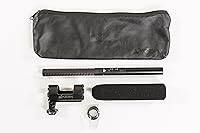
  • In The Box: Includes a shock mount mic holder and a foam windscreen, providing the essential accessories to begin recording without an immediate accessory purchase.
  • Compatibility: Designed for cameras and field recorders with XLR inputs, including prosumer camcorders, cinema cameras, and audio interface rigs.
  • Channels: Single-channel mono output captures audio on one track, suited for on-camera dialogue, narration, and interview recording.
  • Release Date: First made available in September 2004, making it one of the longer-tenured budget-to-mid shotgun microphones continuously available on the market.

Related Reviews
Azden SGM-PDII Shotgun Microphone
72%
83%
Audio Clarity
76%
Noise Rejection
67%
Build Quality
91%
Ease of Setup
78%
XLR Compatibility
More
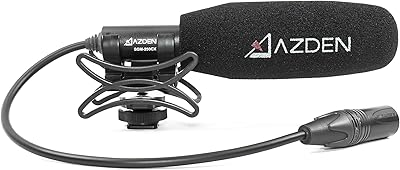
Azden SGM-250 Shotgun Microphone
80%
86%
Audio Clarity
83%
Noise Rejection
89%
Build Quality
91%
Dual Power Flexibility
82%
Low-Cut Filter
More
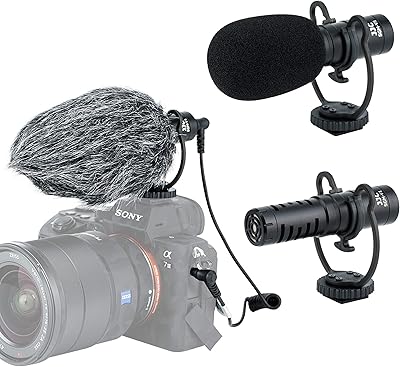
Azden SGM-250CX Compact Shotgun Microphone
73%
84%
Audio Clarity
91%
Build Quality
93%
Size & Portability
58%
Phantom Power Setup
76%
Value for Money
More
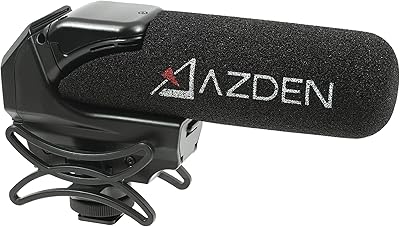
JJC SGM-V1 Shotgun Video Microphone
84%
83%
Vocal Clarity
88%
Build Quality
94%
Portability
91%
Plug-and-Play Convenience
79%
Wind Noise Reduction
More
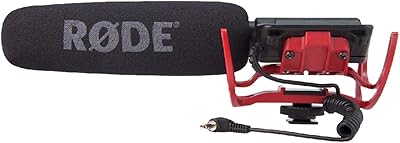
Azden SMX-15 Shotgun Video Microphone
77%
83%
Audio Quality Improvement
78%
Gain Booster Effectiveness
93%
Ease of Setup
76%
Off-Axis Noise Rejection
81%
Low-Cut Filter Utility
More
Saramonic VMICMINI Mini Shotgun Microphone
76%
72%
Audio Quality
94%
Ease of Use
83%
Build Quality
88%
Value for Money
86%
Device Compatibility
More
Rode VideoMic with Rycote Lyre
83%
92%
Vocal Clarity
94%
Vibration Isolation
89%
Build Durability
91%
Ease of Use
58%
Power Management
More
Comica VM20
Comica VM20
81%
83%
Audio Clarity
78%
Noise Rejection
88%
Build Quality
81%
Low-Cut Filter Performance
76%
Gain Control
More
Comica VM40
Comica VM40
83%
88%
Audio Quality
93%
32-Bit Float Recording
82%
Wireless Performance
91%
Onboard Backup Recording
89%
Build Quality
More
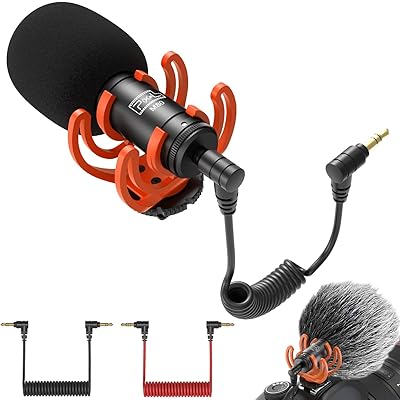
Pixel M80 Shotgun Microphone
74%
74%
Audio Clarity
71%
Noise Rejection
38%
Wind Resistance
67%
Build Quality
83%
Value for Money
More

FAQ

No, the SGM-1X is entirely battery-powered, so phantom power from your camera or mixer is not required. That is actually one of its more practical advantages — if your XLR input does not supply phantom power reliably, or you are working with older gear that does not support it, this mic handles itself without issue. Just keep a spare battery in your kit for longer shoots.

The mic runs on a single replaceable battery — check the current Azden documentation or the product manual for the exact battery type, as that detail is most reliably confirmed there. As a general habit, it is worth swapping in a fresh battery before any important shoot rather than relying on whatever charge is left from a previous session.

That depends on whether your camera has an XLR input. Most DSLRs and consumer mirrorless cameras use a 3.5mm mini-jack, not XLR, so you would need an XLR adapter or a small audio interface between the mic and the camera body. If your camera or camcorder has native XLR inputs, it connects directly with a standard XLR cable, which is not included in the box.

Super-cardioid is the directional mode — it focuses on sound in front of the mic and rejects audio from the sides and rear, which is ideal when recording a single speaker in a noisy environment. Omnidirectional opens the pickup to capture sound from all directions equally, which works well for ambient recording or covering a small group without repositioning the mic. The ability to flip between the two on location, without swapping mics, is a genuinely useful feature for mixed-format shoots.

For light indoor airflow or brief exterior shots on a calm day, it is adequate. In any real wind, though, it will not provide sufficient protection and you will hear it clearly in the recording. If outdoor shooting is a regular part of your workflow, budgeting for a proper deadcat or blimp-style wind shield is strongly recommended — treat the included foam screen as a starter accessory rather than a serious outdoor solution.

Its most distinctive advantage is still the dual polar pattern switch, which most competing mics at this price tier do not offer. On raw audio quality alone, some newer budget shotgun options have closed the gap and offer improved self-noise specifications. Where this mic continues to hold its own is in practical versatility — battery operation, XLR connectivity, and a switchable pickup pattern in a single lightweight package remains a combination that suits specific field workflows well.

Not directly. The XLR connector requires an XLR input on the receiving device, which smartphones, tablets, and most laptops do not have. You would need an XLR-to-USB audio interface to make it work with those devices. Low-cost XLR-to-3.5mm adapters exist, but they can introduce noise, so a proper interface is the cleaner solution if you need to record to a consumer device.

It rolls off the lower frequencies where most unwanted environmental noise lives — things like air conditioning hum, traffic rumble, wind, and the low-frequency thud of handling the mic or moving the camera. With the filter engaged, dialogue recordings tend to sound cleaner and less muddy on location. In a quiet, controlled studio environment you may barely notice the difference, but in the field it is worth experimenting with to find what works best for your specific location.

The plastic construction is one of the most consistent points of criticism from people who have used this mic over time. It is not fragile in normal use, but it does feel noticeably lighter and less premium than metal-bodied alternatives in the same price range. Some users have reported that the battery compartment cover and the polar pattern switch begin to feel less firm after several months of regular field work, so it is not a mic built for genuinely rough daily handling.

A standard XLR cable is the one essential item not included in the box — the mic has a male XLR connector, so you need a male-to-female XLR cable to connect it to your camera, mixer, or field recorder. The shock mount and foam windscreen are included, so beyond the cable you should be ready to shoot. If you plan to use the outdoor wind protection seriously, a third-party deadcat windshield is worth adding to your kit as well.

Where to Buy