Overview

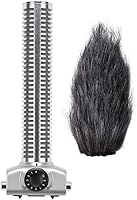
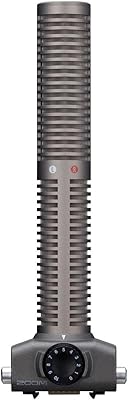
The Zoom SGH-6 Shotgun Microphone Capsule is a dedicated snap-on accessory built specifically for Zoom's modular recorder lineup — not a standalone mic, but a capsule that slots directly into a compatible recorder and turns it into a focused, field-ready audio tool. That distinction matters. Where a traditional shotgun mic demands its own housing, preamp, and cabling, this Zoom mic attachment connects through the recorder's capsule port and works as a single integrated unit. Its supercardioid polar pattern concentrates pickup on sound directly ahead while rejecting off-axis noise — practical in a press scrum, a busy street interview, or any situation where background clutter is a real problem. It's built for videographers, ENG journalists, and documentary filmmakers who prioritize portability without sacrificing directional control.

Features & Benefits

Three internal microphones with digital signal processing work together to produce tight directionality at roughly half the physical length of a conventional shotgun — a real advantage when you're moving fast between setups. A 78 dB signal-to-noise ratio keeps dialogue recordings clean and free of hiss, while a maximum SPL of 122 dB means loud environments won't push it into distortion. There's also an analog-style gain control built into the capsule itself, so level adjustments happen by hand rather than through menus. The all-metal body handles the bumps and drops of daily field work without feeling fragile, and since this shotgun capsule draws power through the recorder, there's no battery compartment to check before a shoot.

Best For

The SGH-6 makes the clearest sense for people already committed to the Zoom recorder ecosystem. Shooters using an H5, H6, or Q8 as their primary audio recorder will find it a natural and practical upgrade over the stock XYH capsule, particularly for run-and-gun video work and on-location interviews where speed of setup is non-negotiable. ENG journalists, independent documentary filmmakers, and content creators recording in acoustically challenging spaces will benefit most from its directional pickup. One honest caveat worth stating plainly: if you don't own a compatible Zoom recorder, this capsule has no function at all. It's an ecosystem-specific tool, and compatibility is non-negotiable before you consider buying it.

User Feedback

Across buyer reviews, two things come up consistently in the positive column: the focused, directional audio performance and the sturdy feel of the build. Users switching from bundled capsules tend to notice a meaningful improvement in how well it rejects ambient noise. The criticism side is also consistent. The absence of a built-in shock mount is the most common complaint — handling noise becomes an issue if the recorder is handheld without additional dampening. A portion of buyers also question the value proposition when standalone shotgun mics at a comparable price work with any recorder brand. The Zoom-only connector is a genuine limitation that some users only fully appreciate after purchase. Connector wear over extended use has been flagged, though it's a minority concern rather than a widespread pattern.

Pros

  • Supercardioid polar pattern delivers genuinely tight directional pickup, cutting ambient noise in busy real-world environments.
  • Three internal mics with digital signal processing produce a focused, clean sound field in a surprisingly compact body.
  • Snaps directly into compatible Zoom recorders with no cables, adapters, or additional gear required.
  • Metal construction feels solid and field-ready — this is not a plastic accessory that will rattle apart after a season of use.
  • A 122 dB maximum SPL rating handles loud environments like concerts or crowded press events without clipping.
  • The built-in analog gain control lets you make fast level adjustments by hand, without navigating recorder menus mid-shoot.
  • At roughly half the length of a traditional shotgun mic, the SGH-6 keeps your overall rig noticeably smaller and lighter.
  • Clean 78 dB signal-to-noise ratio means dialogue recordings stay free of background hiss even at moderate gain levels.
  • Users upgrading from the stock XYH capsule consistently report a clear and audible improvement in directional rejection.
  • Draws power through the recorder itself, eliminating the need to monitor a separate battery before every shoot.

Cons

  • No built-in shock mount means handheld use often introduces handling noise that requires additional dampening accessories.
  • Compatibility is strictly limited to Zoom H5, H6, and Q8 recorders — unusable with any other hardware.
  • At its price point, some buyers find standalone shotgun microphones from competing brands offer more flexibility for comparable audio quality.
  • The proprietary capsule connector creates long-term dependency on Zoom's ecosystem, which is a real risk if you ever change recorders.
  • A small number of users have reported connector wear over extended use, which could become a reliability concern over time.
  • No included windscreen or deadcat is provided, which is a noticeable omission for outdoor field recording use cases.
  • Handling noise sensitivity can catch buyers off guard if they expect the same isolation a dedicated boom-mounted shotgun provides.
  • No -20 dB pad is available on this capsule, which limits headroom options in extremely loud or unpredictable SPL situations.
  • Not suited for boom pole or overhead miking applications where a standalone mic with a suspension mount is the standard approach.

Ratings

Our AI-generated scores for the Zoom SGH-6 Shotgun Microphone Capsule were produced by analyzing verified purchase reviews from buyers worldwide, with spam, bot-submitted, and incentivized feedback actively filtered out before scoring. The ratings reflect the full picture — what this shotgun capsule genuinely does well and where real users have run into friction — so you can make a confident, informed decision rather than one based on curated highlights.

Directional Audio Performance
88%
Users consistently report that the supercardioid pattern delivers noticeably tighter off-axis rejection than the stock XY capsule it typically replaces. In busy street interviews and press environments, reviewers describe dialogue coming through with markedly less background bleed than they expected from a capsule this compact.
A handful of users note that the directionality, while strong, does not quite match a dedicated full-length external shotgun mounted on a boom. At longer subject distances — beyond a few feet — some pickup of ambient room tone becomes more apparent.
Build Quality
91%
The all-metal housing earns consistent praise from field users who have put it through travel, outdoor shoots, and daily attachment cycles. Multiple reviewers with over a year of regular use report no cracking, rattling, or degradation in the capsule body itself.
A small but notable group of long-term users has flagged wear on the proprietary connector after repeated attachment and removal cycles. This is not a widespread failure pattern, but it is a real concern for anyone who swaps capsules frequently across different setups.
Ease of Attachment
93%
The snap-on capsule system is one of the most consistently praised aspects across all buyer feedback. Users describe the attachment process as genuinely instant — no tools, no cables, no setup delay — which matters considerably during fast-paced run-and-gun shoots.
The fit is designed exclusively for Zoom's proprietary mount, so there is no room for error or adaptation. A few users mention that the connection can feel slightly stiff when new, requiring a firm push that initially felt uncertain before they became comfortable with the mechanism.
Handling Noise Rejection
61%
39%
In static setups — tripod-mounted rigs, desk recording, or recorder-on-stand scenarios — users report that handling noise is a complete non-issue and the capsule performs cleanly without any additional isolation hardware.
The absence of a built-in shock mount is the single most common criticism across all reviews. Users who handhold their recorder during interviews consistently report picking up grip vibration and movement noise, often requiring a third-party handle or grip accessory to manage it effectively.
Value for Money
69%
31%
For Zoom ecosystem users upgrading from the bundled XYH capsule, the directional improvement is described as a meaningful and worthwhile step up without requiring a complete rig overhaul. The convenience factor of staying within one integrated system does carry genuine real-world value for working journalists and solo shooters.
At its price point, the ecosystem lock-in becomes a hard pill to swallow for some buyers. Several reviewers note that comparable standalone shotgun microphones from other brands offer similar or superior audio performance with far greater hardware flexibility, making the SGH-6 feel expensive relative to its functional scope.
Compatibility
57%
43%
For the specific recorders it supports — the H5, H6, and Q8 — the integration is genuinely flawless. There are no driver conflicts, no level matching issues, and no compatibility guesswork; it simply works the moment it is attached.
The Zoom-only restriction is a hard dealbreaker for a significant portion of potential buyers who discover it after purchase. Users who later upgrade to a different recorder brand find themselves with a capsule that has become completely non-functional, which several reviewers describe as a frustrating and costly realization.
Noise Floor & Clarity
84%
The 78 dB signal-to-noise ratio translates into noticeably quiet recordings during real-world dialogue capture. Reviewers using the capsule for interview work and documentary narration describe clean, hiss-free results even when reviewing footage through headphones at high monitoring volumes.
At higher gain settings in very quiet recording environments, a faint noise floor does become audible. This is unlikely to affect most field recording scenarios, but users attempting studio-quality voice work at maximum gain report that a low-level hiss is present and occasionally distracting.
Size & Portability
89%
Being roughly half the length of a conventional shotgun mic, this Zoom mic attachment keeps the overall recorder footprint compact enough to fit in a jacket pocket or small belt pouch. Solo documentary shooters and travel journalists regularly cite the size reduction as a meaningful day-to-day advantage.
The dimensions that make it portable also limit its low-frequency reach and rear isolation compared to longer shotgun designs. Users expecting the full frequency extension of a traditional 10-inch or longer shotgun are sometimes caught off guard by the tighter bass response.
Wind Noise Resistance
53%
47%
In calm or lightly breezy indoor conditions, the capsule performs cleanly without any acoustic artifacts. Users recording in controlled environments or mild outdoor settings report that wind interference is not a practical concern under those circumstances.
No windscreen is included in the box, and outdoor users in even moderate wind conditions consistently report significant wind noise artifacts in their recordings. Purchasing a compatible foam windscreen or deadcat is effectively mandatory for any outdoor field work, which adds to the total cost of ownership.
Gain Control Usability
82%
18%
The physical analog-style gain control built into the capsule body is genuinely appreciated by users who prefer tactile level management over navigating digital menus mid-shoot. ENG journalists in particular describe it as a fast and intuitive way to respond to sudden volume changes in a live recording environment.
The gain control range, while useful, has a relatively narrow sweet spot that some users find tricky to dial in precisely under time pressure. A few reviewers note that the control feels slightly stiff compared to other analog knobs they have used, making fine adjustments more difficult when wearing gloves or moving quickly.
SPL Handling
86%
The 122 dB maximum SPL rating holds up well in real-world loud environments. Users who have recorded at live events, noisy construction sites, and crowded public spaces report that the capsule stays clean and free of distortion in situations where cheaper microphones would clip badly.
The capsule lacks a -20 dB pad option, which limits the recordist's ability to manage extreme SPL spikes beyond the hardware ceiling. In genuinely unpredictable environments — a sudden crowd surge or a nearby speaker blast — there is no safety net beyond what the recorder's own input controls can provide.
Long-term Durability
74%
26%
The majority of buyers who have used this shotgun capsule over extended periods report no significant degradation in audio performance or physical condition. The metal body holds up well to field wear, and the internal electronics appear stable across temperature and humidity variations typical of outdoor location work.
The proprietary connector remains the most cited long-term durability concern, with a visible subset of reviewers describing loosening or intermittent contact after a year or more of frequent attachment cycles. The overall durability picture is positive but not without a legitimate cautionary note for heavy daily users.
Setup Speed
94%
For users who value a fast, minimal setup before a shoot, this capsule delivers as well as any accessory in its category. Reviewers regularly describe going from bag to recording-ready in under a minute, with no configuration required beyond attaching the capsule and powering on the recorder.
The only friction point some users mention is an initial learning curve with the capsule release mechanism, particularly under low-light conditions. Once muscle memory develops, the process becomes automatic — but the first few sessions can feel slightly fumbling compared to more conventional XLR connections.

Suitable for:

The Zoom SGH-6 Shotgun Microphone Capsule is a strong match for anyone already working within the Zoom recorder ecosystem who wants to meaningfully upgrade their on-location audio without adding bulk or complexity to their kit. ENG journalists and news videographers will find it particularly well-suited to fast-moving, unpredictable environments where setting up a full mic rig simply isn't practical. Independent filmmakers and documentary shooters using an H5, H6, or Q8 as their core audio recorder get a compact, directional solution that snaps in and works immediately — no extra cables, no phantom power management, no second bag to carry. Content creators recording street interviews, run-and-gun travel footage, or solo field work will appreciate how it consolidates the audio setup into a single, manageable unit. If your workflow centers on portability, speed, and Zoom hardware, this capsule fills a genuine gap in a way that feels considered rather than compromised.

Not suitable for:

The Zoom SGH-6 Shotgun Microphone Capsule is a poor fit for anyone who doesn't already own a compatible Zoom recorder — and that point cannot be overstated. This is not a general-purpose shotgun microphone; it has no XLR output, no standalone housing, and no way to function outside of a Zoom H5, H6, or Q8. Buyers who work with DSLRs, mirrorless cameras, or audio interfaces from other brands will need to look elsewhere entirely. It also isn't the right tool for controlled studio or boom-pole applications, where a dedicated external shotgun with a proper shock mount suspension would handle the job significantly better. Recordists who frequently change recorder platforms or who want long-term flexibility across different hardware setups should weigh the ecosystem lock-in carefully before committing to this purchase at its price point.

Specifications

  • Polar Pattern: The capsule uses a supercardioid polar pattern, which focuses pickup tightly in front while rejecting sound from the sides and rear.
  • Internal Mics: Three internal microphones work together with digital signal processing to achieve directional performance in a compact form factor.
  • Signal-to-Noise Ratio: A signal-to-noise ratio of 78 dB ensures recordings stay clean and low in background hiss even at moderate gain settings.
  • Maximum SPL: The capsule handles sound pressure levels up to 122 dB before distortion, making it usable in loud concert or crowd environments.
  • Maximum Input Gain: Maximum input gain reaches 50 dB, providing sufficient headroom for quiet dialogue capture in controlled field conditions.
  • Impedance: Output impedance is rated at 200 Ohm, which is standard for professional-grade directional microphone capsules of this type.
  • Weight: The capsule weighs 249 grams (8.8 oz), adding manageable mass to a compatible recorder without creating significant balance issues.
  • Dimensions: Physical dimensions measure 8 x 4 x 3.5 inches, roughly half the length of a conventional full-size shotgun microphone body.
  • Body Material: The capsule housing is constructed from metal, providing durability against the bumps and handling of daily field production work.
  • Power Source: Power is supplied entirely through the recorder's capsule port — no batteries or external phantom power source is required.
  • Compatible Recorders: The SGH-6 is mechanically and electrically compatible with the Zoom H5, H6, and Q8 portable digital recorders only.
  • Connectivity: The capsule connects via Zoom's proprietary capsule mount, eliminating the need for XLR cables or external preamp stages.
  • Form Factor: Designed as a snap-on shotgun capsule attachment, this is an accessory module rather than a standalone microphone unit.
  • Gain Control: An analog-style gain control is built into the capsule body, allowing manual level adjustments without navigating recorder menus.
  • Channels: The SGH-6 captures a single mono audio channel, making it suited for dialogue, speech, and focused directional recording.
  • Shock Mount: No integrated shock mount or vibration isolation system is included, which can make the capsule susceptible to handling noise.
  • Microphone Type: Classified as a condenser-based shotgun capsule, the SGH-6 is optimized for directional speech and field audio capture.
  • Manufacturer: Designed and manufactured by Zoom Corporation, the SGH-6 is part of their official interchangeable capsule accessory lineup.

Related Reviews
Zoom SSH-6 Stereo Shotgun Mic Capsule

85%
92%
Dialogue Clarity
94%
Stereo Width Adjustment
88%
Ecosystem Compatibility
86%
Value for Money
91%
Phase Coherence
More
Sennheiser ME66 Shotgun Microphone Capsule
88%
94%
Audio Quality
88%
Build Quality & Durability
91%
Noise Isolation
85%
Ease of Setup
89%
Compatibility with K6 Module
More
Sony SEL200600G 200-600mm Telephoto Zoom Lens
79%
93%
Autofocus Speed
91%
Optical Sharpness
88%
Image Stabilization
89%
Build Quality
74%
Value for Money
More
Comica VM20
Comica VM20
81%
83%
Audio Clarity
78%
Noise Rejection
88%
Build Quality
81%
Low-Cut Filter Performance
76%
Gain Control
More
Pixel M80 Shotgun Microphone
74%
74%
Audio Clarity
71%
Noise Rejection
38%
Wind Resistance
67%
Build Quality
83%
Value for Money
More
Comica VM40
Comica VM40
83%
88%
Audio Quality
93%
32-Bit Float Recording
82%
Wireless Performance
91%
Onboard Backup Recording
89%
Build Quality
More
Zoom Am7
Zoom Am7
84%
91%
Audio Clarity
94%
Stereo Versatility
89%
Physical Controls
82%
Build & Portability
58%
Case Compatibility
More
Rode VideoMic with Rycote Lyre
83%
92%
Vocal Clarity
94%
Vibration Isolation
89%
Build Durability
91%
Ease of Use
58%
Power Management
More
Saramonic VMICMINI Shotgun Microphone
86%
88%
Audio Quality
92%
Value for Money
94%
Portability
90%
Ease of Use
85%
Build Quality
More
Shure VP83 LensHopper Shotgun Microphone
87%
94%
Audio Quality
92%
Battery Life
88%
Build Quality
89%
Ease of Use
90%
Portability
More

FAQ

No — the SGH-6 uses a proprietary connector that is physically and electrically specific to Zoom's capsule system. It will only attach and function with the Zoom H5, H6, and Q8. If you are using a different recorder brand, this capsule has no way to connect.

Unfortunately, no. The H4n does not have the interchangeable capsule port that the H5, H6, and Q8 feature. Compatibility is limited to those three specific models in Zoom's lineup.

Neither. The capsule snaps directly into the recorder's capsule mount and draws power from the recorder itself, so there is no separate battery or XLR cable involved. It is genuinely plug-and-record.

They serve similar directional purposes, but the approach is quite different. This Zoom mic attachment integrates directly with your recorder, keeping your rig minimal and cable-free. A camera-mounted external shotgun would give you more flexibility across different recording systems and typically pairs better with boom pole or overhead miking setups.

It can be. Because there is no built-in shock mount, vibrations from holding the recorder by hand do travel into the capsule. Users who notice this often add a third-party grip or handle with some vibration isolation to reduce it. For static setups on a stand or tripod, it is much less of an issue.

It is optimized for directional speech capture — interviews, dialogue, and ENG work. Its supercardioid pattern is narrow enough that it can work for isolating a single instrument source in some situations, but it is not designed as a music recording capsule and should not be your first choice for that purpose.

Yes. The SGH-6 swaps out in place of the stock XYH capsule that ships with the H6. You simply remove one and attach the other. Many users make this switch specifically when they need more directional control than the XY stereo pattern provides.

Supercardioid has a narrower front-facing pickup angle than standard cardioid, meaning it is more focused and better at rejecting sound coming in from the sides. The trade-off is a small rear lobe of sensitivity, so sound directly behind the mic is picked up slightly more than with a standard cardioid. In practice, for on-camera or field dialogue work, supercardioid gives you noticeably tighter directional control.

A small number of long-term users have mentioned connector wear after extended, repeated use. It is not a widespread reported failure, but if you are swapping capsules frequently — multiple times per week — it is worth handling the connection point carefully and not forcing the attachment.

No windscreen or deadcat is included in the box. For outdoor recording in any wind at all, you will want to pick one up separately. Zoom makes a compatible foam windscreen for this capsule, and third-party deadcat options sized for the SGH-6 are also available and work well for field conditions.

Where to Buy