Overview

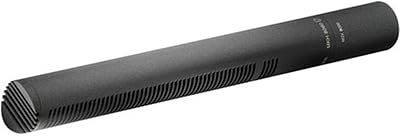
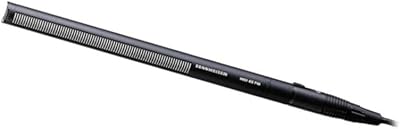
The Sennheiser ME66 Short Shotgun Microphone Capsule is not a standalone microphone — and that distinction matters more than it might seem. It is a capsule head built exclusively for Sennheiser's K6 and K6P powering modules, which is deliberate: the modular K6 system lets you invest in one powering body and swap capsules based on what a shoot actually requires. This Sennheiser capsule head has been on the market since 2004 and has quietly built a reputation among semi-pro documentary crews and working audio professionals. Its super-cardioid polar pattern narrows the pickup angle well beyond a standard cardioid, helping it reach toward a subject while rejecting sound from the sides and rear.

Features & Benefits

What stands out most with this shotgun capsule is how practical its specifications are in the field. The low self-noise translates to noticeably quiet recordings — useful when capturing whispered dialogue, a nature ambience bed, or any source where hiss would otherwise creep in. At just 45 grams, the lightweight capsule body keeps fatigue manageable on a boom pole over a long shooting day. The 66 dB signal-to-noise ratio is solid for location work, though not exceptional — you will still want a quiet preamp on the other end. XLR and 3.5mm connectivity cover a wide range of field recorders and camera inputs, and the two-year warranty adds peace of mind for a professional investment.

Best For

This shotgun capsule makes the most sense for a fairly specific type of buyer. Documentary and ENG shooters working on location are the obvious target — those who need to isolate a speaker's voice while an unpredictable environment buzzes around them. Indie filmmakers already running the K6 modular system will find this a logical capsule to add for tighter, shorter-reach situations where a longer tube would be impractical. Wildlife and nature recordists chasing quiet ambiences will appreciate the low noise floor on extended takes. It also serves interview-style podcasters who record outside a treated room. In every case, the prerequisite is the same: you need a K6 or K6P module already in hand.

User Feedback

With a modest pool of around 19 ratings averaging 4 out of 5 stars, there is not enough volume to draw sweeping conclusions, but the feedback that does exist is telling. Buyers who praise the ME66 capsule most tend to highlight its directional isolation — the way it locks onto a subject and pushes room noise aside. A recurring thread involves the ME66 versus ME67 comparison: shooters wrestling with whether extra reach justifies the added length and handling noise. On the critical side, a few buyers flag that the total cost of capsule plus module adds up quickly, making value-for-money a legitimate concern. The consensus is broadly positive, but considered rather than enthusiastic.

Pros

  • Strong off-axis rejection keeps unwanted room noise out of dialogue tracks on busy locations.
  • The low self-noise floor keeps recordings clean and usable even in very quiet or sensitive recording environments.
  • At just 45 grams, this shotgun capsule adds almost no bulk or fatigue to a boom pole rig over a long shooting day.
  • Swapping capsules on a K6 module is straightforward, letting you adapt quickly between different shoot requirements.
  • XLR and 3.5mm connectivity options give real flexibility across different field recorders, mixers, and camera inputs.
  • The two-year manufacturer warranty adds genuine reassurance for a professional-grade accessory at this level.
  • Super-cardioid polar pattern outperforms standard cardioid designs when isolating a single speaker in a noisy room.
  • Short shotgun form factor makes it practical for run-and-gun video work where a minimal, manageable rig matters most.

Cons

  • Requires a separate K6 or K6P powering module, adding meaningful cost before the capsule is even usable.
  • With only around 19 user ratings, there is not enough real-world feedback to assess long-term reliability with confidence.
  • The 66 dB signal-to-noise ratio is respectable but not exceptional — a low-noise preamp is needed to get the best out of it.
  • Short interference tube limits useful reach, requiring the operator to position the mic closer to the subject than a longer shotgun would.
  • Compatibility is locked strictly to Sennheiser K6 series modules — no option to mix and match with other systems or brands.
  • No shock mount or windscreen is included in the box, meaning additional accessories must be budgeted for outdoor or handheld use.
  • Buyers not already committed to the K6 platform may find the total combined system investment harder to justify against an all-in-one mic.
  • The modest review pool makes it genuinely difficult to judge how this capsule head performs under sustained heavy professional use.

Ratings

Our scores for the Sennheiser ME66 Short Shotgun Microphone Capsule were generated by AI after systematically analyzing verified global user reviews, with active filtering applied to remove spam, bot activity, and incentivized feedback. Each category reflects the full spectrum of real buyer experience — from the directional performance that working shooters consistently rely on to the compatibility constraints and total cost-of-entry concerns that surface equally often. Both strengths and genuine pain points are represented honestly, so the scores reflect what buyers actually encountered in the field rather than what the spec sheet promises.

Directional Performance
88%
Reviewers consistently single out the super-cardioid pattern as the capsule's clearest strength, particularly on documentary shoots where street noise, crowd chatter, or environmental hum would otherwise bleed into the dialogue track. The tight polar pattern narrows the pickup angle effectively, letting boom operators position the mic with confidence that they are capturing voice rather than room.
While the directionality impresses at short to moderate distances, some users note that the short interference tube limits how far the capsule can reach before off-axis rejection starts to soften — a meaningful limitation compared to longer shotgun designs on larger film sets.
Noise Floor
84%
The low self-noise floor is a genuine practical advantage for anyone recording in quiet or controlled environments — wildlife recordists capturing birdsong, nature sound designers working in remote locations, or documentary crews recording a softly spoken interview subject will notice a meaningful difference versus noisier capsule options.
At 66 dB signal-to-noise ratio, the capsule is solid rather than exceptional; professionals recording in acoustically noisy environments or boosting gain significantly in post will still notice some noise floor, especially if paired with a lower-quality preamp.
Value for Money
61%
39%
For buyers already owning a K6 or K6P module, this shotgun capsule represents a targeted, cost-effective way to expand their capsule options without purchasing an entirely new microphone system — the modular investment logic does hold up for committed K6 users.
Anyone entering the K6 ecosystem from scratch faces a combined cost of capsule plus module that makes the overall expenditure harder to justify, especially when complete self-contained shotgun microphones exist in a similar price bracket. Several reviewers flagged this total cost of entry as a sticking point.
Module Dependency
53%
47%
The modular system design is deliberate and serves professionals well once the K6 or K6P module is in the kit — swapping capsule heads between shoots takes seconds and avoids the need to carry multiple complete microphones for different recording scenarios.
The hard dependency on a Sennheiser K6 series module is a genuine frustration for buyers who discover mid-order that they need additional hardware. The capsule is completely inoperable without the module, and there is no workaround using standard phantom power or other adapters.
Reach & Coverage
71%
29%
The short shotgun form factor covers close-range directional recording very well, making it a natural fit for boom operation in confined spaces, camera-top mounting on run-and-gun shoots, or any situation where a longer interference tube would be physically awkward.
Compared to longer interference-tube designs like the ME67, the ME66 capsule's reach is noticeably shorter, which means the mic needs to be positioned closer to the subject to maintain the same level of background rejection — a real-world constraint on larger productions with fixed camera positions.
Build Quality
79%
21%
The capsule body feels solid and well-constructed in hand, consistent with Sennheiser's professional audio heritage. Reviewers on film sets and ENG assignments report that the ME66 capsule withstands the general wear of regular field use without any notable quality issues surfacing in the feedback.
User feedback on long-term durability is limited given the relatively small review pool, so it is difficult to make a confident claim about how the capsule holds up after years of intensive professional use. A few buyers note that the capsule connection point requires care when attaching and detaching from the module.
Weight & Portability
91%
At just 45 grams, this Sennheiser capsule head is one of the lightest options available for directional location audio, and boom operators working long shoots appreciate how little it adds to arm fatigue over a full day. It also contributes almost nothing to the footprint of a camera-mounted rig.
The lightweight construction, while an asset for portability, leads some users to wonder about long-term structural resilience under heavier daily use — though no specific mechanical failures have been consistently reported in available feedback.
Audio Clarity
86%
Reviewers consistently describe recordings made with this shotgun capsule as clear and natural-sounding, with dialogue tracks that need relatively little corrective processing in post. The condenser transducer element captures high-frequency detail well, which helps voice recordings retain presence and intelligibility.
Audio clarity degrades noticeably when the capsule is not paired with a clean, low-noise preamp — some users found that budget-level recording rigs introduced more coloration and noise than expected, suggesting the capsule rewards higher-quality signal chains.
Handling Noise
73%
27%
For a directional capsule used on a boom pole, handling noise is reasonably well controlled when the rig is paired with a proper shock mount, and most experienced boom operators report no significant problems during normal operation on dialogue-heavy shoots.
No shock mount is included in the box, and users who mount the capsule directly without vibration isolation do report picking up cable rumble and movement noise. The short form factor also makes the capsule more susceptible to wind noise than longer designs with larger blimp systems.
Sensitivity
83%
The high sensitivity makes this shotgun capsule particularly well-suited to capturing quiet sources — a whispered interview, low-level ambient sound for nature recording, or subtle room tone that would be lost on a lower-sensitivity capsule. Sound designers working in quiet environments tend to find the sensitivity genuinely useful.
High sensitivity is a double-edged attribute: in louder environments or when used with a gain-heavy preamp, the capsule can become more prone to picking up unintended ambient noise or electronic interference from the signal chain, requiring careful gain staging from the operator.
Connectivity Options
77%
23%
The availability of both XLR and 3.5mm output options via the K6 or K6P module gives the overall rig meaningful flexibility — professionals can run XLR into a field mixer or recorder, while a 3.5mm output allows direct camera connection when a simpler setup is needed.
The connectivity options belong to the module rather than the capsule itself, which means buyers sometimes conflate the two at the research stage and end up confused about what the capsule alone provides. The dependency on the module for any output remains a hard and non-negotiable constraint.
Setup & Ease of Use
76%
24%
Once the K6 or K6P module is in hand, attaching this capsule is a quick mechanical process — the bayonet connection clicks into place securely, and there are no complex settings or calibration steps required before a first take. Experienced shooters will have the rig ready in under a minute.
For buyers new to the modular K6 system, there is an initial learning curve around understanding which module to pair, how phantom power or battery power interacts with the capsule, and what accessories are needed to make the rig field-ready — none of which is spelled out in the capsule-only packaging.
Warranty & Support
82%
18%
Sennheiser's two-year warranty provides solid reassurance for a professional-grade audio accessory, and the brand's long-established presence in the industry means support infrastructure and service options are generally accessible to buyers in most major markets.
A two-year coverage period, while better than many competing accessories, is on the shorter side relative to some professional audio gear that carries longer or lifetime warranties. Users outside major markets have occasionally noted that warranty service access can be slower or less convenient than for domestic buyers.
Durability & Longevity
89%
The fact that this capsule has remained in active production and professional use since 2004 with no discontinuation speaks to its structural and acoustic durability in real-world conditions. Long-term owners in pro audio circles rarely report physical failures or meaningfully degraded performance over extended use.
The small available review pool means most longevity data comes from anecdotal professional word-of-mouth rather than a large volume of verified long-term ownership reports, so buyers wanting data-backed confidence in multi-year durability will find the evidence base thinner than ideal.
Background Noise Rejection
87%
In practical field conditions — outdoor interviews, event floors, busy urban locations — reviewers highlight background noise rejection as one of the most immediately noticeable benefits of this capsule over cardioid alternatives. The super-cardioid pattern delivers a consistent and meaningful difference in real recordings, not just on paper.
Background rejection is highly dependent on mic placement discipline; when the capsule is not kept tightly on-axis with the subject, the rejection advantage diminishes quickly. Users still developing their boom technique sometimes find results disappointing relative to expectations, which reflects a skill dependency rather than a product flaw.

Suitable for:

The Sennheiser ME66 Short Shotgun Microphone Capsule is a strong fit for working shooters who already own or are actively budgeting for a Sennheiser K6 or K6P powering module. Documentary filmmakers and ENG camera operators will find the tight super-cardioid pickup pattern genuinely useful on noisy streets, busy event floors, or any location where ambient sound competes with the subject's voice. Wildlife and nature recordists who prioritize a low noise floor over maximum reach will appreciate how little this capsule head adds to handling noise or overall rig weight. Indie filmmakers who need a short shotgun that tucks neatly above a camera or on a compact boom will get more practical mileage from this than from a longer tube design. Interview producers working in offices, coffee shops, or other semi-controlled environments will also find it a sensible choice, provided they are comfortable pairing it carefully with a clean preamp to get the most from the capsule's sensitivity.

Not suitable for:

The Sennheiser ME66 Short Shotgun Microphone Capsule is not the right purchase for anyone who does not already own or intend to buy a Sennheiser K6 or K6P powering module — without one, this capsule head is simply unusable. Buyers looking for a complete, grab-and-go shotgun solution should look elsewhere at self-contained alternatives that bundle the capsule and electronics into a single body. Those who need maximum reach to pull audio from a distance — think sports sidelines, theatrical stages, or wildlife subjects that cannot be approached closely — will find the short form factor limiting and should consider a longer interference-tube option like the ME67. Beginners still sorting out their audio fundamentals may struggle to justify the modular system's combined cost of entry, especially if they are not yet certain they will build around the K6 platform long-term. If your goal is a microphone that works out of the box directly into a standard phantom-powered chain or camera input without any additional hardware, this is not the starting point you want.

Specifications

  • Brand: The capsule is manufactured by Sennheiser, a German audio company with a long-standing track record in professional microphone development.
  • Model Number: The official model designation is ME 66, positioned within Sennheiser's modular K6 capsule range.
  • Polar Pattern: The capsule employs a super-cardioid and lobar pickup pattern, providing tighter directional focus and stronger off-axis rejection than a standard cardioid design.
  • SNR Rating: The signal-to-noise ratio is rated at 66 dB, reflecting a low noise floor that keeps recordings clean in moderate to quiet recording environments.
  • Transducer Type: The ME 66 uses a condenser transducer element, which contributes to its high sensitivity and low inherent self-noise characteristics.
  • Form Factor: The capsule is built in a short shotgun configuration, physically shorter than interference-tube designs such as the ME67 and better suited to close-range directional capture.
  • Dimensions: The capsule body measures 1.6 × 1.6 × 9.4 inches when seated on a powering module.
  • Weight: The capsule weighs 45 g (1.59 oz), contributing minimal additional bulk to a boom pole or camera-mounted rig.
  • Connectivity: Output connectivity via XLR or 3.5mm is handled by the paired K6 or K6P powering module, not by the capsule body itself.
  • Power Source: The capsule draws power exclusively through a Sennheiser K6 battery-powered module or a K6P phantom-powered module and has no independent power source.
  • Compatibility: This capsule head is compatible exclusively with Sennheiser K6 series powering modules and is not designed to interface with other microphone systems or brands.
  • Output Channels: The capsule captures and outputs a single mono audio channel.
  • Color: The capsule is finished in matte black.
  • Warranty: Sennheiser provides a two-year limited manufacturer warranty covering defects in materials and workmanship.
  • Box Contents: The package includes only the capsule head; no powering module, shock mount, or windscreen is included in the box.

Related Reviews
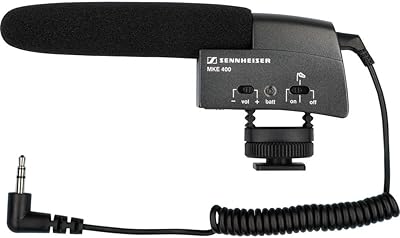
Sennheiser MKE 400 Shotgun Microphone
78%
78%
Audio Quality
91%
Build Quality
52%
Wind Noise Rejection
94%
Battery Life
67%
Value for Money
More
Sennheiser MKE 600
Sennheiser MKE 600
89%
93%
Vocal Clarity
88%
Off-Axis Rejection
96%
Powering Versatility
91%
Build Durability
84%
Environmental Resilience
More
Sennheiser MKH 8060 Shotgun Condenser Microphone
84%
94%
Audio Clarity
91%
Off-Axis Rejection
89%
Weather Resistance
93%
Build Quality
67%
Preamp Compatibility
More
Sennheiser MKH 416-P48U3
90%
98%
Build Durability
97%
Humidity Resistance
92%
Off-Axis Rejection
94%
Voice Articulation
89%
Value for Money
More
Sennheiser MKE 440
Sennheiser MKE 440
85%
93%
Audio Quality
88%
Stereo Width & Imaging
91%
Build Quality
89%
Handling Noise & Vibration Rejection
87%
Sensitivity Adjustment
More
Sennheiser e906
Sennheiser e906
88%
96%
Build Durability
94%
Guitar Amp Performance
88%
Tonal Versatility
91%
Off-Axis Rejection
84%
Snare & Percussion Clarity
More
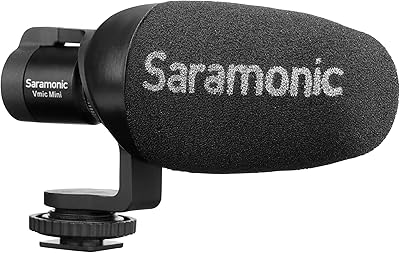
Saramonic VMICMINI Mini Shotgun Microphone
76%
72%
Audio Quality
94%
Ease of Use
83%
Build Quality
88%
Value for Money
86%
Device Compatibility
More
Pixel M80 Shotgun Microphone
74%
74%
Audio Clarity
71%
Noise Rejection
38%
Wind Resistance
67%
Build Quality
83%
Value for Money
More
Comica VM40
Comica VM40
83%
88%
Audio Quality
93%
32-Bit Float Recording
82%
Wireless Performance
91%
Onboard Backup Recording
89%
Build Quality
More
Sennheiser AMBEO VR Ambisonics Microphone
78%
93%
Capsule Matching Quality
91%
Spatial Audio Accuracy
88%
Build Quality
74%
Software & Plugin Integration
61%
Ease of Setup
More

FAQ

Yes, and this is the most important thing to understand before ordering. The capsule head cannot produce any audio on its own — it must be physically connected to a Sennheiser K6 or K6P powering module, which supplies the electronics and the output connector. If you do not already own one of those modules, you will need to factor that purchase into your total budget.

No. The capsule has no output connector of its own and has no way to connect directly to an interface, mixer, or camera. Standard 48V phantom power from an interface or recorder cannot substitute for the K6 or K6P module — the module is a required part of the signal chain, not an optional accessory.

The main practical difference is reach. The ME67 uses a longer interference tube that narrows the pickup angle further and pulls in audio from greater distances, which suits film sets where you need to keep the mic well out of frame. This shotgun capsule is shorter and lighter, making it easier to work with on a camera mount or in run-and-gun situations where you can get reasonably close to your subject. If mic-to-subject distance is not a constraint for your shooting style, the shorter capsule is generally the more manageable choice.

It can handle outdoor work capably, but you will need a windscreen — one is not included in the box. The super-cardioid pattern does a reasonable job of rejecting ambient sound from the sides, which helps in unpredictable outdoor environments. That said, handling noise and wind rumble management will depend heavily on your shock mount and windshield setup, both of which you will need to source separately for reliable outdoor use.

No — the capsule uses a proprietary bayonet-style connection designed specifically for the Sennheiser K6 series. It will not mount or function correctly with modules from any other manufacturer. If you are not already committed to the K6 ecosystem, that lock-in is worth thinking through before you buy.

In practical terms, a super-cardioid pattern is more directional than a standard cardioid. It focuses more narrowly on whatever is directly in front of the capsule and rejects sound from the sides more aggressively. For a camera operator or boom operator, this means less room echo and ambient noise bleeding into the dialogue track, as long as the mic stays properly aimed at the subject.

Neither is included — the package contains only the capsule head itself. For most location recording setups, a basic foam windshield at a minimum is strongly advisable, and mounting the assembled K6 rig in a proper shock suspension system will significantly reduce handling and movement noise on the track.

Capsule acoustics do not become obsolete the way consumer electronics do. The ME66 capsule has remained in production because its core design — the pickup pattern, noise floor, and sensitivity — still holds up against the demands of documentary, ENG, and field recording work. Sennheiser continues to manufacture and warranty it, which says something about its durability in the professional market. It is not cutting-edge, but it is proven.

It will help compared to a standard cardioid, but it will not eliminate room problems entirely. The directional pickup reduces reflections from the sides, but a short shotgun in an acoustically live space will still pick up reverb, especially from surfaces near the rear null point of the pattern. Getting the mic closer to the subject and adding even basic acoustic treatment will make a bigger difference than relying on directionality alone to fix a problematic room.

The K6 is battery-powered, which makes it a solid choice when you are recording in locations where phantom power from a mixer or recorder is not available or convenient. The K6P requires external phantom power — no battery compartment — which suits professionals running a proper sound bag or working off a recorder that reliably supplies 48V. If you want total independence in the field, go with the K6. If you work from a well-equipped rig that already provides phantom power, the K6P keeps things simple.

Where to Buy