Overview

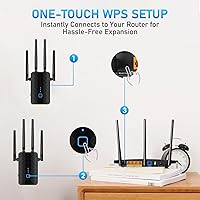
The Zelikovitz M-97A Dual-Band WiFi Extender is a mid-range plug-in repeater aimed at households where dead zones are a genuine daily frustration. Zelikovitz isn't a household name in networking gear — that's worth acknowledging upfront. But an unfamiliar brand doesn't automatically mean a weak product, and this range booster makes a reasonable case for itself. It runs both the 2.4GHz and 5GHz bands simultaneously, giving you the flexibility of longer reach on one band and faster throughput on the other. Setup requires nothing more than a single button press, which keeps things accessible for anyone who'd rather not dig into a router admin panel.

Features & Benefits

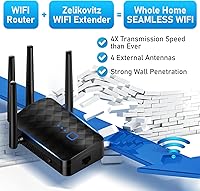
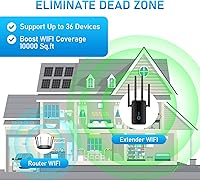
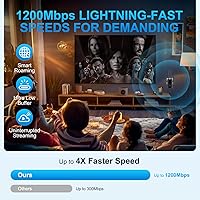
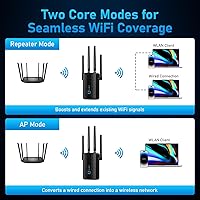
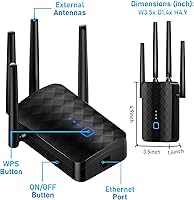
On paper, the M-97A repeater's headline numbers are 1200 Mbps and coverage up to 10,000 square feet, but those figures assume ideal open-space conditions. In a real home with walls, appliances, and competing signals, expect something more modest — which is true of every extender on the market. What genuinely stands out is the dedicated Ethernet port, letting you hardwire a TV, console, or desktop rather than relying on wireless alone. The unit also doubles as an access point, so if you have a wired connection available, you can convert it to Wi-Fi without touching your main router. Security-wise, it covers WPA2 encryption with an onboard chip, which is solid for home use.

Best For

This WiFi extender makes the most sense for people in large, sprawling floor plans — think ranch-style homes or open warehouse-converted apartments — where a single router just can't reach every corner. It's also a reasonable pick if thick concrete or brick walls are eating your signal before it gets to the home office or bedroom. The Ethernet port makes it particularly useful for anyone who needs a wired connection in a room where pulling cable isn't realistic. That said, if you're in a multi-story home with heavy traffic across many devices, a proper mesh system will likely serve you better. This is a targeted fix, not a whole-home networking overhaul.

User Feedback

Because the M-97A repeater only arrived mid-2025, honest review volume is still thin — so take any aggregate rating with some caution. Early users tend to praise the setup experience, with the WPS pairing landing as advertised for most people. Range feedback is more mixed; several buyers report solid improvement in dead zones within a moderate distance of the router, but the 10,000-square-foot claim draws skepticism from those in denser, obstacle-heavy layouts. A handful of users have flagged occasional dropouts after days of continuous use, which points to potential firmware maturity issues worth monitoring. Build quality commentary is generally positive, though the unit runs warm. Verdict so far: promising, but the long-term reliability picture needs more time to form.

Pros

  • Dual-band operation lets you push range on 2.4GHz while keeping speed on 5GHz simultaneously.
  • WPS setup takes under a minute — no app, no login, no configuration headaches.
  • The built-in Ethernet port lets you hardwire one device for a reliably stable wired connection.
  • Access Point mode adds real versatility, converting a wired signal into wireless when needed.
  • WPA2 support paired with an onboard encryption chip delivers solid security for home use.
  • Compact and lightweight at under 6 ounces, it plugs directly into a wall outlet without consuming counter space.
  • The M-97A repeater supports up to 36 simultaneous devices, covering most busy households comfortably.
  • An LED status indicator makes it easy to confirm connection health without opening any software.

Cons

  • Zelikovitz has limited brand history, so long-term firmware support and reliability remain genuinely unproven.
  • The 1200 Mbps figure is a combined dual-band total, not the real-world speed on either individual band.
  • Actual coverage falls noticeably short of the 10,000-square-foot claim in homes with walls and obstacles.
  • Some early users report intermittent dropouts after extended uptime, suggesting firmware may still need refinement.
  • No companion app means zero visibility into signal strength, connected devices, or live performance metrics.
  • The unit runs noticeably warm during extended use, which raises reasonable questions about long-term thermal reliability.
  • With a mid-2025 launch date, review volume is still thin — making it difficult to assess real-world longevity.
  • No tri-band capability means heavy multi-device households may hit congestion that a more capable system would avoid.

Ratings

Our AI rating engine analyzed verified buyer feedback for the Zelikovitz M-97A Dual-Band WiFi Extender from global sources, actively filtering out incentivized, bot-generated, and spam reviews to surface only authentic user experiences. The scores below reflect a balanced picture — where this range booster genuinely delivers and where real buyers have encountered friction. Both the strengths and the honest shortcomings are accounted for in every category.

Setup & Installation
88%
Most buyers report the WPS pairing process takes well under two minutes, which is a genuine relief compared to extenders that require app downloads or browser-based logins. Non-technical users in particular praise the single-button approach, noting they had a working extended network before they even finished reading the instructions.
A subset of buyers encountered issues when their routers lacked a WPS button, forcing them into the browser-based configuration path, which is less intuitive. A few also noted that reconnecting after a power outage required manually re-pairing, which was frustrating when routers and extenders rebooted at different rates.
Signal Range
67%
33%
Buyers in open, single-story ranch homes consistently report meaningful dead-zone elimination, particularly in rooms 30 to 50 feet from the router. For those dealing with concrete or brick walls blocking signal, the improvement over their previous setup was enough to enable stable 4K streaming where it had previously been impossible.
The advertised 10,000 sq ft figure draws consistent skepticism from users in multi-room or multi-story homes, where coverage dropped off well short of expectations. In homes with multiple obstacles, several buyers found the effective range closer to a third of the marketing claim, which led to disappointment for anyone who purchased based on that number alone.
Signal Stability
63%
37%
When positioned correctly — in a clear line of sight with the router at a moderate distance — this range booster holds a reasonably steady connection for streaming and video calls. Users in less congested wireless environments reported going days without a noticeable dropout, which met basic expectations for the price.
Recurring complaints about intermittent disconnections after 48 to 72 hours of continuous uptime point to what may be a firmware maturity issue rather than a hardware fault. Some buyers found that simply unplugging and replugging the extender restored connectivity, but needing to do that every few days makes it difficult to recommend for households that rely on consistent uptime.
Dual-Band Performance
71%
29%
Having both 2.4GHz and 5GHz available gives households genuine flexibility — lighter devices like smart home sensors and phones can stay on 2.4GHz for range, while laptops and streaming devices can grab the faster 5GHz band when close enough. Buyers in medium-sized homes reported this separation helped reduce network congestion noticeably.
At the outer edge of the extender's range, several users noted their 5GHz devices automatically fell back to the 2.4GHz band, delivering speeds closer to the slower band's ceiling. The two bands also broadcast under separate network names by default, which means devices do not roam intelligently between them as they would on a proper mesh system.
Wired Connectivity
82%
18%
The Ethernet port is a standout practical feature, particularly for buyers who want a stable wired connection for a gaming console or desktop in a room far from the main router. Several users highlighted how it eliminated lag spikes during online gaming sessions that wireless alone could not solve.
Only a single Ethernet port is available, which limits wired connections to one device at a time — buyers hoping to hardwire both a TV and a console simultaneously will need a separate switch. The port also does not support speeds beyond the extender's own throughput ceiling, so gigabit-plan subscribers will not see full wired speeds.
Throughput Speed
58%
42%
For everyday tasks like HD video streaming, standard video calls, and general web browsing, the M-97A repeater delivers enough bandwidth to avoid obvious bottlenecks. Buyers using it primarily for a single 4K stream or a handful of light-use devices found speeds satisfactory for their day-to-day needs.
The headline 1200 Mbps figure is a combined dual-band theoretical maximum that bears little resemblance to what devices actually receive through the repeater. Speed test results shared by buyers typically landed in the 100 to 300 Mbps range depending on distance and wall obstruction — a significant gap that disappointed users expecting near-router performance.
Value for Money
74%
26%
For buyers who simply need to extend coverage to one or two trouble spots without committing to a mesh network investment, the price-to-capability ratio is reasonable. The inclusion of both dual-band radios and an Ethernet port at this price point offers more tangible utility than many single-band options in the same tier.
Buyers who purchased primarily on the basis of the coverage and speed claims and then found real-world performance fell significantly short tend to rate value poorly. If you need reliable whole-home coverage or consistent high-throughput performance, the money is arguably better spent stepping up to an entry-level mesh system.
Build Quality
73%
27%
The physical construction feels solid enough for a plug-in extender at this price, with no reports of the unit falling out of the socket or showing signs of casing stress under normal use. Its compact footprint means it does not obstruct adjacent outlets in most configurations.
Multiple users note the unit runs noticeably warm during extended operation, which is common in this product category but does raise reasonable questions about longevity over years of continuous use. The plastic casing shows fingerprints easily, and a handful of buyers found the build feels slightly cheaper than the listed price implies.
Device Compatibility
84%
This range booster works reliably with routers from major brands including TP-Link, Netgear, ASUS, and most ISP-provided gateway devices. Buyers across a wide range of home network configurations reported successful pairing without needing to adjust router settings beyond enabling WPS.
Users with older routers running legacy firmware occasionally reported WPS handshake failures, requiring the browser-based setup path instead. A small number of buyers on ISP-locked modem-router combos found the pairing process less reliable, particularly when the modem's WPS implementation did not follow standard protocol.
Security Features
79%
21%
Support for WPA2 encryption is the current home networking standard, and the addition of an onboard hardware encryption chip gives this extender a modest edge over software-only implementations at a similar price. For most home and small office environments, the security coverage is genuinely adequate.
WEP support, while listed, is a deprecated protocol that offers little real security and should not be relied upon by modern users. There is no mention of WPA3 support, which is increasingly expected in 2025-era networking hardware, and the absence of an app means security settings cannot be monitored or adjusted remotely.
Access Point Mode
76%
24%
The Access Point mode is a genuinely useful secondary function that many buyers in this category overlook entirely. Users who had a wired Ethernet run to a basement or detached garage but no wireless coverage found this mode allowed them to broadcast a fresh Wi-Fi network from that wired source without any additional hardware.
Switching between Repeater and Access Point modes requires accessing the browser-based configuration interface, which is not immediately obvious and lacks step-by-step guidance in the included documentation. A few buyers who intended to use Access Point mode reported difficulty toggling it correctly without referring to third-party tutorials online.
LED Indicator
72%
28%
The LED light handles the basics reliably — confirming power state, WPS pairing activity, and live connection status with a quick glance. For most buyers who simply need to know the extender is working without logging into a dashboard, that straightforward feedback is genuinely sufficient.
The LED provides no granular signal strength feedback, so you cannot tell at a glance whether the extender is receiving a strong or barely adequate signal from the router. In bedroom setups, several buyers found the LED bright enough to be distracting at night, with no option to dim or disable it.
Thermal Performance
61%
39%
Under light-to-moderate load, the unit maintains a manageable temperature and does not throttle performance noticeably during shorter operating periods. Buyers using it in well-ventilated, open wall outlet locations reported no heat-related issues during standard daytime usage.
After several consecutive hours of heavy use — sustained 4K streaming or active gaming — the casing becomes uncomfortably warm to the touch, raising reasonable durability concerns over a multi-year lifespan. The plug-in form factor offers no ventilation slots, and there is no thermal management documentation available from the manufacturer.
Brand Reliability
54%
46%
The hardware itself, based on early user feedback, appears to perform adequately for a first-generation product from a newer brand. A handful of buyers noted prompt responses from customer support when they encountered setup issues, which is an encouraging sign for a label still establishing itself.
With no meaningful product history to draw from and a mid-2025 debut, there is simply no data on how firmware updates will be handled over time or how the brand responds to widespread hardware defects if they emerge. Buyers prioritizing long-term reliability and post-purchase support should factor this uncertainty heavily into their decision.

Suitable for:

The Zelikovitz M-97A Dual-Band WiFi Extender is a practical choice for renters and homeowners in large, spread-out single-story spaces where dead zones have become a daily annoyance. If your home has concrete slab floors, brick interior walls, or other dense building materials that choke wireless signals between rooms, this range booster is designed to handle exactly that challenge. It suits households that stream 4K video or run frequent video calls in rooms sitting well beyond the router's reliable reach. The built-in Ethernet port also makes it a smart pick for anyone who needs one stable wired connection — a gaming console, a smart TV, or a home office desktop — without the cost and complexity of a full mesh network. Budget-conscious buyers who want genuine dual-band capability and simple, button-press setup will find it hits a reasonable balance for the price tier.

Not suitable for:

The Zelikovitz M-97A Dual-Band WiFi Extender is not the right tool for multi-story homes where signal needs to travel vertically through multiple floors and ceilings, as a single repeater placed in one location will inevitably leave significant gaps. Power users who rely on consistently fast 5GHz throughput at distance will likely be disappointed — every extender by design reduces available bandwidth on the band it uses to relay traffic, and this unit is no exception. If you have several heavy-bandwidth users simultaneously streaming, gaming, and video-calling, a proper tri-band mesh system is a more appropriate investment. Buyers expecting established-brand levels of app-based management, a documented firmware update history, or proven long-term support should temper their expectations, since Zelikovitz is a newer entrant without a track record in those areas. Anyone in a compact apartment where the router's existing signal is already reasonable would be better served saving the money entirely.

Specifications

  • Brand: This extender is manufactured and sold under the Zelikovitz brand, a relatively new entrant in the home networking accessories market.
  • Model: The official model designation is M-97A, as identified on the device label and retail packaging.
  • Frequency Bands: Operates simultaneously on both the 2.4GHz and 5.8GHz radio frequency bands, providing true dual-band wireless coverage.
  • Max Throughput: Rated at a combined maximum of 1200 Mbps across both bands under ideal, unobstructed open-space conditions.
  • Coverage Area: Advertised to extend coverage up to 10,000 sq ft, though real-world range in obstacle-heavy environments will be noticeably lower.
  • Device Capacity: Supports simultaneous connections from up to 36 Wi-Fi enabled devices spread across both frequency bands.
  • Ethernet Port: Includes one dedicated Ethernet port for hardwiring a single device such as a gaming console, smart TV, or desktop computer.
  • Setup Method: Pairs with a compatible router via a single WPS button press, with a browser-based configuration option also available.
  • Security Protocols: Supports WEP, WPA, and WPA2 security protocols to guard the extended network against unauthorized access.
  • Encryption Chip: Features an onboard hardware encryption chip that supplements software-level security protocols for an additional layer of network protection.
  • Operating Modes: Functions in two distinct modes: Repeater mode for extending an existing wireless network, and Access Point mode for converting a wired connection into Wi-Fi.
  • Antenna Type: Uses a directional antenna with 360-degree signal dispersion, designed to distribute coverage broadly in all directions from the unit.
  • LED Indicator: An onboard LED status light provides visual confirmation of power state, WPS pairing progress, and live connection health.
  • Weight: The unit weighs 5.9 ounces, compact enough to remain stable when plugged directly into a standard wall outlet.
  • Dimensions: Packaged dimensions measure 8.15 x 3.66 x 2.09 inches, consistent with a plug-in wall-mount form factor.
  • Color: Available in a Black and Blue color scheme as the standard retail configuration for this model.
  • Release Date: First made available for purchase in July 2025, making it one of the more recent additions to the home repeater category.

Related Reviews
Vonets VAP11AC AC1200 Dual Band WiFi Bridge
65%
74%
WiFi-to-Ethernet Bridging Performance
71%
Dual-Band Radio Coverage
78%
Thermal Management & Reliability
44%
Setup & Configuration Experience
81%
Operating Mode Versatility
More
Linksys RE6350 AC1200 Dual-Band WiFi Extender
86%
91%
Setup & Installation
88%
Wi-Fi Performance
89%
Coverage Area
85%
Dual-Band Performance
84%
Streaming & Gaming
More
FjUoLzgK M-97G WiFi Extender
74%
91%
Ease of Setup
67%
Signal Coverage
62%
5GHz Band Performance
78%
2.4GHz Band Reliability
83%
Ethernet Port Utility
More
NETGEAR WAX202 WiFi 6 Dual-Band Router
84%
88%
WiFi Performance
93%
Setup & Installation
85%
App Usability
89%
Speed & Coverage
90%
Device Connectivity
More
VSVABEFV AP240 Dual-Band Wireless Access Point
63%
74%
Value for Money
61%
Wireless Performance
77%
Installation Ease
53%
Setup & Configuration
57%
Range Coverage
More
ASUS RT-AX1800S
ASUS RT-AX1800S
79%
88%
Value for Money
79%
WiFi Speed & Performance
74%
Coverage & Range
83%
Setup & Ease of Use
67%
Router App Experience
More
ASUS RT-AX5400 WiFi 6 Dual-Band Router
80%
84%
WiFi Speed & Throughput
71%
Coverage & Range
88%
Setup & Ease of Use
91%
Built-in Security (AiProtection)
83%
Parental Controls
More
Cudy RE3000 AX3000 Wi-Fi 6 Extender
74%
88%
Setup & Ease of Use
76%
Wi-Fi Coverage
67%
5 GHz Band Performance
81%
2.4 GHz Band Reliability
63%
Real-World Speed Throughput
More
ASUS RT-ACRH13 AC1300 Dual Band Gigabit Router
78%
91%
Ease of Setup
72%
Wi-Fi Range
84%
Connection Stability
67%
Multi-Device Performance
83%
Value for Money
More
ASUS ZenWiFi BD4 Dual-Band WiFi 7 Mesh Router
86%
93%
Wi-Fi Performance
89%
Setup & Installation
91%
Security Features
88%
Gaming & Streaming Performance
84%
Value for Money
More

FAQ

Yes, this WiFi extender is compatible with virtually any standard router or modem that broadcasts a Wi-Fi signal on the 2.4GHz or 5GHz band. You do not need to change your internet provider or replace existing equipment to use it.

Setup is genuinely straightforward. Plug the unit into a wall outlet, wait for the LED to stabilize, then press the WPS button on the extender followed by the WPS button on your router within about two minutes. Most users report pairing completes in under 60 seconds. If your router lacks a WPS button, you can also configure the extender by typing its IP address into any web browser.

Realistically, probably not in most homes. That figure comes from testing in open, unobstructed conditions with no walls, appliances, or interference to contend with. In a typical house, expect effective range to be considerably more modest. It is still a capable booster for large single-story layouts, but the marketing number should not be taken at face value.

Yes, the Ethernet port operates independently of the wireless repeating function. You can plug a console, TV, or desktop directly into the port and receive a stable wired connection while the unit simultaneously extends Wi-Fi coverage to other wireless devices in the area.

By default, the M-97A repeater broadcasts a distinct network name rather than seamlessly merging with your main router's signal. Some users find this helpful for identifying which network to connect to; others prefer a unified name. You can typically rename it during initial configuration through the browser-based setup interface.

Not fully. The combined throughput ceiling across both bands is 1200 Mbps under ideal conditions, and the repeating process introduces additional overhead that reduces real-world speeds further. For streaming, video calls, and general browsing, most users will not notice the difference. For large file transfers or latency-sensitive applications, the speed reduction may be more apparent.

Place it roughly halfway between your router and the dead zone you are trying to fix — close enough to still receive a strong incoming signal, but far enough to actually push coverage into the problem area. Positioning it too far from the router means it has a weak signal to repeat, which reduces its effectiveness significantly. Avoid placing it inside cabinets or directly behind large appliances.

Access Point mode lets you run an Ethernet cable from your router directly into the extender's port, which then broadcasts a fresh Wi-Fi network from that wired source. It is particularly useful if you have a cable run to a room but no wireless coverage there — a basement office or a detached garage, for example. In that configuration, the unit acts more like a secondary router than a traditional repeater.

No app is required. Setup and configuration are handled either through WPS pairing or a standard browser-based interface. That simplicity is a genuine plus for non-technical users, though it also means you will not get real-time device dashboards, signal analytics, or push notifications that some competing products offer through dedicated apps.

It is a fair concern worth taking seriously. The Zelikovitz M-97A Dual-Band WiFi Extender comes from a brand without the established reputation of larger networking names, which makes it harder to predict long-term firmware support, warranty responsiveness, and parts availability. That does not mean the hardware itself is poor — many newer brands source from capable manufacturers — but if long-term brand reliability is a top priority, a more established name may offer greater peace of mind.