Overview

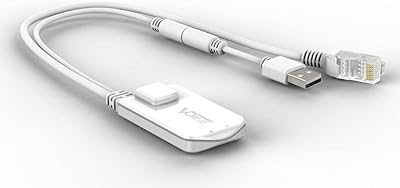
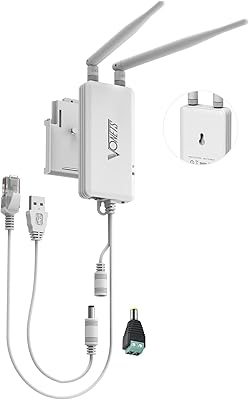
The Vonets VAP11AC AC1200 Dual Band WiFi Bridge isn't the kind of device you'd buy to boost signal in your living room — it's built for a narrower, more demanding job: giving wired-only devices a wireless connection without pulling cable. Think IP cameras, DVRs, industrial sensors. The 2023 revision added a built-in cooling fan, which matters more than it sounds for anything running around the clock. At its price tier, you're getting hardware that sits between consumer-grade extenders and proper enterprise gear. That said, the setup process leans technical — expect to spend time in a web interface rather than tapping through a polished app.
Features & Benefits

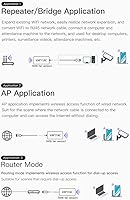
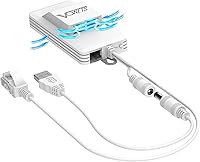
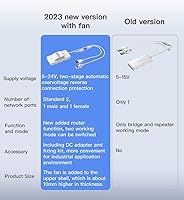
This WiFi bridge runs on both 2.4GHz and 5GHz bands simultaneously, offering up to 300Mbps and 900Mbps respectively — useful when you need to push video feeds without congestion from other devices. It supports multiple operating modes: bridge, repeater, AP hotspot, and a router mode with two LAN ports added in the latest version. The wide voltage input (DC 5–24V) with two-stage overvoltage protection makes it practical for panel-mounted or outdoor enclosure installs. Automatic WiFi reconnection means it recovers from a router reboot on its own — a genuinely useful feature for unattended surveillance deployments. Real-world video range sits closer to 80–100 meters, not the 250-meter open-air figure cited in specs.

Best For

The VAP11AC bridge was designed with installers in mind, not casual home users. It's a strong pick for anyone wiring up a DVR or IP camera system where running Ethernet isn't feasible — the bridge handles the connection quietly in the background. Small businesses connecting POS terminals, network printers, or industrial PLCs over WiFi will find it capable for those tasks. Technically confident home users can also use it to bridge a game console or media player to a distant router. If your device runs Linux, Windows, Android, or iOS, compatibility shouldn't be an issue. Just don't hand this to someone who struggles with basic router settings.

User Feedback

With a 3.6-star average across 123 ratings, this dual-band bridge adapter sits in genuinely mixed territory — not a failure, but not a confident recommendation for everyone either. Buyers tend to appreciate the compact form factor and the fact that dual-band performance is real, not just marketed. The versatility of modes also draws consistent praise from experienced network installers. The criticism is equally consistent: the web interface looks dated, documentation is thin, and first-time configuration can take far longer than it should. Some users report stable uptime over months; others mention periodic connection drops. The cooling fan update does appear to have addressed older overheating complaints, which is a meaningful improvement for always-on use.

Pros

  • Genuinely converts WiFi to a stable wired connection for cameras, DVRs, and IoT devices without pulling cable.
  • Dual-band operation lets installers choose 5GHz for speed or 2.4GHz for range depending on site conditions.
  • Wide DC 5–24V input with overvoltage protection makes it adaptable to non-standard power environments.
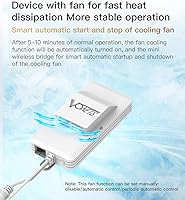
  • The built-in cooling fan meaningfully reduces heat buildup during continuous 24/7 operation.
  • Automatic WiFi reconnection recovers the link after router reboots without manual intervention.
  • Four operating modes — bridge, repeater, AP hotspot, and router — give real flexibility across different deployment scenarios.
  • Compatible with Linux, Windows, Android, and iOS, covering most mixed-device environments.
  • Compact enough to tuck into a junction box or mount behind equipment without special hardware.
  • The VAP11AC bridge holds its configuration reliably once the initial setup is complete.
  • Two LAN ports allow connecting more than one wired device through a single bridge unit.

Cons

  • Initial configuration requires navigating a dated, poorly documented web interface with no companion app.
  • Real-world video streaming range is closer to 80–100 meters — the 250-meter spec figure is misleading for most buyers.
  • Connection stability varies noticeably between units, with some users reporting periodic drops requiring a power cycle.
  • Manufacturer support response times have been inconsistent, leaving some buyers to self-resolve through forums.
  • The dual LAN ports are capped at 10/100Mbps, which bottlenecks high-throughput multi-device setups.
  • Documentation is thin and poorly translated in places, creating friction for anyone who hits an unexpected issue.
  • The cooling fan introduces a faint but constant hum, which matters in quiet or noise-sensitive installation spaces.
  • Mode-switching is only possible through the web UI, compounding difficulty for less experienced users.
  • No mobile app or guided onboarding exists to simplify first-time setup for non-technical buyers.
  • Some edge-case device pairings — older DVR firmware or non-standard embedded systems — may require undocumented manual steps.

Ratings

Our AI-generated scores for the Vonets VAP11AC AC1200 Dual Band WiFi Bridge were produced by analyzing verified global buyer reviews, with spam, incentivized, and bot-driven feedback actively filtered out before scoring. The ratings reflect a balanced picture — genuine strengths alongside real frustrations that installers and technical users repeatedly flagged. Nothing has been smoothed over: where buyers struggled, the scores show it.
WiFi-to-Ethernet Bridging Performance
74%
26%
For its core job — converting a WiFi signal into a stable wired connection for cameras, DVRs, or POS terminals — this dual-band bridge adapter delivers reliably in most real-world deployments. Users running IP surveillance systems particularly noted consistent throughput on the 5GHz band during standard video feeds.
Performance can wobble under heavier simultaneous loads, and a handful of installers reported that throughput dipped noticeably when multiple wired devices shared the two LAN ports. It handles the job well, but it is not a high-margin device at the edge of its rated specs.
Dual-Band Radio Coverage
71%
29%
Having both 2.4GHz and 5GHz active simultaneously gives installers real flexibility — use the 5GHz band for a nearby camera pushing HD footage, and fall back to 2.4GHz for a sensor sitting further away. That kind of in-field adaptability is worth something on a real job site.
The advertised 250-meter open-air range applies only to low-data 802.11a conditions. Buyers running actual video streams found usable range closer to 80–100 meters, and a few reported signal instability beyond 60 meters in environments with walls or interference sources.
Thermal Management & Reliability
78%
22%
The 2023 cooling fan addition addressed a genuine weak point in the earlier hardware. Users who run the VAP11AC bridge continuously for DVR or camera duty reported noticeably fewer heat-related slowdowns and unexpected reboots compared to older units they had replaced.
The fan does add a faint audible hum — negligible in a server cabinet or outdoor enclosure, but worth knowing if you are mounting this in a quiet office environment. A small number of buyers also noted the fan introduced a new failure point over very long deployment cycles.
Setup & Configuration Experience
44%
56%
Once configured correctly, the device holds its settings well and the automatic WiFi reconnection feature works as described — a meaningful time-saver for anyone managing unattended equipment remotely. Experienced network technicians generally got it working within a reasonable session.
This is where the product loses the most ground. The web interface looks like it has not been redesigned since 2015, documentation is sparse and poorly translated, and there is no companion app to simplify the process. Non-technical buyers frequently reported hours of frustration before achieving a working connection.
Operating Mode Versatility
81%
19%
Few devices at this price tier offer a genuine choice between bridge, repeater, AP hotspot, and router modes that can be switched without resetting the unit. Installers working across varied site conditions appreciated being able to repurpose the same hardware for different network roles.
Mode-switching is done entirely through the web UI, which compounds the configuration difficulty for less experienced users. The router mode with dual LAN ports, while useful, is limited to 10/100Mbps, which becomes a bottleneck in any setup pushing close to full throughput.
Build Quality & Form Factor
76%
24%
The compact 3.7 x 1.77 x 0.59-inch body tucks into tight spaces — junction boxes, equipment racks, behind monitor mounts — without requiring creative mounting solutions. The enclosure feels solid for its weight class, and the wide voltage input makes it genuinely adaptable to non-standard power environments.
The plastic housing is functional but does not inspire confidence in harsh outdoor environments without additional protection. The cooling fan vents need to remain unobstructed, which limits some of the more creative installation positions buyers might attempt.
Power Input Flexibility
83%
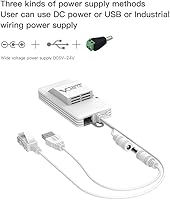
A DC 5–24V input range with two-stage overvoltage protection up to 29V is a standout practical feature for industrial or semi-professional installs. It means the VAP11AC bridge can be powered off existing equipment rails, USB power banks, or standard adapters without a dedicated PSU.
The included power adapter is basic, and buyers using this in higher-voltage environments should verify their supply carefully. A few users noted the power input labeling could be clearer given how consequential incorrect voltage selection can be.
Long-Term Connection Stability
59%
41%
A meaningful portion of buyers — particularly those using this WiFi bridge in surveillance setups — reported months of stable uptime with zero manual intervention after initial configuration. Automatic reconnection after router reboots worked consistently for this group.
The experience is genuinely split. Another segment of buyers reported recurring connection drops every few days or weeks, requiring either a manual reboot or power cycle to restore service. The inconsistency is hard to attribute to a single cause, which makes troubleshooting frustrating.
Documentation & Onboarding
31%
69%
Some technical users found the core configuration logic intuitive enough that they worked around the limited documentation using general networking knowledge. For an experienced installer, the missing manual is an inconvenience rather than a blocker.
For anyone without a networking background, the documentation is genuinely inadequate. The included guide is brief, poorly translated in places, and does not cover common failure scenarios or mode-switching workflows. This is arguably the product's most consistent source of negative reviews.
Automatic Reconnection & Smart Features
72%
28%
Automatic WiFi hotspot reconnection is a feature that sounds minor until your camera goes offline at 2 AM because the router rebooted. Buyers managing remote or unattended installations consistently praised this function as one of the more practical design decisions in the hardware.
Motion detection signaling, while listed as a feature, received almost no substantive feedback in either direction — suggesting it either works quietly in the background or simply goes unused by most buyers. Its implementation is not well documented, limiting its practical adoption.
Value for Money
63%
37%
For technically capable installers who know what they are buying, this dual-band bridge adapter offers a combination of modes and power flexibility that would cost more from better-known brands. The hardware capability-to-price ratio is reasonable if you factor in the learning curve.
Buyers who purchased expecting a plug-and-play experience consistently felt the price was not justified given the setup difficulty and documentation gaps. At this tier, buyers have a right to expect better onboarding, and the product does not deliver that for a meaningful portion of its audience.
Manufacturer Support
38%
62%
A small number of buyers reported that Vonets support, when reached through email, provided functional guidance that resolved their issues. For highly specific technical questions about mode configuration, the manufacturer did occasionally respond with useful detail.
The pattern across reviews points to slow response times and inconsistent quality of support interactions. Several buyers noted they resolved issues through third-party forums rather than official channels, which is a telling sign for a product that demands non-trivial configuration expertise.
OS & Device Compatibility
79%
21%
Cross-platform support across Windows, Linux, Android, and iOS means this WiFi bridge integrates cleanly into mixed-device environments — a real advantage for IoT deployments or workshops running varied hardware stacks. Linux compatibility in particular drew positive mention from embedded systems integrators.
Compatibility is broadly solid, but edge-case device pairings — particularly older DVR firmware or non-standard embedded OS builds — occasionally required manual configuration steps that the documentation did not anticipate. Buyers with legacy equipment should test before committing to a full deployment.
Antenna & Signal Consistency
67%
33%
Four omnidirectional antennas split evenly across both bands give the device a reasonable signal footprint for its compact size. In line-of-sight installations, users moving moderately sized video streams found the signal consistent enough for continuous operation.
In environments with concrete walls, metal shelving, or RF-dense areas — exactly the kind of places IP cameras and DVRs tend to live — signal consistency dropped noticeably. The antennas are fixed and non-adjustable, removing one option for field troubleshooting when placement is suboptimal.

Suitable for:

The Vonets VAP11AC AC1200 Dual Band WiFi Bridge was clearly designed with working installers and technically confident buyers in mind, and that is exactly who gets the most out of it. If you are setting up an IP camera or DVR system in a location where running Ethernet cable is impractical — a detached garage, a warehouse corner, a rooftop mount — this WiFi bridge fills that gap without requiring you to rewire anything. Small business operators connecting POS terminals, network printers, or industrial PLCs over WiFi will find it capable and flexible, particularly given its wide voltage input and multiple operating modes. IoT integrators working across Linux, Android, or Windows environments will appreciate that it does not lock them into a single ecosystem. The 2023 cooling fan addition makes it a more credible choice for always-on deployments where earlier bridge hardware would have throttled or failed under sustained thermal load. If you have basic networking knowledge and a specific wired-device problem to solve, this dual-band bridge adapter is a practical tool at a reasonable price for the capability it delivers.

Not suitable for:

The Vonets VAP11AC AC1200 Dual Band WiFi Bridge is a hard sell for anyone who expects a plug-and-play experience out of the box. If you have never navigated a router web interface or configured a network bridge manually, the sparse documentation and dated UI will likely result in hours of frustration rather than a working installation. It is also not a good fit for buyers hoping to boost general home WiFi coverage — it is a bridge first, and using it as a whole-home extender is an awkward misapplication of what it does well. The 100Mbps LAN ports become a real constraint if you are pushing high-bitrate video from multiple cameras simultaneously, so bandwidth-intensive professional setups may find it limiting. Buyers who need responsive after-sales support should also be cautious — manufacturer responsiveness has been inconsistent according to verified feedback, and troubleshooting through community forums is often the faster path. If your comfort zone is consumer-grade networking gear with a companion app and a quick-start guide that actually works, this dual-band bridge adapter will likely disappoint.
Specifications

  • Brand & Model: Manufactured by Vonets (Shenzhen Houtian Network Communication Technology Co., Ltd), model designation VAP11AC.
  • WiFi Standard: Supports 802.11a/b/g/n/ac across both bands, with a combined AC1200 classification.
  • 2.4GHz Speed: Maximum wireless throughput on the 2.4GHz band is 300Mbps under ideal conditions.
  • 5GHz Speed: Maximum wireless throughput on the 5GHz band reaches 900Mbps under ideal, low-interference conditions.
  • Antennas: Equipped with four fixed omnidirectional antennas — two dedicated to 2.4GHz and two to 5GHz — for simultaneous dual-band operation.
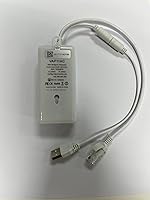
  • LAN Ports: Two RJ45 Ethernet ports operating at 10/100Mbps, allowing up to two wired devices to connect through the bridge simultaneously.
  • Power Input: Accepts a wide voltage range of DC 5–24V via USB or DC connector, with two-stage automatic overvoltage protection rated up to 29V.
  • Cooling System: Features a built-in active cooling fan introduced in the 2023 hardware revision to reduce operating temperature during continuous use.
  • TX Power: Transmit power is rated at 15dBm on 2.4GHz and between 18–23dBm (selectable) on 5GHz.
  • Operating Range: Theoretical open-air range reaches up to 250 meters under low-data 802.11a conditions; practical video streaming range is typically under 100 meters.
  • Operating Modes: Supports four switchable modes: WiFi bridge, WiFi repeater, AP hotspot, and router — all configurable through the web interface.
  • OS Compatibility: Compatible with Windows, Android, Linux, and iOS operating environments for configuration and connected device management.
  • Dimensions: Physical size measures 3.7 x 1.77 x 0.59 inches, making it compact enough to mount in enclosures or behind equipment.
  • Weight: Unit weighs 4.1 ounces, light enough for flexible mounting without structural reinforcement.
  • Smart Features: Supports automatic WiFi hotspot reconnection after signal loss and includes motion detection signaling for compatible camera integrations.
  • Availability: First listed in November 2018 and confirmed as not discontinued by the manufacturer as of the latest product data.
  • Market Rank: Holds a Best Sellers Rank of approximately #285 in the Amazon Repeaters category based on recent sales data.
  • User Rating: Carries an average rating of 3.6 out of 5 stars based on 123 verified global ratings.

Related Reviews

Linksys RE6350 AC1200 Dual-Band WiFi Extender
86%
91%
Setup & Installation
88%
Wi-Fi Performance
89%
Coverage Area
85%
Dual-Band Performance
84%
Streaming & Gaming
More
TP-Link Archer A6 AC1200 WiFi Router
76%
74%
WiFi Speed & Performance
67%
WiFi Range & Coverage
88%
Setup & Ease of Use
71%
Build Quality & Design
91%
Wired Port Performance
More
Vonets VAP11N-300 Mini WiFi Bridge
85%
86%
Performance
91%
Ease of Setup
88%
Power Efficiency
84%
Connectivity Range
90%
Device Compatibility
More
Vonets VAP11G-300 WiFi Bridge Repeater
72%
58%
Ease of Setup
83%
Bridge Mode Performance
67%
Repeater Mode Performance
61%
Wireless Range
71%
Build Quality & Durability
More
NETGEAR WAX202 WiFi 6 Dual-Band Router
84%
88%
WiFi Performance
93%
Setup & Installation
85%
App Usability
89%
Speed & Coverage
90%
Device Connectivity
More
Asus RT-AC1200 Wireless Dual-Band Router
83%
85%
Wi-Fi Performance
91%
Ease of Setup
78%
Coverage Range
88%
Parental Controls
81%
Streaming & Gaming Performance
More
VONETS VAP11S 2.4GHz WiFi Bridge/Repeater
83%
85%
WiFi Performance
91%
Ease of Setup
88%
Value for Money
82%
Build Quality
87%
Compatibility with Devices
More
VSVABEFV AP240 Dual-Band WiFi Access Point
85%
88%
Performance
91%
Ease of Setup
85%
Coverage & Range
83%
Reliability
80%
Build Quality
More
FjUoLzgK M-97G WiFi Extender
74%
91%
Ease of Setup
67%
Signal Coverage
62%
5GHz Band Performance
78%
2.4GHz Band Reliability
83%
Ethernet Port Utility
More
ASUS RT-ACRH13 AC1300 Dual Band WiFi Router
86%
88%
WiFi Performance
91%
Setup and Installation
90%
Value for Money
83%
Signal Coverage
89%
Ease of Use (Mobile App)
More

FAQ

Honest answer: it is not a plug-and-play device. You will need to access a web-based configuration interface using a browser, assign the correct mode, and enter your WiFi credentials manually. If you have ever set up a router or configured a basic network device before, you will get through it. If you have not, budget extra time and expect some trial and error — the included documentation is limited.

Yes, that is exactly the use case this WiFi bridge was designed for. You plug the bridge into your DVR or camera via Ethernet, connect the bridge to your WiFi network through the web interface, and the wired device gets network access without any physical cable run to your router. It works well once configured.

Do not rely on the 250-meter figure for anything other than low-data, open-air, line-of-sight scenarios. For actual video transmission — HD camera feeds, DVR streaming — plan for usable range in the 60–100 meter window. Walls, metal shelving, and competing WiFi signals will reduce that further, so site conditions matter a lot.

The 2023 hardware revision added a built-in cooling fan specifically to address this concern. Earlier versions of the VAP11AC bridge had a documented overheating problem during sustained operation, and buyer feedback on the updated units suggests the fan makes a real difference for always-on deployments like surveillance systems. Just make sure the fan vents stay clear of obstructions.

Yes, both RJ45 ports are active and can support two wired devices simultaneously. Keep in mind they are capped at 10/100Mbps each, so if you are pushing high-bitrate video from two cameras at once, you may start to feel that ceiling. For standard HD camera feeds or network printers, it should be sufficient.

It does. The Vonets VAP11AC AC1200 Dual Band WiFi Bridge is compatible with Linux environments, which is one reason IoT integrators and embedded systems developers tend to favor it over consumer-grade alternatives. Configuration is done through the browser-based web UI rather than any OS-specific software, so the connected device's operating system is largely irrelevant to setup.
Yes, automatic WiFi reconnection is a built-in feature. Once you have configured the bridge with your network credentials, it will attempt to re-establish the connection on its own after a router reboot or brief signal dropout. For unattended installations — remote cameras, equipment in locked enclosures — this is genuinely useful and works as described by most buyers.

Technically it has a repeater mode, but this device is not optimized for whole-home coverage. It lacks the management features, app support, and beamforming capabilities that consumer extenders offer for general home use. If your goal is simply to get better WiFi in more rooms, a dedicated home extender will serve you better and be much easier to configure.

This is the most common complaint among buyers who experience issues. Start by checking that the fan vents are clear and the unit is not mounted in a confined space without airflow. If drops persist, try assigning a static IP to the bridge and fixing the WiFi channel on your router rather than using auto-select. A small number of units appear to have firmware-level instability, and checking Vonets' website for updated firmware is worth doing before assuming the hardware is faulty.

Support responsiveness from Vonets has been inconsistent based on buyer feedback. Some users report receiving helpful technical guidance via email; others have had slow or unhelpful interactions. In practice, a number of buyers have found faster answers through networking forums and community threads than through official support channels. Factor that in if reliable after-sales support is a priority for your purchase decision.