Overview
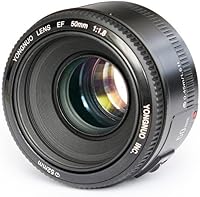
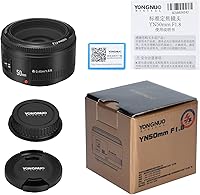
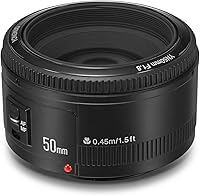
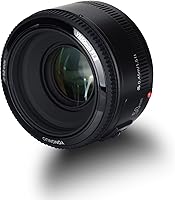
The Yongnuo YN50mm F1.8 Prime Lens has carved out a loyal following since its 2014 debut as a stripped-down, wallet-friendly answer to Canon's own 50mm offering. Designed for the Canon EF mount, it works across both full-frame and APS-C bodies, giving it a surprisingly broad appeal for a single lens. On a crop sensor, the field of view shifts to roughly 80mm — a comfortable focal length for portraits and everyday street work. It is compact and light enough to forget it's even on your camera, which makes this budget prime lens a genuinely practical everyday option for beginners and hobbyists who want to explore prime photography without a big financial commitment.
Features & Benefits
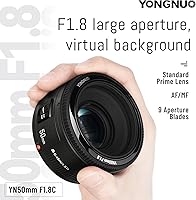
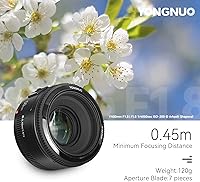
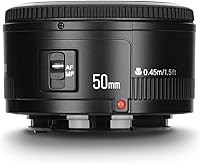
At its widest, the YN50mm f/1.8 opens up far enough to throw backgrounds into a soft blur — useful for flattering indoor portraits or adding depth to street scenes. Autofocus and manual focus can both be used without flipping a dedicated switch on the barrel, which keeps things simple in the field. Multi-coated glass across all six elements does a reasonable job controlling flare, and the lens passes aperture data through to your camera body via EXIF, keeping your image metadata tidy in post-processing. A 52mm filter thread is a practical standard size, and a minimum focus distance of 0.45m lets you get acceptably close to small subjects without needing to swap glass.
Best For
This 50mm prime is a natural fit for anyone picking up their first prime lens on a Canon DSLR and not wanting to spend much doing it. Portrait photographers on a budget will find the wide aperture genuinely useful for separating a subject from a busy background in natural light. On a crop-sensor body, the effective focal length lands around 80mm, which is a comfortable working distance for headshots and candid people photography. Full-frame shooters might reach for it as a lightweight backup rather than a primary workhorse. It's also a good option for students and enthusiasts who want to practice depth-of-field control and low-light shooting without risking expensive glass.
User Feedback
Buyers consistently praise the image sharpness you get when stopped down to f/4 or f/5.6 — at those apertures, the results hold up well for the price. Wide open at f/1.8, center sharpness is reasonable, though corners soften noticeably on full-frame bodies. The most frequent complaints come down to autofocus reliability: in dim conditions the lens can hunt before locking on, and it doesn't always match the consistency of Canon's native 50mm. Focus motor noise is another sticking point for video shooters, as it tends to be picked up by on-camera microphones. Many users are still pleasantly surprised by the build quality — it's plastic, but it doesn't feel cheap for what you pay.
Pros
- The F1.8 maximum aperture delivers genuine background blur for portrait and low-light shooting at a price few lenses can match.
- Covers both full-frame and APS-C Canon EF bodies, making it versatile across a wide range of camera generations.
- Stopped down to f/4 or f/5.6, the YN50mm f/1.8 produces sharp, clean images that hold up well for everyday photography.
- At roughly 205g, this 50mm prime is light enough to carry all day without adding noticeable weight to your kit.
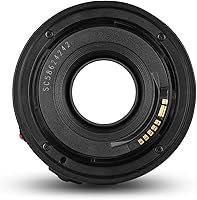
- Gold-plated contacts help maintain a reliable connection to the camera body and resist corrosion over time.
- EXIF aperture data passes correctly to the camera, keeping your shooting metadata organized without any workarounds.
- The 52mm filter thread is a common size, so compatible filters are easy and inexpensive to source.
- Dual autofocus and manual focus support gives shooters practical flexibility without hunting through menus.
- Build quality feels more solid in hand than the price tier would lead you to expect, according to a large majority of buyers.
- Serves well as a dedicated learning lens for students working through the fundamentals of aperture and depth-of-field control.
Cons
- Autofocus hunts noticeably in low light, which can cost you the shot in dimly lit indoor environments.
- AF consistency is less reliable than Canon's native 50mm, and some users report accuracy issues even in decent lighting.
- The focus motor generates audible noise during operation, making it a poor choice for video work with on-camera audio.
- Corner sharpness on full-frame bodies at f/1.8 is soft, requiring you to stop down before the image quality evens out across the frame.
- Autofocus performance varies across Canon body generations, so the experience on an older or newer body may differ significantly.
- There is no image stabilization, which limits how far you can push this budget prime lens in very slow shutter speed situations.
- The plastic barrel construction, while adequate, does not inspire confidence for heavy professional use or rough shooting conditions.
- Flare resistance, while decent for the price, can still be a problem when shooting into strong light sources at wide apertures.
- No weather sealing of any kind, making it risky to use in light rain or dusty outdoor environments.
- Long-term reliability is harder to predict compared to Canon-branded optics with established service and warranty networks.
Ratings
Our AI rating system analyzed thousands of verified global buyer reviews for the Yongnuo YN50mm F1.8 Prime Lens, actively filtering out incentivized, bot-generated, and spam submissions to surface what real photographers actually experience. The scores below reflect an honest cross-section of feedback — from enthusiastic beginners who were genuinely surprised by the results, to more experienced shooters who ran into real limitations. Both the strengths and the frustrations are represented transparently across every category.
Value for Money
Image Sharpness
Autofocus Speed
Autofocus Accuracy
Bokeh Quality
Build Quality
Low-Light Performance
Video Usability
Manual Focus Experience
Flare & Contrast
Lens Compatibility
Weight & Portability
Chromatic Aberration
Ease of Use
Suitable for:
The Yongnuo YN50mm F1.8 Prime Lens is a strong match for Canon DSLR shooters who are ready to step past their kit lens but aren't prepared to spend heavily on glass. Beginners who want to practice shooting with a fast aperture — experimenting with background blur in portrait sessions, low-light indoor photography, or casual street work — will find this 50mm prime offers a meaningful creative upgrade at a very low entry cost. On a crop-sensor body, the effective 80mm field of view is genuinely flattering for portraits, making it a useful tool for hobbyists photographing people at events or in natural light. Students studying photography fundamentals will appreciate having a dedicated prime for learning about depth of field and exposure relationships. Full-frame Canon shooters who want a small, lightweight backup lens to throw in a bag without worrying about it also have good reason to consider this budget prime lens.
Not suitable for:
The Yongnuo YN50mm F1.8 Prime Lens is not the right call for photographers who depend on fast, accurate autofocus — wedding shooters, sports photographers, or anyone chasing unpredictable moving subjects will find the AF system frustrating compared to Canon's native glass. Video creators should think carefully before buying, since the focus motor produces audible noise that on-camera microphones tend to pick up, which is a real problem for run-and-gun filming. Photographers who need edge-to-edge sharpness wide open on a full-frame body will likely be disappointed, as corner softness at f/1.8 is a known limitation. Those shooting in challenging low-light conditions where the camera and lens need to work together reliably will also find this budget prime lens falls short of what first-party Canon optics consistently deliver. If autofocus consistency across different Canon body generations matters to you, be aware that compatibility and AF behavior can vary depending on which camera you pair it with.
Specifications
- Focal Length: This lens has a fixed 50mm focal length, which translates to approximately 80mm on APS-C crop-sensor Canon bodies.
- Maximum Aperture: The maximum aperture is F1.8, allowing strong background separation and usable performance in lower ambient light conditions.
- Minimum Aperture: The lens stops down to a minimum aperture of F22, offering flexibility for landscape or studio lighting scenarios requiring deep focus.
- Lens Structure: Optical construction consists of 5 groups and 6 elements, with multi-coating applied to reduce flare and improve overall light transmission.
- Lens Mount: Designed exclusively for the Canon EF mount, it is compatible with both full-frame and APS-C sensor DSLR cameras.
- Focus Modes: Supports both autofocus and manual focus modes, switchable to give the photographer direct control over focusing behavior.
- Min Focus Distance: The minimum focusing distance is 0.45m, enabling close-up work with a maximum magnification ratio of 0.15x.
- Filter Thread: The front element accepts 52mm threaded filters, a widely available standard size compatible with many affordable filter sets.
- Angle of View: The diagonal angle of view is 46 degrees, with a horizontal angle of 40 degrees and a vertical angle of 27 degrees.
- Weight: The lens weighs approximately 205g (around 4.2 oz), keeping the overall camera setup light and manageable for extended shooting sessions.
- Dimensions: Physical dimensions measure approximately 74mm in diameter and 60mm in length, making it a compact option that balances well on most Canon bodies.
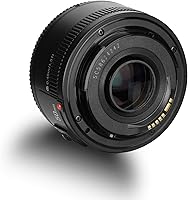
- Contacts: The lens uses gold-plated metal electrical contacts, which improve signal conductivity and offer better resistance to corrosion over time compared to standard contacts.
- EXIF Support: Full EXIF data communication is supported, meaning aperture values and other lens data are recorded accurately in image metadata.
- Lens Coatings: Multi-coated glass elements are used throughout the optical path to reduce unwanted reflections and improve contrast in the final image.
- Format Compatibility: The lens is designed to cover both full-frame (35mm) and APS-C sensor formats within the Canon EF ecosystem.
- Camera Modes: Compatible with all major Canon exposure modes including Manual, Aperture Priority, Shutter Priority, and Program modes.
- Max Magnification: Maximum magnification is 0.15x, achieved at the minimum focus distance of 0.45m, producing an image field of approximately 160 x 240mm.
- Stabilization: There is no optical image stabilization built into this lens; camera body-based stabilization systems are not applicable to most Canon EF DSLRs.
Related Reviews
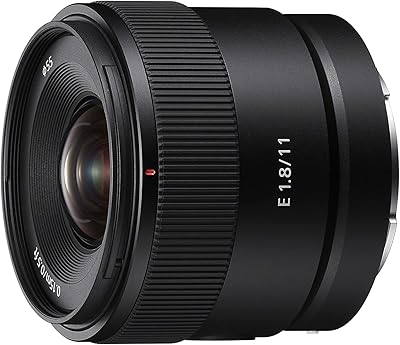
Sony E 11mm F1.8 APS-C Ultra-Wide-Angle Prime Lens
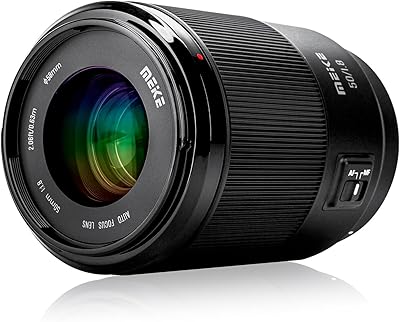
Meike 50mm F1.8 Sony E Mount Lens
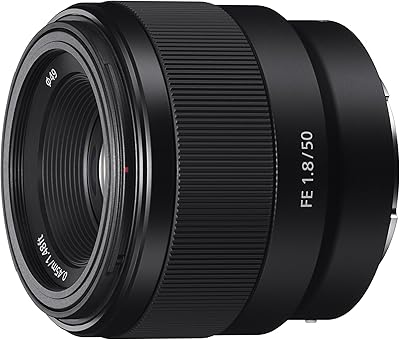
Sony FE 50mm F1.8 Standard Lens
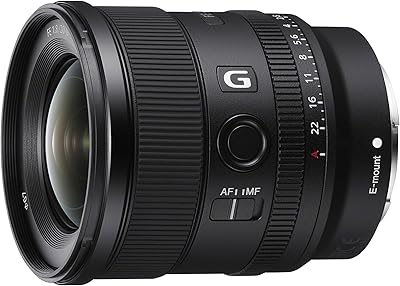
Sony SEL20F18G 20mm F1.8 Wide-Angle Lens
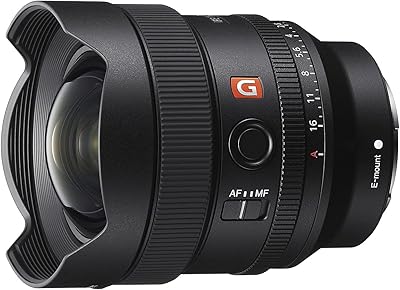
Sony FE 14mm F1.8 GM Wide-Angle Prime Lens
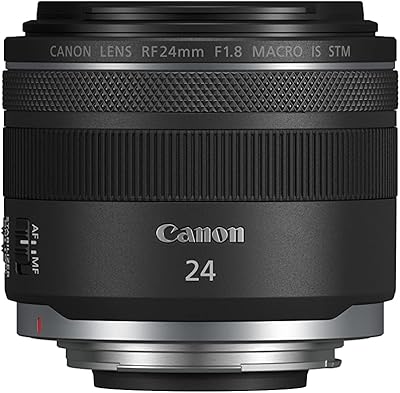
Canon RF 24mm F1.8 Macro Lens
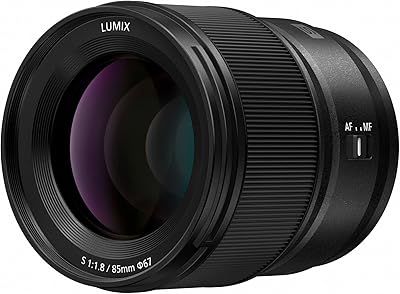
Panasonic LUMIX S-S85 85mm F1.8 Lens
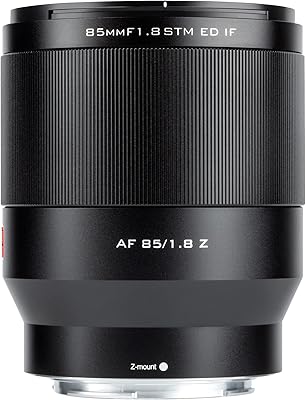
VILTROX 85mm F1.8 Z Portrait Lens
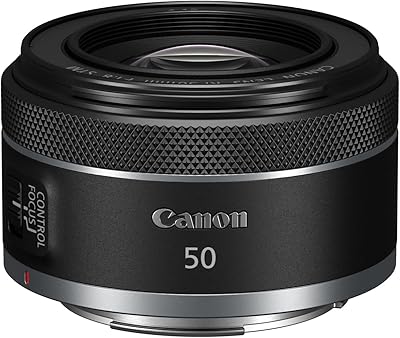
Canon RF 50mm F1.8 STM Lens