LiTime 3500W 48V Solar Inverter Charger

Overview
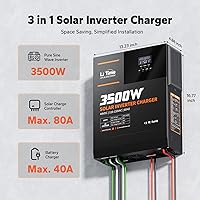
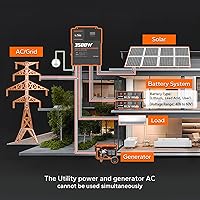
The LiTime 3500W 48V Solar Inverter Charger combines an inverter, MPPT charge controller, and AC charger into a single enclosure — something that would otherwise require three separate components, extra cabling, and considerably more wall space. LiTime built its reputation largely within the LiFePO4 battery community, and this unit reflects that ecosystem focus through broad battery compatibility. With 3500W of continuous power and a 6000W surge rating, it can comfortably run a refrigerator, a home office, or kick-start a well pump without breaking a sweat. It only hit the market in mid-2024 and carries a relatively modest review count, so the value proposition is compelling, but long-term reliability remains to be proven.
Features & Benefits
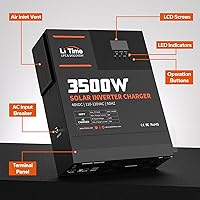
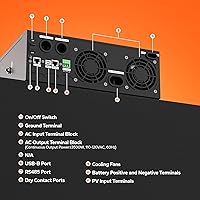
The built-in 80A MPPT controller is one of the more practical aspects of this all-in-one solar inverter charger — at 48V, that translates to roughly 3,840W of solar input capacity, enough to pair with a solid mid-size panel array without a separate charge controller eating up space or budget. Four charging modes offer real flexibility depending on your situation, from solar-only off-grid use to utility-priority for overnight grid top-ups. The pure sine wave output matters more than people realize — sensitive gear like CPAP machines, variable-speed motors, and audio equipment runs cleanly without the buzzing or damage risk tied to modified sine wave units. There is also a built-in UPS function that switches to battery backup within milliseconds, with no manual intervention needed. RS485 and the onboard LCD round out monitoring.
Best For
This 48V off-grid unit is a strong fit for anyone building a cabin, tiny home, or shed setup where wall space is tight and consolidating hardware matters. Homeowners who want automatic failover during grid outages will appreciate the millisecond UPS switchover — no manual intervention, no waiting. RV and van-build enthusiasts running a 48V lithium bank will find the clean sine wave output especially useful for laptops, CPAP machines, and sensitive power tools. For DIY solar builders comparing costs, buying a standalone MPPT controller, inverter, and charger separately can easily cost significantly more with additional installation complexity. And if you already own LiTime LiFePO4 batteries, the native RS485 integration makes this a natural companion.
User Feedback
Across its roughly 65 ratings, the LiTime hybrid inverter sits at 4.0 stars — respectable for a unit this new. Buyers who rate it highly tend to call out the ease of initial setup, the clarity of the LCD, and the compact footprint relative to what you get. On the critical side, a few users have flagged that the included documentation could be more thorough, and fan noise under heavy load has come up more than once. There are no widespread reports of hardware failure yet, but with the product barely past its first year on the market, that track record is too short to draw firm conclusions about long-term durability. Approach it as a promising newcomer, not a battle-tested workhorse.
Pros
- Combines inverter, 80A MPPT controller, and AC charger in one enclosure, eliminating separate components and extra wiring costs.
- The 3500W continuous and 6000W surge output handles most common household loads with meaningful headroom to spare.
- Pure sine wave output protects sensitive electronics, CPAP machines, and variable-speed motors that modified sine wave units can damage.
- Four configurable charging modes let you prioritize solar, grid power, or a hybrid mix based on your daily energy habits.
- Millisecond UPS switchover keeps refrigerators and home office equipment running through grid outages without a single flicker.
- Built-in LCD and RS485 port deliver real-time battery, solar, and AC monitoring without purchasing a separate display module.
- Compatible with both lead-acid and LiFePO4 chemistries, plus a user-configurable mode for non-standard battery setups.
- Compact footprint and manageable weight make wall mounting achievable for a confident single installer.
- Early buyers consistently report that initial setup is approachable even without prior inverter installation experience.
Cons
- Documentation quality has been flagged by multiple early buyers as thin, requiring outside research to complete the installation.
- Fan noise under heavy load is a recurring complaint — not ideal for bedroom, nursery, or quiet workspace installations.
- With fewer than 70 reviews and a mid-2024 launch, meaningful long-term reliability data simply does not exist yet.
- No built-in Wi-Fi or Bluetooth; remote data logging via RS485 requires additional hardware or third-party software.
- The 48V-only design rules out anyone with an existing 12V or 24V battery bank without a full system overhaul.
- Output is capped at 120V AC, making it unsuitable for 240V appliances or split-phase residential loads without extra equipment.
- At just over 25 pounds, safe wall mounting really needs two people — awkward and risky as a solo job.
- LiTime has a niche brand footprint with limited physical service presence, which could complicate warranty follow-through.
- No reported independent verification of MPPT tracking accuracy or UPS switchover speed against the rated specifications.
Ratings
Our AI rating engine analyzed verified buyer reviews for the LiTime 3500W 48V Solar Inverter Charger from across global markets, filtering out bot-generated, duplicate, and incentivized submissions before computing each category score. The result is a balanced, data-driven picture of where this hybrid inverter genuinely delivers and where it still falls short — no marketing spin applied. Both the clear wins and the recurring frustrations buyers actually experience are reflected transparently below.
Value for Money
Ease of Installation
Power Output & Reliability
Pure Sine Wave Quality
Battery Compatibility
MPPT Controller Performance
UPS Switchover Speed
Charging Mode Flexibility
Build Quality
Cooling & Noise
Display & Monitoring
Documentation Quality
Brand Support & Warranty
Suitable for:
The LiTime 3500W 48V Solar Inverter Charger is a practical pick for DIY solar builders and off-grid homeowners who want an inverter, MPPT charge controller, and AC battery charger consolidated into one unit rather than wiring three separate components together. Cabin and tiny home owners with limited wall space will particularly appreciate the compact form factor — at under 17 inches wide and just over 25 pounds, it installs cleanly without demanding a dedicated equipment room. Anyone running a 48V LiFePO4 battery bank will find the compatibility well thought-out, and existing LiTime battery owners get the added benefit of native RS485 integration for unified monitoring. RV and van-life builds that need clean 120V AC power for laptops, CPAP machines, or variable-speed power tools are also a strong match given the pure sine wave output. Budget-conscious builders who have been eyeing premium brands but cannot justify the higher cost will find this unit covers the core bases at a significantly lower total outlay.
Not suitable for:
Buyers who need a proven, long-track-record system for mission-critical applications should look elsewhere — the LiTime 3500W 48V Solar Inverter Charger has fewer than 70 reviews and less than two years on the market, which simply is not enough data to assess how it performs after years of daily cycling. Anyone working with a 12V or 24V battery bank will need a different unit entirely, as this system is built exclusively around 48V DC input. Loads that push consistently past 3500W will exceed the continuous output rating, and while the 6000W surge capacity handles motor start-up well, it is not a substitute for a higher-rated dedicated inverter on a power-hungry workshop or whole-home setup. Buyers who rely on thorough installation documentation should proceed with caution, since early users have reported that the included manual leaves meaningful gaps. If your situation calls for split-phase 240V output, factory-certified installer support, or the institutional backing of an established brand like Victron or Schneider Electric, this all-in-one solar inverter charger is unlikely to meet those requirements.
Specifications
- Continuous Power: Delivers 3500W of continuous AC output, sufficient to run a refrigerator, home office equipment, and lighting simultaneously.
- Surge Power: Handles peak surge loads up to 6000W, covering the high startup current draw of motors, pumps, and compressors.
- DC Input: Requires a 48V DC battery bank as its primary power source and is not compatible with 12V or 24V systems.
- AC Output: Produces 120V AC pure sine wave output at 60Hz, suitable for standard North American appliances and sensitive electronics.
- MPPT Controller: The integrated 80A MPPT charge controller supports up to approximately 3,840W of solar panel input at 48V system voltage.
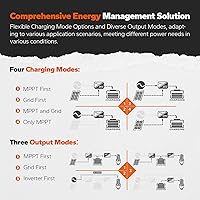
- Charging Modes: Offers four selectable charging modes — Solar Only, Utility Priority, Solar Priority, and Hybrid — to match different energy management needs.
- Output Modes: Supports three output source modes — Inverter Priority, PV Priority, and Utility Priority — selectable based on the user's power priorities.
- UPS Switchover: Switches from grid to battery backup in milliseconds during an outage, preventing interruptions to connected equipment.
- Battery Types: Compatible with 48V lead-acid, standard lithium, and LiFePO4 chemistries, plus a user-configurable mode for custom battery parameters.
- Communication: Includes an RS485 interface for integration with battery management systems and external energy monitoring software.
- Display: Features a built-in LCD panel that shows real-time data for battery charge state, solar input, and AC output status.
- Dimensions: Measures 16.77″ x 13.22″ x 4.88″, compact enough for wall mounting in a small utility space, shed, or RV bay.
- Weight: Weighs 25.3 pounds — manageable for two people but awkward and potentially unsafe as a solo wall-mount installation.
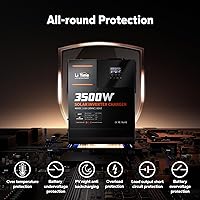
- Protections: Provides automatic hardware protection against short-circuit, overload, and over-temperature conditions to prevent component damage.
- Cooling: Uses intelligent variable-speed cooling fans that ramp up proportionally under load and run quieter during light-duty operation.
- Market Launch: First became available in August 2024, meaning long-term field reliability data is still being accumulated across real-world installations.
Related Reviews
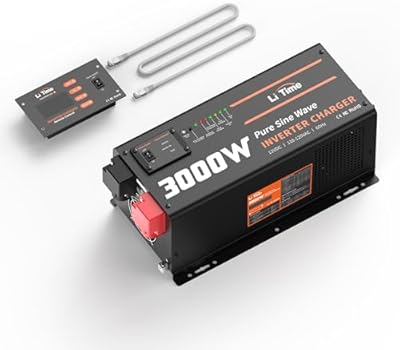
LiTime 3000W Pure Sine Wave Inverter Charger
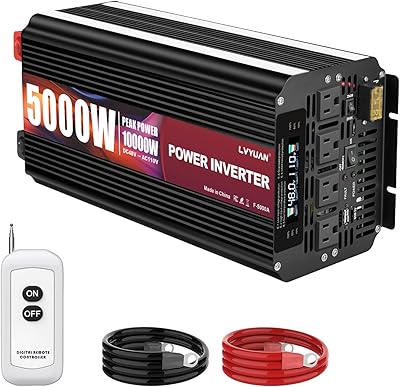
LVYUAN 5000W Power Inverter 48V to 120V
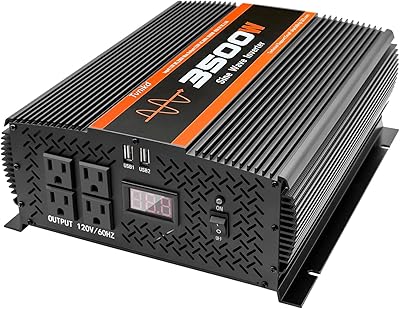
TVNIKD 3500W Pure Sine Wave Inverter
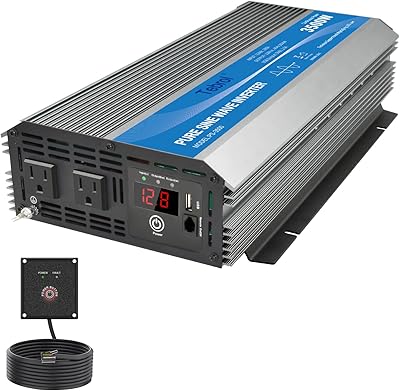
Tebrol 3500W Pure Sine Wave Inverter
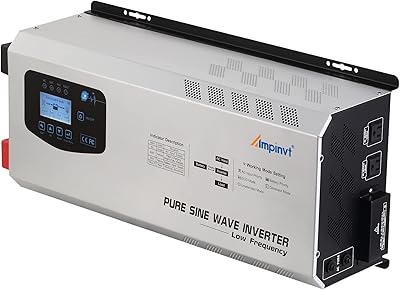
Ampinvt 48V 5000W Split Phase Power Inverter
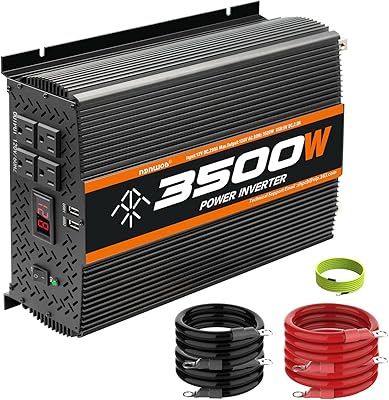
Tebrol 3500W Power Inverter
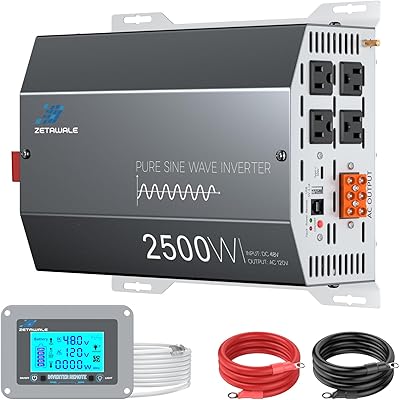
ZETAWALE 48V 2500W Pure Sine Wave Inverter
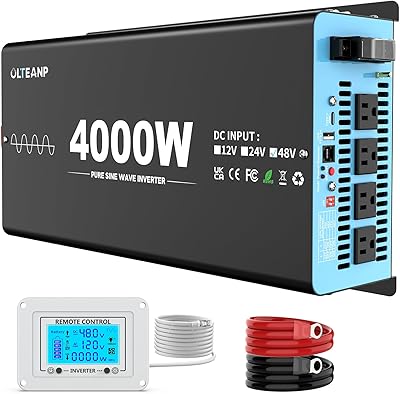
OLTEANP 48V 4000W Pure Sine Wave Inverter
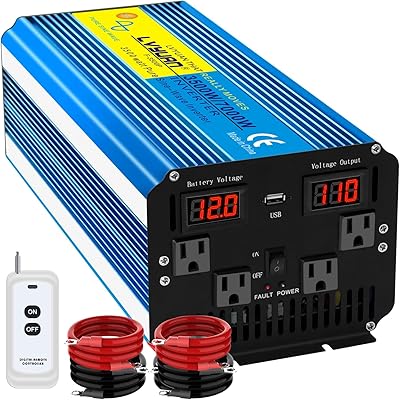
Yinleader 3500W Pure Sine Wave Power Inverter