
Overview

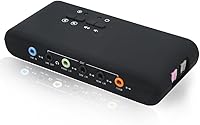
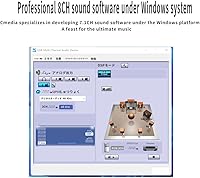
Finding a way to get 7.1 surround sound without opening up your computer case can be a headache, but the YEY 7.1 External USB Sound Card offers a practical, low-cost workaround. This external audio adapter bridges the gap for users with older hardware or laptops that lack high-end integrated audio. It is designed as a plug-and-play device, though you will definitely want to install the dedicated Cmedia control software to unlock its full potential. Keep in mind that this specific software suite is strictly for Windows users, so those on Mac or Linux won't get the same depth of configuration. It provides an impressive array of connectivity options, including dual microphone inputs and digital S/PDIF ports, making it a surprisingly versatile hub for an entry-level price point.

Features & Benefits

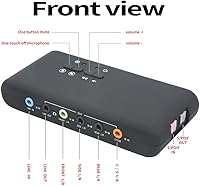
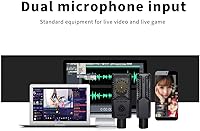
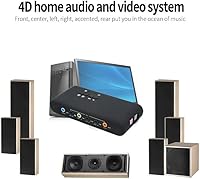
The hardware packs a lot of utility into a small footprint, primarily led by its 8-channel DAC output. This allows you to hook up complex home theater speaker sets that usually require a bulky internal card. Beyond simple playback, this USB sound box includes S/PDIF digital ports to ensure a clean, interference-free signal transfer for your high-fidelity equipment. One of the standout inclusions is the loop-back support, a feature often missing in budget gear that makes capturing internal PC audio much simpler for streamers. You also get immediate tactile control through physical volume and mute buttons, so you don't have to fumble with mouse clicks mid-game. With its dual 3.5mm jacks, the unit even supports basic multi-mic recording setups for hobbyist podcasters.

Best For

The multichannel audio interface is an ideal pick for anyone needing to upgrade motherboard audio without spending a fortune. It shines in a home theater environment where you need to connect analog surround speakers to a modern laptop. Content creators will appreciate the digital optical ports and internal recording capabilities, which are rare finds in this price bracket. Furthermore, it serves as a lifesaver for those maintaining legacy systems, as the drivers remain compatible with older operating systems like Windows XP. If you are a Windows user looking for a functional audio tool that provides more than just a standard headphone jack, this box covers those niche bases well. It is essentially a problem-solver for specific routing needs rather than a high-end audiophile DAC.

User Feedback

Real-world usage highlights that the surround sound virtualization is quite reliable, provided you take the time to set up the included Cmedia drivers. Many buyers point out that finding S/PDIF ports on such an inexpensive device is a major win. However, the experience isn't without its quirks. The software installation can be a bit temperamental on Windows 11, occasionally requiring a manual driver search to get everything running. On the physical side, the lightweight plastic shell does its job, but it clearly lacks the heft of more expensive metal interfaces. It feels a bit hollow in the hand, but for a stationary desktop setup, the build quality trade-off is understandable. It is a classic case of function over form, delivering the necessary ports where it counts.

Pros

  • The 8-channel DAC output provides a surprisingly immersive surround sound experience for movies and gaming.
  • Integrated S/PDIF digital input and output ports are a standout rarity at this low price point.
  • The internal loop-back support makes it much easier for streamers to capture system audio without complex software.
  • Physical volume and mute buttons offer convenient, tactile control during live calls or intense gameplay.
  • Dual 3.5mm microphone inputs allow for simple multi-source recording in basic podcasting setups.
  • This USB sound box is a cost-effective way to add high-end connectivity to older or budget computers.
  • It maintains excellent backward compatibility for legacy systems running older Windows versions like XP.
  • The compact footprint makes it easy to hide away or mount under a desk for a clean workspace.

Cons

  • The proprietary Cmedia software is required for full functionality but is restricted to Windows systems only.
  • The lightweight plastic housing feels hollow and lacks the premium durability found in metal audio interfaces.
  • Driver installation on the latest Windows 11 updates can be inconsistent and may require manual troubleshooting.
  • The non-detachable USB cable creates a permanent failure point if the cord becomes frayed or damaged.
  • Audio fidelity is capped at 48KHz/16-bit, which might not satisfy those looking for high-resolution lossless playback.
  • Tight spacing between the 3.5mm jacks can make it difficult to use multiple thick, high-end cables simultaneously.
  • The hardware buttons have a stiff, loud click that can easily be picked up by nearby microphones.
  • The unit lacks enough physical weight to stay in place when connected to heavy, high-gauge speaker wires.

Ratings

Our review of the YEY 7.1 External USB Sound Card is based on an AI-driven analysis of verified buyer feedback from around the globe, meticulously filtered to remove spam and incentivized ratings. This approach ensures you get a transparent look at both the technical wins and the real-world frustrations that actual owners experience in their daily setups.

Value for Money
93%
For users on a strict budget, this external audio adapter provides features like S/PDIF and 7.1 analog support that are usually locked behind much higher price points. It effectively rescues older hardware from obsolescence without requiring a major investment in internal components.
The low entry price comes at the cost of a lightweight plastic build that lacks the premium feel of professional-grade audio gear. You are definitely paying for the internal chipset rather than the external craftsmanship or high-end aesthetics.
Surround Sound Performance
84%
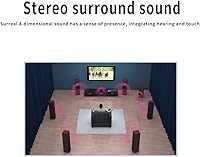
Once the drivers are configured, the 8-channel DAC delivers a surprisingly immersive home theater experience. Users appreciate how it accurately maps audio across 5.1 and 7.1 speaker layouts, providing clear directional cues for movies and casual gaming sessions.
Achieving true surround sound is entirely dependent on the proprietary software, which can be finicky to set up correctly. Without the Cmedia suite active, the device often defaults to basic stereo, which can be frustrating for non-technical users.
Connectivity & Ports
89%
The inclusion of dual 3.5mm microphone jacks and digital optical I/O is a standout feature for this USB sound box. Having both analog and digital options in such a small footprint makes it a versatile hub for various audio routing needs.
The physical spacing between the jacks can be a bit tight, making it difficult to fit bulkier, high-end 3.5mm connectors side-by-side. You might need slim adapters if you are using specialized cables with thick housing.
Windows Compatibility
76%
24%
This unit is a reliable solution for a wide range of Windows versions, from legacy XP systems to modern Windows 10 desktops. It provides a consistent interface for users who need to maintain older workstations with specific audio requirements.
Software stability on Windows 11 is a frequent pain point, with many buyers reporting that the automated installer fails to recognize the device. Manual driver updates and troubleshooting are often required to get the full feature set working on the latest OS.
Recording & Loop-back
81%
19%
The built-in loop-back support is a major benefit for entry-level streamers who need to capture system audio without complex virtual routing. It simplifies the recording process significantly for those making tutorials or recording gameplay on a budget.
At a 48KHz sample rate and 16-bit resolution, the recording quality is adequate for voice but lacks the depth required for professional music production. Serious vocalists might find the noise floor a bit too high for pristine studio work.
Build Quality
58%
42%
The compact and lightweight design makes it easy to tuck behind a laptop or mount under a desk with simple adhesive. Its small dimensions are perfect for cluttered workspaces where every square inch of desk real estate matters.
The all-plastic casing feels somewhat hollow and fragile, leading to concerns about long-term durability if the device is frequently moved. It lacks any significant weight, so heavy cables can easily pull the unit off your desk if it isn't secured.
Ease of Setup
67%
33%
For basic stereo playback, the device is essentially plug-and-play, working almost immediately when connected to a standard USB port. This makes it a quick fix for users who just need a working headphone jack after a motherboard failure.
Unlocking the advanced 7.1 features and S/PDIF functionality requires navigating a dated software interface that isn't very intuitive. The reliance on a mini-CD or specific web downloads for drivers adds a layer of friction to the initial installation.
Tactile Controls
82%
18%
Having dedicated hardware buttons for volume adjustment and microphone muting is incredibly convenient during live calls or gaming. These physical switches provide instant feedback that on-screen sliders simply can't match when you need to mute quickly.
The buttons are somewhat stiff and have a loud, clicky sound that can be picked up by sensitive microphones if the unit is sitting too close. They feel functional but lack the smooth, dampened action of more expensive audio interfaces.
Digital Audio Fidelity
78%
22%
The S/PDIF output provides a clean digital path that avoids the electronic interference often found inside a computer case. This results in a noticeably clearer signal when feeding audio into an external receiver or a pair of high-end powered monitors.
The DAC is limited to 48KHz, which means it cannot handle high-resolution 96KHz or 192KHz audio files in their native format. While fine for standard media, it won't satisfy listeners looking for a true lossless bit-perfect experience.
Portability
91%
Because the multichannel audio interface is so light and draws power directly from the USB bus, it is exceptionally easy to throw into a laptop bag. It is a great travel companion for someone who needs surround sound outputs on the go.
The lack of a detachable USB cable means that if the cord frays or breaks at the entry point, the entire unit becomes useless. A removable USB-C or Micro-USB port would have significantly improved the device's travel-ready credentials.

Suitable for:

The YEY 7.1 External USB Sound Card is a highly practical choice for Windows users who need to restore audio to a laptop with a broken jack or upgrade a motherboard that lacks surround sound support. It is particularly effective for home theater enthusiasts who want to connect older 5.1 or 7.1 analog speaker systems to a modern PC without spending hundreds on a professional interface. Content creators on a budget will also find it useful, as the built-in loop-back feature and digital S/PDIF ports simplify recording internal audio and connecting high-end optical gear. Furthermore, it is a rare reliable option for those maintaining legacy workstations running older operating systems like Windows XP.

Not suitable for:

Serious audiophiles or professional music producers should look elsewhere, as the YEY 7.1 External USB Sound Card is limited to a 48KHz sample rate and 16-bit resolution, which falls short of high-fidelity standards. This device is also not a viable option for Mac, Linux, or mobile users, as the essential 7.1 channel control and S/PDIF functionality depend entirely on proprietary Windows-only software. If you require a rugged, road-ready device for frequent travel, the lightweight plastic construction and non-detachable cable may not survive the rigors of being tossed into a heavy equipment bag daily. Finally, users who want a simple plug-and-play experience on Windows 11 might find the temperamental driver installation process frustratingly technical.

Specifications

  • Audio Channels: The device features an 8-channel DAC for 7.1 surround sound output and a 2-channel ADC via S/PDIF.
  • Sample Rate: Both analog playback and recording support a maximum sampling rate of 48KHz.
  • Resolution: Audio processing is handled with a 16-bit bit depth for both input and output signals.
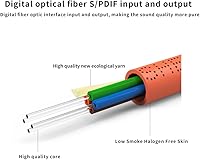
  • Digital Interface: Connectivity includes digital S/PDIF optical input and output compliant with IEC60958 specifications.
  • Analog Inputs: The hardware is equipped with two 3.5mm microphone jacks and one line-in stereo input.
  • OS Compatibility: Software drivers are compatible with Windows systems ranging from XP and Vista up to Windows 11.
  • Dimensions: The physical footprint of the unit measures 4.72 x 2.76 x 1.18 inches.
  • Weight: The total weight of the external adapter is approximately 6.7 ounces.
  • Power Source: Operation is selectable between standard USB bus power or an external self-powered option.
  • Control Interface: The top panel features physical buttons for volume up, volume down, and microphone mute.
  • Recording Support: Built-in loop-back functionality allows for the direct recording of internal system audio.
  • Software Suite: Access to advanced 7.1 channel settings requires the installation of the included Cmedia software.
  • Hardware Interface: Connection to the host computer is established via a standard USB Type-A port.
  • Enclosure Material: The external casing is constructed from lightweight, molded plastic.

Related Reviews
Creative Sound BlasterX G1
84%
88%
Overall Audio Improvement
79%
Virtual Surround Sound
84%
Competitive Gaming Performance (X-Plus Mode)
71%
Software & Customization
92%
Form Factor & Portability
More
Creative Sound BlasterX G5
83%
92%
Audio Clarity & Detail
88%
Gaming Spatial Awareness
91%
Amplification Power
86%
Console Compatibility
58%
Software User Experience
More
Cubilux 7.1 USB External Sound Card
83%
91%
Build Quality
88%
Audio Clarity & Noise Floor
86%
Headphone Output Quality
74%
7.1 Surround Sound Performance
93%
Plug-and-Play Setup
More
StarTech ICUSBAUDIO7D
78%
93%
Plug-and-Play Setup
81%
Audio Quality Improvement
68%
7.1 Surround Performance
74%
SPDIF Digital Output
84%
Build Quality & Durability
More
Andrea Electronics USB-SA-1
87%
93%
Microphone Noise Reduction
96%
Portability & Form Factor
89%
Plug-and-Play Reliability
82%
Build Durability
86%
Audio Output Clarity
More
Creative Sound Blaster Audigy PCIe RX 7.1 Sound Card
84%
88%
Sound Quality
83%
Setup and Installation
76%
Driver Compatibility
85%
Build Quality
92%
Value for Money
More
Creative Sound Blaster Omni Surround 5.1
81%
89%
Audio Quality Improvement
76%
Ease of Installation
82%
Microphone Performance
91%
Physical Controls & Design
84%
Surround Sound Capability
More
ASUS Strix SOAR 7.1
ASUS Strix SOAR 7.1
65%
83%
Audio Clarity Improvement
79%
Headphone Amplifier Performance
67%
Virtual 7.1 Surround Sound
44%
Driver Stability
52%
Software (Sonic Studio Suite)
More
Creative Sound Blaster X4
80%
88%
Audio Quality
91%
Headphone Amplifier Performance
74%
Surround Sound & Virtualization
86%
Build Quality & Physical Controls
92%
Connectivity & I/O Options
More
Creative Sound Blaster AE-7
80%
93%
Audio Fidelity
91%
Headphone Amplifier Performance
71%
Value for Money
58%
Software Quality
67%
Installation & Compatibility
More

FAQ

While the YEY 7.1 External USB Sound Card might work as a basic stereo device on those systems, the specific software needed for 7.1 surround sound and S/PDIF control is only available for Windows. I wouldn't recommend it if you aren't on a PC.

It is plug-and-play for basic two-channel sound, but you definitely need the drivers to unlock the 7.1 surround features. Without that software, your computer will likely just see it as a standard stereo adapter.

This USB sound box is capped at 48KHz and 16-bit. It is great for movies and gaming, but if you are looking to play 96KHz or 192KHz high-res tracks in their native quality, this isn't the right tool.

Yes, that is one of its best features. The loop-back support lets you capture system audio directly, which is a huge help for streamers or anyone making video tutorials.

Some users have found the software installation a bit finicky on Windows 11. If the automatic installer fails, you might need to manually update the driver through the Device Manager to get everything running smoothly.

Absolutely. The multichannel audio interface includes S/PDIF input and output, so you can run a digital optical cable directly to your receiver for a much cleaner signal than analog.

You can. It has two dedicated 3.5mm microphone jacks, which is handy if you are doing a simple two-person podcast or need a secondary input for a specific recording setup.

It is a lightweight plastic build. It is sturdy enough for a desk, but it doesn't have the heavy, premium feel of an all-metal professional audio interface.

Usually, no. It can run entirely on USB bus power from your computer. There is a selector switch if you prefer to use an external power source, but for most people, the USB cable is all you need.

Yes, this external audio adapter is a fantastic choice for legacy systems. It specifically supports older operating systems like Windows XP and Vista, making it a great way to get modern sound on a retro PC.