Overview

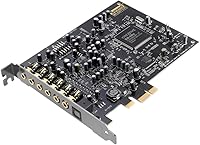
The Creative Sound Blaster Audigy RX 7.1 PCIe Sound Card has been a reliable mid-range option for desktop PC users looking to escape the limitations of onboard audio since its release in 2013. That’s a long run for any PC component, and this sound card has earned it. Where integrated motherboard audio often picks up electrical interference and delivers thin, flat sound, the Audigy RX routes audio through its own dedicated processor, resulting in noticeably cleaner output. It slots into a standard PCIe x1 slot and supports Windows XP through Windows 10, making it broadly compatible with a wide range of desktop setups without complicated installation hurdles.
Features & Benefits

The most immediately practical spec here is the 106dB signal-to-noise ratio — SNR is simply a measure of how much clean signal you get versus background noise, and at 106dB, this PCIe audio upgrade sits well above what most motherboards deliver. The 7.1 surround support is useful for gaming, where hearing a footstep or locating an enemy by sound can actually change outcomes. For headphone users, the 600-ohm headphone amp is a standout; it powers demanding studio-grade headphones that a standard audio jack simply cannot drive adequately. High-impedance headphones — typically 150 ohms and above — require this kind of dedicated amplification. The card also supports EAX reverb effects in compatible older games, and 24-bit/192kHz stereo playback handles high-resolution audio files cleanly.

Best For

This PCIe audio upgrade makes the most sense for a few specific types of buyers. PC users who notice hiss, hum, or general flatness from their built-in motherboard audio will find the improvement immediate and obvious. Gamers who play titles with strong positional audio cues — tactical shooters, immersive RPGs, open-world games with dense soundscapes — will appreciate the 7.1 multi-channel setup. It is also well-suited for anyone running high-impedance headphones that need proper amplification to perform at their best. Home theater PC owners routing audio to a multi-channel receiver will find the analog outputs useful too. Overall, the value here is strongest for buyers who want a real, tangible audio upgrade without overspending.

User Feedback

With over 2,600 ratings and a 4.2-star average, the Audigy RX has a strong track record. The most consistent praise centers on the immediate improvement after switching from onboard audio, with headphone users specifically noting how well the amp handles demanding cans. Installation is frequently described as straightforward — plug it in, install the drivers, and it works. That said, the software suite draws regular complaints; many users find it outdated and cluttered compared to competing options. There is no Mac or Linux support, which is a firm limitation for non-Windows users. Some reviewers also find the virtual surround and EAX effects overly processed, preferring to run the card in pure stereo mode. Long-term owners generally report solid durability and reliable driver support through newer Windows versions.

Pros

  • Immediately eliminates the hiss and electrical noise that plague most integrated motherboard audio solutions.
  • The 600-ohm headphone amp drives demanding, high-impedance headphones with authority that onboard audio simply cannot match.
  • A 106dB signal-to-noise ratio delivers noticeably cleaner, more detailed sound across music, games, and movies.
  • Installation is straightforward — most users report being up and running within minutes of slotting it in.
  • Broad Windows compatibility from XP through Windows 10 means it works reliably across a wide range of desktop systems.
  • The single-slot PCIe x1 form factor fits easily into most desktop builds without consuming extra expansion space.
  • Long-term owners consistently report stable driver performance and solid hardware durability over multiple years of use.
  • 24-bit/192kHz stereo playback handles high-resolution audio files cleanly, well beyond standard CD quality.
  • At its price point, the Audigy RX offers a tangible audio upgrade that outperforms far more expensive onboard implementations.

Cons

  • No Mac or Linux support whatsoever — this is a Windows-only device with no workaround.
  • The bundled Creative software suite feels outdated and cluttered compared to cleaner modern alternatives.
  • Virtual surround and EAX effects can sound over-processed; some users disable them entirely and run stereo only.
  • EAX environmental audio only functions in a limited set of older, compatible game titles — not a universal feature.
  • Laptop users and small form factor PC owners with no available PCIe slot cannot use this card at all.
  • Not a substitute for a proper external audio interface if low-latency monitoring or professional recording is your goal.
  • Driver updates have slowed considerably given the product’s age, which may cause friction on future Windows versions.
  • No USB or portable option exists — committing to this card means it stays inside one desktop machine.

Ratings

The Creative Sound Blaster Audigy RX 7.1 PCIe Sound Card has been stress-tested by real-world buyers across thousands of verified global reviews, and our AI-driven scoring system has analyzed that feedback while actively filtering out incentivized, bot-generated, and spam submissions. The scores below reflect a transparent picture of where this PCIe audio upgrade genuinely excels and where it falls short, so you can make a well-informed decision without wading through misleading five-star noise.

Audio Clarity
88%
The jump from motherboard audio to this card is hard to miss, especially through quality headphones or a decent speaker setup. The 106dB SNR effectively eliminates the low-level hiss and electrical interference that plagues integrated audio, leaving music and game audio noticeably cleaner and more defined.
At the highest volume levels some users report a faint noise floor that becomes perceptible in very quiet listening environments. It is not a dealbreaker for most, but audiophiles used to premium external DACs may notice the ceiling.
Headphone Amplifier
91%
The 600-ohm capable amp is arguably the most compelling reason to buy this card, and users with demanding headphones like the Sennheiser HD 650 or Beyerdynamic DT 990 Pro consistently praise the improvement in volume and control. Headphones that previously sounded thin and underpowered through a motherboard jack come alive with noticeably better bass authority and dynamic range.
The amp performs best with passive, high-impedance headphones rather than modern planar magnetic designs, which have different power requirements. A small number of users also noted a faint hum when using very sensitive in-ear monitors at low volumes.
Gaming Performance
82%
18%
For games with rich positional audio, the 7.1 surround processing gives a tangible sense of space and directionality that flat onboard audio simply cannot replicate. Tactical shooter players in particular report better ability to locate opponents by sound, and open-world game environments feel fuller and more immersive.
The virtual surround implementation divides opinion among competitive players, some of whom find the DSP processing muddies precise directional cues rather than sharpening them. The EAX reverb engine, while fun in supported older titles, is largely irrelevant in modern releases and should not factor heavily into a purchasing decision.
Value for Money
86%
At its price point, the Audigy RX delivers a level of audio improvement that external USB DACs at similar prices rarely match for desktop use cases. For buyers who simply want better-sounding headphones and cleaner PC audio without overspending, the return on investment is strong.
Buyers who later discover the software limitations or who need Mac and Linux support may feel the value erodes quickly. A narrow group of users upgrading from already-capable motherboard audio solutions with good onboard codecs found the improvement less dramatic than expected.
Software & Drivers
54%
46%
Driver installation across supported Windows versions from XP through Windows 10 is generally smooth, and most users report that the core audio functionality works reliably from the moment drivers are installed. Long-term owners note that the drivers themselves have remained stable without causing system conflicts.
The Creative companion software suite is widely criticized as cluttered, outdated, and unintuitive compared to cleaner modern interfaces offered by competitors. Update frequency has dropped significantly as the card has aged, and the software experience alone has driven some otherwise satisfied users to rate the product lower than the hardware deserves.
Installation Ease
89%
Slotting the card into a PCIe x1 bay and installing drivers is a task most users complete in under 15 minutes with no technical background required. The compact single-slot design avoids clearance conflicts with adjacent components in the vast majority of mid-tower and full-tower desktop builds.
A small subset of users encountered driver conflicts with specific motherboard audio controllers that required manually disabling onboard audio in the BIOS before the card would function correctly. The process is straightforward for experienced builders but can frustrate first-timers.
Build Quality
78%
22%
The card feels solid for its weight class and price tier, and long-term owners consistently report that the hardware holds up well over years of continuous use without physical degradation. The PCB construction appears durable enough for a component that sits untouched inside a case.
The card uses a relatively basic bracket and connector finish compared to premium competitors, and there is no passive cooling heatsink on the audio chipset, which some power users flagged as a minor concern in warm case environments. It is functional rather than premium in its physical presentation.
Surround Sound Quality
71%
29%
When connected to a proper 5.1 or 7.1 physical speaker setup, the multi-channel analog output performs well for both gaming and home theater use, and users with HTPC setups connected to AV receivers report clean channel separation. The card handles movie watching with a convincing sense of spatial depth.
Virtual surround through headphones is where opinions diverge most sharply, with a notable portion of users finding the effect sounds artificial or hollow rather than genuinely three-dimensional. Those who disable surround processing and run the card in plain stereo mode consistently report a more satisfying headphone experience.
Compatibility
74%
26%
The broad Windows version support spanning nearly two decades of operating systems is a practical strength, and the PCIe x1 interface ensures the card fits into any desktop motherboard with a spare expansion slot regardless of its generation. Most users encounter no compatibility issues at all.
The complete absence of macOS and Linux support is a hard wall that makes this card irrelevant to a significant portion of the PC user base. Windows 11 compatibility is unconfirmed officially, and while many users report it working, there is no guarantee of continued driver support going forward.
High-Res Audio Playback
83%
The 24-bit / 192kHz stereo playback capability handles FLAC and other lossless audio formats cleanly, and music listeners who have invested in a high-resolution audio library will hear those files reproduced with noticeably more detail than standard 16-bit output allows. Jazz, classical, and acoustic recordings in particular benefit from this headroom.
The benefit of 24-bit/192kHz playback is only fully realized through quality headphones or speakers and well-sourced audio files. Users streaming compressed audio from typical platforms will hear little to no difference compared to a lower-resolution output path.
Noise Floor
77%
23%
By physically separating audio processing from the electromagnetic interference generated by the CPU, RAM, and GPU on the main motherboard, the Audigy RX substantially reduces the noise floor compared to integrated audio. This makes it especially effective in systems with high-end graphics cards that are notorious for injecting noise into onboard audio circuits.
The noise floor is not completely silent, and users with highly sensitive in-ear monitors or measurement-grade headphones can occasionally detect residual hiss at idle. It is a significant improvement over onboard audio but does not match the cleanliness of a dedicated external USB audio interface in an isolated environment.
Longevity & Durability
84%
The hardware track record across a decade-plus of market availability is genuinely reassuring, with a high proportion of long-term owners reporting that the card continues to function exactly as it did on day one after years of daily use. There are very few reports of hardware failure unrelated to physical damage.
While the hardware endures, the product’s age means future-proofing is a real concern. Driver support will inevitably stall as new Windows versions emerge, and there is no guarantee Creative will maintain compatibility indefinitely as the card moves further from its support lifecycle.
EAX & Effects Engine
58%
42%
For users who still play EAX-compatible legacy titles from the early 2000s, having hardware-accelerated reverb and environmental effects is a genuine nostalgia-driven perk that software-based alternatives cannot fully replicate. The effects, when they work, add a layer of atmospheric depth to older games that was originally designed around this technology.
EAX support in modern games is essentially nonexistent, which makes this feature irrelevant for the majority of current gaming scenarios. Buyers who see EAX listed as a feature and assume it will enhance their modern game library will be disappointed once they discover how narrow its actual application is today.
Platform Versatility
41%
59%
Within its supported Windows ecosystem, the card works reliably across a fairly wide range of desktop hardware configurations, and the PCIe x1 interface is universally available on modern motherboards. For Windows-only desktop users, the compatibility story is largely positive.
The hard restriction to Windows desktop systems is a significant limitation in an era where multi-platform setups, Linux gaming, and macOS workstations are increasingly common. Laptop users, Mac users, and Linux users are entirely excluded, which meaningfully limits the card’s addressable audience.

Suitable for:

The Creative Sound Blaster Audigy RX 7.1 PCIe Sound Card is a strong fit for Windows desktop PC users who are genuinely tired of the hiss, hum, or flat sound that onboard motherboard audio often produces. Gamers who rely on positional audio cues — hearing an opponent's footsteps, identifying the direction of gunfire, or feeling immersed in a dense open-world soundscape — will get real, practical value from the 7.1 surround support. It is also an excellent pick for headphone enthusiasts running high-impedance cans (250 ohms and above) that simply cannot be driven to their potential by a standard 3.5mm jack. Home theater PC users who need multi-channel analog output to connect to an AV receiver or surround speaker system will find it a capable and affordable solution. Budget-conscious buyers who want a meaningful, noticeable audio upgrade without committing to a premium external DAC will find the value proposition here quite sensible.

Not suitable for:

Buyers using a Mac or Linux-based system should look elsewhere entirely — the Creative Sound Blaster Audigy RX 7.1 PCIe Sound Card offers no driver support outside of Windows, which is a firm and non-negotiable limitation. Laptop users are also completely excluded, since this is an internal PCIe card requiring a desktop tower with an available expansion slot. Those seeking a modern, polished companion software experience will likely be frustrated; the bundled Creative suite has aged poorly and feels cluttered compared to cleaner alternatives on the market today. Audiophiles chasing the absolute highest fidelity for critical music listening or professional audio production would be better served by a dedicated external audio interface with lower latency and more precise monitoring capabilities. If your primary goal is virtual surround for gaming and you want the most natural-sounding positional audio possible, it is worth knowing that some users find the processed surround effects unconvincing and prefer competitors’ DSP implementations.

Specifications

  • Brand: Manufactured by Creative, a long-established name in PC audio hardware.
  • Model Number: The official model identifier is 70SB155000001.
  • Interface: Connects via a PCIe x1 slot, compatible with standard desktop motherboard expansion bays.
  • Audio Channels: Supports up to 7.1 multi-channel surround sound output for immersive audio playback.
  • SNR: Delivers a signal-to-noise ratio of 106dB, providing clean audio with minimal background noise.
  • Headphone Amp: Onboard amplifier supports headphones with impedance ratings up to 600 ohms.
  • Stereo Playback: Capable of 24-bit / 192kHz stereo playback for high-resolution audio file reproduction.
  • Audio Chipset: Features the EAX reverb engine for environmental audio effects in supported game titles.
  • OS Support: Compatible with Windows XP SP2, Windows Vista SP1, Windows 7, Windows 8, and Windows 10.
  • Form Factor: Single-slot internal card designed to fit most standard desktop PC chassis without issue.
  • Dimensions: Physical dimensions measure 5.71 x 4.72 x 0.71 inches (length x width x height).
  • Weight: The card weighs 4.2 ounces, making it lightweight for an internal expansion component.
  • Memory Type: Utilizes DDR3 SDRAM as part of its onboard processing architecture.
  • Compatible Devices: Designed exclusively for use in desktop personal computers with an available PCIe x1 slot.
  • Platform: Windows-only; no official driver support exists for macOS or Linux operating systems.
  • First Available: This card was first listed for sale on August 20, 2013, reflecting over a decade on the market.
  • Discontinuation: As of the latest available product data, the card has not been discontinued by Creative.
  • User Rating: Holds a 4.2 out of 5 star rating based on over 2,600 verified ratings on Amazon.
  • Category Rank: Ranked #14 in the Computer Internal Sound Cards category on Amazon at time of reference.

Related Reviews
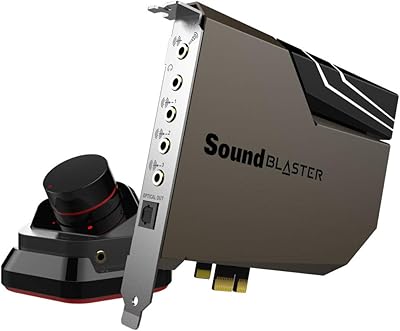
Creative Sound Blaster AE-7
80%
93%
Audio Fidelity
91%
Headphone Amplifier Performance
71%
Value for Money
58%
Software Quality
67%
Installation & Compatibility
More
Creative Sound Blaster Audigy FX V2
74%
83%
Audio Quality Improvement
89%
Ease of Installation
57%
Software & Driver Experience
74%
Surround Sound Performance
78%
Build Quality & Hardware
More
Creative Sound Blaster Omni Surround 5.1
81%
89%
Audio Quality Improvement
76%
Ease of Installation
82%
Microphone Performance
91%
Physical Controls & Design
84%
Surround Sound Capability
More
Creative Sound BlasterX G1
84%
88%
Overall Audio Improvement
79%
Virtual Surround Sound
84%
Competitive Gaming Performance (X-Plus Mode)
71%
Software & Customization
92%
Form Factor & Portability
More
Creative Sound BlasterX G5
83%
92%
Audio Clarity & Detail
88%
Gaming Spatial Awareness
91%
Amplification Power
86%
Console Compatibility
58%
Software User Experience
More
ASUS Strix SOAR 7.1
ASUS Strix SOAR 7.1
65%
83%
Audio Clarity Improvement
79%
Headphone Amplifier Performance
67%
Virtual 7.1 Surround Sound
44%
Driver Stability
52%
Software (Sonic Studio Suite)
More
Creative Sound Blaster X4
80%
88%
Audio Quality
91%
Headphone Amplifier Performance
74%
Surround Sound & Virtualization
86%
Build Quality & Physical Controls
92%
Connectivity & I/O Options
More
Creative Sound Blaster X-Fi Titanium
72%
91%
Audio Quality Upgrade vs. Onboard
88%
Gaming Positional Audio
44%
Driver Installation & Setup
39%
Windows 10 / 11 Compatibility
82%
ASIO Recording Performance
More
Creative Sound BlasterX AE-5 Plus
79%
91%
DAC Audio Quality
88%
Headphone Amplifier Performance
58%
Software & Drivers
79%
Build & Installation
82%
Value for Money
More
Creative SBS E2900 + Sound Blaster Z SE
76%
88%
Audio Clarity & Fidelity
84%
Bass Performance
91%
Headphone Amplifier Quality
79%
Gaming Audio & Surround
58%
Software & Driver Experience
More

FAQ

Yes, for most users the difference is immediate and obvious. Onboard motherboard audio often picks up electrical interference from nearby components, which shows up as hiss or hum. A discrete card like the Audigy RX processes audio on its own isolated circuit, which cleans up the signal considerably. If you have decent headphones or speakers, you will likely hear the improvement right away.

Creative has not officially listed Windows 11 on the supported OS roster, as the product predates it. That said, a number of users have reported success running it on Windows 11 using the Windows 10 drivers. Your mileage may vary, and it is worth checking Creative’s support page for the latest driver availability before purchasing if you are on Windows 11.

Yes, the onboard headphone amplifier is rated to handle loads up to 600 ohms, which covers virtually all consumer and studio headphones including demanding models from brands like Sennheiser, Beyerdynamic, and AKG. High-impedance headphones require more voltage to reach proper listening volume, and the amp here is genuinely capable of delivering that without distortion.

No. This is a Windows-only device and Creative does not provide drivers for macOS or Linux. If you are running either of those operating systems, this card simply will not function and you should look for an external USB audio interface with broader platform support instead.

It is about as straightforward as internal PC components get. You power down the machine, slide the card into an open PCIe x1 slot, secure it with a screw, boot back up, and install the drivers from Creative’s website or the included software. Most users report the whole process taking under 15 minutes. No special tools or technical expertise are required.

7.1 refers to eight audio channels — seven speaker channels plus one subwoofer channel. You do not necessarily need a full physical speaker setup to benefit from it; many users run it with a 5.1 speaker arrangement or use virtual surround processing through headphones. That said, the positional accuracy of virtual surround varies, and some users prefer to simply run stereo for cleaner headphone listening.

EAX is a legacy audio technology that was widely supported in games from the late 1990s through the mid-2000s. Most modern game titles do not natively support it, so if EAX support is a primary reason you are considering this card, temper your expectations. It works well in compatible older titles, but it is not a feature you will use in contemporary releases.

The Audigy RX uses a single PCIe x1 slot, which is a narrow, short expansion connector found on virtually all modern desktop motherboards. The card itself is compact at under 6 inches long, so it fits in most mid-tower and full-tower cases without clearance issues. The main requirement is simply having one available PCIe x1 (or wider) slot open on your motherboard.

Long-term owners generally report positive results in terms of hardware durability — the card itself tends to keep working reliably over many years. The main concern over time is software rather than hardware; Creative’s driver update cadence has slowed, and the companion software suite has not kept pace with modern design standards. For users who install the drivers and then largely ignore the software, this is rarely a dealbreaker.

It is genuinely useful for casual and immersive gaming where you want to feel the environment, but opinions are split when it comes to competitive play. Some users find the positional cues helpful for locating sounds in games like first-person shooters. Others feel the DSP processing adds a layer of artificiality and prefer listening in plain stereo. It is worth experimenting with both modes after setup to find what works best for your gaming style.

Where to Buy