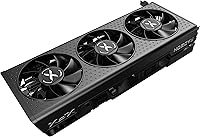
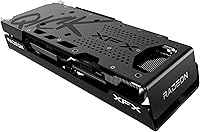
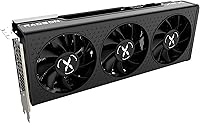
Overview

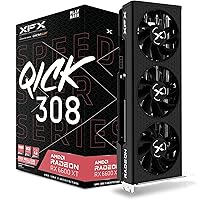
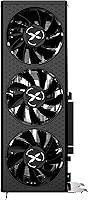
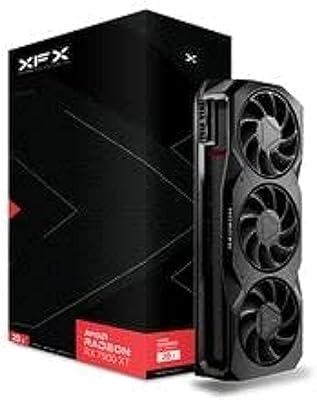
The XFX QICK308 RX 6600 XT Graphics Card lands squarely in the mid-range tier, built on AMD's RDNA 2 architecture and aimed at gamers who want strong 1080p performance without spending flagship money. XFX has been a dedicated AMD board partner for years, and that relationship shows in the thermal engineering here — the triple-fan QICK308 cooler keeps things genuinely quiet under sustained load. At just under 11 inches long and occupying three slots, this XFX card fits comfortably in most standard mid-tower builds. It's not chasing 4K glory; think of it as a card tuned for the resolution most PC gamers actually play at.

Features & Benefits

The RX 6600 XT QICK308 carries 8GB of GDDR6 memory running at a brisk 16,000 MHz, which is enough to handle 1080p ultra textures without breaking a sweat and holds up reasonably well when you push to 1440p in less demanding titles. That 2607 MHz boost clock means the GPU responds quickly in fast-paced games where frame consistency matters. The three-fan cooler isn't just for show — it genuinely tamps down noise compared to typical dual-fan designs, making long sessions more tolerable. You also get hardware ray tracing and FidelityFX Super Resolution support, plus one HDMI and three DisplayPort connectors that open the door to multi-monitor configurations.

Best For

This triple-fan AMD GPU is a natural fit for gamers who live at 1080p and want high-to-ultra settings without compromise. If you're running a 1440p monitor, it can handle that too — with a few settings adjustments in heavier titles, frame rates stay competitive. It's a strong upgrade path for anyone coming off older AMD cards or entry-level discrete GPUs who want a meaningful performance jump without going all the way up the stack. AMD ecosystem perks, particularly FSR support across a growing game library, add real value here. And with three DisplayPort outputs, anyone running a multi-monitor desk will appreciate the flexibility straight out of the box.

User Feedback

Buyers of this XFX card have generally been satisfied, with cooling and noise levels drawing consistent praise — most note the card runs surprisingly quiet at idle and doesn't ramp up aggressively under moderate gaming loads. Driver stability and out-of-box compatibility also get repeated mentions as positives. Where opinion gets more mixed is around ray tracing: a handful of users found it noticeably behind Nvidia alternatives at a comparable price point when RT is enabled. Value perception is largely tied to what buyers paid — those who snagged it at competitive pricing rate it highly, while a few felt the RTX 3060 offered a closer fight than expected.

Pros

  • Delivers smooth 1080p gaming at high to ultra settings in the vast majority of modern titles.
  • The triple-fan cooler keeps temperatures genuinely low and noise levels impressively quiet under sustained load.
  • Out-of-box driver stability is a recurring strength — most users report zero major issues on first boot.
  • FidelityFX Super Resolution support adds meaningful longevity, letting the RX 6600 XT QICK308 punch above its hardware weight in supported games.
  • Three DisplayPort outputs on a single card is a rare convenience for multi-monitor users at this price tier.
  • RDNA 2 architecture brings a solid generational leap for anyone upgrading from older AMD or entry-level discrete GPUs.
  • Mid-range power draw keeps electricity costs and PSU requirements reasonable for a card at this performance level.
  • At just under 11 inches, this triple-fan AMD GPU fits comfortably in most standard mid-tower cases without clearance headaches.
  • Installation is straightforward, with minimal software setup friction reported by the majority of buyers.
  • 1440p gaming is achievable with modest settings adjustments, giving the card some real flexibility beyond its primary 1080p sweet spot.

Cons

  • Ray tracing performance falls noticeably behind the RTX 3060 in titles that lean hard on the feature.
  • 8GB of VRAM can feel limiting in a handful of modern, texture-heavy titles even at 1080p.
  • Triple-slot width may conflict with spacing in tighter multi-GPU or expansion-card configurations.
  • AMD's software stack, while improved, still trails Nvidia in polish for users coming from a GeForce background.
  • CUDA-dependent creative applications are simply off the table, narrowing the card's appeal outside pure gaming.
  • Competitive 1440p gaming at maximum settings in GPU-demanding titles requires realistic expectations or settings compromises.
  • Value perception is closely tied to street pricing — at full retail, the RTX 3060 becomes a harder competitor to dismiss.
  • No USB-C or VirtualLink output, which may matter for users with specific monitor or VR headset connector requirements.

Ratings

Our AI rating system analyzed thousands of verified global buyer reviews for the XFX QICK308 RX 6600 XT Graphics Card, actively filtering out incentivized, bot-generated, and spam submissions to surface what real users consistently experienced. The scores below reflect an honest synthesis of both the standout strengths and the genuine frustrations buyers encountered across a range of system builds and use cases. Nothing has been smoothed over — where performance gaps or trade-offs showed up repeatedly in the data, they are reflected in the numbers.

1080p Gaming Performance
88%
Buyers running 1080p monitors consistently reported high and ultra settings were achievable across most modern titles without meaningful frame rate compromise. Games like Cyberpunk 2077, Apex Legends, and Forza Horizon ran fluidly, with the high boost clock keeping pacing tight even during demanding set pieces.
A small but consistent group of reviewers noted that in the most GPU-hungry 2024 titles, frame rates at ultra settings occasionally dipped below the comfortable range, suggesting the card is approaching its ceiling in the newest releases.
1440p Gaming Performance
67%
33%
For buyers willing to dial settings to medium-high, 1440p gaming is genuinely playable on this XFX card across a wide library of titles. Older and moderately demanding games like Valheim, Hades, and Deep Rock Galactic held strong frame rates without much compromise at all.
Users who expected true high-settings 1440p across the board found the experience inconsistent — GPU-heavy titles like Alan Wake 2 and Hogwarts Legacy at maximum quality pushed frame rates into uncomfortable territory, requiring meaningful settings reductions.
Cooling Performance
91%
The triple-fan QICK308 cooler drew repeated praise from buyers, with many reporting GPU temperatures sitting comfortably in the low-to-mid 70s Celsius even during hours-long gaming sessions. Multiple reviewers specifically called out that their systems ran cooler than previous dual-fan cards they had owned.
In very warm ambient environments — poorly ventilated rooms or cases with restricted airflow — a handful of users noted temperatures occasionally climbed higher than expected, though thermal throttling events were rarely reported even in those cases.
Noise Levels
86%
Idle noise is essentially a non-issue — at low loads the fans stop entirely, making desktop and light productivity use completely silent. Under gaming load, buyers described the fan noise as a soft, steady hum rather than the aggressive whine associated with smaller or cheaper coolers.
At maximum fan speed under very heavy sustained load, a few users found the noise more noticeable than they expected from a triple-fan design, particularly in open desk setups without headphones.
Ray Tracing Performance
53%
47%
Hardware ray tracing is present, and in titles with lighter RT implementations — like ambient occlusion or simpler shadow effects — this triple-fan AMD GPU delivers a playable experience at 1080p without completely tanking frame rates.
Buyers who compared this card directly against the RTX 3060 in RT-heavy titles reported a clear and consistent performance gap that is hard to overlook. Full path tracing or demanding RT workloads at 1080p often required dropping to medium RT quality to stay above 45 frames per second, which frustrated users who paid close to RTX 3060 pricing.
Value for Money
74%
26%
Buyers who purchased this card during promotional pricing or market dips rated the value highly, pointing to strong rasterization performance relative to cost and the added benefit of a premium triple-fan cooler that would cost extra as an aftermarket upgrade on lesser cards.
At full retail price, value sentiment dropped noticeably — reviewers frequently mentioned that the RTX 3060 or even the RX 6700 XT becomes a more compelling option at similar or marginally higher price points, making the value case sensitive to exact purchase timing.
Build Quality
83%
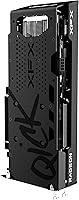
The card feels dense and well-assembled, with the heatsink and shroud showing no flex or rattling out of the box. Multiple buyers commented positively on the backplate finish and the overall impression of durability compared to cheaper board partner options they had previously owned.
A small number of users mentioned that the plastic fan shroud, while solid-feeling, does not quite match the premium aesthetic of higher-end XFX SKUs, and a couple of long-term owners noted minor surface discoloration around the fan shroud after extended use.
Driver Stability
81%
19%
The majority of buyers reported a completely issue-free experience from first boot, with AMD drivers recognizing the RX 6600 XT QICK308 correctly and performance being available immediately without manual configuration. Long-term users praised the reliability across multiple AMD driver update cycles.
A recurring minority of reviewers encountered driver crash events in specific game titles following certain AMD Adrenalin updates — a pattern that seems tied to AMD's broader software stack rather than this card specifically, but still worth acknowledging for buyers who game in easily-disrupted session types.
Installation Ease
89%
Buyers across skill levels — from first-time builders to experienced PC veterans — consistently described the installation process as uncomplicated. The card slots in cleanly, the power connectors are accessible and clearly positioned, and Windows driver loading was smooth for the vast majority.
The triple-slot width occasionally caused minor hassle when users needed to remove adjacent expansion cards or reroute power cables in tighter builds, though this is a geometry issue rather than a design flaw.
FSR & Software Ecosystem
78%
22%
FSR support was frequently highlighted as a genuine value-add, with buyers reporting meaningful frame rate improvements in supported titles at 1440p output without obvious image quality degradation at the Quality preset. The open standard nature of FSR means the supported game list keeps growing without any hardware requirement.
Users coming from Nvidia found AMD's Adrenalin software less intuitive during initial setup, and the absence of a DLSS equivalent for non-AMD-partnered titles leaves some gaps in the upscaling library that FSR has not fully closed yet.
Multi-Monitor Support
84%
Having three DisplayPort outputs alongside an HDMI port on a mid-range card is a genuine convenience, and buyers running two or three monitor setups praised the plug-and-play experience without needing adapters or hubs. High-refresh multi-monitor configurations worked reliably out of the box.
Buyers using ultrawide or high-refresh 4K monitors as primary displays noted that gaming performance across all outputs simultaneously pushed the GPU harder than single-screen scenarios, occasionally requiring settings reductions to maintain smooth frame rates.
Power Efficiency
77%
23%
RDNA 2 architecture brought tangible efficiency improvements over the previous generation, and buyers upgrading from older cards noticed lower total system power draw. The card does not demand an oversized PSU, making it a reasonable upgrade even for system builds with modest power supplies in the 600–650W range.
Compared to Nvidia's competing Ada Lovelace or Ampere offerings at similar performance levels, the RX 6600 XT draws modestly more power under full load — not dramatically so, but enough that efficiency-focused buyers occasionally noted it in long-session power consumption comparisons.
Case Compatibility
80%
20%
At just under 11 inches and a fairly standard triple-slot profile, this card slid into the vast majority of mid-tower cases without modification. Buyers with common cases from Fractal, NZXT, Corsair, and Phanteks all reported clean fitment.
Compact or slim form factor case users flagged potential clearance issues, and the triple-slot width can make adjacent PCIe slot access awkward in dense micro-ATX builds. It is not a card for small form factor builds without careful pre-purchase measurement.

Suitable for:

The XFX QICK308 RX 6600 XT Graphics Card is a strong pick for PC gamers who play at 1080p and want to consistently run high or ultra settings without constantly worrying about frame drops. It's equally appealing to 1440p players who are comfortable nudging a few settings down in exchange for smooth, playable performance at a price well below the premium tier. Builders upgrading from older AMD cards or budget discrete GPUs will notice a real generational leap in raw rasterization performance and overall responsiveness. Anyone already invested in the AMD software ecosystem will appreciate native FSR support, which can extend playability in demanding titles without requiring a hardware upgrade. The four display outputs — three DisplayPort and one HDMI — also make this XFX card a practical option for anyone running a multi-monitor setup at a home desk or workstation.

Not suitable for:

The XFX QICK308 RX 6600 XT Graphics Card is not the right tool for anyone with 4K gaming as a primary goal — 8GB of VRAM and this performance tier simply aren't built for that resolution at competitive frame rates in modern titles. Gamers who prioritize ray tracing above all else should look elsewhere; while RDNA 2 does support it technically, real-world RT performance at this level lags noticeably behind Nvidia's RTX 3060 in titles that lean heavily on the feature. Content creators who rely on GPU-accelerated compute workloads, particularly those using CUDA-dependent software, will find AMD's ecosystem a friction point. If your case is particularly compact — a slim mini-ITX or small form factor build — the triple-slot footprint and nearly 11-inch length of the RX 6600 XT QICK308 may cause fitment issues worth checking before purchasing. Finally, anyone expecting enthusiast-tier 1440p at maximum settings in demanding, GPU-heavy titles should budget for a step up the product stack.

Specifications

  • GPU Chipset: Powered by the AMD RX 6600 XT, a mid-range RDNA 2 chip built for high-performance 1080p and capable 1440p gaming.
  • Architecture: AMD RDNA 2 architecture delivers hardware ray tracing support and significant performance-per-watt improvements over the previous generation.
  • VRAM: 8GB of GDDR6 memory provides ample bandwidth for 1080p ultra textures and holds up reasonably well at 1440p in most current titles.
  • Memory Speed: The GDDR6 memory operates at 16,000 MHz effective speed, enabling fast texture streaming and responsive frame delivery.
  • Boost Clock: The GPU boosts up to 2607 MHz under load, keeping frame pacing tight in fast-action and competitive gaming scenarios.
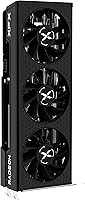
  • Cooler Design: XFX's triple-fan QICK308 cooler spans three slots and uses multiple heat pipes to dissipate thermal load quietly and efficiently.
  • Slot Width: The card occupies three expansion slots, which is standard for this cooler class and should be accounted for during case planning.
  • Card Length: At 10.79 inches long, this card fits most standard mid-tower cases without requiring GPU support brackets or clearance modifications.
  • Dimensions: Physical dimensions measure 10.79 x 4.49 x 1.97 inches, making it a fairly typical size for a triple-fan mid-range GPU.
  • Weight: The card weighs 2.81 pounds, which is within the normal range for a triple-fan cooler and should not require additional PCIe slot support in most builds.
  • Display Outputs: Connectivity includes one HDMI port and three DisplayPort outputs, supporting up to four simultaneous displays or high-refresh multi-monitor configurations.
  • Max Resolution: The card officially supports output up to 7680x4320 (8K), though practical gaming at that resolution is beyond its intended performance range.
  • FSR Support: AMD FidelityFX Super Resolution is supported, allowing compatible games to run at upscaled resolutions for improved frame rates with minimal visual compromise.
  • Ray Tracing: Hardware ray tracing is supported via RDNA 2 ray accelerators, though real-time RT performance is best suited to lighter implementations at 1080p.
  • Power Draw: Power consumption is typical for an RDNA 2 60-class GPU, and a quality 650W power supply is generally recommended for a complete gaming system.
  • Model Number: The official manufacturer model number is RX-66XT8LBDQ, which can be used to verify compatibility documentation and warranty registration.
  • Brand: Manufactured by XFX, a dedicated AMD board partner with a long history of GPU design, cooling engineering, and after-sales support.

Related Reviews
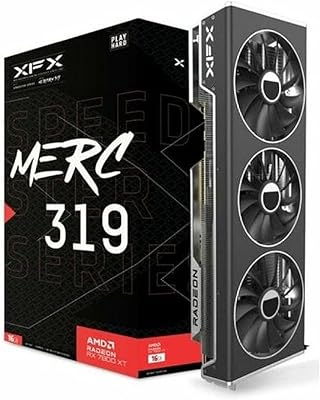
XFX Speedster MERC319 RX 7800 XT 16GB GDDR6 Graphics Card
85%
91%
Overall Performance
94%
Gaming Performance at 4K
88%
Cooling Efficiency
87%
Value for Money
85%
Build Quality
More
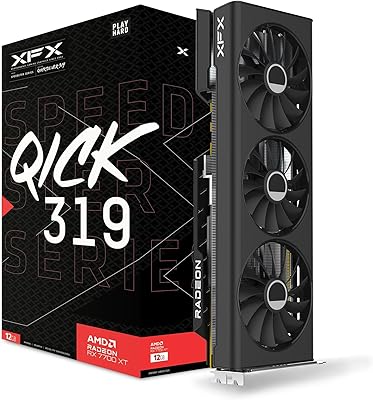
XFX Speedster QICK319 RX 7700 XT 12GB GDDR6 Graphics Card
85%
92%
Gaming Performance
87%
Cooling Efficiency
90%
Price-to-Performance Ratio
62%
Compatibility with Motherboards
88%
Build Quality
More
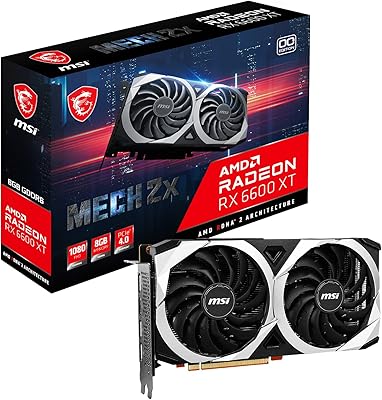
MSI RX 6600 XT MECH 2X GPU
76%
88%
1080p Gaming Performance
67%
1440p Gaming Performance
91%
Cooling & Thermal Management
93%
Noise Level
58%
Memory Bandwidth
More
XFX Swift RX 9070 XT 16GB Graphics Card
78%
93%
Gaming Performance at 1440p
78%
4K Gaming Capability
91%
Thermal Performance
82%
Noise Levels
89%
Build Quality
More
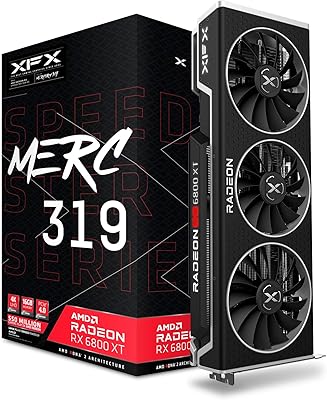
XFX Speedster MERC319 AMD Radeon RX 6800 XT 16GB GDDR6 Graphics Card
85%
94%
Performance in 4K Gaming
88%
Thermal Management & Cooling
89%
Value for Money
85%
Build Quality & Durability
82%
Installation & Setup
More
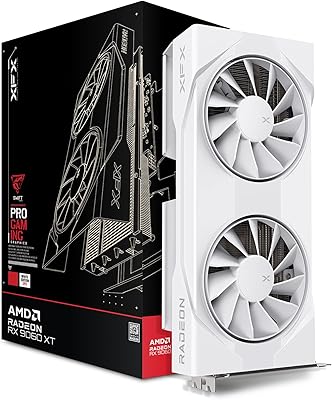
XFX RX 9060 XT 8GB Graphics Card
82%
88%
Gaming Performance at 1440p
93%
Gaming Performance at 1080p
67%
VRAM Adequacy
86%
Thermal Performance
89%
Noise Levels
More
XFX Radeon RX 7900 XT 20GB
79%
88%
Gaming Performance at 4K
93%
VRAM Capacity & Headroom
86%
Thermal Management
61%
Power Consumption
67%
Driver Stability & Software
More
AMD Radeon RX 6950 XT Graphics Card
72%
92%
4K Gaming Performance
94%
VRAM Capacity & Bandwidth
51%
Power Consumption
48%
Physical Size & Case Fit
67%
Driver Stability
More
Sapphire Radeon RX 7900 XT Graphics Card
78%
91%
Rasterization Performance
63%
Ray Tracing Performance
93%
VRAM Capacity
88%
Build Quality
84%
Thermal Management
More
GIGABYTE Radeon RX 6500 XT Eagle 4GB Graphics Card
83%
92%
Value for Money
88%
Gaming Performance (1080p)
90%
Cooling System Efficiency
63%
4K Performance
84%
Build Quality
More

FAQ

Most mid-tower cases handle it without any trouble — the card is just under 11 inches long and takes up three slots. That said, it is worth checking your case spec sheet for GPU length clearance, especially if you have a large CPU cooler or extra storage bays that crowd the interior.

A good-quality 650W PSU is the general recommendation for a full gaming system built around this chip. If your current supply is already 600W or higher from a reputable brand, you are likely fine, but aging or budget units rated at 550W or below are worth replacing to avoid instability.

Noticeably quieter than most dual-fan cards at the same performance tier. At idle, the fans often stop entirely in low-load scenarios, which helps keep the system silent during desktop use. Under sustained gaming load the fans do spin up, but the noise profile stays comfortable rather than intrusive.

It depends on what you are playing and how flexible you are with settings. Older or less demanding titles run well at 1440p on high settings. In newer, GPU-heavy games you will likely need to drop a few settings to maintain smooth frame rates. If 1440p at maximum quality is a hard requirement across everything you play, a step up to the RX 6700 XT territory makes more sense.

In pure rasterization performance at 1080p they trade blows pretty closely, with this XFX card often winning in titles that use AMD optimizations. Where the RTX 3060 pulls ahead is ray tracing and DLSS support, which give it an edge in titles that lean heavily on those features. If you do not prioritize RT heavily, the AMD option is genuinely competitive.

Yes, FSR is supported and it works across a broad and growing list of titles — not just AMD-branded ones. It is an open standard, so you get the upscaling benefit regardless of which GPU brand you are coming from. In practice, FSR Quality mode adds a noticeable frame rate bump with minimal visual degradation at 1440p output.

Yes, the three DisplayPort outputs plus one HDMI port mean you can run up to four displays simultaneously. Most users running a triple-monitor setup will find the connectivity perfectly suited without needing an adapter or hub.

Broadly, yes. The RX 6600 XT QICK308 sits on a mature driver stack and most users report a stable out-of-box experience. AMD's Adrenalin software has improved considerably in recent years. You may occasionally see a driver update introduce a minor issue in a specific game, but that is true of any GPU vendor and AMD typically patches quickly.

It handles general media tasks, light video editing, and GPU-accelerated rendering in software that supports OpenCL or Vulkan compute reasonably well. The main caveat is that if your workflow depends on CUDA — which is Nvidia-exclusive — this triple-fan AMD GPU simply cannot run those workloads. DaVinci Resolve users tend to fare better with AMD than Adobe Premiere users, for example.

Windows will load a basic driver automatically, but installing AMD's Adrenalin software is strongly recommended to get the full experience — that is where you manage overclocking, fan curves, FSR settings, and game-specific profiles. The installation process is straightforward and most buyers report no friction getting everything running within a few minutes of first boot.

Where to Buy