Overview

The WeatherX WR182R NOAA Weather Emergency Radio has been quietly earning its place in emergency kits since 2013 — a long runway that gives it something many newer radios lack: a real track record. At its core, this is a multi-power emergency tool designed for situations where the lights go out and cell towers go quiet. It fits in one hand, weighs just over ten ounces, and is compact enough to toss into a go-bag without a second thought. Storm-prone households, campers, and serious preppers are its natural audience — people who want something dependable sitting on the shelf, not collecting dust until it matters.
Features & Benefits

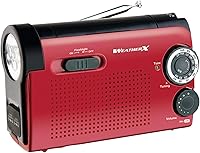
The standout here is honestly the three independent power sources. You can charge the built-in battery via USB before a storm hits, crank the dynamo by hand if power runs out, or drop in three AA batteries as a last resort. That redundancy is what makes this emergency radio worth considering. The NOAA weather band uses direct tuning, so you are not scanning through static during a tornado warning — you dial in and listen. A built-in LED flashlight means one fewer item to grab in a blackout. AM/FM reception rounds things out for everyday use, though analog tuners can struggle in weak-signal areas.

Best For

This weather band radio makes the most sense for people in hurricane or tornado corridors who want a no-fuss alert device that does not depend on Wi-Fi or a charged phone. It is equally at home in a hiking pack or a basement emergency kit. Budget-conscious buyers will appreciate what is included without paying for features they will never use — there is no digital display, no Bluetooth, no app required. If you want something simple and reliable that works when infrastructure fails, the WR182R fits that bill. Those chasing audiophile reception or smart-home integration should look elsewhere.

User Feedback

Owners consistently praise how easy it is to operate under stress — no complicated menus, just knobs and a crank. The hand dynamo gets strong marks for actually working when needed. On the downside, AM/FM reception draws complaints from users in rural or fringe-signal areas, which is worth knowing if that matters to you. The built-in rechargeable battery holds a charge adequately but loses capacity over time, which some longer-term owners mention. The plastic build feels lightweight, and a few buyers note it does not inspire much confidence in rough handling. Durable enough for shelf storage; perhaps less so for rugged outdoor abuse.

Pros

  • Three independent power sources mean you are almost never left without a working radio during an outage.
  • NOAA direct tuning locks onto weather alerts quickly — no scanning through static when time matters.
  • Compact and light enough to include in a go-bag or emergency kit without taking up meaningful space.
  • The integrated LED flashlight removes one item from your emergency checklist entirely.
  • Simple analog controls work well under stress and need zero instruction to operate.
  • USB charging fits naturally into how most households already keep devices topped up.
  • At this price tier, the combination of features represents strong overall value for preparedness-focused buyers.
  • The hand crank has a reliable real-world track record among owners who have actually used it during outages.

Cons

  • AM/FM reception is weak in rural or fringe-signal areas, making it unreliable as an everyday radio outside urban zones.
  • The built-in rechargeable battery loses capacity noticeably over time and cannot be replaced by the user.
  • All-plastic construction feels hollow and has cracked for some buyers after minor drops.
  • The analog tuning dial offers no frequency presets, requiring you to retune after every power cycle.
  • Speaker audio distorts at higher volumes, which limits usefulness in noisy outdoor environments.
  • The flashlight brightness drops meaningfully as battery levels decline, reducing its reliability late in an outage.
  • No digital display makes precise frequency tuning a slow, trial-and-error process under pressure.
  • Hand-crank charging is slow and physically tiring during extended use, especially for users with limited hand strength.

Ratings

Our AI rating system analyzed thousands of verified global purchases of the WeatherX WR182R NOAA Weather Emergency Radio, actively filtering out incentivized, bot-generated, and spam reviews to surface what real buyers actually experienced. The scores below reflect a transparent synthesis of both the genuine strengths and recurring frustrations reported across long-term owners and first-time emergency kit builders alike. Where this radio earns trust and where it falls short are both represented honestly.

Power Source Versatility
91%
Owners repeatedly call out the three-way power system as the single most reassuring feature during real outages. Being able to switch from a drained rechargeable cell to AA batteries mid-storm, or crank by hand when both run out, delivers genuine peace of mind that few competitors at this price tier match.
The hand crank requires sustained effort to generate meaningful charge, and a few users found it tiring during extended outages. The rechargeable battery capacity is also modest, meaning heavy use will send you to the crank or AAs faster than you might expect.
NOAA Weather Band Reception
83%
Direct tuning to NOAA channels is a clear advantage when seconds count. Users in suburban and mid-density areas report locking onto weather alerts quickly and reliably, with clear audio that cuts through during the critical first minutes of a storm warning.
Reception in rural fringe zones or areas with geographic interference can be inconsistent, and the analog tuner offers no memory presets, so you may need to retune after the unit is powered off. It is functional but not refined.
AM/FM Reception Quality
61%
39%
For everyday casual listening, the AM/FM bands work well enough in urban and suburban environments. A handful of users appreciated having it as a countertop radio between emergencies, which adds practical day-to-day value.
This is where the most consistent criticism lands. Fringe-area users report weak, static-heavy AM/FM reception, and the built-in antenna can be finicky. If strong FM fidelity matters to you, this radio will likely disappoint outside of well-covered metro areas.
Ease of Use
88%
The analog controls are genuinely simple to operate under stress, which matters enormously when you are dealing with a blackout or a frightened family. No menus to navigate, no pairing process — just knobs, a crank, and a button. Several reviewers specifically mentioned handing it to elderly relatives without any instruction needed.
The lack of a digital display means frequency tuning is imprecise, and landing exactly on a station requires patience. For users accustomed to digital presets, the analog dial can feel frustratingly vague during hurried situations.
Built-in LED Flashlight
74%
26%
Having a functional flashlight integrated into the unit is genuinely useful during power outages, reducing the number of items you need to locate in the dark. Most buyers at this price tier consider it a solid bonus rather than an afterthought.
The flashlight brightness is adequate but not impressive — it illuminates a room or a path, not a large outdoor area. Users comparing it to a dedicated flashlight note it falls short, and beam intensity tends to drop noticeably as battery levels dip.
Build Quality & Durability
58%
42%
The unit is compact and light enough to slip into a go-bag without adding meaningful weight. For shelf storage and occasional emergency use, the construction holds up well enough over multiple years of low-intensity ownership.
The all-plastic body is the most polarizing aspect of long-term feedback. Several owners describe it as feeling hollow or fragile, and a couple noted cracking after minor drops. It is not a rugged field device — treat it as a home emergency tool, not outdoor gear.
Battery Life (Rechargeable)
62%
38%
When freshly charged, the built-in battery handles several hours of radio use, which covers most acute storm events. Users who keep it plugged in via USB between uses report it is always ready when needed.
Capacity degrades noticeably over time, and longer-term owners — those who have had the unit two or more years — report significantly shorter run times on a full charge. The battery is not user-replaceable, which compounds this problem as the unit ages.
Portability & Form Factor
86%
At just over ten ounces and small enough to fit in a jacket pocket, the WR182R is one of the more genuinely portable emergency radios available at this size class. Campers and hikers appreciate not having to dedicate much pack space to it.
The Red/Black color scheme and shape make it look more like a toy than a serious preparedness tool to some buyers, which is a minor but real perception issue. The compact size also limits speaker volume, which can be a problem in noisy environments.
Value for Money
84%
Considering the three power sources, NOAA direct tuning, and integrated flashlight bundled into a single compact device, buyers consistently feel they received more utility than the price suggests. It punches above its weight class for emergency preparedness on a tight budget.
At the same time, the plastic build and so-so AM/FM reception remind you that compromises were made to hit that price point. Buyers expecting mid-range radio performance will feel the gap, especially if they have owned a higher-tier NOAA radio before.
Setup & Initial Configuration
89%
Out-of-the-box experience is refreshingly simple. A power adapter is included, the rechargeable battery comes pre-installed, and there is essentially no setup learning curve. Most users reported being operational within two minutes of opening the box.
There is no quick-start guide that specifically walks through the NOAA tuning process, which can trip up first-time weather radio users. A few buyers had to look up their local NOAA frequency online before getting useful weather alerts.
Hand Crank Mechanism
77%
23%
The dynamo crank is one of the better-regarded features among real emergency users. Multiple buyers who actually lost power during storms confirmed the crank worked reliably and produced enough charge to keep listening through critical alert windows.
The crank handle is small, which makes extended cranking uncomfortable for users with larger hands or arthritis. Charging via crank is slow — generating a meaningful charge for extended listening takes sustained effort that some users found impractical.
Speaker Audio Quality
63%
37%
Voice clarity on NOAA broadcasts is acceptable, and weather alerts come through intelligibly even at lower volume levels — which is ultimately what matters most for an emergency radio. Music listening is passable in a pinch.
The mono speaker produces thin audio with limited bass and rolls off at higher volumes. At maximum volume, distortion becomes noticeable. For music or extended listening, audio quality is a real limitation that analog radio enthusiasts will find mediocre.
USB Charging Convenience
79%
21%
USB charging aligns the WR182R with how most households already manage device charging. Plugging it into a standard USB port or wall adapter to top off the battery is frictionless and encourages users to keep it charged and ready.
Charging speed is on the slow side, and the unit cannot operate while charging from USB in all configurations. There is no charge indicator light that clearly signals when the battery is full, which is a small but recurring source of frustration.
Long-Term Reliability
71%
29%
For a device that sits in a closet or on a shelf for months between uses, the WR182R holds up reasonably well. Many buyers report units that have remained functional for several years of periodic emergency use without major failures.
The battery degradation issue mentioned across long-term reviews is the most serious reliability concern. A few users also report the tuning dial loosening over time. It is reliable enough for occasional emergency use but not built for daily wear and tear.

Suitable for:

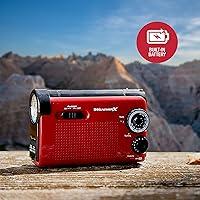
The WeatherX WR182R NOAA Weather Emergency Radio was built for a specific kind of buyer, and if you fit the profile, it delivers real value. Households in hurricane corridors, tornado-prone regions, or areas that routinely lose power during winter storms will find the triple power system — rechargeable battery, hand crank, and AA batteries — genuinely reassuring rather than a marketing checkbox. Campers and day hikers who want a lightweight radio that does not depend on a charged phone or cell signal will appreciate how easily it slips into a pack. It is also a smart addition to a prepared household emergency kit for anyone who wants NOAA weather alerts accessible without fuss — no apps, no Wi-Fi, no setup ritual. Budget-conscious buyers who need a functional, multi-purpose device and can accept analog limitations will find this weather band radio punches well above its modest price.
Not suitable for:

The WeatherX WR182R NOAA Weather Emergency Radio is a poor match for buyers who expect consistent, high-fidelity AM/FM reception across all environments. If you live in a rural or fringe-signal area and plan to use it regularly as a general-purpose radio, the analog tuner will frustrate you quickly. Buyers who want a rugged, drop-resistant device for serious outdoor adventures should also look elsewhere — the all-plastic body is serviceable for shelf storage but not built for rough trail conditions. Tech-forward users who expect digital frequency displays, memory presets, or Bluetooth connectivity will find this radio feels dated by comparison. Similarly, anyone who plans on heavy daily use should be aware that the built-in rechargeable battery degrades over time and cannot be swapped out by the user, which becomes a real inconvenience after a couple of years of regular use.
Specifications

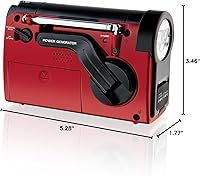
  • Dimensions: The unit measures 5.28″ long by 2.09″ wide by 3.46″ tall, making it compact enough to fit in most emergency kits or jacket pockets.
  • Weight: At 10.2 ounces, this emergency radio is light enough to carry on a hiking trail without meaningfully adding to pack weight.
  • Radio Bands: Supports AM, FM, and NOAA Weather band reception, covering everyday listening as well as official government weather alert broadcasts.
  • Tuner Type: Uses analog direct tuning, allowing immediate manual selection of a target frequency without scanning through channels.
  • Power Source 1: Features a built-in rechargeable battery that can be topped up via an included USB-compatible power adapter before or between emergencies.
  • Power Source 2: A built-in hand-crank dynamo generates electricity mechanically, providing radio operation when both battery and grid power are unavailable.
  • Power Source 3: Accepts 3 AA batteries (not included) as a third independent fallback power option when other sources are depleted.
  • Flashlight: Includes an integrated LED flashlight that operates from the same power sources as the radio, eliminating the need for a separate torch.
  • Connectivity: Equipped with a USB port for charging the internal battery from a wall adapter, power bank, or computer USB port.
  • Material: The housing is constructed from plastic, keeping the unit lightweight but limiting its resistance to drops and rough handling.
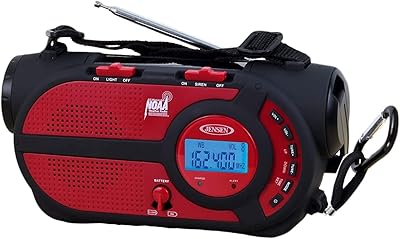
  • Color: Available in a Red and Black color scheme, making it visually distinct and easier to locate in a storage kit or dark environment.
  • Included Accessories: Ships with a power adapter; AA batteries are not included and must be purchased separately.
  • Antenna: Features a built-in antenna designed for stationary or low-mobility use, with no external telescoping antenna for enhanced signal capture noted in official specs.
  • Model Number: The official manufacturer model number is WR182R, produced by Digital Products International under the WeatherX brand.
  • Availability: First made available in January 2013 and confirmed as not discontinued by the manufacturer, indicating continued production and parts support.
  • Target Use: Designed primarily as an emergency preparedness device for households, campers, and hikers rather than as a high-fidelity everyday radio.

Related Reviews
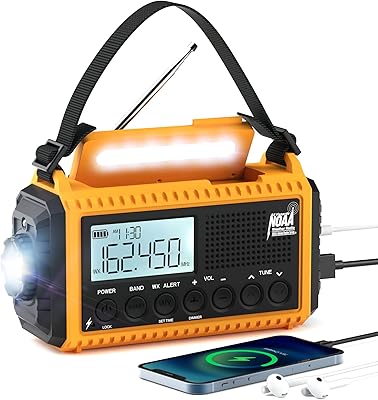
Leaton Emergency NOAA Weather Alert Radio
85%
88%
Battery Life & Charging Options
85%
Weather Alerts & Reception
90%
Build Quality & Durability
93%
Portability & Size
87%
Ease of Use
More
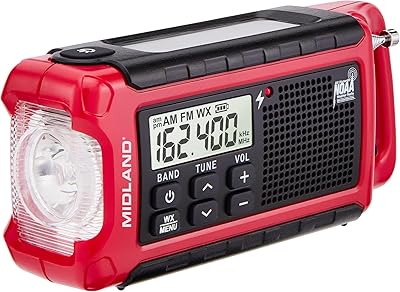
Midland ER210 Emergency Weather Radio
75%
91%
NOAA Reception Quality
83%
Power Source Versatility
78%
Battery Life
89%
Ease of Use
67%
Flashlight Performance
More
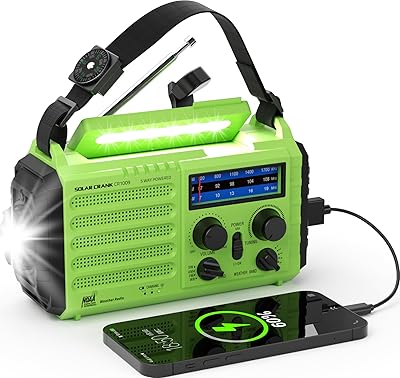
Eoxsmile CR1009Pro Emergency Weather Radio
79%
88%
Value for Money
91%
NOAA Weather Alert
67%
Battery Life
83%
Charging Versatility
74%
Build Quality
More
PPLEE CR1009 5000mAh Emergency Weather Radio
74%
88%
NOAA Reception Reliability
91%
Power Redundancy
83%
Battery Life
47%
Solar Charging Performance
44%
Hand Crank Efficiency
More
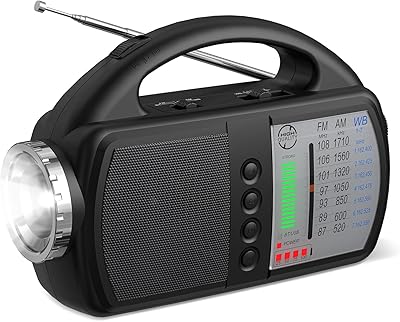
Jensen JEP-650R NOAA Emergency Weather Radio
70%
88%
Value for Money
83%
NOAA Reception
81%
Power Source Versatility
51%
Hand-Crank Efficiency
67%
AM/FM Reception
More
PPLEE 1009Pro-G NOAA Emergency Weather Radio
84%
94%
Power Options Versatility
88%
Build Quality and Durability
81%
Ease of Use
90%
Portability and Size
75%
Sound Quality (Radio Reception)
More
QAUYYW Emergency Weather Radio XSY330
86%
89%
Battery Life
85%
Ease of Use
92%
Portability
75%
Radio Reception
88%
Build Quality
More
Sttfaishen F20 Emergency Hand Crank Weather Radio
72%
82%
NOAA Alert Reception
54%
Battery Capacity & Honesty
61%
Hand Crank Usability
57%
Solar Charging Performance
83%
USB-C Charging Speed
More
Audiocrazy AM FM NOAA Emergency Weather Radio
67%
83%
NOAA Reception
61%
Battery Life
58%
Build Quality
79%
Value for Money
62%
Bluetooth Performance
More
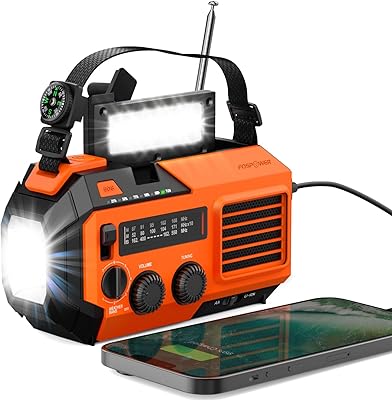
FosPower A6 5200mAh Emergency Weather Radio
77%
91%
NOAA Reception
84%
Build Quality
67%
Power Bank Utility
53%
Hand Crank Efficiency
49%
Solar Charging
More

FAQ

Yes, it is a good idea to give the built-in rechargeable battery a full charge before storing it in your emergency kit. The included power adapter makes this straightforward. Think of it like any other rechargeable device — start it topped up so it is ready when you actually need it.

Expect several hours of continuous radio use on a full charge under normal conditions. That said, battery capacity does decline over time with repeated charge cycles, so units that are a couple of years old may not hold a charge as long as they once did. Keeping AA batteries on hand as a backup is a smart habit.

This depends on the power configuration in use, and the product documentation does not explicitly guarantee simultaneous charge-and-use in all modes. To be safe, treat it as a charge-first, use-later device rather than relying on it as a continuously powered unit.

NOAA operates multiple regional transmitters across the US, each broadcasting on one of seven designated frequencies between 162.400 and 162.550 MHz. You can find your nearest transmitter and its frequency on the NOAA Weather Radio website. Once you have the right frequency, dial it in directly — no scanning needed.

No, it is not rated as waterproof or water-resistant. The plastic housing offers no meaningful protection against rain or moisture ingress. Keep it dry and store it in a sealed bag if it will be part of a kit that might get wet.

Owners who have actually used the crank during power outages report it works reliably for keeping the radio operational. It is not fast — you will need to crank steadily for a few minutes to generate meaningful listening time — but it does the job when you have no other option. It is more of an emergency measure than a convenient charging method.

That depends largely on where you live. In urban and suburban areas with strong broadcast infrastructure, AM/FM performance is generally acceptable for casual listening. In rural or fringe-signal areas, the analog tuner can struggle with static and weak signals. If reliable AM/FM reception is a priority, manage your expectations accordingly.

It is a functional emergency flashlight rather than a high-lumen torch. It will comfortably illuminate a room, a hallway, or a path directly in front of you, which covers most blackout scenarios. Do not expect it to light up a large outdoor area or compete with a dedicated LED flashlight.

The battery is not designed for user replacement. Once it degrades significantly — which typically becomes noticeable after two or more years of regular use — you lose that power tier. The AA battery option remains fully functional as a long-term workaround, but it is worth factoring this into your long-term ownership expectations.

Honestly, yes — this is one of the better fits for users who find technology confusing. There are no menus, no pairing processes, and no apps involved. It is knobs, a crank, and a button. Multiple reviewers specifically mention gifting it to older relatives who picked it up immediately without any help. The simplicity is a genuine strength here.