Overview

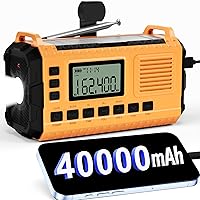
The Sttfaishen F20 Emergency Hand Crank Weather Radio is a budget-minded all-in-one device that packs a weather radio, power bank, and flashlight into a compact 5×3×2-inch frame weighing under 2 pounds. Sttfaishen is a relatively new name in this space, but the F20 has picked up real momentum in the weather radio category — and it's easy to see why. For households that want basic emergency preparedness without spending a lot, this emergency radio covers the essential bases. Just keep expectations calibrated: it's designed to be practical and affordable, not a ruggedized professional survival tool.
Features & Benefits

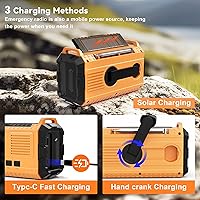
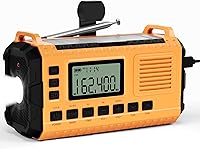
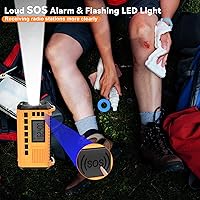
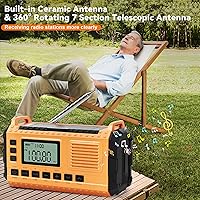
The core appeal of this emergency radio is the combination of functions it brings together at this price point. It receives all seven NOAA preset weather alert channels and uses a seven-section rotating antenna alongside a built-in ceramic antenna for noticeably cleaner signal pickup compared to single-antenna designs. Charging flexibility is genuinely useful here: USB-C is the main daily driver, while the hand crank and solar panel serve as backup power options when you are off-grid or the power is out. The full-band tuner covering FM, AM, SW, and WB auto-scans and saves stations. There is also a multi-mode flashlight, a reading light, and an SOS strobe alarm for signaling in distress situations.

Best For

This weather radio and power bank combo suits a specific kind of buyer well. If you are assembling a basic home emergency kit on a tight budget, or you want something to toss into a camping pack or kayak hatch, it fits neatly. People living in hurricane or tornado regions will find the NOAA alert reception particularly worthwhile. It is also a solid gift for elderly relatives who want simple, low-tech emergency readiness without a complicated setup. Preppers looking for a redundant phone-charging option when the grid goes down will appreciate the power bank output — though this is best treated as one layer in a broader kit, not a standalone solution.

User Feedback

Buyers generally appreciate the value this emergency radio delivers, with positive notes about radio reception clarity and the convenience of having multiple charging methods in one device. That said, the 40,000mAh battery claim raises eyebrows among more experienced users — given the unit's small size and weight, that figure is widely questioned, and real-world phone-charging capacity appears more modest than advertised. Build quality feedback is mixed, with some users finding the plastic housing feels less sturdy than expected. Hand-crank charging is functional but slow, consistent with most devices in this class. The flashlight and SOS alarm earn decent marks, though neither stands out as exceptional.

Pros

  • Compact enough to fit in a backpack side pocket, a kitchen drawer, or a car emergency kit without any real sacrifice of space.
  • NOAA weather alert reception is reliable for most users, with the dual-antenna setup offering a noticeable edge over single-antenna budget radios.
  • USB-C charging keeps the device topped up easily at home, so it is ready when an actual emergency hits.
  • FM radio performance in urban and suburban areas is clean and stable — genuinely listenable for extended listening during outages.
  • The SOS alarm and strobe combination adds a real safety layer for solo hikers or anyone signaling for help in low-visibility conditions.
  • Auto-scan and station memory make tuning fast and approachable, even for users who are not comfortable with manual frequency adjustment.
  • Multiple charging methods — USB-C, hand crank, and solar — mean you are not entirely without options if one power source fails.
  • At well under a typical emergency radio price point, this emergency radio delivers more functional variety than most direct competitors.
  • The bright orange color makes it easy to locate quickly in a dark bag, cluttered shelf, or emergency supply bin.
  • Reading light mode is a practical bonus for extended indoor outages where preserving phone battery matters.

Cons

  • The 40,000mAh battery claim is almost certainly inflated — real-world device charging output is significantly more modest than advertised.
  • Build quality feels noticeably fragile, with the crank arm and antenna joint being the most commonly cited durability concerns after extended use.
  • Hand-crank charging is slow and tiring to sustain, producing only marginal power gains even after several minutes of consistent effort.
  • Solar charging in anything less than direct, unobstructed sunlight is largely ineffective and should not be factored into emergency planning.
  • The included manual is thin and poorly translated in places, making full feature configuration unnecessarily difficult for some users.
  • Shortwave reception is weak enough to be unreliable for anyone who actually depends on SW bands for international or emergency broadcasts.
  • Audio distortion appears at higher volume levels, which is frustrating during longer listening sessions in noisy environments.
  • The USB-C port has shown early signs of loosening with regular use, raising questions about long-term connector durability.
  • No rubberized grip or weather-resistant coating means wet or cold hands make the device harder and less safe to operate outdoors.
  • Sttfaishen is a largely unknown brand with limited after-sales support infrastructure, which adds uncertainty around warranty claims or defect resolution.

Ratings

The Sttfaishen F20 Emergency Hand Crank Weather Radio earned its scores through AI-driven analysis of verified global buyer reviews, with spam, bot submissions, and incentivized feedback actively filtered out before scoring. The ratings below reflect a balanced picture — genuine strengths alongside the real frustrations that show up repeatedly when everyday buyers put this emergency radio and power bank combo to the test. No category has been glossed over, and the scores are weighted to reflect what actually matters when lives or comfort may be on the line.

NOAA Alert Reception
82%
18%
Most users in hurricane- and tornado-prone areas report that the NOAA preset channels lock in reliably and deliver alerts with decent audio clarity. The dual-antenna setup — rotating external rod plus internal ceramic — genuinely helps in fringe signal areas where single-antenna radios struggle.
A subset of buyers in more rural or geographically obstructed regions note occasional signal drop-outs, and a few found switching between NOAA channels less intuitive than expected without carefully reading the manual first.
Battery Capacity & Honesty
54%
46%
The built-in battery does hold a meaningful charge for extended radio listening sessions, and users who ran it continuously for several hours during storms reported it lasted longer than a typical portable speaker would. For light use, it holds up reasonably well.
The advertised 40,000mAh figure is widely disputed among buyers with electronics experience — a device this small and light physically cannot house that capacity with current lithium polymer technology. Real-world phone charging output falls well short of what that number implies, which erodes trust.
Hand Crank Usability
61%
39%
The hand crank is functional in a pinch and does restore some usable power after sustained cranking, which is exactly what you need when all other power sources are unavailable. For emergency radio use specifically — not heavy device charging — it does the job.
Crank efficiency is slow even by category standards, and the mechanism feels plasticky under sustained use. Several buyers flagged concerns about long-term durability of the crank arm, particularly after repeated emergency-scenario testing.
Solar Charging Performance
57%
43%
On a bright, unobstructed sunny day, the solar panel does trickle charge the unit and keeps the battery from fully depleting during extended outdoor use. For weekend campers in sunny climates, it provides a useful supplement.
Charging via solar is genuinely slow — think hours of direct sunlight for marginal gains. Cloudy or partially shaded conditions render it nearly ineffective, and buyers expecting robust solar top-ups in real emergencies often come away disappointed.
USB-C Charging Speed
83%
The USB-C input works well as the primary daily charging method, and users report the device charges to full in a reasonable timeframe compared to older Micro-USB emergency radios. This is the charging method that actually makes sense for regular use and pre-storm prep.
The 15W fast charge claim is on the optimistic side for some users depending on the adapter used. A small number of buyers reported the USB-C port feeling slightly loose after several months of regular plugging and unplugging.
FM/AM/SW Radio Reception
78%
22%
For a budget device, the full-band tuner performs admirably. FM reception in particular draws consistent praise, with users in suburban and urban areas pulling in clear, stable stations. The auto-scan and station memory features work reliably and save meaningful setup time.
Shortwave reception is the weak link — usable in ideal conditions but noticeably inferior to dedicated SW radios. AM performance in buildings with heavy interference is also inconsistent, which some buyers found frustrating for indoor emergency scenarios.
Flashlight Performance
69%
31%
The multi-mode flashlight is genuinely useful for navigating a dark home during a power outage or finding gear in a tent at night. The reading light mode, in particular, draws positive mentions from users who used it for extended periods without draining the battery excessively.
Brightness output is adequate rather than impressive — it will not replace a dedicated flashlight for serious outdoor use. The beam spread is narrow, and a few users wished for a wider flood mode for illuminating larger areas like a garage or backyard.
SOS Alarm & Strobe
74%
26%
The SOS alarm is loud enough to be heard at a meaningful distance outdoors, and the strobe effect adds a visual distress signal that increases the chance of being spotted in low-visibility conditions. For the intended use case, this feature works as advertised.
Indoors or in noisy urban environments, the alarm volume may not cut through background noise as effectively as dedicated personal safety alarms. The strobe brightness, while functional, does not match the intensity of purpose-built emergency strobes.
Build Quality & Durability
58%
42%
The F20 is lightweight and easy to handle, and the orange housing makes it easy to locate quickly in a bag or emergency kit. For normal, occasional use it holds together without obvious problems out of the box.
The plastic construction feels noticeably budget-grade, and multiple buyers flagged concern about the crank arm, antenna joint, and USB port holding up under repeated real-world use. Drop resistance is not something users should assume without a protective case.
Portability & Form Factor
88%
At under 2 pounds and roughly the size of a thick paperback, this emergency radio genuinely fits in a backpack side pocket, a kayak dry bag, or a kitchen drawer without taking up meaningful space. For a device combining this many functions, the footprint is impressive.
The weight and size are well-managed, but the all-plastic body without any rubberized grip can feel slippery when cranking or operating with wet or cold hands — a minor but recurring complaint from outdoor users.
Ease of Use
76%
24%
First-time users generally get the radio and flashlight functions working within minutes. Button layout is logical enough, and the auto-scan for FM and AM stations removes the frustration of manual tuning for less tech-savvy users — making it a reasonable choice for older family members.
The shortwave and weather band switching process is less intuitive, and the included manual is brief and not always clearly translated. A few buyers needed to search for tutorial videos online to fully use every function the device offers.
Value for Money
84%
Judged purely against what you spend, the F20 hand crank radio packs an unusual number of functions into its price bracket. For buyers who simply want a credible emergency preparedness option without a significant financial commitment, the overall offering is hard to argue with.
The value equation weakens if you scrutinize individual performance metrics — the battery capacity claim is misleading, and solar and crank charging efficiency lag behind what the marketing implies. Informed buyers may feel slightly oversold on the power side of the package.
Setup & Initial Configuration
79%
21%
Unboxing and getting started is straightforward — the battery comes partially charged, the antenna deploys smoothly, and basic radio scanning works immediately. For emergency preparedness gifting, this low barrier to entry is genuinely appreciated by recipients who are not gadget-savvy.
Saving custom radio stations and configuring weather alert preferences require working through menu steps that feel unintuitive without a better manual. Some users defaulted to basic functions only because deeper configuration was not worth the effort.
Audio Output Quality
71%
29%
Volume at higher settings is loud enough for a medium-sized room, and clarity on strong FM stations is clean and listenable for extended periods. During a power outage, users found the speaker more than adequate for keeping up with news broadcasts and alert updates.
At maximum volume, some distortion creeps in — particularly on AM and weather bands. Bass response is thin, which is expected for the form factor, but a handful of users found the audio fatiguing during long listening sessions in quiet environments.
Power Bank Output Reliability
59%
41%
When the battery has a decent charge, the power bank output does successfully charge smartphones and small devices, which is exactly the function most buyers care about during an extended outage. Even a partial phone charge can be critical in a real emergency.
Output consistency is uneven — some users reported slower-than-expected charging speeds to connected devices, and the gap between the advertised battery capacity and actual device charging performance is wide enough to be a meaningful disappointment for buyers who planned their emergency prep around it.

Suitable for:

The Sttfaishen F20 Emergency Hand Crank Weather Radio is a practical fit for households that want a credible emergency preparedness baseline without spending heavily on specialized gear. It makes particular sense for people living in regions where seasonal weather threats — hurricanes, tornadoes, severe thunderstorms — are a real annual concern, since reliable NOAA alert access can genuinely matter in those moments. Casual campers, day hikers, and kayakers who want one compact device covering communication, lighting, and backup phone charging will find the form factor and feature set well-matched to their needs. It is also a thoughtful, low-fuss gift for elderly relatives or family members who want basic emergency readiness but would be overwhelmed by complex gear. For anyone assembling a first emergency kit on a budget, this weather radio and power bank combo covers enough of the essentials to serve as a solid starting point.
Not suitable for:

Buyers who need serious, dependable survival equipment should look elsewhere — the Sttfaishen F20 Emergency Hand Crank Weather Radio is a budget device, and its construction and real-world performance reflect that honestly. If your emergency plan depends heavily on recharging devices like tablets, portable medical equipment, or multiple smartphones, the actual usable power output will fall well short of expectations, regardless of what the spec sheet implies. Dedicated outdoor adventurers who regularly push into remote terrain, or preppers building a high-reliability long-term kit, will find the plastic build quality and inconsistent hand-crank efficiency a genuine liability over time. Those who need strong shortwave reception for international broadcasts or ham radio monitoring will also be disappointed — SW performance on this F20 hand crank radio is mediocre at best. And anyone who has already invested in quality purpose-built tools — a separate NOAA radio, a high-capacity power bank, a proper flashlight — will find limited incremental value in combining those functions into a single budget unit.
Specifications

  • Dimensions: The unit measures 5″ long by 3″ wide by 2″ tall, making it roughly the footprint of a thick paperback book.
  • Weight: At 1.98 pounds, the device is light enough to carry in a backpack or store in a standard emergency kit without adding noticeable bulk.
  • Battery Type: The internal battery is a polymer lithium cell, which offers a lighter and more flexible form factor compared to traditional cylindrical lithium-ion packs.
  • Claimed Capacity: The manufacturer advertises a 40,000mAh battery capacity, though independent user experience suggests real-world output is considerably lower than this figure implies.
  • Charging Inputs: Three input methods are supported: USB-C (primary), a built-in hand crank (backup), and an integrated solar panel (supplemental outdoor use).
  • Fast Charging: The USB-C port supports up to 15W input charging, which meaningfully reduces recharge time compared to standard 5W USB input on older emergency radios.
  • Radio Bands: The tuner covers FM, AM, shortwave (SW), and weather band (WB), with auto-scan functionality and the ability to save preferred stations to memory.
  • Weather Channels: Seven NOAA weather alert channels are preset and accessible, allowing the radio to automatically receive official severe weather broadcasts for the local area.
  • Antenna System: Reception is handled by a seven-section, 360-degree rotating external rod antenna working in combination with a built-in ceramic antenna for improved signal sensitivity.
  • Power Bank Output: The device includes a USB output port to charge external devices such as smartphones, drawing from the internal battery when grid power is unavailable.
  • SOS Function: A dedicated SOS mode activates both an audible alarm at maximum volume and a synchronized strobe light to aid rescuer visibility in distress situations.
  • Lighting Modes: The built-in light includes a standard flashlight mode and a lower-intensity reading light mode, both useful for extended low-light operation indoors or outdoors.
  • Color: The unit is available in orange, a practical choice that makes it easier to locate quickly in a dark bag, storage box, or emergency supply area.
  • Model Number: The official model designation is F20, manufactured under the Sttfaishen brand.
  • Included Accessories: The package includes the radio unit, a user manual, and one nonstandard internal battery, which comes pre-installed in the device.

Related Reviews
ZZMICHP 16000mAh Hand Crank Emergency Weather Radio
85%
92%
Battery Life & Power
87%
Ease of Use
68%
Portability & Size
85%
Durability & Build Quality
90%
Radio Performance
More
Rckskaya Condor 1 Emergency Hand Crank Radio
73%
88%
Power Source Versatility
72%
NOAA Weather Reception
83%
Flashlight Performance
67%
Phone Charging Capability
79%
SOS Alarm & Signaling
More
RunningSnail Emergency Crank Weather Radio
72%
88%
Value for Money
84%
Power Redundancy
91%
Built-in Cables
73%
NOAA Reception Quality
62%
Battery Capacity
More
Esky 10000mAh Emergency Hand Crank Radio
84%
89%
Battery Life
94%
Power Options Flexibility
76%
Portability & Weight
85%
Build Quality
91%
SOS Alarm & Emergency Features
More
Givoust MD-107R Hand Crank Emergency Weather Radio
75%
83%
NOAA Reception Quality
78%
Battery Life
81%
Charging Versatility
57%
Hand Crank Efficiency
66%
Build Quality & Durability
More
GIDEZH H27 30000mAh Emergency Weather Radio
75%
82%
Battery Capacity
86%
NOAA Reception Quality
78%
Charging Versatility
88%
All-in-One Convenience
74%
Flashlight Performance
More
Pristar Hand Crank 10000mAh Emergency Weather Radio
71%
83%
Value for Money
76%
Build Quality
52%
Hand Crank Performance
78%
NOAA Reception
47%
Solar Charging
More
AXYEBI AB-US-107Y Emergency Weather Radio
75%
91%
Value for Money
82%
NOAA Signal Reception
88%
Flashlight Performance
63%
Build Quality & Durability
67%
Hand Crank Usability
More
DexScout Crank Emergency Weather Radio 10000mAh
86%
91%
Value for Money
88%
Battery Life and Charging
94%
Portability & Size
85%
Weather Alert Accuracy
90%
Build Quality and Durability
More
RunningSnail MD-090P Emergency Weather Radio
72%
84%
NOAA Reception Quality
54%
Hand Crank Charging
58%
Solar Charging Performance
67%
Battery Capacity & Longevity
78%
Flashlight Performance
More

FAQ

It does have a USB output port and can charge smartphones when the internal battery has charge remaining. That said, treat it as a backup option rather than a primary power bank — the usable output capacity in practice is well below what the advertised figure suggests, so do not expect to fully recharge a modern smartphone multiple times from a single internal charge.

Realistically, not a lot in a short period. The hand crank on the F20 is best thought of as a last-resort trickle charger — sustained cranking for several minutes will produce enough power to extend radio listening time or squeeze a small charge into a phone, but it is slow and physically tiring. Do not rely on it as your primary charging method.

This is the most common skepticism raised by technically experienced buyers, and it is well-founded. A device this size and weight cannot physically house a true 40,000mAh polymer lithium cell with current technology. The real-world charging output is noticeably more modest. Plan your emergency kit accordingly and treat any phone charging as supplemental rather than a guaranteed full recharge.

In most real-world conditions, indoor window solar charging will produce little to no meaningful charge. The solar panel works best in direct, unobstructed outdoor sunlight. Even outdoors, it is a slow trickle — useful for maintaining partial charge during a long sunny day, but not a quick top-up solution.

For most users in suburban and urban areas, NOAA reception is reliable and audio is clear enough to hear alerts without strain. The dual-antenna setup does help in areas where single-antenna radios struggle. Rural users in geographically obstructed areas may encounter occasional signal inconsistency, so it is worth testing your local reception before depending on it during an emergency.

No — there is no IP water resistance rating on this device, and the all-plastic housing should be considered splash-vulnerable at best. Keep it away from rain, wet hands, and moisture during use. If you plan to take it kayaking or camping in wet conditions, store it in a dry bag when not actively in use.

Basic functions — turning it on, scanning FM and AM stations, and activating the flashlight — are straightforward enough for most users without technical experience. The NOAA weather channel switching is simple once set up. Where it gets tricky is configuring shortwave bands or saving custom stations, which may require patience and the included manual for less tech-savvy users.

The flashlight is bright enough for navigating a dark home, locating items in a bag, or moving around a campsite safely. It is not a replacement for a dedicated high-lumen flashlight if you need to illuminate large outdoor areas. The reading light mode is a nice touch for extended indoor outages where you want gentler, sustained light without draining the battery quickly.

The tuner supports FM, AM, and shortwave bands in addition to NOAA weather channels. FM performance is the strongest, with clean reception on most local stations in suburban and urban environments. AM is functional but susceptible to interference indoors. Shortwave reception is mediocre by dedicated radio standards — fine for casual SW listening but not reliable enough for serious shortwave monitoring.

The plastic construction is adequate for occasional use and careful storage, but this is not a ruggedized device. The hand crank arm and antenna joint are the components most likely to show wear over time. If you plan to keep it in a go-bag that gets handled frequently or stored in a vehicle with temperature swings, consider wrapping it in a soft pouch to reduce wear on the more fragile parts.