




Overview

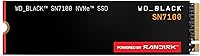
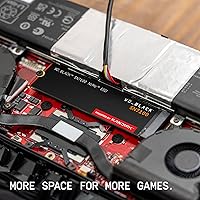
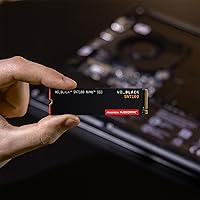
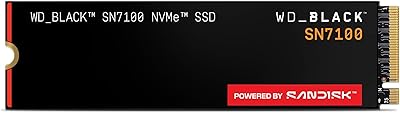
The WD_BLACK SN7100 500GB NVMe SSD is WD_BLACK's latest Gen4 entry, built for gamers and portable device users who want real performance without flagship-tier pricing. It competes squarely in the mid-range Gen4 space alongside drives like the Crucial P5 Plus — solid, well-established competition. At its core, SanDisk's TLC 3D NAND provides a better reliability-to-cost ratio than QLC alternatives, which tends to matter more over years of heavy use than it does in early benchmarks. The 500GB configuration is the smallest option in the lineup, and its standard M.2 2280 form factor fits modern laptops, desktops, and handheld gaming consoles without any compatibility headaches.

Features & Benefits

The headline number is 6,800 MB/s sequential reads, which translates to noticeably faster game load times and large file transfers compared to Gen3 drives — not just in synthetic benchmarks but in everyday use. The Gen4 PCIe interface is a meaningful step up for anyone still running an older drive, particularly in gaming workloads where asset streaming matters. Power consumption is also worth highlighting: WD claims roughly double the efficiency over its previous generation, and that shows up as extended battery life on gaming laptops and handhelds. SanDisk's TLC NAND holds up better than QLC under repeated heavy writes. The WD_BLACK Dashboard adds health monitoring, though it is strictly a Windows-only tool.

Best For

This Gen4 NVMe upgrade makes the most sense for handheld gaming users — Steam Deck-compatible builds and similar devices where both transfer speed and power draw have real consequences. Laptop gamers benefit from the same efficiency gains, since better power management means fewer interruptions during longer sessions away from a charger. Desktop builders moving up from Gen3 who want a legitimate performance step without overspending will find it a reasonable fit too. The important caveat is storage: 500GB is tight by modern standards, with a few AAA titles capable of filling it up quickly — buyers who can stretch to a larger capacity variant probably should. Anyone who values software monitoring alongside hardware performance will appreciate the Dashboard, Windows requirements aside.

User Feedback

With more than 3,000 ratings averaging 4.7 stars, this WD_BLACK drive lands firmly in well-regarded territory. Easy installation and a noticeable jump in system responsiveness come up repeatedly in positive reviews, alongside appreciation for how physically compact the drive is. On the critical side, buyers consistently flag that 500GB disappears faster than expected — a handful of large games and storage decisions start piling up quickly. The Dashboard's Windows exclusivity frustrates Steam Deck and Linux users who wanted drive management tools. Some reviewers mention thermal throttling under sustained heavy loads, though reports suggest it is not pervasive. Those upgrading from the older SN770 frequently note a clear real-world improvement, which aligns with what benchmark data tends to show.

Pros

  • Gen4 PCIe speeds up to 6,800 MB/s translate into noticeably faster game load times compared to Gen3 drives.
  • SanDisk TLC 3D NAND offers better long-term write endurance than QLC alternatives at a similar price point.
  • Power efficiency improvements are meaningful for laptop and handheld users who care about battery life.
  • Standard M.2 2280 form factor ensures compatibility with virtually every modern laptop, desktop, and handheld gaming device.
  • The SN7100 is extremely lightweight at under 0.2 ounces, making it a painless physical upgrade.
  • Installation is straightforward — most buyers report the swap taking under ten minutes with no complications.
  • Over 3,000 user ratings averaging 4.7 stars reflects broad, consistent buyer satisfaction across different use cases.
  • Users upgrading from the older SN770 frequently report a clear, tangible improvement in real-world responsiveness.
  • WD_BLACK Dashboard provides useful drive health monitoring and performance tuning for Windows users.
  • Competitive mid-range pricing puts genuine Gen4 performance within reach without overspending.

Cons

  • 500GB is tight for modern gaming — two or three large AAA titles can fill the drive uncomfortably fast.
  • The WD_BLACK Dashboard is Windows-only, leaving Linux, macOS, and many handheld OS users without software support.
  • Some users report thermal throttling during extended, sustained heavy workloads, which can affect transfer consistency.
  • The 500GB tier offers less value per gigabyte than the larger capacity options in the same lineup.
  • Peak sequential speeds trail top-tier Gen4 competitors in sustained write scenarios, which matters for heavy workloads.
  • No included heatsink means buyers with poorly ventilated builds may need an aftermarket thermal solution.
  • Drive management features are minimal outside of Windows, reducing utility for non-PC gaming setups.
  • Buyers needing more than moderate storage capacity will quickly outgrow this entry-level configuration.

Ratings

The WD_BLACK SN7100 500GB NVMe SSD earns strong marks across most categories, based on AI analysis of thousands of verified global buyer reviews — with spam, bot activity, and incentivized feedback actively filtered out. The scores below reflect the real distribution of user sentiment, capturing both what this Gen4 drive does well and where it falls short for specific buyers. Strengths and pain points are weighted equally, so the picture you see here is an honest one.

Read Performance
91%
Users upgrading from Gen3 drives consistently report a sharp improvement in game load times and large file reads, with the 6,800 MB/s ceiling feeling tangible in real desktop and gaming workloads. Steam Deck users in particular note faster boot times after swapping in the SN7100.
The performance ceiling is only fully realized on Gen4-compatible hardware; those running it in Gen3 slots see noticeably reduced speeds. A handful of users also note the gap between this drive and premium Gen4 competitors widens during sustained sequential operations.
Write Performance
83%
For everyday gaming installs, patch downloads, and moderate file transfers, write speeds are consistently strong and users rarely encounter bottlenecks. TLC NAND helps maintain better write consistency over time compared to QLC-based alternatives at similar price points.
Under prolonged, heavy write workloads — such as large video file transfers or disk imaging — some users report speed dips consistent with thermal throttling or SLC cache exhaustion. Content creators pushing the drive hard will likely notice more than casual gamers will.
Power Efficiency
89%
This is one of the SN7100's most praised real-world attributes among laptop and handheld users. Buyers running Steam Deck sessions report meaningfully longer playtime compared to older drives, and laptop gamers appreciate that the drive does not visibly accelerate battery drain.
Power efficiency benefits are most apparent when compared directly to the previous SN770 generation; users coming from other modern Gen4 competitors may not notice as dramatic a difference. The efficiency gains are also less relevant for desktop users with no battery constraints.
Storage Capacity
58%
42%
For light-to-moderate gaming libraries, productivity workloads, or use as a secondary drive, 500GB is a workable starting point. Buyers who actively manage their installs and treat larger games as rotate-in, rotate-out titles can make this capacity function reasonably well.
Modern AAA titles frequently exceed 80–100GB each, and buyers repeatedly flag that 500GB feels insufficient within weeks of heavy use. Several reviewers explicitly wish they had opted for the 1TB variant, and this capacity tier consistently draws the most critical feedback in the entire pool.
Thermal Management
72%
28%
In well-ventilated desktop builds and most gaming laptops with active cooling, the SN7100 handles typical gaming and productivity workloads without any notable throttling. Users in standard configurations rarely encounter heat-related performance issues during day-to-day use.
Extended sustained workloads — particularly lengthy sequential writes or use in enclosed or passively cooled enclosures — can trigger thermal throttling, which some users noticed as sudden speed drops mid-transfer. No heatsink is included, and buyers in tight or warm builds may want to add one.
Installation Ease
94%
Installation is one of the most universally praised aspects of this drive across the review pool. The standard M.2 2280 form factor means it drops into virtually any compatible slot without adapters, and most buyers report the physical swap taking under ten minutes with no complications.
The installation process itself is simple, but first-time builders occasionally note confusion around data migration — cloning an existing drive requires a separate cable or enclosure that is not included. Operating system setup from scratch is straightforward, but migrating an existing installation adds a step.
Software & Dashboard
61%
39%
Windows users who take advantage of the WD_BLACK Dashboard find it genuinely useful for monitoring drive health, checking endurance metrics, and running diagnostics without third-party tools. It adds a layer of visibility that budget drives rarely offer.
The Windows-only limitation is a recurring frustration, particularly for Steam Deck owners and Linux users who represent a meaningful portion of this drive's target audience. Buyers expecting cross-platform software support are routinely disappointed, and this restriction consistently surfaces in critical reviews.
Build Quality
88%
The SN7100 feels like a premium component — the PCB is solid, the NAND is sourced from SanDisk's own manufacturing, and the construction shows no signs of the cost-cutting sometimes seen in no-name budget Gen4 drives. Users express confidence in its physical durability.
At this form factor, there is inherently little to grip or evaluate physically, and some buyers wish the board came with even a basic thermal pad pre-applied. The drive has no visible differentiating build features beyond the brand label.
Value for Money
86%
At its price point, the SN7100 offers a compelling combination of TLC NAND reliability, Gen4 throughput, and brand backing that outpaces many cheaper alternatives. Buyers consistently describe it as a smart mid-range choice that does not feel like a compromise.
Value perception softens at the 500GB tier specifically — the cost-per-gigabyte ratio improves substantially at 1TB and 2TB, making the entry configuration feel less efficient for storage-hungry buyers. A few users note that competing drives occasionally offer similar specs at slightly lower prices during sales.
Compatibility
92%
The standard M.2 2280 footprint and backward compatibility with Gen3 slots makes this drive genuinely universal across modern hardware. Buyers report clean detection across desktop motherboards, gaming laptops, and handheld consoles without needing drivers or firmware updates.
Backward compatibility with Gen3 is functional but comes with a real speed penalty that some buyers do not anticipate before purchasing. Users on older platforms expecting full Gen4 performance without a compatible motherboard will not get what the spec sheet suggests.
Reliability & Endurance
87%
TLC 3D NAND is a meaningful reliability advantage over QLC, and buyers who have been running SSDs long-term tend to appreciate this distinction. The five-year warranty signals confidence from the manufacturer and provides reassurance for buyers making a long-term storage investment.
The drive is still relatively new to market as of late 2024, so long-term endurance data from real-world users is still accumulating. Early adopters cannot rely on years of reliability reports the way they can with more established drive models.
Noise & Vibration
97%
As a solid-state drive with no moving parts, the SN7100 operates in complete silence under all workloads, which is a meaningful quality-of-life improvement for anyone upgrading from a mechanical hard drive. Buyers consistently mention the absence of any audible drive activity as a positive.
This is a universal characteristic of NVMe SSDs rather than a differentiating feature of this drive specifically, so it offers no meaningful advantage over competing solid-state alternatives. There is essentially nothing to critique here, which is expected.
Brand Reputation
84%
WD_BLACK carries strong name recognition in the gaming storage segment, and SanDisk's involvement in manufacturing adds an additional layer of credibility. Buyers who have used previous WD_BLACK drives report consistent quality across generations and express confidence in the brand.
Some technically informed buyers point out that WD_BLACK is a marketing umbrella rather than a fully independent engineering team, and the SanDisk manufacturing connection is not always clearly communicated at point of sale. Brand loyalty does not fully substitute for detailed independent benchmark comparisons.
Gen3 to Gen4 Upgrade Value
79%
21%
For buyers still running PCIe Gen3 drives, the SN7100 delivers a noticeable and real-world-meaningful performance jump — particularly in gaming load times and large application launches. The upgrade path feels well-justified for users whose current hardware supports Gen4.
Users on Gen3 motherboards will not see the full speed benefit and may find the value proposition less clear when cheaper Gen3 drives can close the gap in everyday tasks. The upgrade argument weakens considerably if the host platform cannot support the full Gen4 bandwidth.

Suitable for:

The WD_BLACK SN7100 500GB NVMe SSD is a strong fit for handheld gaming enthusiasts who want faster load times and better battery longevity from a single upgrade — the improved power efficiency over the previous generation is a genuine advantage in devices like the Steam Deck where every watt counts. Laptop gamers who have been running on an older Gen3 drive will notice a real-world difference in both application launch times and large file handling, without needing to pay flagship SSD prices. Desktop PC builders looking to step into Gen4 territory on a reasonable budget will also find the SN7100 a credible, trustworthy option backed by SanDisk's TLC 3D NAND — a more durable NAND type than the QLC found in some competing budget drives. It suits anyone who values a brand with established reliability, a tidy software dashboard for drive health monitoring, and broad M.2 2280 compatibility across virtually any modern platform.

Not suitable for:

Buyers who play a heavy rotation of modern AAA titles should think twice before committing to this capacity tier, because 500GB fills up fast — a couple of large open-world games and a few smaller titles can exhaust the drive's usable space within weeks. The WD_BLACK SN7100 500GB NVMe SSD is also not the right pick for content creators, video editors, or anyone regularly moving large media files, where a 1TB or 2TB drive would be a far more practical investment. Linux users and Steam Deck owners running a non-Windows OS will find the WD_BLACK Dashboard entirely inaccessible, removing one of the drive's differentiating features. Those chasing absolute peak sequential performance at the top of the Gen4 tier will find that drives like the Samsung 990 Pro pull ahead in sustained workloads, even if the gap rarely shows up in day-to-day gaming use. If raw storage capacity or cutting-edge peak throughput are the primary purchase criteria, a different drive or a higher-capacity variant of this lineup would serve better.

Specifications

  • Capacity: The drive offers 500GB of usable storage, making it the entry-level configuration in the SN7100 product line.
  • Interface: It connects via a PCIe Gen4 NVMe interface, offering significantly higher bandwidth than older PCIe Gen3 drives.
  • Form Factor: The drive uses the M.2 2280 form factor, measuring 3.14 x 0.86 x 0.04 inches, compatible with virtually all modern motherboards and laptops.
  • Sequential Read: Maximum sequential read speed reaches up to 6,800 MB/s under optimal conditions.
  • NAND Type: Storage cells are built on SanDisk's TLC 3D NAND technology, which balances write endurance, performance consistency, and cost better than QLC-based alternatives.
  • Manufacturer: The drive is manufactured by SanDisk Technologies, Inc. and distributed under the WD_BLACK brand, a division licensed from Western Digital Corporation.
  • Weight: The drive weighs just 0.192 ounces, making it one of the lightest internal storage upgrades available for portable devices.
  • Compatible Devices: Officially compatible with desktops, laptops, and handheld gaming devices that support the M.2 2280 slot with PCIe Gen4 or Gen3 connectivity.
  • Installation Type: This is an internal drive requiring physical installation into an available M.2 slot; no external enclosure or adapter is included.
  • Software: The WD_BLACK Dashboard is available for drive health monitoring and performance management, but it is compatible with Windows operating systems only.
  • Color: The drive has a black PCB finish consistent with the WD_BLACK gaming-oriented product line aesthetic.
  • Model Number: The official model identifier for this 500GB configuration is WDS500G4X0E-00CJA0.
  • Release Date: The SN7100 series became available starting December 2024, placing it among the more recently launched Gen4 NVMe drives in this price tier.
  • Market Rank: At launch, the drive reached a top-10 ranking in the Internal Solid State Drives category on Amazon, reflecting strong early adoption.
  • Power Efficiency: WD_BLACK claims up to 100% better power efficiency compared to the previous SN770 generation, a meaningful spec for battery-powered devices.

Related Reviews
WD_BLACK SN770M 500GB NVMe SSD
89%
93%
Performance
95%
Compatibility with Gaming Consoles
91%
Speed (Read/Write)
88%
Installation Ease
87%
Durability
More
WD_BLACK 4TB SN7100 NVMe SSD
87%
94%
Performance (Speed)
92%
Storage Capacity
85%
Power Efficiency
89%
Installation & Setup
91%
Durability & Reliability
More
WD_BLACK 1TB SN7100 NVMe SSD
89%
94%
Read Speed Performance
89%
Write Speed Performance
92%
Power Efficiency
91%
Endurance and Longevity
87%
Value for Money
More
WD_BLACK SN7100 2TB NVMe SSD
85%
93%
Read & Write Performance
88%
Gaming Load Times
86%
Power Efficiency
84%
Thermal Management
91%
Value for Money
More
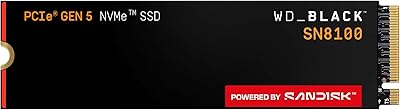
WD_BLACK SN850 500GB NVMe Internal SSD
83%
93%
Sequential Read Speed
82%
Write Performance
88%
Thermal Management
96%
PS5 Compatibility
67%
Value for Money
More
fanxiang S880E 500GB NVMe SSD
78%
83%
Raw Speed Performance
86%
PS5 Compatibility
91%
Value for Money
77%
Thermal Management
93%
Installation Ease
More
TEAMGROUP MP44L 500GB Gen4 NVMe SSD
78%
88%
Sequential Read Speed
61%
Sustained Write Performance
79%
Thermal Management
91%
Installation & Compatibility
93%
Value for Money
More
WD_BLACK SN770 2TB NVMe SSD
85%
91%
Read & Write Performance
93%
Value for Money
94%
Installation & Compatibility
88%
Long-Term Reliability
92%
Gaming Load Times
More
WD_BLACK SN8100 1TB NVMe SSD
78%
97%
Raw Read Performance
83%
Write Speed
76%
Real-World Gaming Impact
81%
Compatibility & Setup
62%
Thermal Management
More
Crucial P3 500GB NVMe M.2 SSD
82%
88%
Read Speed Performance
71%
Write Speed Performance
93%
Value for Money
94%
Ease of Installation
86%
Reliability & Longevity
More

FAQ

Yes, the M.2 2280 form factor fits the Steam Deck's internal slot, and the drive performs well in that context. Keep in mind that the WD_BLACK Dashboard software will not function on SteamOS since it is Windows-only, so you will not get drive health monitoring unless you boot into Windows.

Honestly, it depends on your library. If you play a handful of titles and rotate them in and out, 500GB is workable. But if you keep multiple large open-world games installed at once, the space goes fast — some single titles now exceed 100GB. For heavy gamers, the 1TB variant is worth the extra investment.

The SN7100 is a meaningful step forward in both raw throughput and power efficiency. Users upgrading from the SN770 consistently report noticeable improvements in load times and overall system responsiveness, and the Gen4 interface provides more headroom for demanding workloads.

A heatsink is not included and is not strictly required for most use cases. In well-ventilated desktop builds or laptops with active cooling, the drive runs fine without one. If you are installing it in a tight enclosure with limited airflow, an aftermarket M.2 heatsink is a cheap precaution against thermal throttling under sustained loads.

Yes, it is backward compatible with Gen3 M.2 slots. You will not get the full Gen4 speeds in that configuration, but the drive will still function and perform better than many Gen3 drives do in their native environment.

It lets you monitor drive health, check remaining lifespan, run performance diagnostics, and configure certain settings. It is a useful tool if you like keeping tabs on your hardware, but it is strictly Windows-only — Linux and macOS users will not be able to use it at all.

Not difficult at all for most users. If you can handle a small Phillips-head screwdriver and follow basic anti-static precautions, the physical swap takes under ten minutes. The drive is detected automatically by modern operating systems once seated correctly.

Some users have reported throttling during prolonged, intensive workloads like extended file transfers or heavy compression tasks. For typical gaming and everyday use, it is not a practical concern. If you regularly handle large sustained writes, monitoring drive temperatures is a sensible habit.

WD does offer data migration tools through their website, and the WD_BLACK Dashboard on Windows includes some utilities. However, a dedicated cloning cable or external enclosure is typically needed to clone an existing drive, and those are sold separately.

WD_BLACK drives in this series typically carry a five-year limited warranty, which is strong for a mid-range SSD and reflects confidence in the TLC NAND's longevity. Always confirm warranty terms on WD's official site for your region, as terms can vary.