
Overview

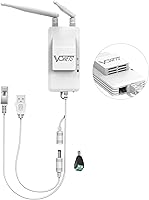
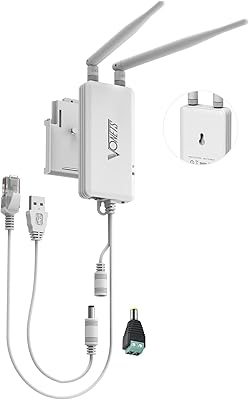
The Vonets VAP11S-5G 5GHz WiFi Bridge Router sits in an interesting middle ground — sturdy enough for industrial deployments yet compact enough to tuck behind a camera mount or NVR rack. It launched in mid-2023 and has quietly built a 4.0-star reputation among network installers and small-shop IT folk who need reliable Ethernet-to-WiFi conversion without spending enterprise money. Compared to cheap consumer dongles, this WiFi bridge adapter feels more purposefully built, with a compact form factor, dual external antennas, and a smart cooling fan that sets it apart from rivals that simply run hot and hope for the best. Solid value for the price tier it occupies.

Features & Benefits

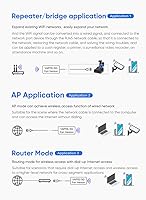
The VAP11S-5G runs in three distinct modes — Bridge, Repeater, and Router — which sounds simple until you realize how rarely competitors offer all three in one box this small. In Bridge mode, it performs transparent MAC-layer conversion, meaning your downstream device gets its own IP address rather than being double-NATted. The dual external antennas genuinely help in real installs where the device sits inside a cabinet or around a corner. Power flexibility is a practical win too: the wide DC 5V–24V input range, with a USB fallback, means you can tap an existing on-site supply instead of hunting for the right adapter. Just keep in mind the Ethernet ports are 10/100, so the 867 Mbps wireless ceiling stays theoretical.

Best For

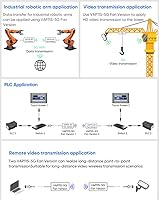
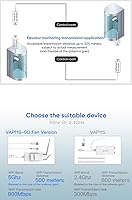
This mini wireless bridge genuinely earns its keep in scenarios where running new cable is impractical. Think IP cameras and NVRs in a warehouse that need to report back over WiFi, PLCs on a factory floor that were never designed for wireless, or IoT sensors too far from a wired drop. Home lab users will find it equally useful for bridging a network switch, older media player, or network-attached printer onto a 5GHz segment. It also works as a dead-zone repeater if your router signal does not reach a back room or detached garage. Where it is less suited: if you need gigabit throughput or a dual-band setup, the hardware ceiling will frustrate you.

User Feedback

Buyers who use this WiFi bridge adapter in surveillance or industrial setups tend to be satisfied, citing stable bridge performance and consistent connectivity once the device is configured. The initial setup gets mixed marks — the web interface works, but mode-switching requires some familiarity with networking concepts, and the documentation could be clearer for first-timers. The cooling fan draws occasional comments: it does produce a faint hum during heavy use, which is a non-issue in a server room but worth knowing if silence matters. Long-term stability appears solid based on available feedback, with few reports of dropped connections or overheating under normal conditions. The main gripe comes down to documentation quality rather than the hardware itself.

Pros

  • Runs in Bridge, Repeater, or Router mode — three useful configurations in one compact device.
  • Dual external antennas provide noticeably better signal pickup than internal-antenna competitors.
  • Wide DC 5V–24V power input lets you tap existing on-site supplies in industrial installs.
  • USB power fallback adds flexibility when a DC connector is not convenient.
  • The smart cooling fan kicks in automatically, preventing the heat buildup that quietly kills compact networking gear.
  • Transparent MAC-layer bridge mode means downstream devices get their own IP addresses, avoiding double-NAT headaches.
  • Compact mounting kit is included, making rack or wall installation straightforward.
  • Overvoltage protection up to 27V adds a layer of safety in less controlled power environments.
  • At its price point, the VAP11S-5G undercuts industrial-grade alternatives considerably.
  • Stable long-term performance reported by users running it continuously in surveillance and IoT setups.

Cons

  • Documentation is thin and can leave non-technical buyers confused when switching between modes.
  • Ethernet ports are limited to 10/100Mbps, creating a wired throughput ceiling regardless of WiFi speed.
  • Single-band 5GHz only — useless if your router broadcasts exclusively on 2.4GHz.
  • The cooling fan produces an audible hum that may be distracting in quiet environments.
  • No cloud management or mobile app; configuration requires accessing a web interface directly.
  • Review base is still relatively small, making it harder to assess long-term reliability with confidence.
  • Mode-switching is not intuitive for beginners and can require a factory reset if misconfigured.
  • No dual-band support limits flexibility when 5GHz signal strength is weak or obstructed.
  • The included DC connector is industrial-style, which may require an adapter in typical home setups.
  • This mini wireless bridge offers no built-in VLAN or advanced traffic management features.

Ratings

The scores below reflect an AI-driven analysis of verified global user reviews for the Vonets VAP11S-5G 5GHz WiFi Bridge Router, with spam, bot-generated, and incentivized feedback actively filtered out before scoring. Ratings are calibrated to surface both what buyers genuinely appreciate and where real frustrations consistently emerge — nothing is glossed over.

Bridge Performance
83%
Users deploying this WiFi bridge adapter for IP cameras, NVRs, and industrial sensors consistently report stable, drop-free connections once the device is properly configured. In bridge mode specifically, the transparent MAC-layer passthrough earns praise from installers who need downstream devices to appear directly on the main network.
A subset of users note that performance can degrade noticeably when the 5GHz signal from the upstream router is weak or partially obstructed, since the single-band design leaves no fallback frequency. A few industrial users also report occasional disconnections that required a power cycle to resolve.
Ease of Setup
62%
38%
Buyers with a working knowledge of networking concepts — IP addressing, bridge versus router mode, DHCP behavior — generally get the VAP11S-5G running within 15 to 20 minutes and describe the web interface as functional and responsive. The inclusion of a mounting kit and labeled ports also reduces physical installation friction.
Non-technical users frequently cite the setup process as the steepest hurdle, particularly when switching between operating modes, which can require a factory reset if steps are missed. The printed documentation is widely described as too sparse, and finding clear guidance often means hunting through Vonets' online resources independently.
Thermal Management
81%
19%
The smart cooling fan is a genuine differentiator at this price tier — compact networking gear without active cooling often throttles or fails silently after weeks of continuous use, and buyers running this mini wireless bridge 24/7 in camera systems report sustained stability that they attribute directly to the fan kicking in during peak load.
The fan does produce an audible hum when active, which a handful of users found distracting in quiet home office environments. A small number of reviews also question whether the fan will remain reliable after 12 to 18 months of near-constant cycling, though failure reports remain rare so far.
Build Quality
74%
26%
The housing feels sturdier than typical consumer-grade adapters at this price, and the industrial DC connector plus wide voltage tolerance suggest the device was designed with real-world deployment environments in mind rather than just a clean home desk setup.
The plastic enclosure attracts fingerprints and shows scuff marks easily, and a few buyers felt the external antenna connectors lacked the solidity they expected for an industrial-positioned product. It does not feel fragile, but it also does not inspire the same confidence as purpose-built enterprise hardware.
Antenna Signal Quality
78%
22%
The two external 5GHz antennas deliver a tangible improvement over single or internal-antenna competitors, with users reporting usable connections at distances and through light obstructions that cheaper adapters could not handle. Installers mounting the device inside an electrical cabinet especially notice the difference.
Signal quality drops off sharply through dense materials like concrete walls or metal enclosures, which is a physics limitation rather than a product flaw but catches some buyers off guard. The antennas are not high-gain units, so expectations should remain realistic for long-range deployments.
Wired Throughput
53%
47%
For the device categories this WiFi bridge adapter actually targets — IP cameras, PLCs, legacy printers, IoT sensors — the 10/100Mbps Ethernet ports provide more than adequate bandwidth, and users in surveillance and light industrial contexts rarely bump into the ceiling in practice.
The 10/100Mbps port limitation is a hard cap that frustrates buyers who purchased based on the 867 Mbps wireless headline figure, expecting that speed to carry through to wired devices. Anyone transferring large files, running a NAS drive, or connecting a modern media server will find the real-world throughput ceiling a genuine disappointment.
Power Flexibility
88%
The wide DC input range from 5V to 24V, combined with a USB fallback option, makes this one of the more adaptable compact bridge devices available — field installers can tap an existing on-site DC rail rather than sourcing a dedicated adapter, which simplifies deployments in industrial enclosures and remote locations significantly.
The industrial-style DC connector bundled in the box is less convenient for typical home installations where a standard USB or barrel-jack adapter would be more intuitive. A small number of users also reported instability when powered from low-amperage USB sources that could not sustain the 2A draw under load.
Mode Versatility
77%
23%
Having Bridge, Repeater, and Router modes available in one device genuinely expands deployment options — the same hardware can serve as a client bridge in one install and a signal repeater in another, which network installers managing multiple sites find commercially useful.
Switching between modes is not intuitive, and the web interface does not always make the implications of each mode change clear to less experienced users. Several buyers have reported needing to factory reset the device after incorrectly applying a mode switch, which adds unnecessary downtime in time-sensitive installs.
Long-term Reliability
71%
29%
Users who have run the VAP11S-5G continuously in low-traffic scenarios like surveillance bridging or single IoT device connectivity generally report stable operation over several months without intervention, which is a reasonable result for a device in this price bracket.
The review base is still relatively small given the device launched in mid-2023, making it genuinely difficult to draw firm conclusions about multi-year reliability. A handful of users have reported unexplained disconnects requiring reboots, and it remains unclear whether those are edge cases or an early indicator of a longer-term pattern.
Value for Money
79%
21%
Buyers who match the device to its intended use cases — bridging a wired camera or industrial sensor to WiFi — consistently describe it as fair value, especially when comparing it to enterprise-grade alternatives that cost several times more for features that smaller deployments simply do not need.
Users who expected consumer-router simplicity or gigabit throughput based on the headline specs often feel the pricing is harder to justify after hitting the setup complexity or the 10/100 throughput ceiling. For buyers with purely domestic needs, several simpler and cheaper options exist at this price tier.
Documentation Quality
44%
56%
Vonets does maintain an online knowledge base and configuration guides that technically cover the device's main setup scenarios, which means determined users can usually find answers if they search for them. Users already familiar with Vonets products from prior purchases find the documentation adequate.
The physical documentation included in the box is widely considered insufficient, and the online resources are inconsistently organized, making it hard for first-time buyers to navigate confidently. This is one of the most frequently mentioned pain points across the review base and represents the clearest area where the product falls short of its positioning.
Physical Footprint
85%
At just 3.66 x 1.77 x 0.94 inches and under 4 ounces, this mini wireless bridge tucks neatly behind a camera mount, inside an enclosure, or onto the back of a monitor arm without calling attention to itself. The included mounting kit makes permanent installation straightforward in professional settings.
The two external antennas do add to the overall profile once attached, which can make fitting the device inside tightly packed enclosures more awkward than the body dimensions alone suggest. Buyers with very confined installation spaces should account for antenna clearance before purchasing.
Fan Noise Level
66%
34%
In server rooms, warehouse environments, and outdoor enclosures — where the device is most commonly deployed — the fan noise is essentially a non-issue and goes unnoticed by the majority of users in those settings. The auto-start and auto-stop behavior also means the fan is not running constantly.
In quieter indoor environments like a home study or small office, the fan hum is audible enough to be a mild nuisance for sensitive users, particularly during late-night or low-ambient-noise conditions. It is not disruptively loud, but it is noticeable enough that a few buyers specifically mentioned it as a reason for docking a star in their reviews.

Suitable for:

The Vonets VAP11S-5G 5GHz WiFi Bridge Router is a strong pick for network installers, small business IT staff, and technically minded DIYers who need to put wired-only devices onto a wireless network without pulling new cable. It fits naturally into surveillance setups where IP cameras, DVRs, or NVRs are fixed in place and a wired run to the router is impractical. Industrial users will appreciate the flexible power input, making it deployable alongside PLCs, AGVs, or IoT sensors that draw from existing on-site DC supplies. Home lab enthusiasts who want to bridge a network switch, older media player, or wired printer onto a clean 5GHz segment will find it equally capable. If you have even a basic grasp of networking concepts like IP addressing and bridge versus router mode, the setup process is manageable and the payoff in stable connectivity is real.

Not suitable for:

Buyers expecting plug-and-play simplicity comparable to a consumer travel router may find the Vonets VAP11S-5G 5GHz WiFi Bridge Router a frustrating experience, since switching between its three modes requires navigating a web interface that assumes some networking knowledge. Anyone who needs gigabit throughput should look elsewhere — the 10/100Mbps Ethernet ports cap real-world wired speeds well below what modern NAS drives, 4K streaming boxes, or high-volume file transfers demand. The device is single-band 5GHz only, so it will not help in environments where only a 2.4GHz network is available or where longer-range, wall-penetrating signal is the priority. Users in noise-sensitive spaces like a home office or bedroom should also know the cooling fan produces an audible hum during sustained operation. And if you are looking for centralised management or cloud monitoring features common in prosumer mesh systems, this mini wireless bridge simply does not offer that.

Specifications

  • Brand: Manufactured by Vonets, a brand operated by Shenzhen HouTian Network Communication Technology Co., Ltd.
  • Model: The device carries the model designation VAP11S-5G.
  • Frequency Band: Operates exclusively on the 5GHz single-band spectrum; no 2.4GHz support is included.
  • WiFi Standards: Compatible with 802.11a, 802.11n, and 802.11ac (Wi-Fi 5) wireless protocols.
  • Max WiFi Rate: Theoretical maximum wireless data rate is 867 Mbps under ideal 802.11ac conditions.
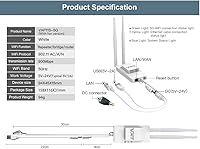
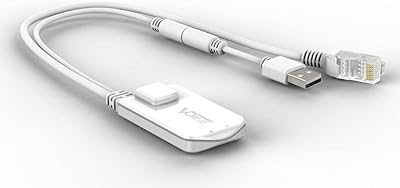
  • Ethernet Ports: Equipped with two adaptive 10/100Mbps RJ45 Ethernet ports — one integrated jack and one pigtail cable with connector.
  • Operating Modes: Supports three configurable modes: WiFi Bridge (IP and MAC layer), Wireless Repeater, and Router mode with WiFi WAN uplink.
  • Antennas: Includes two detachable external 5GHz antennas designed to improve signal reception over internal-antenna alternatives.
  • Power Input: Accepts a wide DC voltage range of 5V to 24V (typical 5V/2A or 12V/1A) and also supports USB power input as an alternative.
  • Overvoltage Protection: Two-stage automatic overvoltage protection safeguards the unit up to a maximum protective ceiling of 27V.
  • Cooling System: A built-in smart fan activates automatically after approximately 5 to 10 minutes of sustained operation and shuts off when temperatures normalize.
  • Dimensions: The unit measures 3.66 x 1.77 x 0.94 inches, making it compact enough for discreet mounting in tight spaces.
  • Weight: Weighs 3.53 ounces without power supply or antennas attached.
  • Mounting: One mounting kit is included in the box to facilitate wall or panel installation in industrial and field deployments.
  • Power Connector: Ships with one industrial-grade DC power connector suited for use with standard DC adapters in the supported voltage range.
  • Availability: First listed on Amazon on August 9, 2023, with a growing review base and an average rating of 4.0 out of 5 stars across 94 ratings.

Related Reviews
Vonets VAP11S Industrial WiFi Bridge Router
72%
54%
Ease of Setup
84%
Connectivity Reliability
83%
Value for Money
91%
Power Flexibility
87%
Dual-Port Design
More
Vonets VAP11N-300 Mini WiFi Bridge
85%
86%
Performance
91%
Ease of Setup
88%
Power Efficiency
84%
Connectivity Range
90%
Device Compatibility
More
Yeacomm NR330 AX3600 5G WiFi 6 Router
72%
83%
Ease of Setup
71%
Real-World Speeds
62%
Carrier Compatibility
78%
WiFi Performance
74%
Build Quality
More
Vonets VAP11G-300 WiFi Bridge Repeater
72%
58%
Ease of Setup
83%
Bridge Mode Performance
67%
Repeater Mode Performance
61%
Wireless Range
71%
Build Quality & Durability
More
Zyxel FWA510 5G NR WiFi 6 Router
77%
78%
5G Connectivity Performance
83%
WiFi Coverage & Stability
81%
Cloud Management (Nebula)
61%
Value for Money
72%
Setup & Installation
More
Wiflyer Z8102AX-T-RM520NGL 5G WiFi 6 Router
69%
74%
Cellular Performance
78%
Dual SIM Functionality
38%
US Carrier Compatibility
81%
WiFi 6 Performance
83%
Antenna System
More
D-Link G530 5G WiFi 6 Cellular Router

75%
81%
5G Signal Reception
88%
Dual-WAN Failover
69%
WiFi Coverage & Range
86%
Setup Experience
62%
FALCON App Quality
More
Router Guard Large WiFi Router EMF Shield
74%
78%
EMF Shielding Effectiveness
61%
WiFi Signal Impact
84%
Build Quality
96%
Ease of Installation
71%
Router Compatibility
More
Rockspace AC2100 Wi-Fi Router
74%
83%
Value for Money
63%
Wi-Fi Range & Coverage
78%
Multi-Device Performance
88%
Setup & Ease of Use
86%
Wired Connection Quality
More
BrosTrend EAP5 5KM Outdoor WiFi Bridge Kit
80%
91%
Ease of Setup
77%
Wireless Range
83%
Signal Stability
78%
Throughput Performance
86%
Build Quality
More

FAQ

Yes, the VAP11S-5G connects to any standard 5GHz WiFi network just like a regular wireless client would. You will need to log into its web interface to enter your network name and password during initial setup, but once that is done, it handles the rest automatically. If your router uses WPA2 security, which most do, compatibility should not be an issue.

The 867 Mbps figure is the theoretical wireless ceiling under perfect lab conditions, but the Ethernet ports themselves are 10/100Mbps, which caps your wired throughput at around 94 Mbps in practice. For IP cameras, NVRs, PLCs, and most IoT devices, that is more than sufficient. If you are planning to run high-speed file transfers or stream uncompressed 4K video, you will hit that ceiling quickly.

This mini wireless bridge is designed to connect one wired device or small wired segment to an existing WiFi access point, not to link two separate wired networks together in a point-to-point configuration. For true wireless backhaul between two locations, you would typically need a pair of bridge-capable devices, one at each end. Using a single VAP11S-5G, one side of the link is always a WiFi access point or router that you do not control directly.

The fan does not run all the time — it activates automatically after roughly 5 to 10 minutes of sustained use once the device warms up, then shuts itself off when it cools down. In practice, the hum is fairly faint and most users in server rooms, utility closets, or outdoor enclosures will never notice it. That said, if you plan to place it on a desk in a quiet home office or bedroom, the occasional fan noise is worth knowing about beforehand.

Yes, this WiFi bridge adapter is broadly compatible with any device that has an RJ45 Ethernet port and communicates over a standard IP network, which includes IP cameras, NVRs, and DVRs from virtually all major brands. It does not care what brand the camera is — it simply converts the wired Ethernet connection to WiFi and passes traffic through transparently.

The Vonets VAP11S-5G 5GHz WiFi Bridge Router includes a two-stage automatic overvoltage protection circuit with a protective ceiling of 27V, which gives a reasonable safety margin if you accidentally connect a slightly higher-voltage supply. That said, you should always stay within the rated 5V to 24V range intentionally — the protection feature is a safety net, not an invitation to push the limits.

Honest answer: it is manageable but not foolproof. You connect to the device over its default WiFi network or via a wired port, then access its web-based admin panel to select your operating mode and enter your WiFi credentials. The process is well-documented enough for someone comfortable with basic networking concepts, but if terms like bridge mode, DHCP, and IP address are unfamiliar, expect a bit of a learning curve. Reading through Vonets' online documentation before starting helps a lot.

Yes, USB power is a supported option, which is handy if you want to tap a nearby device's USB port or use a standard phone charger. Just make sure your USB source can supply at least 2A at 5V — an underpowered source can cause instability or unexpected reboots, especially when the WiFi radio and fan are both active.

Based on the device's 802.11a/n/ac specification, it supports WPA and WPA2 security standards but does not include WPA3, which is a newer protocol associated with Wi-Fi 6 hardware. For the vast majority of home and industrial networks still running WPA2, this is a non-issue. If your environment enforces WPA3-only connections, this adapter would not be compatible.

Configuration is handled through a local web interface, and there is no built-in cloud portal or mobile app for remote management. Once the device is set up and running in bridge or repeater mode, it operates without ongoing intervention, so the lack of remote management rarely causes problems in practice. If you need to change settings, you will either need to be on the same local network or physically connect a device directly to one of its Ethernet ports.