Overview

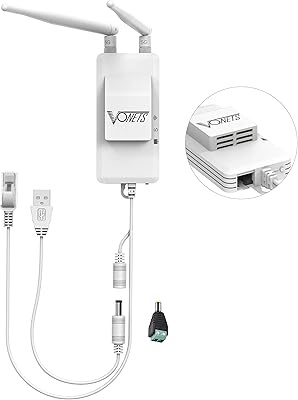
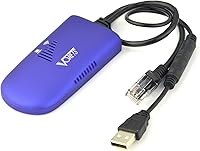
The Vonets VAP11G-300 WiFi Bridge Repeater is a compact networking device that solves a surprisingly common problem: you have a wired-only gadget and no practical way to run a cable to it. About the size of a deck of cards, it sits quietly behind a DVR, camera, or printer and handles the wireless connection on that device's behalf. It runs on 2.4GHz only — worth knowing upfront if your router is 5GHz-exclusive — and can operate in three distinct modes depending on what your setup needs. Power arrives via USB or DC input, so finding a convenient spot for it rarely takes much effort.
Features & Benefits

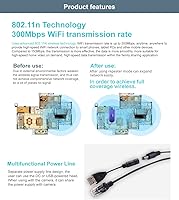
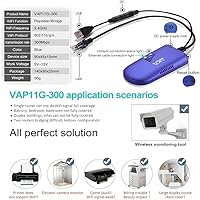
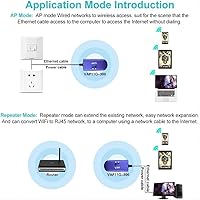
This mini WiFi bridge can do three different jobs, and knowing which one you need actually matters. In Bridge mode, it acts like an invisible cable — plug one end into your wired device and it communicates with your router wirelessly. Repeater mode grabs your existing WiFi signal and rebroadcasts it further, with a memory function that automatically reconnects after a power cycle. Access Point mode flips the script, turning a wired connection into a wireless hotspot for nearby devices. Wireless throughput tops out at 300Mbps, which handles HD video feeds and basic IoT traffic without complaint. The single RJ45 port means it serves one device at a time.

Best For

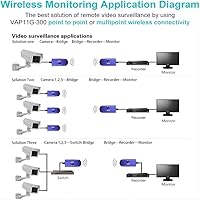
The VAP11G-300 shines when you have a device with an Ethernet port but no built-in WiFi — an older PS3, a DVR, a network printer, or an IP camera installed somewhere cabling simply isn't practical. Renters and frequent movers will appreciate how easy it is to pack up and redeploy without any permanent installation. Hobbyists connecting IoT sensors or small industrial controllers will find the bridge mode particularly useful. That said, this compact network adapter genuinely rewards buyers who are comfortable following a short setup guide. If you're expecting plug-and-play simplicity right out of the box, it's worth adjusting those expectations before purchasing.

User Feedback

Across nearly 400 reviews, this mini WiFi bridge holds a 4.2-star rating — a score that reflects a genuinely capable device with a few consistent rough edges. Buyers who take the time to read the manual report solid, reliable bridge performance and appreciate the discreet footprint. The most common complaint is that initial configuration feels cryptic without guidance, especially for less experienced users. Range is also worth realistic expectations: open-room distances are handled well, but walls cut performance noticeably. A smaller number of reviewers flag occasional dropouts over extended use, particularly in areas dense with competing wireless signals — something to factor in for always-on applications like security cameras.

Pros

  • Connects any wired Ethernet device to WiFi without replacing or upgrading the device itself.
  • Three operating modes — bridge, repeater, and access point — cover a wide range of real-world networking scenarios.
  • USB power option lets you draw power directly from a TV, DVR, or router's USB port, no extra outlet needed.
  • Compact size makes the VAP11G-300 easy to tuck behind equipment or carry in a laptop bag.
  • Handles HD IP camera feeds and IoT data traffic reliably once configured in a stable environment.
  • Wide DC voltage range means it works with a variety of power sources without needing a specific adapter.
  • Hotspot memory in repeater mode reconnects automatically after a power cycle — no manual re-pairing required.
  • Strong value at its price point for buyers who need a dedicated single-device bridge solution.
  • Ranked among the top 120 products in its Amazon category, reflecting a track record of consistent buyer satisfaction.

Cons

  • Initial configuration is not intuitive — expect to spend time with a video guide before the first successful setup.
  • Operates on 2.4GHz only, making it vulnerable to interference in apartments or offices with many competing networks.
  • A small but notable share of users report periodic dropouts after weeks or months of continuous operation.
  • Official support is limited — the manufacturer contact provided offers little practical help for troubleshooting.
  • Only one wired device can connect at a time; no built-in switching for multi-device setups.
  • Advertised 80-meter range applies to open-air, obstacle-free conditions that most real homes do not offer.
  • No mounting holes or integrated clips make permanent or semi-permanent physical installation awkward.
  • The short power cable can restrict placement options when the nearest USB port is not directly adjacent.
  • Long-term stability in high-interference or high-temperature environments is inconsistent based on user reports.

Ratings

The Vonets VAP11G-300 WiFi Bridge Repeater earned its scores through AI analysis of verified global buyer reviews, with spam, bot-generated, and incentivized feedback actively filtered out before scoring. Ratings reflect the honest distribution of real-world experiences — including both the aspects buyers consistently applaud and the friction points that show up repeatedly across different use cases. Every category below balances what works well against what genuinely frustrated users in practice.
Ease of Setup
58%
42%
Buyers with some networking background — those who have configured a router before or know what a subnet is — typically get this mini WiFi bridge running within 15 to 20 minutes. The web-based configuration interface is functional and covers all three modes clearly once you find it.
For less experienced users, the initial setup is the single biggest pain point. The default IP address, login steps, and mode-switching process are not self-explanatory, and several reviewers needed multiple attempts or had to consult third-party video guides before succeeding.
Bridge Mode Performance
83%
This is where the VAP11G-300 genuinely earns its keep. Users connecting DVRs, IP cameras, and older game consoles like the PS3 to their home WiFi report stable, consistent throughput once the bridge is configured correctly. Many note it handles HD video feeds from security cameras without dropping frames.
Performance is noticeably tied to signal strength at the bridge location. If the device is placed in a weak-signal area, the wired device on the other end inherits that weakness — there is no magic compensation for a poor upstream connection.
Repeater Mode Performance
67%
33%
The auto-scan and hotspot memory features work as advertised for users in open-plan spaces. Buyers who deployed this compact network adapter to stretch a signal across a large single-floor area appreciated the automatic reconnection after power cycles.
Repeater performance drops off meaningfully through walls or floors, making it a poor fit for multi-story coverage extension. The 2.4GHz-only operation also means interference from neighboring networks in dense urban environments can degrade stability.
Wireless Range
61%
39%
In open-air conditions with minimal obstructions — think a garage to a router visible through a window — the range holds up well for a device this small. Users in studio apartments or single-open-room deployments report no meaningful signal issues.
The advertised 80-meter range is strictly a best-case, obstacle-free number. Through a single interior wall, real-world range drops noticeably, and video transmission reliability is best kept under 50 meters even in favorable conditions. Thick walls or concrete floors make range a genuine limitation.
Build Quality & Durability
71%
29%
The housing feels solid for a device in this price bracket — it does not flex or creak when handled. Several buyers who have run the VAP11G-300 continuously for six-plus months report no physical degradation, and the casing stays cool under normal operating conditions.
A minority of reviewers flagged long-term reliability concerns, with units becoming unstable or dropping connections after extended continuous operation. This appears more common in environments with high ambient temperatures or dense wireless interference nearby.
Long-Term Stability
63%
37%
For always-on applications in stable environments — a security camera feed in a quiet residential setting, for example — many buyers report months of uninterrupted operation. The device handles its defined job reliably when conditions are consistent.
In high-interference environments, such as apartment buildings with dozens of competing WiFi networks, some users experience periodic dropouts requiring manual reboots. For mission-critical applications, this inconsistency is a meaningful concern that reviewers raise with enough regularity to flag.
Portability & Form Factor
88%
Weighing just over three ounces and roughly the footprint of a thick business card, this compact network adapter is genuinely easy to carry and redeploy. Renters and travelers love that it slips into a laptop bag without adding noticeable bulk.
The attached power cable, while short and manageable, adds a small amount of clutter behind devices. Users who prefer a truly wireless or self-contained unit may find the cable mildly inconvenient in tight equipment racks or enclosed media cabinets.
Power Flexibility
86%
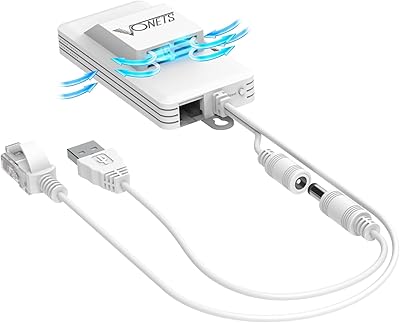
The ability to draw power from either a USB port or a DC adapter covering 5V to 15V is a practical advantage. Users commonly power this mini WiFi bridge directly from a USB port on their DVR or TV, eliminating the need for a separate wall outlet.
The included cable is around 30 centimeters, which works in many scenarios but can feel restrictive if the closest USB port or outlet is not immediately adjacent to where the bridge needs to sit for optimal signal.
Compatibility with Devices
84%
The breadth of compatible devices is a genuine selling point. Buyers have successfully used the VAP11G-300 with IP cameras, DVRs, PS3 consoles, network printers, industrial PLCs, and IoT sensors — essentially anything with a standard RJ45 Ethernet port.
Compatibility is limited to one device at a time given the single RJ45 port. Users expecting to share the wireless connection across multiple wired devices simultaneously will need a separate switch or a different solution entirely.
Value for Money
79%
21%
At its price point, the VAP11G-300 offers a surprisingly capable set of modes for buyers who know what they need it for. Users who successfully configure it almost universally agree the price-to-function ratio is strong for a dedicated bridge or repeater task.
The value equation shifts unfavorably for buyers who struggle with setup or encounter stability issues, since support resources are limited and the manufacturer contact options feel inadequate for troubleshooting complex configuration problems.
Documentation & Support
44%
56%
A configuration video is available and some buyers find it sufficient to get up and running. Users who locate the right video guide before starting report a much smoother experience than those who attempt setup cold.
The included documentation is minimal and the listed support email feels unreliable to buyers who have tried it. Multiple reviewers note that resolution of setup issues depended entirely on third-party community guides rather than anything provided by Vonets directly.
Access Point Mode Usefulness
69%
31%
For users who have a wired connection — say, a hotel Ethernet port or a desktop router output — and want to share it wirelessly with phones or tablets, the Access Point mode handles the job competently without requiring any additional hardware.
This mode is the least-discussed among reviewers, suggesting it is used less frequently than bridge mode. Those who do try it note that it works but lacks the configuration depth that a dedicated travel router or consumer AP would offer.
2.4GHz Band Performance
72%
28%
On a clean 2.4GHz channel with moderate network traffic, the VAP11G-300 moves data smoothly enough for HD IP camera feeds, web browsing through a connected device, and light file transfers. The 300Mbps ceiling rarely becomes a bottleneck for its typical use cases.
The exclusive reliance on 2.4GHz is a real constraint in crowded wireless environments. Users in dense apartment buildings or offices with many competing 2.4GHz networks will experience interference that 5GHz-capable alternatives would sidestep entirely.
Physical Installation Flexibility
77%
23%
The small dimensions make it easy to position this mini WiFi bridge in tight spots — behind a wall-mounted camera, tucked inside an AV cabinet, or velcro-mounted to the back of a monitor. USB power keeps cabling minimal in most setups.
There are no mounting holes or integrated clips, so any fixed installation requires adhesive solutions or improvised mounting. In professional or semi-permanent installations, a cleaner attachment mechanism would be appreciated.

Suitable for:

The Vonets VAP11G-300 WiFi Bridge Repeater is the right tool for anyone who owns a device with an Ethernet port but no built-in wireless capability and needs a low-cost, low-footprint fix. Think of the person who installed a wired IP camera in a spot where running a cable back to the router just isn't practical, or someone who wants to get a PS3 or older DVR onto their home network without drilling holes or buying a whole new device. Renters who cannot modify walls or run permanent cabling will find this particularly useful — it is portable, draws power from USB, and leaves no trace when you move out. Hobbyists and small-business operators connecting IoT sensors, industrial controllers, or similar single-port Ethernet devices wirelessly will also find it fits their needs well. The key qualifier is comfort with a short configuration process: buyers who are willing to watch a setup video or read a manual before plugging it in consistently get good results.
Not suitable for:

The Vonets VAP11G-300 WiFi Bridge Repeater is not a good fit for buyers expecting a plug-and-play experience with zero configuration — the setup process has a real learning curve that frustrates users who go in cold. It is also the wrong choice if you live in a dense apartment building with heavy 2.4GHz interference, since the device operates exclusively on the 2.4GHz band and has no ability to use the less congested 5GHz frequency that most modern routers also support. Anyone needing to connect more than one wired device simultaneously should look elsewhere, as the single RJ45 port is a hard limit. For always-on critical applications — like a security camera that absolutely cannot go offline — the occasional stability issues reported by a subset of users make this a risky choice without a backup plan. And if your router is more than two or three rooms away with walls in between, the real-world range limitations will likely disappoint.
Specifications

  • Brand & Model: Manufactured by Shenzhen Houtian Network Communication Technology and sold under the Vonets brand as model VAP11G-300.
  • Dimensions: The unit measures 3.62 × 1.85 × 0.83 inches, making it small enough to sit discreetly behind most devices.
  • Weight: At 3.41 oz, this is a genuinely lightweight device that adds no meaningful burden to any installation.
  • WiFi Standard: Supports the 802.11b/g/n protocol suite, which covers all common 2.4GHz router configurations in use today.
  • Frequency Band: Operates exclusively on the 2.4GHz band — there is no 5GHz support on this device.
  • Max Wireless Speed: Wireless throughput peaks at 300Mbps under ideal conditions, which is sufficient for HD video feeds and standard IoT data traffic.
  • Ethernet Port: Includes one RJ45 port with 10/100Mbps adaptive speed, connecting a single wired device at a time.
  • Operating Modes: Supports three distinct modes: WiFi Bridge (wireless to wired), Wireless Repeater (signal extension), and Access Point (wired to wireless broadcast).
  • Power Input: Accepts power via USB or DC input, with a wide voltage tolerance spanning 5V to 15V DC (typical draw is 5V at 1A).
  • Power Cable: Ships with a 30cm power cable that terminates in either a USB or DC connector depending on the version received.
  • Transmit Power: Transmission power is rated at 14.5dBm in standard operation and up to 16dBm at peak, in line with typical compact WiFi adapters.
  • Antenna: Uses a built-in internal antenna — there are no external antenna connectors or upgrade options on this unit.
  • Open-Air Range: Point-to-point range reaches up to 80 meters in unobstructed, open-air conditions with minimal data load.
  • Video Range: For continuous video transmission, Vonets recommends keeping the distance under 50 meters to maintain stable throughput.
  • Ripple Tolerance: The power input tolerates ripple of less than 100mV, which is a standard requirement for stable networking hardware operation.
  • BSR Ranking: Holds a Best Sellers Rank of #119 in the Amazon Repeaters category, reflecting consistent sales volume since its 2021 launch.
  • First Available: This product was first listed for sale on December 15, 2021, and the current version reflects a 2025 process design update.
  • Compatibility: Works with DVRs, IP cameras, PS3 consoles, network printers, industrial PLCs, IoT sensors, medical devices, and any other device with a standard RJ45 Ethernet port.

Related Reviews
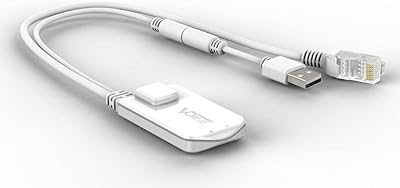
Vonets VAP11N-300 Mini WiFi Bridge
85%
86%
Performance
91%
Ease of Setup
88%
Power Efficiency
84%
Connectivity Range
90%
Device Compatibility
More
VONETS VAP11S 2.4GHz WiFi Bridge/Repeater
83%
85%
WiFi Performance
91%
Ease of Setup
88%
Value for Money
82%
Build Quality
87%
Compatibility with Devices
More
VONETS VAP11S-5G 5GHz Mini WiFi Router Bridge Repeater
81%
88%
Setup Ease
85%
WiFi Speed & Performance
80%
Reliability & Stability
83%
Signal Coverage
90%
Power Flexibility
More
BrosTrend 5KM WiFi Bridge
86%
91%
Ease of Setup
88%
Build Quality & Durability
94%
WiFi Range
87%
Outdoor Performance
78%
Signal Stability
More
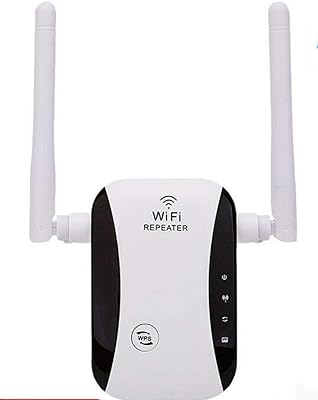
SANOXY Wireless-N Wifi Repeater 300Mbps
82%
85%
WiFi Range Extension
90%
Ease of Setup
76%
Build Quality
80%
Signal Strength in Dead Zones
88%
Compatibility with Routers
More
Vonets VAP11AC AC1200 Dual Band WiFi Bridge
65%
74%
WiFi-to-Ethernet Bridging Performance
71%
Dual-Band Radio Coverage
78%
Thermal Management & Reliability
44%
Setup & Configuration Experience
81%
Operating Mode Versatility
More
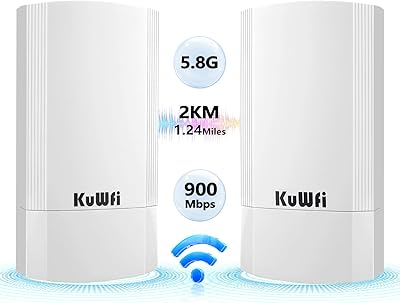
KuWFi CPE200 5.8G 900Mbps Outdoor WiFi Bridge
84%
85%
Setup & Installation
91%
Weather Resistance
88%
Wireless Performance
87%
Range & Coverage
82%
Build Quality
More
GOOD STORY WB504H Wireless Bridge Point to Point Outdoor WiFi
85%
94%
Ease of Setup
88%
Long-Range Performance
90%
WiFi Speed/Connectivity
85%
Durability/Build Quality
89%
Installation Flexibility
More
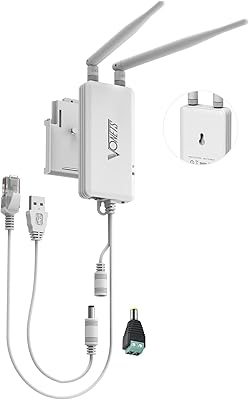
C. Crane CC Vector RV Long Range WiFi Repeater System
84%
89%
Signal Range
94%
Ease of Setup
85%
Connectivity Options
88%
Build Quality
62%
Performance in Crowded Areas
More
WAVLINK WN588HX3 WiFi 6 Outdoor Access Point
75%
83%
Outdoor Signal Range
91%
Build Quality & Weatherproofing
78%
Installation & Mounting
61%
Setup & Configuration Experience
86%
WiFi 6 Performance
More

FAQ

Honest answer: it is not plug-and-play in the way a basic USB device is. You will need to access its web-based configuration page, enter your WiFi network credentials, and select the operating mode you need. If you have ever logged into a router admin panel before, this will feel familiar. If you have not, budget 30 to 45 minutes and watch a setup video first — it makes a significant difference.

Unfortunately, no. The VAP11G-300 only connects to 2.4GHz WiFi networks. If your router is set to broadcast 5GHz exclusively, this device will not see it. Most modern dual-band routers broadcast both frequencies simultaneously, so check your router settings — you likely have a 2.4GHz network available even if you have not used it recently.

No — the single RJ45 port means it serves one wired device at a time in bridge mode. If you need to connect multiple devices through a single wireless uplink, you would need to add a small network switch between this adapter and your devices, though that introduces additional configuration complexity.

Treat that number as a best-case ceiling, not a typical result. It assumes open air with no walls, furniture, or interference between the bridge and your router. In a typical home with even one or two interior walls in the path, expect effective range to be considerably shorter — often 15 to 30 meters. For video transmission specifically, staying under 50 meters is the practical recommendation.

For many users it works fine in this role, but with a caveat: a small share of buyers report occasional dropouts after extended continuous operation, particularly in environments with a lot of wireless interference. If your camera is in a relatively quiet RF environment and you can tolerate an occasional reboot, it should hold up well. For mission-critical security applications where downtime is unacceptable, you may want a more robust solution.

Bridge mode is the most common use case — it acts like an invisible cable, connecting one wired device to your WiFi network. Repeater mode, on the other hand, picks up your existing WiFi signal and rebroadcasts it to extend coverage to a new area, but without a wired device on the other end. Think of bridge mode as a translator between your wired device and your wireless network, while repeater mode is purely about pushing your WiFi signal further into a room or hallway.

Yes, and this is actually one of the more popular use cases for it. The PS3 has an Ethernet port but its built-in WiFi is notoriously weak on older models. Plugging this mini bridge into the PS3's Ethernet port and connecting it to your home WiFi is a clean, inexpensive fix. Setup is the same as any other device — just follow the configuration steps carefully.

Yes, and this is one of the more convenient aspects of the design. As long as the USB port on your TV, DVR, or other device provides at least 5V at 1A — which most do — you can power this compact network adapter directly from it, keeping the installation tidy and avoiding the need for an extra outlet.

Yes, a new WiFi network or changed password requires you to go back into the configuration interface and update the credentials. It is not a lengthy process once you have done it once, but the device has no way to automatically detect or adapt to network changes. The hotspot memory feature only helps it reconnect to a previously saved network after a power cycle — it does not handle credential changes on its own.

It can work in that context for low-stakes applications like connecting a PLC controller or sensor to a monitoring system. The main consideration is interference — industrial environments can have significant electrical noise that affects 2.4GHz wireless performance. If the environment is relatively clean of RF interference and the device does not need to be always-on without fail, it is a cost-effective option worth trying.

Where to Buy