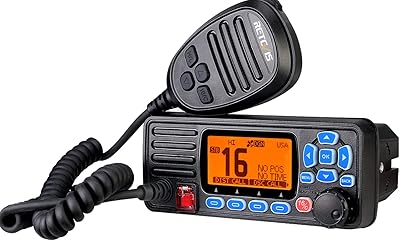
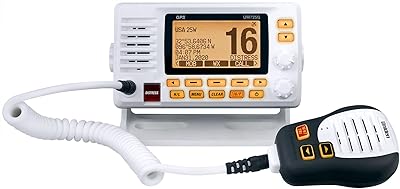
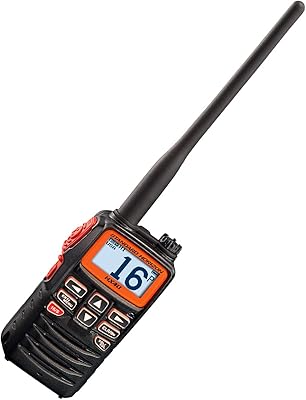
Overview

The ICOM M424G Fixed Mount VHF Radio sits in a category where ICOM has earned genuine respect — not through marketing, but through decades of building equipment that holds up on real boats in real conditions. What separates the M424G from more basic options in its class is the internal GPS integration, which means your DSC distress calls carry accurate position data without requiring a separate GPS feed. Pair that with an IPX7 submersible rating — one meter for 30 minutes — and you have a radio built to handle the kind of abuse a marine environment throws at gear daily. This is not a casual weekend toy; it is a purpose-built safety and communication tool.
Features & Benefits

The standout capability of this marine radio is how the built-in GPS and DSC work together. When a distress call goes out, the radio automatically includes your current coordinates — no fumbling with a chartplotter connection or hoping an external GPS source is live. The AquaQuake drainage function is genuinely useful: after a wave rolls over the helm or rain soaks the unit, a quick activation clears water from the speaker so audio stays intelligible. AIS transponder compatibility adds situational awareness when paired with the right equipment. The dual/tri-watch function and built-in NOAA weather alert monitoring round out a feature set that covers the core safety bases without unnecessary complexity.

Best For

The M424G hits its stride with boaters who take safety communication seriously. Offshore sailors and coastal cruisers who rely on DSC distress calling will appreciate having GPS position data baked in — no external dependency, no gaps in an emergency. Anglers running to offshore grounds who want AIS traffic awareness without wiring up a full chartplotter system will find the compatibility a practical fit. That said, this fixed mount VHF radio is probably overkill for someone who only uses a radio for marina check-ins. It is best suited to boaters who spend meaningful time underway, particularly where weather alerts and simultaneous channel monitoring are genuine priorities.

User Feedback

Owners of this fixed mount VHF radio consistently highlight audio clarity in wet conditions as a real strength — specifically how well the AquaQuake function performs after actual exposure to spray or rain. GPS lock speed and DSC distress call reliability also draw positive comments from buyers who have tested those workflows firsthand. On the constructive side, a number of reviewers are candid that installation requires wiring knowledge; this is not a plug-and-play job, and some familiarity with marine electrical systems is genuinely helpful. A handful of users also find the menu navigation less intuitive than simpler radios. Still, with a 4.7-star average and no recurring durability concerns, real-world satisfaction runs high.

Pros

  • Internal GPS delivers accurate position data during DSC distress calls without relying on an external GPS source.
  • IPX7 waterproofing rated to 1 meter for 30 minutes handles real marine conditions, not just light rain.
  • The AquaQuake draining function clears water from the speaker quickly, keeping audio clear after wave exposure.
  • AIS transponder compatibility adds vessel traffic awareness without requiring a separate dedicated device.
  • Dual and tri-watch modes let you monitor Channel 16 and a working channel at the same time, a genuine safety advantage.
  • Built-in NOAA weather alert function keeps you informed of incoming conditions without a separate weather receiver.
  • Buyers consistently report strong audio clarity even in demanding wet environments.
  • Long-term durability has drawn no significant complaints from owners, suggesting solid build quality for the price point.
  • A 4.7-star average across real-world buyers reflects unusually high overall satisfaction for a marine electronics product.
  • ICOM’s established reputation in marine electronics means parts, support, and firmware familiarity are accessible.

Cons

  • Installation requires basic marine electrical knowledge — first-timers will likely need professional help.
  • Menu navigation has a steeper learning curve than simpler fixed mount radios on the market.
  • The unit ships with only the radio and a user manual — no mounting hardware or microphone accessories are included.
  • At its price point, buyers expecting a more intuitive out-of-the-box experience may feel the interface is dated.
  • The physical footprint is relatively large at 9 by 8 by 3 inches, which may be a constraint on smaller helms.
  • AIS compatibility requires a separately purchased AIS transponder to function — it is not standalone.
  • Only 21 channels are available, which covers standard needs but may feel limited compared to some competing models.
  • No backlit key details or advanced display features noted, which can be a drawback for low-light night navigation use.

Ratings

The ICOM M424G Fixed Mount VHF Radio has been scored by our AI rating engine after processing verified buyer reviews from multiple global markets, with spam, bot-generated, and incentivized feedback actively filtered out. Scores across each category reflect the honest balance of real-world praise and genuine frustration that owners have reported — nothing is inflated to flatter the product. Where this marine radio earns high marks and where it falls short are both represented transparently below.

DSC & GPS Accuracy
93%
Owners who have actually triggered DSC distress workflows — not just in testing, but in real emergency scenarios — report that the integrated GPS locks quickly and transmits accurate coordinates without any dependency on external equipment. For offshore sailors and cruisers, that self-contained reliability is a meaningful confidence builder.
A very small number of users noted occasional slower GPS acquisition in heavily shaded or below-deck environments, which is expected physics rather than a product defect but worth knowing if your helm has limited sky view.
Audio Clarity
91%
Audio performance in wet, high-spray conditions stands out as one of the most frequently praised aspects of this marine radio. Buyers running in heavy chop or during rainstorms report voice transmissions remain crisp and intelligible on both ends of the call.
At maximum volume in very loud engine environments, a handful of users felt the speaker output could be pushed a bit harder. It is not a widespread complaint, but boaters with loud diesel setups may want to consider external speaker compatibility.
AquaQuake Performance
88%
The AquaQuake drainage function earns genuine praise from owners who operate in spray-heavy conditions. After a wave washes over the helm or during heavy rain, activating the function clears water from the speaker quickly enough that communication is restored within seconds rather than minutes.
The feature requires manual activation rather than triggering automatically, which means in a high-stress moment you need to remember to use it. It is a minor workflow friction but something first-time owners occasionally overlook until they read the manual thoroughly.
Waterproofing & Durability
89%
The IPX7 rating translates well to real marine use — owners report the unit handles consistent spray, rain exposure, and the occasional full-wave wash without any degradation in performance over time. No recurring durability complaints appeared in long-term ownership feedback.
IPX7 is not a saltwater immersion certification, and while the unit handles exposure well, owners in high-salinity environments note that consistent fresh-water rinsing is important for long-term seal integrity — a maintenance step not prominently highlighted in the included manual.
Installation Experience
61%
39%
For boaters with existing marine electrical experience, the wiring and mounting process is described as logical and well-documented. The user manual covers the installation steps clearly enough that experienced DIYers can complete the job without outside help.
First-time fixed mount radio installers consistently flag this as a challenging setup. The unit requires proper 12V wiring, antenna connection, and ideally a flush or bracket mount that is sold separately — and the lack of included hardware means the out-of-the-box experience feels incomplete for those new to helm electronics.
Menu & Interface Usability
67%
33%
Once owners invest time learning the menu structure, the interface gives access to a genuinely broad feature set without needing to dig into a companion app or external device. Experienced VHF users tend to get comfortable with the navigation within one or two outings.
Buyers coming from simpler fixed mount radios consistently note the menu depth feels non-intuitive at first. There is no shortcut or quick-access layout for commonly used functions, which can be frustrating when you need to adjust settings quickly on the water.
AIS Compatibility
79%
21%
For boaters who already own or plan to add an AIS transponder, the M424G integrates cleanly without requiring a chartplotter as the go-between. Anglers and cruisers navigating busy shipping lanes find this pairing adds real situational awareness to their safety setup.
The radio does not include AIS receive or display capability on its own — compatibility requires purchasing a separate AIS transponder, which adds meaningful cost. Buyers who see AIS listed without reading carefully sometimes expect the feature to work out of the box.
Weather Alert Function
84%
The passive NOAA weather alert function works reliably in real use — owners on longer passages report the alert triggering appropriately when severe weather advisories were broadcast, giving them advance notice without needing to actively monitor a weather channel.
The weather alert coverage is naturally limited to NOAA broadcast range, which varies by geography. Boaters in regions with spotty NOAA coverage, or those sailing internationally, will find this feature less useful than domestic coastal operators.
Dual and Tri-Watch Reliability
86%
The dual and tri-watch modes perform consistently according to owner feedback, with Channel 16 monitoring staying active and responsive during working channel conversations. For boaters who are required to monitor Channel 16 while underway, this functions exactly as it should.
A few users noted that switching between watch modes is buried deeper in the menu than they expected, making on-the-fly adjustments slightly awkward during active navigation. It is a usability issue rather than a functional one, but noticeable in practice.
Build Quality
88%
Long-term owners consistently report no physical degradation — buttons remain tactile, the housing shows minimal wear, and internal components appear to hold up well across seasons of regular marine use. ICOM’s hardware reputation holds up in owner experience here.
The aqua color finish, while distinctive, shows water spot staining more visibly than darker alternatives. It is purely cosmetic, but a few owners mentioned it looks worn in appearance faster than the unit actually ages.
Value for Money
76%
24%
For boaters who will genuinely use the integrated GPS, DSC accuracy, and AIS compatibility, the M424G offers a compelling feature-per-dollar ratio compared to piecing together similar capabilities across separate devices. The total cost of alternatives adds up quickly.
For buyers who do not need GPS-linked DSC or AIS compatibility, the price feels steep relative to simpler fixed mount options that handle basic communication equally well. The value proposition is real but only for users who actually use the advanced features.
GPS Lock Speed
82%
18%
Under open sky conditions, owners report the internal GPS acquires a position lock reasonably quickly — fast enough that DSC functionality is operational shortly after powering on, which matters in emergency scenarios where every second counts.
In partially obstructed environments — under a hard top, near tall structures, or in marina slips with limited sky view — GPS lock can take noticeably longer. This is a hardware physics limitation shared across internal GPS units, not specific to ICOM, but worth setting realistic expectations around.
Channel Coverage
73%
27%
The 21-channel coverage handles all standard marine VHF communication needs for recreational boating, coastal navigation, and offshore use within the US and most international waters where this frequency band applies.
Compared to some competing fixed mount models that offer broader channel counts or additional band coverage, 21 channels feels limited to buyers who operate across diverse international waters or who want flexibility beyond standard recreational use cases.

Suitable for:

The ICOM M424G Fixed Mount VHF Radio is purpose-built for boaters who treat their radio as a genuine safety instrument, not just a convenience. Offshore sailors and coastal cruisers who regularly file float plans and need DSC distress calling to work accurately — with real GPS coordinates attached — will get the most out of what this marine radio offers. Anglers running to deeper water or navigating busy shipping lanes will also appreciate the AIS transponder compatibility, which adds meaningful situational awareness without requiring a separate dedicated device. If you operate in high-spray or rain-heavy environments, the IPX7 submersible rating and AquaQuake drainage function mean you are not babying the unit every time conditions turn rough. Boaters upgrading from a basic fixed mount model who want weather alert monitoring and dual/tri-watch capability built in will find the M424G covers those bases without needing additional hardware.

Not suitable for:

The ICOM M424G Fixed Mount VHF Radio is genuinely overspecified for casual or occasional boaters who only need a radio for short marina runs or light recreational use. If you are not comfortable with basic marine electrical wiring, installation will likely require professional help — this unit does not drop in and connect without some hands-on knowledge of your vessel's 12V system. Buyers expecting an intuitive, minimal-learning-curve interface similar to entry-level radios may find the menu structure requires a real time investment to master. The M424G is also not a fit for anyone who needs a portable or handheld solution, since it is a fixed mount unit designed to stay permanently installed at the helm. If your radio use is genuinely limited to short-range marina communication and you have no need for GPS-linked DSC or AIS compatibility, a simpler and more affordable fixed mount option would serve you just as well.

Specifications

  • Brand: Manufactured by ICOM, a well-established name in professional and recreational marine electronics.
  • Model Number: The exact model designation is M424G, distinguishing it from other radios in the ICOM fixed mount lineup.
  • Channels: The radio operates across 21 channels within the standard marine VHF band.
  • Frequency Range: Transmission and reception span from 156.000 MHz to 174 MHz, covering all standard marine VHF frequencies.
  • Max Talk Range: Rated for a maximum talking range of approximately 5 miles under typical open-water conditions.
  • Waterproof Rating: Certified IPX7 submersible, meaning the unit can withstand immersion at 1 meter depth for up to 30 minutes.
  • Operating Voltage: Designed to run on a 12-volt DC power supply, standard for most recreational and offshore marine installations.
  • Dimensions: The unit measures 9″ deep by 3″ wide by 8″ tall, requiring adequate helm or console space for mounting.
  • Weight: The radio weighs 1.2 pounds, making it a relatively compact and manageable fixed mount unit.
  • Internal GPS: An integrated GPS receiver provides accurate real-time position data without requiring connection to an external GPS source.
  • DSC Calling: Digital Selective Calling (DSC) functionality is built in, enabling one-touch distress calls that automatically transmit GPS coordinates.
  • AIS Compatibility: The unit is compatible with external AIS transponders, allowing vessel traffic data to be integrated when paired with supported equipment.
  • AquaQuake: The AquaQuake draining function uses the speaker to actively expel water, restoring clear audio output after submersion or heavy spray.
  • Watch Modes: Dual-watch and tri-watch modes allow simultaneous monitoring of Channel 16 alongside one or two additional working channels.
  • Weather Alerts: Built-in NOAA weather channel reception includes an automatic alert function that triggers when severe weather broadcasts are detected.
  • Color: The unit is finished in an aqua color scheme consistent with ICOM’s marine product line aesthetic.
  • In the Box: Each unit ships with the radio itself and a user manual; no additional mounting hardware or accessories are included.
  • Manufacturer Status: As of the available product data, this model is confirmed as not discontinued by the manufacturer.

Related Reviews
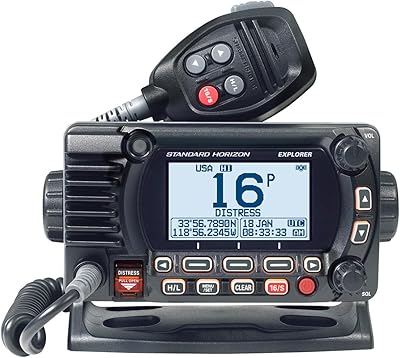
Standard Horizon GX1850 Fixed Mount VHF Radio
75%
83%
NMEA 2000 Integration
88%
Audio Clarity
86%
Waterproofing & Durability
84%
DSC Functionality
82%
Ease of Installation
More
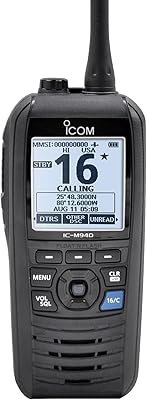
Icom M94D VHF Marine Radio
80%
91%
Build Quality
83%
AIS Receive Performance
87%
DSC Distress Calling
88%
Audio Clarity
92%
AquaQuake Water Draining
More
Retevis RA27 Fixed Mount Marine Radio
77%
88%
Value for Money
83%
DSC & Emergency Performance
76%
GPS Accuracy
87%
Ease of Installation
67%
Audio Clarity
More
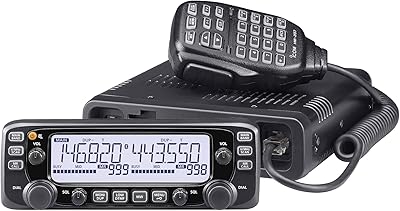
Icom IC-2730A Dual Band VHF/UHF Mobile Radio
78%
93%
Transmit Power
91%
Dual-Band Receive
88%
Build Quality
89%
Audio Clarity
54%
Menu Navigation
More
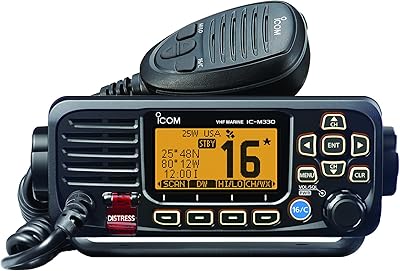
ICOM M330 Fixed-Mount VHF Marine Radio
77%
88%
Audio Clarity
84%
DSC Performance
86%
Ease of Installation
79%
AquaQuake Function
81%
GPS & NMEA Integration
More
Uniden UM725G Marine VHF Radio
79%
93%
Display Clarity
91%
Built-in GPS
88%
DSC Functionality
86%
Audio Quality
84%
Ease of Installation
More
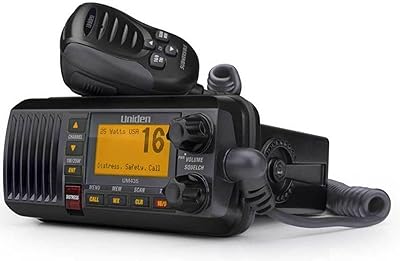
Uniden UM435BK Fixed Mount VHF Marine Radio
80%
93%
Waterproofing & Weather Resistance
88%
Audio Clarity & Reception
84%
Ease of Installation
91%
Channel Coverage & Compatibility
82%
Value for Money
More
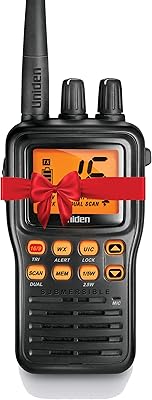
Uniden MHS75 VHF Marine Radio
89%
94%
Waterproof Performance
85%
Range & Signal Strength
88%
Battery Life
90%
Ease of Use
91%
Build Quality
More
Standard Horizon HX890NB VHF/GPS Radio
86%
91%
Performance in Marine Environments
93%
Build Quality and Durability
82%
Ease of Use
88%
Battery Life
94%
Waterproofing and Submersion
More
Standard Horizon HX40 VHF Marine Radio
86%
88%
Range & Performance
92%
Build Quality & Durability
95%
Waterproofing
89%
Ease of Use
72%
Battery Life
More

FAQ

Yes, and that is one of the most practical aspects of the M424G. The internal GPS feeds your coordinates directly into the DSC distress call, so if you hit the distress button, your position goes out automatically. You do not need a chartplotter or external GPS wired into the radio for that core function to work.

AquaQuake uses the speaker driver to vibrate and push water out of the speaker grille after the unit gets wet. In practice, it clears audio noticeably faster than just waiting for the speaker to dry out on its own. Owners who have used it in real spray and rain conditions report it works as advertised.

It depends on your comfort level with marine electrical work. The radio runs on 12 volts DC and requires proper wiring into your vessel’s power system, along with antenna connection and ideally a flush or bracket mount. If you have done basic helm wiring before, it is manageable. If you have not, having a marine electronics installer handle it is a worthwhile call.

No. The box contains the radio and a user manual only. You will need to source a compatible mounting bracket or flush mount kit separately, which is worth factoring into your total setup budget before purchasing.

Not on its own. AIS compatible means this marine radio can be connected to a separate AIS transponder or receiver to pass traffic data through, but the radio itself does not have a built-in AIS receiver or display. You would still need compatible AIS hardware and likely a chartplotter to actually visualize vessel targets.

Honest answer: it has a bit of a learning curve. The feature set is deep relative to entry-level radios, and the menu structure reflects that. Most users get comfortable with it after a few sessions, but if you are coming from a very basic radio, plan to spend some time with the manual before heading out.

Yes. The dual-watch and tri-watch modes are specifically designed for this. You can keep an ear on Channel 16 for safety and distress traffic while still staying on a working channel, which is standard practice and also required by FCC regulations when underway.

IPX7 means the unit is rated for submersion at 1 meter for 30 minutes, which is a solid standard for a helm-mounted marine radio. It handles spray, rain, and the occasional wave wash without issue. That said, it is not designed for continuous underwater exposure, and like any electronics, rinsing with fresh water after saltwater exposure is a good maintenance habit.

Yes. The built-in weather alert function monitors NOAA broadcasts and will trigger an alarm when a weather warning is issued for your area. You do not have to be actively listening on a weather channel for it to alert you, which is a useful passive safety feature on longer passages.

The rated maximum range is 5 miles, but real-world VHF range depends heavily on antenna height, terrain, and atmospheric conditions. With a properly installed, elevated antenna, you can often communicate well beyond 5 miles on open water. The radio’s rated range is a floor, not a ceiling, when antenna setup is optimized.

Where to Buy