Overview

The Uniden R4 Radar Detector sits comfortably in the upper tier of the detection market, and Uniden's decades of hardware experience show in how it is designed. The built-in GPS alone separates it from the crowd of basic windshield-mount units that beep at everything indiscriminately. Add a compact, road-friendly footprint and a multi-color OLED display that is genuinely readable at a glance, and you have a device that feels purpose-built rather than mass-produced. That said, it performs best on open highways. Drivers expecting a flawless city experience should temper their expectations — this is a highway-first tool.
Features & Benefits

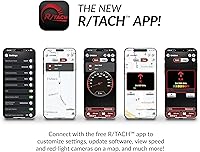
What really sets this radar detector apart in daily use is the GPS auto-mute memory. Drive past the same automatic grocery store door every morning, and after a couple of passes, the Uniden R4 simply stops alerting you to it — no manual input needed. The advanced K/Ka-band filtering cuts down false positives from other vehicles' blind-spot monitoring systems, a common annoyance on modern highways. Voice alerts keep your eyes forward and are programmable enough to match your preferences. The R/TACH app adds customization most rivals do not offer, and the preloaded speed and red light camera database receives free updates.

Best For

This long-range detector is built with a specific driver in mind: someone who logs real highway miles and wants early, reliable warning rather than a unit that cries wolf every few blocks. If you commute on interstates or take frequent road trips, the detection range and GPS route filtering will earn their keep quickly. It also suits drivers who prefer dialing in settings through an app rather than scrolling through on-device menus. Urban stop-and-go commuters may find the value less obvious — performance is more modest in dense traffic. Also worth checking: local detector laws vary by state and country before you buy.

User Feedback

Owners of the Uniden R4 are consistently vocal about two things: detection range and how much quieter their commute becomes once the GPS memory learns their regular routes. The early Ka-band pickup draws steady praise from highway regulars who have compared it against pricier alternatives. On the downside, a fair number of buyers found the initial app setup more involved than expected, and some report occasional false alerts in heavy city traffic despite the filtering. The overall rating sits at 4.6 out of 5 across nearly a thousand reviews — solid, but the mixed urban performance feedback is worth factoring in if you rarely leave the city.

Pros

  • Detection range on open highways is genuinely class-leading, giving drivers meaningful advance warning.
  • GPS auto-mute memory learns your regular routes and silences repetitive false alerts automatically.
  • Advanced K/Ka-band filtering handles the modern vehicle landscape far better than older detectors.
  • The multi-color OLED display makes band type and signal strength readable at a glance.
  • Preloaded red light and speed camera database receives free updates, with no subscription required.
  • Voice alerts are clear, contextual, and customizable, making eyes-on-the-road operation practical.
  • The Uniden R4 Radar Detector ships ready to use out of the box with sensible default settings.
  • Free firmware updates have demonstrably improved filtering accuracy since the unit launched.
  • Compact form factor avoids obstructing sightlines, unlike bulkier detectors in the same tier.

Cons

  • Urban performance is noticeably weaker, with occasional false alerts slipping through in dense traffic.
  • The R/TACH app setup process is more involved than expected and pairing can be inconsistent.
  • GPS mute memory requires several passes on a route before it starts silencing known false alerts.
  • The included windshield mount loosens over time on some dashboard and glass surface types.
  • Laser detection warnings often arrive too late for practical reaction, an industry-wide limitation here too.
  • Firmware updates require a computer connection rather than delivering over the air conveniently.
  • Speed and red light camera database has gaps in smaller towns and rural areas outside major metros.
  • The power cable length may fall short in larger vehicle cabins without an extension.
  • Mountain and heavily wooded terrain can compress effective detection range noticeably.

Ratings

The scores below reflect our AI-driven analysis of verified buyer reviews for the Uniden R4 Radar Detector, sourced globally and filtered to remove incentivized, bot-generated, and duplicate submissions. We weighed both the enthusiastic praise from long-haul highway drivers and the more critical feedback from city commuters to ensure every scorecard reflects the full picture. Strengths are recognized where they are earned, and real pain points are not smoothed over.

Detection Range
94%
This is the category where the Uniden R4 earns its reputation without argument. Highway drivers consistently report picking up Ka-band signals well before cresting hills or rounding gradual curves, giving them meaningful reaction time. For anyone running long interstate stretches, the early-warning distance is noticeably ahead of what mid-tier detectors deliver.
Detection range advantages shrink considerably in stop-and-go urban environments where signal geometry is unpredictable. A handful of users noted that in mountainous or heavily wooded terrain, range felt closer to average. The gap between highway and city performance is real enough to factor into your buying decision.
False Alert Filtering
83%
The K/Ka-band filtering handles the modern vehicle landscape better than most detectors in this price tier. Drivers who share roads with newer SUVs and trucks running adaptive cruise or blind-spot systems report far fewer nuisance alerts than they experienced with older detectors. On familiar routes, the GPS-assisted learning makes a noticeable difference within the first week.
City driving still produces occasional false positives that slip through the filtering, particularly near shopping centers with automatic door sensors. Users who primarily drive in dense urban corridors found filtering less impressive than the highway-focused marketing implies. It is strong but not bulletproof in complex RF environments.
GPS Auto-Mute Memory
91%
For daily commuters, this feature alone justifies stepping up from a basic detector. The system quietly learns which alerts on your regular route are false, and after a few passes it simply stops bothering you with them. Reviewers who had previously tolerated repetitive false alerts describe the mute memory as one of the most practically useful features they have encountered.
The GPS memory requires a few repetitions of the same route before it kicks in, so brand-new commuters will still hear those false alerts during the learning phase. A small number of users reported the memory occasionally needing to relearn specific locations after firmware updates, which was mildly frustrating.
Red Light & Speed Camera Alerts
78%
22%
The preloaded camera database covers a wide range of intersections and speed zones, and the free update model means it does not go stale the way some competitor databases do. Drivers who travel through unfamiliar cities found the advance warnings genuinely useful for adjusting speed before reaching monitored zones.
Database accuracy depends on how recently it was updated, and some users found specific local cameras were missing or flagged incorrectly. The system works best for drivers who stay on top of firmware updates; those who skip them for months may encounter outdated entries. Coverage is stronger in major metro areas than in smaller towns.
App Integration (R/TACH)
67%
33%
When the app works smoothly, it adds a genuinely useful layer of control that you would not expect at this price point. Being able to adjust sensitivity, filter settings, and alert preferences from your phone without pulling over is convenient for drivers who like to fine-tune on the fly. Real-time alerts displayed on your phone screen are a practical bonus for those who mount their phone prominently.
The setup process drew criticism from a meaningful portion of buyers who found pairing inconsistent or the interface less intuitive than expected. Some Android users reported connectivity drops, and the initial configuration curve puts it out of reach for drivers who just want to plug in and go. The app feels like a beta-phase feature more than a polished product.
Display Readability
88%
The multi-color OLED panel punches well above its size. Band identification, signal strength, and directional indicators are all readable at a glance without requiring the driver to squint or look away from the road for more than a moment. The color coding for different threat types adds quick visual context that single-color displays simply cannot match.
In direct sunlight at certain angles, the display can wash out slightly, requiring a brightness adjustment. A few users with older eyes mentioned the default font size feels small when the unit is mounted at dashboard level rather than on the windshield. Neither issue is a dealbreaker, but both are worth knowing.
Voice Alert Quality
82%
18%
The voice alerts are clear, contextual, and genuinely useful for hands-free driving. Having the detector announce the specific band type rather than just beeping means you can make an informed judgment call without glancing at the screen. The ability to customize alert phrasing and volume helps drivers match the system to their cabin noise level and personal preference.
Some users found the default voice tone a little robotic, and the customization options, while present, are not as deep as the marketing suggests. At highway speeds with music playing, a few drivers reported needing to increase alert volume significantly before the voice cues registered clearly.
Build Quality & Design
79%
21%
The housing feels solid without being bulky, and the compact footprint means it does not obstruct sightlines the way larger detectors can. The matte black finish resists fingerprints reasonably well, and the overall fit of the unit feels deliberate rather than cheaply assembled. Button feedback is tactile and responsive.
The included mount received scattered complaints about not holding position firmly over time, particularly on textured dashboards. The power cable length was flagged as slightly short for some vehicle cabin configurations. Neither issue is unique to this model, but they are common enough to mention.
Ease of Setup
71%
29%
Basic physical installation is genuinely straightforward — mount it, plug it in, and the unit works out of the box for drivers who want default settings. The on-device menu is navigable without a manual for most core adjustments, and the OLED display makes the setup prompts easy to follow.
Getting the most out of this long-range detector requires time with the settings, and that configuration depth is a sticking point for less tech-comfortable buyers. App-dependent setup steps added friction for drivers who expected a truly plug-and-play experience. The learning curve is real if you want performance beyond the defaults.
Highway Performance
93%
On open roads this detector is in its natural element. The combination of long detection range, effective Ka-band filtering, and GPS mute memory creates an experience that feels meaningfully better than what budget-tier detectors offer. Road trip drivers in particular report high confidence in the unit over multi-hour highway stretches.
Performance at this level assumes relatively flat or gently rolling terrain. Drivers in the mountain west noted that topography can compress effective range, making the unit feel more average in those specific conditions. This is a physics limitation, not a product flaw, but it affects some buyers more than others.
Urban Performance
61%
39%
The filtering improvements over older Uniden models are real, and city drivers who previously owned an entry-level detector will notice a reduction in nuisance alerts. The GPS mute memory does eventually help on familiar urban routes once it has had time to learn the environment.
City-only drivers consistently rate this detector lower than their highway counterparts. Dense urban RF environments generate enough false signals that even the advanced filtering cannot eliminate the noise entirely. For someone who rarely gets on a highway, the premium price tag is harder to justify against the mixed urban experience.
Value for Money
76%
24%
For the frequent highway driver, the value proposition holds up. The free database updates and firmware upgrades mean the upfront cost is not supplemented by ongoing subscription fees, which distinguishes it from some competitors. Long-distance commuters and road-trip regulars tend to feel the investment pays for itself relatively quickly.
Casual drivers or those who stick mostly to city streets will find the price hard to swallow given the urban performance limitations. There are capable detectors at lower price points that cover basic needs adequately, making this a tough sell for infrequent drivers. The value is real, but it is conditional on your driving profile.
Software & Firmware Updates
74%
26%
Free firmware updates are not a given in this product category, and Uniden delivering them at no extra cost is a genuine plus. Several buyers noted that updates had improved filtering accuracy over time, which is the kind of post-purchase improvement that builds brand loyalty. The R/TACH app also received iterative improvements since launch.
The update process itself requires a computer connection for firmware, which is less convenient than over-the-air delivery. Users who are not comfortable with file management may find the update workflow confusing. The gap between updates has also been inconsistent, leaving some buyers uncertain about the long-term support commitment.
Laser Detection
69%
31%
The laser detection is present and functional, and in situations where it triggers early enough, drivers appreciate having the warning. For areas where laser enforcement is less common, it functions as a reliable secondary layer without adding complexity to the alert system.
Like virtually all consumer radar detectors, laser alerts often arrive with very little time to react since laser guns are typically aimed at a specific target rather than broadcast broadly. Several users noted that laser alerts felt more like confirmation than warning. This is an industry-wide limitation, not specific to this model.

Suitable for:

The Uniden R4 Radar Detector was built with a very specific driver in mind, and if you fit that profile, it delivers real value. Frequent highway commuters and long-distance road trip drivers will get the most out of it — the extended detection range and GPS-assisted false alert filtering are features that genuinely shine on open interstates where early warning actually translates into reaction time. If your daily drive takes you past the same shopping centers and automatic doors repeatedly, the auto-mute memory will quietly improve your experience within the first week without any manual intervention. Tech-comfortable drivers who enjoy customizing their gear through a companion app will also find the R/TACH integration a worthwhile addition rather than a gimmick. It suits buyers who are trading up from a budget detector and understand they are paying for a meaningful performance jump, not just a name. Before buying, verify that radar detector use is legal in your state or country, as regulations vary and enforcement differs across regions.

Not suitable for:

The Uniden R4 Radar Detector is a harder sell for drivers who rarely leave urban environments. Dense city driving introduces a volume of RF noise — from automatic doors, adaptive cruise systems, and collision-avoidance sensors in surrounding vehicles — that even the advanced filtering cannot fully suppress, and the GPS mute memory takes time to learn a complicated urban route. If your commute is mostly surface streets, traffic lights, and parking garages, the performance advantage that defines this detector simply does not have room to express itself. Buyers who want a true plug-and-play experience should also think twice; getting the most out of this long-range detector requires patience with the settings menu and some familiarity with the companion app. Drivers on a tighter budget who only need occasional basic detection coverage would likely be better served by a simpler, less expensive unit. Finally, anyone hoping for a fully wireless or battery-powered solution will need to look elsewhere, as this detector runs on a corded 12V connection.
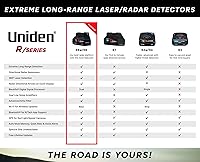
Specifications

  • Brand & Model: Manufactured by Uniden under the model designation R4, a brand with decades of experience in consumer detection hardware.
  • Detection Type: Detects both radar and laser signals, covering the two primary speed enforcement technologies used by law enforcement.
  • Frequency Bands: Supports 24.125 GHz (K-band) and 34.7 GHz (Ka-band), the two radar frequencies most commonly used in traffic enforcement across North America.
  • GPS: Built-in GPS module enables location-aware features including auto-mute memory and preloaded camera database alerts.
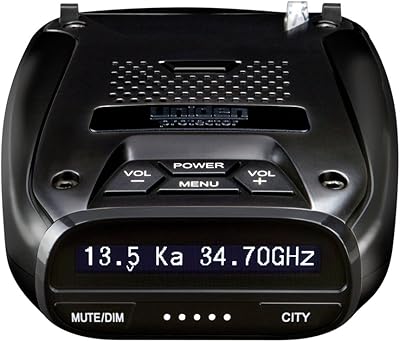
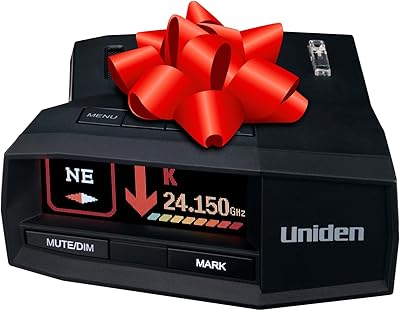
  • Display: Multi-color OLED panel displays signal band, strength, frequency, and directional indicators simultaneously for at-a-glance situational awareness.
  • Voice Alerts: Customizable voice alert system announces detected band types verbally, allowing hands-free operation without requiring the driver to look at the display.
  • Camera Database: Ships with a preloaded database of red light and speed camera locations, kept current through free firmware updates from Uniden.
  • False Alert Filter: Advanced K/Ka-band filtering algorithm is specifically tuned to reduce false positives triggered by blind-spot monitoring and collision-avoidance systems in nearby vehicles.
  • App Compatibility: Compatible with the free Uniden R/TACH app on both iOS and Android, enabling remote settings customization and on-screen alert mirroring.
  • Power Source: Operates via a corded 12V connection, designed for permanent or semi-permanent in-vehicle installation through the cigarette lighter or hardwire port.
  • Dimensions: Unit measures 5″ in length, 3″ in width, and 1″ in height, offering a compact profile that minimizes windshield obstruction.
  • Weight: Complete unit weighs approximately 1 pound, making it lightweight enough for standard suction-cup windshield mounts without strain.
  • Voltage: Rated for 12-volt DC vehicle electrical systems, compatible with standard passenger cars, trucks, and SUVs.
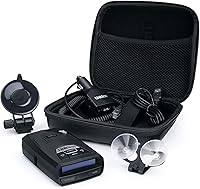
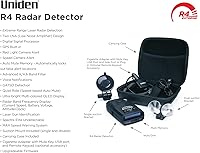
  • In the Box: Package includes the detector unit and a printed user manual; a power cable and windshield mount are also included for immediate installation.
  • Market Ranking: Ranked #12 in the Radar Detectors category on Amazon, with an average rating of 4.6 out of 5 stars across 939 verified ratings.
  • Release Date: First made available for purchase in November 2021, with ongoing firmware and database updates issued since launch.

Related Reviews
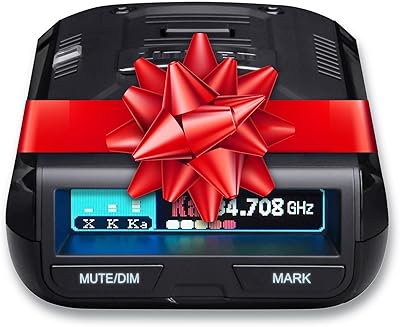
Uniden R3 Radar Detector
81%
96%
Detection Range
91%
GPS False Alert Filtering
93%
Radar Band Sensitivity
74%
Laser Detection
82%
BSM & False Alert Management
More
Uniden R8W Radar Detector
83%
93%
Detection Range
88%
False Alert Filtering
91%
Directional Awareness
74%
App Integration & Connectivity
86%
GPS & Camera Alert Accuracy
More
Uniden R7 Radar Detector
79%
94%
Detection Range
86%
False Alert Filtering
91%
Dual-Antenna Design
83%
GPS & Camera Database
78%
Display Quality
More
Uniden DFR5 Long Range Radar Detector
76%
88%
Detection Range
71%
False Alert Filtering
93%
Ease of Setup
86%
Spectre Undetectability
67%
Display Readability
More
Uniden DFR6 Radar Detector
80%
91%
Detection Range
73%
False Alert Filtering
88%
Display Quality
86%
Ease of Setup
67%
Build Quality
More
XpacEbank Car Radar Detector
81%
85%
Detection Performance
90%
Ease of Setup
88%
Voice Alert Clarity
65%
False Alerts
89%
GPS Accuracy
More
Escort X80 Radar Detector
84%
92%
Long-Range Detection
88%
Ease of Installation
84%
Voice Alert Customization
90%
App Integration (Escort Live)
80%
Accuracy of Alerts
More
Escort MAX 4 Radar Detector
79%
88%
False Alert Filtering
91%
Detection Range
79%
CarPlay & Android Auto Integration
67%
Value for Money
63%
AutoLearn Setup & Learning Curve
More
Cobra RAD 480i
Cobra RAD 480i
83%
83%
Detection Range
88%
False Alert Filtering
92%
Ease of Setup
79%
App Integration
86%
CarPlay and Android Auto Support
More
Cobra RAD 380 Radar Detector
71%
74%
Detection Range
78%
False Alert Filtering
93%
Ease of Setup
81%
Laser Detection Coverage
88%
Value for Money
More

FAQ

It works immediately with the default settings once you plug it in and mount it. That said, spending 15 to 20 minutes adjusting the sensitivity and filtering preferences will get you noticeably better performance for your specific driving environment. The manual walks you through the key settings clearly enough.

The built-in GPS logs the location of alerts you manually mute. After you mute the same false alert a couple of times at the same spot, the detector learns to silence it automatically on future passes. It takes a few days on your regular commute before it really starts making a difference, but once it kicks in, the improvement is noticeable.

Radar detector legality varies by state and by vehicle type. They are legal for passenger vehicles in most U.S. states, but prohibited in Virginia, Washington D.C., and in all commercial vehicles over a certain weight threshold. Always check the specific laws for your state and any states you plan to drive through before using it.

More than on the highway, yes. Dense urban environments generate significant RF noise from automatic store doors, adaptive cruise systems in other cars, and various other sensors. The filtering helps, but it does not eliminate city false alerts entirely. Highway drivers are the ones who consistently rate this long-range detector highest for low false alert rates.

You download the latest database file from Uniden's website and transfer it to the detector via a USB cable connected to your computer. It is a straightforward process, but it does require a computer rather than being an over-the-air update. Uniden provides clear step-by-step instructions on their support page.

Yes, the app is available for both iOS and Android. That said, some Android users have reported occasional pairing inconsistencies depending on their device model and OS version. iPhone connectivity tends to be more stable in user reports. If you run into issues, checking for an app update usually resolves them.

On flat, open highway stretches, the detection distance is genuinely impressive — drivers commonly report picking up Ka-band signals more than a mile out, sometimes considerably more depending on terrain and atmospheric conditions. In hilly or wooded areas, that range compresses significantly, as it would with any radar detector.

Laser detection is included, but it comes with a realistic caveat that applies to every consumer detector on the market: laser guns are aimed directly at a specific vehicle rather than broadcast widely, so by the time a laser hit registers, you may already be in the target zone. Think of laser detection as a warning layer rather than a reliable early-alert system.

Yes, the Uniden R4 can be hardwired using a compatible hardwire kit, which routes power directly from the fuse box for a cleaner, cord-free look. The hardwire kit is typically sold separately. This is a popular option for drivers who want a more permanent, integrated installation.

For highway driving, the difference is real and meaningful — particularly in detection range and false alert management. If you currently own a basic beeper-style detector with no GPS and no band filtering, the practical improvement will be immediately noticeable on your first open-road drive. For city-only driving, the gap narrows considerably and the higher price becomes harder to justify.

Where to Buy

Best Radar Detectors
In stock $389.99
webtron-x
In stock $429.99