Overview

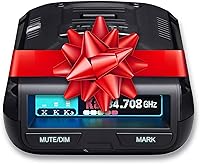
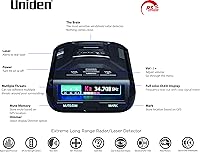
The Uniden R3 Radar Detector has earned a firm spot near the top of its category — and not by accident. Uniden has been building detection hardware for decades, and the R3 reflects that experience. It wraps radar, laser, and GPS functionality into a compact windshield-mount unit genuinely built around driver usability. The multi-color OLED display and programmable voice alerts mean your eyes can stay where they belong. At its price tier, this is not a casual purchase — it is a considered one, aimed at drivers who take speeding ticket protection seriously.
Features & Benefits

What sets the R3 apart in real-world driving is detection range — the kind that gives you a full stretch of highway worth of warning before you ever see the source of a Ka-band signal. GPS mute memory is quietly one of the best practical features here; drive past the same automatic door sensor every morning and after a few passes the R3 learns to stay quiet. BSM filtering reduces false hits from collision-avoidance systems in newer vehicles. The preloaded camera database covers red light and speed cameras with free updates, though coverage depth does vary by region.

Best For

The R3 is a natural fit for highway commuters and road-trip regulars who spend serious time at speed on unfamiliar stretches. Daily drivers benefit quickly from the GPS learning feature — the detector adapts and the noise dies down over time. Enthusiast drivers who follow detector communities will recognize the R3 as a frequently recommended unit. It is also a practical pick for anyone wanting red light and speed camera coverage without a recurring subscription. Worth noting: radar detector legality varies by state and country, so check your local laws before buying. If discretion is a priority, this radar detector has a noticeable windshield presence.

User Feedback

Buyers who use this radar detector on long highway runs consistently praise early warning distance above almost everything else, with several noting alerts well before competing units would have triggered. The GPS mute memory draws steady appreciation from commuters previously worn down by repeat false alerts. On the critical side, a number of users flag that initial setup takes real patience — the menus are not immediately intuitive, and dialing in custom modes requires time with the manual. Mount longevity comes up occasionally, with some buyers replacing the suction cup over extended use. Overall satisfaction at this price tier runs high, but expectations around the learning curve should be set accordingly.

Pros

  • Detection range on open highways consistently outperforms most competitors in its class.
  • GPS mute memory learns your regular route and silences repeat false alerts automatically over time.
  • BSM filtering keeps K-band false alerts from modern vehicles manageable in heavy traffic.
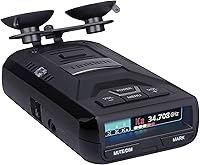
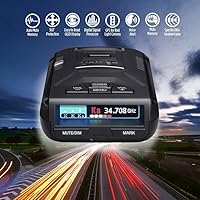
  • The multi-color OLED display shows signal type, strength, and frequency at a single glance.
  • Programmable voice alerts allow fully hands-free use without reaching for the unit.
  • Preloaded red light and speed camera database comes with free lifetime updates at no extra cost.
  • Ka-band sensitivity — the most enforcement-relevant band — is particularly strong in real-world use.
  • Backed by a manufacturer warranty and a track record of continued firmware support post-purchase.
  • Well-regarded in the enthusiast community, with a long-standing top ranking in its category.

Cons

  • Menu navigation is dense and counterintuitive, with a steep learning curve for new users.
  • The included suction cup mount can lose grip over time, especially in hot climates.
  • Firmware and database updates require a computer connection rather than an over-the-air process.
  • Red light and speed camera coverage varies significantly by region — smaller cities often have gaps.
  • Laser detection, while present, provides little practical protection since measurement happens near-instantly.
  • The unit has a noticeable windshield footprint — not a good fit for drivers who prefer discretion.
  • In dense urban environments, even BSM filtering does not eliminate all K-band false alerts.
  • The GPS learning benefit is most useful on fixed routes — frequent route changes reduce its value.
  • The physical design feels utilitarian, and the housing finish does not fully match the premium price tier.

Ratings

The Uniden R3 Radar Detector has been scored across 13 performance categories by our AI system after analyzing thousands of verified global purchases, with spam, bot-submitted, and incentivized reviews actively filtered out before any score was calculated. The result is a transparent picture of where this detector genuinely earns its reputation — and where real buyers have run into friction. Strengths and frustrations are both reflected without sugarcoating.
Detection Range
96%
This is where the R3 consistently separates itself from the pack. Buyers driving open interstate stretches report alerts firing hundreds of yards — sometimes over a mile — before any visible source. That kind of advance notice translates directly into real reaction time, not just a blinking light after the fact.
A small number of users note that extreme sensitivity can occasionally flag distant signals that never materialize into an actual threat, which requires some mode tuning to manage effectively in dense urban environments.
GPS False Alert Filtering
91%
The location-based mute memory is genuinely well-implemented. Commuters who drive the same route daily report that within a week, the R3 has quietly learned to ignore the grocery store doors, bank drive-throughs, and other fixed false sources without any manual intervention required each morning.
The GPS learning process takes several passes before it kicks in, meaning the first few days on a new route can still feel noisy. Users who frequently change routes also report the benefit is less pronounced since the learned database reflects familiar paths only.
Radar Band Sensitivity
93%
Ka-band performance in particular draws repeated praise from enthusiast buyers who cross-test against other units. The R3 picks up Ka signals — the most commonly used by modern enforcement — at distances that competing detectors in similar price brackets often miss entirely.
X-band sensitivity, while technically present, is of limited practical value in most regions where X-band enforcement has largely been phased out. A handful of users feel the broader sensitivity occasionally works against them by requiring more manual band filtering.
Laser Detection
74%
26%
The R3 does detect laser, and in situations where a sweep catches it early enough, it provides useful warning. Buyers using it on highways with known laser enforcement corridors appreciate having the detection active as a layer of awareness.
Like virtually all radar detectors on the market, laser detection is widely acknowledged to be more of a notification than a protection — by the time the R3 alerts to a laser hit, the measurement has usually already been taken. Experienced buyers understand this limitation going in, but it is worth stating plainly.
BSM & False Alert Management
82%
18%
In modern traffic, cars equipped with blind-spot monitoring systems constantly emit K-band signals that cheaper detectors scream at constantly. The R3 handles this noticeably better than entry-level alternatives, making highway driving in heavy traffic far more tolerable.
In dense urban areas with heavy late-model vehicle traffic, some K-band bleed-through still occurs. A portion of users opt to reduce K-band sensitivity as a workaround, which is an effective fix but requires navigating the menu system first.
Red Light & Speed Camera Alerts
77%
23%
Having a preloaded camera database with free lifetime updates removes a recurring cost that competing solutions often charge for. Users in major metro areas report solid coverage, and the alerts integrate naturally into the detector's existing notification system without feeling bolted on.
Coverage quality is uneven depending on region. Users in smaller cities and rural areas report noticeable gaps, and the database can lag behind newly installed cameras by weeks or months. The system works best as a helpful layer of awareness rather than a definitive, real-time source.
OLED Display Clarity
88%
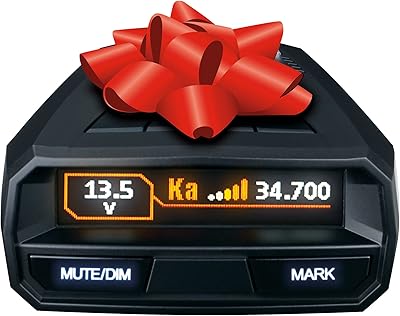
The multi-color display is genuinely easy to read at a glance while driving. Being able to see signal type, frequency, and strength simultaneously on one screen — without squinting — is something buyers coming from single-line LCD detectors notice immediately and positively.
In direct harsh sunlight, a small number of users report some washout on the display, particularly at lower brightness settings. It is not a dealbreaker for most, but drivers in consistently sunny climates have flagged it as a minor annoyance.
Voice Alert Quality
84%
Programmable voice alerts that clearly announce band type and threat level mean experienced drivers can keep eyes fully on the road. The clarity of the audio is consistently praised, and the ability to customize alert behavior means the R3 can be tuned to match individual driving styles.
Some users find the default voice volume requires adjustment out of the box, and the voice alert options, while useful, are not as granular as a small number of power users would prefer. Minor complaints overall, but worth noting for buyers who prioritize audio feedback heavily.
Ease of Setup & Menu Navigation
61%
39%
Once configured, the R3 runs reliably without needing constant attention. Buyers who invest time in the initial setup process report high satisfaction with the end result, and the device does what it promises once everything is dialed in to personal preference.
Getting there is the sticking point. The menu system is one of the most consistently criticized aspects across user feedback — described variously as dense, counterintuitive, and requiring the manual for anything beyond basic operation. First-time radar detector owners in particular find the learning curve steeper than expected at this price point.
Build Quality & Housing
79%
21%
The physical unit feels solid and appropriately substantial for a premium-tier purchase. The button layout is functional, and the housing has held up well for the majority of buyers who report using the R3 across multiple years and varying climate conditions.
It is not a particularly refined or sleek design — the R3 has a utilitarian look that prioritizes function. A segment of buyers note the plastic housing feels slightly less premium than the price tag might suggest, though durability complaints are relatively rare.
Mount & Windshield Stability
68%
32%
For most buyers, the included windshield suction mount works adequately and holds the unit securely during normal driving. The mounting position provides a good viewing angle and keeps the unit within easy reach for quick adjustments.
Suction cup longevity is a recurring theme in critical feedback. In hot climates or on textured windshields, a portion of users report the mount losing grip over time, sometimes unexpectedly. Several buyers mention purchasing a third-party mount as a longer-term fix, which adds minor additional cost.
Firmware & Update Experience
73%
27%
Free firmware and database updates are a meaningful long-term value point. Users who stay current with updates report the R3 continues to perform well over the years, and Uniden has a track record of supporting the device post-purchase.
The update process itself draws mixed reviews — some buyers find it straightforward while others describe it as clunky, requiring a computer connection and manual file management rather than an over-the-air or app-based solution. Not a dealbreaker but behind modern expectations.
Value for Money
83%
Among buyers who researched the category before purchasing, the dominant sentiment is that the R3 delivers on its core promise at its price tier. The combination of top-end detection range, GPS functionality, and a lifetime-updated camera database stacks up favorably against what alternatives charge for equivalent capability.
For buyers who are primarily city drivers or who mostly travel low-speed surface streets, the R3 can feel like more detector than they actually need. The value proposition is strongest for frequent highway use — without that context, the premium is harder to justify against more affordable options.

Suitable for:

The Uniden R3 Radar Detector was built with a specific driver in mind: someone who spends meaningful time on open highways, regularly encounters speed enforcement, and wants the earliest possible warning rather than just a notification that something nearby is happening. Long-haul commuters and road-trip regulars get the most out of it — particularly those who drive consistent routes, since the GPS mute memory actively learns and quiets repeat false alerts over time, making daily use progressively less intrusive. Enthusiast-level buyers who follow the radar detector community and compare real-world range performance will find the R3 holds its own at the top of the category. It also suits drivers who want red light and speed camera coverage bundled in without paying a recurring subscription fee, understanding that database accuracy will vary by region. If your driving is primarily at highway speeds and ticket protection is a genuine priority rather than a novelty, the R3 is a well-matched tool for the job.
Not suitable for:

The Uniden R3 Radar Detector is a harder sell for drivers who spend most of their time on low-speed city streets, where detection range matters far less and dense traffic creates more false alert noise to manage. Buyers who want a discreet, low-profile device should also look elsewhere — the R3 has a visible windshield presence that some drivers find conspicuous. If you are a first-time radar detector owner expecting plug-and-play simplicity, the menu system will likely frustrate you before it impresses you; getting the R3 properly configured takes patience and time with the documentation. Drivers in jurisdictions where radar detectors are restricted or prohibited should also stop here — legality varies by state, province, and country, and that check comes before any purchase decision. Finally, buyers hoping for a fully app-connected, smartphone-integrated experience will find the R3 is more of a standalone device rooted in its own ecosystem, which may feel dated compared to newer alternatives.
Specifications

  • Brand & Model: Manufactured by Uniden under the model designation R3, a brand with decades of experience in consumer detection and communications hardware.
  • Detection Types: Detects radar signals across X, K, and Ka bands, as well as laser (LIDAR) signals from law enforcement speed measurement devices.
  • Frequency Bands: Covers X-band at 10.525 GHz, K-band at 24.125 GHz, Ka-band at 34.7 GHz, and full-spectrum laser detection.
  • GPS: Built-in GPS module enables location-aware mute memory and preloaded red light and speed camera alert functionality.
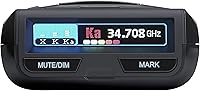
  • Display: Multi-color OLED screen simultaneously shows signal type, frequency, and signal strength for at-a-glance situational awareness while driving.
  • Voice Alerts: Programmable voice alerts announce band type and threat level audibly, supporting hands-free operation without requiring the driver to glance at the display.
  • False Alert Filter: Combines GPS-based mute memory for fixed location sources and BSM (Blind Spot Monitoring) filtering to suppress K-band emissions from nearby vehicles.
  • Camera Database: Ships with a preloaded database of red light and speed camera locations, with free firmware and database updates available from Uniden.
  • Power Source: Powered via DC vehicle power at 12 volts, supplied through a standard in-car power adapter included with the unit.
  • Dimensions: The unit measures 4.5″ in length, 2.81″ in width, and 1.25″ in height, making it a compact but visible windshield-mount device.
  • Weight: Weighs 1.65 pounds, which is typical for a full-featured windshield-mount detector with integrated GPS hardware.
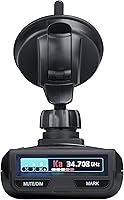
  • Mount Type: Attaches to the windshield via a suction cup mount included in the box, positioning the unit in the driver's forward sightline.
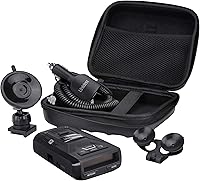
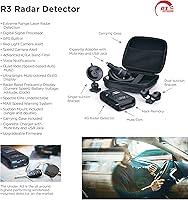
  • In the Box: Package includes the R3 detector unit, windshield suction mount, and 12V DC power adapter; no additional accessories are included by default.
  • Compatibility: Compatible with smartphones for optional companion functionality, and powered by any standard 12V DC vehicle outlet.
  • Warranty: Includes a manufacturer warranty from Uniden; buyers should confirm current warranty terms and registration requirements directly with Uniden at time of purchase.
  • Category Rank: Holds a Best Sellers Rank of #6 in the Radar Detectors category on Amazon, reflecting sustained buyer demand since its 2017 launch.
  • Availability: Confirmed as not discontinued by the manufacturer, meaning firmware updates and customer support remain actively available from Uniden.

Related Reviews
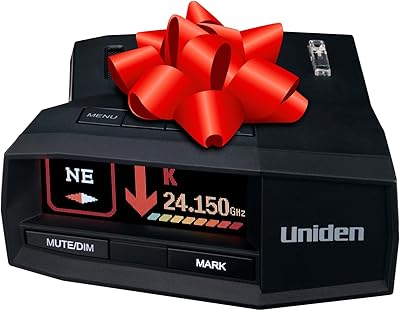
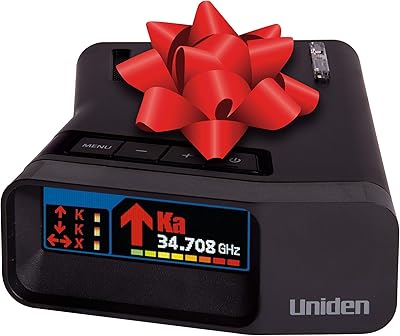
Uniden R8W Radar Detector
83%
93%
Detection Range
88%
False Alert Filtering
91%
Directional Awareness
74%
App Integration & Connectivity
86%
GPS & Camera Alert Accuracy
More
Uniden DFR5 Long Range Radar Detector
76%
88%
Detection Range
71%
False Alert Filtering
93%
Ease of Setup
86%
Spectre Undetectability
67%
Display Readability
More
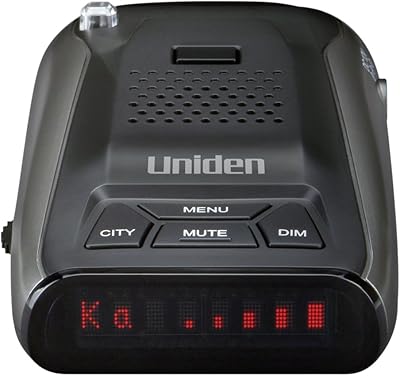
Uniden R7 Radar Detector
79%
94%
Detection Range
86%
False Alert Filtering
91%
Dual-Antenna Design
83%
GPS & Camera Database
78%
Display Quality
More
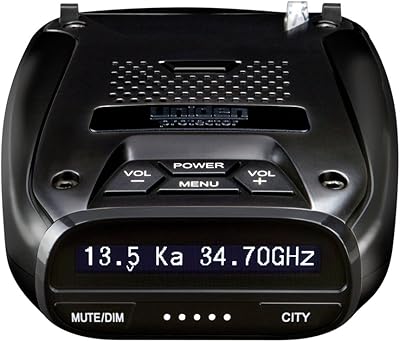
Uniden R4 Radar Detector
79%
94%
Detection Range
83%
False Alert Filtering
91%
GPS Auto-Mute Memory
78%
Red Light & Speed Camera Alerts
67%
App Integration (R/TACH)
More
Uniden DFR6 Radar Detector
80%
91%
Detection Range
73%
False Alert Filtering
88%
Display Quality
86%
Ease of Setup
67%
Build Quality
More
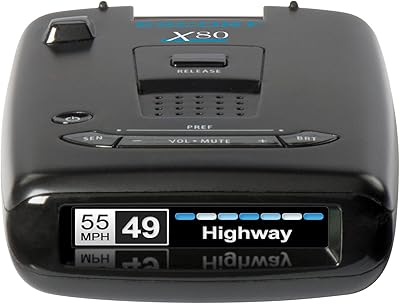
XpacEbank Car Radar Detector
81%
85%
Detection Performance
90%
Ease of Setup
88%
Voice Alert Clarity
65%
False Alerts
89%
GPS Accuracy
More
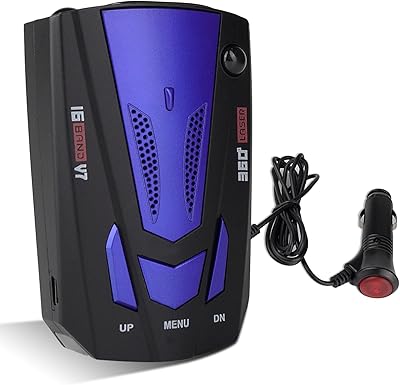
Escort X80 Radar Detector
84%
92%
Long-Range Detection
88%
Ease of Installation
84%
Voice Alert Customization
90%
App Integration (Escort Live)
80%
Accuracy of Alerts
More
Escort Redline 360c Radar Detector
81%
93%
Detection Range
88%
False Alert Filtering
91%
360-Degree Coverage
89%
Stealth & RDD Invisibility
84%
CarPlay & Android Auto Integration
More
Cobra RAD 380 Radar Detector
71%
74%
Detection Range
78%
False Alert Filtering
93%
Ease of Setup
81%
Laser Detection Coverage
88%
Value for Money
More
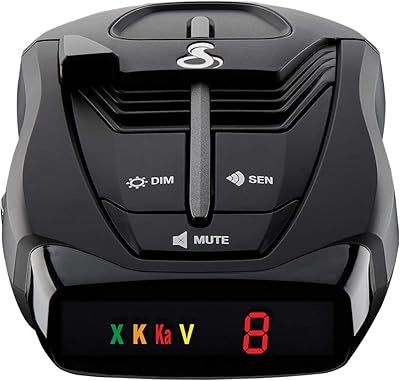
Escort MAX 4 Radar Detector
79%
88%
False Alert Filtering
91%
Detection Range
79%
CarPlay & Android Auto Integration
67%
Value for Money
63%
AutoLearn Setup & Learning Curve
More

FAQ

Radar detector legality varies significantly by jurisdiction — they are legal for passenger vehicles in most U.S. states, but banned in Virginia, Washington D.C., and on military bases, and prohibited for commercial vehicles over 10,000 lbs under federal law. Canada has its own province-by-province rules, and many countries outside North America prohibit them outright. Always check your local laws before purchasing or using any radar detector.

It typically takes a few passes — usually three to five drives along the same route — before the R3 confidently locks in a false alert location and begins automatically muting it. The first couple of days on a new route will still feel noisy, but most commuters notice a meaningful reduction in nuisance alerts within the first week of regular use.

Technically yes, it detects laser — but practically speaking, laser protection from any radar detector is limited. When a laser gun fires and the R3 picks it up, the speed measurement has almost certainly already been taken. Laser detection is best understood as situational awareness rather than advance warning, unlike radar where the R3 genuinely excels at early detection.

Updates are handled through Uniden's website and require connecting the R3 to a computer via USB. You download the latest database file and transfer it to the device manually — there is no over-the-air or app-based update system. It works reliably, but the process is more hands-on than what some buyers used to modern connected devices might expect.

It can be used in the city, but its strengths shine brightest on open highways where detection range truly matters. Urban environments bring more K-band noise from vehicles with blind-spot systems, more fixed false alert sources, and generally less need for long-range detection. City-primary drivers will likely find themselves doing more manual filtering, and the value proposition is weaker in that context.

It does come up in user feedback, particularly in hot climates where windshield temperatures cause suction cups to lose grip over time. Cleaning both the windshield and the suction cup thoroughly before mounting helps significantly. If persistent dropping is an issue, aftermarket mounts designed for radar detectors are widely available and considered a worthwhile upgrade by many long-term R3 owners.

Honestly, it has a steeper learning curve than most buyers expect. The menu system is functional but not intuitive, and getting modes, sensitivity, and band filtering dialed in to your preferences takes real time with the instruction manual. If you go in expecting to configure it carefully over the first week rather than plug it in and forget it, you will have a much better experience.

Yes, and this is a known challenge with K-band detectors in modern traffic. The R3 includes BSM filtering specifically to address this, and it handles it better than budget alternatives. That said, in very heavy traffic with a lot of late-model vehicles, some bleed-through still happens. Many users dial back K-band sensitivity as a practical workaround, especially in urban driving.

They are generally reliable in major metropolitan areas, and free lifetime database updates mean the R3 is not stuck with outdated data. That said, coverage is not uniform — smaller cities and rural areas may have notable gaps, and newly installed cameras can take some time to appear in the database. Think of it as a useful supplementary layer of awareness rather than a definitive, real-time map.

Yes, the OLED display operates independently of the audio, so you can run it silently and still get full visual signal information including band type, frequency, and strength. Some drivers prefer this approach in quieter cabin environments or when using the vehicle audio system. The display is clear enough to read at a glance, though keeping at least low-volume voice alerts active is generally recommended for highway use.

Where to Buy

Best Buy
In stock $329.99
Uniden America Corporation
In stock $279.99
Bigbigmart.com
In stock $296.10
Crutchfield
In stock $313.49
Abt Electronics & Appliances
In stock $329.99
TikTok Shop
In stock $329.99
Best Radar Detectors
In stock $329.99