Overview

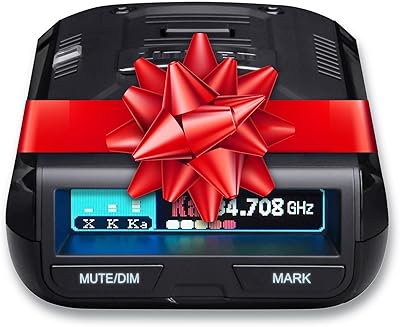
The Uniden DFR5 Long Range Radar Detector has held its ground in the mid-range market since its February 2016 release — and still ranks among the top sellers in its category. That kind of long-term consistency is hard to ignore. This windshield-mount radar detector targets everyday drivers: the commuter logging real highway miles who wants a reliable heads-up before a speed trap, not a premium unit packed with features they will rarely touch. It plugs into your 12V outlet, mounts to the windshield in seconds, and works immediately. No app, no Bluetooth pairing, no learning curve.
Features & Benefits

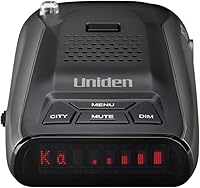
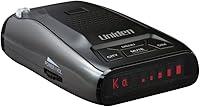
What makes the DFR5 genuinely useful on the highway is its extended detection range across X, K, and Ka bands — giving you a longer window to react rather than a last-second scramble. The advanced K band filter is worth highlighting because K band is notoriously noisy; automatic store doors and adaptive cruise control systems on nearby cars constantly trigger cheaper detectors. This Uniden detector handles that reasonably well in suburban conditions. It is also Spectre-undetectable — relevant in states where police run equipment specifically designed to identify drivers using radar detectors. The VFD dot matrix display reads clearly at a glance, and corded 12V power means it never runs dry mid-drive.

Best For

The DFR5 hits its sweet spot with highway commuters who cover long stretches of open road and want genuine advance warning — not a unit that screams every time it passes a grocery store. It is a particularly solid pick for drivers in states where radar detectors are legal and police use Spectre units to identify them; the built-in undetectability adds real confidence without any extra setup. If you are moving up from a bargain-bin detector and are not ready to spend on GPS-equipped models, this windshield-mount radar detector is a smart middle ground. No pairing, no subscription — just mount it and drive.

User Feedback

Owners of the DFR5 consistently highlight its value for money and detection range as the standout strengths, with many noting it outperforms similarly priced Cobra and Escort units in highway scenarios. The praise is genuine, but so are the critiques. City drivers report more false alerts than expected even with the filter running — urban environments simply overwhelm any mid-range detector at times. A handful of buyers have flagged the suction cup mount losing grip over time, and a few found the cord length awkward depending on windshield placement. Display readability in direct sunlight gets mixed marks; some find it perfectly fine, others less so.

Pros

  • Highway Ka band detection range consistently impresses drivers who commute on open interstates.
  • Spectre I, IV, and IV+ undetectability is a genuine built-in advantage unavailable on most competing units at this price.
  • Setup takes under two minutes — mount, plug in, and the DFR5 is ready to go immediately.
  • Advanced K band filtering keeps false alerts manageable on suburban roads and light mixed-use drives.
  • Transfers easily between vehicles, making it practical for multi-car households.
  • Corded 12V power means it never runs low mid-drive unlike battery-dependent portable devices.
  • Buyers upgrading from entry-level detectors notice an immediate and meaningful improvement in detection sensitivity.
  • Holds a top-60 bestseller rank in its category years after launch — a sign of sustained real-world trust.
  • Performs competitively against similarly priced Escort and Cobra units, particularly on highway Ka band sensitivity.

Cons

  • Urban drivers face persistent false alerts that the K band filter cannot fully resolve without GPS learning.
  • Laser detection is reactive by nature — alerts typically arrive after an officer has already clocked your speed.
  • No GPS means no automatic muting of known false-alert locations, ever.
  • The suction cup mount loses grip over time, especially in vehicles exposed to heat cycles in warmer climates.
  • Display readability in direct afternoon sunlight is a recurring complaint, not an isolated one.
  • No red light camera alerts, speed limit data, or smartphone connectivity of any kind.
  • Cord routing can be awkward depending on dashboard layout, and no cable management clips are included.
  • As GPS-equipped competitors have dropped in price, the DFR5's feature-set feels increasingly dated.
  • Some long-term owners report gradual sensitivity drift after extended use, affecting alert consistency.

Ratings

The scores below reflect an AI-driven analysis of verified buyer reviews for the Uniden DFR5 Long Range Radar Detector, sourced globally and filtered to exclude incentivized, spam, and bot-generated feedback. Each category is scored independently to give you an honest picture of where this windshield-mount detector genuinely delivers — and where real drivers have run into frustration. Both the strengths and the recurring pain points are reflected without sugarcoating.

Detection Range
88%
Highway drivers consistently report that the DFR5 picks up Ka band signals well before the source comes into view — often with enough time to check speed and adjust naturally. For open-road commuters, this early warning window is exactly what separates a useful detector from a useless one.
Detection range drops noticeably in hilly or heavily wooded terrain where line-of-sight is limited. A handful of users noted that at high speeds, even a solid range advantage can feel shorter than expected, particularly on fast-moving interstates.
False Alert Filtering
71%
29%
The advanced K band filter does a respectable job on suburban arterials where adaptive cruise control signals from nearby vehicles would otherwise trigger constant alerts. Drivers who spend most of their time on highways report a noticeably quieter experience compared to cheaper detectors.
In dense urban environments — think downtown corridors with automatic sliding doors, shopping plazas, and heavy traffic — false alerts still occur with enough frequency to become annoying. City-based drivers are the most vocal critics on this front, and the filtering simply cannot match GPS-equipped models that learn and mute known false-alert locations.
Ease of Setup
93%
Mount, plug in, and drive — that is genuinely the full setup process. The included suction cup mount and DC charging cable mean there is nothing to pair, configure, or download. Buyers switching from a dead unit mid-week appreciate how quickly this detector is ready to use.
The suction cup mount, while convenient, has drawn complaints about losing grip over time — particularly in vehicles with curved or treated windshields. A few users also found the coiled power cord awkward to route neatly depending on their dashboard layout.
Spectre Undetectability
86%
For drivers in states where law enforcement uses Spectre I, IV, or IV+ detection equipment, this is a meaningful built-in feature. Users in those regions specifically called out the DFR5 as one of the few mid-range options that handles this without requiring an aftermarket stealth mode.
This feature is only relevant in certain jurisdictions, so a portion of buyers essentially pay for a capability they will never need. There is also no way to independently verify Spectre undetectability in day-to-day use, which leaves some buyers relying entirely on Uniden's claim.
Display Readability
67%
33%
The VFD dot matrix display is legible in typical daytime and nighttime driving conditions, showing signal type and strength in a format experienced detector users will immediately understand. At a glance in moderate light, it does its job without being distracting.
Direct sunlight is where the display struggles — multiple reviewers noted that in bright afternoon sun, especially with the unit mounted high on the windshield, reading the display requires a deliberate look. This is a recurring complaint rather than an isolated one.
Build Quality
74%
26%
The DFR5 feels solid enough for a unit in this price tier — it is not flimsy or hollow, and the button layout is straightforward. Users who have owned it for two or more years without issues reinforce the impression that the hardware is reasonably durable.
The plastic housing does not feel premium, and the mount's long-term grip is a legitimate concern. A small number of users reported the unit developing rattles or sensitivity drift after extended use, though these appear to be the minority.
Value for Money
84%
Buyers consistently position the DFR5 as a smart middle-ground purchase — better real-world detection than entry-level units without the steep price of GPS-enabled competitors. For highway-heavy drivers who want reliable performance without overspending, the value proposition holds up well.
As GPS-equipped detectors from competitors have come down in price over recent years, the DFR5's value argument has narrowed. Buyers who later upgraded noted they wished they had spent a little more upfront for location-based filtering.
Highway Performance
89%
This is where the DFR5 earns its reputation. On long stretches of open highway, early Ka band detection gives drivers a consistent, useful warning window. Multiple users specifically bought this detector for road trips and long interstate commutes and came away satisfied.
Performance consistency can vary by region depending on which radar bands local law enforcement favors. A few users in areas with heavy laser usage noted the detector offers little practical advantage against laser guns — alerts arrive too late to be actionable.
Laser Detection
54%
46%
The DFR5 does detect laser signals across the standard frequency range, and users in radar-dominant enforcement areas will rarely encounter a scenario where this limitation matters day-to-day.
Laser detection on any non-jamming device is largely reactive — by the time the alert fires, an officer using a laser gun has almost certainly already captured a reading. Experienced detector users understand this limitation, but first-time buyers sometimes expect more than any passive laser detector can realistically deliver.
Urban Usability
58%
42%
With the K band filter engaged, the DFR5 handles light urban use tolerably. Drivers passing through cities occasionally on otherwise highway-dominated commutes will not find it unbearable.
For drivers whose daily route is primarily city streets, the false alert rate becomes a real quality-of-life issue. Without GPS-based muting of known false-alarm locations, there is no way for this windshield-mount radar detector to learn and adapt over time.
Mount Stability
62%
38%
Initial installation is quick and the unit holds firmly on a clean, flat windshield. For most drivers in moderate climates, it stays in place reliably during day-to-day use.
Heat cycles in warmer climates cause the suction cup to release more frequently, which is a consistent complaint among buyers in southern states. The mount design has not changed since launch, and no upgraded mounting option is included in the box.
Band Coverage
81%
19%
X, K, Ka, and laser coverage means the DFR5 is equipped for virtually all radar enforcement technologies currently in use across North America. For most drivers, no relevant band is left unmonitored.
X band is largely obsolete in most regions, making that coverage more of a checkbox than a practical benefit. The lack of POP radar mode detection — found on some competing units — is occasionally cited as a gap by more technically minded buyers.
Portability Between Vehicles
83%
The suction-mount and corded design make transferring the DFR5 between a car and a truck a genuine two-minute task. Households with multiple vehicles appreciate that one unit can realistically serve all of them without permanent installation.
The cord management situation can be awkward in vehicles with widely spaced 12V ports and windshields, requiring some improvisation to keep things tidy. There is no built-in cable clip or organizer included in the package.
Comparison to Competitors
76%
24%
Against similarly priced Cobra units, buyers consistently favor the DFR5 for its more reliable Ka band sensitivity. Compared to entry-level Escort models in the same price range, users found the Uniden's range performance comparable or slightly better.
Once buyers look at GPS-enabled Escort or Radenso units just a step above this price tier, the DFR5 starts to feel dated in feature set. The lack of automatic muting, red light camera alerts, or speed limit data is increasingly hard to overlook as those features become more accessible.
Long-Term Reliability
77%
23%
A meaningful number of reviewers have owned the DFR5 for three or more years without hardware failure — a good sign for a corded, always-on device that lives through summer heat and winter cold cycles in a vehicle.
Some longer-term owners reported gradual sensitivity changes and occasional inconsistency in alert behavior over time, suggesting component drift may affect units after extended use. Warranty support experiences from buyers have been mixed in terms of responsiveness.

Suitable for:

The Uniden DFR5 Long Range Radar Detector is built for drivers who spend the bulk of their time on highways and open roads — think daily interstate commuters, long-haul road trippers, or truck drivers covering rural routes where Ka band enforcement is the primary concern. If your drive is mostly highway miles and you want a meaningful detection window without the complexity or cost of a GPS-enabled unit, the DFR5 delivers exactly that. It also makes strong sense for buyers in states where Spectre-equipped patrol vehicles operate, since the built-in undetectability is a genuine advantage that most competitors at this price tier skip entirely. First-time radar detector buyers stepping up from a bargain-bin unit will find the jump in detection sensitivity immediately noticeable. And because setup is as simple as mounting and plugging in, it works equally well across multiple vehicles — useful for households where a single detector needs to move between a car and a truck depending on the day.
Not suitable for:

The Uniden DFR5 Long Range Radar Detector is a poor fit for drivers whose daily routes run primarily through dense urban areas. Without GPS-based muting or the ability to learn and suppress known false-alert locations — things like shopping plaza entrances or intersections loaded with adaptive cruise control traffic — city drivers will find the alert frequency tiresome over time, even with the K band filter active. Buyers who want red light camera warnings, speed limit display, or connected smartphone features will need to look elsewhere entirely, as this detector has none of those capabilities. If laser gun enforcement is common in your area, it is also worth knowing upfront that passive laser detection on any non-jamming device rarely provides actionable warning — the DFR5 is no exception to that limitation. And if you are hoping for a sleek, discreet installation, the suction mount and visible coiled cord are not going to satisfy you; this is a functional, utilitarian setup, not an invisible one.
Specifications

  • Brand: Manufactured by Uniden, a brand with decades of experience in communications and detection electronics.
  • Model: DFR5, part of Uniden's consumer radar detector lineup introduced in February 2016.
  • Detection Bands: Detects X band (10.525 GHz), K band (24.125 GHz), Ka band (34.7 GHz), and laser signals across standard enforcement frequencies.
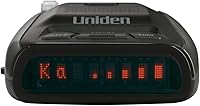
  • Display Type: VFD (Vacuum Fluorescent Display) dot matrix screen showing signal type, band, and relative signal strength at a glance.
  • Power Source: Corded 12V DC power via included cigarette lighter adapter — no internal battery, operates continuously while the vehicle is running.
  • Dimensions: Unit measures 6.75″ wide by 2.5″ tall by 10.1″ long, making it a mid-sized windshield-mount detector.
  • Weight: The unit weighs 11.2 ounces, light enough to hold reliably on a suction cup windshield mount without strain.
  • Mount Type: Included suction cup windshield mount allows tool-free installation and easy transfer between vehicles.
  • Undetectability: Rated as undetectable by Spectre I, Spectre IV, and Spectre IV+ radar detector detection devices used by law enforcement in select jurisdictions.
  • K Band Filtering: Features an advanced K band filter designed to suppress false alerts triggered by automatic doors, blind-spot monitoring, and adaptive cruise control systems.
  • Compatible Vehicles: Designed for use in passenger cars and trucks; compatible with any vehicle equipped with a standard 12V DC power outlet.
  • In the Box: Package includes the DFR5 detector unit, a DC charging cable, and a suction cup windshield mount — no additional accessories required for basic use.
  • Laser Detection: Detects police laser (LIDAR) signals, though as with all passive laser detectors, alerts are typically received after a speed reading has been captured.
  • Voltage: Operates on 12 volts DC, consistent with the standard power output of cigarette lighter and accessory ports in most passenger vehicles.
  • Bestseller Rank: Holds a position of #59 in the Amazon Radar Detectors category, reflecting sustained long-term sales volume since its 2016 launch.
  • Manufacturer Status: Confirmed as not discontinued by the manufacturer, with the product remaining in active production and distribution as of the latest available data.

Related Reviews
Uniden R7 Radar Detector
79%
94%
Detection Range
86%
False Alert Filtering
91%
Dual-Antenna Design
83%
GPS & Camera Database
78%
Display Quality
More
Uniden DFR6 Radar Detector
80%
91%
Detection Range
73%
False Alert Filtering
88%
Display Quality
86%
Ease of Setup
67%
Build Quality
More
Uniden R4 Radar Detector
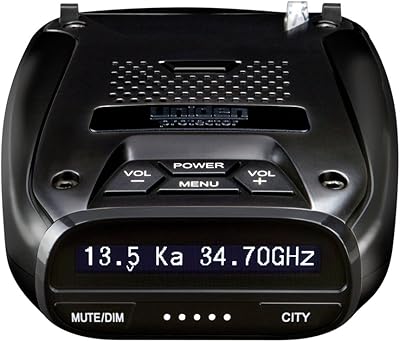
79%
94%
Detection Range
83%
False Alert Filtering
91%
GPS Auto-Mute Memory
78%
Red Light & Speed Camera Alerts
67%
App Integration (R/TACH)
More
Uniden R3 Radar Detector
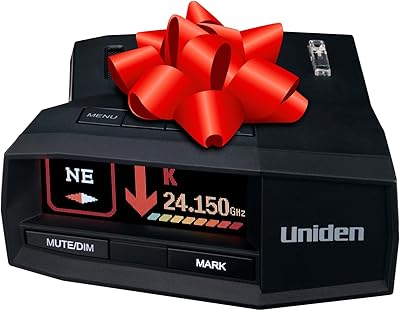
81%
96%
Detection Range
91%
GPS False Alert Filtering
93%
Radar Band Sensitivity
74%
Laser Detection
82%
BSM & False Alert Management
More
Uniden R8W Radar Detector
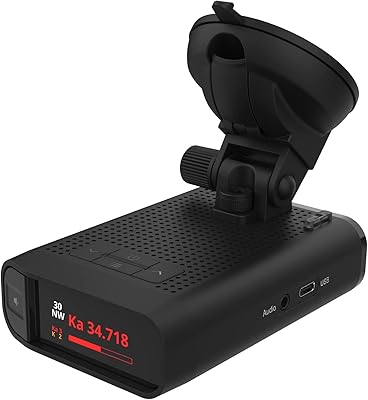
83%
93%
Detection Range
88%
False Alert Filtering
91%
Directional Awareness
74%
App Integration & Connectivity
86%
GPS & Camera Alert Accuracy
More
Radenso DS1 Radar Detector
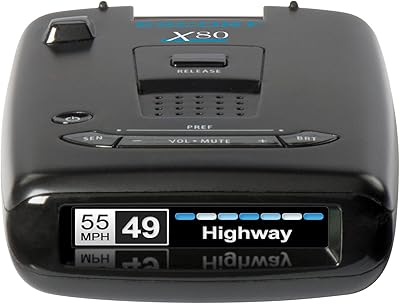
82%
91%
Detection Range
93%
False Alert Filtering
88%
MultaRadar & Specialty Band Coverage
89%
GPS Lockout System
86%
Display Quality
More
Escort X80 Radar Detector
84%
92%
Long-Range Detection
88%
Ease of Installation
84%
Voice Alert Customization
90%
App Integration (Escort Live)
80%
Accuracy of Alerts
More
XpacEbank Car Radar Detector
81%
85%
Detection Performance
90%
Ease of Setup
88%
Voice Alert Clarity
65%
False Alerts
89%
GPS Accuracy
More
Cobra RAD 380 Radar Detector
71%
74%
Detection Range
78%
False Alert Filtering
93%
Ease of Setup
81%
Laser Detection Coverage
88%
Value for Money
More
Cobra RAD 480i
Cobra RAD 480i
83%
83%
Detection Range
88%
False Alert Filtering
92%
Ease of Setup
79%
App Integration
86%
CarPlay and Android Auto Support
More

FAQ

Setup is genuinely simple — mount it on the windshield using the included suction cup, plug the DC cable into your 12V outlet, and it is ready to use. There is no app to download, no Bluetooth pairing, and no account required. Most buyers have it operational within two minutes of opening the box.

The DFR5 includes a K band filter specifically aimed at reducing these kinds of interference signals. In light suburban and highway traffic, it does a reasonable job of keeping things quiet. That said, no mid-range passive detector eliminates false alerts entirely — in heavy traffic with lots of modern vehicles nearby, you will still hear occasional alerts that are not enforcement-related.

It does detect laser signals, but it is important to set realistic expectations here. When an officer uses a laser gun, they aim directly at your vehicle and capture a reading almost instantly — by the time any passive laser detector alerts you, the measurement has typically already been taken. The DFR5 is far more practically useful against radar-based enforcement, where the signal travels farther in advance and gives you a meaningful warning window.

In certain states and jurisdictions, law enforcement uses devices called radar detector detectors — Spectre models being the most common — to identify drivers who are running a detector. The DFR5 is designed to operate without emitting a detectable signal that those devices can pick up. Whether this matters to you depends entirely on where you drive; in states where radar detectors are legal and Spectre units are not commonly deployed, this feature is largely irrelevant. In states where both are in play, it is a meaningful advantage.

On a clean, flat windshield in a moderate climate, the mount holds reliably under normal day-to-day conditions. The issue most buyers run into is in hotter climates, where heat cycles cause the suction cup to soften and lose grip over time. Cleaning both the windshield and the suction cup regularly helps, but some owners in southern states do find themselves re-mounting the unit more often than they would like.

Against Cobra units in the same price range, the DFR5 generally outperforms on Ka band sensitivity — real-world user comparisons consistently favor the Uniden in highway scenarios. Against Escort units at a similar price point, the gap is narrower, and it comes down to individual priorities. The DFR5 has an edge in Ka range performance, while Escort units at this tier often offer a slightly more refined false alert experience in mixed urban-suburban conditions.

Yes, and that is one of the practical advantages of a suction-mount corded detector. Removing it from one vehicle and installing it in another takes about two minutes. As long as both vehicles have a standard 12V accessory port, the same unit, mount, and cable work identically in either.

Nighttime readability is generally not an issue — the VFD display is bright enough to read without being distracting in low light. Daytime performance in direct sunlight is more mixed. Buyers with a south-facing or west-facing windshield during afternoon drives have noted that reading the display requires a deliberate glance in bright conditions. It is not a dealbreaker for most, but it is a legitimate limitation compared to detectors with higher-contrast displays.

No, it does not. There is no GPS chip, no location memory, and no way for the detector to learn and suppress specific false-alert spots on your regular route. If you drive through the same intersection every day and it triggers a false K band alert each time, you will hear that alert every time. This is one of the clearest practical differences between this detector and GPS-equipped units from Escort or Radenso.

Radar detector legality in the United States varies by state and vehicle type — they are legal for private passenger vehicles in most states but prohibited in Virginia, Washington D.C., and for commercial vehicles over a certain weight under federal rules. Always verify the laws in your specific state and any states you plan to drive through before using this windshield-mount radar detector. Nothing in this review constitutes legal advice.

Where to Buy