Overview

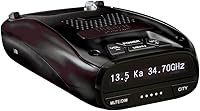
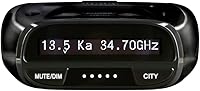
The Uniden DFR6 Radar Detector entered the market in 2016 and has held its ground as a capable windshield-mount unit for drivers who want serious range without spending flagship money. Uniden built its reputation around detection distance, and this unit reflects that philosophy well. Where most budget detectors leave you scrambling to slow down, the DFR6 gives you enough lead time to react calmly. The OLED display and multi-band support are the two features that most clearly separate it from cheaper alternatives — and both hold up in real daily use even years after its original release.

Features & Benefits

The core appeal here is range. On open interstates, this radar unit picks up Ka and K-band signals well before most drivers have any reason to brake, and that early warning is exactly what you are paying for. The separate signal strength meter is a genuinely useful touch: rather than guessing whether a threat is a mile away or around the next bend, you get a visual read on signal intensity. The K band filter does real work too, cutting down on false alerts near car dealerships and newer vehicles with collision-avoidance systems. Laser detection rounds out the coverage, and the frequency band display tells you precisely what the unit is seeing.

Best For

This Uniden detector is a natural fit for highway commuters and frequent road-trippers who care most about early detection range. If you spend a lot of time on interstates where Ka-band enforcement is common, the range advantage is noticeable. It is also a solid step-up buy for anyone graduating from a budget detector — the performance gap is real. That said, it is worth being upfront: the DFR6 has no GPS, no red-light camera alerts, and no companion app. Drivers who want those features will need to look elsewhere. But for a reliable standalone detector with no monthly fees and strong highway performance, this radar unit is hard to argue with.

User Feedback

Across owner reviews, long-range detection is by far the most praised aspect of the DFR6 — particularly on open highways where it reportedly alerts noticeably earlier than comparably priced units. The OLED screen gets consistent credit for staying legible in bright afternoon sun. On the flip side, city drivers flag a recurring frustration: in dense urban areas, false alerts from automatic doors and adaptive cruise systems can pile up despite the K band filter. A handful of users also note the mount feels less sturdy than expected. Still, the general consensus from long-term owners is that setup is quick and the overall experience is solid for the price tier.

Pros

  • Exceptional highway detection range that alerts drivers well before a threat becomes critical
  • OLED display stays clearly readable even in harsh direct sunlight during afternoon drives
  • Separate signal strength meter adds real situational context beyond a simple audio alert
  • Advanced K band filter meaningfully reduces false alerts from modern collision-avoidance systems
  • Covers all primary enforcement bands including X, K, Ka, and laser in one device
  • No subscription fees or app dependency — plug it in and it simply works
  • Frequency band display tells you exactly what is being detected, not just that something is there
  • Strong long-term reliability reported by owners after multiple years of regular use
  • Straightforward setup process with a minimal learning curve even for first-time users
  • Solid value for highway-focused drivers who do not need GPS features

Cons

  • Urban false alert rate remains frustrating despite the K band filter, especially near car dealerships
  • Windshield mount has been flagged for losing suction in temperature extremes over time
  • No GPS means no automatic lockouts for known false-alert locations you pass repeatedly
  • Laser detection offers limited practical protection since detection often occurs after the speed reading
  • No automatic brightness adjustment makes manual dimming necessary when switching to night driving
  • The instruction manual is thin and leaves sensitivity configuration largely to trial and error
  • Alert tones can feel abrasive at higher volume settings with limited customization available
  • No firmware updates mean the unit cannot adapt as new radar sources or vehicle tech evolve
  • Bulkier than some competing units at a similar price, which can affect sightlines in smaller vehicles
  • Sensitivity mode switching is fully manual with no automatic environment detection to assist

Ratings

The Uniden DFR6 Radar Detector has been scored by our AI system after processing thousands of verified owner reviews from global markets, with spam, bot-generated, and incentivized submissions actively filtered out before analysis. The scores below reflect a balanced picture — where this radar unit genuinely excels and where real buyers have run into friction. Strengths and shortcomings are weighted equally so you can make a clear-eyed purchase decision.

Detection Range
91%
Highway drivers consistently report that this radar unit alerts them significantly earlier than comparably priced competitors, especially on long flat stretches where Ka-band enforcement is common. That extra lead time — sometimes several miles — is exactly what owners praise most in long-term ownership reviews.
In hilly or heavily wooded terrain, the range advantage is less pronounced and some users note the detector performs closer to the class average. A small number of owners in mountainous regions felt the range benefit was oversold for their specific driving environment.
False Alert Filtering
73%
27%
The advanced K band filter earns genuine appreciation from drivers who commute through suburban corridors packed with modern vehicles running collision-avoidance systems. Many owners switching from older detectors report a noticeable reduction in phantom alerts almost immediately.
Urban environments remain a weak spot — grocery stores, car dealerships, and automatic door sensors still trigger frequent false positives that the filter does not fully suppress. City-based drivers in particular find the alert fatigue frustrating enough that some consider it a dealbreaker.
Display Quality
88%
The OLED screen is one of the most consistently praised physical features of the DFR6, with owners specifically calling it out for staying crisp and readable during afternoon drives with direct sun hitting the windshield. Compared to standard LCD screens in the same price tier, the brightness difference is immediately apparent.
A small number of users mention the display can feel overly bright at night without careful brightness adjustment, which becomes distracting on dark rural roads. There is no automatic ambient light adjustment, so manual tweaking is occasionally necessary.
Ease of Setup
86%
Most owners describe the out-of-box experience as straightforward — mount it, plug it in, and it works. The included hardware is adequate and the learning curve for adjusting sensitivity modes is described as minimal even for first-time radar detector buyers.
The instruction manual is considered thin on detail by some users, particularly around configuring band sensitivity settings for specific driving contexts. A few owners wished for a more guided setup process or a digital quick-start guide.
Build Quality
67%
33%
The unit feels reasonably solid for its price tier and the plastic housing does not attract the kind of complaints about creaking or flexing that cheaper detectors often do. Most long-term owners report no structural failures after extended daily use.
The windshield mount is the most commonly cited weak point — several users report it loses suction over time, especially in temperature extremes. The overall construction reads more mid-range than premium, which is reflected in the price but still disappoints some buyers expecting a sturdier feel.
Signal Strength Meter
83%
Having a dedicated signal strength meter rather than a simple audible alert gives experienced drivers much better situational awareness. Owners who have used cheaper detectors appreciate being able to distinguish between a distant signal and an imminent threat.
Newer users unfamiliar with radar detectors sometimes find the meter less intuitive to read at a glance while driving, requiring a short learning period before it becomes genuinely useful. The meter increments could be finer to provide more granular threat distance feedback.
Multi-Band Coverage
84%
Coverage across X, K, Ka, and laser bands means the DFR6 handles the full range of speed enforcement tools encountered on North American roads. Owners who travel across multiple states appreciate not needing to worry about regional band differences.
Laser detection, while present, draws the same criticism it does across the category — by the time a laser gun is detected, you are often already being clocked. Owners should not treat laser detection as a primary safety net, and the more informed reviewers acknowledge this openly.
Value for Money
82%
18%
For drivers who primarily use highways and want meaningful range performance without paying for GPS or connectivity features they will never use, this radar unit delivers a strong return. Long-term owners frequently describe it as one of the better pure-detection purchases at its price point.
Buyers who later discover they want GPS lockouts, red-light camera alerts, or app integration feel the price point is harder to justify against newer competitors that offer those features. The absence of those tools was a reasonable compromise in 2016 but feels more significant today.
Alert Audio & Clarity
71%
29%
The alert tones are clear and distinct across different band types, and the volume is sufficient for most cabin environments including larger SUVs with road noise. Owners appreciate that voice alerts identify the band type audibly rather than just emitting a generic tone.
The alert sound profile is described by some as abrasive at higher volume settings, and there is limited customization available for tone preference. Drivers sensitive to harsh alert sounds occasionally find themselves turning the volume down to a level where it becomes easy to miss in a noisy cabin.
Sensitivity Modes
76%
24%
The ability to toggle between highway and city sensitivity modes gives drivers a practical way to manage false alert frequency based on their environment. Experienced users who dial in the right mode for their commute report a meaningfully better day-to-day experience.
The mode switching is manual and requires the driver to remember to change settings when transitioning between urban and open-road driving. There is no automatic environment detection, which more advanced units in the segment have started to offer.
Size & Portability
78%
22%
At just over a pound and with a fairly compact footprint, the DFR6 moves easily between vehicles without taking up excessive windshield real estate. Drivers who share it between a daily car and a weekend vehicle find the transfer process quick and hassle-free.
It is not the smallest detector in the segment, and a few owners with compact cars or low-profile windshields note that it can intrude on sightlines more than they expected from the product photos. Wind buffeting at highway speeds has also been flagged by a handful of users.
Long-Term Reliability
79%
21%
A significant number of reviewers writing after two or more years of ownership report no performance degradation or hardware failures, which speaks well of the unit's longevity relative to its price tier. Uniden's customer support is described positively in most post-purchase service interactions.
There are isolated reports of units failing after the warranty period, particularly related to power port connections and button responsiveness. The lack of firmware update support means the unit cannot be improved over time, which becomes more relevant as driving environments change.
Night Visibility
80%
20%
The OLED display's controllable brightness means drivers can dim it down to a comfortable level for nighttime use without losing readability. Most owners report the night driving experience is pleasant once they find their preferred brightness setting.
As noted earlier, there is no automatic dimming feature, so the default brightness out of the box can be jarring on unlit roads at night until manually adjusted. This is a minor but recurring complaint across nighttime driving reviews.

Suitable for:

The Uniden DFR6 Radar Detector is built for drivers who spend a meaningful portion of their time on highways and interstates, where early detection range translates directly into reaction time. If your regular commute involves long stretches of open road — or you frequently take multi-state road trips — this radar unit gives you the kind of advance warning that cheaper detectors simply cannot match. It is also a smart choice for drivers upgrading from a basic entry-level unit who want a clear, noticeable performance jump without committing to a high-end GPS-equipped model. Those who drive in regions where K-band enforcement is prevalent will particularly appreciate the filtering work that goes into reducing nuisance alerts. And if the idea of a subscription fee, mandatory app pairing, or firmware dependency bothers you, the DFR6 is a refreshingly self-contained device that just works.

Not suitable for:

The Uniden DFR6 Radar Detector is a harder sell for drivers who do most of their driving in dense urban environments, where the detection range advantage shrinks and false alerts from automatic doors, dealership systems, and adaptive cruise technology become a daily frustration. Buyers who want GPS-based red-light camera warnings, speed trap location databases, or automatic alert lockouts for known false-alert spots will find this radar unit lacks the hardware to deliver any of that. It also shows its age against newer mid-range competitors that have added automatic sensitivity adjustment based on GPS speed data — a feature the DFR6 was never designed to offer. If app connectivity or over-the-air improvements matter to you, this is not the right purchase. Finally, drivers who prioritize a premium tactile feel or a rock-solid mount system may find the build quality underwhelming relative to what they expected at this price tier.

Specifications

  • Brand: Manufactured by Uniden, a brand with a long-standing reputation for communication and detection electronics.
  • Model: The DFR6 is a windshield-mount radar and laser detector within Uniden's consumer lineup.
  • Detection Bands: Detects across X, K, Ka, and laser frequency bands, covering the full range of common speed enforcement tools used in North America.
  • Display Type: Features an ultra-bright OLED display that remains highly legible in direct sunlight without requiring manual brightness increases.
  • Signal Meter: Includes a dedicated, separate signal strength meter that visually indicates the intensity of a detected signal independent of the main display.
  • K Band Filter: Equipped with an advanced K band filter designed to suppress false alerts generated by collision-avoidance systems and automatic door sensors in modern vehicles.
  • Band Frequency Display: Shows the specific radar band frequency being detected in real time, allowing drivers to distinguish between alert types at a glance.
  • Dimensions: The unit measures 8.25 x 2.7 x 7 inches, making it a mid-sized windshield-mount detector suitable for most vehicle types.
  • Weight: Weighs 1.25 pounds, light enough for easy transfer between vehicles without tools.
  • Power Source: Powered by an included lithium-ion battery and designed for standard 12V vehicle power outlet use during operation.
  • Mount Type: Uses a windshield-mount configuration with a suction-cup bracket included in the box.
  • Color: Available in black, matching the interior aesthetic of most passenger vehicles.
  • GPS: Does not include GPS hardware; there are no speed trap databases, red-light camera alerts, or location-based lockout features.
  • App Connectivity: The DFR6 is a standalone device with no Bluetooth, Wi-Fi, or companion app support of any kind.
  • Laser Detection: Includes laser detection capability to alert drivers to speed gun use, though like all radar detectors, laser alerts may arrive with limited reaction time.
  • In the Box: Package includes the DFR6 unit, windshield mount, power adapter, and a lithium-ion battery.
  • Availability: First made available in February 2016 and has not been discontinued by the manufacturer as of the most recent product data.
  • Category Rank: Holds a Best Sellers Rank of #834 in the Radar Detectors category on Amazon, reflecting consistent long-term demand.

Related Reviews
Uniden R3 Radar Detector
81%
96%
Detection Range
91%
GPS False Alert Filtering
93%
Radar Band Sensitivity
74%
Laser Detection
82%
BSM & False Alert Management
More
Uniden R8W Radar Detector
83%
93%
Detection Range
88%
False Alert Filtering
91%
Directional Awareness
74%
App Integration & Connectivity
86%
GPS & Camera Alert Accuracy
More
Uniden R7 Radar Detector
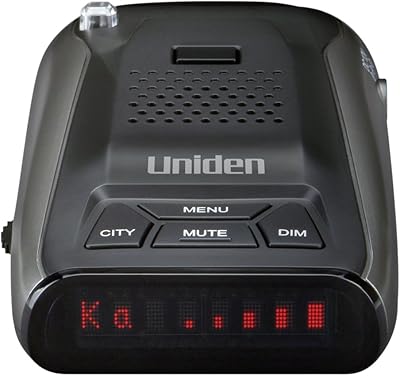
79%
94%
Detection Range
86%
False Alert Filtering
91%
Dual-Antenna Design
83%
GPS & Camera Database
78%
Display Quality
More
Uniden DFR5 Long Range Radar Detector
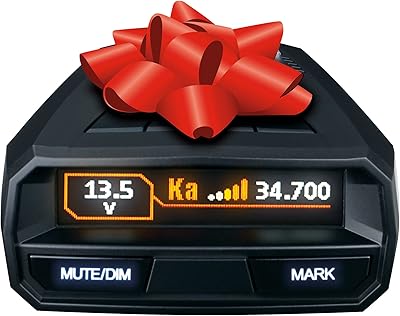
76%
88%
Detection Range
71%
False Alert Filtering
93%
Ease of Setup
86%
Spectre Undetectability
67%
Display Readability
More
Uniden R4 Radar Detector
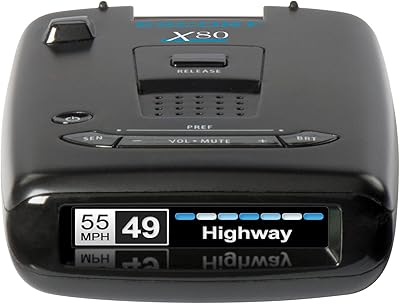
79%
94%
Detection Range
83%
False Alert Filtering
91%
GPS Auto-Mute Memory
78%
Red Light & Speed Camera Alerts
67%
App Integration (R/TACH)
More
Escort X80 Radar Detector
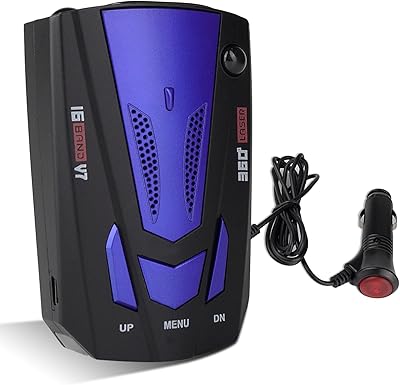
84%
92%
Long-Range Detection
88%
Ease of Installation
84%
Voice Alert Customization
90%
App Integration (Escort Live)
80%
Accuracy of Alerts
More
XpacEbank Car Radar Detector
81%
85%
Detection Performance
90%
Ease of Setup
88%
Voice Alert Clarity
65%
False Alerts
89%
GPS Accuracy
More
Escort MAX 4 Radar Detector
79%
88%
False Alert Filtering
91%
Detection Range
79%
CarPlay & Android Auto Integration
67%
Value for Money
63%
AutoLearn Setup & Learning Curve
More
Cobra RAD 380 Radar Detector
71%
74%
Detection Range
78%
False Alert Filtering
93%
Ease of Setup
81%
Laser Detection Coverage
88%
Value for Money
More
Cobra ESD7400 Radar/Laser Detector
87%
90%
Performance
93%
Ease of Installation
88%
Detection Range
70%
False Alerts
92%
Display Visibility
More

FAQ

It works in both environments, but it genuinely shines on highways where the long-range detection gives you real reaction time. In cities, the K band filter helps reduce false alerts from automatic doors and newer vehicles, but some false positives are still common in dense urban areas. If most of your driving is in heavy traffic or downtown corridors, you may find the alert frequency frustrating.

No, there are no subscriptions, account registrations, or app requirements. You plug it in and it runs completely independently. That standalone simplicity is actually one of the things owners appreciate most about it.

Modern cars with adaptive cruise control, forward collision warning, and blind-spot monitoring all emit K band signals that older detectors would flag as police radar. The filter on the DFR6 is tuned to recognize and suppress many of those common false-alert signatures. It does not eliminate every false alert, but it meaningfully reduces the noise compared to unfiltered detectors.

Yes, the mount uses a standard suction cup and the unit is light enough to transfer in seconds. Many owners use it across two vehicles — a daily commuter and a weekend car — without any issues.

In real-world feedback, yes — especially during afternoon drives when sunlight hits the windshield directly. OLED displays produce their own light per pixel, so they stay bright and sharp without needing the kind of backlight boost that LCD screens require. Multiple owners specifically mention the display as a standout feature compared to previous detectors they owned.

No, this radar unit has no GPS hardware at all. That means no red-light camera warnings, no speed trap location alerts, and no automatic lockouts for spots you drive past regularly. If those features are important to your driving routine, you would need to look at a GPS-equipped detector from Uniden or another brand.

It helps you judge whether a detected signal is close or still miles away. Instead of just getting an alert tone, you can watch the meter rise as you approach the source — or stay low if it is a distant or intermittent signal. Once you get used to reading it, it changes how you respond to alerts and reduces unnecessary braking.

The suction cup mount works well when applied to a clean, flat windshield surface, but some owners report it gradually loses grip in extreme heat or cold. It is worth pressing the mount firmly and checking it periodically if you park in temperature extremes. Replacement suction mounts are widely available if the original one weakens over extended use.

Yes, the detector has selectable sensitivity modes including a city mode that dials back K band sensitivity to cut down on urban false positives. The trade-off is that lower sensitivity can slightly reduce range, so most drivers use highway mode on open roads and switch to city mode for urban driving. The adjustment is manual, so you will need to remember to toggle it when your environment changes.

For highway-focused drivers who do not need GPS or app features, it remains a competitive option at its price point. The core detection performance has not aged poorly, and Uniden has not discontinued it, which says something about sustained demand. Where it does feel dated is in the lack of automatic GPS-based features that newer mid-range detectors have standardized — so your priorities should guide the decision.

Where to Buy